Search

Mountain Journal

Environment, news, culture from the Australian Alps

A Fire Management Plan for the Tasmanian Wilderness World Heritage Area

The Tasmanian Wilderness World Heritage Area (TWWHA) is a World Heritage Site in Tasmania. It is one of the largest conservation areas in Australia, covering 15,800 km², or almost 20% of lutruwita/ Tasmania. It is also one of the last great expanses of temperate wilderness in the world.

In recent summer’s, significant sections of the TWWHA have been devastated by bushfires. The 2018/19 fires were especially destructive.

Fire is perhaps the greatest challenge for the management of the TWWHA, particularly in the context of climate change. With the September 2020 release by the Parks and Wildlife Service of a range of discussion papers for public comment, the state is moving towards the development of a Fire Management Plan for the TWWHA, as recommended by the 2016 report by Tony Press (Tasmanian Wilderness World Heritage Area Bushfire and Climate Change Research Project) and prescribed by the 2016 TWWHA Management Plan. 

How have the papers been received by conservationists?

Continue reading “A Fire Management Plan for the Tasmanian Wilderness World Heritage Area”

New species of rare frog discovered, threatened by logging

Goongerah Environment Centre (GECO) based in far East Gippsland has long been working to protect remaining forests in that part of the state. Working with allies like the Flora and Fauna Research Collective, they have led citizen science projects which have frequently found threatened or endangered species in areas scheduled for logging, then used the law to gain protection of the habitat these species rely on.

Now GECO is warning that a population of the vulnerable  Large Brown Tree Frog is threatened by logging and that a Special Protection Zone placed around the logging is insufficient.

Continue reading “New species of rare frog discovered, threatened by logging”

Living with the Fear

Last summer’s fires burnt through communities right along the east coast of Australia and across large sections of the High Country. The sheer scale and ferocity of the firestorms made many individual fires unfightable. Many covered long distances in short periods of time, racing across the country. In some instances, like at Mallacoota in Victoria’s far east, they literally pushed communities to the beaches and into the water.

The fact is that these are the fires of the ‘present future’ – the climate change fuelled era that we are already passing into. This means ever worse fire seasons which, in turns means greater impacts on the people, businesses and communities that live or rely on increasingly fire prone landscapes. As noted by fire historian Stephen J Pyne, we now live in the ‘pyrocene’ – the age dominated by fire.

As was shown by last summer, the economic costs of fire seasons can be devastating. But there is something else going on that is obvious – on a personal and emotional, even spiritual, level. Many people are struggling with post traumatic shock, and many now hold a deep unease about the places they call home. Many people now openly express fear of the bush, and the fires that will come, summer after summer.

Continue reading “Living with the Fear”

Backcountry Film Festival 2021

The Backcountry Film Festival is a pre-winter tradition in Melbourne, with screenings happening each autumn. Other towns and cities sometimes also host the festival. Sadly, in 2020 the festival couldn’t go ahead as a screening because of the COVID-9 lockdown. Hopefully we will be back to ‘business as usual’ in 2021!

The program is put together by the Winter Wildlands Alliance, who say: ‘We believe in the power of humans and their spirit. Our mission is to manifest that power in communities through stories of activists, adventurers, and the outdoors to inspire and activate’.

‘The 16th Annual Backcountry Film Festival will be screening documentaries and ski movies about athletic pursuit in the mountains, artistic vision, friendship, and how the snowsports community is adapting to a changing environment’.

We hope to screen it in Melbourne in March or April 2021. Stay tuned for details.

There are 10 films in the 2021 season (you can check them out here) covering everything from slacklining in the mountains of Norway, climbing and skiing in Svalbard, doing the “Vallée Blanche” ski route in Chamonix, to gorgeous clips from the Revelstoke backcountry.

Check here for further background on the festival.

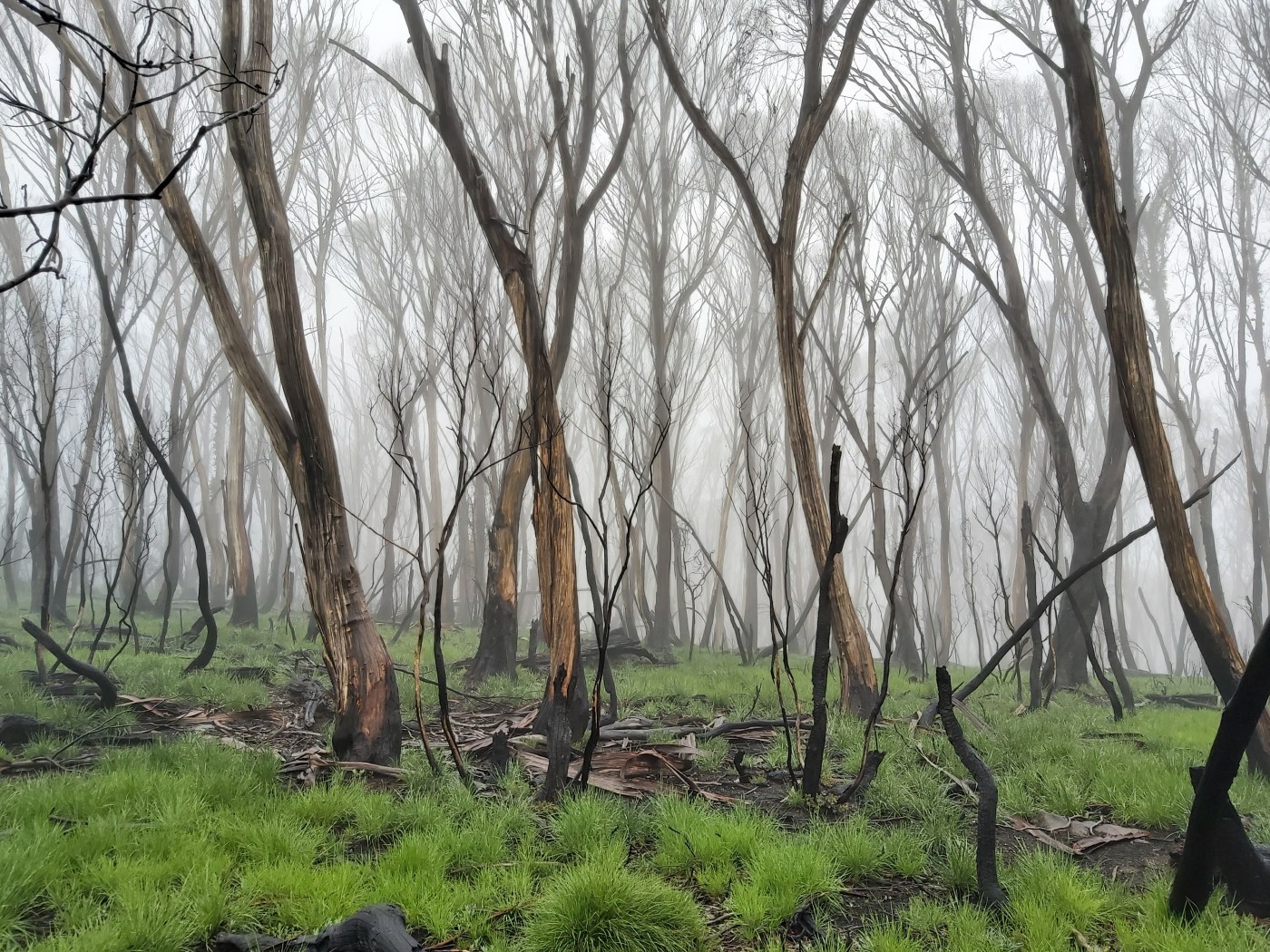
HEADER IMAGE: From Life beyond Fear.

LOWER IMAGE From Lost.

ANU launches centre for early fire detection & suppression

Last summer, 1,507,895 ha of Victoria was burnt, much of it in the remote mountains of the Alps and East Gippsland. Almost every significant fire in Victoria during the 2019–20 season was as a result of lightning strike. 

Many of these started after storms moved across East Gippsland and the Alps on November 21 and December 31. Forest Fire Management crews swung into action and many of the fires were quickly put out. Aerial bombing dealt with others. In the 2019/20 fire season, state government FFMV crews suppressed 89% of all new ignitions with aggressive ‘first attack’ techniques. But there were simply too many lightning strikes, and some grew into massive blazes, including the fires that went on to devastate the forests and landscapes of East Gippsland in coming weeks.

It is clear that we need additional air capacity to get on top of these small fires before they become blazes. We also need more career remote area firefighters. Victoria should also follow the lead of NSW and TAS and establish a volunteer remote area firefighting force. In recent years, the NSW teams have able to keep 90% of the fires they attended contained to less than 10 hectares in size.

But fire seasons will continue to get longer and more intense because of climate change. We need all the help we can get to stop these lightning caused fires before they turn into blazes. This new development could deliver some useful help:

Continue reading “ANU launches centre for early fire detection & suppression”

Tasmanian volunteer remote area firefighting teams established

Over the summer of 2018/19, huge fires burnt across Tasmania. An independent review of Tasmania’s management of the summer bushfires was initiated. It makes a series of recommendations for the fire services and government, including a proposal to re-establish a volunteer remote area firefighter group. The report was produced by the Australasian Fire and Emergency Service Authorities Council (AFAC).

Recommendation 2 of the report says:

The Tasmanian Fire Service (TFS) should pursue the creation of a cadre of volunteer remote area firefighters. In doing so the TFS should not consider itself limited to upskilling of current volunteer brigade members, but should carry out a cost benefit analysis of creating one or more remote area firefighting units based in urban areas, in order to tap into the potential of those members of the urban-based Tasmanian community who may have advanced knowledge and skills relating to navigation and survival in wilderness areas.

That group has now been established and is being trained.

Continue reading “Tasmanian volunteer remote area firefighting teams established”

The independent review of the 2019/20 fires

Inquiry into the 2019–20 Victorian fire season 

After the 2019–20 Victorian fire season, the Inspector-General for Emergency Management was charged with ‘investigating Victoria’s preparedness for the fire season, response to fires in large parts of Victoria’s North East, Gippsland, and Alpine regions, and will review relief and recovery efforts’.

On 31 July 2020, Inspector-General Tony Pearce delivered his report to government on Phase 1 of the independent Inquiry. It covered ‘Community and sector preparedness for and response to the 2019–20 fire season’.  The report made a series of Observations and recommendations.  It has now been made public. The government now needs to decide how to respond to the report and the recommendations.

The take home message from the report is:

‘Measured in terms of their geographic extent, the tragic loss of life, the damage to property and infrastructure, the devastation to flora and fauna, and their overall social and political impacts, the 2019– 20 fires mark a key turning point in Australia’s relationship with fire and the environment’. 

Continue reading “The independent review of the 2019/20 fires”

Winter of The Little Things

I don’t know about you, but I’m a winter person. I daydream about snow through summer, sneak off to the mountains in autumn to get that sense of oncoming winter, and once the snow arrives, I’m there. My New Year’s Eve is the end of the ski season. Having New Years in the middle of endless summer heat never made sense to me, but the end of the season, when thousands start to head off the mountains and quiet returns, really marks the end of the year for me.

Like other snow addicts I anxiously check the season outlook. Those big falls in May and early June gave me hope for a good season in 2020, in spite of the fact that we just had two great winters and three in a row was going to be pushing our luck. 

Then came lockdown 1 and 2, the closure of the VIC resorts, and a pretty ‘uninspiring’ winter.

Continue reading “Winter of The Little Things”

WINTER LIGHT: the Tasmanian mountains in winter

Well known Tasmanian landscape photographer Grant Dixon is launching a new book. Grant has been exploring the Tasmanian wilderness for some 40 years and undertaking trips to the mountains in winter for much of that time, capturing images featuring both grand vistas and intimate details of the winter landscape.

Grant says ‘I’m publishing a high quality, hard cover photographic book in the Tasmanian tradition of fine art productions and of using photography to activate awareness of the environment. The book features 89 images, captured over several decades, of the Tasmanian mountain landscape in winter’.

In his foreword, writer and photographer David Neilson states, “this exceptional collection of alpine images clearly reveals Grant’s outstanding artistic vision. ….. The human spirit desperately needs wilderness and Grant’s photos speak to us passionately of that need.

Grant has organised a pre order crowd fund to print the book. You can buy a copy of the book, please check here for details, and collect in Hobart, or have it posted to you. There are some great images and calendar on offer for people who are able to contribute more.

Continue reading “WINTER LIGHT: the Tasmanian mountains in winter”

Lake Malbena ‘helicopter tourism’ proposal to undergo federal assessment

Tasmania is famed for its wild landscapes, much of which is protected in national parks and World Heritage.

In 2016, the Hodgman Liberal government changed the Tasmanian Wilderness World Heritage Area (TWWHA) management plan, rezoning various sections of what was once Wilderness zone, into ‘Self Reliant Recreation’ zoning, which allowed developers to propose commercial developments in these zones. Perhaps the highest profile case has involved the plan to allow helicopter landings to take place at Lake Malbena on the Central Plateau. This was approved by the Federal environment minister, and has been slowly moving forward despite a strong community campaign and legal challenge.

In a significant development, it has now been announced the proposal will now require Federal assessment of its environmental impacts.

Continue reading “Lake Malbena ‘helicopter tourism’ proposal to undergo federal assessment”

Celebrating the Winter that (almost) Wasn’t

What a winter! After several early starts – good snow falls in May and early June, it turned into a roller coaster of a ride, with continual boom and bust – big storms dropping impressive amounts of snow, then warm weather and rain hammering the snow pack. While the NSW mountains fared much better than in Victoria, conditions were often a bit ‘ordinary’ – icy, windy, etc. Tasmania had its usual boom and bust conditions, but with some fantastic snow pack, often an elusive and brief reality on that mountain island.

Because of the lock down, resorts closed early in VIC then never re-opened, so resorts have resembled ghost towns for much of the season, and businesses, who were suffering after a terrible fire season, had almost no trade. Lots of small business owners have been forced very close to the wall economically, and all businesses that managed to stay open had to get creative.

Now, as we move into Mud Season, the resorts in VIC are opening again as regional Victorians are allowed to travel. The good news is that the national parks are opening as well. Stalwarts are chasing the runs still to be had on Bogong and other high peaks in VIC, and the Main Range still has a good base in many places.

Hope the remaining ‘winter’ is a good one for you and that you manage to get out and enjoy it. And remember to support your local mountain business! Here’s to a better Winter of 2021.

Logging threat to Central Highlands fish hatchery

The northern Central Highlands of Victoria, to the north east of Melbourne is heavily forested hilly country that harbours endangered species, rainforest and wonderful mountain ash forests. A number of rivers, including the Rubicon and Snobs Creek, flow north, joining the Goulburn system. Sadly, the area has been heavily logged for decades.

This logging has been strongly resisted by locals (see for instance this report from 2018). Protest has focused on the environmental and economic impacts (there is a small eco tourism industry that operates in the region). But a threat to water quality, and hence a fish hatchery that relies on that water, has been gaining media interest lately. 

Continue reading “Logging threat to Central Highlands fish hatchery”

Blog at WordPress.com.

Up ↑