Search

Mountain Journal

Environment, news, culture from the Australian Alps

Tag

endangered species

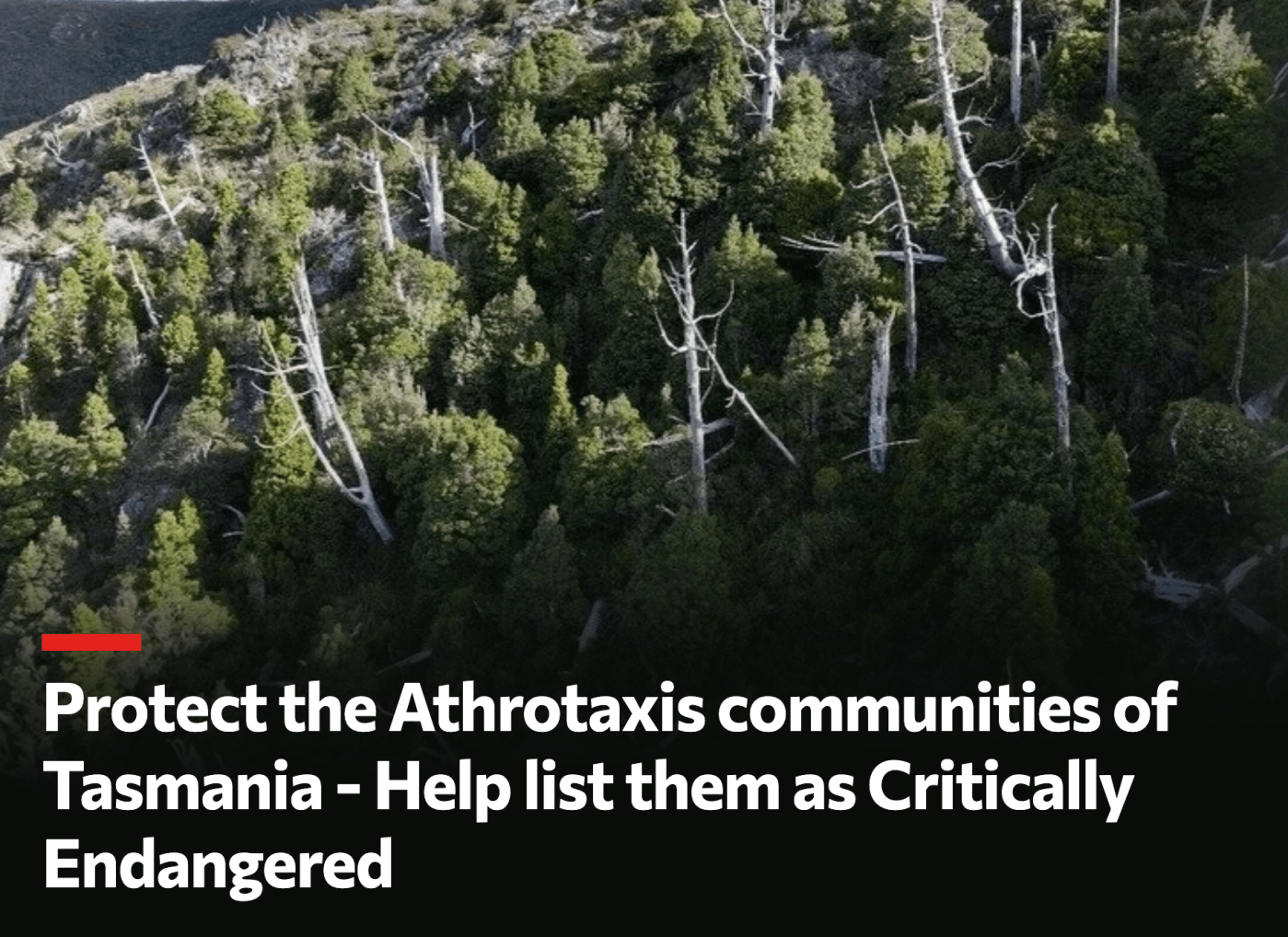
Help protect the Athrotaxis communities of Tasmania

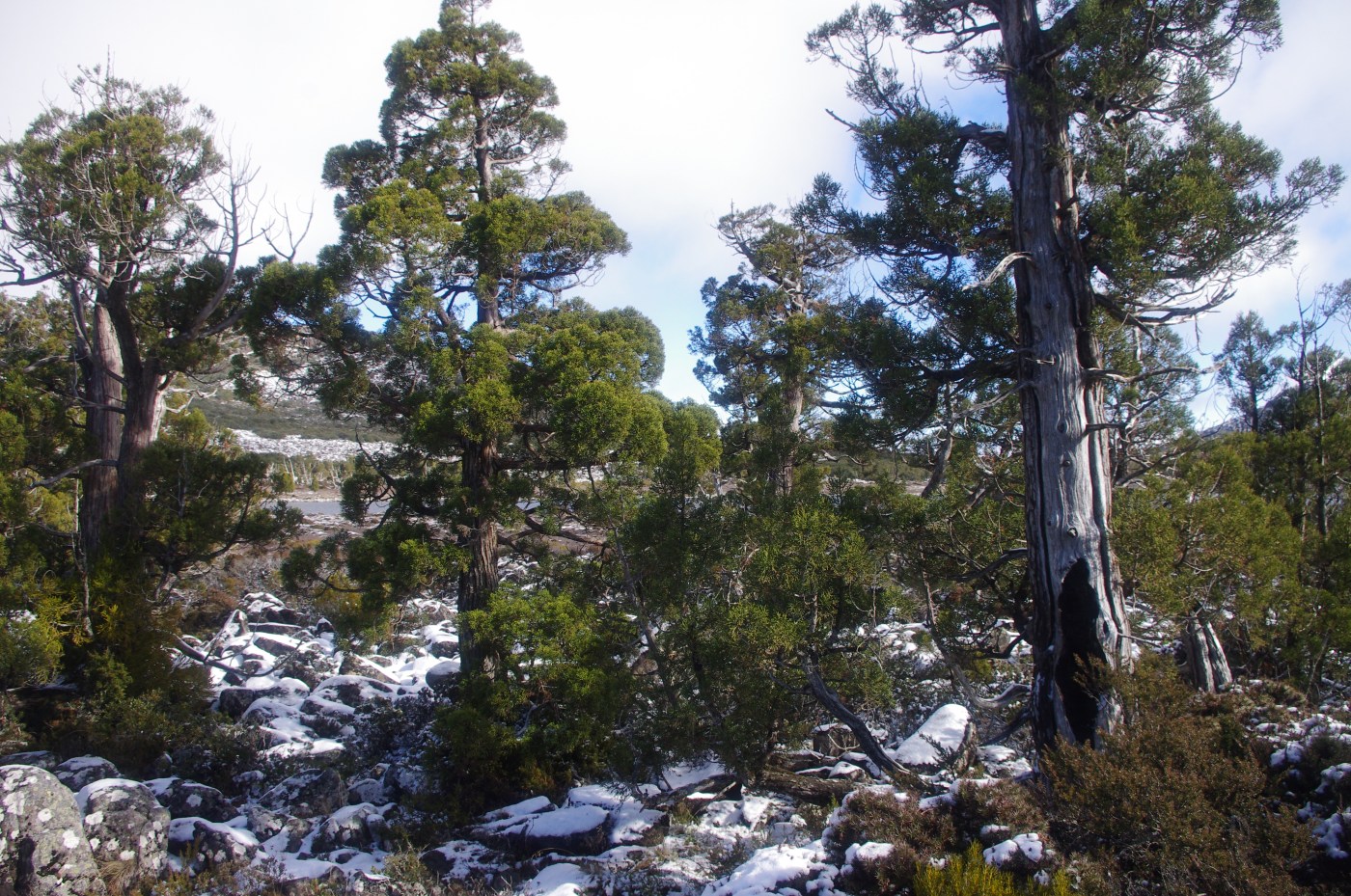
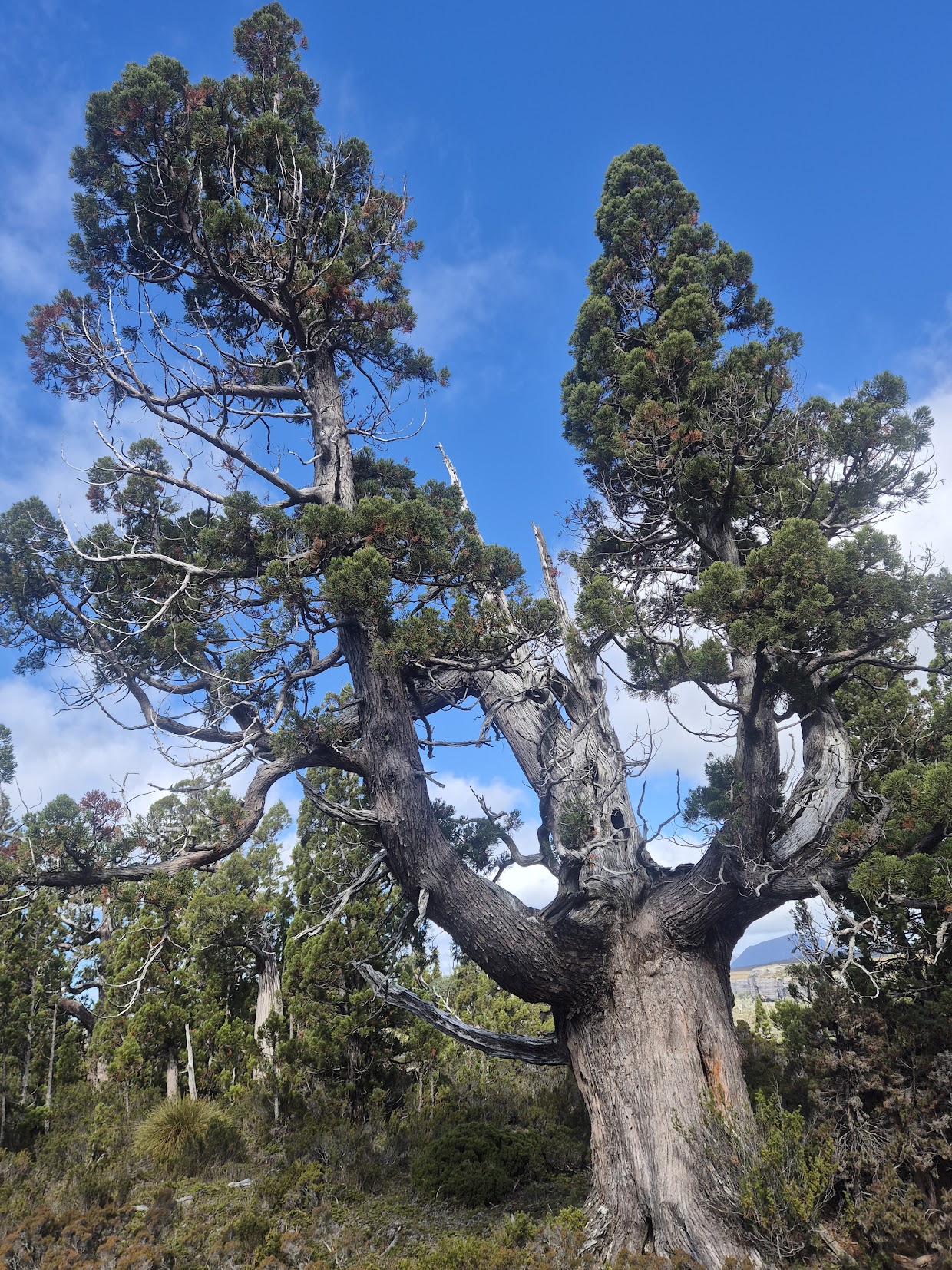
The pencil pine (Athrotaxis cupressoides) is a much loved and wonderfully charismatic tree of the Tasmanian mountains where it is largely restricted to sub-alpine areas above 800 metres. It is one of the Gondwanan species – dating back to the times of the Gondwana super continent – and often grows around tarns, streams and lakes because of its intolerance to fire. Pencil pines can reach ages in excess of 1,200 years, but have little chance of recovery after a ​fire.

It is hard to imagine the mountains of lutruwita without these wonderful trees (check here to get a sense of the beauty of these trees).

Sadly they face a very uncertain future. But this campaign aims to secure a future for both pencil and King Billy pines.

Continue reading “Help protect the Athrotaxis communities of Tasmania”

Mountain Icons in a time of change

The theme for this year’s Mountain Journal magazine (which is available as a pdf here) was ‘the mountains are changing, are we ready?’

In delving into the changes being driven by global heating, destructive land use practises, and more people venturing into the mountains, we profiled four of our favourite mountain Icons.

Continue reading “Mountain Icons in a time of change”

Defending the mountain

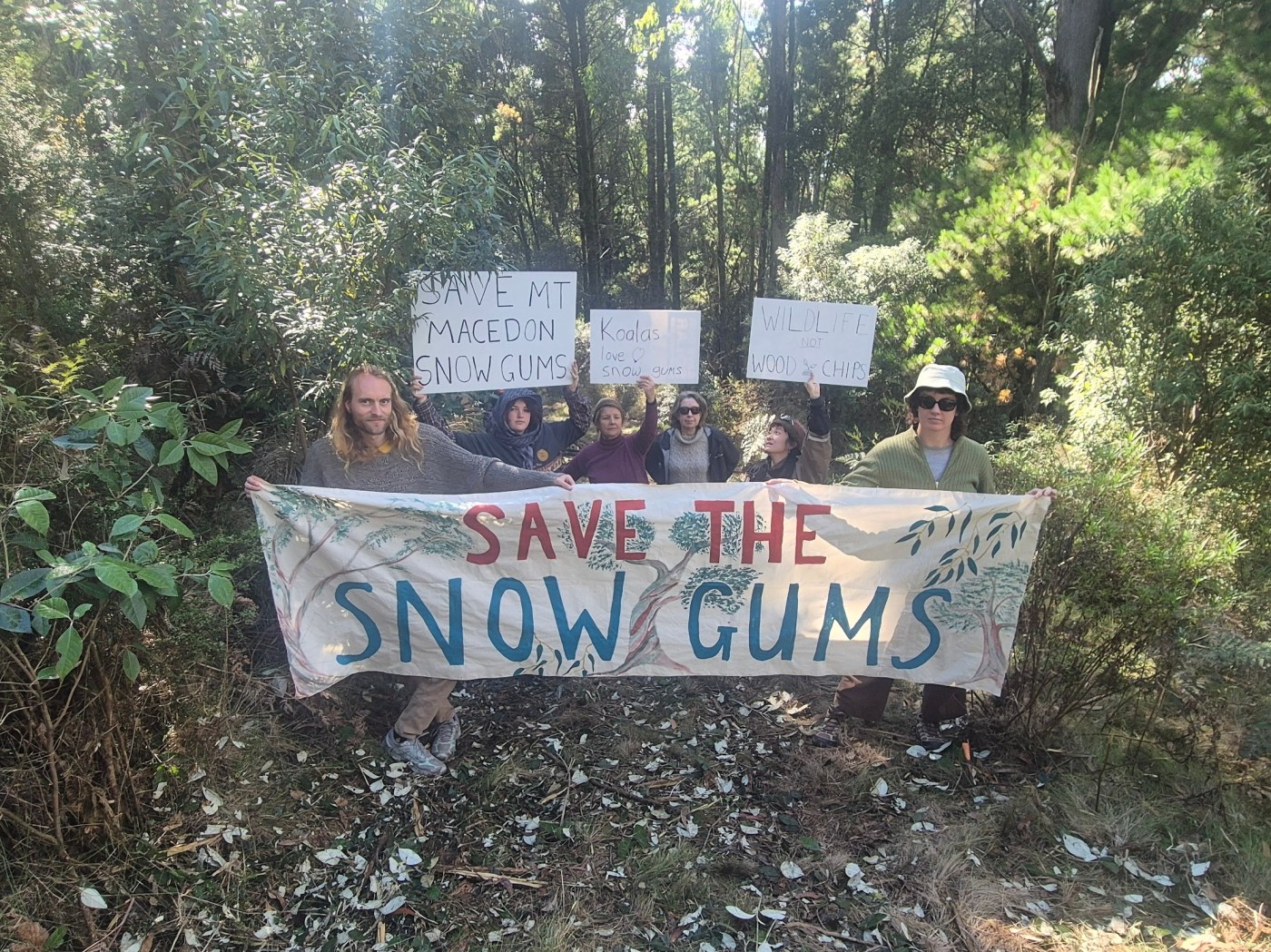
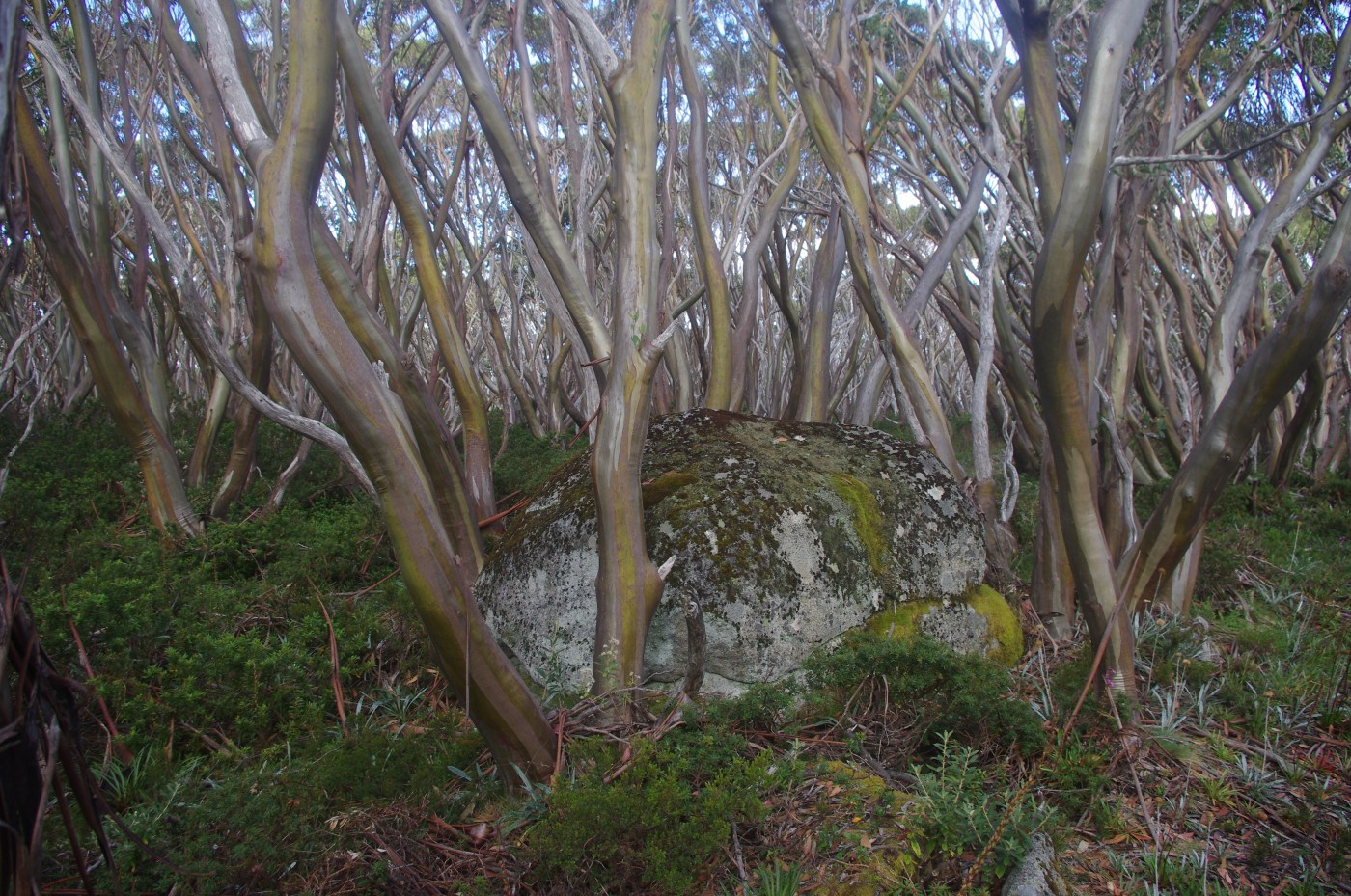
I live on Dja Dja Wurrung country in central Victoria. When I need a bit of mountain time, I head to Mt Macedon for some cooler air and deep green forests. The two small pockets of snow gum that exist on the highest points of the range always draw me, and it is a treat to wander through vigorous regrowth forests of snow gum intermixed with alpine ash.

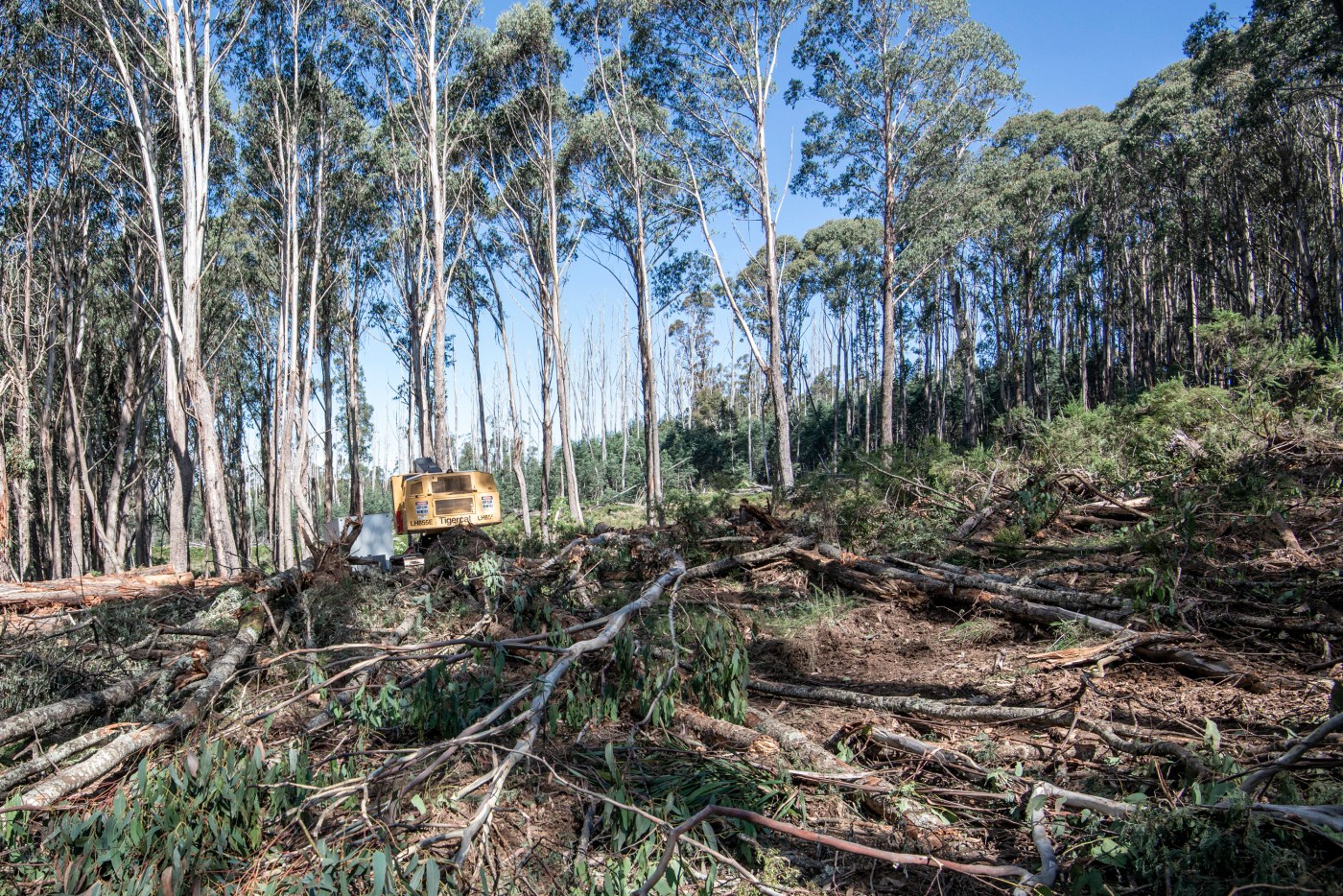
I just spent the better part of a week trying to stop Parks Victoria from destroying almost a hectare of snow gum forest on the Macedon summit in order to restore a historic view towards Melbourne.

Despite a spirited campaign led by local people, contractors devastated the slopes immediately south of the summit last Friday (April 17). On the Sunday, a planned community rally went ahead and turned into something of a vigil to reflect on the destruction that had just happened. There was grief, sadness, anger and determination. What really struck me was the depth of feeling that so many people expressed for the mountain. Many of us see the mountain as a personal refuge. This destruction of a rare forest has impacted many on a deep level. I heard so many stories of people’s personal connection to the mountain last week.

If you are one of those people I would welcome your story for inclusion here. Send it through: cam.walker@foe.org.au

Continue reading “Defending the mountain”

Listing snow gums as a threatened ecological community

Australia’s alpine landscape is a living archive of our continent’s cultural and environmental history. These stories can be found in First Nations Cultural Heritage, glacial landscape features, fossilised fish bones, and the fascinating physiology of our endemic alpine species. In recognition of its unique social, ecological and aesthetic values, the Alps are recognised as a National Heritage Place and largely protected in National Parks.

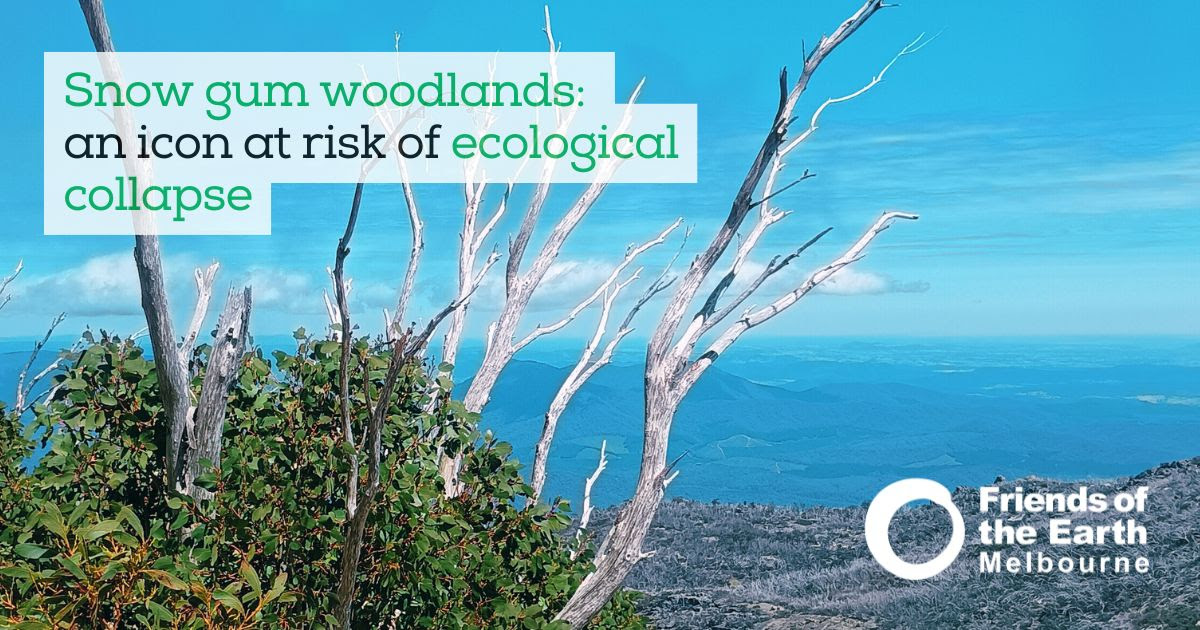
However, these measures have been insufficient to hold back the impacts of anthropogenic climate change, including rapid ecological decline in Snow Gum Woodlands. We are now seeing the beginning of ecosystem collapse – drought, dieback and successive fires have altered the structure, composition, and condition of snow gum woodlands dramatically. We must intervene and develop a robust recovery plan if these ecological communities are to remain viable into the future.

The first step towards a coordinated recovery effort is to recognise the risk of extinction nationally. This will trigger the development of a national recovery plan, increase opportunities for funding, and support research, monitoring, and management interventions.

Friends of the Earth has initiated a plan to have snow gum woodlands recognised as a ‘Threatened Ecological Community‘ under federal environment laws.

You can add your voice at support the proposal by signing this open letter.

If you are a researcher and would like to actively contribute your skills and experience to the application to list snow gums under the EPBC, please fill out this form so we can get in touch to discuss.
Victorian State of the Environment 2023 Report released

The Victorian State of the Environment (SoE) 2023 Report has been released. These are five-yearly report cards produced by the state government which measure the health of our natural environment – our land, water, air and ecosystems. The report covers three key areas:

  • the health of Victoria’s natural environment
  • the adequacy of our science
  • areas for future focus.

The Greens labelled it ‘a damning new report (which) has found Victoria’s ecosystems and threatened species are in a far more dire situation now than they were five years ago’.

They say ‘It found that biodiversity and climate change indicators were particularly bad, with more than 75% of biodiversity indicators (32 of the 42) deteriorating or unclear, and 73% of climate change health measures (11 out of 15) also deteriorating or unclear. Only 1 out of 57 were classed as good (which related to the number of Victorians taking action to protect nature)’.

While I don’t have time to do a deep analysis of the report (which is available here), a quick look at the categories related to mountain areas are all fairly depressing. In short, there are no positive trends that are obvious.

Continue reading “Victorian State of the Environment 2023 Report released”

More mountain forests at risk from logging

In February 2022, VicForests released its proposed 2022 Timber Release Plan (TRP). The TRP outlines the forest areas it intends to log. Community groups are able to submit submissions to the process, but TRPs are generally then ‘rubber stamped’ despite calls for specific high conservation areas to be protected. The comment period for the TRP has now closed.

While there were very significant forests in the Central Highlands and South Gippsland scheduled for logging (such as at Tanglefoot picnic ground in Toolangi, the Wallaby catchment in the Kinglake National Park, Snobs Creek Valley, a large coupe near Noojee, and 14 coupes between Cambarville and Matlock), there are also a number of areas proposed for logging in the high country.

Continue reading “More mountain forests at risk from logging”

There is still time to protect the Little Dargo

The fires of 2019/20 burnt huge areas of north eastern Victoria. The remaining unburnt forests are more important than ever. One of these areas lies in the headwaters of the Little Dargo River, just south of Mt Hotham. It is a pristine area, without roads, and containing mature forest, much of it dominated by Alpine Ash. It is an area of state forest that lies right next to the Alpine National Park.

The state government logging agency, VicForests, intends to log a total of 11 “coupes”, or sections, of mature forest in the upper Little Dargo River, probably this spring. These coupes are located in a series of clusters, where separate sections of bush will be harvested, creating a large zone of cleared land over time. Extensive roading networks will be needed to access the coupes.

One coupe has already been logged. The remaining coupes have not yet been scheduled for harvesting. There is still time to stop this ecological disaster – if we act now.

Continue reading “There is still time to protect the Little Dargo”

Forum: Threatened species and fire recovery

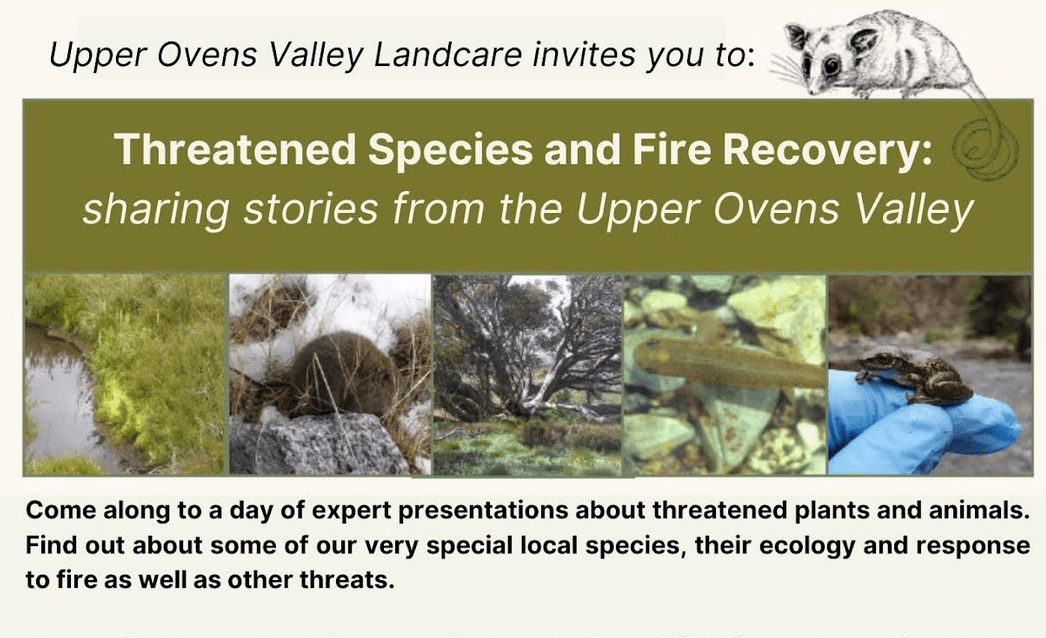
Upper Ovens Landcare are hosting a one day forum with the focus of ‘sharing stories from the Upper Ovens Valley’ about species recovery after fire. It will be held at  Dingo Dell, Mt Buffalo national park on Saturday 30 April 2022.

Continue reading “Forum: Threatened species and fire recovery”

National Threatened Species Day 2021

Every year on September 7, National Threatened Species Day is commemorated across Australia to raise awareness of plants and animals at risk of extinction.

There are currently 457 species of fauna and 1348 species of flora listed as vulnerable, endangered or critically endangered under Australia’s Environment and Biodiversity Conservation Act 1999 (EPBC Act). Many of these are found nowhere else in the world.

This is a summary of some of the threats facing mountain species.

Continue reading “National Threatened Species Day 2021”

Threatened Species and Fire Recovery: a special community event

Endangered snow leopards or mountain gorillas? Not in Australia – but we do have native animals and plants threatened with extinction, right here in the Upper Ovens Valley.

The Upper Ovens Valley Landcare Group is hosting a special community event on Saturday June 19 to explore the ecology of some of these very special local species, why they are at risk and what can be done about it.  

Continue reading “Threatened Species and Fire Recovery: a special community event”

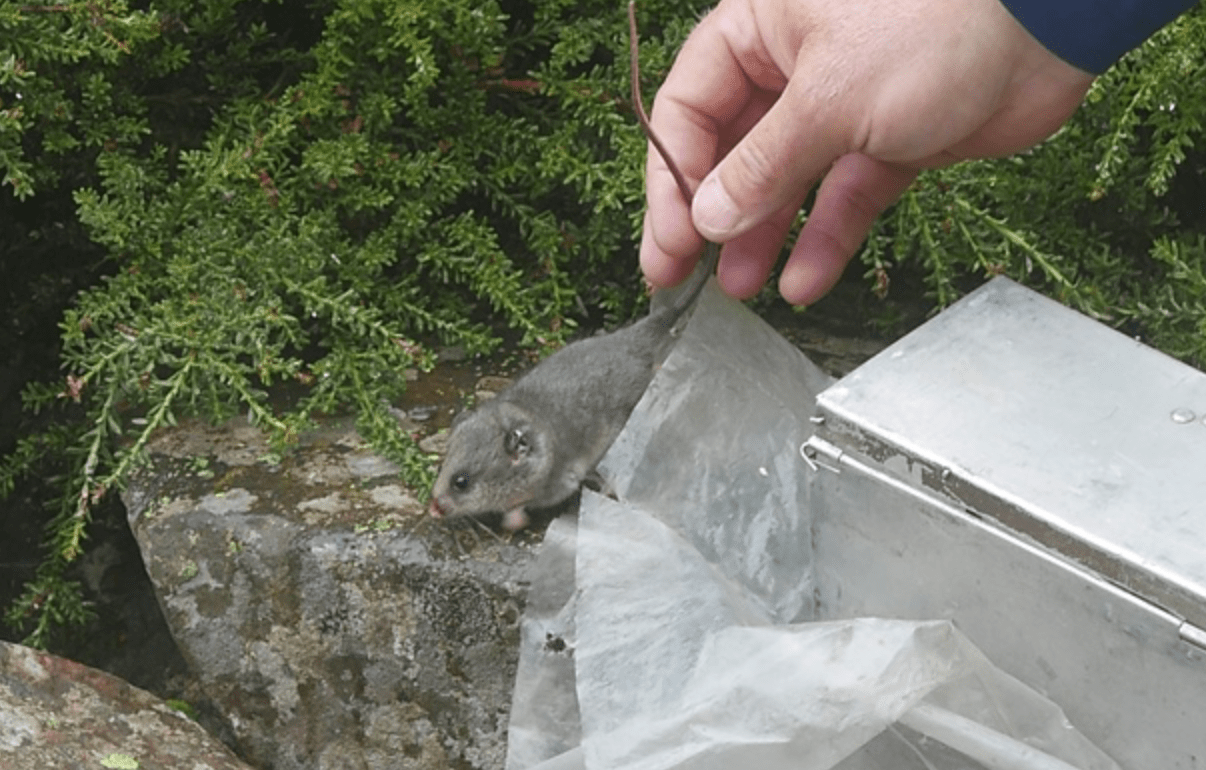
Good news for the Mountain Pygmy Possum

The mountain pygmy possum (MPP) is a small animal of The Australian high country. Since, 2008, it has been declared by the IUCN Redlist as Critically endangered. Population estimates totalled less than 2000 individuals from the three combined isolated populations in 2000.

They are reliant on Bogong Moths to build up reserves for winter and for successful breeding. The lack of moths has had a significant impact on breeding in recent summers. But there is some good news from the 2020/21 summer.

Continue reading “Good news for the Mountain Pygmy Possum”

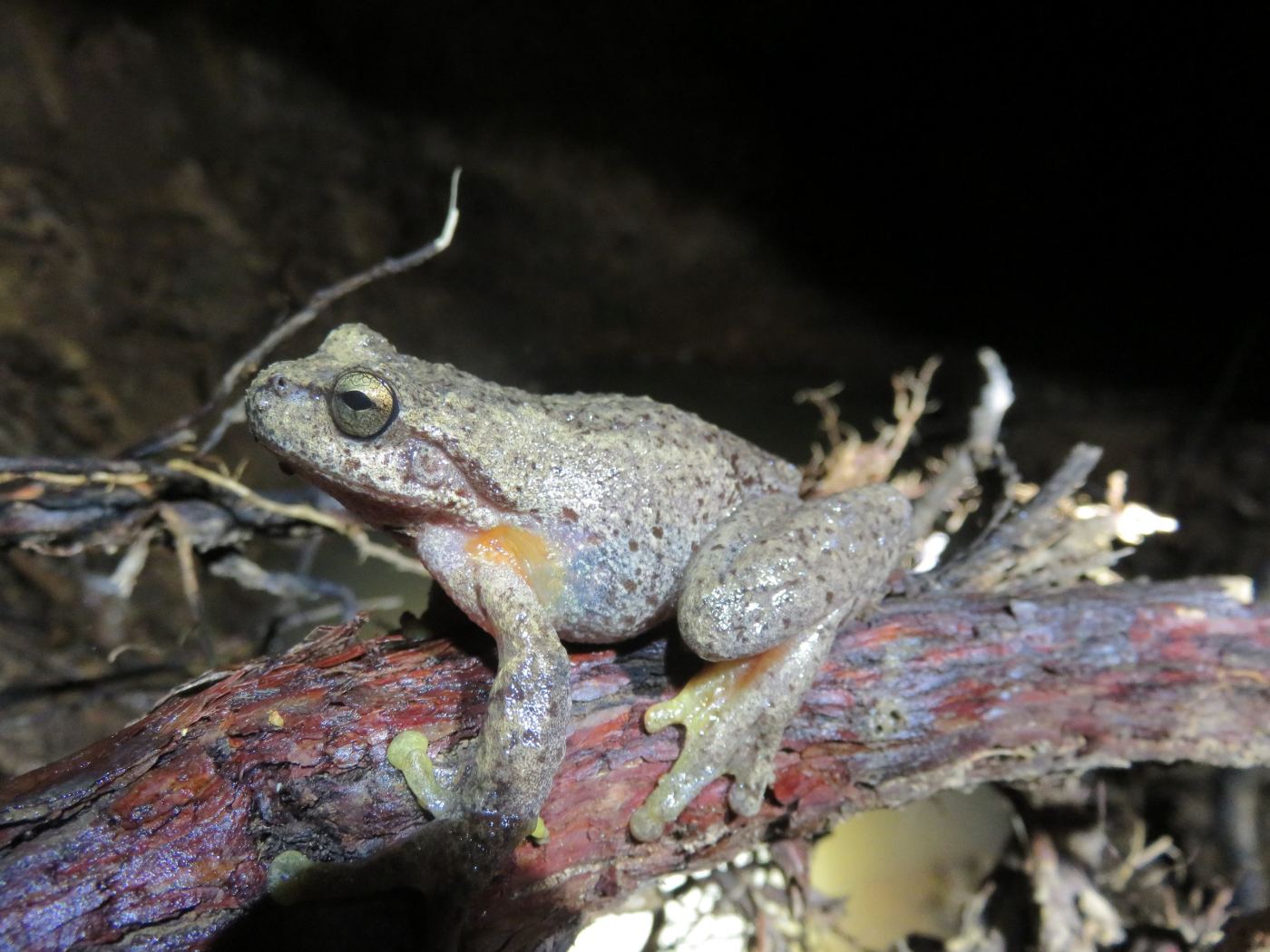
New species of rare frog discovered, threatened by logging

Goongerah Environment Centre (GECO) based in far East Gippsland has long been working to protect remaining forests in that part of the state. Working with allies like the Flora and Fauna Research Collective, they have led citizen science projects which have frequently found threatened or endangered species in areas scheduled for logging, then used the law to gain protection of the habitat these species rely on.

Now GECO is warning that a population of the vulnerable  Large Brown Tree Frog is threatened by logging and that a Special Protection Zone placed around the logging is insufficient.

Continue reading “New species of rare frog discovered, threatened by logging”

Blog at WordPress.com.

Up ↑