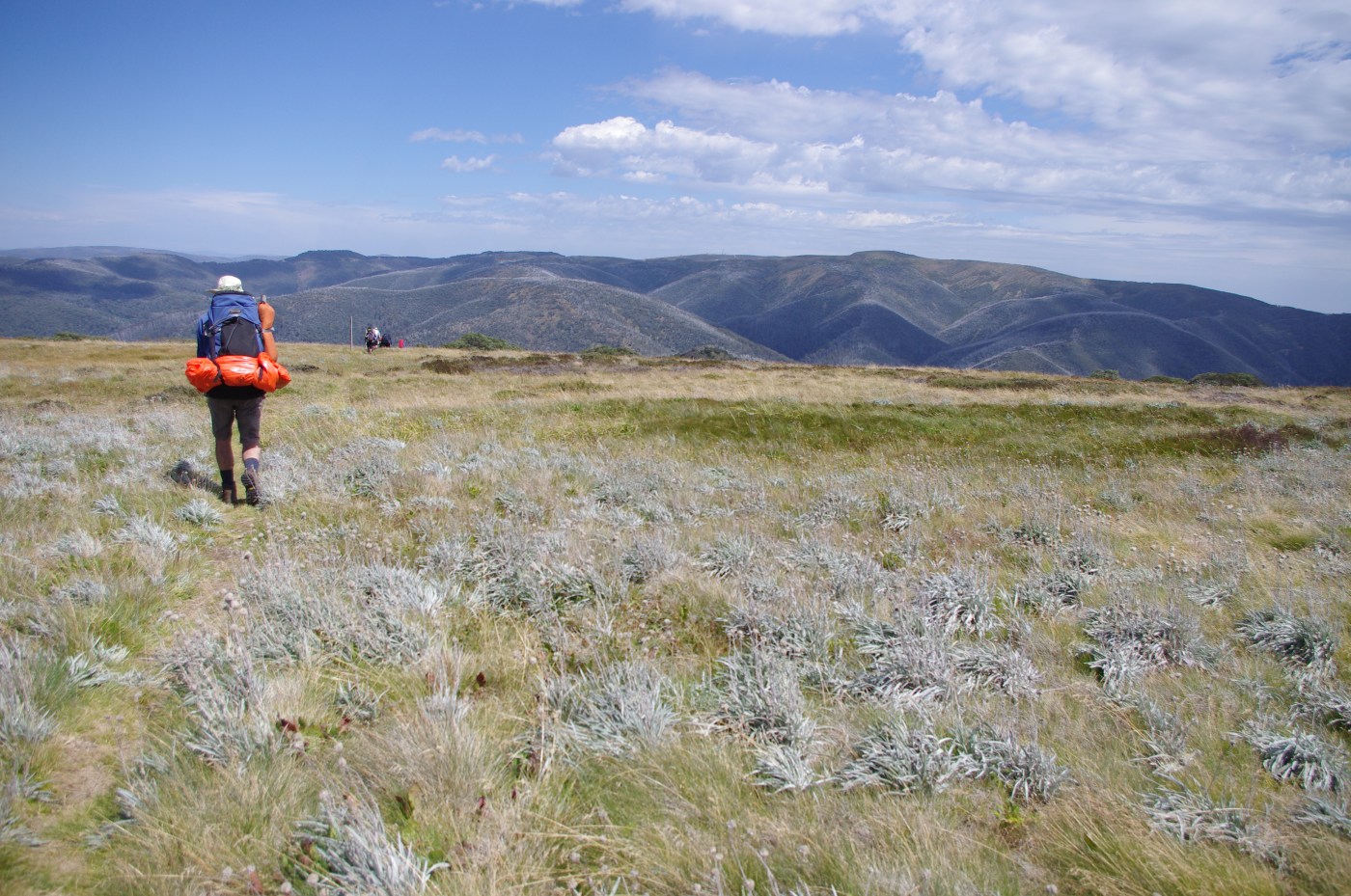
As a mountain obsessed teenager, I naturally drifted towards working in the mountains. I planted trees on the Monaro Tablelands, did some fire crew work, applied for jobs at ski resorts. I found myself the dream job for a few months, helping renovate a 100 year old store in a town in the mountains of eastern Alaska … But the ultimate romantic job was fire lookout, of course.
The ongoing saga about the proposal to build a cable car up the face of Mt Wellington/ kunanyi continues.
The latest development involves a request from the proponent of the cable car to access land owned by Carlton & United Breweries (the Cascade Brewery), to use as the base for their cable car, which would run from South Hobart to the top of Mount Wellington (kunanyi).
As the Wellington Defenders say: “this inappropriate and culturally insensitive development would “scar” the mountain, ruining the majestic view of Mount Wellington that the citizens of Hobart enjoy. Not only would the cable car be an ugly scar upon the mountain, but it would ruin the sense of wilderness Hobartons come to enjoy on the mountain”.
There is a petition urging CUB to refuse the request available here.
Please sign and share.
The Federal Government’s announcement of a feasibility study into the expansion to the Snowy Hydro Scheme in NSW could potentially break the current impass in the fossil fuels vs renewables energy debate.
Pumped hydro represents stored energy, which can be created through the use of renewables. It is a ‘game changer’ in that it can, in effect, provide baseload power for when renewable energy supplies like wind and solar need back up. This will be done through what is called Pumped Hydro.
The Peaks Challenge is a huge event. It is a marathon road riding event, with around 2,000 cyclists, and covers a huge amount of country: the main challenge is a 235 kilometre loop, that is often described as being “comparable to a Tour de France mountain stage”. It does an enormous loop around Falls Creek, and has three major climbs to Tawonga Gap, Mount Hotham and Falls Creek.
If you’re not a rider, but planning to be in the area, its worth checking for details on road closures over the weekend.
This will be the second time that the Victorian Walking Festival has run. This information comes from the key organiser of the festival, Stephen Ingrouille.
Time to lace up the boots and start planning the 2017 Victorian Walking Festival which will start on April 1, run until mid-May and coincide with:
- the Premier’s Active April Program;
- the walks in the National Trust Heritage Festival; and
- the international Jane’s Walk urban walking tours.
Any organisation (commercial or community) or individual is welcome to submit walks for the program. Walks can be of any length, any degree of difficulty and anywhere in the state. Self-guided walks and walking related social events (talks/presentations) are also welcome. It has a decentralised model of organising, with the website refering interested people back to the organiser of the walk/ event.
This is a huge worry. The cable car that has been proposed for kunanyi/ Mount Wellington, in Hobart, which has been looking ever less likely to proceed, has just received a massive boost. The Tasmanian government has announced that it will will acquire land, and enact new land ownership laws to help clear the way for a cable car development application.
This project would cause major visual scarring to the mountain and many localised ecological impacts. It represents an old fashioned ‘Disneyland’ approach to tourism and is widely opposed by the community in Hobart. You can find background information here.
The following is taken from a news report that appeared in The Sunday Tasmanian newspaper on February 25, 2017. Authors are Patrick Billings and Simeon Thomas-Wilson.
Continue reading “Tasmanian government intervenes in Mt Wellington cable car debate”
The Australian Alps has hundreds of fantastic trails. The iconic long distance trail is the Australian Alps Walking Track, which stretches from Walhalla, east of Melbourne, almost to Canberra. The AAWT was created in stages, starting with the Victorian Alpine Walking Track, which was developed in the 1970s as part of a larger vision of linking the Australian Alps with a three-state trail. The dream of a long distance track was only fulfilled after years of work and a lot of ‘big picture’ thinking by many people.
Now there are plans to extend the track network all the way to Melbourne and right into Canberra. There are two alternatives for the track from Melbourne, and a proposed route into Canberra, which are outlined below. This well researched proposal identifies gaps in existing tracks and a number of options for connecting up with the existing AAWT.
Continue reading “Connecting Melbourne and Canberra to the Australian Alps Walking Track”
Its that time of year: another circle around the sun, and almost autumn … so its time to think about the year that was.
Saturday September 2, 2017.
This is the annual day for telemark skiers (and any other backcountry inclined skiers and riders) to get together, share some turns, make new friends and generally enjoy getting out in the mountains.
Anyone is welcome to organise an event.
At this point there are plans for gatherings at MT HOTHAM and the SNOWY MOUNTAINS.
The W-Tree community near the Snowy River in East Gippsland need your help to stop logging of the Basin Creek rainforest complex. This spectacular rainforest area is currently under threat from VicForests logging operations.
The Basin Creek Rainforest Complex is a beautiful matrix of pristine rainforested gullies and old-growth forest that forms a crucial wildlife corridor in an area devastated by clear fell logging. This corridor links the Snowy River National Park with forests further to the West.
Please sign the petition to Victorian Environment Minister Lily D’Ambrosio MP calling on her to protect this stunning place from destructive clear fell logging.
With a review of alpine resorts being carried out by the Victorian government, the Victorian National Parks Association (VNPA) has renewed its campaign to have Mt Stirling incorporated into the Alpine National Park.
There is a small window of time remaining to provide input to the review, supporting the call for the inclusion in the park. The following information from the VNPA explains how to have input into the process.
Continue reading “Time to make Mt Stirling part of the Alpine Park”
Mountain Journal has published a number of stories on the fires that devastated large areas of Tasmania’s high country in 2016. At the time we suggested that the ecological damage would be very long term because of the nature of the high elevation vegetation.
Sadly, that seems to be the case:
The following comes from a news report by the ABC.
A year on from bushfires in Tasmania’s Wilderness World Heritage Area (WHA), some areas are showing signs of recovery but others are not.
Ecologist Professor Jamie Kirkpatrick said once alpine flora such as pencil pines were burnt, they died.
“They haven’t got any seed stores, so there’s no seed in the soil and there’s very seldom seed in the trees themselves, so if you burn the stands you’ll often get rid of them for a very long time period,” he said.
“It’s those plants that actually make it a world heritage area because they’re really highly significant scientifically as paleo endemics from the cretaceous period.”
The fires wiped out plants more than 1,000 years old.
Researchers will travel to Lake Mackenzie next month to gather data about how the landscape is faring.

Recent Comments