Search

Mountain Journal

Environment, news, culture from the Australian Alps

Tag

Alpine national park

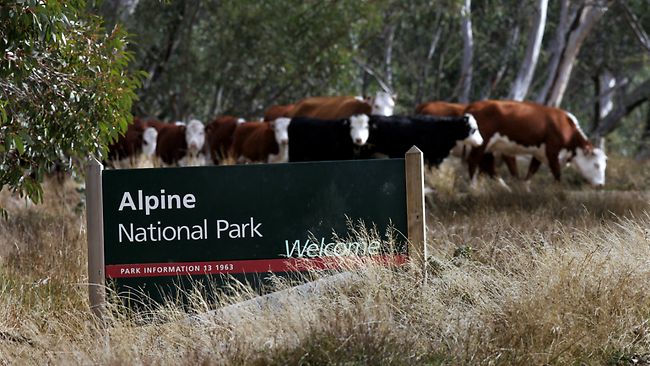
cattle back in Alpine national park. Ryan Smith’s legacy?

The Age is reporting that:
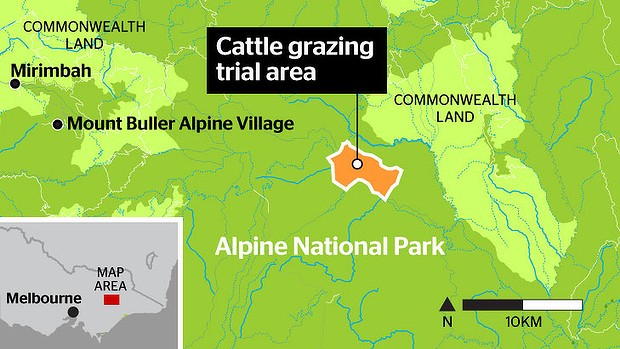
Image from The Age. Graphic: Jamie Brown

Cattle have returned to the Alpine National Park for the first time in three years, with animals released in recent days under the Napthine government’s grazing trial.

It is understood that a little under 60 cows were brought into the park either on Wednesday night or Thursday morning, marking the start of the program.

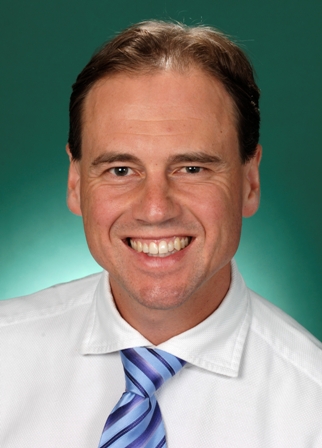
The move follows the state government getting approval for its grazing plans from federal Environment Minister Greg Hunt earlier this month. The state government says the trial will test whether cattle grazing lowers bushfire risk by reducing fuel loads.

As pointed out by Phil Ingamells of the Victorian National Parks Association:

“the trial was not science, rather a political promise to the cattlemen to protect their privileged grazing rights in the park”.

“Decades of evidence show how much grazing harms the park. But it does nothing to reduce grazing risk,” he said.

Read more in the article by Tom Arup here.

And background on the trial here.

Environmental policy in a time of climate change
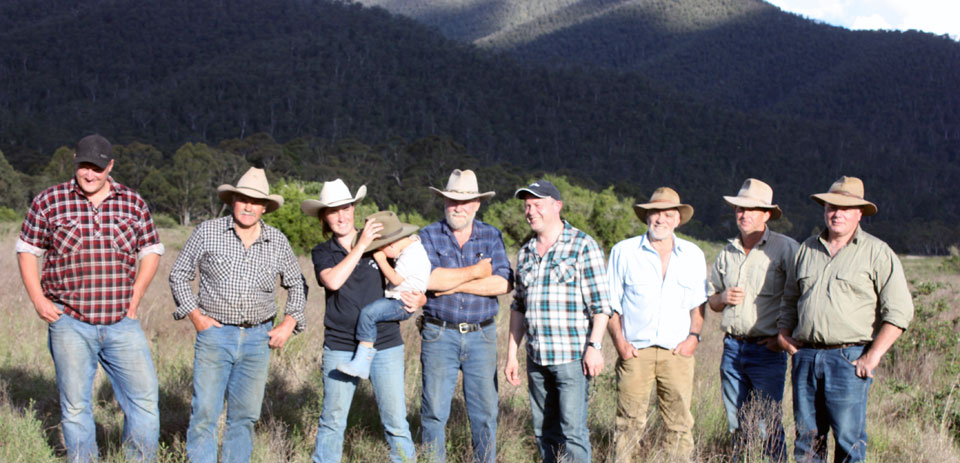
Environment Minister Ryan Smith with mountain cattle graziers, Wonnangatta Valley. source: MCAV

The state government has doggedly pursued this grazing trial since it came to power, and the environment minister Ryan Smith has been closely involved in efforts to get cattle back into the park. The first attempt was knocked back by the previous federal government. The current proposal has recently been approved by Coalition Minister Greg Hunt.

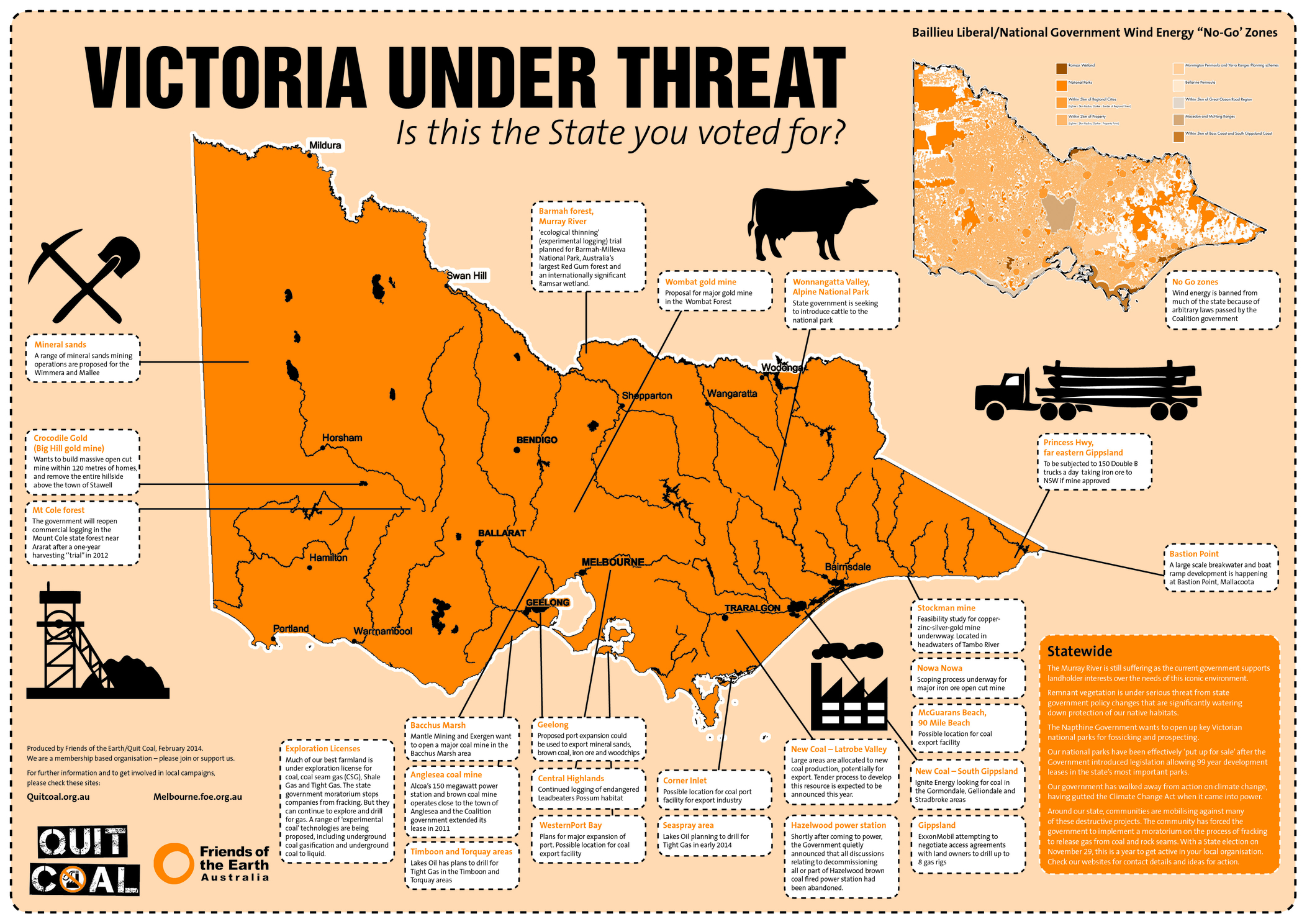
Victoria’s environment is in bad shape. Imagine how things could be improved if Mr Smith put as much effort into reducing Victoria’s contribution to climate change. Or protecting Mallacoota from the destructive development at Bastion Point. Or if he acted to protect the habitat of the endangered Leadbeaters Possum which is threatened by logging. Or … (insert any number of other issues here: for instance or check this list from Environment Victoria).

Sadly, he has instead overseen the demolition of the Victorian Climate Change Act. Development of renewable energy has basically stopped on his watch, which can only give benefit to the fossil fuel industry.

Meanwhile, he has pursued this project, widely described as being more about politics than land management.

Will he be remembered as the minister who turned his back on climate action and habitat protection, whose one legacy was to put cattle back into a national park?
VIC map for web

Alpine grazing trial: “If this was a Masters’ project, we’d boot it back to the student”

It’s getting on to four years that the Victorian government has been pursuing its attempt to re-introduce cattle into the Victorian alpine national park. You would think that for an issue they are so committed to they would actually be able to produce a comprehensive and scientifically robust plan.

This has not been the case. The following article from the ABC is just the latest criticism of the trial from a scientific perspective. Journalist is Jeremy Story Carter.

Alpine grazing trial given fail mark

alpine grazingA senior scientist says the proposal for the Victorian National Alpine Park cattle grazing trial would receive a fail mark if it was the work of a student.

Professor Mark Burgman, chair of the School of the Botany at the University of Melbourne, reviewed the proposal as part of a submission to the Victorian Government by the Australian Academy of Science.

“If this was a Masters’ project, we’d boot it back to the student,” said Professor Burgman.

“If it was submission to the Australian Research Council, it wouldn’t get to first base, it would get bounced.”

Federal Environment Minister Greg Hunt last week approved the trial, which will allow 60 cattle to be released into the Wonnangatta Valley this year, with more permitted over the coming two years, subject to review.

Professor Burgman believes the trial should not be permitted in its current form, as it fails to incorporate years of exhaustive research into the impacts of grazing on alpine regions.

“The science I see in front of me is lacking, and it is an admission that should be redressed before anyone starts to think about doing a trial of any kind,” he said.

“There is a wealth of information that could be used to help design the study, but they didn’t make any use of it. That 50-60 years of research ought to have been used to design the study.

“From a scientific perspective, it doesn’t make any sense to do that.”

He says the trial is too narrow in scope, and there is a potential for its findings to be used in other, broader contexts.

“It is very limited in space and its time – three years, one location,” said Professor Burgman.

“If one were to do this in isolation, it would be very easy to generate a set of results that are misleading, that you are then tempted to extrapolate to other places, other situations, that simply won’t function in the same way or react in the same way.”

Professor Burgman is concerned results from the trial could lead to mismanagement of future grazing regions.

“If you treat this trial in isolation, you will end up with some pretty significant surprises and start to manage the place in ways that will lead to outcomes you would have rather avoided.”

Greg Hunt approves Victorian Alpine National Park cattle grazing trial

In a sad but not unexpected move, the federal environment minister Greg Hunt has approved the Victorian government’s grazing trial in the Wonnangatta Valley within the Victorian national park.

Check here for some background.

This report comes from Tom Arup at The Age.

Greg Hunt approves Victorian Alpine National Park cattle grazing trial

alpine grazingCattle grazing will return to Victoria’s Alpine National Park after federal Environment Minister Greg Hunt approved a state government trial to have 60 to 300 cows in the park.

Mr Hunt’s approval stands in contrast to the Gillard Government which blocked a similar – albeit larger – cattle grazing trial, on the grounds it would damage the environment and the heritage values of the alpine region.

The Napthine government has pursued the trial saying it is necessary to test whether grazing reduces the risk of bushfires by removing fuel loads. Conservationists say there is little scientific rigour behind the program and past research shows cattle grazing has no impact on stopping bushfires, while damaging sensitive alpine ecology.

Under the trial, 60 cows will be released into the Wonnangatta Valley in the park for the first year of the program. In the second and third years of the trial, up to 300 cows could be introduced, though Mr Hunt would need to approve the expansion and extra years first.
Advertisement

The approval of the second and third years of the trial by Mr Hunt will be contingent on additional surveys of rare and endangered species in the area and the impacts on heritage.

Mr Hunt has also put limits on the numbers of dogs and horses allowed to be used during the trial. Temporary electric fencing will also be installed along some of the 262-hectare trial site boundary.

Cattle grazing was first removed from the Alpine National Park in 2005 by the Bracks government. Grazing is backed by the Mountain Cattlemen’s Association of Victoria, which says it is part of its long-standing cultural heritage and has campaigned for the practice to return to the national park.

Upon coming to power in Victoria in 2010, the Coalition moved to reinstall grazing in the park, proposing a five-year trial of 400 cattle across several sites to test its impact on bushfire risk.

The government then released cows in the national park in 2011 but was ordered to remove them by the Gillard Government because they had not sought approval under federal environment laws.

That sparked a bitter battle between Canberra and Spring Street over the trial. Former federal Environment Minister Tony Burke changed heritage protections for the alpine region to block cattle grazing, likening the proposal to Japanese “scientific” whaling.

The state government launched a legal challenge, which failed. When the Abbott government came to power last year it then resubmitted a slimmed down version of the trial.

Mr Hunt’s approval was made late on Wednesday night, and he says it followed a “rigorous assessment”.


Studies make a mockery of alpine grazing bid

The following opinion piece was published in the Weekly Times newspaper, March 5, 2014, and was written by Phil Ingamells, from the Victorian National Parks Association.

The project to put cattle back into the Alpine National Park has put Federal Environment Minister Greg Hunt in something of a pickle.

Should he leave decisions on land management to the states, as many in his Government will be pressing him to do, or should he act on his clear responsibility to protect the National Heritage-listed Alpine National Park?

alpine grazingThe Victorian Government hasn’t made it easy for him to surrender his authority. Its submissions have been careless, rushed and lacking in expertise.

Having made a pre-election promise to the mountain cattlemen that they’d get back into the park, the Victorian Government framed the exercise as a scientific trial to “prove” that alpine grazing would reduce fire.

But in December 2010 they hurried cattle into the park before they had even thought about out how to run a trial. Tony Burke, then federal Environment Minster, saw through the exercise and called a halt. This second attempt isn’t much better.

If you really want to know how grazing affects bushfires, you have to look at the behaviour of real fires, and two clever studies have done that.

One carefully measured the severity of fire across grazed and ungrazed areas of the Bogong High Plains after the 2003 fire. Another used satellite imaging right across the high country for both the 2003 and 2006 fires.

Both studies found that grazing didn’t significantly reduce fire extent or severity, and there was evidence grazing could alter vegetation over time to ­actually increase risk.

But the Victorian Government seems to be pretending these published didn’t happen.

Instead, the new “trial” will, inexplicably, put 300 cattle into the remote Wonnangatta Valley, letting them munch away on half the known population of a nationally threatened orchid.

Scientists and experienced land managers agree it will tell us nothing useful about fire behaviour. The Victorian Government is either showing incompetence, or taking the federal minster for granted, or both.

cattle grazing in Alpine Park ‘before winter’?

Rob Harris provides an update on the alpine grazing proposal in the Weekly Times.

You will be pleased to know you have a full 10 days to provide input on more than 20 documents. The paperwork is available here.

Environment Minister Ryan Smith with mountain cattle graziers, Wonnangatta Valley. source: MCAV

Cattle grazing in the Alpine National Park could return after a full assessment of a proposed grazing trial

CATTLE could graze again in the Alpine National Park before winter after the Commonwealth agreed to a full assessment of a proposed trial.

Environment Minister Greg Hunt last week opened a 10-day consultation period.

Mountain Cattlemen’s Association of Victorian president Charlie Lovick said the decision for a “full federal environmental assessment” made sense.

“No doubt it’s a polarising issue and it’s going to continue to be, but this takes some of the politics out of it and now the worthiness of a trial can be accessed,” Mr Lovick said.

“The 10-day period and assessment means we could still get up there by late March and a short trial this year before returning next year could certainly be advantageous.”

The proposed three-year grazing trial of 60 cattle would take place in the remote Wonnangatta Valley.

Projects deemed by the Commonwealth likely to have a “significant impact” on nationally protected areas requires federal approval.

The process requires the State Government to publish assessments that “clearly articulates any impacts” and will also take into account expert scientific advice and public submissions.

A decision is expected by the end of next month.

Victorian Environment Minister Ryan Smith was asked to submit more information about the trial – particularly a survey of native flora – to the Commonwealth last month.

Grazing in the national park was banned by the Bracks government in 2005.

Mr Smith said the Coalition Government believed there was a “clear need to investigate”.

Past scientific studies, including one by the CSIRO, have ruled grazing did not reduce the risk of fire in Alpine areas.

The Victorian National Parks Association criticised plans to return cattle as “a back door way of getting cheap grazing for their mates” while the Australian Society of Native Orchids has written to the federal minister opposing the return of cattle.

Alpine grazing proposal sent for assessment

alpine grazingTom Arup from The Age newspaper is reporting that the Victorian government’s cattle grazing proposal has been referred for assessment by the Environment Department. It is good to hear that the poorly developed proposal hasn’t been approved and will require further investigation.

However, with the tendency of this government to approval destructive projects, the threat is not yet averted. The state government could use the additional time to actually inform people about the plan by providing more details on how the proposal has been framed. Without additional data, it seems like a deal for some mates rather than a well thought out scientific proposal to see if grazing can reduce fire risk.

Victoria’s alpine cattle grazing trial will face an assessment

Victoria’s cattle grazing trial in the Alpine National Park will face an assessment under the federal environment laws, scuppering any chance of cattle grazing the park this summer.

Federal Environment Minister Greg Hunt has deemed the project a ”controlled action”, meaning that first it will need an assessment by his department, and then his approval. The trial, which the state government says is necessary to see if grazing reduces bushfire risk, would see 60 head of cattle released into the Wonnangatta Valley for three summers.

A larger trial was blocked by the federal government in 2012 under national environment law for the threat grazing posed to the natural and heritage values of the region.

For background on the proposal, check here.

volunteers needed for Australian Alps Walking Track Project

Conservation Volunteers Australia and Parks Victoria are calling for volunteers to help restore remote sections of the 650-kilometre Australian Alps Walking Track.

Helicopter Spur
Helicopter Spur

Last summer saw helpers spend 120 days in Alpine National Park Across repairing 23 kilometres of track, laying 930 metres of rubber matting and installing water bars to prevent erosion at locations including The Knobs, Mount Sunday and Mount McDonald.

Remote sections of the track are difficult to maintain over time and help is needed to clear fallen timber off the track, install rubber tiling, brush-cut overgrown vegetation and to install crucial signage and symbols to help guide bushwalkers on their adventures in the Australian Alps.

There will be three projects in March and April which are rated hard walking, and involve remote camping in the King Billy/ Mt Magdala/ Mount Clear/Knobs areas of the Alpine National Park.

Full details here. (Search for Victorian projects on the map, then click the project in the Alpine national park) or check this leaflet on the trips.

For more info, contact volunteer engagement officer Adam Smolak on asmolak@conservationvolunteers.com.au

The trips are:

Australian Alps Walking Track Project Mt Clear/Nobs Area
2nd to 8th March 2014
16th to 22nd March 2014
Please check here for more info.

Australian Alps Walking Track Project King Billy Mt Magdala Area
30th March to 5th April 2014

See more here.

Victorian government yet to supply all information on alpine grazing proposal

The following comes from Rob Harris at The Weekly Times. It is interesting to note that this trial is ostensibly about whether cattle grazing can reduce fuel load, yet the Mountain Cattleman rep keeps talking about invasive species in the valley.

Given that cattle introduced most of the invasive species in the first place it seems to be an ‘own goal’ type argument to run if you want to see cattle brought back.

As with the earlier attempt to get cattle into the Alpine Park, it would appear that the Victorian government has done a poor job of compiling the information that the federal minister needs to make an informed decision on the trial. Given that the Wonnangatta trial has been a concept endorsed by the environment minister for at least a year, it is hard to fathom why this second application has been managed so badly.

For background on the issue, check here.

There is an online poll attached to the story: Should a native orchid halt alpine grazing?


Fears for native orchid put high country cattle trial on hold

alpine grazingA THREATENED native orchid could prove the latest hurdle to returning cattle to the high country.

The Victorian Government’s push to begin a three-year trial in the Wonnangatta Valley this month has been put on hold after the Commonwealth sought more information about the habitat.

The Australasian Native Orchid Society of Victoria is the latest conservation group to raise concerns about a return to alpine grazing, after it was reported a survey of rare and threatened plants in the area was not included in Victoria’s application to the Commonwealth.

The Wonnangatta Valley is home to one of two known populations of the native orchid diuris ochroma, or pale golden moth.

Society member Richard Thomson said the group had written to federal Environment Minister Greg Hunt seeking protection for the native flower.

“Having chosen this venue virtually in the middle of the park – where there is plenty of state forest which would have been equally as suitable and wouldn’t run the same risks to the environment – just seems totally weird to me,” Mr Thomson said.

Mr Thomson said it was “ridiculous” the Victorian Government would put the native flower at risk.

If the trial is approved by the Commonwealth, 60 cattle will be released into the Valley for a three-year trial.

A spokesman said Mr Hunt was awaiting information from his Victorian counterpart that would allow the department to make a “fully-informed decision”.

A spokeswoman for Victorian Environment Minister Ryan Smith said an updated survey of the native habitat would be provided to the Commonwealth. She said the “experience and expertise gathered over 170 years” should be included in land management.

The mountain cattlemen, removed from the park in 2005 by the Bracks Labor Government, will this weekend hold their annual high country “get together” on the Omeo High Plains.

Mountain Cattlemen’s Association of Victoria president Charlie Lovick said the decision to stop grazing Wonnangatta had grown into a fire trap “infested with invasive species”.

Cattle grazing – decision put off til 2014?

alpine grazingThe political rumour mill is suggesting that federal environment minister Greg Hunt won’t give approval to the Victorian government’s grazing trial before Christmas. The Victorian government proposes putting cattle back into a  section of the Alpine National Park to see if it can reduce fuel loads in the Wonnangatta valley.

However, the proposal has been undermined by the fact that only limited information has been presented about how the trial would be managed. In a worrying development, it would seem that the state government has also  withheld significant information from the federal environment department, about possible impacts of the project.

Refusing to fast-track approval of this project would be prudent for a minister who is already under fire for signing off on a growing number of environmentally destructive projects.

Lets hope common sense prevails and the federal government requires considerably more information than a desk top study to decide if this is actually a scientifically robust proposal.

Science society urges governments to axe cattle grazing trial in Victorian Alps

?????????????????????????????????????????????????The federal environment minister Greg Hunt is due to make a decision shortly on the Victorian government’s plan to put cattle back into the Alpine National Park. With only a few working days til Christmas, will the minister do one of those shonky announcements just before the summer holidays that governments are famous for?

Or will he do the reasonable thing and allow additional time for his department to consider the information that the state government withheld from him?

Recently, Mr Hunt approved major coal and gas facilities adjacent to the Great Barrier Reef. Refusing a poorly developed ‘scientific whaling’ (sorry, ‘scientific’ grazing project) would help re-build some of his reputation as the minister for the environment.

The following is from The Age, journalist Tom Arup.

Victoria’s leading scientific society has called on the state and federal governments to abandon plans for a cattle grazing trial in the Alpine National Park, saying peer-reviewed evidence shows it would fail to cut fire risk.

In a letter to state Environment Minister Ryan Smith, the normally conservative Royal Society of Victoria has questioned the merits and scientific basis of a trial to test whether cattle grazing decreases the risk of bushfires by reducing fuel loads. About 60 cattle would be released into the Wonnangatta Valley for three years if the trial is approved by the Commonwealth.

In the letter, society president Dr Bill Birch says the trial ignores published evidence that cattle grazing has no measurable effect on fuel reduction, but has serious impacts on the diversity of species in the local area.

”The plan for the proposed trial is not clear and shows little evidence of sound scientific structure,” Dr Birch writes.

Dr Birch says among the trial’s failings are that the vegetation in the Wonnangatta Valley represents only a proportion of that found throughout the Alpine park, meaning the results could not automatically be applied to the entire region. He also said wildfires burn more intensely and move differently to controlled burns, which would be used in the trial, meaning any effect on fuel reduction by cattle would not be measurable.

”The Royal Society considers the proposed trial as another example of so-called scientific study, undertaken without adequate appreciation or even demonstrated knowledge of the literature and which is characterised by inadequate planning and inadequate scientific rigor,” Dr Birch writes. ”We suggest that the trial be abandoned.”

Executive officer of the Mountain Cattlemen’s Association, Graeme Stoney said: ”There is no doubt grazing reduces fuel in the grazing areas.”


Fire in the Crosscut Saw area

crosscut sawThe CFA is reporting ‘fire activity in the northern Wonnangatta Valley.  This fire has started as a result of last nights lightning activity.  The fire is close to the Australian Alps Walking Track and the Macalister Springs Hut.  The fire is currently active in the Cross Cut Saw Section of the track and visitors are advised to avoid the area’.

The fire is in the Terrible Hollow and apparently burning up towards Mt Buggery. As of midday Dec 20, it was listed as being 10 ha in size.

Scroll down for updates

UPDATE. 21 DEC

The fire is close to the Australian Alps Walking Track and the Macalister Springs Hut.  The fire is currently active in the Crosscut Saw Section of the track and visitors are advised to avoid the area.
The Australian Alpine Walking Track is closed from King Billy Saddle through to Barry Saddle (where Barry Saddle adjoins the Wonnangatta Road).
Closures to the Alpine Walking Track include: Howitt Spur Walking Track, Queen Spur Walking Track, King Spur Walking Track and Macalister Springs Walking Track. (This general area of closures to the Australian Alpine Walking Track is also known as the Howitt Crosscut Speculation Area).
Smoke will be visible in the area.  Aircraft will be operating in the vicinity of Mt Buller and Snowy Range today and tomorrow.

You can  find updates here.

UPDATE. DEC 22

The fire is still going and described as being in the ‘Cross Cut Saw’ area (now 42 ha in size), with the Alpine track and surrounding areas closed. Fire breaks are being cut on the south east and eastern flanks, and fire retardants on the western sides.

UPDATE. DEC 23

The fire is now described by the CFA as being ‘contained’ at 45ha in size. The area outlined above remain closed.

UPDATE. DEC 24

The CFA has announced that the fire is now contained, although it appears that previously announced track closures are still in place. Check with Parks Vic before going near the area.

Decision on Alpine grazing before Christmas

w-valleyThe following information comes from the Victorian National Parks Association. A number of significant environmental decisions will be made by the federal environment minister before Christmas, with the danger that they will slip through relatively unnoticed and unreported.

If approved, it can be expected that cattle will be introduced over summer. Last time the Victorian Coalition government introduced cattle to the Alpine Park, they did so without setting in place adequate scientific frameworks to the trial. They had been clearly told that grazing would not be useful in reducing fire risk, yet proceeded to implement their policy.

The fact that the government has withheld information from the federal minister in their current attempt to reintroduce cattle is hardly the basis for assuming this trial will be any more scientifically robust.

Over the next few days Australia’s environment minister Greg Hunt must decide whether or not he will let the Victorian Government put cattle back into the Alpine National Park.

After failing to return cattle to the Alps in both 2010 and 2011 the Napthine Government is again asking the federal government to approve a new cattle grazing trial in the Alpine National Park.

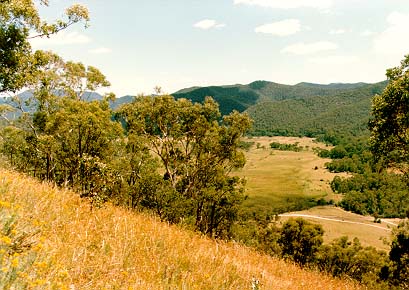
They plan to bring 60 cattle into the remote Wonnangatta Valley, a beautiful river flat that sits below the Howitt High Plains and has been ungrazed by cattle since 1988.

We need your help. Please take action today or as soon as possible:

We cannot allow this grazing trial to go ahead.

The Victorian Government wants to put cattle into the park simply because of a promise it made to some graziers that once held privileged grazing licences.

Their new attempt comes on the back of repeated attacks by the Napthine Government on the integrity of national parks including changing legislation to allow 99 year leases for private development, expanding areas for fossicking and prospecting and making significant cuts to park budgets.

We have also uncovered many serious flaws in the proposed trial:

  • There is no scientific design for the trial, and apparently no scientists are involved.
  • There has been no consideration of a location outside of the national park, even though there are many areas where such a trial could be conducted.
  • The State Government has withheld an important survey listing rare and threatened plants in the valley from the Federal Government.
  • The application ignores the considerable evidence that cattle grazing does not significantly reduce alpine fires. There are far more important bushfire research projects on which to spend scarce research funds.
  • More than 60 years of research shows cattle damage alpine wetlands and the headwaters of many rivers, threaten nationally-listed rare plants and animals, and bring weeds into the National Heritage-listed Alpine National Park.

National parks are the cornerstone of our efforts to protect nature – not cow paddocks or private resorts.

Please email Greg Hunt today.

Blog at WordPress.com.

Up ↑