Search

Mountain Journal

Environment, news, culture from the Australian Alps

Tag

climate change

New grassroots movement to change the way ski areas are run

The US-based Mountain Riders Alliance has now gone global:

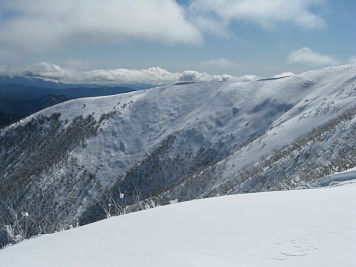
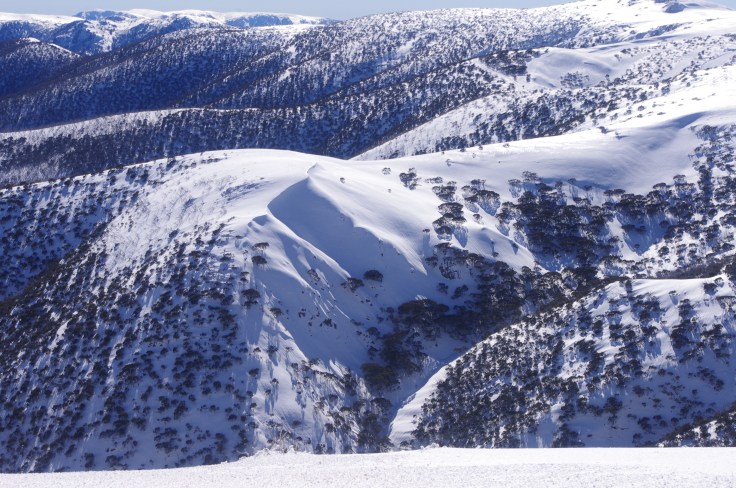
Bon Accord spur, VIC

“A new paradigm is emerging in ski area management: one that’s globally-based, rider-centric, environmentally sustainable, sensitive to local needs, and skier-and-snowboarder-owned

“Rising lift ticket costs, negative impacts on ski communities and the environment, and the desire to combat climate change have all led concerned skiers and snowboarders to form a global collaborative group, Mountain Rider’s Alliance (MRA).

“MRA is a movement of snow enthusiasts who are dedicated to changing the ways ski areas are run. MRA’s mission is to create rider-owned-and-operated ski areas that are rider-centric, environmentally sustainable and sensitive to local cultural, social and economic concerns”.

For the full announcement, check here.

When does climate chaos become the new ‘normal’ weather?

late August, snow buckets down day & night across the Alps

Its hard not to feel envious when you look at those photos from the late 19th century that were taken as the miners and loggers made their way up the deep valleys below the alpine peaks and built villages and new towns. Places like Harrietville, at the head of the Ovens River below Mt Feathertop, seem to have had regular dumps of snow through the winter months. Now, if we just get some snow flurries down that far it rates as an event.

Of course, Australian weather has always been famous for being erratic. And if you look at the snow pack records that chart winter snow depths over the past 3 decades you can see wild variety between the seasons.

Climate skeptics love to point to cold weather and hard winters as ‘proof’ that climate change is not real, but this just reveals more about their ignorance of how climate change is expected to work than proving any other point. Some climate campaigners prefer to use the word ‘climate chaos’ because this gives a better indication of what the science tells us is coming: ever more erractic and extreme weather events.  In our part of the world, this will include drought, flood, fire, and extreme weather events like torrential rain.

This info is easy to find. It is not the stuff of hysterical greenies hiding in caves. It is from the mainstream of the climate science community. In a democracy we can think what we like. But having an opinion which runs counter to science doesn’t mean climate change is not happening. One of the things that strikes me – in a week where much of western and north eastern Victoria has been flooded, people evacuated, the road to Falls Creek was cut, and a landslip closed operations briefly at Hotham resort, is how quickly we can adapt to changed conditions and accept them as the ‘new’ normal behaviour of the weather. Just a week before that we had those wild snowfalls that blocked the Hotham Road for a day and a half and dumped almost a metre of powder across the alps. Then throw your mind back to July, and the gray rainy skies that brought miserable conditions and mediocre snow.

My point here is not to stir up fear, or to slate all this strange winter to climate change. Its just to remind ourselves that what we have experienced has not been an ‘ordinary’ winter. Sure, we need to grab the good winters when they do come along, and ski or board as hard as we can. We probably need to grumble and find other things to do in the winters that don’t happen. But we should never lose sight of the fact that all of whats happening is consistent with what climate science tells us is coming, unless we decide to do something serious as a global community to greatly reduce our greenhouse emissions.

And for me that’s reason enough to do what we can where can, to reduce our impact, and to get action at the community, corporate and government level.

Protect our Winters video

Protect Our Winters was created as a way to bring the winter sports community together to fight climate change and its effects on our mountains.

It is the environmental center point of the winter sports community, united towards a common goal of reducing climate change’s effects on our sport and local mountain communities.

POW has just released their 2010 trailer video.

You can watch it here.
For details on POW in Australia, check here.

getting ready for climate change in the North East

As the Alpine Shire of Victoria’s north east continues with its bizarre ‘cart before horse’ approach to getting a major development going within the Buffalo National Park, it is also doing some useful and considered work on climate change.

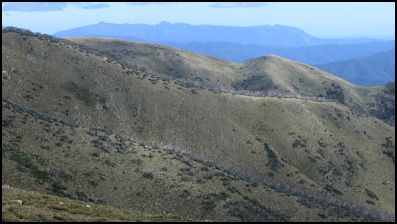
Buffalo Plateau from near Mt Hotham

Just this week, Council accepted the final report of a study into the viability of a ‘skyways’ system on Mt Buffalo. Last year Council offered its active support for the proposal, with a community study which was conducted by the Buffalo Skyways Taskforce arm of the Great Alpine Valley Tourism Board.

Unsurprisngly, the study found 64% ‘support’ for the project.

See here for some of the issues associated with developing a major gondola/ skyway project within one of our most significant national parks.

Climate change and the North East

Meanwhile, Council has been working with the adjacent Towong Shire to consider what the expected rise in average temperatures, days of extreme fire-weather risk, drought conditions and a decrease in rainfall and snow will mean for the region, and how to best plan for these conditions.

According to the Alpine Council website:

“The councils assessed how their services and assets would be affected by predicted climate change, including increased frequency and intensity of extreme weather and reduced water availability”.

The CSIRO predicts that temperatures in north-eastern Victoria could be, on average, up to 1.6 degrees warmer by 2030 and up to five degrees warmer by 2070.

Snow fall is expected to be reduced by between 10 and 40 per cent by 2030 and between 22 and 85 per cent by 2050.

The number of very-high and extreme fire-weather risk days is also expected to climb by between four and 25 percent by 2020 and 15 to 70 per cent by 2050.

Alpine Shire Council’s Manager Planning and Environment Services, Heather Green said the findings did not recommend that councils fundamentally change the way they operate. This means that, sadly, there are no real mitigation measures included in Councils response – that is proposals to reduce the emissions of Council operations. Council has taken a  simple  ‘adaptation’ approach, which is generally seen as being insufficient as a strategy for dealing with global warming.

What is suggested is for Council to consider the likely future impacts of climate change on new developments within the Shire’s area. “For example, factoring predicted increases in flooding and storm events when upgrading urban storm-water systems will minimise the need to replace damaged infrastructure and reduce the risk to the community”.

The climate change risk assessments undertaken by both councils will result in the development of specific service area action plans to enable current services, assets and policies to adapt to the predicted climate variability.

The project has been delivered in partnership with the North East Greenhouse Alliance and funded with the assistance of the Australian Government Department of Climate Change and Energy Efficiency.

For further information on the Councils response and details on expected climate change impacts, see here.

Take action to protect our winters!

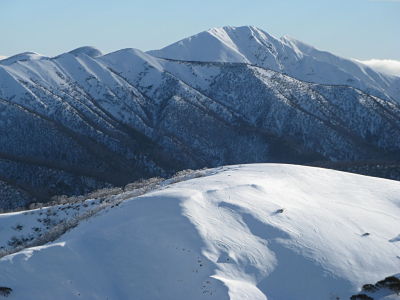
A classic image from the Victorian Alps: Mt Feathertop from Hotham. But without serious action on climate change now, our alpine areas are at grave risk.

First Protect our Winters (POW) Australia action alert

The Victorian government is in the final stages of deciding what type of Climate Bill it will deliver as part of it’s election commitments.

Similar Bills in other places – for instance, the UK and Scotland – have set ambitious greenhouse emissions reductions targets (Scotland has committed to 42% reductions by 2020).

We must urge the Victorian government to deliver a strong, world leading Bill. The final decision about the Bill is being taken now. And a strong Bill will greatly reduce Victoria’s contribution to climate change through driving a shift away from our reliance on polluting brown coal power.

POW Australia has issued its first action alert, asking people to email the Premier, John Brumby. It is available here.

We hope POW supporters, skiers and boarders from across Australia will support this on line campaign. Lets get the Australian winter sports community mobilised to protect our winters.

Everest women’s seven summits eco-action tour

In July 2010 a team of nine Nepali women have begin the first international leg of a tour that will see them climb seven of the highest peaks on each of the seven continents. On successfully climbing all seven summits they will be setting a world record for being the largest team to do so.

The team will be using their expedition to highlight the urgent issue of climate change, and they are currently in Australia.

Check here for extra information and itinerary.

“Climate change is a scam”

Climate change is already negatively impacting the snow and ski industry.

Our notoriously fickle winters are becoming more erratic. For instance, climate change projections show that, as Australia’s temperatures continue to increase, the maximum snow depths will continue to decrease and the snow seasons will become shorter (source).

In spite of compelling evidence, there is still stubborn denial in some parts of the snow community.

Here is one example.

If your income came from running a large ski business, do you think it would be worth tracking what trends are happening in your industry? And if anyone and everyone was saying that climate change was going to impact on the future and possibly even the viability of your business, do you think that maybe you might look into what’s coming?

Obviously not everyone works that way. Here’s some choice quotes from Mick Klima, co-owner of the Rhythm Snowsports megastore in Cooma, courtesy of Powerhound magazine.

(Does climate change worry you?)

“I’m with [British politician] Lord Monckton on that one, mate. That guy’s got it together. It’s a scam. It’s the new religion. It’s become too politicised and too emotional”. Which does beg the question, does ignoring it because its ’emotional’ make it go away?

“I’m not into the masses being manipulated by fear. There’ll always be something that politicians use to manipulate the way the public’s money is spent”.

(Will it impact on your business?)

“It won’t happen in my lifetime. I hope it doesn’t happen in my lifetime.”

Yeah, well, good luck with that one Mick.

news from the alps – climate change

To borrow a phrase from TV advertising, the current edition of the Australian Alps National Parks ‘news from the alps’  newsletter is a “must see” for anyone with an interest in our alpine environments.

Main Range, Snowies, NSW

The theme is climate change, and the newsletter pulls together a summary of the threats – and various complications that come with these threats – facing Australia’s alpine parks as a result of global warming.

A rather sobering take home message includes the following: “no longer will we be effective in building the Alps’ resilience simply by preserving all species in their current locations, but rather we need to make space and opportunities for them to self-adapt, re-organise, move. And we need to continue our efforts to remove the pest plant and animal species from the picture as this is a stress and a threat that we can control and minimise (unlike increased fire or reduced rainfall). We need to press on with connectivity conservation, again in the interests of space and adaptive movement, and we should also be poring over maps to help us spot potential refugia to focus our efforts on – sweet spots where Mother Nature, even under the influence of climate change, is more likely to be kind to biodiversity under threat”.

Surely, as we struggle with in-action on climate change both at the national and state levels, the work being done by a range of agencies and individuals across the alps becomes ever more important. As the editor notes, the many people profiled in this edition are doing visionary and necessary work and “this will make a profoundly positive difference to what would otherwise be a confronting future”.

You can download the newsletter here.

An interview with Bob Rich, Moora Moora, VIC

“The forces of destruction grow exponentially, like compound interest. It is my hope that we can make the trends to sustainability also grow exponentially, at a higher rate. If we can do this, there may be a future.

Moora Moora from the air

Can we prevent disaster? No, because it has already started. The 173 Victorians killed by the Black Saturday fires were killed by climate change.

We can mitigate climate change, reduce the generation of deadly pollutants, nourish and maintain soil and water and other essentials of life. We can work to adapt life to cope with the changes that are inevitably on the way, that are here already. As I said, if the growth toward sanity can overtake the current growth toward insanity, then we have a hope of salvaging something, of creating the seed of a decent future.

But this needs a complete culture change. It means rejecting greed as the primary motive force.

We can do it in principle. In practice?”

The full interview is here.

Why the snow sports community should speak out on climate change legislation

Jeremy Jones

The following is an opinion piece from snowboarding legend Jeremy Jones. This has been widely published in newspapers across the USA.

Here in Victoria, we have a promise from the state government to deliver a Climate Change Bill.

If prominent Australian skiers and boarders expressed this type of sentiment – and followed up with activism – it would bring a new dimension, perspective and sense of urgency to the climate change debate here.

Check here to read Jeremy’s letter.

Blog at WordPress.com.

Up ↑