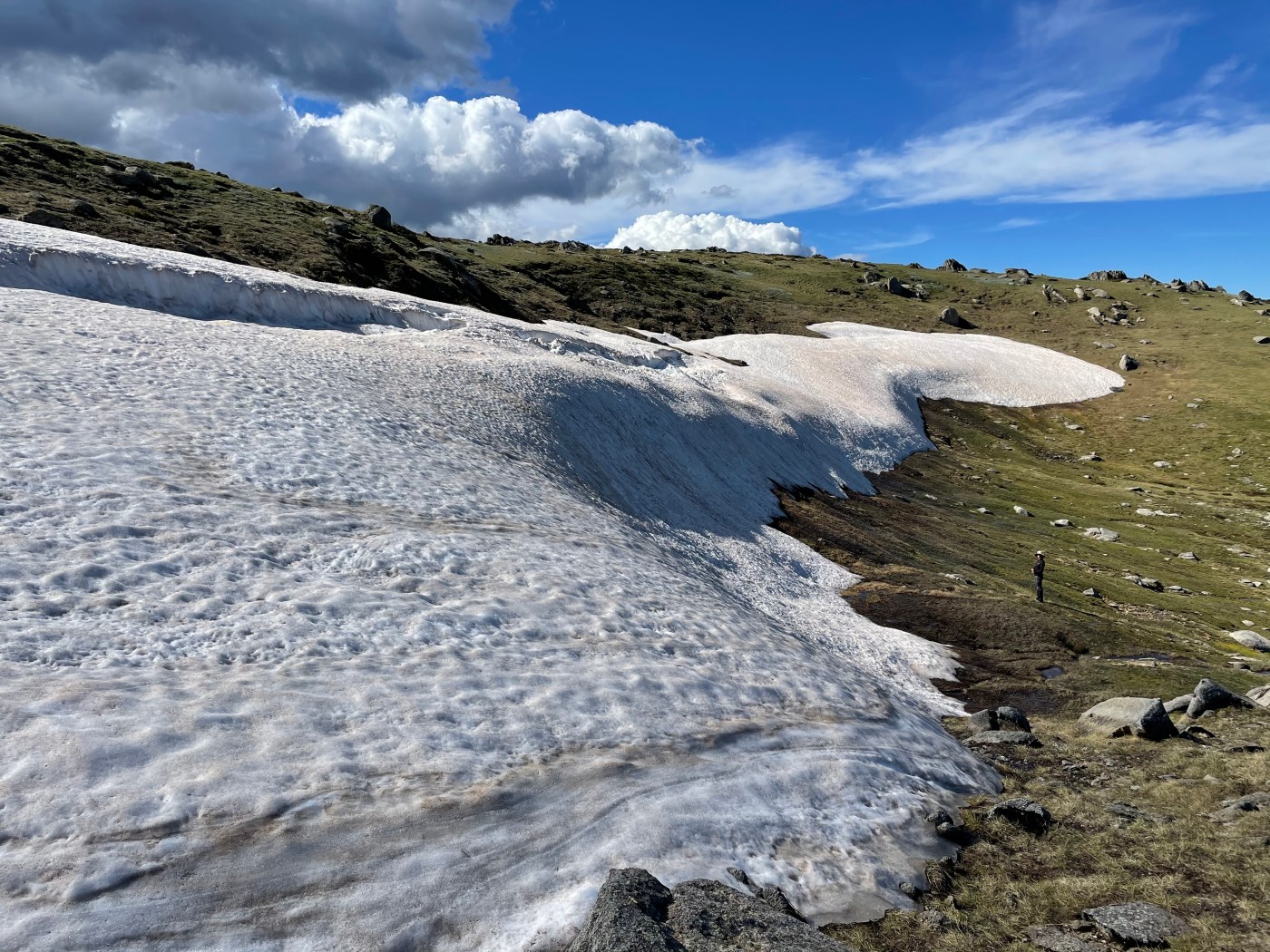
Snowpatch plant community distribution and composition are strongly tied to the duration of long-lasting snow cover in alpine areas; they are vulnerable to global climatic changes that result in warmer temperatures and longer growing seasons.
Given the very small areas of alpine terrain in Australia, these communities are already very limited in their distribution. New research shows that Snowpatch plant community identity is being lost. In terms of their structure and composition, they are transitioning to woody communities rather than herbfields full of small plants. The loss of late-lying snow is likely to be the main reason for this change, as shorter periods of time where the communities are covered by snow allows woody plants to move into areas where late snow typically excluded them previously.
In Australia, snowpatch plant communities have developed on south-east facing slopes at high elevations in subalpine and alpine zones. They are amongst the rarest and most restricted of Australian alpine plant communities, with subalpine snowpatches (the lowest elevation, early-melting examples of the community) likely to be the most vulnerable to the changes in snowcover timing and extent predicted (and already observed) by global change models.
Without serious global action to reduce the pace and scale of climate change, the future doesn’t look great for snow patch communities.
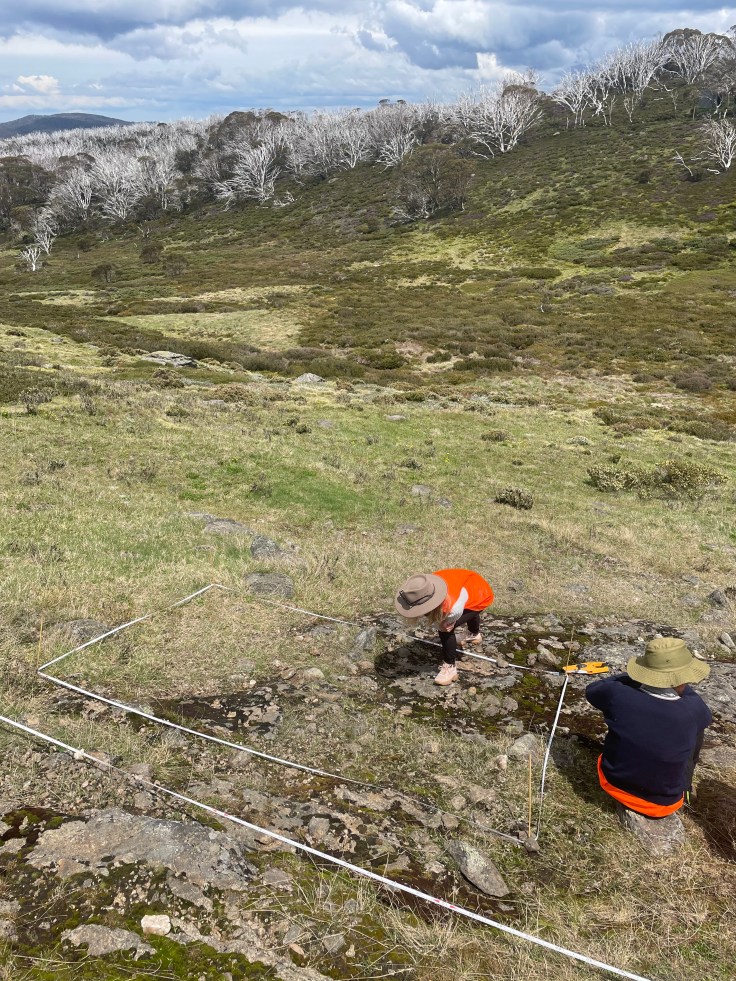 ABOVE: sampling the snowpatches.
‘Australian alpine regions have experienced ~ 1 °C warming (of both maximum and minimum temperatures) since the 1970s and, as a result, there has been substantial decline in the amount of snow and its persistence over this time. Continued environmental changes will likely cause snowpatches to reduce in area and re-organise due to the establishment of non-snowpatch species from adjacent plant communities; in the longer-term, warming will allow invasion of plants from lower elevation’.
The research, Early-melting snowpatch plant communities are transitioning into novel states was produced by John Morgan and Zac Walker and published in Scientific Reports.
The work sought to document shrub size-class distributions over time to detect evidence for their encroachment into snowpatches, which is a key prediction with climatic change. It found that early-melting snowpatch vegetation has declined in extent, and changed in species composition, and that shrub and tussock grass cover has increased in the snow patch communities. At this point, the species associated with snowpatch communities are still present. However, many of them are ‘transitioning to a novel state with changed composition and taller vegetation structure’. There is little evidence for species loss having occurred to date, but ‘given enough time, the long-term loss of species is likely if taller shrubs outcompete short-statured snowpatch species. Our results provide evidence that this alpine ecosystem is forming a novel community with an uncertain future’.
The changes that have already happened are significant:
‘The area occupied by early-melting snowpatch plant communities has decreased over the last 40 years; 86% of snowpatches have declined in area, by an average of 41.6%’.
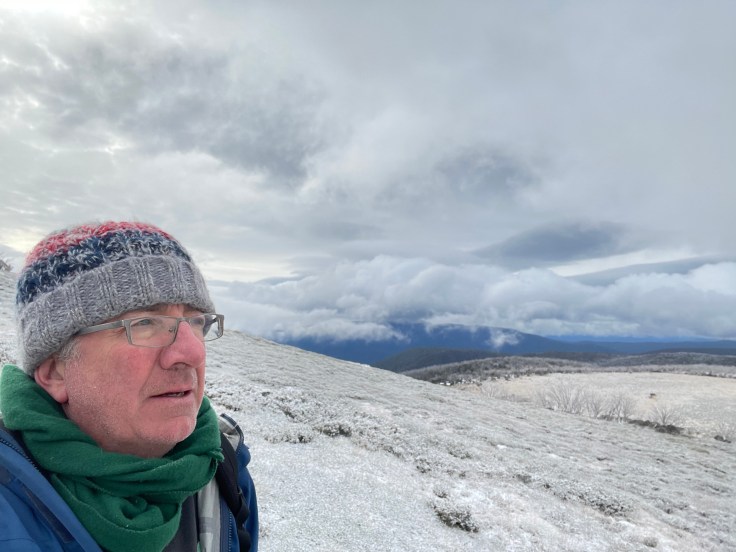
Report author John Morgan.




 Mountain Journal
Leave a comment