The Victorian State of the Environment (SoE) 2023 Report has been released. These are five-yearly report cards produced by the state government which measure the health of our natural environment – our land, water, air and ecosystems. The report covers three key areas:
- the health of Victoria’s natural environment
- the adequacy of our science
- areas for future focus.
The Greens labelled it ‘a damning new report (which) has found Victoria’s ecosystems and threatened species are in a far more dire situation now than they were five years ago’.
They say ‘It found that biodiversity and climate change indicators were particularly bad, with more than 75% of biodiversity indicators (32 of the 42) deteriorating or unclear, and 73% of climate change health measures (11 out of 15) also deteriorating or unclear. Only 1 out of 57 were classed as good (which related to the number of Victorians taking action to protect nature)’.
While I don’t have time to do a deep analysis of the report (which is available here), a quick look at the categories related to mountain areas are all fairly depressing. In short, there are no positive trends that are obvious.
Below are some of the summary tables of items relevant to mountain environments.
Status of indicator in the table:
Yellow = ‘fair’ status
Red = ‘poor’ status
Green = ‘Good’ status (or high confidence in the data)
Grey = insufficient data
Bushfires
As we know, the high country has been hit hard in recent decades.
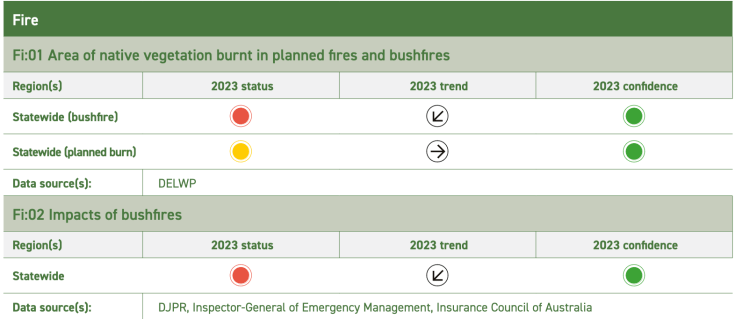
The report says:
In 2019–20, the area burnt by bushfires was the greatest since 1980; and the long-term trend is a consistent increase in Victoria’s land sitting below minimum TFI. These areas are vulnerable to major – and potentially irreversible – changes in vegetation communities if they burn again in the next few decades. These trends indicate an increasing likelihood that some areas will experience localised extinctions of plant species.
The number of days per year when temperatures in Victoria are unusually hot has increased significantly and is linked with increased risk of heatwaves and bushfires. Victoria has experienced a drier climate with more intense rainfall events in recent years.
There are several examples of catastrophic natural disaster events associated with climate change since publication of the SoE 2018 Report.
Regeneration of forests after logging
We know there is widespread failure of Alpine Ash forests regenerating after logging, or being burnt in the early years of regeneration. This is borne out in the report.

Climate sensitive communities.
Possible threats and localised collapse of forest ecosystems including snow gum woodland and Alpine Ash forests are well known. Yet the report identified insufficient data about the state of these ecosystems.
However, Indicators B:02 to B:11 (which assess assess the health of some of Victoria’s key ecosystems) demonstrated the scale of the problem. ‘In general, the extent of Victoria’s ecosystems has been largely stable in recent years except for grasslands and wetlands, which are both deteriorating. However, the trend in condition of wetlands, grasslands, and potentially alpine and subalpine areas, is in decline, while ecosystems in north-eastern Victoria and East Gippsland have been severely impacted by the 2019–20 bushfires’.

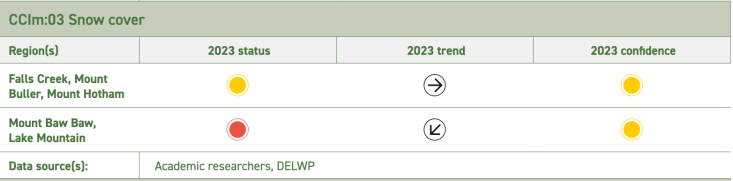
Snow pack
As expected, the lower elevation areas and resorts are experiencing noticeable impacts on snow cover.
‘The temperature increases reported in the SoE 2018 Report have continued. Data from Australia’s Bureau of Meteorology (BOM) show that each year since 1997 has been warmer in Victoria than the average for the period from 1961 to 1990. Furthermore, seven years during the past decade (2012-2021) have been in the top 10 warmest years on record for Victoria.’
Overall health of the Alpine bioregion
The report found ‘low’ impacts across the region, however there was a trend of declining health underway.





 Mountain Journal
Leave a comment