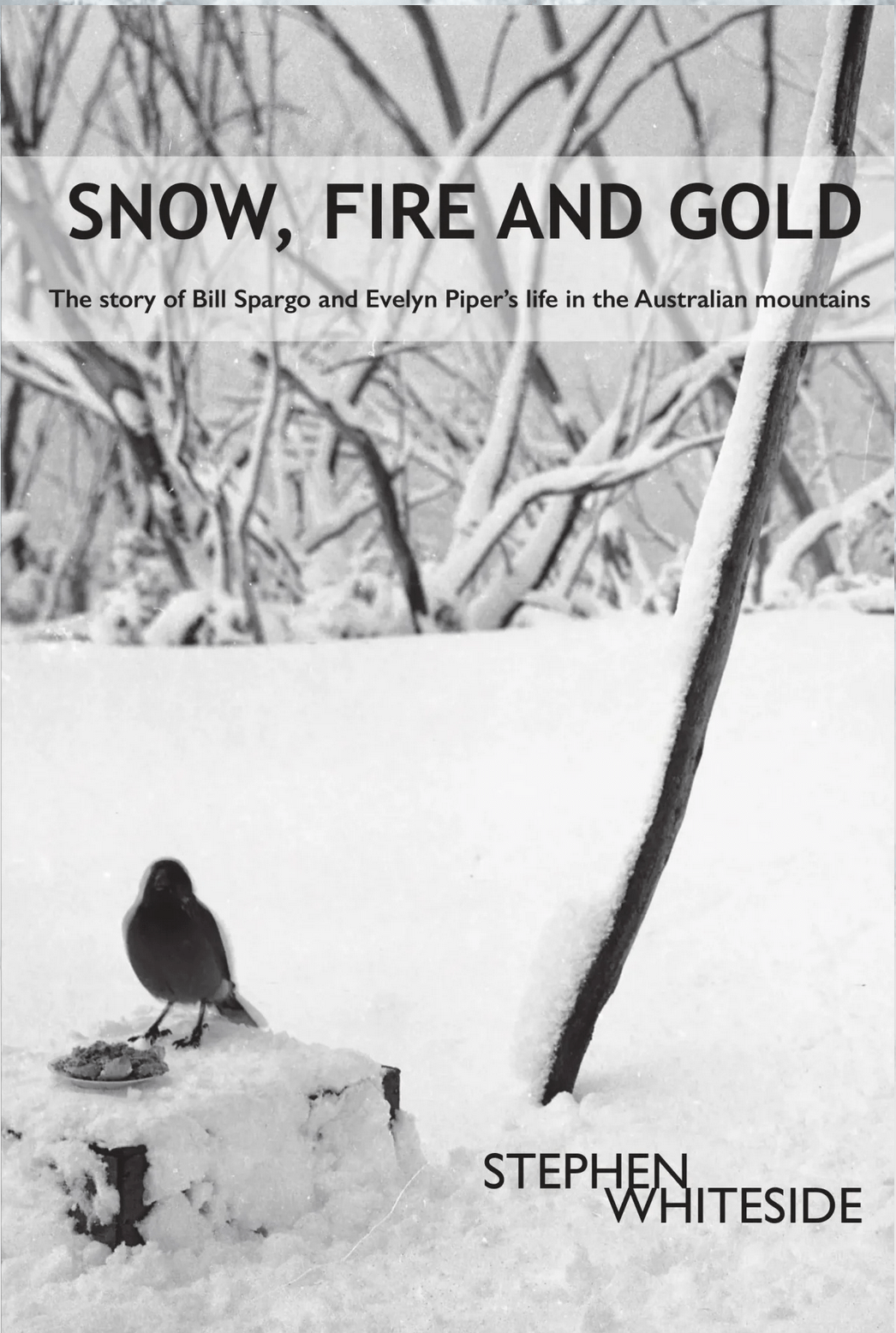
We often see mountain environments as being wilderness: remote and wild country with few signs of human impact or habitation. But, of course, the mountains are a peopled landscape, rich in memory, history and personal stories. Many First Nations stories are now gone, lost with the people who were murdered or displaced. The cattle grazing families who followed occupation tend to dominate popular culture when it comes to the mountains, and most of the others barely get a mention. But there were generations of explorers, miners, loggers, skiers and hikers, hydro workers and road builders, people who built the ski resorts or managed to farm in the higher areas who have also left rich stories. Snow, Fire and Gold written by Stephen Whiteside is a wonderful book about Bill Spargo and Evelyn Piper and their long connection to each other and the mountains around Hotham.
One obvious sign of the human story of the Alps are the huts that dot the landscape. These include old cattle family huts, cabins attached to fire towers, huts connected with government agencies, the hydro schemes, recreation groups, or public infrastructure. They all tell a story of what happened before, or about our enduring connection to place. A rare few hold cultural treasures that speak to other times – the informal museum in the hut at Twilight Tarn in Mt Field national park in lutruwita/ Tasmania is one that comes to mind. Most of these huts were seasonal residences or provided short term shelter for workers or travellers. A rare few were long term homes for people. Spargos is one of these.




 Mountain Journal
Leave a comment