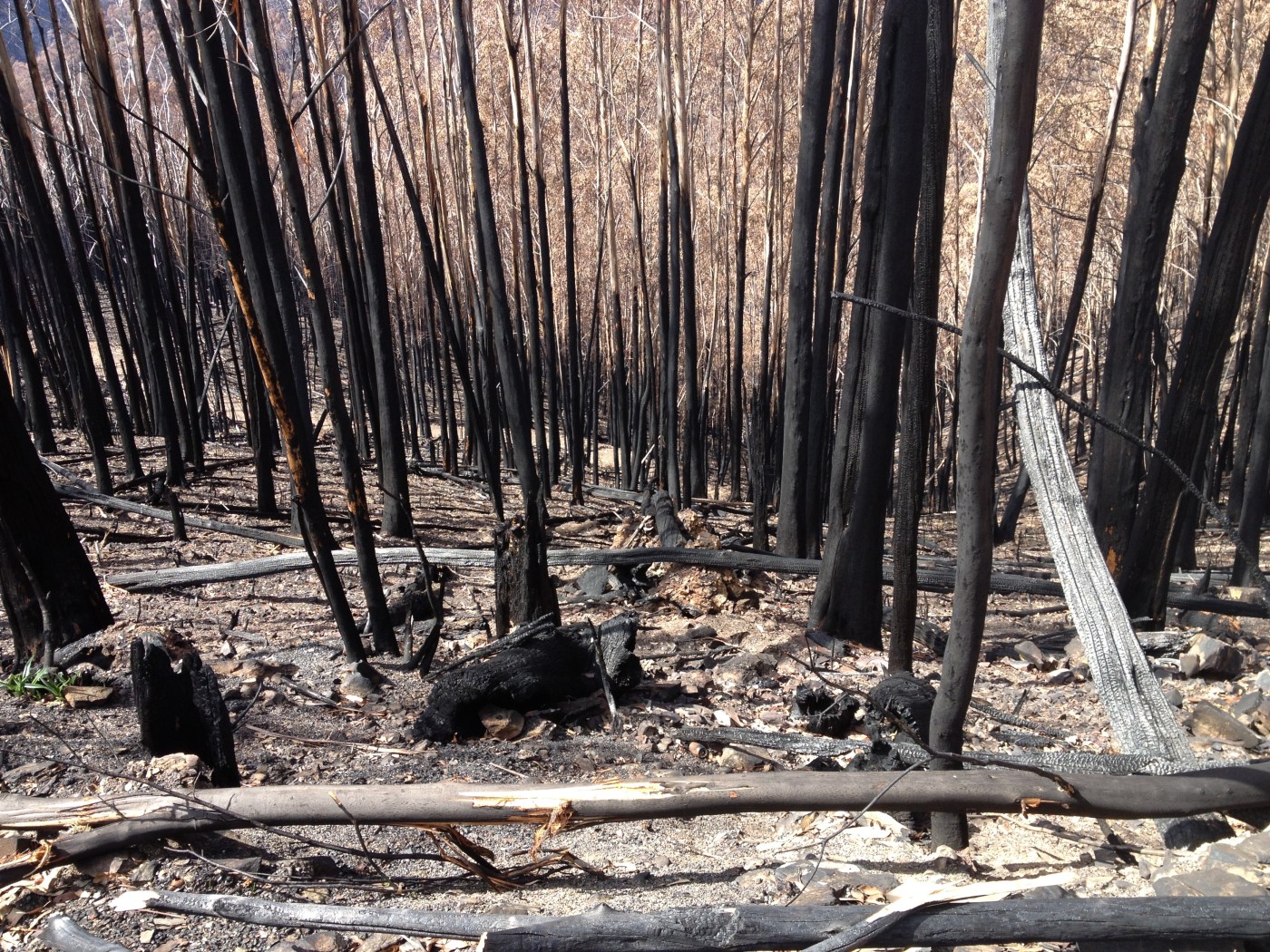
The Victorian Department of Energy, Environment and Climate Action (DEECA) is updating the Code of Practice for Bushfire Management on Public Land (the Bushfire Code), and is calling for feedback on the draft Code.
The Bushfire Code sets out objectives for the way DEECA manages bushfire on public land, including state forests and national parks.
The current Bushfire Code is more than 10 years old. It updating it to make sure it meets modern needs and expectations.
There is an online submission process which is open until November 3.
Contribute to the process
While there will not be any significant changes made to the draft code as a result of the submission process, it would be really worth people filling out the survey.
The survey is generally a ‘tick the box’ exercise and will only take a few minutes. In the last question:
What would you be most interested to see regular reports on?
It would be great if you would tick the box: ‘Ecosystem resilience’ to send the message that the community is deeply concerned about the impacts of bushfires and fuel reduction burning on natural ecosystems.
There is a brief section at the end where you can write some comments (limited to 1,000 characters).
Two key points to make would be:
1/ that a key problem with the current document is that there is no stated requirement for decision makers to do everything possible to ensure there is minimal damage to fire sensitive and fire damaged ecosystems in firefighting operations.
This lack of direction to protect ecosystem values is obvious in many sections, where there is no mention of the need to consider environmental impacts in planning or decision making around fire fighting planning or operations. If it isn’t explicitly outlined in the Code, why would crews on the ground adopt the principle of minimum harm?
2/ And under the fuel management/ fuel reduction burning section (called ‘Deliver fuel management activities’) there is no reference to monitoring the ecological impacts of these activities on areas that are burnt, nor any requirement to assess whether the fuel management practises actually reduce fire risk. This is simply not acceptable.
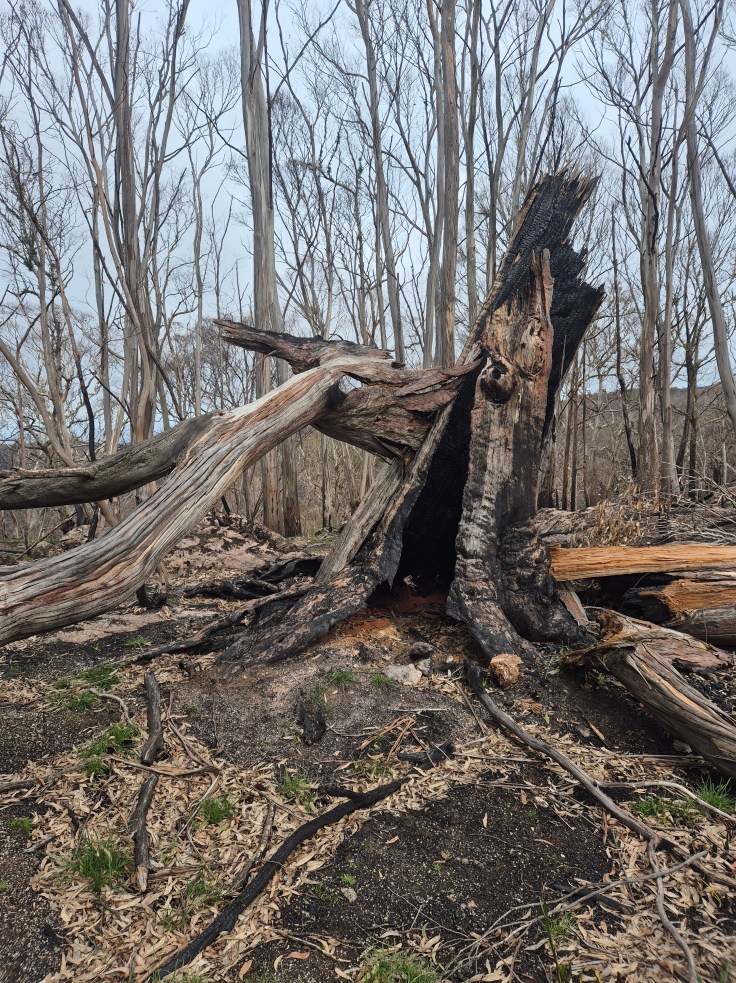
Check these notes below for a nerdy dive into the details of the proposed Code.
Lack of direction to protect ecosystems
A key problem with the current document is that there is no stated requirement for decision makers to do everything possible to ensure there is minimal damage to fire sensitive and fire damaged ecosystems.
This lack of direction to protect ecosystem values is obvious in many sections, where there is no mention of the need to consider environmental impacts in planning or decision making around fire fighting planning or operations.
For instance, it is not mentioned in the sections covering:
- The Code itself (I understand that the Code is not regulatory in nature and does not prescribe the operational detail however the issue is unlikely to appear in manuals, guidelines, strategies and plans unless specified in the guiding framework of the Code)
- Application of the Code
- It is not required to be considered in the Review of the Code
Ecosystems only matter after the fire?
While ‘ecosystems’ are referenced in the Planning section under ‘Recovery’, there is no reference or requirement to consider ecosystems in ‘Response’. This is a significant oversight, as it is during a fire event that damage occurs to ecosystems, either directly through fire or indirectly through fire mitigation activities such as creating containment lines.
Under the ‘Objectives’ and ‘Principles’ section, it does note that ‘Victoria has some fire sensitive vegetation types’ and that ‘appropriate fire regimes (should) benefit species by promoting the regeneration of plants and create a diversity of habitats for animals’. It also notes that ‘climate change is increasing the severity and frequency of bushfires’, which can be expected to increase the scale and intensity of impacts on fire sensitive vegetation types unless planners and incident controllers are directed to do everything possible with the available resources to reduce the impact of fire and mitigation operations.
Dot points 17 and 18 note the need to manage risk to the environment, among the other categories. Again, these need to be operationalised to have any meaning.
I understand that the protection and preservation of human life and relief of suffering will continue to be afforded highest priority, and fully support this prioritisation. However, in resource allocation decision making the environment is often abandoned in favour of protection of human assets due to limitations of available firefighting resources. This indicates that we simply don’t have enough fire fighting assets in difficult fire seasons to adequately protect the other objectives beyond human life and suffering. This has implications both in terms of continual damage of fire sensitive vegetation types in Victoria and for future firefighting in an environment where climate change is making fires more frequent and intense.
While the overall state wide availability of resources is something beyond the control of specific incident controllers during specific fires (they can only allocate what is available), it is essential that the updated Code of Practice for Bushfire Management on Public Land direct incident controllers and other decision makers to minimise adverse impact of bushfire and bushfire management activities on ecosystems, ecosystem services and environmental values. It must explicitly require efforts to ensure the conservation of native flora and fauna species.
Principles for bushfire management on public land
With reference to Dot point 29 – ‘Where negative impacts cannot be mitigated, the Department will make transparent and defensible decisions between objectives based on expected outcomes’, this is not currently practised in any meaningful way when it comes to the environment. It is very difficult to access any information about allocation decision making for specific fires, even though complex records are always kept during these events. To give one example, despite multiple phone calls and emails it was not possible to find any information about allocation of resources to protect fire sensitive snow gum woodlands at Lookout Hill within the footprint of the Bayindeen fire (February 2024). It is clear that a decision was taken to not seek to stop the fire from passing through these forests. However it appears that one load of fire retardant was applied from the air (presumably to protect nearby communications assets). Why are these real time decisions not made public?
Dot point 34. ‘Community involvement and action is an integral component of bushfire management and the implementation of a multi-tenure, multi-agency bushfire management approach.’ Community involvement in bushfire management and implementation of management approaches is really not possible under existing management structures.
Dot point 44. ‘The Department has the capability, tools, systems and processes to make strategic, risk-based decisions and undertake bushfire management planning effectively, balance objectives for bushfire management on public land, and deliver legislative responsibilities.’ If the Department is to take its obligations to ecological protection seriously it must mandate that data sets of at risk plant and animal species and fire sensitive vegetation types are available in all incident control centres, that they are used proactively in decision making about air and ground asset allocation, and that an ‘advocate’ be present in the ICC to ensure ‘the environment’ is not forgotten in decision making.
Dot point 72. ‘Values assessments that consider the overall or cumulative impacts from proposed and previous operational plans ‘. This must expressly consider impacts of operations on fire sensitive vegetation communities.
Zoning
The process of zoning makes sense for a range of practical reasons. As noted in Dot Point 25, ‘Climate change is further influencing bushfire risk’. This means that fire sensitive vegetation types are more likely to be impacted by fire in future, therefore requiring regular review of Fire Sensitive Zones (FSZ).
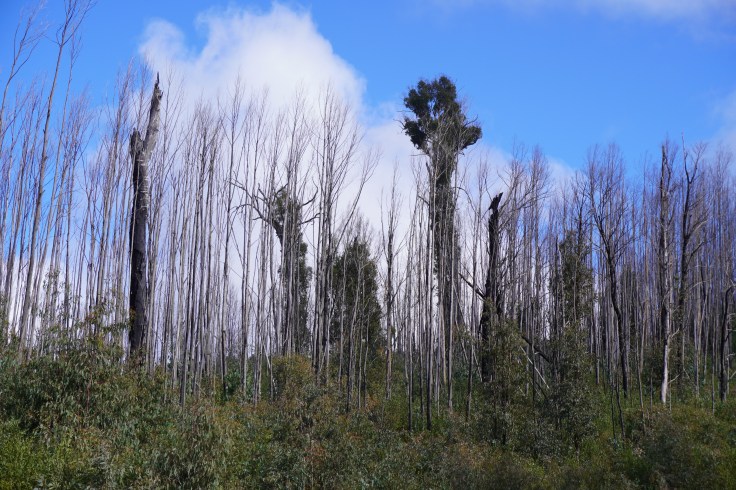
There were significant fires in the Victorian High Country in 1998, 2002/3, 2006/7, 2013 and 2019/20. More than 90% of Snow Gum habitat has been burnt at least once in the last 20 years. New research from Latrobe University shows that long-unburnt snow gum forests are now exceedingly rare (comprising less than 1% of snow gum forests in the Victorian Alps). There is already well documented localised ecosystem collapse happening in snow gum forests and woodlands due to increased frequency of wild fire – that is, the loss of snow gum trees, with only grass and scrub remaining in once forested areas. If we want this ecosystem to survive, it is imperative that we ensure we have the resources, and the allocation decisions during fires, to ensure fire is kept out of these systems as they recover.
The same situation exists with Alpine Ash. While this species covers around 500,000 ha of Victoria and stretches from the Otways to the north-eastern boundary with NSW, much of these forests have been badly damaged by logging and fire. The massive bushfires in 1998, 2003, 2006, 2009, 2013, 2014 and 2019/20 and meant that over 97% of Alpine Ash distribution burnt. These fires overlapped and some areas burnt two to three times across two decades, leaving 43,000 ha of Alpine Ash forest at risk of collapse.
This challenge will also persist as a problem for future land managers. At present it is estimated that there is about 140,000 ha of vulnerable (young) ash regrowth in the state that will not self-regenerate if burnt again. This ‘at risk’ area will reduce to about 80,000 ha in 2024, as older regrowth matures – but still presents a massive risk for land managers.
This means we must have the resources to keep fire out of these forests as they recover.
Mitigation
Dot point 95. The statement that ‘The Department undertakes a broad range of mitigation activities to reduce the incidence and severity of bushfires, minimise their effects and improve the resilience of public land, communities, industry, infrastructure and ecosystems. This includes adaptation planning for future bushfire risk based on climate change scenarios in partnership with community’ must take into account the fact that fire sensitive vegetation (including all types of rainforest) will be at greater risk of burning due to climate change and a resulting drying of the environment. Fire passing from adjacent drier forest types can be expected to become a greater risk to rainforests in coming decades. Therefore active management to protect rainforests must include controlling fire in surrounding forests dominated by Eucalyptus species.
Fuel management has no reference to ecological impacts
The section Deliver fuel management activities has no reference to monitoring the ecological impacts of these activities on treated areas, nor any requirement to assess whether the fuel management practises actually reduce fire risk. This is simply not appropriate.
(128) It is essential that the Department has the ‘people, capability and resources it needs in the right places to undertake timely and responsive bushfire management’. If we are to take our responsibility to protecting ecological assets and fire sensitive communities, and not be forced to abandon these natural assets during times of widespread or extreme fire activity it is clear that we will require continued investment in first strike and early intervention capacity to allow fire crews to access remote areas when lightning strikes cause widespread ignitions.
In terms of the Department having ‘the systems and tools’ it needs, this must include data sets and maps of fire sensitive and other species that must be protected from intense wildfire.
Preparedness strategies
(129) – in order to ensure we can continue to ‘Build workforce capacity and capability in a changing climate’ we must be open to considering novel and flexible ways of mobilising new demographics and provide opportunities for more people to be involved in firefighting efforts. One proposal to consider it the plan to create a remote area firefighting team (RAFT) within the CFA which will be trained to operate alongside FFMV crews in first strike operations. If this is made available to people living in urban areas who are outside the catchment area of an existing CFA brigade it can be expected to significantly boost our firefighting capacity. This potentially diverse force is also very relevant to dot point (142).
The preparedness strategies must include a requirement for the Department to maintain data sets of at risk species and fire sensitive communities in a way that is easily accessible in ICCs.
(164) To operationalise the requirement to consider the ecological impacts of wild fire, this should be directly included in this dot point as a secondary objective to the protection and preservation of human life and relief of suffering.




 Mountain Journal
Leave a comment