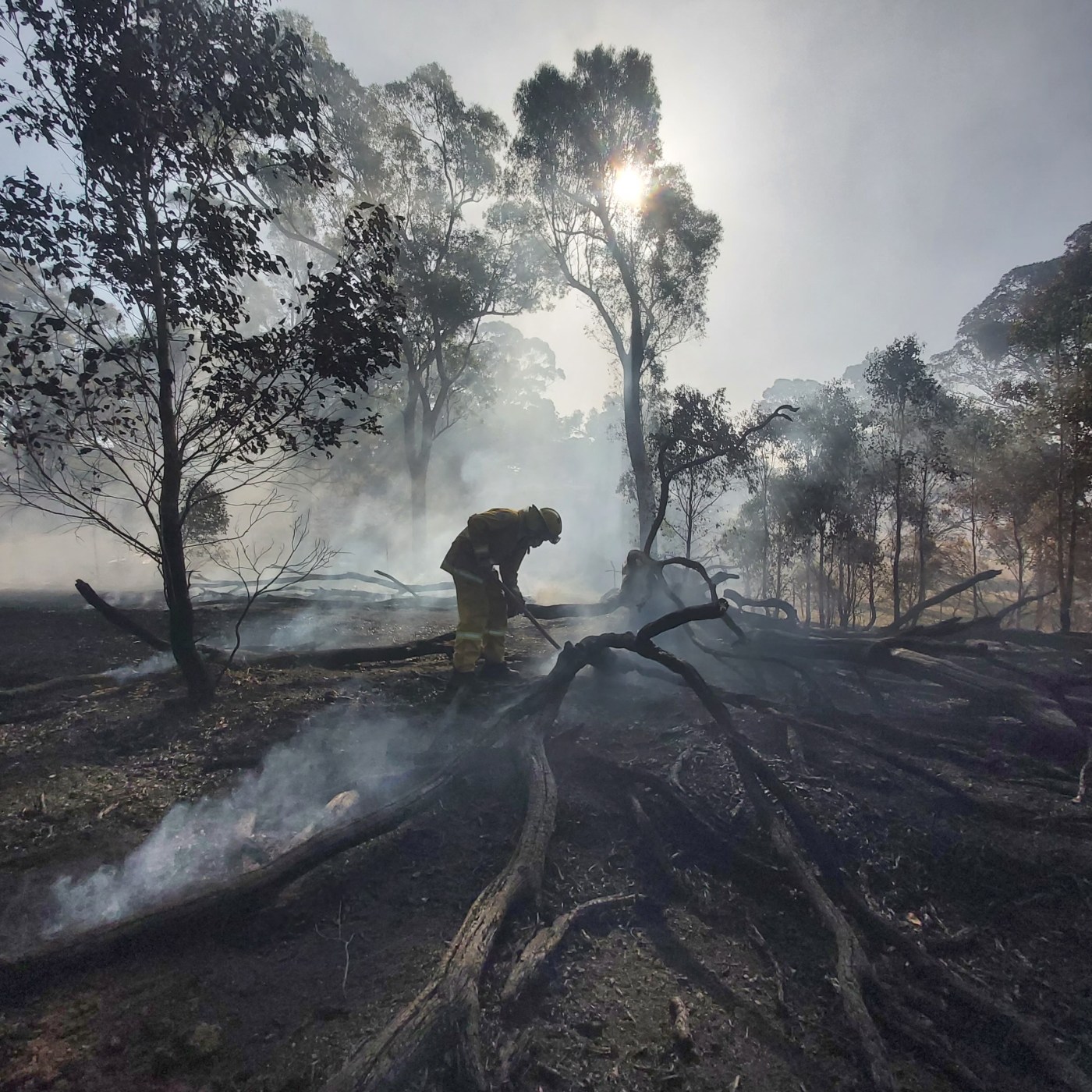
On Tuesday November 12, lightning started a fire in remote country north of Valencia Creek in the Victorian high country.
On Wednesday November 13, two rappel crews from Forest Fire Management Victoria (FFMV) were airlifted into the Avon Wilderness to fight the fire.
The crews created a mineral earth break around the fire and spent two days extinguishing hotspots before it was announced that the fire had been contained. In total the fire burnt around 1.3 hectares of forest. (Source: FFMV facebook).
This sort of early intervention is what is needed to stop small fires from turning into uncontrollable blazes.
Despite solid investments by the Victorian government, it is clear that in bad fire seasons, where there are multiple simultaneous fire starts due to lightning, that Victoria does not have sufficient capacity to stop all these ignitions turning into fires. FFMV does an outstanding job of protecting our public lands and putting these fires out, as do the air crews who tackle remote area fires. But in those peak moments we need more capacity.
With fire seasons getting longer due to climate change, there are many things we need to do to respond effectively to more intense seasons.
A new fire fighting team for Victoria
Locally, one idea is for Victoria to establish a volunteer remote area firefighting team (often called RAFT), as the ACT, Queensland, NSW and Tasmania have done. These crews would be trained to provide additional capacity to support the efforts of FFMV.
We propose that Victoria do something different as it sets up its volunteer RAFT:
Interstate teams draw from existing volunteer brigades. At present, most people living in urban areas can’t contribute to volunteer firefighting efforts because they live too far from a CFA station, which means that the burden of fire fighting continues to fall on rural and regional communities, while the benefits of effective firefighting are experienced by all Victorians.
Victoria could establish its volunteer remote area teams by offering opportunities to people living in urban areas to sign on and be trained, indicate when they are available, and then be deployed at times of urgent need. They would need to do an annual qualification refresher course before being deployed. This would mean we skill up new trained firefighters rather than draining the existing volunteer base. This is more complicated than attracting people who already have fire qualifications and experience but would allow people who love natural places to play a role in protecting them through committing time to firefighting efforts.
Creating opportunities for people living in large centres like Melbourne and Geelong can be expected to increase diversity within CFA volunteers and attract many young people to firefighting.
These teams could be utilised alongside FFMV remote area crews to access new start fires in remote areas. While not trained to the level of rappel teams, these crews, trained in dry firefighting, could assist in putting out small fires caused by lightning strikes.
At a forum on ‘the future of fire’, held in December 2023, Dr. Philip Zylstra, fire behaviour scientist and Adjunct Associate Professor at Curtin University, spoke about his experience of using RAFT teams so as to stop new start fires.
Phil discussed the fire in 2019 north west of Sydney in the Wollemi wilderness. When discovered, it was about 14 ha in size. But by the time crews were going to be allocated, it had grown to about 30 ha. It was on the western edge of about 100,000 ha of bush that had been burnt already. Post fire, the lower fire risk of a burnt area only lasts about 2 years, and then the forests become more flammable than if they hadn’t burned. There were only 4 Remote Area Firefighting Teams (RAFT) crews available to get out there and as a result, it became the largest single ignition fire in Australia’s history as it moved into the recently-burnt and highly flammable forests nearby.
If there had been RAFT crews to send earlier, and knowledge that burnt forests were more flammable, crews could have been allocated to intervene before it became a huge fire.
Time for Victoria to establish a volunteer RAFT
Since the Black Summer of 2019/20, Friends of the Earth has been proposing the creation of a volunteer remote area firefighting team within the Country Fire Authority.
These crews could be deployed as needed through a simple process: trained volunteers commit to do a refresher at the start of each season, then nominate when they will be available over summer. They can then be deployed as strike teams at times of great need: for instance, when it is expected there will be a large number of new fire starts (eg from lightning storms) or to assist on existing ‘campaign’ fires where local CFA crews would normally be allocated.
Sharing the burden of firefighting
Having volunteer teams based in urban areas would:
- represent a new way of building firefighting capacity,
- build diversity within the CFA by attracting young people and people of diverse backgrounds,
- help relieve the burden on existing rural and regional fire brigades who are expected to provide people for deployment as strike teams through summer, and
- could be delivered at a very small overall cost to the taxpayer.
Climate change is supercharging fire seasons. It is putting new burdens on existing firefighters and their families and on state budgets. Providing opportunities for city based people to volunteer their time in firefighting efforts would be a smart response to the reality of longer and more intense fire seasons.
Resources and further information
There is a lot more detail on the proposal here.
If you are a member of an organisation with an interest in the outdoors, please consider signing this letter.
If you are an individual who would like to express your interest in becoming involved in these teams should they be established, please add your name here. This does not bind you to anything – but it will be useful for us to be able to demonstrate interest from the community when lobbying government about the need to establish these teams.




 Mountain Journal
Leave a comment