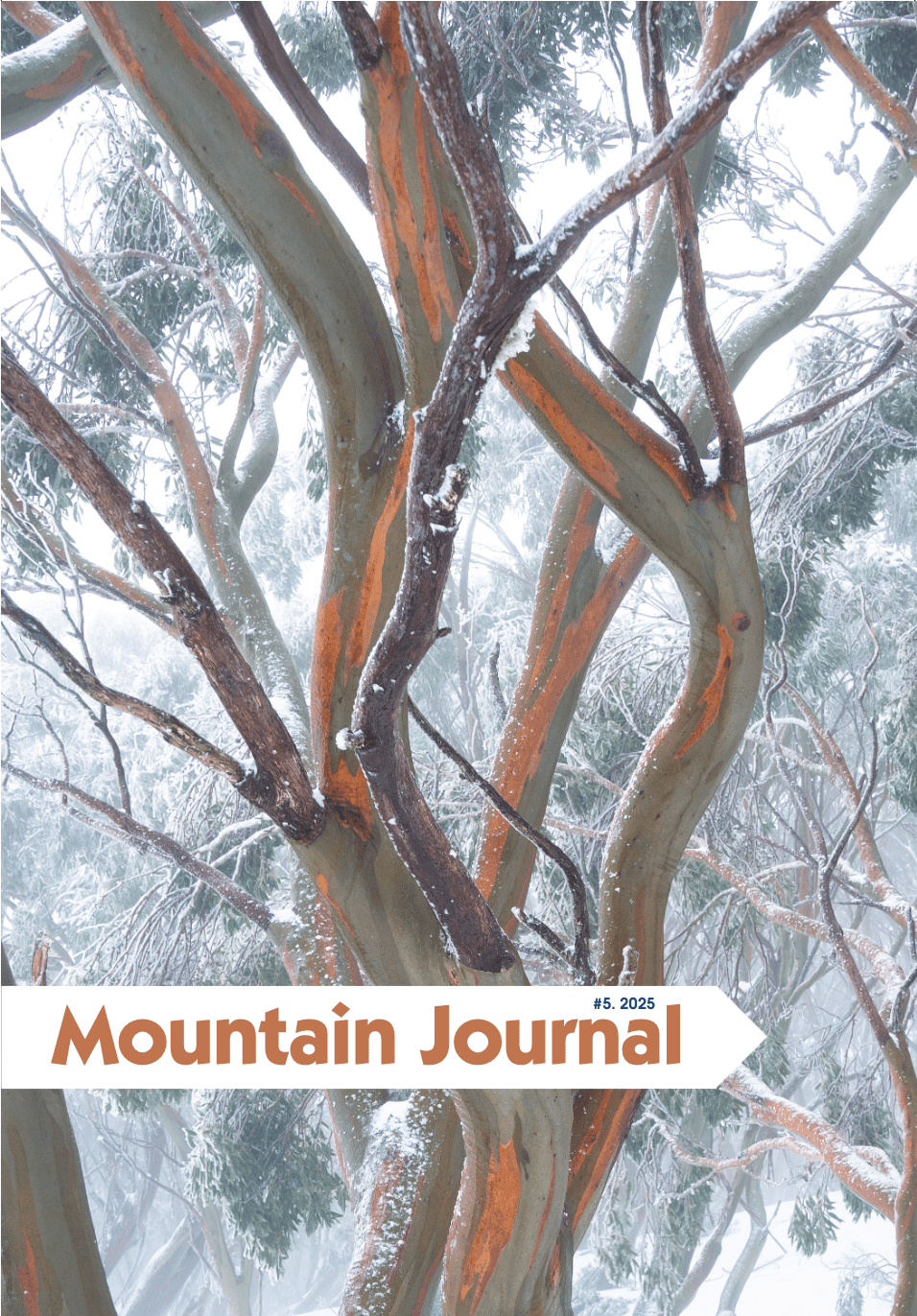
The Mountain Journal magazine is now in its 5th year of production. We print 1,000 copies and distribute it for free through mountain and valley towns between Melbourne and Canberra during autumn each year. This year we had a guest editor – Anna Langford, who has produced an absolutely gorgeous magazine with the assistance of designer Tess Sellar and beautiful images from a range of people including Matt Tomkins.
The theme delves into what is happening to Winter. As Anna says in her introduction: “Long, deep winters are fast becoming folk tales of the past. But there is still so much to love, and so much we can do to act. To talk about our alpine winters is to lament what we’ve lost, celebrate
what we still have, record it for collective memory, and impel each other to step up and take action“.
You can read a pdf version of the magazine here: 5_printready.
The magazine is presently at the printers (the wonderful solar powered Black Rainbow, based in East Gippsland). Once its ready we will start distribution, so please keep an eye open in your favourite cafe, brewery or mountain hut.
For the first time we have received external support for this project. We want to thank One Planet for providing support for the production of this year’s magazine. You can find out more about One Planet here. We are proud to have an association with this company because of their love for wild nature and the fact they still produce gear here in Australia, at their factory in Sunshine West in Naarm/ Melbourne.
If you would like to assist in distribution and are based in Melbourne, I hope you can join us on May 11 at the Backcountry film festival, where you can grab some copies to leave in your favourite public space.
If you would like us a copy of the magazine, please email your name and address to cam.walker@foe.org.au We ask for $10 to cover the cost of printing and postage.
Magazine introduction
From this year’s editor Anna Langford.
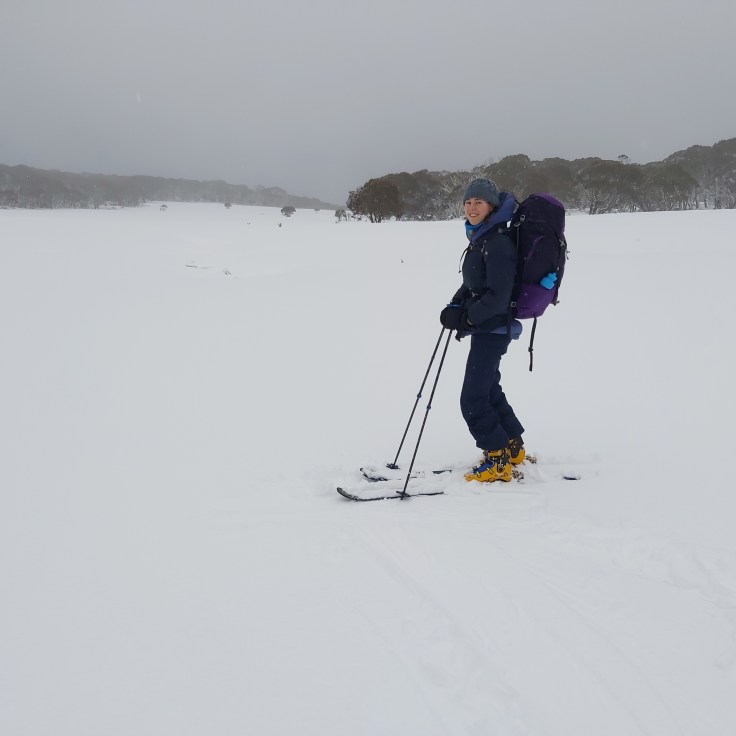 When Cam Walker phoned me up and asked if I wanted to guest-edit the 2025 issue of Mountain Journal, I was hours away from boarding a flight to Norway. It was the start of a three month stint in the Arctic Circle. I wanted to meet people whose ancestors arrived up there long ago and decided, generation after generation, to stay in one of the coldest places on earth.
Its climate makes it also one of the starkest places on earth. As Barry Lopez put it in his 1986 classic Arctic Dreams, ‘Arctic mountain ranges… retain their remoteness even when you stand within them’. It’s hard to explain the feeling of standing up on an Arctic tundra, where no trees soften the crisp line between bare land and sky, and feeling so present, yet so distant from everything you know at the same time. You can’t help but feel stripped bare by the place.
My three months covered three seasons, as the Sámi (the Arctic Indigenous peoples of that region) mark them: Čakčageassi (autumn-summer), Čakča (autumn/reindeer mating season) and Čakčadálvi (autumn-winter). Through the turning of the seasons, the planetary tilt had never been so obvious. I watched the daylight weaken, like a torch with a dying battery, to the achingly beautiful late autumn days of sunrise that slunk straight into sunset. But climate change blunted what should have been the steadily chilling bite of each stage.
The whole time I was away, in these mesmerising places, I couldn’t stop talking about our mountains back home. When people would ask me about Australia (probably expecting descriptions of golden beaches), it wouldn’t be long before I was showing them photos of those worn old peaks, and close-ups of resplendent snow gums, gushing ‘there is nowhere else like it on Earth.’
Many of the same threats to the Arctic also imperil this unique pocket of the planet, the Australian Alps. Long, deep winters are fast becoming folk tales of the past. But there is still so much to love, and so much we can do to act. To talk about our alpine winters is to lament what we’ve lost, celebrate what we still have, record it for collective memory, and impel each other to step up and take action. I hope this issue of Mountain Journal does all of these things for you, and I look forward to hearing from you.




 Mountain Journal
Leave a comment