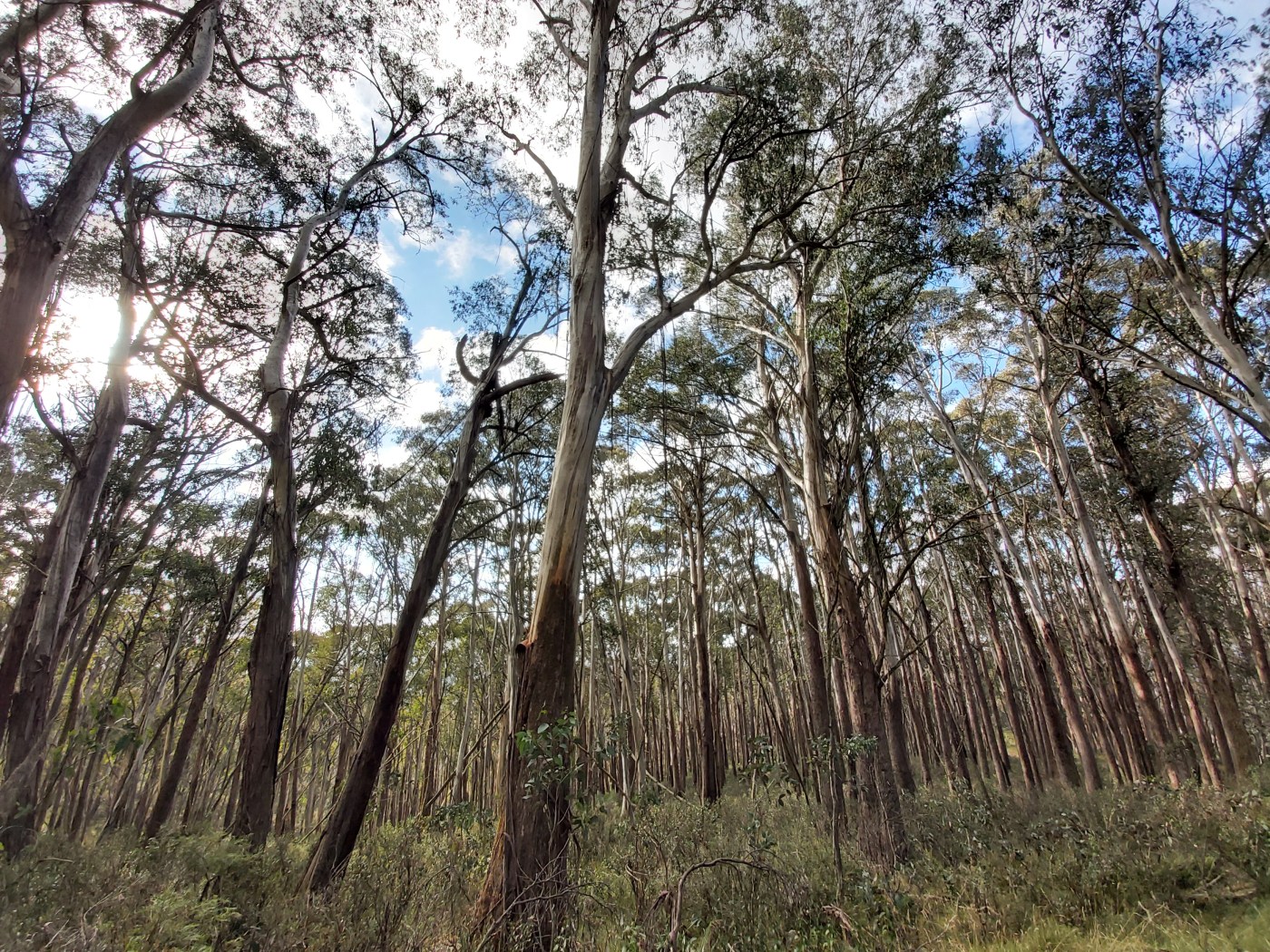
Ash forests – forest comprised of Mountain Ash, Alpine Ash, or sometimes both – are some of the most iconic forest types in Victoria, or even the world. Covering around 500,000 ha of Victoria and stretching from the Otways to the north-eastern boundary with NSW, their stronghold is in the Central Highlands to the east of Melbourne and through the higher ranges of Gippsland and the north east of the state.
These forests have a complex relationship with fire: these forests can live with some fire – but not too much. Scientifically known as ‘obligate seeders’, after severe bushfire, ash forests are killed, but prolifically regenerates from canopy stored seed. The important point here is that these slowly regenerating forests cannot produce seed for 20 years after they regenerate from fire. This means they are highly vulnerable to shortened fire intervals – the exact challenge that land managers in Victoria are facing with climate change.
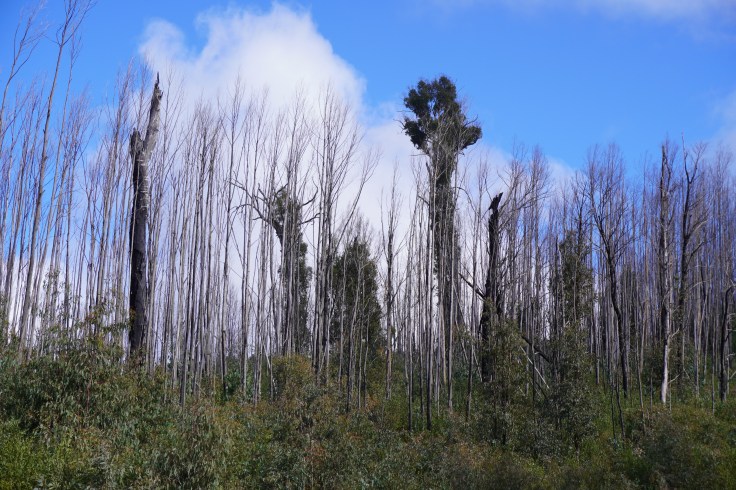
Once a mountain ash or alpine ash forest has burnt numerous times, it may eventually fail to regenerate, which can lead to population collapse and a change of ecosystem type. This sounds simple, but ecologically, this is dramatic. A tall forest – high in carbon stocks and habitat – changes rapidly to a short shrubland or grassland.
This not theory. This situation already exists among alpine ash forests. The massive bushfires in 1998, 2003, 2006, 2009, 2013, 2014 and 2019/20 and meant that over 97% of Alpine Ash distribution burnt. These fires overlapped and some areas burnt two to three times across two decades (Fagg et al. 2013; Bassett et al. 2021), leaving 43,000 ha of Alpine Ash forest at risk of collapse (Fairman, 2023).
Mountain Journal has long reported about threats to Ash forests and the need for greater government intervention (check here for some of the articles).
Now people involved in the recovery of Ash forests have recently spoken out about the threats posed to these forests.
As was reported by the ABC in June 2025,
‘Vast tracts of Victoria’s alpine forests are one major bushfire away from oblivion, according to a growing number of scientists.’
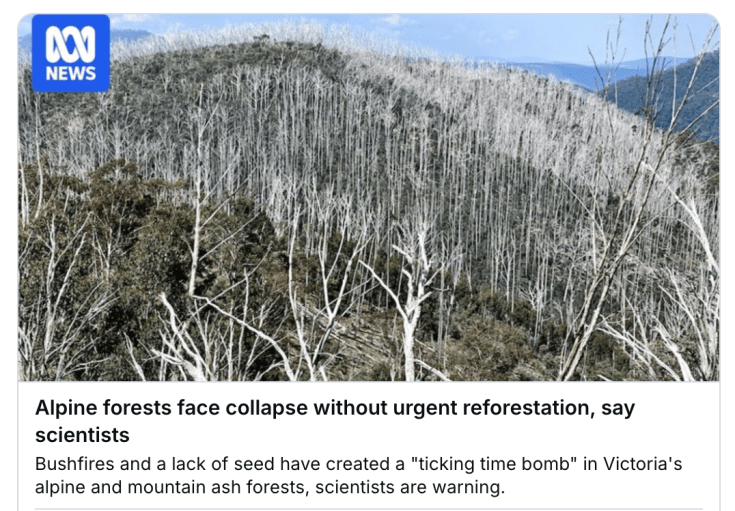
Dr Tom Fairman, a future fire risk analyst at the School of Agriculture, Food and Ecosystem Sciences, has calculated that in the past two decades, half of the state’s mountain forests have been ravaged by bushfire.
This reporting points out that there is an urgent need for government to invest in the seed recovery efforts.
Dr Fairman and other leading scientists, alarmed at the precarious state of the mountain forests, have accused the Victorian government of not doing enough to address the problem.
Owen Bassett, a silviculture, or forest, scientist says:
‘The government has just awarded tenders to seed harvesting contractors who scale the giant trees to gather the tiny pinhead-sized seeds at the tree’s crown.
Landline can reveal the contracts are only for one to two tonnes of seed from alpine and mountain ash species in the next two years.
Mr Bassett describes the amount as “woefully low”. In past years about three times that amount was collected.
He believes 17 tonnes of seed is now needed to ensure there are sufficient supplies to re-seed burnt areas after severe bushfires.
Owen says:
‘responsibility for the alpine forests should be broadened and favours the establishment of privately funded seed banks supported by corporate and community donors to assist the state’.
Victoria’s native species seed bank was depleted following re-seeding efforts after the Black Summer bushfires.
Next to no seed has been collected since the timber industry shut down and seed-harvesting contractors were retrenched.




 Mountain Journal
Leave a comment