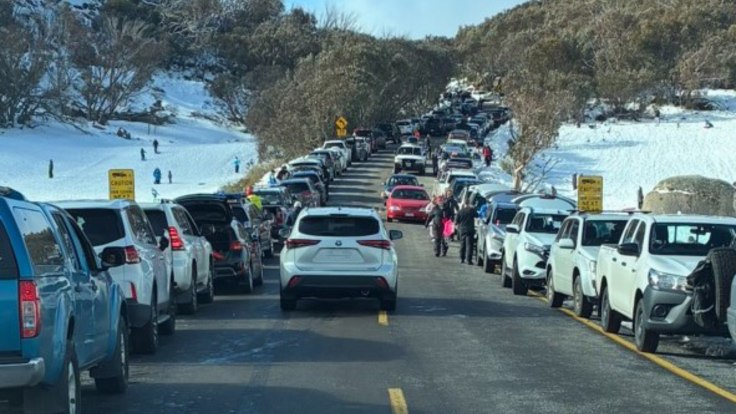
Anyone who spends time in the high country will have seen the exponential growth in visitors during ski season in recent years, especially since the covid times. Resort car parks full, mayhem on the roads, rubbish along the access roads, overcrowding. This is our new reality, so it’s worth thinking about how we can make it work.
Firstly, we should admit that change can be hard. We love these places and are used to the way things are. Suddenly the roads are busier, the car parks and ski runs are full, even the usual campgrounds are busy with people.
It’s possible to feel slightly crowded while also being glad that more people are enjoying the places we have loved for years. Life is complex, and we can hold multiple feelings at the same time. Overall, its great that more people are finding their way to the mountains in search of fun, snow, and the outdoors. But as the mountains continue to get more crowded, good manners become ever more important.
These are a few ideas gathered over the past few weeks from watching the crowds and yarning with many people.
FOR FIRST TIMERS – snow visitors to the resorts
Firstly, welcome! Its great that more people are coming to the mountains. Here’s a few ideas which may help if you’re unfamiliar with the high country.
Driving:
- Hire some chains for your car. In Victoria you’re required to carry them to the resorts (increasingly there are police checks, with a hefty fine for failure to have chains) and you’d be stupid not to carry some in NSW. Accidents will always be way more expensive than the cost of hire
- Consider catching a bus up the final approach from the valley towns (places like Mansfield, Bright, Mt Beauty, Jindabyne). Its way less stressful that driving in poor conditions on roads you aren’t familiar with
- Follow the road signs. Yes, this sounds dumb, but this is good advice, especially the ones that say Fit Chains Here. Its just not worth the chance of doing a 360o slide later on if you ignore the sign. Be aware that roads that are south facing may be dangerous: never assume that if the road mostly feels ok, it will be ok all the way up the hill: monitor and drive to the road conditions
- PULL OVER if driving slow. All the roads to mountain resorts have many pull over spots. Getting cars off your tail avoids accidents and makes for much more pleasant driving and is basic good manners
On the mountain :
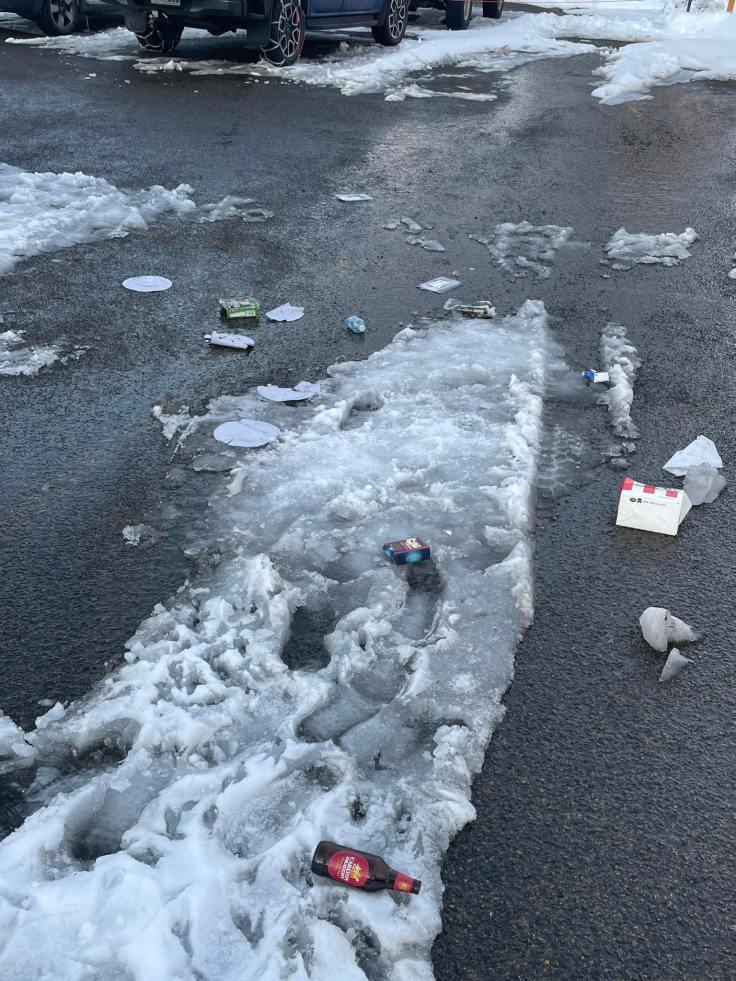
- Do not leave rubbish. This drives locals crazy. There is no one to clean up after you and rubbish causes direct environmental impacts and reduces everyone else’s enjoyment. When locals are forced to clean up the mess it does cause resentment.
- Support local businesses. Even if you bring all your food, buy a coffee or hot chocolate or something to support the local (mostly sole trader) businesses on the mountain
- Please don’t feed the native animals, including birds, it can make them sick
- Clean up after your dog
- Don’t walk on the ski trails!
A note from Greg Owen about trail etiquette. While this is about the area around Dinner Plain (DP) it is relevant wherever foot traffic meets ski trails:
There are both shared trails (walkers and snowshoes/skis) and those reserved for skis/ snowshoes only which are on the DP cross-country ski network. The XC Ski Network is beautiful but short lived. And it is dedicated to skis and snowshoes for a couple of very good reasons:
- Snow cover on the trails is never very thick and footholes shorten their life.
- Footholes also make the trail potentially dangerous for skiers, especially when they become a mess of frozen gopher holes. The more footholes, the greater the risk of a fall.
Look for a sign …
Dinner Plain Community Association has placed information signs at the north and south entrances to the XC Ski Trails. Also off Apian Way. They remind people to NOT walk on these trails. The signs are informational and intended to help everyone enjoy the trails around Dinner Plain during our short winter.
DPCA does not make the rules!
Even if you miss the signs, it’s easy to know when you’re on the XC Network. If you pass through an open gate into a fenced area, you have entered the XC Ski Trails. It’s a beautiful area – if you’d like to enjoy its tranquillity, why not hire/buy snowshoes or skis. It would be well worth it.

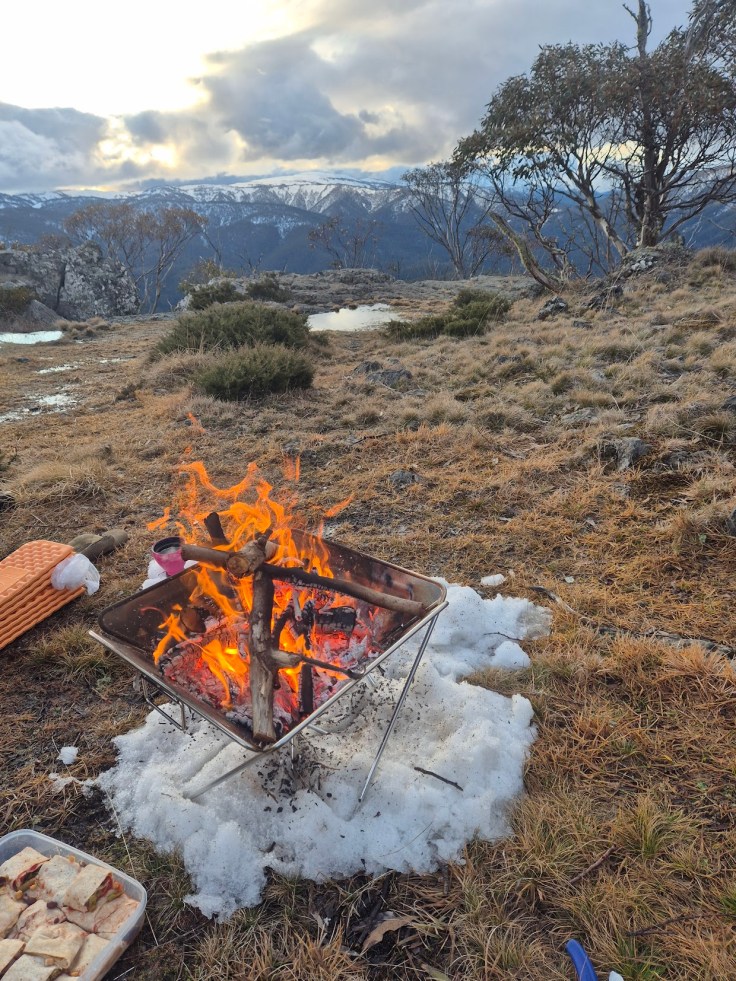
ABOVE: this is not cool. Rubbish and a fire pit on a cross country ski trail. Image: Hotham XC facebook group. https://www.facebook.com/groups/285668518560105
FOR THE OLD TIMERS
Yes, we love to complain in facebook groups about the mess and chaos. But that doesn’t change anything. Our job, as I see it, is to be ambassadors for the mountains, and this can be hard work.
What I mean is that we need to continue to greet, encourage and educate the newer people. When you see something wrong – eg people packing up camp and leaving their rubbish – go over and say something. This is really the only thing that changes people’s behaviour. If the people are reasonable, that’s great. If not, get their license plate and dob them in to the EPA, some people only learn via their hip pocket:
In Victoria. https://www.epa.vic.gov.au/litter
In NSW: https://www.epa.nsw.gov.au/Your-environment/Litter/Report-littering
THE WILD WEST – outside the resorts
Things become more complex outside the ski resorts. Places that are less regulated and have free access, like the Buffalo Plateau and Dinner Plain in Victoria, and various places in the ACT, feel especially crazy this year. Land managers in Victoria are radically under resourced to patrol state forests and national parks, meaning there is very little presence of staff for education and enforcement. So the impact of poor behaviour is amplified, as there is often no one to look after the mess, and existing staff are really stretched. In many ways this is where we really need to be mindful of our impacts, and especially willing to intervene when we see poor behaviour.
Regardless of whether we camp or walk the dog, ride a mountain bike or trail bike, 4WD or ski, we can see that our public lands are being loved to death.
In Victoria, the state land manager (called DEECA) needs additional funds to have the staff and resources to ensure our public lands are properly managed.
Please consider signing this open letter to the Victorian government urging them to in crease funding to front line land managers.
Dogs
Please be aware that dogs are not allowed in national parks.
Toilets
If there isn’t a public toilet, PLEASE walk well away from the road and tracks, and dig through the snow pack, then into the ground and cover your waste up with soil and then snow when you’re done. Mark it with sticks or something similar. Just covering it with snow means it will be exposed later on, leaving a nasty surprise for whoever might wander past.
Public huts
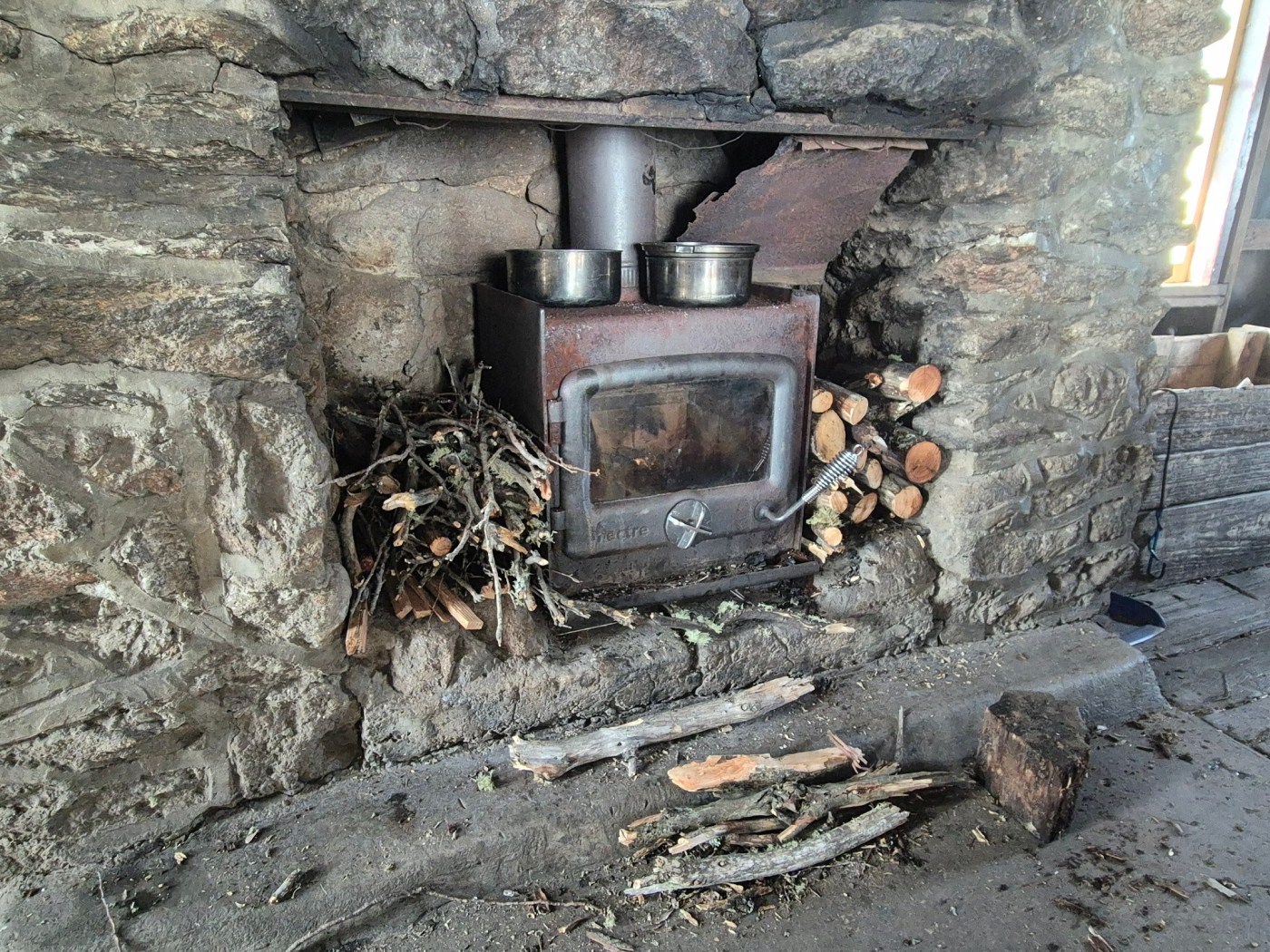
Most mountain huts are public assets and users need to look after them. Use them in an emergency, and as a base for cooking and hanging out but don’t plan to sleep in them if there are lots of people around (camp near by). Share/ make room for others. These huts don’t have a booking system and you need to make room for later arrivals.
It is up to all users to leave them in good condition. This means:
Firewood
With more people clustering around the huts close to roads, there is ever greater demand on the surrounding forests to provide firewood. This is causing significant ecological and visual damage.
I can’t believe I have to say this, but GREEN WOOD DOESN’T BURN (apologies for the shouting). More and more I find green (live) branches that have been cut and left for firewood in huts. And if you walk around the popular campsites and huts you can see more and more trees have been butchered with poor cutting practises. Over time this will make places much less pleasant to camp in. We all need to be thoughtful users of our public places.
To reduce your impact, please:
- Bring your own firewood if camping near the road (most valley towns will have bags of firewood available for sale as you drive through, for instance at service stations)
- If looking for wood, go easy on the trees around the hut/ site, and don’t hack at them. Use your skis/ snow shoes to explore a bit further and find fire or beetle killed trees. It’s a bit of extra effort, but will radically reduce the impact around the hut/ camp over time.
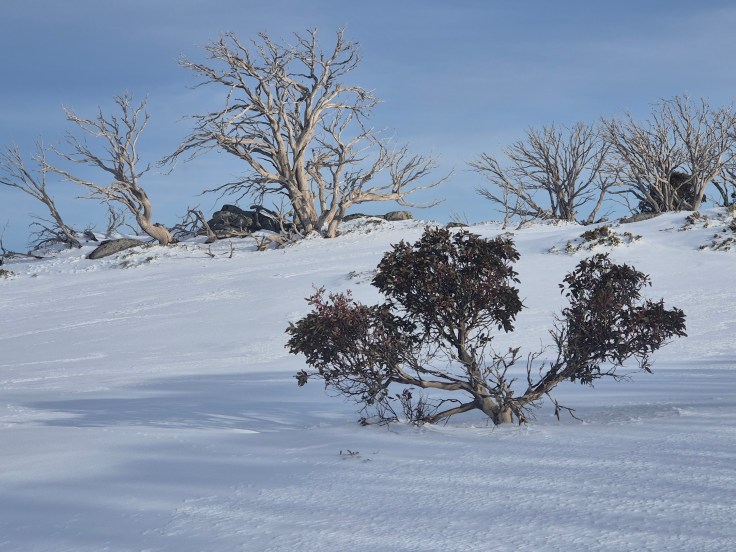
When looking for dead wood, go for the ‘air dried’ greyed branches rather than those with the green lichen. The bare branches are much more likely to burn well (lichen enjoys a bit of moisture to grow, so branches covered with lichen is more likely to be rotted or damp).
And please don’t over work specific areas: fan out and go a couple of hundred metres to spread out the impact. When pulling branches off trees, I always rely on the advice I received from my dear friend Wadjularbinna Nulyarimma who was a member of the Gungalidda tribe of the Gulf of Carpentaria. She would always say ‘if the tree doesn’t want to give it, then you shouldn’t take it’. What she meant was: don’t force a tree to give up its dead timber. Push or bend the branch you want with reasonable force twice, and if it doesn’t release, then move on to the next branch. In Wadjularbinna’s view, the trees are relatives and want to be treated with respect, and this approach has always worked for me.
Needless to say, if there is a hand tool in the hut you’re using (a saw or axe), look after it and stow it back in it’s spot when you’re done.
Add to this post
Please feel free to contact me if you would like to add information to this post: cam.walker@foe.org.au




 Mountain Journal
Leave a comment