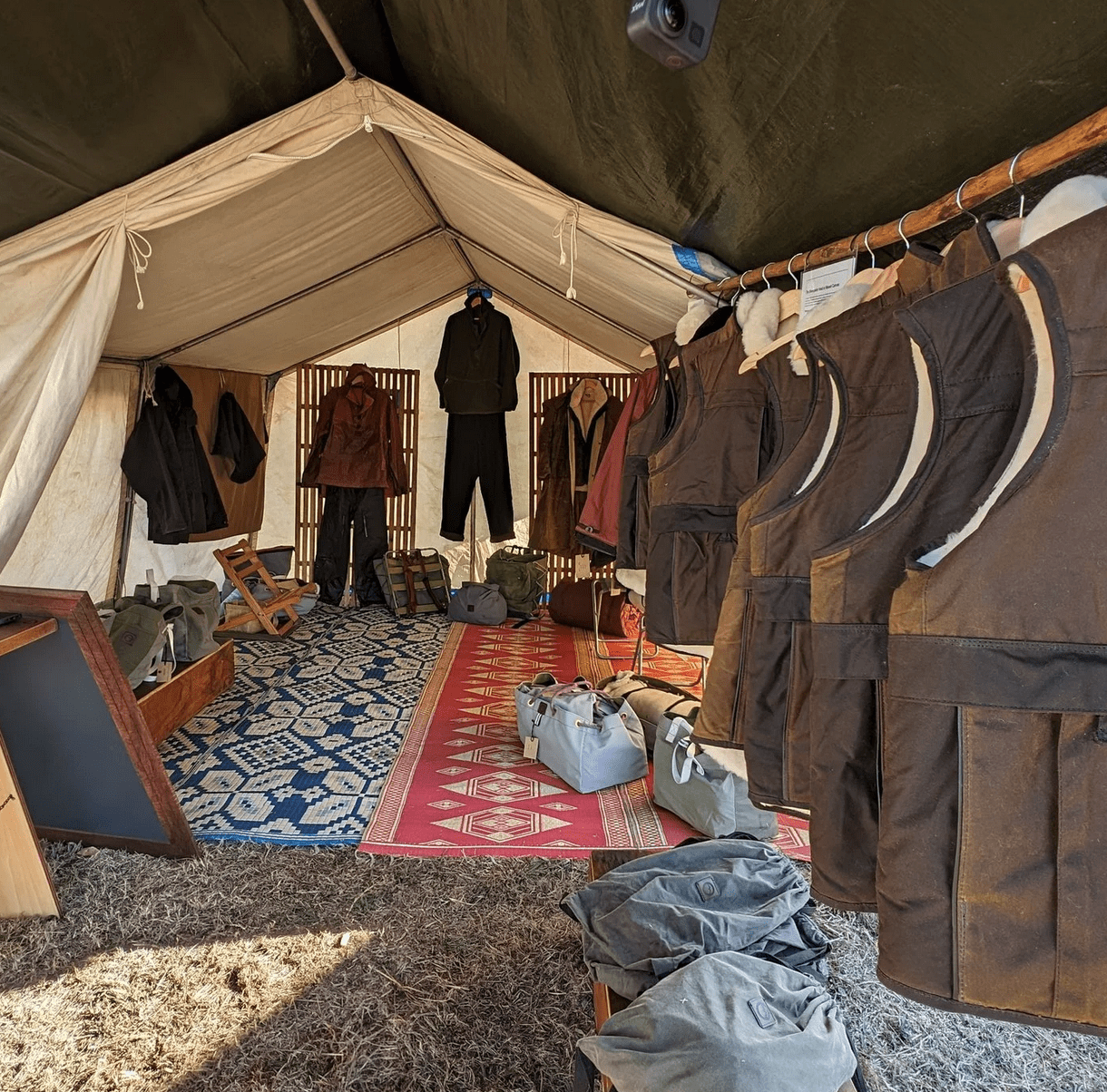
Almost all outdoor gear used to be made in Australia. That is now a rarity, although a couple of companies continue to produce things here (there is a probably outdated list of these companies available here). Outdoor gear advertising is largely synonymous with generic high impact lifestyles – fly here, go there, have the latest stuff, charge that line – rather than being connected to a place or community (sure there are exceptions, but the ‘global brands’ do dominate the market here in Australia).
That’s why small scale, locally owned gear companies are so important (as are, of course, locally owned shops – you can find a list of them here).
Some Australian brands like Snow Gum, One Planet or Mountain Designs, have been around for decades. There are also a growing number of micro brands starting up and one of these is Peak Oil Company, whose primary mission is ‘making durable clothing and equipment for the Australian outdoors, without using petrochemicals’.
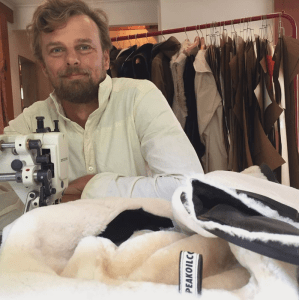 Peak Oil Co was established by Leigh Blackall. He says ‘I’m making outdoor clothing and equipment in a home studio in the Bend of Islands, near Melbourne. My products use natural materials like hemp, cotton, silk, wool, leather, fur, beeswax, gum turpentine and linseed oil and avoid plastics, toxic chemicals, harmful dyes, and industrial processes. I’m revisiting traditional materials and methods to use them in new ways and create long lasting, high quality products’.
Leigh has a fascinating genesis story for the company:
“… I’ve enjoyed wilderness all my life, but struggled to reconcile the experiences in such places with the technology, equipment and mindset many carry into it. When I was caught in a blizzard in the Western Arthur Ranges of Tasmania, I was forced to fully consider this paradox. Bad weather compelled me to cook in my tent, a fuel spill caught fire and within seconds I was engulfed in flames of melting plastic. I spent that night cold, wet and in pain. I lay next to a creek with my burned hands in the icy water, rain and sleet falling over me. I contemplated my ruined equipment and precarious situation without it, resolving to approach things differently from then on.”
Where did the idea come from?
The idea first came from reflecting on Australian leisure culture, which we touched on in this article. Much of how we approach the outdoors—especially alpine areas—has been shaped by imported models of recreation: resorts, consumer tourism, and a gear-heavy outdoor industry that markets escape rather than connection, to ourselves and the places we pass through. What struck me is how thin and disconnected it all feels, especially when these landscapes demand endurance, adaptation, and respect.
So the question became: what would leisure in alpine Australia look like if it were grounded instead of escapist and avoidant? If it were about resilience, knowledge and skill, rather than novelty and consumption? Clothing and equipment became central to that vision because what we wear and carry is often the first and most intimate layer of how we conceive ourselves, and how we engage with a place. By redesigning these things—using natural materials, focusing on physical and cultural longevity, and encouraging repair—we can start to shift the culture itself. My business, and the manifesto that is emerging here, came directly from that vision. It’s an attempt to seed a new way of engaging with the outdoors, one that makes us more competent and connected, not just better entertained.
What are you producing?
That’s why I produce outdoor clothing and equipment—but with a very deliberate difference. Most of the outdoor industry today has allowed itself to be misguided by absurdities in fashion and extremism. Instead of designing for reality, it markets to our fantasies. What we are then is: synthetic gear in seasonal colours, over-complicated features, and garments that are just as disposable as they are expensive.
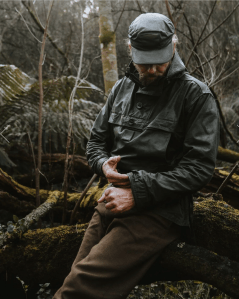
My approach is the opposite. I make jackets, ponchos, trousers, satchels—garments for weather, work, travel, the outdoors, all comfortable enough to sleep in—exclusively from wool, hemp, cotton, and canvas treated with natural oils and was. These things are inspired by pre-industrial cultures, designed to be simple to make, to be durable, and able to be repaired and modified and adorned. The person wearing these can conceive of themselves very differently. It’s an ongoing effort. Each piece is not just a product but a platform for position and skill: simple to make and repair, versatile and adaptive, resilient historically connected. In this way, the clothing might project something very different. A stronger idea of Self and place.
What is the ethos behind it?
And that flows directly into the ethos: reconnecting clothing and equipment to reality. The outdoor industry often claims to prepare people for nature, but in relying on plastics and fragile trends, it has actually separated us from it. My ethos insists on three principles:
- Foundational designs and materials: using only what the earth provides—wool, hemp, cotton, hide—materials that breathe, last, and return to the soil and, referencing pre industrial designs and methods across cultures.
- Longevity and repair: clothing that isn’t “finished” when it leaves my workshop, but continues to evolve with the wearer through use, patching, and care. I want to encourage and support that.
- Resilience over absurdity: designs that serve in the weather, terrain, and activities we take on, rather than the churn of marketing or fashion cycles that project unreal fantasies for us to forever want and chase.
At its heart, this ethos is about cultural change. By offering historically connected, durable, repairable, natural gear, I’m trying to support a broader shift in how we think about ourselves, our lives and the outdoors in Australia: away from surface-level consumption and toward a practice of living that is resilient, self-reliant, and deeply grounded in the places we move through.
I’m not saying I’ve nailed it, it’s never finished, but it’s a clearer, more fulfilling vision to work towards. It’s a harder way, that’s for sure, maybe even “pissing in the wind” as we say, or “swimming against the stream”, but I see no other way. We need to do this. What we’re doing and where we’re headed can’t last.
You can contact Leigh here: contact@peakoilcompany.com
And you can read more about the Company here.




 Mountain Journal
Leave a comment