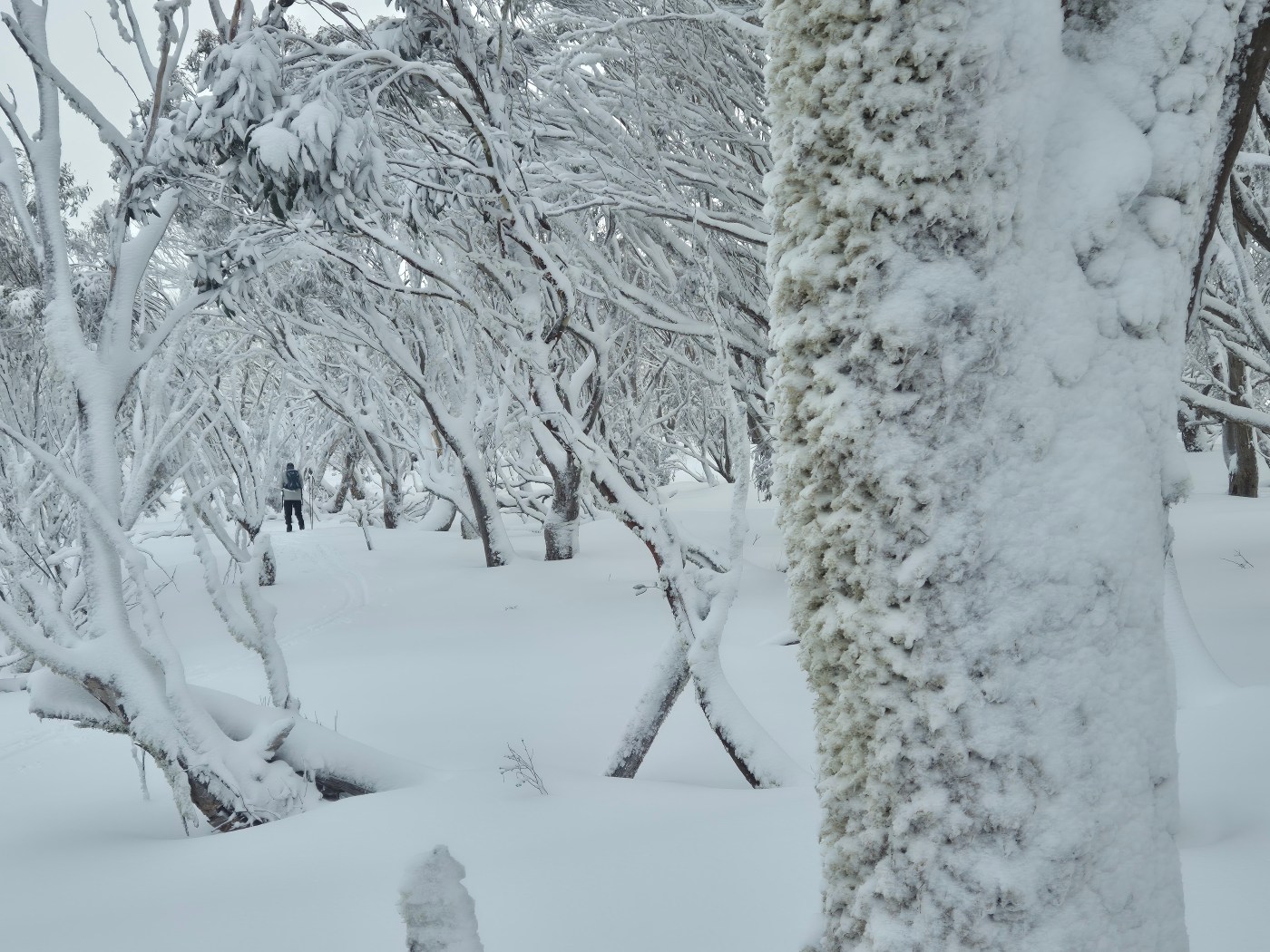
We’re getting close to October and there is still excellent snow cover across the higher elevations of the Australian high country. After several ‘ordinary’ winters, we really needed this one. Businesses were struggling, workers were facing short seasons and snow lovers were generally depressed. So, 2025 has been the boost we all needed.
I have raved a lot on the website about what a great winter it has been and the snow media has wheeled out the superlatives to describe good snow falls and solid snow pack. Its been truly fantastic.
However, we do also need to remember an important fact. 2025 was not spectacular. It was an average version of what winter should be in the Australian mountains. And sadly, it was an increasingly rare winter – one that started early and maintained good snow pack across higher elevation through to the ‘formal’ end of the season – but which is rapidly becoming unusual, rather than regular.
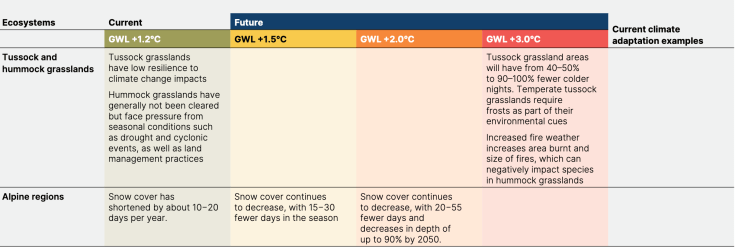
In reality, snow pack is in decline in Australia. As was noted by the CSIRO in 2024:
- Australian snow seasons show significant year-to-year variability, with observations showing a downward trend in maximum snow depth over the past 70 years.
- This decrease in maximum snow depth is due to rising temperatures and decreasing precipitation, largely caused by increases in global greenhouse gas emissions.
- Climate models project further declines in snow cover and depth in the coming decades, posing significant challenges for alpine resorts and ecosystems.
As mentioned here multiple times, snow pack has been in decline at least since 1957. We have two key sets of long term data (one from Victoria and one from NSW, explained here) and both demonstrate the decline.
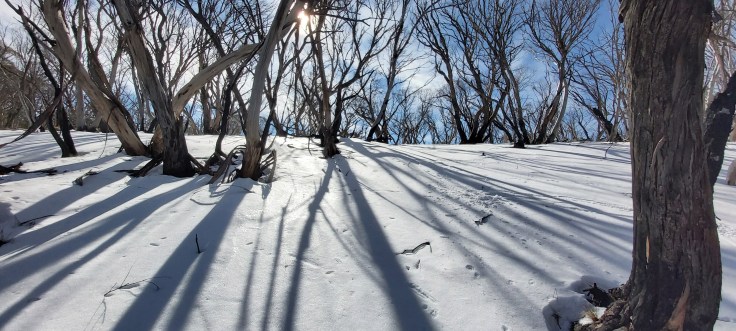
When we look at a good winter like 2025 and people talk about how good it is, often we forget that the old ‘normal’ is now gone. What we are witnessing is a deteriorating landscape, yet mostly we think it is ‘normal’ because we don’t have a memory of what was here before. Anecdotal memory is hard to trust (we all know that skier who says ‘we always had good and bad winters, so climate change is crap’.) Sadly, personal observation isn’t the same as data. And the data is clear.
Shifting baseline syndrome
As noted in the book Shifting baseline syndrome: causes, consequences, and implications, each new generation accepts the situation in which they were raised as being ‘normal’.
Further,
With ongoing environmental degradation at local, regional, and global scales, people’s accepted thresholds for environmental conditions are continually being lowered. In the absence of past information or experience with historical conditions, members of each new generation accept the situation in which they were raised as being normal. This psychological and sociological phenomenon is termed shifting baseline syndrome (SBS).
So, as we reflect on the ‘winter that was’ it would be wise for us to remember this fact. We are watching winter snow through the lens of Shifting Baseline Syndrome. Simply put, Shifting Baseline Syndrome is ‘a gradual change in the accepted norms for the condition of the natural environment due to a lack of experience, memory and/or knowledge of its past condition’. In this sense, what we consider to be a healthy environment now, past generations would consider to be degraded, and what we judge to be degraded now, the next generation will consider to be healthy or ‘normal’.
You can read more on shifting baseline syndrome, and how it influences how we view the mountains here.
This page, hosted by Snowy Hydro allows you to look at snow pack over various years, and compare the conditions (NSW sites only) between years.
Remember, action is always the antidote to despair.




 Mountain Journal
Leave a comment