Back in 2022, I helped host an event at Mt Hotham called Climate change, fire and the Alps. I remember being struck by something that was said by one of the speakers. Craig Hore, who at that point was a Ranger in Charge of Fire and Emergency Operations North East District, at Parks Victoria, reflected on his long connection to the mountains. Fire regimes in the high country have changed in the last quarter century, with more frequent and intense fires.
Craig reflected on the fact that since the fires of 2002/3, the mountains have been transformed. With ever more frequent fire and drier conditions, he doesn’t think that we can go back to what the Alps used to be like. In his early days as a Ranger he could drive through older forests for hours. But now so much of the park has been badly impacted by fires. “I doubt we will ever see those old forests again.”
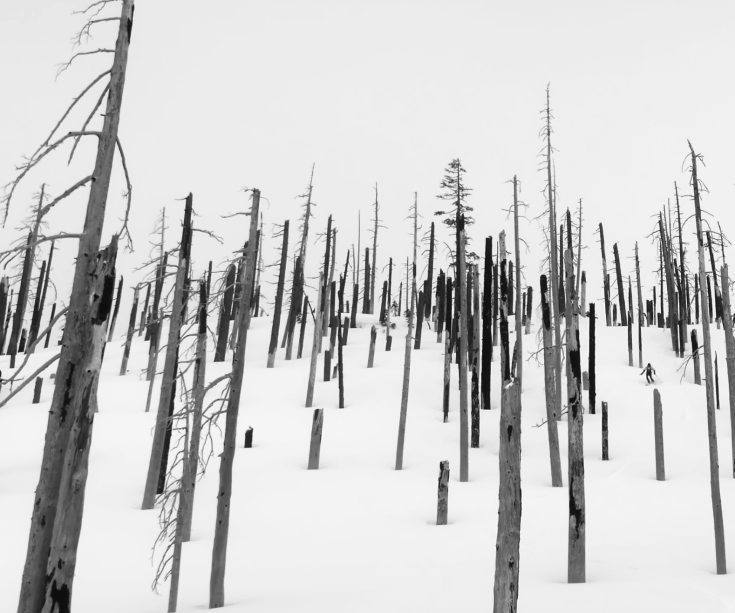
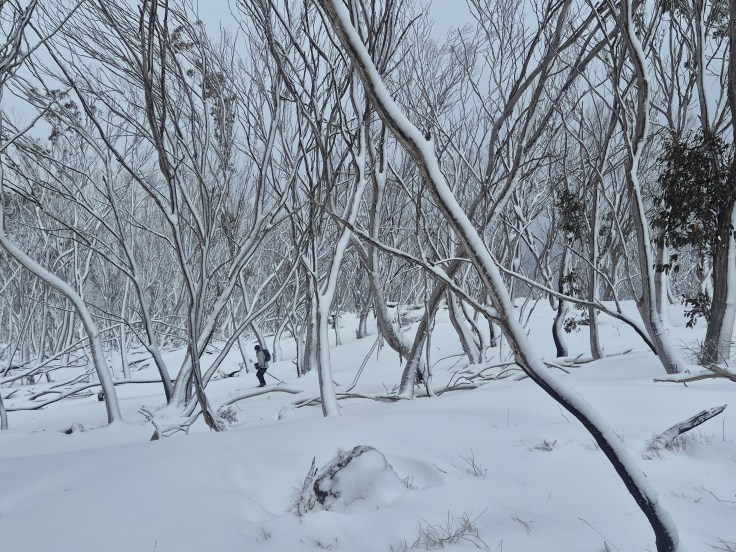
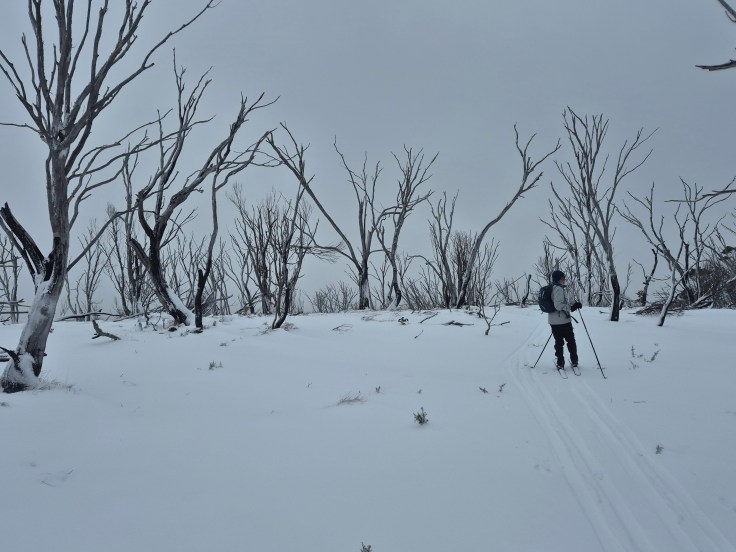
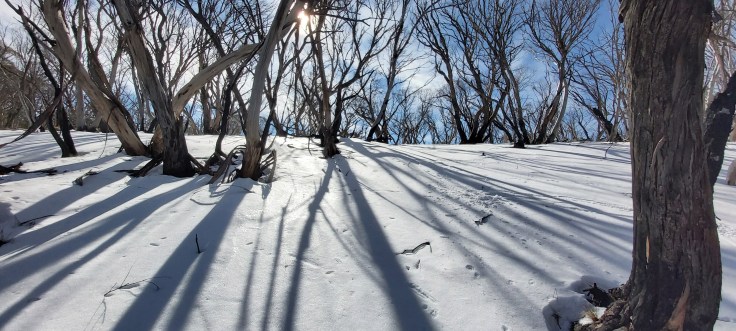
Research shows that in the Victorian high country, ‘Long-unburnt snow gum forests (now) comprise less than 1% of snow gum forests in the Alps’. To walk, ski or ride in the Alps now days is to be confronted with endless walls of dead grey tree trunks and thickets of highly flammable regrowth. The forests that our parents knew are now largely gone.
It’s strange how quickly this calamitous state of affairs has become ‘normal’.
I have noticed this in ski and riding films. More and more films have scenes that sweep through burnt out pine or spruce forests. Yet there is little commentary about the changing nature of fire. There is a genre of long distance hiking videos – particularly ones focused on the Pacific Crest Trail, which follows the higher mountains of California from the Mexico to Canadian borders. More and more sections of the track are closed on a regular basis due to wild fire and people film themselves walking through vast tracks of badly burnt out land. Many seem obsessed with their own journey, and the loss around them goes largely un-noticed. Closer to home, the K2K (Kiandra to Kosci) trip has become really popular in the last year or so. Despite the fact that a dwindling snow pack makes it less reliable than pre climate change days, the noticeable thing for me is always how hammered the forests are between Kiandra and Mt Jagungal. It’s barely ever referenced in stories I see about this wonderful walk/ ski/ snowshoe trip.

Of course, much of this is due to our species tendency to experience ‘shifting baseline syndrome’. We forget what things were like before, and assume that what we see now is ‘normal’. But like ignoring the reality of human induced climate change, sadly being oblivious to the continued loss of healthy older forests doesn’t solve the problem.
As always, action is the antidote to despair. We have the ability to stop the loss. And all of us who love the mountains have agency and the ability to make things better if we choose.

ABOVE and BELOW: stills from the film The Blackcountry Journal, by Mallory Duncan. Available here.
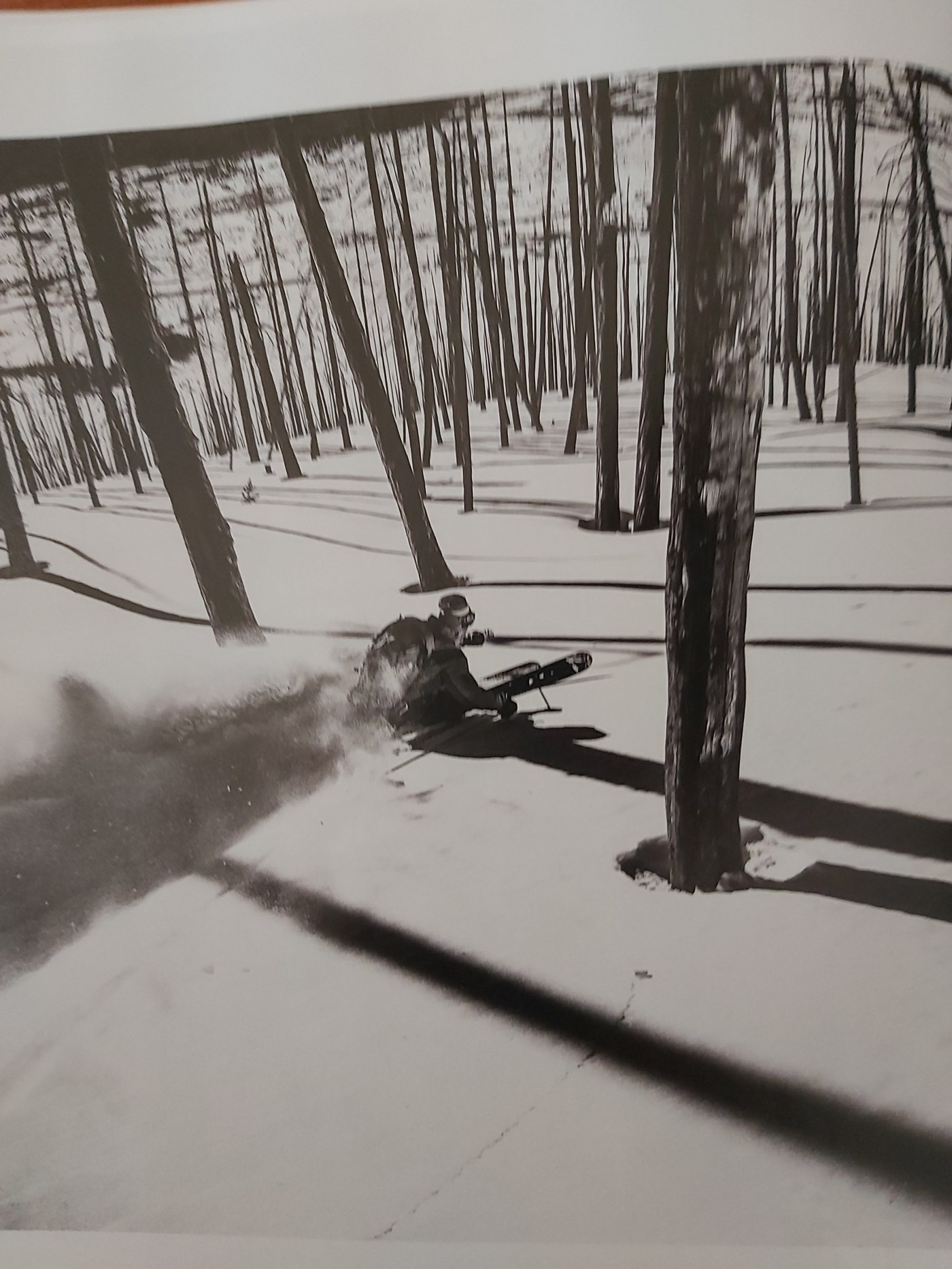
HEADER IMAGE: unknown skier from an old Powder magazine.




 Mountain Journal
Leave a comment