
The theme for the 2026 edition of Mountain Journal magazine will be on ‘our changing mountains‘, which hopes to delve in to some of the many changes that are obvious to anyone who visits the high country on a regular basis.
In the first installment / teaser for the 2026 edition, Stephen Whiteside reflects on a trip up Mt Bogong in 1976 and a recent return to the mountain, and what has changed and what has stayed the same.
A wet walk from Mountain Creek
(Mt Bogong then and now)
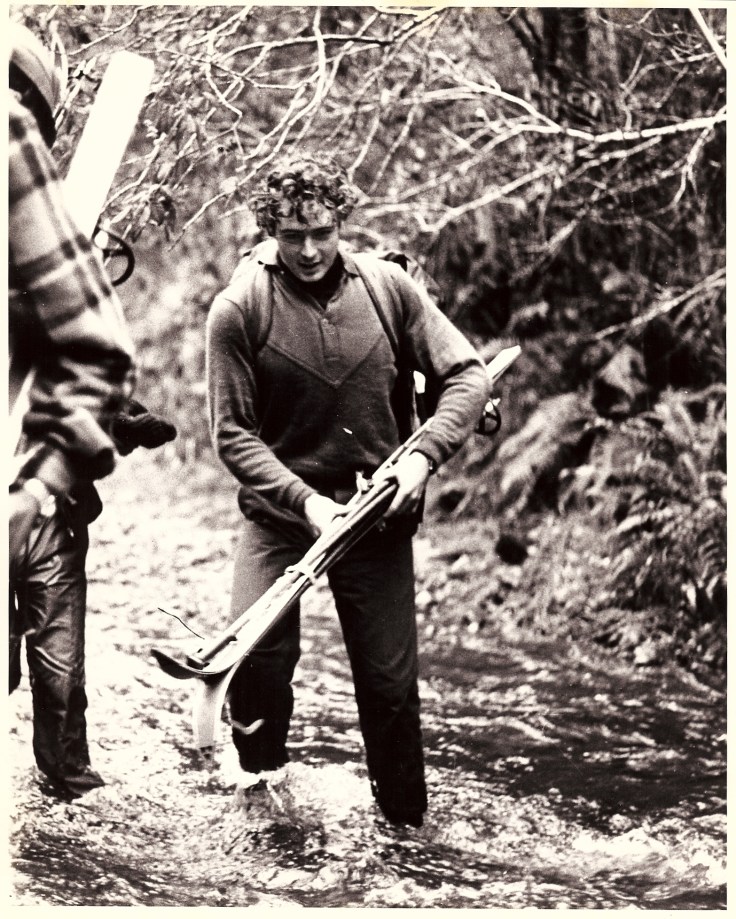
I plunged into the ankle-deep waters of Mountain Creek for the fifth time, as it crossed back and forth across the walking track. My boots and socks, and the bottom of my trousers, were soaking wet. How many more times would I have to do this before we reached the bottom of the Staircase Spur and started the climb up Mt Bogong? How would my feet fare once we reached the snow?
The year was 1976, the month October – ideal for spring skiing, or so we had been told. The weather actually turned out to be dreadful! Earlier in the year, in summer, the same group – six friends, all male, aged about 20 – 23 (together with one other young man) – had climbed the Eskdale Spur to the summit of Mt Bogong, and on to Cleve Cole Memorial Hut, starting at Camp Gap. A few of us had met at the home of Mt Bogong Club member Ian Parfitt the previous year for instruction on how to safely ski Mt Bogong. He had suggested the Camp Gap starting point as the easiest way to climb the mountain. He had pointed out, however, that we would need to hire the services of a cattleman to take us there in his 4WD from Mountain Creek. (Cars were not as good back then, and nor was the road.) We had taken his advice for the walk in February, but this time it didn’t feel worth the hassle. We would just climb the Staircase and take our chances.
We had decided early on that we really needed to stay near the foot of the mountain the night before the climb if we were to reach the hut by sundown. Somehow, we managed to track down the owner of a lone caravan that sat in a paddock on the far side of the Kiewa River. It was ours for the night for a modest fee. We were always able to squeeze in there – half of us sleeping on the floor – and it served us well for many years.
The evening before the first climb we had retired to the Bogong Hotel in Tawonga for a few beers. Sitting at the bar looking out over the mountain, we felt no less than Everest pioneers! (Alas, the hotel was burnt down in 2011.)
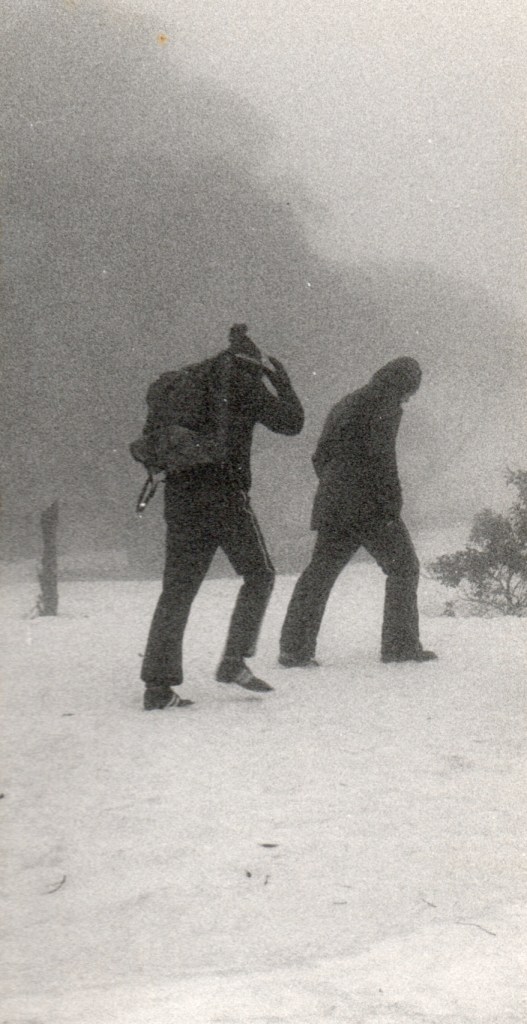
For this October trip, we were asked if we could transfer a large gas bottle from Michell Refuge to the Cleve Cole Hut. We were told this would qualify us for membership of the Mt Bogong Club. Everything was word of mouth. There was no membership fee, no paperwork. I do not recall having ever been told about an AGM or a work party, though they may have existed. There was certainly no internet, no website, no social media and no mobile phones. For that matter, there was not even any Alpine National Park. Mt Bogong was just Mt Bogong. When the National Park was declared in 1989, many people expressed concerns that it would lull people into a false sense of security in regard to Mt Bogong.
Three of us headed off from Cleve Cole in fog and sleet, with an empty pack in which to place the gas bottle. It proved an awkward beast! We took it in turns wrestling it up the Eskdale, and eventually delivered it safely to its new home. We were duly given the key to the ‘inner sanctum’ but, after a season, elected not to continue with our membership, and returned the key.
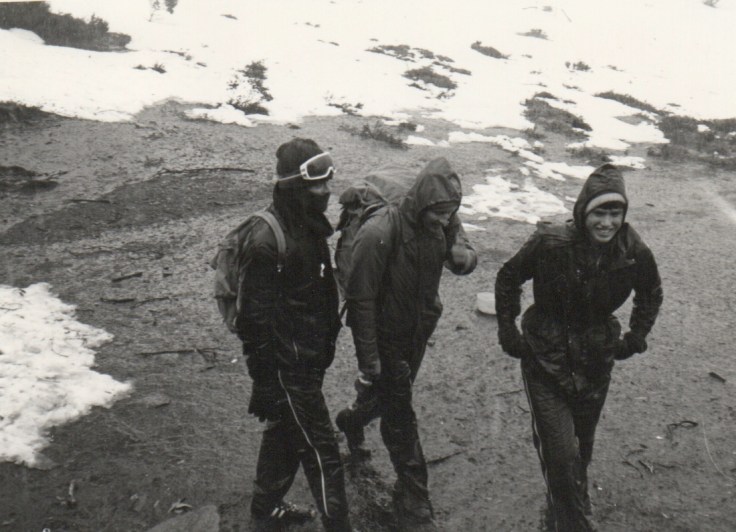
The truth is, we were not sufficiently skilled, strong or enthusiastic skiers to take full advantage of club membership. The gear didn’t help. Looking back, I think we were starting out at a difficult time. The lace-up leather boots and cable bindings that had served the skiing pioneers so well had long gone, but the sophisticated new backcountry and hybrid gear had not yet arrived. We had gone down to the local cross-country ski hire shop in Melbourne and been given skinny lightweight skis (without steel edges) and low-slung lightweight boots that barely reached the ankle. Skiing in this gear along the top of the Eskdale Spur and the summit ridge, with a 20kg pack on your back, was a nightmare, really. I edged forward gingerly, feeling that at any moment I was going to lose my grip, and slide down 500 feet of ice.
My two adult kids, to my great delight, are now members of the Mt Bogong Club, and visit regularly. They talk glowingly of the autumn work parties, and regularly attend the AGM at a trendy pub in Melbourne. I recently visited the mountain with them myself late in the year. We stayed, of course, at Cleve Cole. It was good to be back. The hut had changed little, though a small wooden stove had replaced the open fireplace, and the storeroom was new to me. The new toilets are obviously a huge improvement on the old ‘Clochemerle Rose’ (as the old toilet was called). The drive from Mountain Creek to Camp Gap in a Subaru Forester was not particularly difficult. We certainly didn’t need to track down a local cattleman – not that we could have even if we had wanted to, I suspect. I was struck by the luxuriant growth of grass around the hut. I felt sure this was a new development. Likewise, the vast numbers of hares dancing around the hut.
It is great to see so many people enjoying the hut and the mountain, but the question cannot be avoided. How many people is too many? At what point does backcountry (a term that did not exist fifty years ago, by the way) become front country? How will Mount Bogong look in another fifty years’ time? How do we want it to look?
By the way, my soaking feet fared remarkably well as I trudged through the deep snow on the higher reaches of the Staircase Spur in October 1976. They didn’t feel cold at all!
© Stephen Whiteside 11/12/2025
Photos: Maurice Molan




 Mountain Journal
Leave a comment