Search

Mountain Journal

Environment, news, culture from the Australian Alps

Author

Cam Walker

I work with Friends of the Earth, and live in Castlemaine in Central Victoria, Australia. Activist, mountain enthusiast, telemark skier, volunteer firefighter.

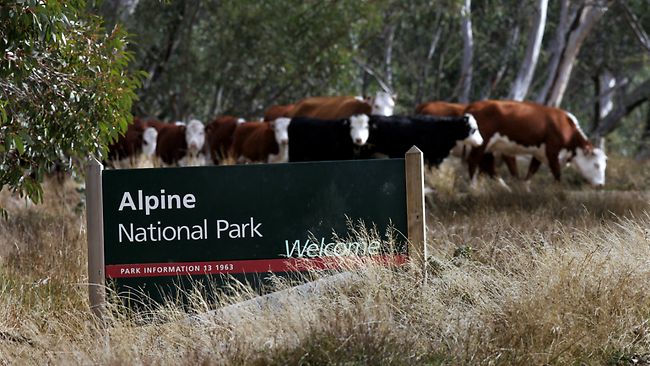
cattle grazing in Alpine Park ‘before winter’?

Rob Harris provides an update on the alpine grazing proposal in the Weekly Times.

You will be pleased to know you have a full 10 days to provide input on more than 20 documents. The paperwork is available here.

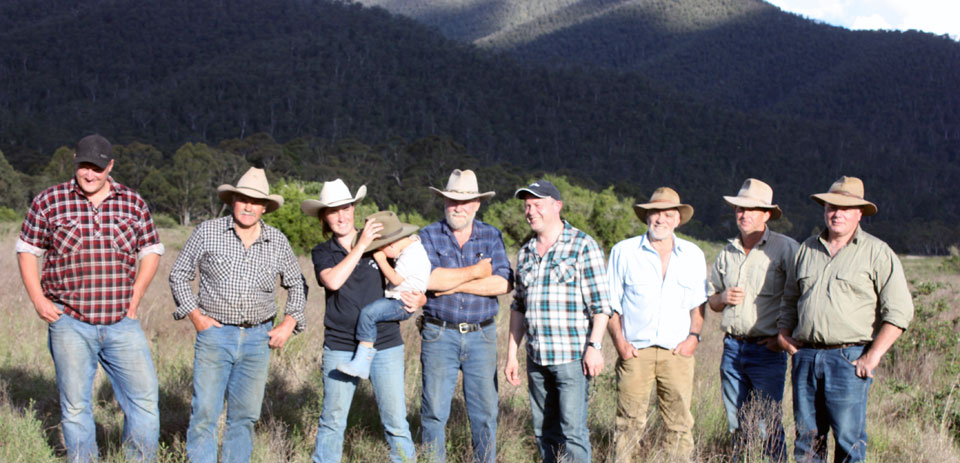
Environment Minister Ryan Smith with mountain cattle graziers, Wonnangatta Valley. source: MCAV

Cattle grazing in the Alpine National Park could return after a full assessment of a proposed grazing trial

CATTLE could graze again in the Alpine National Park before winter after the Commonwealth agreed to a full assessment of a proposed trial.

Environment Minister Greg Hunt last week opened a 10-day consultation period.

Mountain Cattlemen’s Association of Victorian president Charlie Lovick said the decision for a “full federal environmental assessment” made sense.

“No doubt it’s a polarising issue and it’s going to continue to be, but this takes some of the politics out of it and now the worthiness of a trial can be accessed,” Mr Lovick said.

“The 10-day period and assessment means we could still get up there by late March and a short trial this year before returning next year could certainly be advantageous.”

The proposed three-year grazing trial of 60 cattle would take place in the remote Wonnangatta Valley.

Projects deemed by the Commonwealth likely to have a “significant impact” on nationally protected areas requires federal approval.

The process requires the State Government to publish assessments that “clearly articulates any impacts” and will also take into account expert scientific advice and public submissions.

A decision is expected by the end of next month.

Victorian Environment Minister Ryan Smith was asked to submit more information about the trial – particularly a survey of native flora – to the Commonwealth last month.

Grazing in the national park was banned by the Bracks government in 2005.

Mr Smith said the Coalition Government believed there was a “clear need to investigate”.

Past scientific studies, including one by the CSIRO, have ruled grazing did not reduce the risk of fire in Alpine areas.

The Victorian National Parks Association criticised plans to return cattle as “a back door way of getting cheap grazing for their mates” while the Australian Society of Native Orchids has written to the federal minister opposing the return of cattle.

Alpine grazing proposal sent for assessment

alpine grazingTom Arup from The Age newspaper is reporting that the Victorian government’s cattle grazing proposal has been referred for assessment by the Environment Department. It is good to hear that the poorly developed proposal hasn’t been approved and will require further investigation.

However, with the tendency of this government to approval destructive projects, the threat is not yet averted. The state government could use the additional time to actually inform people about the plan by providing more details on how the proposal has been framed. Without additional data, it seems like a deal for some mates rather than a well thought out scientific proposal to see if grazing can reduce fire risk.

Victoria’s alpine cattle grazing trial will face an assessment

Victoria’s cattle grazing trial in the Alpine National Park will face an assessment under the federal environment laws, scuppering any chance of cattle grazing the park this summer.

Federal Environment Minister Greg Hunt has deemed the project a ”controlled action”, meaning that first it will need an assessment by his department, and then his approval. The trial, which the state government says is necessary to see if grazing reduces bushfire risk, would see 60 head of cattle released into the Wonnangatta Valley for three summers.

A larger trial was blocked by the federal government in 2012 under national environment law for the threat grazing posed to the natural and heritage values of the region.

For background on the proposal, check here.

Land of No Use – Montana wilderness ski project

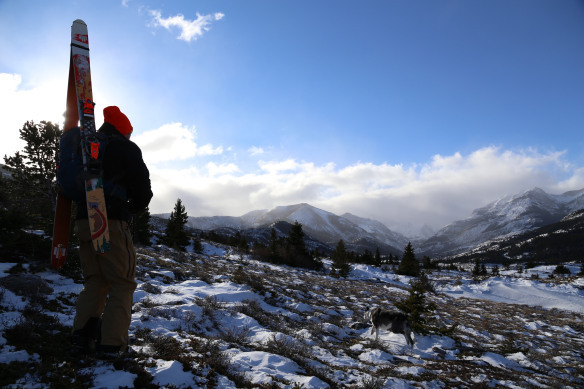
Ry Phipps in the Bob Marshall Wilderness

This is a great project. A group of back country skiers from Montana have joined together to make a film that looks at wilderness in their state – the first in the USA to create wilderness. Designated wilderness areas prohibit mechanised recreation like the use of snowmobiles. The US phenomena of ‘slednecks’ is a huge issue across a lot of the mountainous public lands in the ‘States.

They say:

Land of No Use is a two year documentary project using winter recreation to explore the value of Montana’s public lands.  The title comes from an old bumper sticker and slogan for opponents of wilderness designations (i.e. motorised recreation enthusiasts and timber corporations) that reads, “Wilderness = Land of No Use.”  The narrative of the land management debate will shadow that of a group of young athletes exploring terrain where humans are mere visitors, in a state named for its mountains.

The people behind the project recently successfully crowd sourced funds for the filming and production.

They plan to have it ready for distribution later this year.

Their blog has some great images and videos of their back country adventures.

Valhalla showing in Melbourne

Valhalla.Two years in the making, Valhalla is the latest film from Sweetgrass Productions. The premise of the film is that as we get older we lose our passion for life, that sense of wonder we had as a child, but can find it again.

This is a tale about the search to rediscover the freedom of youth.

Valhalla is like a psychedelic version of ‘Into the Wild’, but with a bit of nudity, a lot of skiing and boarding, a happy ending, and a simple message: Go out there. Find yourself. Bring yourself back and find your place. It’s a homage to ‘70s era surfing and skiing films and counterculture lifestyle, with a sound track to match.

But as with any Sweetgrass film, its also got incredible skiing and boarding footage in some beautiful terrain.

We will also be showing a couple of short films from Sweetgrass before Valhalla: Desert River, a nice flowing piece set in Alaska, and Skiing the Void, about skiing and coming to terms with the loss of friends.

This is being shown as a fund raiser for climber and all round great guy Lincoln Shepherd and his family.  Their house was burnt down in the recent Grampians fire. Feel free to make a donation of any size.

This film is being shown at
LongPlay
318 St. Georges Rd.
North Fitzroy 3068
Tuesday 25 February

Arrive at 6.30 to get a drink and have a chat
Shorts start at 7 (Skiing the Void, Desert River)
Valhalla starts at 7.20pm

Please be aware that LongPlay only holds 35 people so please rsvp if you’re coming along. We have 14 rsvp’s by facebook and email, so please let me know if you’re attending.

Entry by donation – all money raised will go to Lincoln.

Further info: cam.walker@foe.org.au

VIC government opens more parks to prospecting

Prospectors get green light to search in national parks

The Age has reported that the state government has approved for new national parks. The following is an excert from an article by Tom Arup.

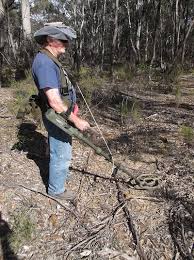
Five parts of the Alpine National Park, one area of the Lake Eildon National Park and two sections of the Lerderderg State Park will now be opened to recreational gold hunters who are often known as prospectors or fossickers.

The use of metal detectors and hand tools will be allowed, but the government has ruled out the use of more elaborate motorised devices sometimes used by prospectors.

A review of the environmental and cultural impact of the decision will occur after one year.

Phil Ingamells from the Victorian National Parks Association said national parks were there for nature, not for digging up.

prospecting”The government acknowledges that prospecting damages natural areas, so it is disappointing that the activity will be allowed in new areas in national parks,” he said.

The decision to open up new areas follows a Victorian Environmental Assessment Council investigation – commissioned by the government – of nine national and state parks to determine which would be most appropriate to allow prospectors access to.

While the council recommended the new areas adopted by the government on Tuesday, it warned in its final report there was clear evidence the practice could damage the natural values of national parks, especially rivers and creeks. It also said prospecting did not sit well with the purposes of national and states parks.

Read the full article by Tom Arup here.

Read background info here.

Buffalo Chalet facing partial demolition, renovation, reopening

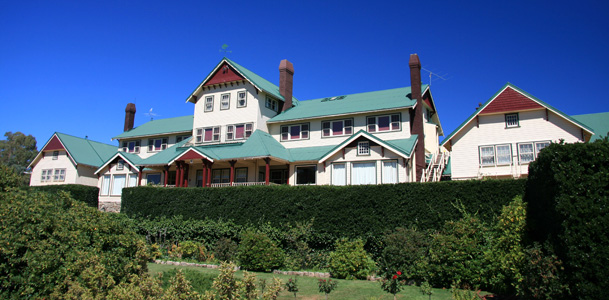
Image: Sustainable Melbourne

The Mt Buffalo chalet is more than a century old, and an icon of the Victorian mountains. There is nothing else remotely like it, inter twined as it is with the post invasion history of the Buffalo Plateau. The chalet is included in the Victorian Heritage Register for its architectural, historical and social significance.

It was closed in 2007, and has been in deterioration since then.

There have been various attempts to save the Chalet, get it renovated and reopened, but as time goes by, the damage to the building continues to grow, making any plan to re-open the whole building for accommodation ever more unlikely.

There are now plans to lift heritage protections to allow demolition of several sections of the lodge.

The Government wants to re-open the publicly-owned building as a visitor day centre and cafe in a $7.5 million restoration.

There is a good story from Chris McLennan of The Weekly Times about the current state of the Chalet and the plans to demolish part of it and reopen the front section of the building.


Woods Point bushfire refuge deemed illegal

With bushfire season still in full force, the kindest thing that can be said about the Victorian Government order to the community of Woods Point that they abandon their fire refuge is that it is very badly timed.

Woods Point is one of the most isolated towns in the state, in a valley in the Victorian high country. Long sections of heavily forested country must be traversed if people are to leave in the case of fire threat and the need for a community refuge is both obvious and necessary.

The following report comes from The Weekly Times, written by Chris McLennan.

Fury as Woods Point bushfire refuge deemed illegal

Woods_Point_Bridge_Street_005A SMALL Victorian town will defy a Victorian Government order to abandon their fire refuge.

Woods Point residents rely on the old gold mine tunnel which has saved the town’s population once before.

Despite the tunnel being the state’s only officially recognised fire refuge for years, new rules governing the construction of refuges have seen the government and local council in the last few weeks refuse to accept legal liability for the structure.

Signs nominating the tunnel as a fire refuge are to be removed and residents fear a gate on the entrance will be padlocked.

”Do they want us to die?” member of the town’s safety committee, Margaret Martyn said.

Fire Services Commissioner Craig Lapsley yesterday said the tunnel, known locally as the adit, did not meet the new building requirements to be a community fire refuge.

The Country Fire Authority yesterday began an assessment of the tunnel hoping to reclassify it as a “Neighbourhood Safer Place” but the question of legal liability remains.

Mr Lapsley said the CFA, Victoria Police and the Fire Services Commissioner would continue to work with Mansfield Shire Council to resolve the issue.

He said before the 2009 Black Saturday bushfires, there was an adhoc and inconsistent approach to the designation of community fire refuges.

You can read the full story here.

More fires – less snow gums?

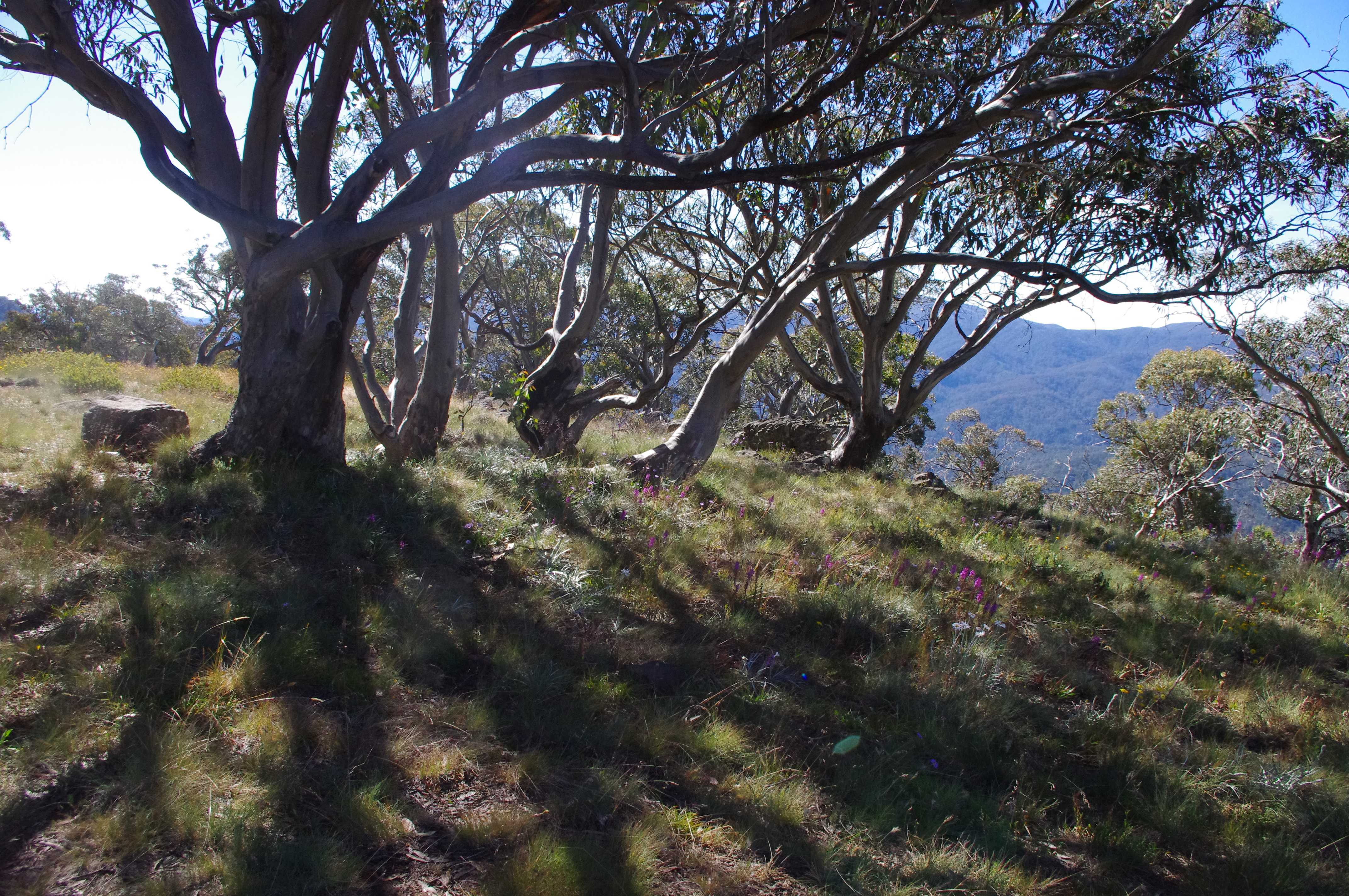
IMGP6629Snow gums are the quintessential alpine tree on mainland Australia, generally growing at heights between 1,300 and 1,800 metres asl. Forests and woodlands of Eucalyptus pauciflora can look quite uniform from a distance, but up close they have such character.

But wildfire has been devastating large swathes of snow gum habitat, with significant fires in the Victorian High Country in 1998, 2002/3, 2006/7 and 2013 and in the Snowy Mountains in 2003.

Research is showing that if we want to allow snow gum forests the chance to recover from these fires, we need to keep the cattle out and do our best to stop any future fire activity.

This story available here.

Sochi Olympians speak out on climate change

An interesting piece on the efforts of some Olympians and Paralympians who are speaking out about the need for concerted action to reduce greenhouse emissions. This comes from the Sustainable Play website and is written by Brad Rassler.

Brad notes that just 83 athletes, primarily from the U.S. and Canadian squads, and just a few from outside North America, have signed on to speak about the need for action on climate change at the Sochi Games.

Wouldn’t it be great to see some of our winter athletes raising the issue at the Games?

Sochi Olympians Speak Out On Climate Change

olympic athletesU.S. cross country skier Andy Newell will travel to Sochi, Russia in two weeks to compete in the Winter Olympics. And though his aim is clear — to stand atop the podium — he’s traveling to the Games with more than precious metal on his mind.

For the past two months, Newell, 30, has quietly appealed to his fellow Olympians to leverage the Sochi Games as an opportunity to speak to world leaders about the ravages of global climate change on the winter snowpack. The petition he’s been circulating, Olympic Athletes for Action Against Climate Change, makes the case to his fellow competitors in four paragraphs:

Winter is in jeopardy.  Inconsistent weather patterns caused by a changing climate are causing destruction around the world, and the economic impact is being felt in both large cities and small mountain communities.

    As winter Olympic athletes, our lives revolve around the winter and if climate change continues at this pace, the economies of the small towns where we live and train will be ruined, our sports will be forever changed and the winter Olympics as we know it will be a thing of the past.

    The power we have as Olympians on a global stage is immense.   Let’s use this year to make a collective statement, to send a message to the world’s leaders to recognize the impact of climate change and to take action now.

Please join us by signing this letter.

That letter, addressed to the world’s leaders from the petition’s signatories, is comprised of a simple sentence containing a powerful ask:

“…to recognize climate change by reducing emissions, embracing clean energy and preparing for a commitment to a global agreement in Paris in 2015.”

The call to action refers to the United Nations Framework Convention on Climate Change in Paris, schedule for November 30 – December 11, 2015.

Newell has thus far been joined by 82 athletes, primarily from the U.S. and Canadian squads, and just a few from outside North America. He hopes to have 100 signatures before the Games begin in two weeks, but admits getting athletes to step up and sign has proved tougher sledding than he thought.

“It’s a tricky situation. Not only because it’s hard to get the word out there to people in different countries, but a lot of athletes are reluctant to sign things in general in an Olympic year.  They don’t want to cause a controversy.  They don’t want to use the Olympics as a platform for protest either, necessarily.”

Newell, who counts 350.org founder, author and environmental advocate Bill McKibben as one of his heroes and mentors, concedes that the life of an average Olympian, with its requisite air travel, isn’t exactly easy on the planet.

“We burn a lot of fossil fuels chasing the winter around and trying to go to these competitions.  I think a lot of us feel bad about that.  But that’s our job and our livelihood and our passion.  But at the same time, we try to use that – the professional athlete as a platform — to try to raise the awareness of people that may not understand what’s going on out in the environment.”

“I didn’t necessarily want to use the Olympics as a platform for a protest, necessarily,” Newell says. “But I wanted to at least try to get a lot of athletes on board to sign this letter and basically get it to their heads of state, to say, you know, we’re Olympic athletes and we can’t continue to support ourselves and this kind of livelihood if our winters keep disappearing, and we want you guys to recognize that there is some climate change happening.”

The U.S. cross country team’s winningest athlete and gold medal favorite, Kikkan Randall, has signed the petition.

“I grew up in a family that was very respectful of the opportunities that we had to be out in the environment, and to try to do our part, the best we could, to contribute to the health of the environment,” says Randall. “And certainly being involved in a sport that does rely on the weather and the fact that climate change could effect our sport…I think athletes, doing what we do, we have a great platform to go and encourage others…to do their part.”

Protect Our Winters (POW), a California-based non-profit whose athlete-advocates get the word out about climate change, has stepped forward to boost international attention to Newell’s petition. Chris Steinkamp, POW’s executive director, says that Sochi is an ideal backdrop for an athlete alliance to speak out about climate change.

“The Olympics is the perfect stage for something like this.  Obviously, it has a history of social issues. But I think this is the first time that climate change has come up, and it’s because obviously climate change is a hot issue right now. Sochi is one of those places where it could be a real issue in the next couple of weeks, and the conditions and the weather might be really inconsistent.  So it’s a perfect storm for this issue to be recognized.”

Or maybe an imperfect storm, climatically speaking. Steinkamp says that although climate change is well documented by the science, global leaders have not yet taken the necessary actions to curb its progress, and the time to act is now.

“Every year we all go into these climate conferences, these international global discussions about climate change with high hopes that something is going to be done, and nothing ever really does get done.  So the goal of the letter is two-fold:  To really let world leaders know that something needs to be done, but also let them know that something needs to be done in Paris in 2015.”

Whether international decision makers heed Newell’s call remains to be seen. Steinkamp views the alliance itself, the first of its kind, as a significant flag in the snow.

“The cool thing is that you’ve got these Olympians that are standing up for climate change, and with this platform that they have in Sochi, [they have] the opportunity to speak their mind. Because the only way that the world leaders are going to listen is if the population lets them know about it.”

According to CNN, over 6,000 Olympians and Paralympians will compete in Sochi. Newell has just 82 with two weeks to go.


The practical realties of social change suggest that as more athletes sign the petition, the safer it becomes for those sitting on the fence to participate. This author of Sustainable Play has created his own petition, encouraging the readership of this site to ask the remaining 5,900 to take an Olympic-sized stand for this Olympic-sized issue. Reassure them that climate change transcends mere politics; it’s a phenomenon without borders.


Click on the “petition’s petition” here:


http://tinyurl.com/kn395tj
volunteers needed for Australian Alps Walking Track Project

Conservation Volunteers Australia and Parks Victoria are calling for volunteers to help restore remote sections of the 650-kilometre Australian Alps Walking Track.

Helicopter Spur
Helicopter Spur

Last summer saw helpers spend 120 days in Alpine National Park Across repairing 23 kilometres of track, laying 930 metres of rubber matting and installing water bars to prevent erosion at locations including The Knobs, Mount Sunday and Mount McDonald.

Remote sections of the track are difficult to maintain over time and help is needed to clear fallen timber off the track, install rubber tiling, brush-cut overgrown vegetation and to install crucial signage and symbols to help guide bushwalkers on their adventures in the Australian Alps.

There will be three projects in March and April which are rated hard walking, and involve remote camping in the King Billy/ Mt Magdala/ Mount Clear/Knobs areas of the Alpine National Park.

Full details here. (Search for Victorian projects on the map, then click the project in the Alpine national park) or check this leaflet on the trips.

For more info, contact volunteer engagement officer Adam Smolak on asmolak@conservationvolunteers.com.au

The trips are:

Australian Alps Walking Track Project Mt Clear/Nobs Area
2nd to 8th March 2014
16th to 22nd March 2014
Please check here for more info.

Australian Alps Walking Track Project King Billy Mt Magdala Area
30th March to 5th April 2014

See more here.

The Little Things – A new snowboard film project from Marie France Roy

The following comes from Snowboarder Magazine. There is a trend emerging of snowboarders and skiers – who are often keenly aware of how climate change is already impacting on mountain environments – taking on a more vocal attitude about the need for change. This is one more example of this.

the little thingsMarie-France Roy has earned many accolades during her snowboarding tenure for her talent when standing sideways. She has put out some of the most influential video parts of the past decade and has chops in both the backcountry and the streets.

Last season, Marie embarked on a journey to give back to the sport she loves and create a film that would share the stories of snowboarders who are committed to living in a way that positively affects the environment as much as possible. The movie is called “The Little Things” and will follow Marie and the rest of the crew this season before culminating in a release in fall 2014.

You can see the trailer for the film here.

Nowa Nowa mine proposal moves to approvals stage

The following update is an excert from an article in The Age, journalist is Jason Dowling.

Surge of activity could see Victoria playing mine host

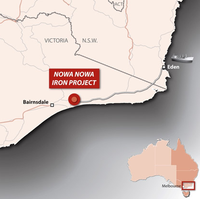
nowa nowaVictoria could soon boast a new commercial iron ore mine amid a surge of mining activity.

A combination of increased mineral prices and a supportive state government is driving a rejuvenated local mining sector with hot interest in exploration licences.

This week Eastern Iron advised the stock exchange it had moved into the environmental approvals phase for a commercial iron ore mine at Nowa Nowa, 30 kilometres from Lakes Entrance.

The proposed East Gippsland iron ore mine would be in the Tara State Forest, and would include a 25-hectare open pit.

The mine would have a span of about 10 years and produce about 1 million tonnes of iron ore a year to be exported from near Eden.

Eastern Iron’s managing director, Greg De Ross, said he did not believe there were environmental reasons to prevent the mine, and said the area had already been heavily logged.

”It is certainly not pristine wilderness,” he said. ”There are no show-stoppers from an environmental perspective.”

For a background on this proposal, check here.

Blog at WordPress.com.

Up ↑