Search

Mountain Journal

Environment, news, culture from the Australian Alps

Author

Cam Walker

I work with Friends of the Earth, and live in Castlemaine in Central Victoria, Australia. Activist, mountain enthusiast, telemark skier, volunteer firefighter.

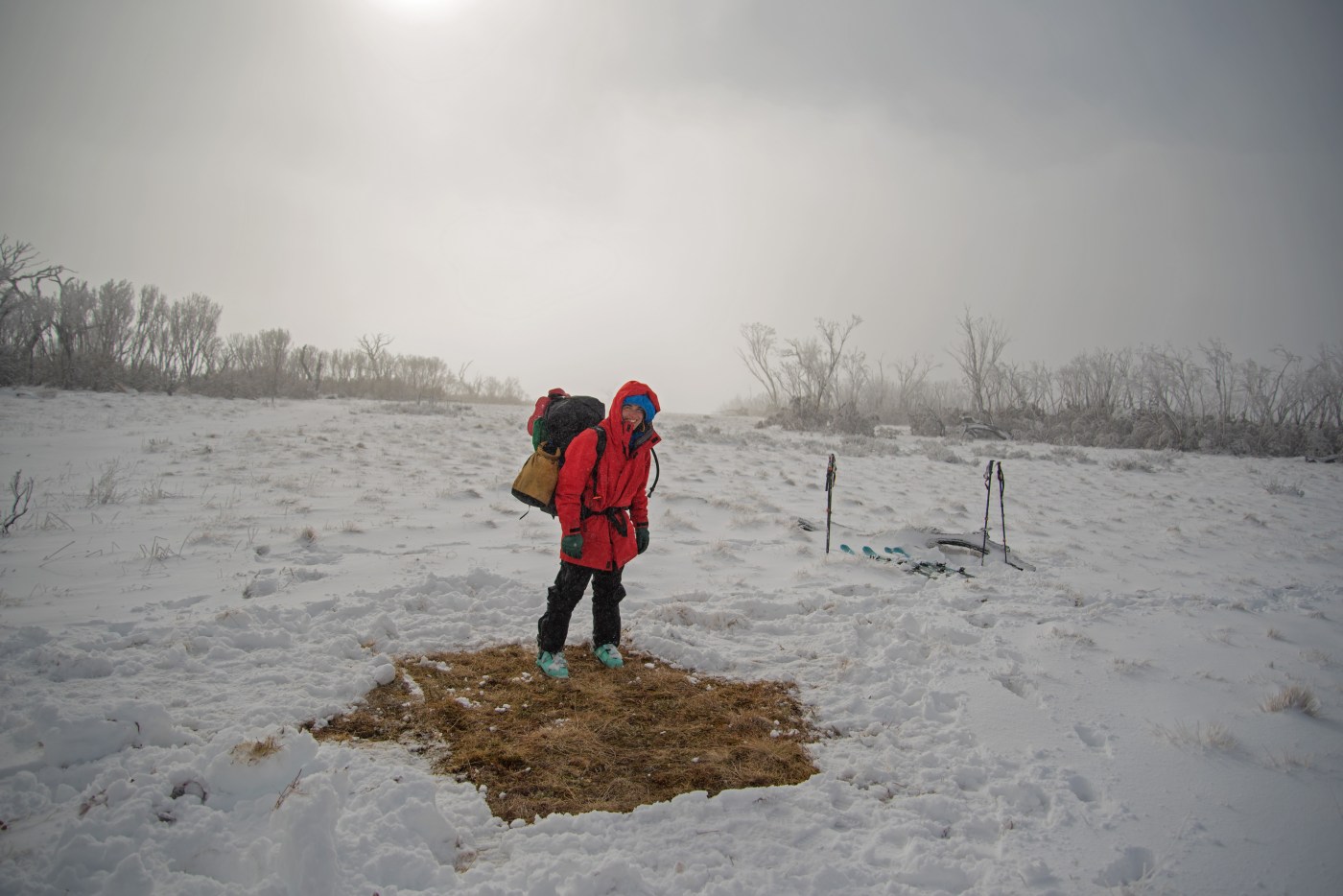
The Hills Sisters Ski the AAWT

The Australian Alps Walking Track (AAWT) is the premier long distance walking track through the Australian mountains. It starts in Walhalla in Victoria, crosses the Victorian Alps and the Snowy Mountains and goes almost to the outskirts of Canberra. It is 650 to 704km in length, with an epic 28,000 metres of elevation gain during the length of the walk.

Marita Hills recounts her winter journey along the AAWT with her sister Angela.

Continue reading “The Hills Sisters Ski the AAWT”

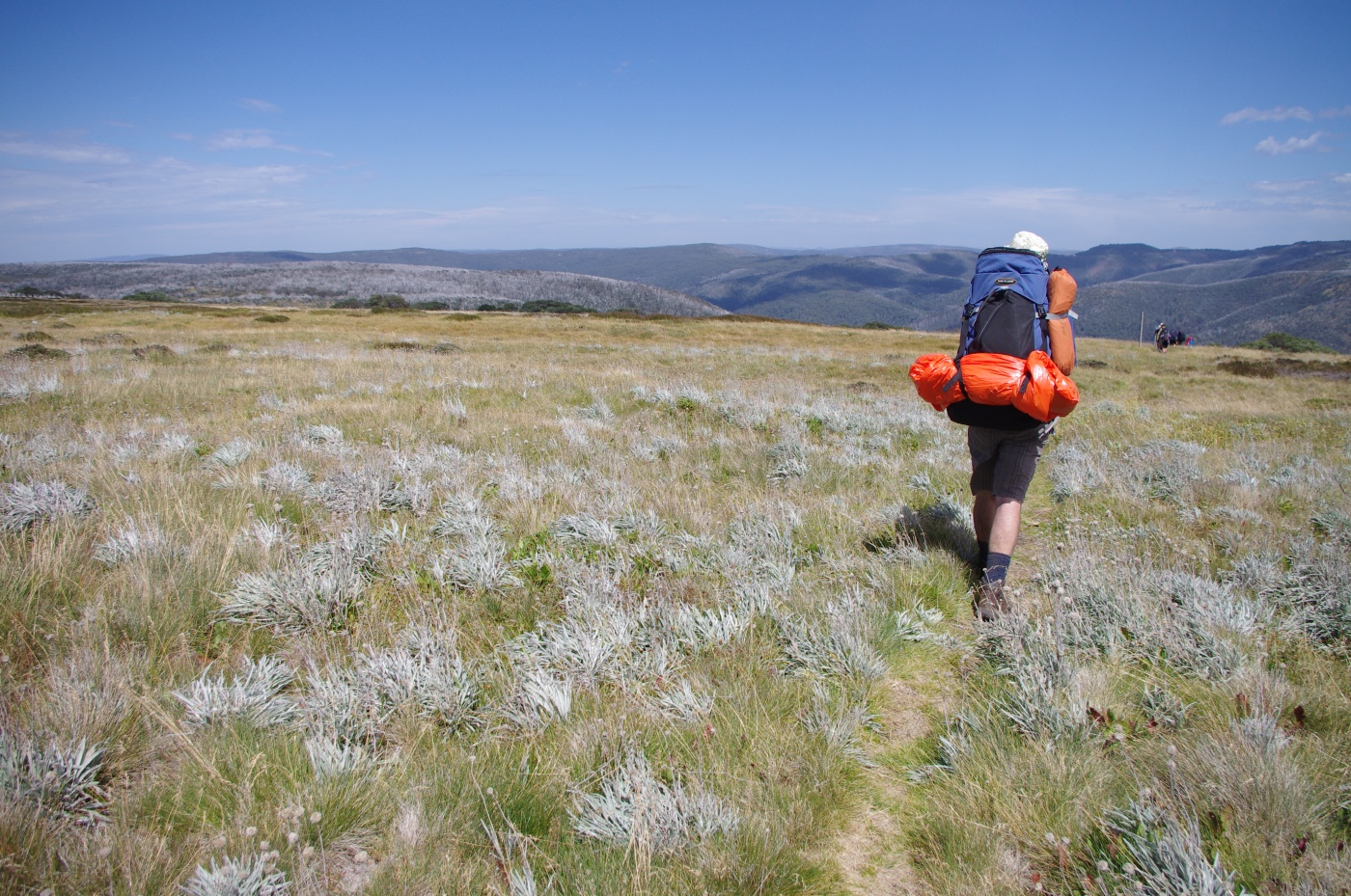
A solo journey on the AAWT in support of mental health

Elise Marcianti reflects on a 300 km solo journey from Kosci to Bright along the Australian Alps Walking Track (AAWT). Her journey – done as a fund raiser for mental health campaign Moving For The Mind –   started with an ultra in Kosciuszko then hiking down to Bright, drawing illustrations of the mountain huts along the way.

Continue reading “A solo journey on the AAWT in support of mental health”

Now is the time to speak up against commercial development in the Alpine national park

The Falls to Hotham Alpine Crossing (FHAC) is a 37km hike located in the Alpine National Park in north eastern Victoria. The hike generally is done as a 3 day trip, and links the resort towns of Falls Creek and Mt Hotham (starting and finishing slightly outside each town). It is hugely popular.

The creation of the walk, which simply connected existing tracks was a smart way to create an ‘iconic’ walk without much in the way of infrastructure (there are camping platforms at the two suggested overnight sites).

However, like other state governments, the Victorian government has been focused on encouraging private commercial development within national parks, including within the Alpine National Park. The Falls to Hotham Alpine Crossing Master Plan proposes an ‘improved’ option for the FHAC which would make it a 57-kilometre, multi-day route which will take in the Diamantina Spur and Razorback as well as the Bogong High Plains.

Continue reading “Now is the time to speak up against commercial development in the Alpine national park”

MJ turns 14

JAN 2024

What even happened last year? Another mild summer, no big fires, then truly dazzling amounts of autumn snow, a great start to winter, then, nothing. Rain and warm temps and misery and the snow pack was gone, not to return. Early end to the season in many places, especially the lower resorts. The usual denial and grumpy guys ranting on line if you dared to mention the ‘climate’ word. Muddy spring and now, another mild summer – a bit different to the El Niño scorcher we had been expecting (so far at least).

Yes, this is the new reality. Climate systems turned on their heads. Wild floods up north, while more than 14 million hectares burnt across the Northern Territory alone during our spring. Erratic winters and wild swings of weather. Buckle in, because it’s not going back to ‘normal’ any time soon.

Then there are the wars raging across many parts of the planet.

And yet, the world can still feel right. Those long autumn days with a slow wander across snow plains, the light rich, the air cool, the distant peaks calling. We are blessed to live in a safe corner of the planet with beautiful hills and forests, rivers and high plains. The freedom and safety to explore. Let us be grateful, as we work for a better world for all.

You can read the full reflection here.

Native forest logging stops in VIC high country on JAN 1!

On January 1, 2024, all native forest logging on public lands in the east of the state will end. This is a wonderful win for forests, animals, landscapes and the climate, and comes after decades of hard work by many thousands of people.

In recent years Friends of the Earth (FoE) has been campaigning to protect areas of high conservation forest in the north east of the state from logging. We are proud to have played a significant role in the long campaign to gain an end to native forest logging in the east of Victoria.

Here is a brief summary of the recent campaign in the north east and the high country.

Continue reading “Native forest logging stops in VIC high country on JAN 1!”

Welcome coverage of threats to snow gums in The Age

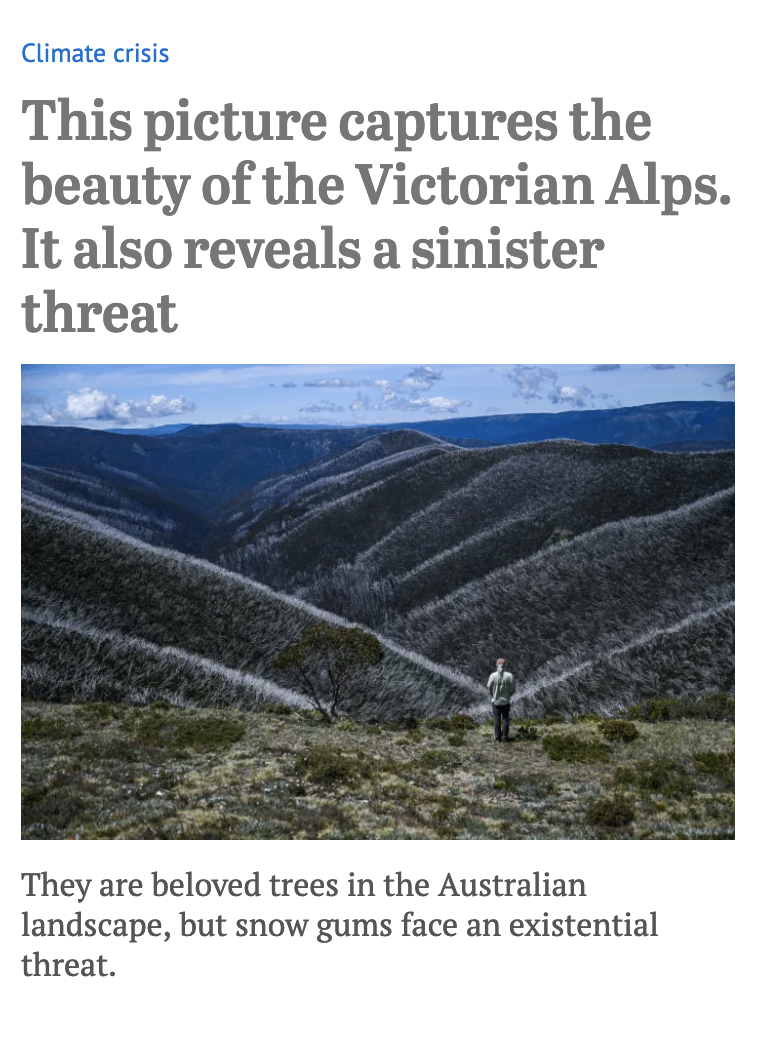
You may have seen today’s story by Miki Perkins in The Age here.  It considers the threats posed to snow gum woodlands (and other mountain forests) by more frequent and intense bushfires.

The story says ‘the global climate crisis, driven by humans burning fossil fuels, has brought a new threat to these mountain peaks: more frequent and more intense bushfires.

Because snow gums have not evolved to cope with these conditions, experts say the nature of Australia’s high mountain landscapes are changing, and the ecological collapse of snow gum woodlands – the abrupt decline or change of this ecosystem – is happening before our eyes’.

Continue reading “Welcome coverage of threats to snow gums in The Age”

‘Another year over. And a new one just begun’

Well, here we are, on the other side of Christmas and wandering towards new years. As the grinding horror of war continues in places like Gaza and Ukraine, I am reminded yet again of how lucky we are to find ourselves in this peaceful corner of the planet.

While ‘new years’ for me is the end of the winter snow, the public holiday and all the hype attached to it is a good excuse to reflect on life and plan some adventures as we get to the end of the calendar year.

Continue reading “‘Another year over. And a new one just begun’”

California acquires 7 large firefighting planes – could Australia use this model?

We know that there is growing pressure to increase our fleet of large firebombers. There are Large Air Tankers (LATs) and ‘Type 1’ helicopters which can carry large loads of water/ retardant and which can have a big impact in terms of slowing fires so ground crews can then fight them.

Australia generally needs 6 or 7 LATs in an average summer, and only two of these are located here year round (and only one is actually owned locally, by the NSW Rural Fire Service). The others are leased in from the northern hemisphere for the fire season. As climate change causes fire seasons to become longer in both hemispheres, relying on leasing them becomes a riskier and more expensive proposition.

That has led to proposals to buy our own national fleet of LATs. This was recommended by the Bushfire Royal Commission into the 2019/20 Black Summer. The Commission recommended ‘The development of a modest Australian-based and registered national fleet of VLAT/LAT [Very large Airtanker/Large Air Tanker] aircraft and Type-1 helicopters, jointly funded by the Australian, state and territory governments, will enhance Australia’s bushfire resilience’.

It has also prompted conversations about whether we can repurpose aircraft that are already owned by the Australian Defence Force that are nearing the end of their military working life which could be re-purposed to become firebombers (there are some notes here about converting Lockheed Orion planes from the RAAF into firefighting aircraft, with a variety of views about the viability of this proposal).

Even in North America (where we lease our LATs from) there is increasing competition between agencies and states to access large firefighting aircraft. In an announcement (published by Hotshot Wake Up, a podcast that covers all things fire based in the USA) it has been noted that California has acquired 7 publicly owned C-130 planes, which are being transferred from the Coast Guard and which will be retrofitted to be able to be used to fight fires. The announcement states that they will also be used for ‘search and rescue, and emergency operations related to wildfires’.

Surely this is an indicator of options the Australian government could be pursuing here to build the number of publicly owned large air tankers.

Continue reading “California acquires 7 large firefighting planes – could Australia use this model?”

Walker registration in remote TAS World Heritage Areas – how is the system going?

There has long been a permitting system for people wishing to walk the Overland Track in lutruwita/ Tasmania. Since 2021, there has also been a registration system for the Western and Eastern Arthurs and Mt Anne area, Lake Rhona and the Walls of Jerusalem. Many of these areas experienced visits from a record numbers of walkers during the 2022-23 season.

How is the system going? The general feedback from walkers visiting these areas is that the system is needed to manage environmental impact and crowding, but that the system itself needs to be reviewed and improved.

Continue reading “Walker registration in remote TAS World Heritage Areas – how is the system going?”

2024 Backcountry film festival lineup announced

The 19th Annual Backcountry Film Festival is put together by the Winter Wildlands Alliance (WWA). It will be screening a collage of short documentaries and ski movies about the pursuit of objectives and ideals in the mountains, artistic vision, friendship, and how the snowsports community is adapting to a changing environment.

We are yet to set the date for the 2024 festival: it will happen in Melbourne in late April or early May.

We normally start with some speakers from local backcountry groups and feature a couple of short locally made backcountry films, then get into the WWA program.

Continue reading “2024 Backcountry film festival lineup announced”

Killer trees of the high country

A year or so ago I was on a fireground, ‘mopping up’ a fire that had run up a hill through a scrubby forest of Box and Stringybark. There were a surprising number of nasty looking trees with hanging branches or burnt out crowns, so we were working slowly and carefully, to stay out of danger. One of the others, an older guy with decades of firefighting experience told me of a day years ago when he was fighting a fire in Ash country up in the Central Highlands. He turned around at one point to find his mate dead on the ground. A branch from an Ash tree (not sure if it was Alpine or Mountain Ash) had hit the man in his neck at the top of his spine and killed him instantly.

We all know that Alpine Ash love to throw small branches that fall almost as spears and end up stuck in the ground. I was thinking of this story as I wandered through an Alpine Ash forest the other day after a big stormy front had come through. All around there were ‘spears’ sticking up from the ground. I was glad I was safely camped in a clearing when that wind was blowing.

Continue reading “Killer trees of the high country”

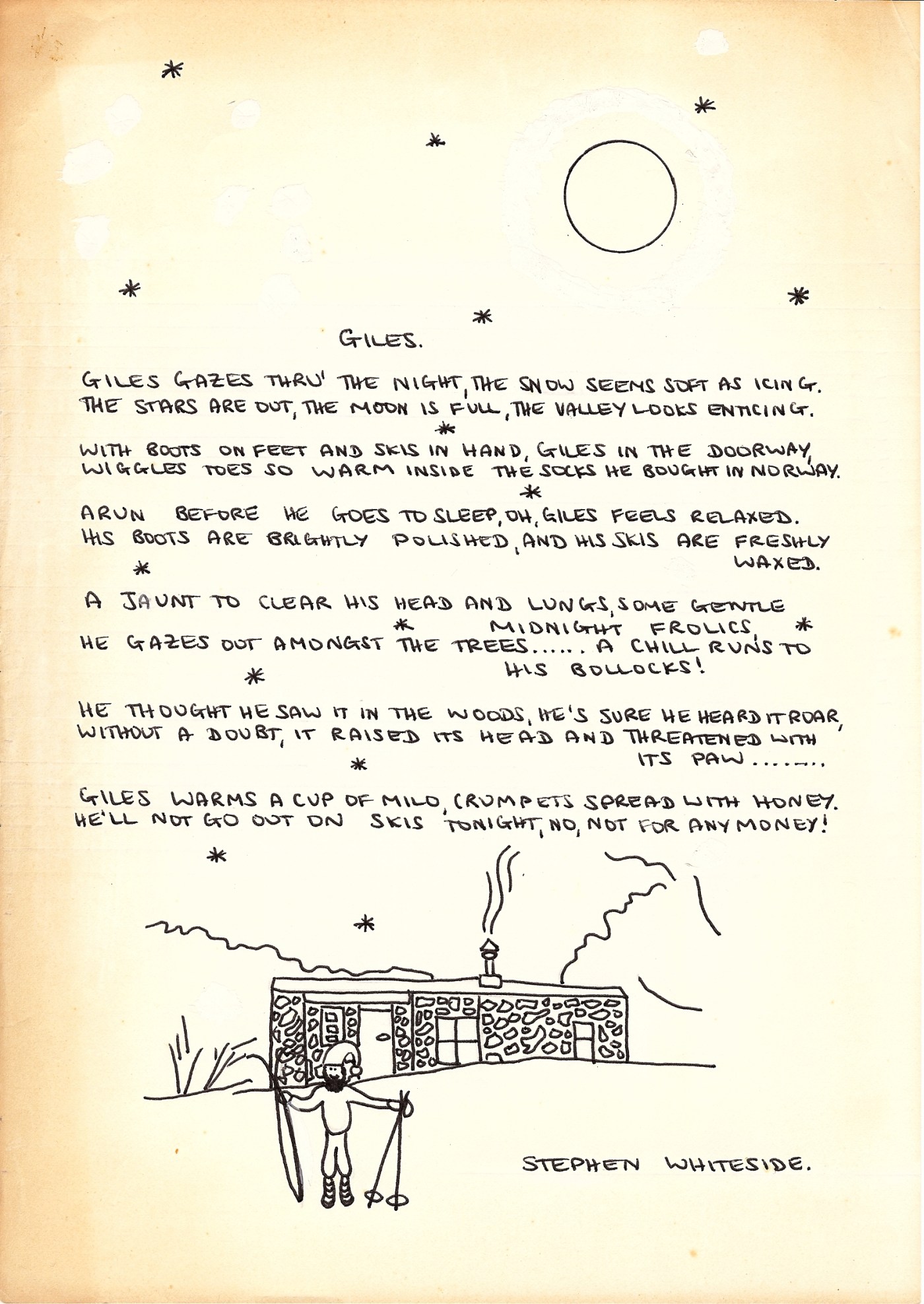
‘Giles’, Mt Bogong, and Cleve Cole Memorial Hut

We love receiving feedback on the magazine. Lately there have been quite a few emails come in from people who have spotted copies of the magazine in places as scattered in Derrick Hut and a cafe in Thredbo. But this is the first time the feedback was a mountain poem.

Stephen Whiteside has provided this one as part of his efforts to help create a body of bush verse that relates to the snow country.

Continue reading “‘Giles’, Mt Bogong, and Cleve Cole Memorial Hut”

Blog at WordPress.com.

Up ↑