I work with Friends of the Earth, and live in Castlemaine in Central Victoria, Australia. Activist, mountain enthusiast, telemark skier, volunteer firefighter.
The effects of climate change on Australia’s alpine areas could mean the end of the ski season.
AUSTRALIA’S ski slopes could be completely bare of natural winter snow by 2050 unless concerted action is taken against global warming, according to a government-commissioned report that paints a grim picture of the effects of climate change on alpine areas.
The report, Caring for our Australian Alps Catchments, has found the Alps, which stretch from Victoria through New South Wales to the Australian Capital Territory, face an average temperature rise of between 0.6 and 2.9 degrees by 2050, depending on how much action the international community takes to combat climate change.
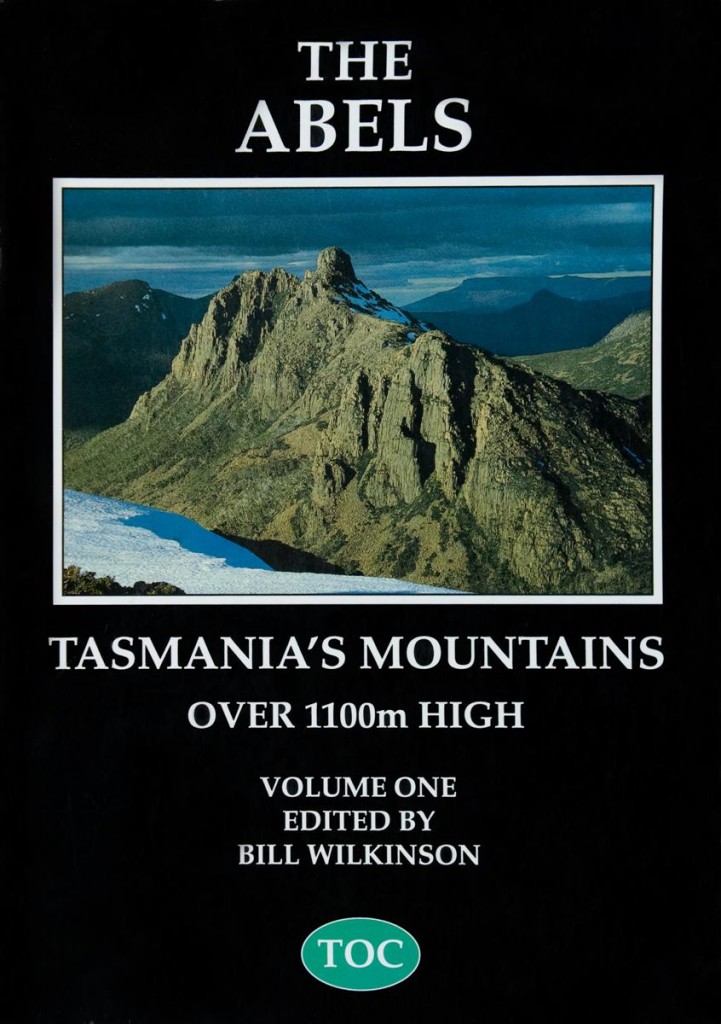
This book, the long awaited second volume covering Tasmania’s mountains over 1,100 metres in height, which covers the west and south west of the state, is absolutely gorgeous.
This volume is considerably longer than the first, with good introductory essays on animals, plants, geology and weather.
As with the first volume, it has profiles on all mountains in the region over 1,100 metres, opening lots of options for peaks you might have glimpsed from afar or seen on a map, but weren’t quite sure about how to get there or what the terrain might be like.
This article comes from the Bright Observer, journalist: ALEX BAIRD
Hopes are high
Group waits for government to back push to give chalet new lease of life
The Gorge, Buffalo Plateau
DESPITE no word from the State Government on the future of the Mount Buffalo Chalet, hope remains strong among members of the consortium fighting to reopen the building that a positive outcome will occur.
The Mt Buffalo Community Enterprise (MBCE) group submitted a comprehensive proposal to Parks Victoria in May, which was designed to show the merits of returning the chalet to its former glory.
MBCE executive director Mark McKenzie-McHarg said while talks were still in place, there had been no official word from the government on whether it would back the chalet, which has been closed since 2007 after a lease dispute.
“There’s no further news at this stage, but we are hoping to hear something in the coming weeks,” he said.
“We are involved in discussions and are hopeful we can come to some sort of arrangement.
“We still feel positive, we don’t have any certainty about this.
“It’s a big project and we feel it’s important to be patient.”
For any plans to go ahead to restore the famous building, Mr McKenzie-McHarg said it would need a “significant government contribution” and while the group had plenty of local support, until a government response was forthcoming, the group wasn’t getting too excited.
“We’ve had a lot of interest from a range of different community groups,” he said.
“We really need the State Government to commit, but until that happens we aren’t trying to have too big a profile.
“We think it’s important to be patient, because it’s such a big project, we’ve already submitted business cases and proposals.
“If we do get their backing, that’s when we’d go out and try and get more people onboard.”
As spring bears down on us, I know lots of people are off on last minute missions to the hills before its all over. Am off soon to Mt Stirling to see whats on offer in Stanley Bowl. It reminded me of this nice little story from my friend Andrew from last spring.
“Below, one last drop before the long summer and dusty roads and work and endless heat, waiting for those cold fronts to push through off the southern ocean. Just before I drop, I feel on the cusp of height and gravity, a small, fleeting moment of grace. I wait a minute more, weightless and happy and alone and yet in company. The whole world below beckons, and I treasure the thought of those few minutes of turns and no time for any other thoughts, and then push off into that space and that moment. One last time”.
Once again, the media is reporting further evidence that the controversial alpine grazing re-introduced to Victoria’s alpine national park early this year has very little to do with scientific research and a lot to do with grubby politics.
The following article comes from The Age, the journalist is Melissa Fyfe.
The backcountry ski and boarding community is in a state of shock with the news of the death of Graeme Nelson on Mt Feathertop yesterday.
The following are some clips from news stories on his death.
To my mind, having met and skied with Graeme, this comment from Treeski posted on the Backcountry Forum sums up my feelings this morning:
“looking out at feathertop today from hotham there’s a dark cloud sitting over the mountain as if in mourning for it’s fallen hero. RIP Graeme and thank you for inspiring us”.
Postings on the BC Forum highlight the depth of respect that we all held for Graeme. He was well liked, and seen as being passionate about life and his many interests, and generous of spirit. His trip reports and backcountry knowledge – always willingly shared – were famous in the Forum. Go well, Graeme. Wishing all the best to his wife Janice and family in what must be a terribly sad time.
Eden doctor killed in Victorian skiing accident
BY AMANDA STROUD, writing in the Eden Magnet.
25 Aug, 2011 10:23 AM
Dr Graeme Nelson, the 56-year-old co-founder of the Curalo Medical Clinic in Eden, has been killed in a tragic accident while cross-country skiing near Mount Hotham in Victoria yesterday afternoon.
Dr Nelson is understood to have fallen down a 700 metre icy slope around 1.30pm.
His body was recovered late yesterday afternoon by Victorian police.
Dr Nelson’s wife and clinic co-founder, Dr Janice Nelson was at the medical clinic yesterday afternoon when she was contacted by Victorian police with the devastating news.
Colleague and friend of nearly 20 years Dr Michael Pentin was also at the clinic when the call came.
“We heard about it around 5.30pm last night.
“We were just dumbfounded.
“The clinic is a very morose place today, both the staff and the patients,” Dr Pentin said.
Graeme Nelson loved outdoor sport and was a keen surfer, bushwalker and skier.
“He liked cross country skiing over the more remote areas in Australia and has skied in the Himalayas recently,” Dr Pentin said.
“Graeme was a very experienced skier, both alpine and cross country skiing.
“He was also very keen on surfing- he was a very accomplished surfer – and bushwalking,” he said.
“He was doing what he loved doing, which is the only consoling thing.
“It’s a lesson to us all – to do things before it’s too late.
“He made the best of his time off, he always made the best of it,” Dr Pentin said.
Graeme and Janice Nelson moved to Eden in 1989 from Wonthaggi, Gippsland Victoria to establish the husband and wife practice which celebrated its 20th birthday in 2009.
The clinic is the only general practice in Eden and has been integral to developing local aged care.
Skier’s body recovered from Mt Feathertop
From Channel Nine.
NB: if you access the news report on this page about Graeme’s accident you will be forced to endure an ad for toothbrushes first. Channel 9 clearly doesn’t want a tragedy to get in the way of the profit imperative.
The body of a 57-year-old cross-country skier who went over a 700-metre drop on a Victorian mountain has been recovered.
The Eden man apparently lost control as he was skiing down Mt Feathertop in Victoria’s northeast.
The man’s body was located on the southeast side of the mountain, the state’s second highest, in the Alpine National Park about 1.20pm (AEST) on Wednesday, police said.
The Victoria Police helicopter retrieved the body late on Wednesday evening.
The Search and Rescue squad will return to the mountain on Thursday to examine the scene.
In his second installment of writing from the Victorian Alps, artist Ben Laycock sends his greetings from the exclusive enclave of ‘Dinner Plane’.
“Dinner Plain, for all you poor folks that have never been there, is on the road from Mount Hotham to Omeo, just past Picnic Point and way before Breakfast Creek. Mythology has it that Dinner Plain was named after the humble repast, (horse and damper) eaten there week in and week out by The Man from Snowy River, Clancy himself no less, during the long and fruitless search for The Wild Brumby”.
He adds the warning that some images are ‘gruesome’.
The following is an excert from a longer article written by Gus Hearl and Peter Southwell-Kealy.
Etheridge Ridge, Snowy Mountains
On Saturday 2 July, 2011 the cross country skiing community was devastated to learn of the death of Ross Martin in a cycling accident. Anybody who came into contact with Ross would have found him to be at times, a charming, and at other times, a challenging companion. He was, however, always interesting and always happy to share his opinions with whoever was prepared to listen.
He was, for many people, the embodiment of cross country skiing in this country. Indeed, Ross was such a larger-than-life character that, even though his on snow feats have been surpassed by many skiers, his standing as one of the great cross country skiers produced by this country remains undiminished. If anyone was a legend and an elder statesman in cross-country skiing in Australia, it was Ross.
Ross’ uncle, the late Bruce Haslingden, competed in the 1952 Oslo Winter Olympics and seems to have been the catalyst for Ross’ interest in cross country skiing. Ross worked for Bruce as a jackaroo for a while after leaving school and, through Bruce, established a lifelong association with both Kosciusko Alpine Club and Cooma Ski Club. He is rightly recognised as a legend of both those esteemed organisations and the active members of each of those clubs could dine out for years to come on Ross Martin stories (some of which are actually true).
Ross joined KAC as a junior member in 1956 and also became a member of Cooma Ski Club at about the same time. He had skied in cross-country races every year since 1961. It was his idea to start the KAC Martini Cross Cross-Country Classic in 1972 and he competed in every one of those races until 2010, one of only three people to achieve that milestone. In recent times he had also been actively involved in re-invigorating the Charlotte Pass Open
Ross was very fortunate in that he started his racing career in the early 1960’s, when the local sport was dominated by Robbie Kilpinnen from Finland, Kore Grunnsund from Norway and Otto Pinkas from Austria. They took Ross under their wings, as it were, and he learnt much from them: not just skiing technique but toughness, a love of the mountains and a sense that nothing which came easy in life was necessarily worthwhile. Often they would use the Jagungal Wilderness between Kiandra and Grey Mare Hut as their training ground, skiing in the winter and running in the summer.
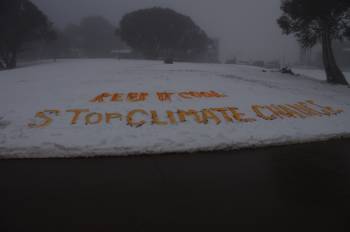
'keep it cool. Stop climate change'. Dinner Plain, June 2011
Ben Laycock is a “painter and occasional sculptor” from Castlemaine in Central Victoria. His wonderfully vivid paintings are his interpretation of the essence of the landscapes he visits and works in. He is turning his hand to writing and we will feature some of his work on the site in coming months.
His first installment, ‘greetings from the Wonnangatta’, is now on the site. It involves reflections from a week picking walnuts on the Wonnangatta River near Dargo.
This is a nice little video about sustainable practises when you’re in the snow. It comes from a European group called Respect the mountains
image: respect the mountains
, which is undertaking a grassroots awareness raising initiative for visitors in the Alps.
Their blurb: ‘Many tourists visit the Alps every year, especially during the winter season. The damages are severe. Respect the Mountains is designed to make people aware of the uniqueness and importance of mountain areas and the simple measures you can take to reduce the negative impact. This to make sure that future generations can enjoy the mountains too, that nature is preserved and the economical situation can be secured’.
On June 16th, activists locked down to equipment used to construct a pipeline at Snowbowl, the ski area on the San Francisco peaks outside of Flagstaff, AZ.
The peaks are sacred to 13 Indigenous nations and play a central role in the creation stories of the Dineh, as well as serving as markers of the borders of Dinetah (Dineh land). The pipeline is meant to carry sewage water that will be used as fake snow for the ski area. Spraying sewage on this sacred place, beyond being profoundly disrespectful and insulting, will destroy a fragile and unique ecosystem in which medicine people gather plants for healing and ceremonies.
Please, support these activists! Six have been arrested, four of whom are Native. They are being held at the county jail and their bond is set at $238 each. If you are in a position to help financially, if you have legal skills that could be of service, or if you’re an independent journalist who can cover this story, please contact: Beth Lavely
Tel: 928.254.1064
Email: protectpeaks@gmail.com
Here is some more background info on the action:
PROTECT THE PEAKS – STOP DESTRUCTION & DESECRATION NOW!
Today we take direct action to stop further desecration and destruction of the Holy San Francisco Peaks. We stand with our ancestors, with allies and with those who also choose to embrace diverse tactics to safeguard Indigenous People’s cultural survival, our community’s health, and this sensitive mountain ecosystem.
On May 25th 2011, sanctioned by the US Forest Service, owners of Arizona Snowbowl began further destruction and desecration of the Holy San Francisco Peaks. Snowbowl’s hired work crews have laid over a mile and a half of the planned 14.8 mile wastewater pipeline. They have cut a six foot wide and six foot deep gash into the Holy Mountain.
Although a current legal battle is under appeal, Snowbowl owners have chosen to undermine judicial process by rushing to construct the pipeline.
Four weeks of desecration has already occurred. Too much has already been taken. Today, tomorrow and for a healthy future, we say “enough!”
As we take action, we look to the East and see Bear Butte facing desecration, Mt. Taylor facing further uranium mining; to the South, Mt. Graham desecrated, South Mountain threatened, the US/Mexico border severing Indigenous communities from sacred places; to the West, inspiring resistance at Sogorea Te, Moana Keya facing desecration; to the North, Mt. Tenabo, Grand Canyon, Black Mesa, and so many more… our homelands and our culture under assault.
We thought that the USDA, heads of the Forest Service, had meant it when they initiated nationwide listening sessions to protect sacred places. If the process was meaningful, we would not have to take action today.
We continue today resisting Snowbowl’s plan to spray millions of gallons of wastewater snow, which is filled with cancer causing and other harmful contaminants, as well as clear-cut over 30,000 trees. The Peaks are a pristine and beautiful place, a fragile ecosystem, and home to rare and endangered species of plants and animals.
Our action is a prayer.
There is a Facebook page here and extra info from Indigenous Action Media here.






 Mountain Journal
Recent Comments