Search

Mountain Journal

Environment, news, culture from the Australian Alps

Protect Our Winters report: Our Changing Snowscapes

We have known for years that climate change is reducing the overall amount of snow we receive in Australia. The snow pack has been in decline since at least 1957. We also know that the loss of snow is being felt especially at lower elevations and will have enormous impacts on the local economies that have developed around the mountains.

Today Protect Our Winters (POW) have released a comprehensive update on the threats posed by climate change – to snow pack, the mountain environment and animals who rely on a thriving ecosystem, and downstream rivers, and also the impacts on the local economies that rely on good snowfalls.

Continue reading “Protect Our Winters report: Our Changing Snowscapes”

Navigating Your Way in the Mountains

Recently in a post about navigation on Mountain Journal I asked if, in the electronic era, there was still a role for traditional tools such as the paper map and compass.

In this post Kelly Van Den Berg, who trains people in navigation, offers her thoughts.

Traditional navigation skills in the mountains? Do we actually need this skill?

In an age of robust and accurate electronic devices, where do the traditional map and compass fit in ?

Up until a few years ago, all of my navigation experience was with a map and compass. I was thrust screaming into the electronic era after taking some work as a Backcountry guide. I quickly had to launch myself into understanding what these newfangled electronic things were all about as I pretended to understand how to download GPX files into programs I’d never heard of late at night in the days leading up to tours.

This process certainly made me realised how out of touch I was, but it helped me to realise something way more useful …how much my traditional skills overlapped and complemented the modern adaptations and that the dark arts were far from obsolete.

Continue reading “Navigating Your Way in the Mountains”

Why did you walk the AAWT?

Long distance walking tracks have a strange allure. They wind through incredible landscapes and offer us time out, an opportunity for reflection and challenge, and a chance of meeting ourselves, others and the land itself.

There are, of course, many great long distance walks in Australia. Some well known like the Overland Track in lutruwita/ Tasmania, and some less known such as the Penguin to Cradle, which starts at Bass Strait on the north coast of Tassie and allows a connection with the Overland, or the McMillans Track, which follows an old route cut through the mountains of Victoria.

Then there is the Bibbulmun Track in WA, which stretches 1,000 km from Kalamunda in the Perth Hills, to Albany on the south coast, winding through the heart of the scenic South West of Western Australia.

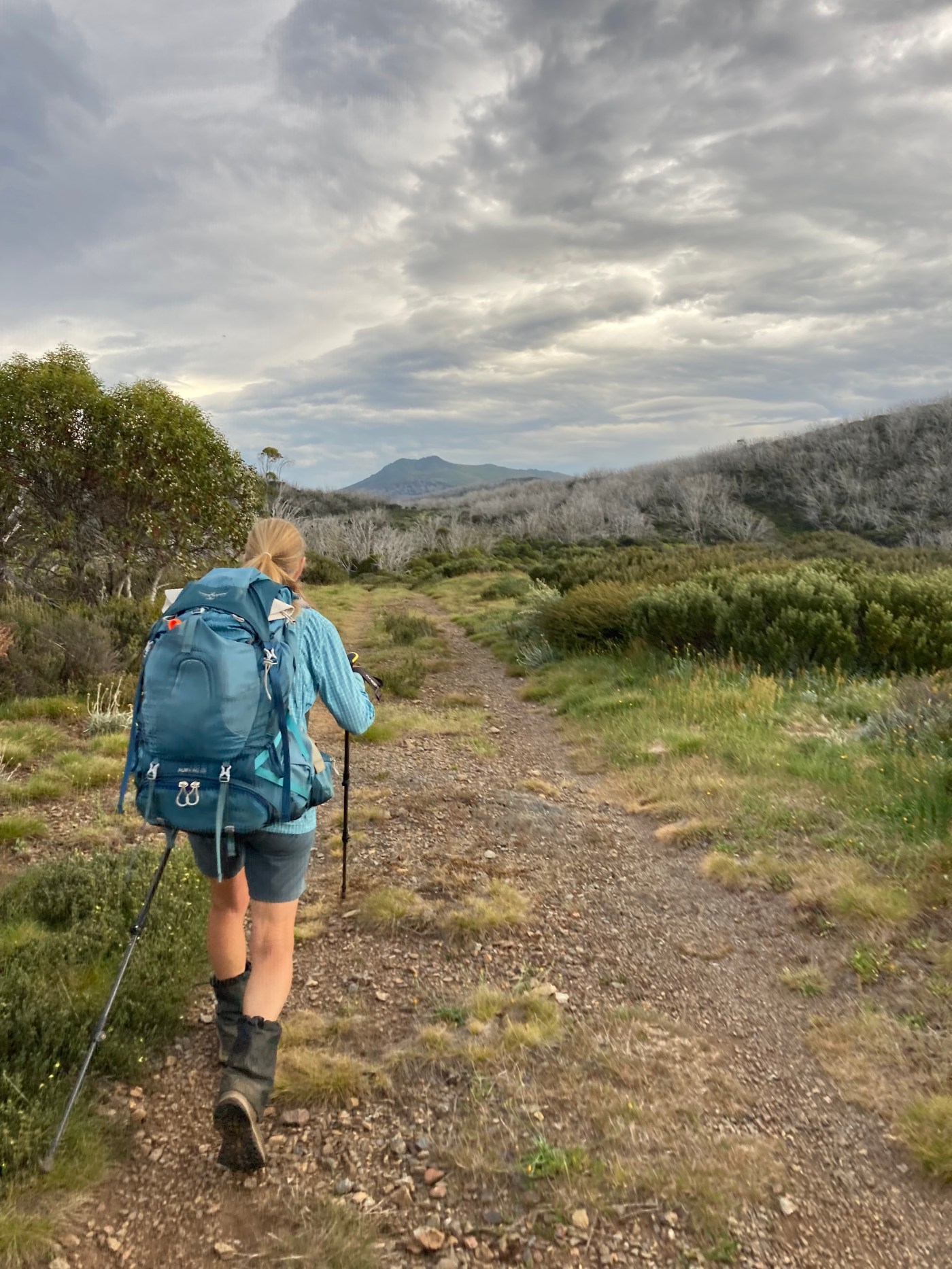
Of course, it is the Australian Alps Walking Track (or AAWT) that stands out as our premier long walk, stretching almost 700 kilometres from Walhalla near Victoria’s Latrobe Valley almost all the way into Canberra. Unlike many famous long distance walking tracks, the AAWT is very much a solo effort. Rather than there being mass numbers of walkers starting each day, it is possible to go for days on end without meeting another human. In some sections the track is sketchy or overgrown. The track goes through or past very few human settlements so resupplies can require a bit of work to organise.

Continue reading “Why did you walk the AAWT?”

Celebrating the survivors

Across the mountains of south eastern Australia, climate change is already driving profound change. In many places in the high country, snow gum forests are facing a double threat: dieback, caused by a native beetle is killing individual trees, and climate change driven fire regimes are devastating vast areas of forest.

Recent research by John Morgan, Michael Shackleton and Zac Walker from the Research Centre for Applied Alpine Ecology at La Trobe University highlights that ‘Long-unburnt snow gum forests (now) comprise less than 1% of snow gum forests in the Victorian Alps’.

We know that snow gums can survive fire. We also know that across the Alps snow gum woodlands are starting to collapse from too frequent fire. That’s why we have to appreciate and protect the old forests that remain.

Continue reading “Celebrating the survivors”

Winter Van Life

‘Van life’ might be a popular Instagram hashtag, but it hides the multitude of reasons why people spend winter in their vehicles. More and more people are choosing to spend their winters outside as they pursue their snow dream. For others it is a necessity as rents climb and erratic winter snow impacts on the availability of work. James Worsfold delves into the issue.

This story originally appeared in the 2024 Mountain Journal magazine (#4). Available as a PDF here > https://themountainjournal.com/2024/03/19/mountain-journal-magazine-4-now-online/

Continue reading “Winter Van Life”

BTAC gets to work on the AAWT

If you have ever wandered on a walking track in the mountains, you have enjoyed the fruits of someone else’s labour. Walking tracks are cultural artifacts that allow us to access the forests, mountains and rivers that we love. Often they follow earlier paths: settlers followed First Nations routes out of Gippsland into the high country. Miners and graziers cut rough tracks into the gold diggings. Sometimes these turned into commerce highways as large population centres grew around the diggings. Nowadays the foot tracks in the high country are all about recreation.

But with increasing fires across the mountains, many tracks can become crowded out through a mass of regrowth. And as trees killed in bushfires start to collapse, many tracks become crossed by fallen logs and the tracks become multiple braids, often ending in dead ends, making navigation difficult and increasing the likelihood of walkers becoming lost. Land management authorities have limited funds to maintain the trail network and have many demands on their time.

Continue reading “BTAC gets to work on the AAWT”

Let’s talk about maps

As I walk up the trails at Mt Stirling towards the summit, I always enjoy this sign. As more and more people get into the high country on foot or ski or bike, its good to remind them that it is another place to the lowlands and forested country, and things can get nasty very quickly. I also reflect that, with numbered sign posts and maps on pretty much every intersection on the mountain, it is almost impossible to get lost (yes, I know, people still manage to do it).

And I love the ‘map and compass’ note. It feels almost quaint and old worldly. And it makes me think about how our ways of navigating have changed so profoundly in the space of a few decades.

Continue reading “Let’s talk about maps”

‘Mountain Redneck magazine’

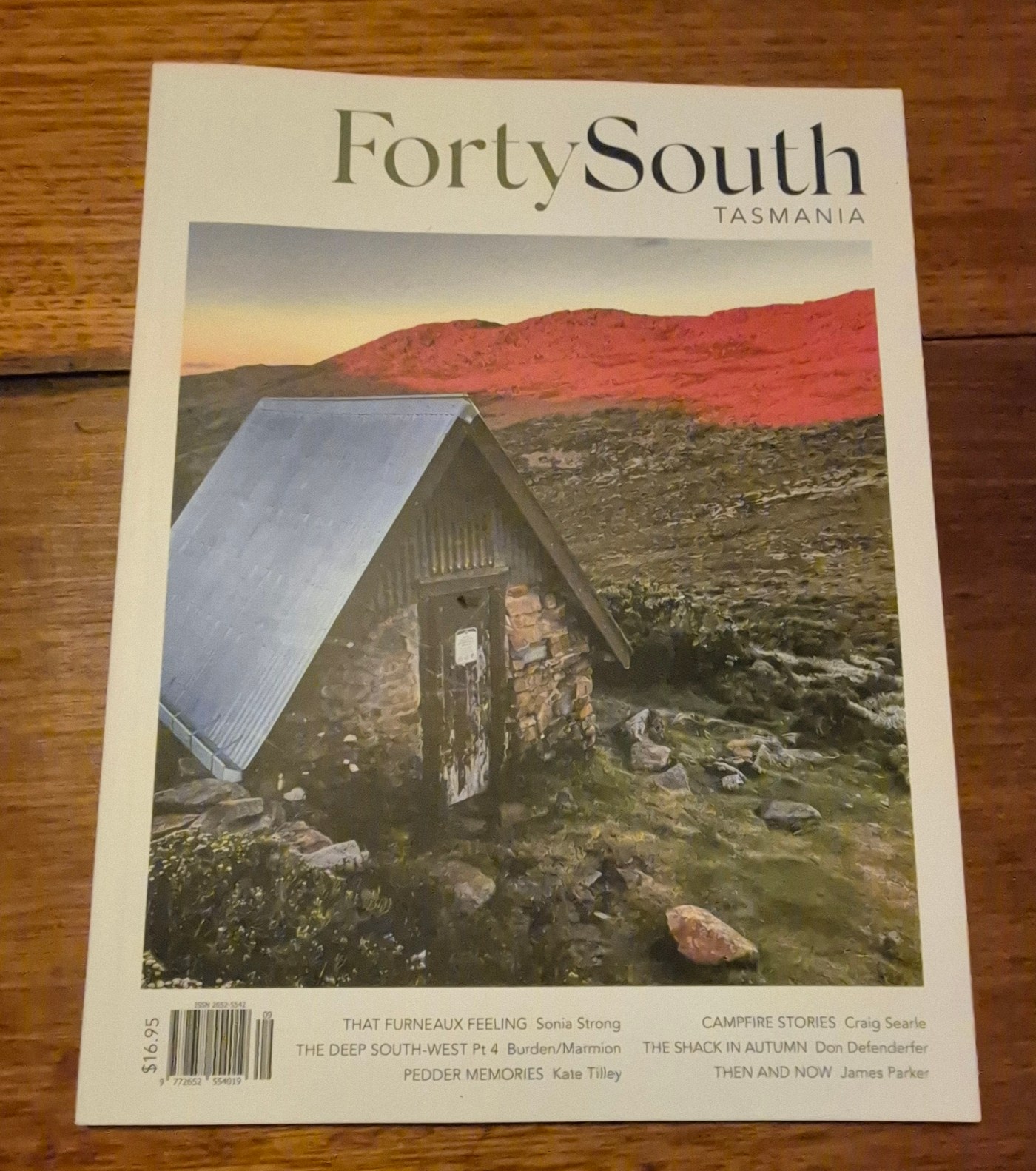
This year’s Mountain journal magazine is now starting to pop up in various places around the high country. Our ‘distribution strategy’ (such as it is) mostly revolves around me chucking a few magazines in my pack or car as I wander around the Alps. So its all pretty haphazard, and reflects where I get to, which means they don’t get placed right across the Alps. But the 2024 edition is now out there, in spots as random as Cope hut, Moscow Villa and Bluff Spur hut on Mt Stirling.

That means the feedback starts. Its always great to get a message from someone who has found one in a hut. The most common spot is Mt Wills, and mostly from people who are walking the Australian Alps Walking Track (AAWT). The next most common spot is Derrick hut (maybe because I’m out there often, so its easy to keep stocked up).

Continue reading “‘Mountain Redneck magazine’”

Getting ready for winter

Yes, last winter was a bit ordinary. But to be a skier or rider in Australia is to be an eternal optimist (did you see the story this week that hundreds of the world’s leading climate scientists expect global temperatures to rise to at least 2.5C above preindustrial levels this century?) so we have to remain hopeful.

Its May. Its getting cool. Its only a few weeks til the start of the ’snow season’ (yes, it is just a capitalist construct). But its still very exciting that winter is getting close.

Here is the beginning of a list of backcountry events and human powered adventure in the high country. Fingers crossed for a good winter.

Continue reading “Getting ready for winter”

‘Save the Trees. March with us in the Autumn Festival Parade’

There has been a long and spirited community campaign to stop the removal of significant trees on the edge of Bright in Victoria’s north east.
.
Now, Bright’s Gateway Protection Group have announced that they will be marching in the Autumn Parade this year (May 4), and are inviting members of the community to join them.

Continue reading “‘Save the Trees. March with us in the Autumn Festival Parade’”

Alpine Odyssey Film – Screening Dates Announced, Bookings Open

Alpine Odyssey, a film by Ivan Hexter, tells the story of Huw Kingston’s winter 2022 journey along the 700km length of the Australian Alps, a journey he first undertook 27 years ago. His 50-day traverse also saw him skiing at each of the dozen mainland Australian snow resorts en route.

“It was a journey across country I have loved for decades” said Huw. “A journey to celebrate the mountains and communities that make up this very special, very small part of Australia. But with love also comes concern and care.”

Screenings will raise funds for Save the Children and Protect Our Winters (POW). Whilst the film will be core to each event there will be other elements to entertain and POW will also be presenting details on some of the important work they are doing here in Australia to highlight the impacts of a changing climate.

Continue reading “Alpine Odyssey Film – Screening Dates Announced, Bookings Open”

Mountain Icons: the majesty of Mt Buffalo

Mountain Journal has slowly been compiling a collection of stories of ‘mountain icons’. In this contribution, Anna Langford reflects on her long connection to the Buffalo plateau.

How instinctively we reach for the superlatives – the oldest, fastest, biggest – when we want to distinguish something above its peers.

Mount Buffalo has no such claims on its fellow mountains: it is not the tallest, steepest, or remotest… and say nothing of its dismal snowpack that frays year by year.

There is only one superlative I insist on assigning it. To me, Buffalo has always been the grandest of our peaks.

Continue reading “Mountain Icons: the majesty of Mt Buffalo”

Blog at WordPress.com.

Up ↑