Search

Mountain Journal

Environment, news, culture from the Australian Alps

Tag

activism

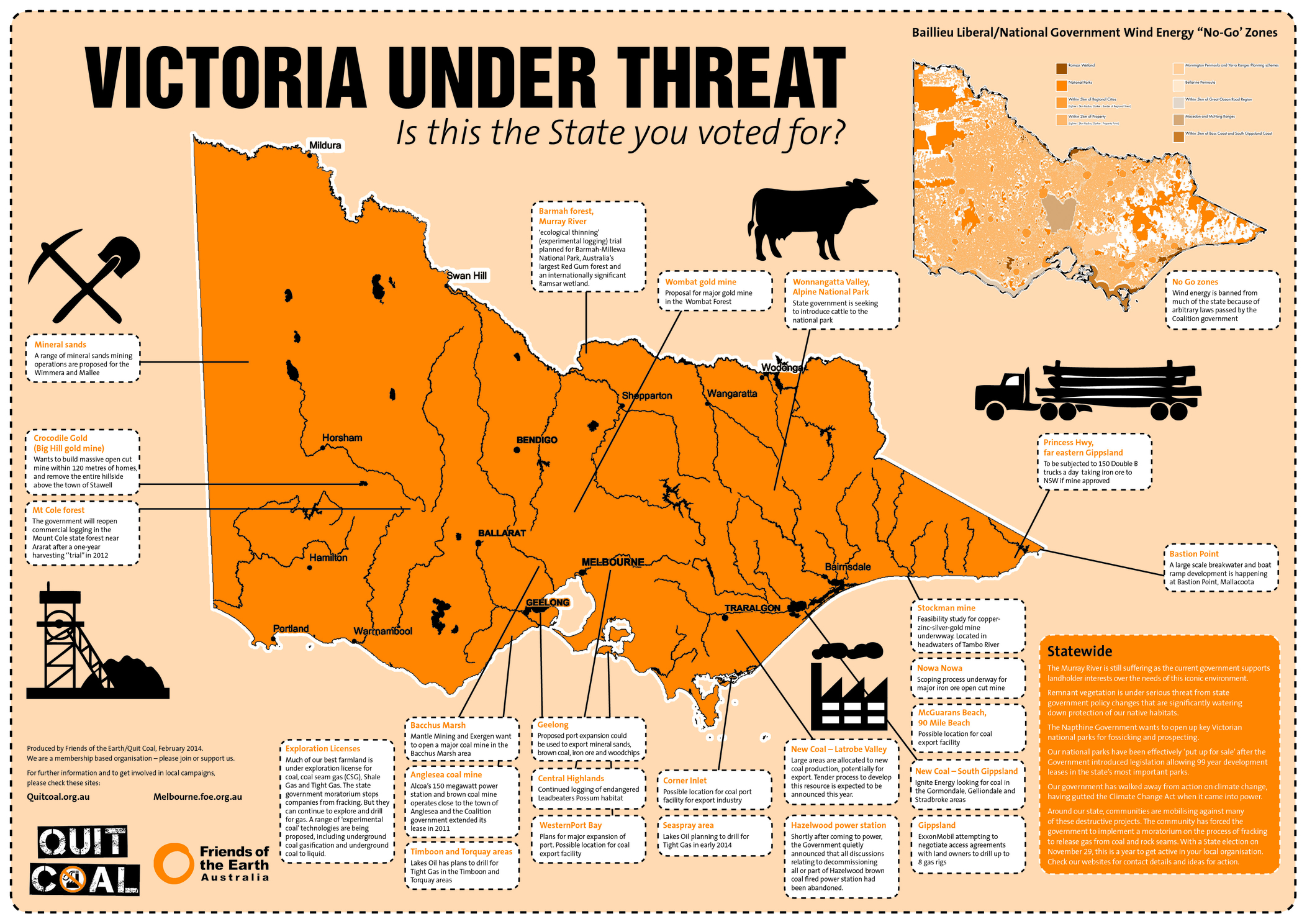
Victoria under threat

VIC map for web

In the time it has been in power, the Coalition government has implemented a comprehensive anti-environment agenda.

Yet many Victorians are not aware of how bad the government policies and actions have been.

The map shows some of the obvious hotspots and areas of impact. In terms of the Alps, this includes the cattle grazing proposal. Feel free to post others – eg potential private development in national parks – on the Friends of the Earth facebook page.

take action to keep cattle out of the Alpine national park

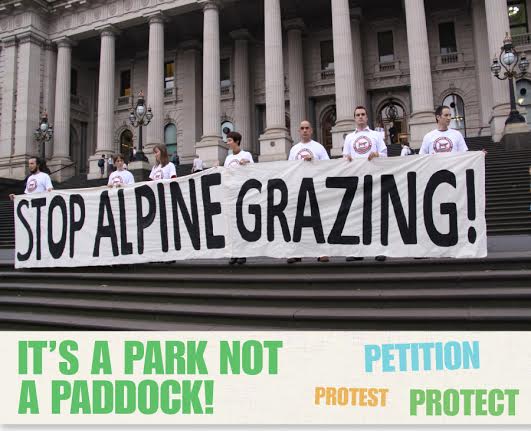
grazing bannerThe following comes from the Victorian National Parks Association.

In an exercise likely to cost the Victorian taxpayer more than half a million dollars, the Napthine Government is pushing to let cattle into the Alpine National Park’s beautiful Wonnangatta Valley next month.

They claim it is a trial to see how effective cattle grazing will be at reducing bushfires, but the so-called research trial is not actually part of the Victorian Government’s bushfire research program. It is in fact funded separately in an effort to honour a promise made by the Victorian Coalition to return cattle to the park.

What we need from you

The Federal Government has declared it will assess and approve or reject the proposed trial under national environmental laws.

The Wonnangatta Valley, part of the Alpine National Park, is protected under these laws as “national heritage” and is home to a number of nationally threatened species including rare orchids.

You have until 5pm next week (February 25) to say why the trial should not go ahead.

Please send a submission to the Victorian Government’s Department of Environment and Primary Industries, telling them why the trial will hurt the National Heritage listed Alpine National Park. Your comments will also be sent to the Australian Government.

Tell them:

  •     Cattle do not belong in the National Heritage listed Alpine National Park.
  •     The trial will allow cattle to graze half of the only population of the nationally threatened Pale Golden Moths orchid in a protected area, and a quarter of the entire known population.
  •     The trial design is careless, as they plan to bring cattle in as soon as March this year, even though there have been no fauna surveys done at the site, which is likely to contain populations of several threatened reptiles and frogs.
  •     The trial will contribute little, if anything, to our understanding of fire management in the high country. There are far better research programs to spend valuable research funds on.
  •     There has been no effort to find a suitable site for the trial outside the Alpine National Park, even though many suitable sites exist.

Please also add your own words about why you believe this trial should not go ahead.

Submissions MUST be sent by 5pm, Tuesday 25 February.

Send to:
Wonnangatta Valley Research Trial
Department of Environment and Primary Industries
PO Box 500
East Melbourne VIC 3002
wv.trial@depi.vic.gov.au

Please check the VNPA facebook page for further details on how to make a submission.

How well has the Napthine government managed our environment?

Sealers Cove, Wilsons Prom NP

The following is from the Victorian National Parks Association.

With a Victorian state election due in November this year a survey has been launched asking people what they think of the Napthine Government’s environmental policy.

If you are concerned about the way the Victorian Government has handled conservation issues please take the survey, it only takes a few minutes at most.

You can do the survey here.

Sochi Olympians speak out on climate change

An interesting piece on the efforts of some Olympians and Paralympians who are speaking out about the need for concerted action to reduce greenhouse emissions. This comes from the Sustainable Play website and is written by Brad Rassler.

Brad notes that just 83 athletes, primarily from the U.S. and Canadian squads, and just a few from outside North America, have signed on to speak about the need for action on climate change at the Sochi Games.

Wouldn’t it be great to see some of our winter athletes raising the issue at the Games?

Sochi Olympians Speak Out On Climate Change

olympic athletesU.S. cross country skier Andy Newell will travel to Sochi, Russia in two weeks to compete in the Winter Olympics. And though his aim is clear — to stand atop the podium — he’s traveling to the Games with more than precious metal on his mind.

For the past two months, Newell, 30, has quietly appealed to his fellow Olympians to leverage the Sochi Games as an opportunity to speak to world leaders about the ravages of global climate change on the winter snowpack. The petition he’s been circulating, Olympic Athletes for Action Against Climate Change, makes the case to his fellow competitors in four paragraphs:

Winter is in jeopardy.  Inconsistent weather patterns caused by a changing climate are causing destruction around the world, and the economic impact is being felt in both large cities and small mountain communities.

    As winter Olympic athletes, our lives revolve around the winter and if climate change continues at this pace, the economies of the small towns where we live and train will be ruined, our sports will be forever changed and the winter Olympics as we know it will be a thing of the past.

    The power we have as Olympians on a global stage is immense.   Let’s use this year to make a collective statement, to send a message to the world’s leaders to recognize the impact of climate change and to take action now.

Please join us by signing this letter.

That letter, addressed to the world’s leaders from the petition’s signatories, is comprised of a simple sentence containing a powerful ask:

“…to recognize climate change by reducing emissions, embracing clean energy and preparing for a commitment to a global agreement in Paris in 2015.”

The call to action refers to the United Nations Framework Convention on Climate Change in Paris, schedule for November 30 – December 11, 2015.

Newell has thus far been joined by 82 athletes, primarily from the U.S. and Canadian squads, and just a few from outside North America. He hopes to have 100 signatures before the Games begin in two weeks, but admits getting athletes to step up and sign has proved tougher sledding than he thought.

“It’s a tricky situation. Not only because it’s hard to get the word out there to people in different countries, but a lot of athletes are reluctant to sign things in general in an Olympic year.  They don’t want to cause a controversy.  They don’t want to use the Olympics as a platform for protest either, necessarily.”

Newell, who counts 350.org founder, author and environmental advocate Bill McKibben as one of his heroes and mentors, concedes that the life of an average Olympian, with its requisite air travel, isn’t exactly easy on the planet.

“We burn a lot of fossil fuels chasing the winter around and trying to go to these competitions.  I think a lot of us feel bad about that.  But that’s our job and our livelihood and our passion.  But at the same time, we try to use that – the professional athlete as a platform — to try to raise the awareness of people that may not understand what’s going on out in the environment.”

“I didn’t necessarily want to use the Olympics as a platform for a protest, necessarily,” Newell says. “But I wanted to at least try to get a lot of athletes on board to sign this letter and basically get it to their heads of state, to say, you know, we’re Olympic athletes and we can’t continue to support ourselves and this kind of livelihood if our winters keep disappearing, and we want you guys to recognize that there is some climate change happening.”

The U.S. cross country team’s winningest athlete and gold medal favorite, Kikkan Randall, has signed the petition.

“I grew up in a family that was very respectful of the opportunities that we had to be out in the environment, and to try to do our part, the best we could, to contribute to the health of the environment,” says Randall. “And certainly being involved in a sport that does rely on the weather and the fact that climate change could effect our sport…I think athletes, doing what we do, we have a great platform to go and encourage others…to do their part.”

Protect Our Winters (POW), a California-based non-profit whose athlete-advocates get the word out about climate change, has stepped forward to boost international attention to Newell’s petition. Chris Steinkamp, POW’s executive director, says that Sochi is an ideal backdrop for an athlete alliance to speak out about climate change.

“The Olympics is the perfect stage for something like this.  Obviously, it has a history of social issues. But I think this is the first time that climate change has come up, and it’s because obviously climate change is a hot issue right now. Sochi is one of those places where it could be a real issue in the next couple of weeks, and the conditions and the weather might be really inconsistent.  So it’s a perfect storm for this issue to be recognized.”

Or maybe an imperfect storm, climatically speaking. Steinkamp says that although climate change is well documented by the science, global leaders have not yet taken the necessary actions to curb its progress, and the time to act is now.

“Every year we all go into these climate conferences, these international global discussions about climate change with high hopes that something is going to be done, and nothing ever really does get done.  So the goal of the letter is two-fold:  To really let world leaders know that something needs to be done, but also let them know that something needs to be done in Paris in 2015.”

Whether international decision makers heed Newell’s call remains to be seen. Steinkamp views the alliance itself, the first of its kind, as a significant flag in the snow.

“The cool thing is that you’ve got these Olympians that are standing up for climate change, and with this platform that they have in Sochi, [they have] the opportunity to speak their mind. Because the only way that the world leaders are going to listen is if the population lets them know about it.”

According to CNN, over 6,000 Olympians and Paralympians will compete in Sochi. Newell has just 82 with two weeks to go.


The practical realties of social change suggest that as more athletes sign the petition, the safer it becomes for those sitting on the fence to participate. This author of Sustainable Play has created his own petition, encouraging the readership of this site to ask the remaining 5,900 to take an Olympic-sized stand for this Olympic-sized issue. Reassure them that climate change transcends mere politics; it’s a phenomenon without borders.


Click on the “petition’s petition” here:


http://tinyurl.com/kn395tj
Protect Our Winters launches the POW Riders Alliance

Riders-Alliance-2-300x225In the US, Protect Our Winters has just launched what it is calling its ‘Riders Alliance’, a group of 53 professional snowsports athletes, committed to fighting climate change and speaking out for the environment.

It is a remarkable line up of some of the best skiers and boarders on the planet.

As they say in the release, “Climate change is affecting our lives and careers and it’s in our best interest to use our passion to mobilize the community and bring a new perspective to the policy discussion.”

It’s great to see leadership being taken by so many high profile athletes. The group includesGretchen Bleiler, Jeremy Jones, Sage Cattabriga-Alosa, and Ingrid Backstrom.

The POW Riders Alliance was developed as a central platform for athletes to speak out and create a social movement against climate change.  For example, POW recently led a group of 17 athletes to Washington, D.C. for meetings with US Senators and has reached over 20,000 young students with a message of climate action delivered by pro athletes.

POW believes that by combining the athletes’ passion with their influence, first-hand experience and immense media reach, it represents a new, powerful approach to environmental advocacy.

With the Winter Olympics just a couple of weeks away, POW and Olympic athletes from the Riders Alliance will launch an initiative to call attention to climate change on the world’s largest sports stage in Sochi, Russia in partnership with a group of graduate students from the Yale School of Forestry.

The press release is available here,  and photos of the skiers/ boarders are available here.

Logging halted in forest on the Errinundra Plateau today

This report comes from Goongerah Environment Centre. The actions are part of the Fearless Summer campaign.

Image: GECO. NB: this photo is from the Dec 12 action

Environmentalists have halted logging in state forest on the iconic Errinundra Plateau in East Gippsland. One person has climbed a tree more than 40 metres, and sits on a platform tied to machinery.

“Until recently this area of forest was reserved as a special protection zone, it contains a number of different forest types and is of high conservation value. It also contains old growth forest and is a known site for the endangered powerful owl.” Said David Caldwell, spokesperson for Goongerah Environment Centre (GECO)

“This area was made available for logging in 2011as part of changes to the informal reserve system. This process swapped a large number of forest areas reserved for specific values, for areas that don’t reflect the same value. This has been something of a lifeline to the logging industry, who have repeatedly shown poor management of Victoria’s forests at the expense of the taxpayer.” He said.

“This is another example of forest destruction in the face of evidence of threatened species. Our native forests are becoming degraded and without areas like this one, they won’t be able to provide our endangered animals with a chance to survive. This is a looming extinction crisis that is being assisted by forest agencies around the nation.” Said Miranda Gibson spokesperson for Still Wild Still Threatened.

Today’s action is the latest in a series of actions over the last week, known as Fearless Summer, a coalition of grassroots environment groups, committed to an end to industrial scale native forest logging and export woodchipping.

Conservationists maintain stand at forest action

The following media release comes from Still Threatened, Still Wild, and marks the beginning of a summer of actions to protect remaining old growth forests.

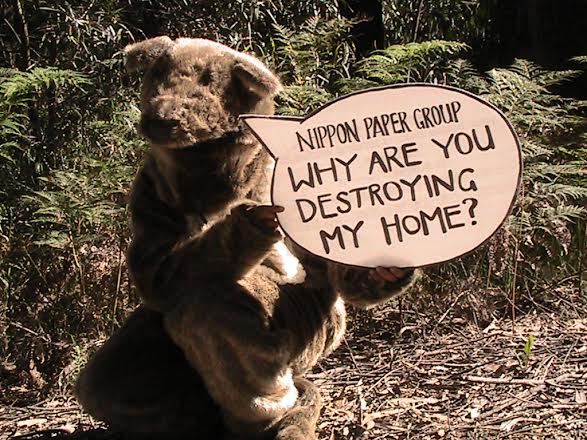
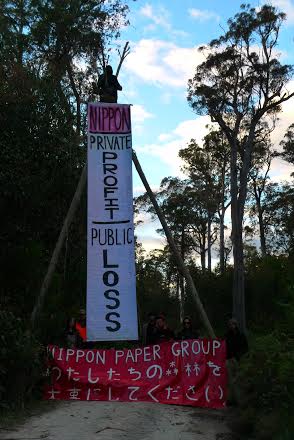
koalaToday’s protest action continues to stop logging operations in a stand of forest at Stony Creek, East Gippsland, Victoria. Two conservationists remain at the top of tripods, blocking the road at different access points to the logging zone. While one person remains 30 meters above the ground in a tree sit in the middle of the logging coupe. Around 40 others remain in the area.

Department of Environment and Primary Industries (DEPI) workers attended the site at around 11am. The DEPI workers then cut down trees in an area believed to be part of the Snowy River National Park, in an attempt to drive around a blockade tripod. Forestry workers are currently in the logging coupe, below the tree sit, assessing the situation.

nippon“Three conservationists are today putting themselves on the line, up tripods and tree sits, and risking arrest in order to halt the destruction of this stand of forest that is home to the endangered long footed potoroo” said David Caldwell of Goongerah Environment Centre (GECO).

“Continued funding from tax-payer dollars to this industry for the benefit of a few private companies, like Nippon Paper, should be of concern to all tax payers. Australia is not only losing millions of dollars to prop up this industry, we are also losing our irreplaceable native wildlife species” said Mr Caldwell.

“Today’s action has brought a national focus to the destruction of wildlife habitat that is occurring here in East Gippsland as well as forested landscapes around Australia. It comes the day after a court appeal was lost by My Environment which now allows the ongoing logging of endangered leadbeater possum habitat.” said Poppy King of Central Highlands Action Group (CHAG).

“These dedicated conservationists are committed to continuing today’s action as long as possible, in order to protect this precious forest from industrial scale logging. This is part of a nation-wide movement that will see ongoing actions across the country in a call for protection of our native forests” said Miranda Gibson of Still Wild Still Threatened.

For comment:

Miranda Gibson and David Caldwell

(03) 5154 0109

Law fails to guarantee protection for Victoria’s emblem

This release is from Healesville based MyEnvironment, about the outcome of the recent case seeking protection for the Leadbeaters Possum.

Law fails to guarantee protection for threatened species

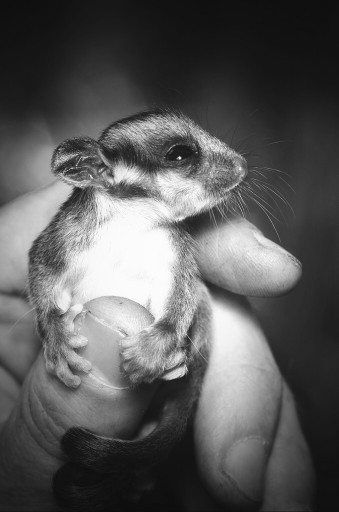
IMG_2247_Version_2The Flora and Fauna Guarantee Act has never before been tested at the level of Appeal. By taking our case to Appeal we have given the law the best possible opportunity to show whether it can be effective in its stated purpose of GUARANTEEING the survival of unique native species.

In this, the law has failed.

This judgement gives the green light to ongoing destruction of Leadbeater’s Possum habitat in Toolangi State Forest at sites where we have photographic and video confirmation that the species is present. Obviously, this is a disappointing outcome for MyEnvironment but, more importantly, for Leadbeater’s Possum and all other species that rely on the protection of the Flora and Fauna Guarantee Act for their ongoing survival.

If the Flora and Fauna Guarantee Act is incapable of guaranteeing the protection of our state’s faunal emblem against a rapacious logging industry, we have to wonder what, if anything, does it protect?

We call on the state government to urgently review the Act to make it functional and effective in saving threatened species, including the Leadbeater’s Possum from extinction.

In the meantime, we call on VicForests and its contractors to demonstrate genuine commitment to their repeated protestations of concern for the survival of Leadbeater’s Possum by properly protecting all sites in logging coupes that contain known colonies of the species, including the three Toolangi coupes that were the subject of this case, where video and photographs of nesting and foraging animals have recently been obtained. Their conduct in coming days and weeks will be a public demonstration of their sincerity and decency.

We shall now take time to study the implications of the judgement for MyEnvironment, the group and its members, and to take advice on future action.

For quotes please call ; Steve Meacher 0447 330 863 or  Sarah Rees 0438 368 870

For background on the Toolangi forest issue, check here.

Little Red Toolangi Treehouse – week 2

996033_684143504937992_1091510074_nOn sunday 10 November, 2013, a young activist called Hannah Patchett launched the beginning of what is intended to be a long term tree sit to highlight the immediate threats to the Leadbeaters Possum through continued destruction of its habitat.

Now in her second week of living in treesit, she has been getting some great media and good local support.

Background on the Toolangi forest campaign available here.

Stay in touch via facebook.

Read Hannah’s article in the Guardian here.

leadership from the front lines of climate change

While the new International Panel on Climate Change (IPCC) report confirmed recently that climate change is indisputable, it’s something that the winter sports community has been seeing first-hand for years.

This has seen many in the recreational skiing and boarding community get active to tackle climate change. But there are also some interesting things happening amongst professional athletes.

Jeremy Jones
Jeremy Jones

In April, 75 Olympic medalists and other winter sports athletes – including White House “Champion of Change” awardee and pro snowboarder Jeremy Jones – lobbied President Obama, urging the President to take action on climate and clean energy.

The representatives of the global snow sports community signing the letter to the President included X Games champions and World Champion snowboarders, alpine/Nordic skiers and professional climbers, including:

• Olympic gold and silver medalist Julia Mancuso (Olympic Valley, CA)
• Olympic silver medalist and four-time X Games gold medalist Gretchen Bleiler (Aspen, CO)
• 10-time Big Mountain Rider of the Year Jeremy Jones (Truckee, CA)
• Olympic silver medalist, three-time World champion, seven-time X Games champion Lindsey Jacobellis (Stratton, VT)
• Two-time Olympian and six-time X Games gold medalist Nate Holland (Truckee, CA)
• Olympic gold & silver medalist, six-time X Games medalist, six-time World Cup champion Hannah Teter (Belmont, VT)
• 2010 Olympian, Nordic skier Kikkan Randall (Anchorage, AK)
• Five-time winner Powder Magazine’s Best Female Performer Ingrid Backstrom (Seattle, WA)
• Two-time World Freeskiing champion Chris Davenport (Aspen, CO)
• Two-time World Freeeskiing champion, Kit Deslauriers (Jackson, WY)
• 2013 World champion, X Games medalist Arielle Gold (Steamboat Springs, CO)

For a full list of signers, check here.

The letter states “Without a doubt, winter is in trouble”  “… at risk are the economies of tourist-dependent states where winter tourism generates $12.2 billion in revenue annually, supports 212,000 jobs and $7 billion in salaries.  Those are the jobs and businesses are generators of billions in federal and state income.”

Hot Planet/ Cool athletes program

Meanwhile Protect our Winters (POW) has restarted Hot Planet/ Cool athletes program, which organises Professional skiers and snowboarders to deliver presentations to North American students, encouraging them to become Climate Leaders.
Protect Our Winters re-launched their “Hot Planet/Cool Athletes” program this week to take the first hand perspective of climate change into the classroom to explain climate change from an engaging new perspective and to inspire and empower students to become involved.

Presented by The North Face, the program has been presented to more than 20,000 students at 41 schools nationwide since 2011.  The new format for 2013 continues to educate students about climate change, combining engaging action sports footage and understandable climate science with first hand athlete’s perspectives and a call to action that truly breaks through to students and gives them the tools to be part of the solution.

Pro athletes such as Gretchen Bleiler, Jeremy Jones, Sage Cattabriga-Alosa, Ingrid Backstrom, Lucas Debari, Danny Davis and Angel Collinson are featured in the video project, with many others scheduled for in-person school appearances.

More info here.

Our time is now

Then there is the the #ourtimeisnow campaign, a call to action that invites students to take meaningful action on climate change.  By connecting with them in a relevant way, via their social media, POW will invite all students to use the hashtag #ourtimeisnow across their social media channels. POW can then track its use and provide meaningful climate actions directly back to each student.  As students become more involved in the campaign by using the hashtag on Twitter and Instagram, they will have opportunities to win prizes and spend time with professional athletes discussing climate change or joining POW representatives to lobby MPs in Washington.

“We’ve got to create a social movement starting with young kids who will be the most affected, and we feel that this component of the program is a critical step in making a difference.  By using social media as a backbone for it, we’re connecting with students on their terms and starting that movement with meaningful results,” said POW’s Executive Director, Chris Steinkamp.

STEPS – a journey to the edge of climate change

rid-greener-screengrab-140x130Then there is this new film from Ride Greener and Coupdoeil which considers how the snow industry can work in harmony with nature to protect the climate we rely on.

The promo says:

“The carbon-neutral approach shown in the film is a new way of thinking with the ever-looming shadow of climate change growing closer year after year. It’s not too late to prevent the oncoming consequences of fossil fuels and the damage that has already been caused”. This film tackles how an industry that revolves around predictable and consistent weather patterns can play it’s part in preventing climate change.

Details here.

long term tree-sit established in Toolangi forest

On sunday 10 November, 2013, a young activist called Hannah Patchett launched the beginning of what is intended to be a long term tree sit to highlight the immediate threats to the Leadbeaters Possum through continued destruction of its habitat.

969385_10151799133659001_829810885_nKeep up to date via the treehouse facebook page.

Check here for background information on this long running campaign.

Friends of the Earth – Media Release

Saturday 9 November 2013

Tomorrow at 12 noon Hannah Patchett will formally launch her time dwelling in Toolangi’s treetops.

The Little Red Toolangi Treehouse has been built 50 metres up into the canopy of an area of forest habitat for the critically endangered Leadbeater’s Possum.

“I’ve chosen to stay in the Little Red Toolangi Treehouse because I want to see real action taken to save the Leadbeater’s Possum from extinction,” says Hannah Patchett.

“Removing clearfell logging from these forests is the first step.”

Logging of the remaining unburnt forest area following the 2009 bush fires has become increasingly controversial, and the subject of extensive community opposition.

Today the Toolangi forest continues to be logged, mostly for pulp for paper.

Leading expert on the Leadbeater’s Possum, Professor David Lindenmayer, has called for an end to clearfell logging by the end of 2013.

“The Little Red Toolangi Treehouse is a vital and brave initiative to protect the Leadbeater’s Possum habitat that the Napthine state government continues to log against expert recommendations,” says spokesperson for Friends of the Earth, Lauren Caulfield.

“Friends of the Earth support Hannah’s efforts because like her, our organisation and our supporters want implementation of management changes our forests so desperately need,” says Lauren.

“As it stands current industrial scale clearfelling will see our wildlife emblem managed into extinction’,” says Lauren.

“Real and urgent action must be taken to protect the Leadbeater’s Possum and its forest habitat from logging.”

“Forestry Minister Peter Walsh and environment Minister Ryan Smith must ensure the new management recommendations laid out by Professor Lindenmayer are implemented if the Leadbeater’s Possum is to stand a chance,” concludes Lauren.

What: Launch of the Little Red Toolangi Treehouse
Photo opportunity: Little Red Toolangi Treehouse from the ground, or assisted ascend to tree platform
When: From 12 noon, Sunday 10 November
Where: Toolangi State Forest – contact Amelia Young for directions 0404 074 577

Help keep gold prospecting out of national parks!

The Baillieu Government wants to give prospectors and fossickers more freedom to dig up our most treasured national parks.The government has directed the Victorian Environmental Assessment Council (VEAC) to recommend that prospectors and fossickers should be permitted to expand their activities into the Alpine, Yarra Ranges, Baw Baw, Croajingolong, Errinundra, Lake Eildon, Lind and Mitchell River national parks, as well as the Lerderderg State Park.

Fossicking is already allowed in a number of Box-Ironbark parks in central Victoria. But despite a requirement that park managers monitor the impact of this damaging activity, no assessment has been carried out.

Prospecting in Victoria's national parks
> Take action

Our national parks are there to conserve our precious natural environments.

Please join us. VEAC cannot recommend that prospecting not be permitted in all of the parks, even if that is what its evidence shows.

PLEASE send your comments to the VEAC investigation by the deadline of Monday, 18 February 2013.

There are two easy ways to send a submission:

1. QUICK SUBMISSION

Just add your comments to our online submission and click SEND.

Quick email submission

2. PERSONAL SUBMISSION

In your own words, tell the government why our national parks should not be used for damaging activities like prospecting and gold panning.

Some suggestions:

  • Fossicking (metal detecting, digging holes and panning for gold) causes unnecessary damage to streamsides, and can threaten rare species such as ground orchids.
  • Our national parks are set aside to protect our natural areas for future generations. They are there for passive recreation, not exploitation.
  • Many of the rivers that flow through these parks are already listed as Heritage Rivers, and Natural Catchments. These additional levels of protection should be respected.
  • Fossicking is already allowed in a number of Box-Ironbark parks in central Victoria. But there has been no monitoring of their impacts as required by park management plans.
  • Fossicking and panning damages streamsides, causes erosion, and silts up rivers. In old gold-bearing streams, already worked over many years ago, mercury and other pollutants can be released into streams when soil is disturbed.
  • Fossicking and gold panning can damage the many important Aboriginal cultural heritage sites in the region.
  • While prospectors insist they behave responsibly, many don’t. The parks in the investigation area are in relatively remote areas, and fossickers’ activities will be difficult if not impossible to supervise or monitor.
  • Managing prospectors and fossicking will take park rangers away from other essential activities, at a time when staff numbers are already well below what’s needed for park management.
  • Many rivers, streams and catchments are important for rural, regional and city water supplies. We should be aiming to improve their condition, not compromise it.
  • There is already plenty of opportunity to fossick for gold in the extensive State Forest areas in eastern Victoria, outside national parks.
  • VEAC should have the opportunity to recommend no prospecting in parks, but the government has already decided that prospecting will be allowed in nine new parks (Alpine, Yarra Ranges, Baw Baw, Croajingolong, Errinundra, Lake Eildon, Lind and Mitchell River, and Lerderderg State Park).

Send your submission by Monday 18 February 2013 to:

Email: prospecting.investigation@veac.vic.gov.au

Or if sending by mail address your submission to:

VEAC
Level 6, 8 Nicholson St
East Melbourne 3002
Victoria, Australia

More information

The VEAC website has lots if useful information including maps and park overviews.

VEAC website

Read Phil Ingamells’ analysis of this issue in his article ‘Prospecting in Wonderland’.

Prospecting in Wonderland

Blog at WordPress.com.

Up ↑