Search

Mountain Journal

Environment, news, culture from the Australian Alps

Tag

activism

Environmental protection laws under attack

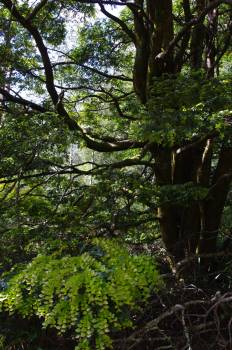
Nothofagus, Mt Toorongo, VIC

Changes are afoot to dramatically wind back cornerstone federal environmental protection laws. Under these changes, State Governments would be given sweeping powers to assess and approve major development projects. If implemented, these changes would be a disaster for our nation’s environment and wildlife.

In 1999, the Howard Government introduced the Environment Protection and Biodiversity Conservation (EPBC) Act. It was meant to protect environmental areas and wildlife that were so important, and so at risk, that their existence was of national importance.

Since it was introduced, the EPBC Act has saved only a few wild places from mining and other development. Many thousands of developments have gone ahead.

Australia’s environment is now under unprecedented attack. Nine open cut mines are planned for Tasmania’s pristine Tarkine forests. The Broome community are battling the construction of a massive gas hub at James Price Point that would mark the beginning of the industrialisation of the Kimberley . The Great Barrier Reef is becoming a coal and gas highway, and could lose its World Heritage status.

The State of the Environment Report 2011 paints a grim picture. More and more endangered species are moving closer to extinction, and we are losing our precious places.

40 years backwards

This is the most serious attack on environmental protection in over 40 years. It doesn’t take much imagination to see what the environmental implications of state decision-making would look like for our environment. In Queensland, Premier Campbell Newman has opposed any delays to coal projects, saying that Queensland is “in the business of coal”.

In Western Australia, four out of five Environmental Protection Authority decision-makers on the proposed James Price Point gas hub had to disqualify themselves because of conflicts of interest; the single remaining member, unsurprisingly, approved the proposal.

In Victoria, intervention by Federal Environment Minister Tony Burke was required to stop Premier Baillieu from overturning the previous government’s ban on alpine grazing, to reintroduce cattle into national parks under the guise of a ‘grazing trial’ that was likened to ‘scientific whaling’. Meanwhile, the New South Wales Government has changed laws to permit private hunters to shoot in national parks and allow fishing in critical grey nurse shark habitat.

The major environmental victories of past decades have largely been won by the Federal Government overturning bad development decisions by state governments. Without strong federal laws, the Franklin River would be dammed, the Great Barrier Reef would have oil rigs and Fraser Island would be a sand mine.

Yet later this year, the Council of Australian Governments (COAG) meets to agree to the framework for handing over of approval powers to the states. Decisions about renewing Regional Forest Agreements could be made at any time.

We need decision-makers to hear our voices now. Friends of the Earth is mounting a campaign − ‘Nature: Not Negotiable’ − to prevent the gutting of federal environment laws and to strengthen the federal government’s role in protecting the natural environment.

This campaign includes mobilising around the upcoming COAG meeting, organising with local campaigns, lobbying and community campaigning.

For more information on this work or to get involved, please email lauren.caulfield@foe.org.au

You can also find us on Twitter @naturenotneg or on Facebook at ‘Nature: Not Negotiable’.

Please support our campaign to ensure these powers are not undermined.

Info on the campaign is available here.

Our petition is available here.
logging and Melbourne’s water catchments

The following comes from Central Highlands Action Group and highlights the logging issue within Melbourne’s drinking water catchments.

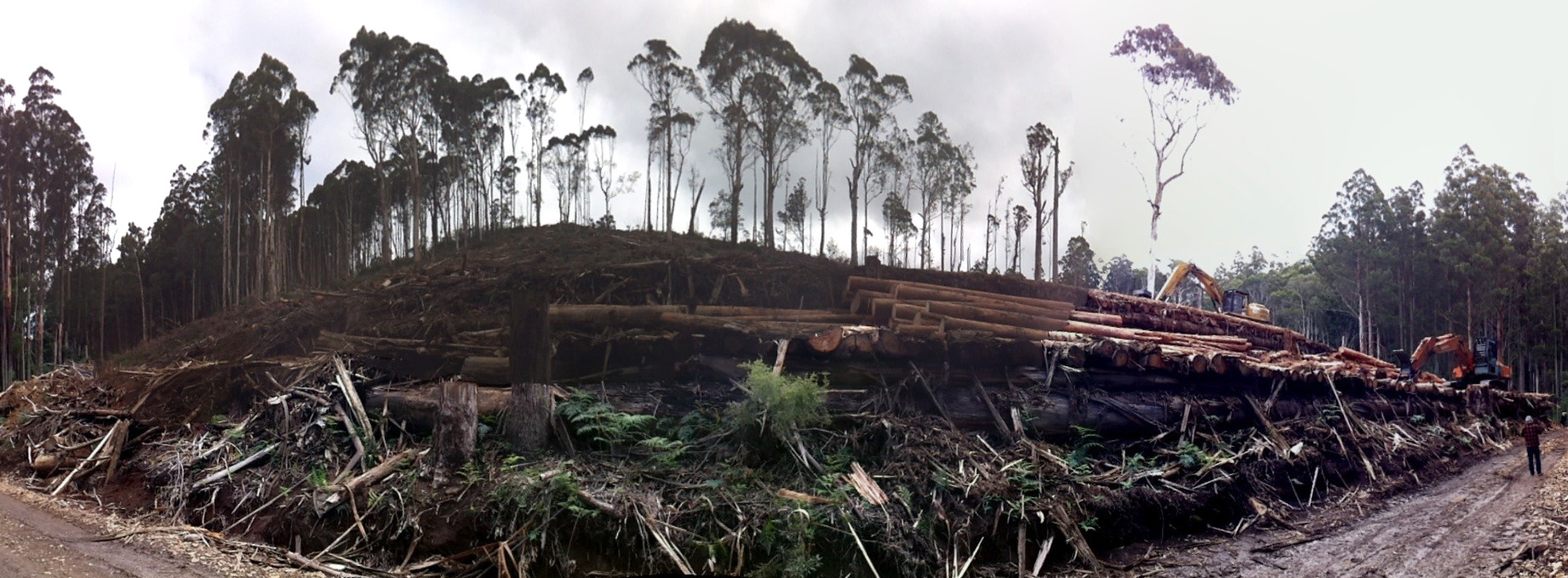
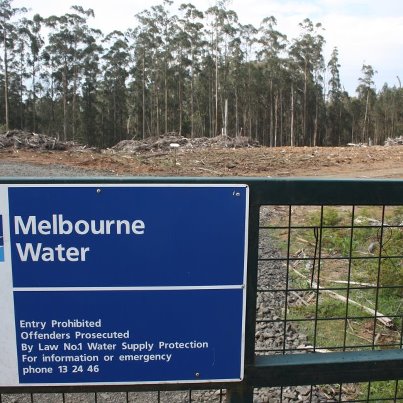
Starvation Creek – Yarra Catchment. Image: CHAG.

Melbourne Water and Premier Baillieu overcharge us for a desalination plant while they plunder our free water from Melbourne’s catchments subject to logging.

Logging in Toolangi, tributary to the Upper Goulburn, is already ripping 3,807 billion litres of water from ‘paying’ downstream users and irrigators worsening over the next century. VicForests, the governments logging company, don’t pay for this water cost nor do Australian Paper (makers of Reflex copy paper) who receive 50% of VicForests wood supply. The owners of Australian Paper are the Japanese multi-national pulp conglomerate Nippon Paper, whose office is in Tokyo. VicForests have only paid a legitimate rent for this forest ‘use’ once since their inception in 2004.

VicForest have yet to break even since 2005 without the aid of grants. They are insolvent but are exempt from Part IV of the Trade Practices Act that would see these matters investigated by a third party like the ACCC. VicForests have avoided audits by the Auditor General after 8 years of operating.

In 2008 the Victorian ALP government received the results of the Wood and Water study committed to in the Regional Forest Agreement process (RFA) in 1998. The results of the hydrological study recommended ending logging in 2009/10 in order to improve water yields to Melbourne (DSE/Mein 2008). This was flatly rejected by government and as a result environment and local government stakeholders abandoned participation in the study.

As temperatures broke state records, angry at the state governments response to dismissing the option to end catchment logging, fifteen local governments independently carried a motion to stop catchment logging by 2010, including the Melbourne City Council. The government ignored this concern and proposed a very expensive buffer.

In 2008 the state ALP government commissioned a desalination plant and maintained clearfell logging the catchments, which in effect, firmly privatised the otherwise historically free water resource. Melbourne has enjoyed a clean, heathy water supply as a result of government in the late 1800‘s kicking timber-getters and miners out of the catchments. As Melbourne’s population grew, new water sources were channeled and created like the Thomson dam at a considerable cost to Victorians. The Thomson provides up to 60% of Melbourne’s water and is now the most heavily logged catchment in the network.

In the 2010 election the Coalition Minister for Water and Forestry, Peter Walsh, committed to hastening logging rotations down from 80 years to 50 years in the Timber Industry Action Plan (TIAP) in order to create more resource from the dwindling forests. This ultimately means that regenerating forests, after logging, growing in the band of highest rainfall, will be kept in perpetual thirst. Regrowing ash species forests lose up to 50% of water run off at 50 years of age due to their enormous growth capacity. It’s not HOW MUCH you log its where and what species you log that’s costing Melbourne critical free water!

In the TIAP, Minister Walsh made a commitment to log parks and strengthened commitments to log water catchments as an electoral promise to his National party colleagues (many of whom are loggers). So under current policy and its effects, our catchments will never yield water at their maximum delivery and we have to pay for the forfeiture via a desalination plant no-one can afford. Minister Walsh runs VicForests and Melbourne Water so he sets any checks and balances, should any exist.

In this Melbourne By-Election voters should demand that candidates openly declare their policy on Melbourne’s Water! It maybe the single greatest issue for the sustainability and survival of Melbourne.

Check here for details on protests held earlier in 2012.

Residents and activists defending old forests at Toolangi

The tree sit at Toolangi

For the past two days, more than 30 people from the Central Highlands Action Group and local Toolangi and Healesville residents have been occupying a large logging coupe on Yellowdindi rd in Toolangi state forest.

Two 30m tree sits, which are suspended by ropes attached to two log-harvesters and two ‘bunnies’ with their arms locked through the tracks of a third machine have ensured that no clear-felling took place in the coupe on Monday January 16.

Much of the Toolangi forests were burnt in the fires of 2009. One Toolangi local said that “residents are concerned that following the Black Saturday fires in 2009 that clear-fell logging in the area will increase the risk of mega-fires due to the large amount of wood waste which is left behind in coupes. The resulting mono-species regeneration after logging operations is far more combustible than the mature age forests which are being removed. This is a recipe for further fire disasters”. They point to research by eminent forest ecologist Dr David Lindenmayer, which clearly indicates that clear-felling practices in the Central highlands notably increases fire risk and thus threatens the whole region.

Activists also point to other values of the forests: “These forests give us protection against climate change and provide habitat for native fauna which is such a feature of this area.”

There is a report available here.

These images by Emma-Jayne Heather.

the coupe at Yellowdindi

‘respect the mountains’

This is a nice little video about sustainable practises when you’re in the snow. It comes from a European group called Respect the mountains

image: respect the mountains

, which is undertaking a grassroots awareness raising initiative for visitors in the Alps.

Their blurb: ‘Many tourists visit the Alps every year, especially during the winter season. The damages are severe. Respect the Mountains is designed to make people aware of the uniqueness and importance of mountain areas and the simple measures you can take to reduce the negative impact. This to make sure that future generations can enjoy the mountains too, that nature is preserved and the economical situation can be secured’.

You can find the video here.

Resisting ski area destruction in Arizona

Image: Indigenous Action Media

On June 16th, activists locked down to equipment used to construct a pipeline at Snowbowl, the ski area on the San Francisco peaks outside of Flagstaff, AZ.

The peaks are sacred to 13 Indigenous nations and play a central role in the creation stories of the Dineh, as well as serving as markers of the borders of Dinetah (Dineh land). The pipeline is meant to carry sewage water that will be used as fake snow for the ski area. Spraying sewage on this sacred place, beyond being profoundly disrespectful and insulting, will destroy a fragile and unique ecosystem in which medicine people gather plants for healing and ceremonies.

Please, support these activists! Six have been arrested, four of whom are Native. They are being held at the county jail and their bond is set at $238 each. If you are in a position to help financially, if you have legal skills that could be of service, or if you’re an independent journalist who can cover this story, please contact: Beth Lavely
Tel: 928.254.1064
Email: protectpeaks@gmail.com

Here is some more background info on the action:

PROTECT THE PEAKS – STOP DESTRUCTION & DESECRATION NOW!

Today we take direct action to stop further desecration and destruction of the Holy San Francisco Peaks. We stand with our ancestors, with allies and with those who also choose to embrace diverse tactics to safeguard Indigenous People’s cultural survival, our community’s health, and this sensitive mountain ecosystem.

On May 25th 2011, sanctioned by the US Forest Service, owners of Arizona Snowbowl began further destruction and desecration of the Holy San Francisco Peaks. Snowbowl’s hired work crews have laid over a mile and a half of the planned 14.8 mile wastewater pipeline. They have cut a six foot wide and six foot deep gash into the Holy Mountain.

Although a current legal battle is under appeal, Snowbowl owners have chosen to undermine judicial process by rushing to construct the pipeline.

Four weeks of desecration has already occurred. Too much has already been taken. Today, tomorrow and for a healthy future, we say “enough!”

As we take action, we look to the East and see Bear Butte facing desecration, Mt. Taylor facing further uranium mining; to the South, Mt. Graham desecrated, South Mountain threatened, the US/Mexico border severing Indigenous communities from sacred places; to the West, inspiring resistance at Sogorea Te, Moana Keya facing desecration; to the North, Mt. Tenabo, Grand Canyon, Black Mesa, and so many more… our homelands and our culture under assault.

We thought that the USDA, heads of the Forest Service, had meant it when they initiated nationwide listening sessions to protect sacred places. If the process was meaningful, we would not have to take action today.

We continue today resisting Snowbowl’s plan to spray millions of gallons of  wastewater snow, which is filled with cancer causing and other harmful contaminants, as well as clear-cut over 30,000 trees. The Peaks are a pristine and beautiful place, a fragile ecosystem, and home to rare and endangered species of plants and animals.

Our action is a prayer.

There is a Facebook page here  and extra info from Indigenous Action Media here.

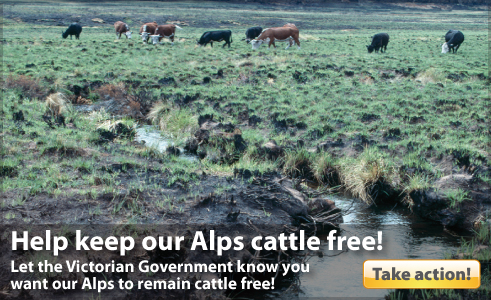
Stop alpine grazing – it’s a park not a paddock!

Image: VNPA

PUBLIC FORUM, April 6

The Baillieu Government has reintroduced grazing to Victoria’s Alpine National Park under the guise of a flawed science project.

Cattle were banned from the park in 2005, now they are back – damaging threatened species, trampling wetlands and spreading weeds.

While this may benefit a few cattlemen it comes at great cost to Victoria’s natural heritage. National parks are for nature, not cattle.

There will be speakers from Environment groups, scientists, politicians and others.

WHEN: Wednesday, April 6, 2011. Doors open 6.30pm, for a 7pm start.

WHERE: Box Hill Town Hall.

Full details here.

Backcountry film festival

UPDATE: 2012 shows – Melbourne in April

For details on the 2012 season please check here.

We will also be showing the festival at Dinner Plain in August. Stay tuned for details.

Showing in Melbourne, April 2011

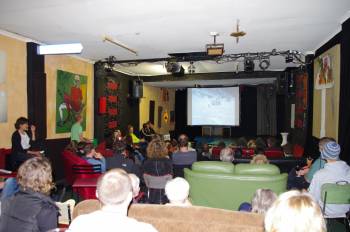
Many thanks to everyone who showed up. We will need a bigger venue next time ...

The Winter Wildlands Alliance created the Backcountry Film Festival in 2005 to help grassroots and professional filmmakers to show audiences their love of the winter outdoors. Since then, the annual festival has been shown in more than 30 towns and cities, and raised thousands of dollars to help efforts to preserve our winter environment.

The 2011 film festival is showing in Australia.

This tuesday, April 12

Films start at 8 pm. Please feel free to arrive earlier to grab a drink.

At 303 (303 High street, Northcote, Melbourne), tram stop #32 on the #86 tram. Its just next door to the Northcote Social Club.

303 is a licensed bar.

Entry by donation. All funds raised will support Protect Our Winters.

You can watch the trailer here.

Protect Our Winters is the environmental centre point of the winter sports community, united towards a common goal of reducing climate change’s effects on our sport and local mountain communities.

We believe that to really effect things, consumer behaviour needs to change and that the power of an actively participating and united community can have a direct influence on climate change, now and for generations behind us.

This year’s festival features:

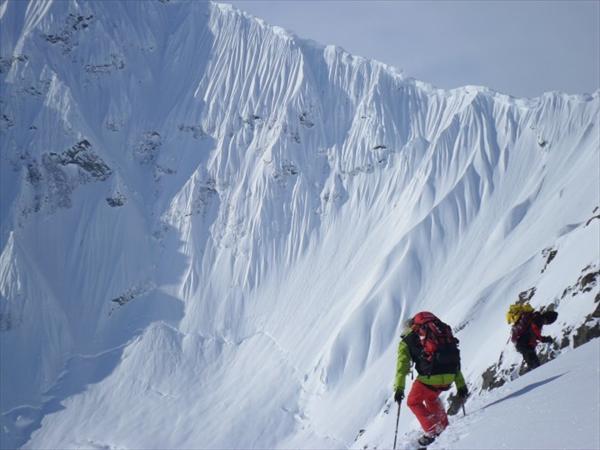
Best of the Festival: Teton Gravity Research’s festival cut of “Deeper” follows legendary snowboarder Jeremy Jones and other top riders as they forsake helicopters, snowmobiles and lifts to venture deep into untouched terrain under their own power.

Best Short Film: “Desert River” from Sweetgrass Productions, is a beautiful ski adventure into Alaska.

Best Environmental Film: “Whitebark Warrior” from TreeFight and Snaz Media, chronicles the decline of thousand-year old whitebark pines due to climate change and efforts underway to save these iconic high alpine trees.

Other Films Include:

  • Australis, an Antarctic ski odyssey
  • TELEvision (check here for a TELEvision trailer to give you a sense of whats on offer) and
  • Cross Country Snowboarding

For extra information, please check the festival website.

For details on POW Australia, please contact Cam: cam.walker@foe.org.au

There will be other Australian screenings of the festival:

  • at Mt Buller on 16th July.
  • Jindabyne, dates TBC.

Snow Monkey has offered a 10% discount card to each person that attends the night.

They have shops in Collingwood and Mt Hotham.

Josh Dirkson, Alaska, from the film Deeper. Image: Teton Gravity Research.

‘adventures in saving snow’

Australia has any number of well known sports people. What sometimes surprises me is how few prominent skiers/ boarders – that is people connected with our mountains – actually speak out on environmental issues. This example from the excellent Wend magazine profiles extreme skier from the USA, Alison Gannett, and her advocacy work on climate change.

Alison Gannett–Adventures in Saving Snow

(author: James Mills)

Image: Wend

There are plenty of people out there talking about climate change. But how many are actually doing something about it? Even those of us who spend a lot of time outdoors can be guilty of contributing to the destruction of the natural environment we love. We fly in jets from place to place for the sake of adventure. And many of us are still driving low gas mileage, carbon emitting SUVs. Our active lifestyles can really hurt the planet. So that’s why we can all take a few lessons from professional skier and environmental advocate Alison Gannett.

“I went to school for climate change and majored in education for environmental issues. And then I went to school for solar design for alternative home building,” she said. “At the same time, I had a professional skiing career, doing crazy things like the X-Games and jumping off cliffs for a living.” While she had two careers running parallel to one another, Gannett suffered a devastating crash at the X-Games and because she was badly injured and unable to compete, several of her sponsors immediately dropped her. That got Gannett to thinking.

“I realized how shallow a lot of my ski industry sponsors were,”  she said. “I decided, wouldn’t it be cool to partner with companies that have more at stake and care more about than just selling clothing?” Though many of the competitors and colleagues thought she was crazy for chasing the more lucrative sponsorship deals, Gannett changed her professional priorities to work instead with companies who share her environmentally conscious values. “I want to chase ethics,” she said. “I want to work with companies that have the same beliefs that I do.”

It turns out that there are plenty of sponsors out there willing to support Gannett’s mission to raise awareness for the ongoing crisis of climate change. Blending her interests in sustainable living and an active lifestyle, she’s proven to be a very effective spokesperson for both. “As an athlete getting older, I’d have to say that I have better sponsor relationships now than I ever did,”    she said. “And now working with the Save Our Snow Foundation and working with schools, working with Congress, working with the White House I’m saving our snow, saving our planet and making the world a better place.”

Allison Gannett is the kind of adventure athlete that walks her talk. While still leading an exciting life as a professional skier, she’s making a big difference in educating the general public on the realities of climate change. And through her work at the Save Our Snow Foundation and on her own organic farm in Colorado, she’s showing us what we each can to do to slow it down.

You can find Alison’s website here.

Alpine grazing action alert

A new dilemma for the government:

According to The Age newspaper, “traditional owners of Victoria’s high country have threatened the Baillieu government with legal action, accusing it of “stepping over the mark” in the controversial return of cattle to the Alpine National Park.”

The government appears to be in the bunker and not responding to a number of recent stories in The Age.

UPDATE, 12/1/11: it has just been announced that the government has secretly put a small number of cows back in the Alps Park in order to “prevent any potential Federal Government injunction”. (!!)

This secrecy flies in the face of the Ted Baillieu’s committment to transparent government.

Check this letter from the Environmental Farmers Network on the grazing decision.

Background

Cattle were removed from the Alpine National Park in 2005 by the government of Steve Bracks. This was an important step forward for good land management in our state. Since then, some of the long term damage caused by decades of grazing have started to heal.

However, the Victorian Coalition announced in the build up to the November election that it would return cattle grazing to Victoria’s alpine national parks as a tool to reduce fire risk.

It probably made sense to summer graze cows in the alps when the practise started in the 1800’s. Given what we now know – of the ecological damage they cause – it made sense to remove them from the precious alpine areas.

Putting them back into the Park – in the very headwaters of our most significant river systems in a time of climate change – would mean turning our backs on common sense land management and scientific evidence. Grazing greatly damages the alpine systems, including the peat beds, that release high quality water into our river systems across the north east of the state.

Research on alpine grazing has consistently shown that the pro grazing mantra ‘grazing reduces blazing’ simply isn’t true.

The Victorian National Parks Association has substantial information on the question of grazing and fires which is available here.

You can also see the CSIRO’s finding on grazing and fire here.

We need to send a strong message to the new government that the majority of Victorians do not support the re-introduction of grazing into the Alps and other protected areas like the Barmah forest.

TAKE ACTION

Please write to the Premier and Environment minister, explaining that you are opposed to the reintroduction of cattle grazing into Victoria’s alpine environment.

You could mention that the grazing of cattle in a national park is inconsistent with conservation management, which is the main purpose of national parks protection. It will not help reduce fire risk. Our alps are at great risk from climate change and do not need that degradation that will come with grazing.

Simply send a brief and polite email outlining your concerns, with your name and address to:

The Hon Ted Baillieu MP
Premier of Victoria
ted.baillieu@parliament.vic.gov.au

The Hon Ryan Smith MP
Minister for Environment and Climate Change
ryan.smith@parliament.vic.gov.au

It would be great if you could cc us a copy so we know how many letters have gone in: foe@foe.org.au

Please send this alert on to your friends. Thanks!

New grassroots movement to change the way ski areas are run

The US-based Mountain Riders Alliance has now gone global:

Bon Accord spur, VIC

“A new paradigm is emerging in ski area management: one that’s globally-based, rider-centric, environmentally sustainable, sensitive to local needs, and skier-and-snowboarder-owned

“Rising lift ticket costs, negative impacts on ski communities and the environment, and the desire to combat climate change have all led concerned skiers and snowboarders to form a global collaborative group, Mountain Rider’s Alliance (MRA).

“MRA is a movement of snow enthusiasts who are dedicated to changing the ways ski areas are run. MRA’s mission is to create rider-owned-and-operated ski areas that are rider-centric, environmentally sustainable and sensitive to local cultural, social and economic concerns”.

For the full announcement, check here.

Geoff Mosley

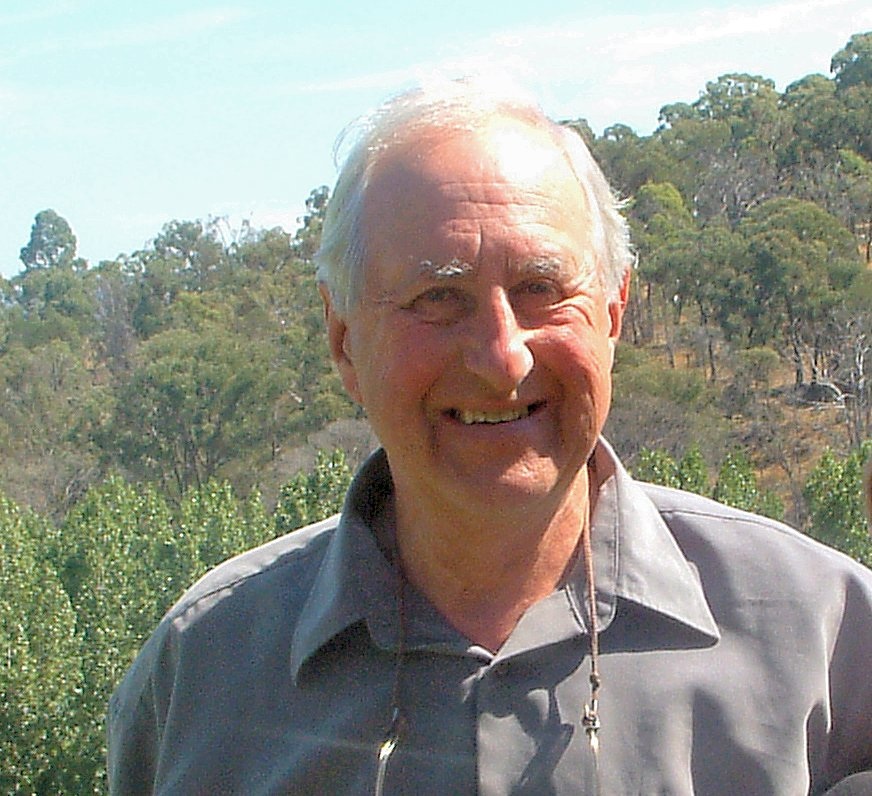
Geoff Mosley has worked for decades to protect wild places in Australia. He helped establish wilderness zones and parks across the south east of the mainland and Tasmania, and has recently released a book on Antarctica. He is active in the field of steady state economics, a keen walker, and widely published activist and thinker.

Perhaps he is best known for his efforts to see a major national park established across the Australian Alps. Much of this vision has now been realised, although he continues to work to see an extension of the Western section of the Alpine National Park and to get World Heritage listing for the forest ecosystems of the south east corner of the country, where Gippsland and NSW meet.

Check here for an interview with Geoff.

Take action to protect our winters!

A classic image from the Victorian Alps: Mt Feathertop from Hotham. But without serious action on climate change now, our alpine areas are at grave risk.

First Protect our Winters (POW) Australia action alert

The Victorian government is in the final stages of deciding what type of Climate Bill it will deliver as part of it’s election commitments.

Similar Bills in other places – for instance, the UK and Scotland – have set ambitious greenhouse emissions reductions targets (Scotland has committed to 42% reductions by 2020).

We must urge the Victorian government to deliver a strong, world leading Bill. The final decision about the Bill is being taken now. And a strong Bill will greatly reduce Victoria’s contribution to climate change through driving a shift away from our reliance on polluting brown coal power.

POW Australia has issued its first action alert, asking people to email the Premier, John Brumby. It is available here.

We hope POW supporters, skiers and boarders from across Australia will support this on line campaign. Lets get the Australian winter sports community mobilised to protect our winters.

Blog at WordPress.com.

Up ↑