Search

Mountain Journal

Environment, news, culture from the Australian Alps

Tag

Bogong High Plains

Alpine Ecology Course 2017

The Research Centre for Applied Alpine Ecology is pleased to announce details of its 2017 Alpine Ecology Course.  This is an exciting opportunity to learn about the plants, animals, land-forms and soils that make up alpine ecosystems. The course is designed for people who are involved in natural resource management or conservation activities in alpine and other natural environments.

It will be held on the Bogong High Plains from the 5th – 10th February 2017.

Further information available here.

The Bigfoot Snow Trail

The Bigfoot Snow Trail is described as:

“A unique and spectacular event offering both a SnowMarathon and a SnowSprint event in Victoria’s beautiful Falls Creek Resort. Enjoy the magic of winter as you make your way across the high plains, exploring solo or with friends. This one of a kind event takes runners on an extraordinary journey, visiting historical huts and witnessing some of Australia’s highest peaks under snow. The views will give you that feeling of awe, the feeling that you are on top of the world”.

Continue reading “The Bigfoot Snow Trail”

Major re-route of Falls to Hotham alpine crossing proposed

Tourism North East has called for feedback on the master plan for the Falls to Hotham Alpine Crossing walk. This has been billed as an ‘iconic’ walk which links the two resorts via the Bogong High Plains and Cobungra Gap, and is generally done over three days. A permit is required to camp at the Falls to Hotham Alpine Crossing campsites.

There is a proposal for a major re-alignment of the walk, which instead of skirting the High Plains, cuts out to Tawonga Huts then down into the Kiewa Valley and up Mt Feathertop. This new proposal would require substantial new track building up the Diamantina Spur. The initial public consultation period for the Plan is over.

Continue reading “Major re-route of Falls to Hotham alpine crossing proposed”

Join the 2015/2016 Falls Creek Hawkweed Volunteer Program

Native to Europe, Hawkweeds have recently become naturalised on mainland Australia.

Hawkweeds are highly invasive and spread quickly via runners and roots, forming dense mats inhibiting and outcompeting native vegetation. They can cause major environmental damage in alpine and sub-alpine areas, and are considered a significant threat to the Victorian Alps if not eradicated early.

Participating in volunteer surveys is a great way to help protect the Victorian Alps from this dangerous weed, as well as a fantastic opportunity to enjoy the magnificent alpine environment during the green summer months.

Continue reading “Join the 2015/2016 Falls Creek Hawkweed Volunteer Program”

In praise of huts 2

Mountain Journal has previously covered the issue of huts in the high country. As we said then:

Huts in the mountains can be a vexed issue. Huts will tend to attract people and so tend to concentrate visitation within a larger area. As one example, most people who climb Mt Bogong tend to then turn towards Cleve Cole hut rather than head across to the Hooker Plateau. This tendency to influence visitation can be both good and bad.

They are part of the cultural history of the high country, and reflect major stages in the post colonisation era: cattle grazing, forestry, hydro, even fire watch towers and, more recently, huts built for recreational purposes. We also have a number of strange and random anomalies, ones that don’t really make sense: Craig’s hut near Mt Stirling as an example, which was built as a set for a film. There are, of course, those whose primary function is safety, such as Seaman’s hut near Mt Kosciusko, and huts that belong to clubs or even schools (Geelong Grammar on Mt Stirling)”.

With growing risk of wildfire, and many huts simply ageing and starting to fall apart, there is the chance that the overall number of huts will decline in coming years. Some are carefully looked after (the Kosciusko Huts Association lists the known caretakers of huts in the Snowy Mountains) but others are falling into disrepair.

I am more interested in indigenous history of the high country than huts, but I do appreciate the cultural value they hold for many people and the practical value of refuge huts.

Continue reading “In praise of huts 2”

Australian Alps Walking Track Projects – volunteer places available

Conservation Volunteers have two Australian Alps Walking Track (AAWT) projects remaining for the 2014/15 season, with some spaces left on the respective teams.

They are both base camping projects in the Victorian high country:

Bogong High Plains March 1 to 7 2015

Work involves Track definition and surfacing using rubber tiles, and creating drains.

Omeo region March 22 to 28 2015

This will involve a mix of track clearing, brushcutting, drainage installation, and track marking.

If you are interested it will be fantastic to hear from you.

To express interest, please contact Adam via email, on 03 54440777 or on 0427 507 004.

asmolak@conservationvolunteers.com.au


Parks Victoria volunteer track ranger program

For people with solid outdoor experience who want to share their love of wild nature with others, this is a great opportunity.

Parks Victoria is calling for volunteer track rangers who can be available to stay in key areas in the Alpine National Park on peak weekends, to be available to support people who are out walking.

The Track Ranger Program was established in 2005 and has volunteers hiking and camping at popular walking trails and campsites in the Victorian Alps during peak periods. Track Rangers will spend time hiking the trails of Mount Bogong, Mount Feathertop or the Bogong High Plains over 3 to 5 days. The program runs over the new year period, Labour Day weekend and Easter.

You will receive support and training from Parks Victoria.

Check below for a full description of the role.

Continue reading “Parks Victoria volunteer track ranger program”

Australian Alps Walking Track maintenance program, 2014/ 2015

Conservation Volunteers Australia (CVA) and Parks Victoria are embarking on their 3rd year of a joint maintenance program of the Australian Alps Walking Track from November 2014 to mid-March 2015. They are looking for fit and strong outdoor volunteers to join the program, committing 6 days to support the track maintenance activity.

Ross Grant, Parks Victoria Ranger in Charge, says the volunteers will be working in some of Victoria’s most spectacular scenic locations on a variety of projects.

Continue reading “Australian Alps Walking Track maintenance program, 2014/ 2015”

Join the 2014/2015 Falls Creek Hawkweed Volunteer Program

Hawkweeds are a highly invasive pest plant species which can cause major environmental damage in alpine and sub-alpine areas of Australia if not eradicated early. Native to Europe, Hawkweeds have recently become naturalised on mainland Australia. Hawkweeds spread quickly via runners and roots, forming dense mats inhibiting and outcompeting native vegetation.

For several years, Parks Victoria has co-ordinated volunteer teams each summer to remove Hawkweed on the Bogong High Plains.

Volunteer recruitment is now open for the 2014/2015 season Falls Creek Hawkweed Survey. Participating in the Falls Creek Volunteer surveys is a great way to help protect the Victorian Alps from this dangerous weed, as well as a fantastic opportunity to enjoy the magnificent alpine environment during the green summer months.

Continue reading “Join the 2014/2015 Falls Creek Hawkweed Volunteer Program”

Alpine Researchers honoured for contributions to parks

This is from a few weeks ago, but is good acknowledgement of the efforts of researchers working to remove Hawkweed and control willows on the Bogong High Plains. Thanks to David Turner for spotting this one.

The release below is from Parks Victoria.
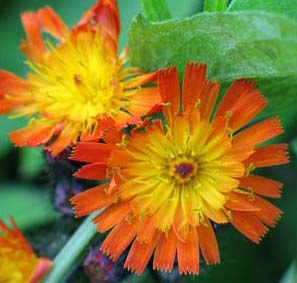
orange_hawkweedTwo Victorian researchers have been recognised for their outstanding contribution to managing highly invasive weeds in Victoria’s Alpine National Park.

Parks Victoria Chief Executive Dr Bill Jackson today acknowledged The University of Melbourne’s Dr Nick Williams, and Dr Joslin Moore from Monash University, as joint recipients of Parks Victoria’s inaugural Nancy Millis Science in Parks Award.

Dr Jackson said the award was being presented to the two researchers for their outstanding contribution to fostering excellence in applied science for the benefit of park management.

“Both projects demonstrated the researchers’ strong willingness to work closely with park managers to understand the extent and challenge of the weed problems. They also demonstrated leading edge science in solving difficult problems.”

“The work of Dr Williams and his team from The University of Melbourne has helped to protect the Alpine National Park’s biodiversity and transformed hawkweed control into a cutting edge and targeted program. This research partnership between Parks Victoria and Department of Environment and Primary Industries staff has significantly reduced Hawkweeds in the Alpine National Park, and the goal of eradicating it altogether is now a real possibility.”

“Dr William’s research and the work being done by all the partners on this project also benefits private landowners as hawkweeds have the potential to invade agricultural land and significantly affect agricultural production.”

Dr Jackson said Dr Joslin Moore and her team had achieved great results in controlling willow on the Bogong High Plains and as a result has had a major impact in protecting the Bogong High Plains environment.

“Willows are highly invasive and following the 2003 fires began germinating in large numbers. This posed a significant threat to an area within the Alpine National Park that is particularly important for its high biodiversity and landscape environment.

“As a result of a 7 year partnership with Parks Victoria, local Catchment Management Authorities and Falls Creek and Mt Hotham resorts, Dr Moore’s work has been fundamental in improving efforts to control willows on Bogong High Plains.”

Dr Jackson said both researchers had extensively documented their research in scientific publications, adding to the international body of work on effective methods of managing these extremely invasive weeds.

“I warmly congratulate Dr Williams and Dr Moore, and their teams who have contributed to this work, on making a real difference to managing invasive weeds in Victoria’s iconic Alpine landscapes.

“Caring for our parks is a complex task that involves many challenges including climate change, population increases and threats such as invasive pest plants and animals.

“We need innovative solutions and a good scientific understanding of how best to tackle these issues and how best to care for these important natural environments. Dr Williams and Dr Moore’s projects are part of Parks Victoria’s Research Partners Program that fosters collaborative applied research with universities and other research organisations.

The Nancy Millis Science in Parks Award

This award presented by Parks Victoria honours the late Professor Nancy Millis who was Chair of Parks Victoria’s Science and Management Effectiveness Advisory Committee since its inception 1997 and a member of Parks Victoria Board’s sub-committee on Environment.
Giving Back part 2: the Victorian Mobile Landcare Group

I recently posted about the need for people who enjoy the mountains to give back to the natural environment in some way. One great option is to join or support one of the many groups that do ecological restoration work or track maintenance. One group that certainly ‘walks the talk’ is the Victorian Mobile Landcare Group, who work across a range of projects in the Victorian High Country.

The following is a report on a recent project they completed on the Bogong High Plains.

For contact details on a range of groups, check here.

Roper’s Hut Track Repair

Seven members of the Victorian Mobile Landcare Group Inc. (VMLCG) travelled to Mt. Beauty late on Friday 7 March in order to take on a request from Parks Victoria (PV) to assist create a rock vehicle bridge to protect sensitive sphagnum moss beds which straddle the Management Vehicle Only track out to the iconic Roper’s Hut, burn in the 2003 fires and restored in 2009 by a community effort, headed by the Freemasons Victoria NE District.

OLYMPUS DIGITAL CAMERA
This one is the end of work. Time is 1 pm

The team met Parks Ranger Elaine Thomas and contractor Kim, on Saturday morning at Falls Creek and after rationalising vehicles and loads to reduce track impact, travelled out to the Big River Fire Trail and Roper’s Track intersection.

Once fortified by an early morning team, the VMLCG team then walked to the site, and after a JSA and briefing on design and approach by Kim, commenced the work to excavate and create the crossing.

In all, around 4 cubic metres of existing material was moved to make two purpose built and rock-based wheel tracks for both PV and contractor vehicles required to access the hut site. The 4 cubic metres of 75 – 150 mm granite rock used to fill the wheel tracks was kindly donated to the project by AGL, the operators of the recently constructed Clover hydro power station and this kind donation is much appreciated and acknowledged. Without it, this work would not have been possible.

This one is the end of work. Time is 1 pm
Start of the work at 10am. The pink dots mark the outlines of the track to be built
This one is start of work 10 am.  The pink dots are the track outlines we had to create.

The VMLCG was originally tasked for two days but with the combined effort of the team and Parks Victoria rangers, the entire project was completed between 10 am and 1:30 pm on the Saturday – and after a quick lunch, the crew returned to Falls Creek and an early mark for the weekend!

The next phase of the project will be when the VMLCG returns with Fintona Girls’School to plant out around 450 alpine shrub species to stabilise the soil around the tracks and reduce their visual impact. It is expected in time, the spot will become barely noticeably and yet provide a much needed stabilising base for the occasional and required vehicle access.

We’ll let the before and after photos speak for the work done.

The VMLCG specialises in the development and delivery of remote area landcare projects and works collaboratively with a number of conservation groups on a diverse range of projects across Victoria. They can be reached via http://www.vmlcg.org.au

Hawkweed Eradication Program

The following is a reportback from Parks Victoria on this summer’s Hawkweed program. For several years PV has been co-ordinating a program on the Bogong High Plains aimed at getting this invasive weed under control.

Volunteers help to eradicate dreaded Alpine weed

orange_hawkweedVolunteers are helping to eradicate one of the state’s worst weeds from the Victorian Alps. Hawkweed is an extremely invasive member of the daisy family and is a State prohibited weed in Victoria. It has already caused major environmental damage in North America, Japan and New Zealand. Three species have been discovered in the Falls Creek Alpine Resort and surrounding Alpine National Park. An eradication program is underway and being jointly overseen by Parks Victoria, the Department of Environment and Primary Industries and Falls Creek Resort Management. Universities, research organisations and volunteers are also helping with the eradication program.

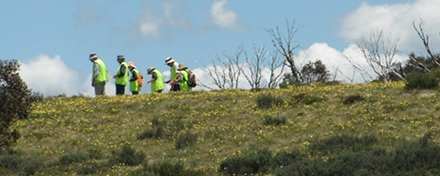
Over summer, 59 volunteers made a significant contribution by seeking out Hawkweeds across the vast and rugged alpine landscape. Volunteers from the Victorian National Parks Association, Weed Spotters, Landcare and Bushwalking clubs, as well as individuals joined forces for the hunt. They searched a total area of 73 hectares over a five week period in December and January, discovering 15 Hawkweed infestations.

“The search involved approximately a thousand hours of surveillance over rough terrain and often in challenging weather conditions,” said Keith Primrose, Operations Manager for the Hawkweed Eradication Program with Parks Victoria.

The project was assisted with information from Parks Victoria’s Research Partners Program by the University of Melbourne, Parks Victoria and DEPI. This helped locate and prioritise Hawkweed infestations.

Falls Creek Resort Management supplied accommodation for the volunteers free of charge.

This meant they stayed on the mountain for the surveillance work and enjoyed their free time in this beautiful landscape.

Parks Victoria Volunteer Coordinator Yohanna Aurisch says these enthusiastic teams are making a real difference. “We had an amazing season with a fabulous bunch of volunteers and we can’t thank them enough for their time, hard work and dedication. They discovered infestations of Orange, King devil and Mouse-ear Hawkweeds and have helped us take another step towards eradicating this highly invasive pest.”

Keith Primrose says only a committed approach will see the eradication of Hawkweed from the Victorian Alps “Without the dedication and effort of these volunteers this program has significantly less chance of success.”

Planning is already underway for next year’s season and recruitment starts later this year. For more information contact Keith Primrose via info@parks.vic.gov.au

If you think you have seen a Hawkweed please contact DEPI on 136 186.

Blog at WordPress.com.

Up ↑