With bushfire season still in full force, the kindest thing that can be said about the Victorian Government order to the community of Woods Point that they abandon their fire refuge is that it is very badly timed.
Woods Point is one of the most isolated towns in the state, in a valley in the Victorian high country. Long sections of heavily forested country must be traversed if people are to leave in the case of fire threat and the need for a community refuge is both obvious and necessary.
The following report comes from The Weekly Times, written by Chris McLennan.
Fury as Woods Point bushfire refuge deemed illegal
A SMALL Victorian town will defy a Victorian Government order to abandon their fire refuge.
Woods Point residents rely on the old gold mine tunnel which has saved the town’s population once before.
Despite the tunnel being the state’s only officially recognised fire refuge for years, new rules governing the construction of refuges have seen the government and local council in the last few weeks refuse to accept legal liability for the structure.
Signs nominating the tunnel as a fire refuge are to be removed and residents fear a gate on the entrance will be padlocked.
”Do they want us to die?” member of the town’s safety committee, Margaret Martyn said.
Fire Services Commissioner Craig Lapsley yesterday said the tunnel, known locally as the adit, did not meet the new building requirements to be a community fire refuge.
The Country Fire Authority yesterday began an assessment of the tunnel hoping to reclassify it as a “Neighbourhood Safer Place” but the question of legal liability remains.
Mr Lapsley said the CFA, Victoria Police and the Fire Services Commissioner would continue to work with Mansfield Shire Council to resolve the issue.
He said before the 2009 Black Saturday bushfires, there was an adhoc and inconsistent approach to the designation of community fire refuges.
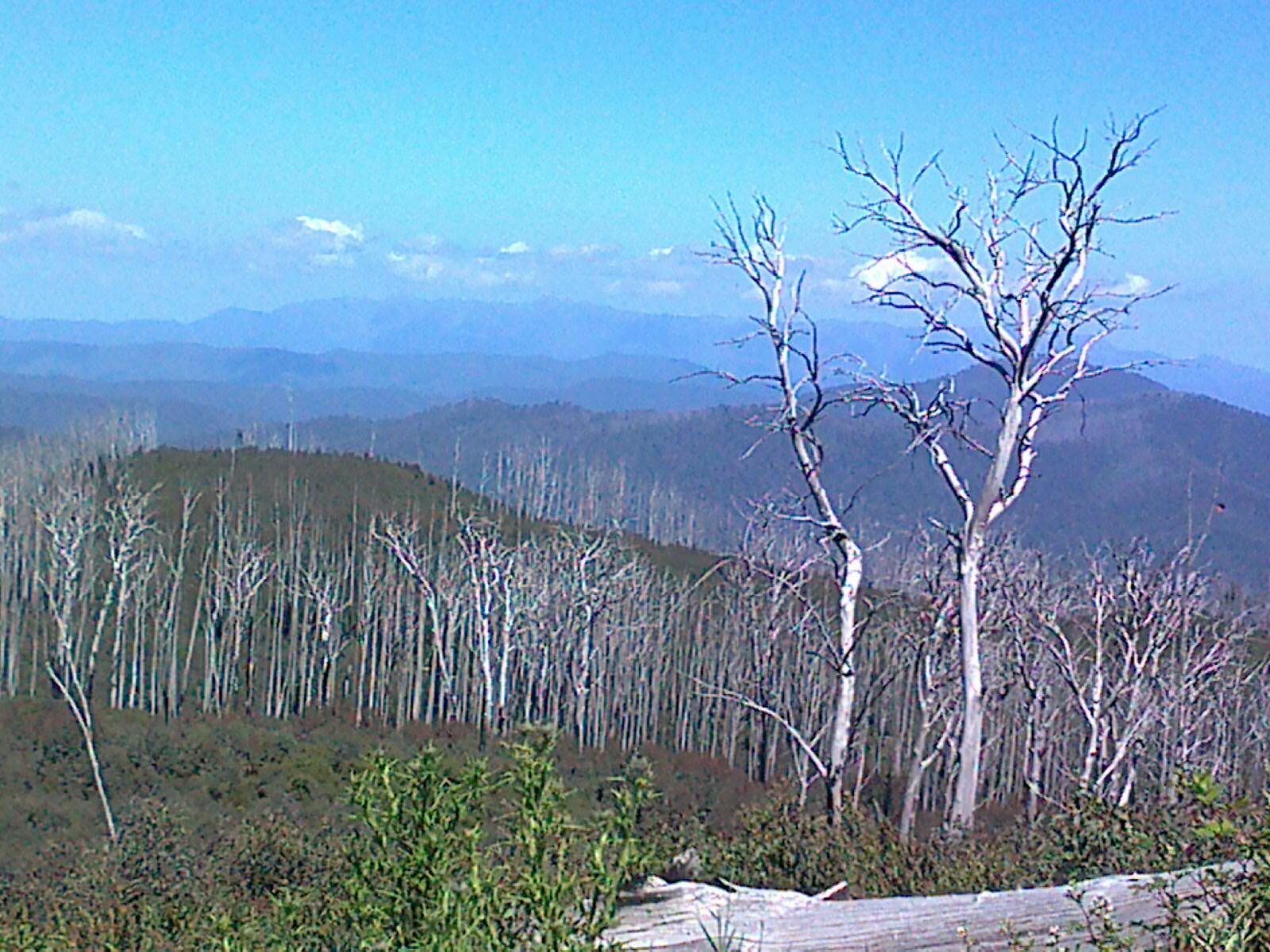
Snow gums are the quintessential alpine tree on mainland Australia, generally growing at heights between 1,300 and 1,800 metres asl. Forests and woodlands of Eucalyptus pauciflora can look quite uniform from a distance, but up close they have such character.
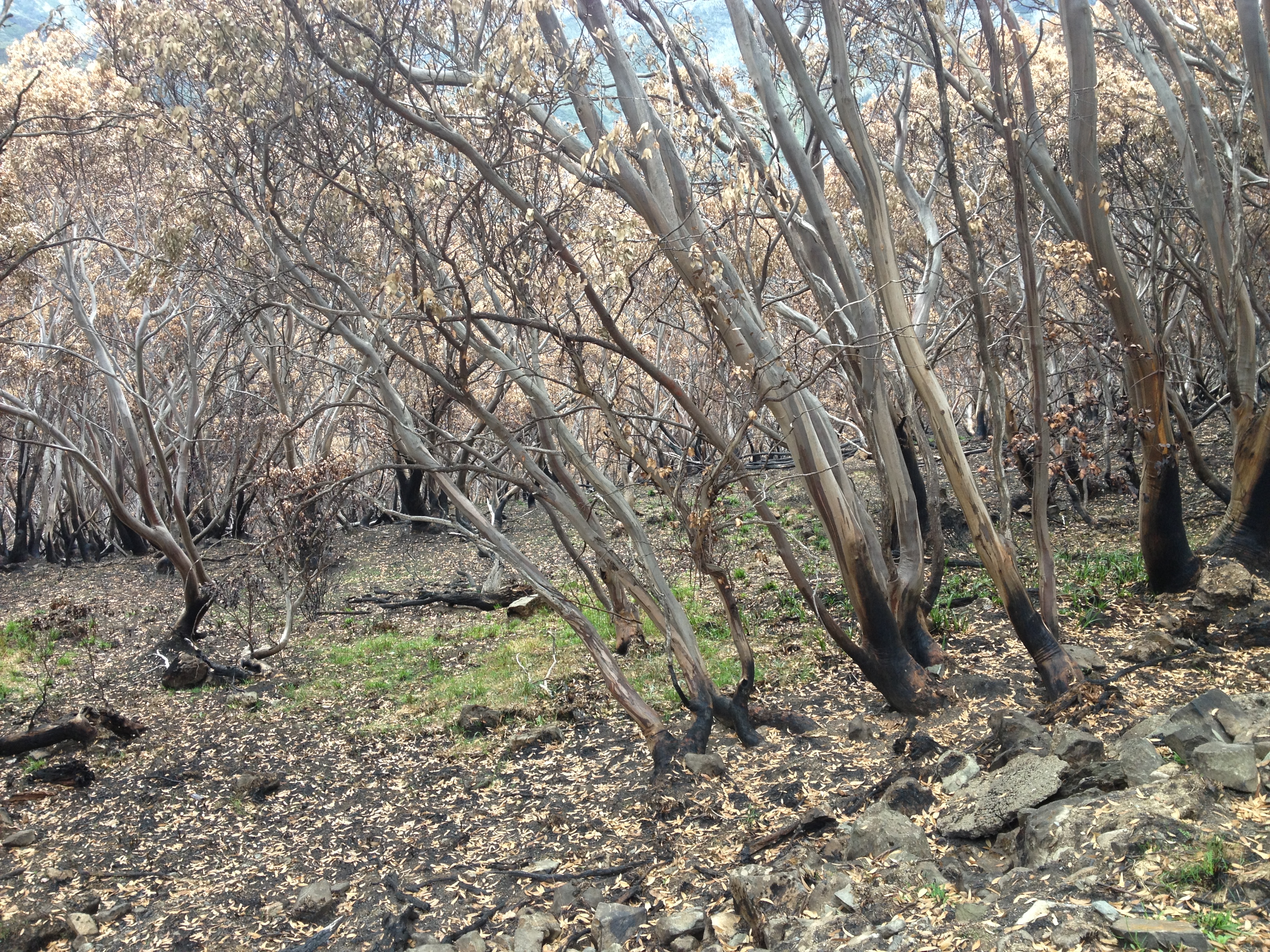
But wildfire has been devastating large swathes of snow gum habitat, with significant fires in the Victorian High Country in 1998, 2002/3, 2006/7 and 2013 and in the Snowy Mountains in 2003.
Research is showing that if we want to allow snow gum forests the chance to recover from these fires, we need to keep the cattle out and do our best to stop any future fire activity.
Most fires in the mountains (so far) have been in the foothills (see news item below from The Gippsland Times) or East Gippsland. However the CFA is now reporting fire activity in various locations in the high country.
There is a fire roughly 20km NNE of Benambra Township and the high ridge country near Mt Matlock. Check the CFA site for details.
As of friday morning, Jan 17, the CFA is reporting that
Firefighters are responding to a fire in the TAMBORITHA-CAREY RIVER area 15kms NE of Licola.
UPDATE ON TAMBORITHA FIRE, Jan 22
Fire is still going, now 150 ha in size, and the regions identified below are still closed.
UPDATE JAN 19
The fire is currently 120 hectares in size.
The Lake Tarli Karng walking track network is closed. Visitors should also stay away from tracks north of the Avon Wilderness area and the Mount Wellington to Millers Hut 4WD area.
JAN 17 NOTE ON TAMBORITHA FIRE:
Campers and walkers in the Carey River catchment, north of the Avon Wilderness Park, the Lake Tarli Karng track network and the Mount Wellington to Millers Hut 4WD area are advised to leave and all visitors should stay away from these areas.
Ground crews will be checking for vehicles and walkers, with air support if necessary.
Additionally, there is advice for Ensay, Omeo, Swifts Creek, Benambra:
Firefighters are responding to a fire in the 33 KM NE SWIFTS CREEK area in the vicinity of Brumby Rock.
There is currently no threat to communities, but you should continue to stay informed and monitor conditions.
Fire crews battle High Country lightning blazes
FIRE conditions are predicted to significantly worsen on Friday with Severe Fire Danger Ratings forecast across Gippsland.
For Sale a top temperature of 41 degrees has been forecast for Friday with a light shower of two and the chance of a thunderstorm from the early afternoon.
Work by DEPI, Parks Victoria and CFA fire fighters on Wednesday prevented the spread of many fires across Gippsland.
A band of lightning crossed parts of central and east Gippsland and sparked many small fires.
The majority of these fires have been in the area north of Briagolong and the area north of Bruthen.
Firefighting aircraft and dozers were dispatched to support firefighters on the ground.
Gippsland regional fire controller Bryan Russell commended fire crews for their speedy work in very hot and uncomfortable conditions.
As the Gippsland Times went to press crews were fighting fires at Briagolong, Dargo, Treasures, Waterford, Castleburn, Cobbannah.
In the east fires were also burning.
An all clear advice had been issued for fires at Mossiface, Bruthen and Wiseleigh.
I have been out checking some of my special places, to see how they are faring after last summer’s Feathertop fire. The north razorback fire burnt hot up and out of the Ovens river, past Mt Smythe and into the Upper Buckland River and swinging east around the massive bulk of Hotham and towards Dinner Plain.
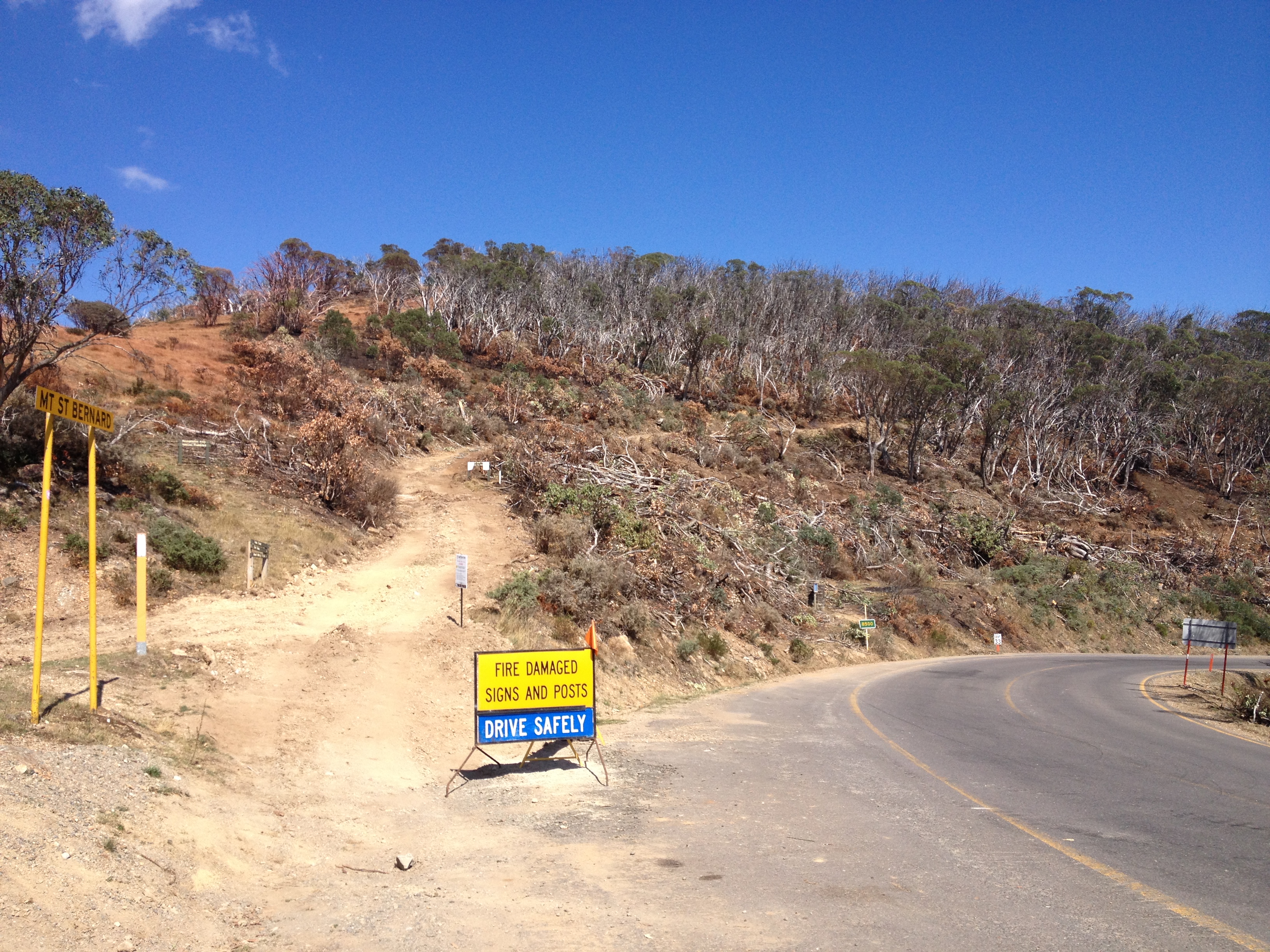
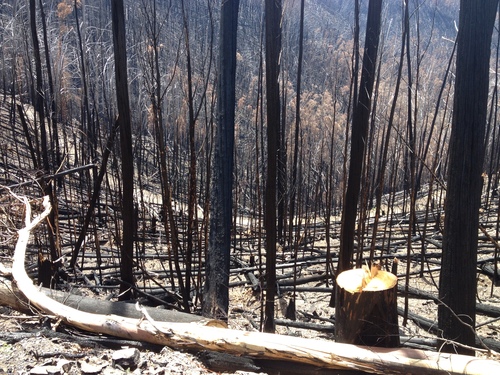
Many of the forests along the Sugarloaf Ridge were badly burnt and now big swathes of burnt out country have been clearfelled to protect the Great Alpine Road. I understand the need to cut out the alpine ash close to the road that had been killed in the 2013 or earlier fires, but a major over clearing has happened on the slopes of Mt St Bernard, where fire killed snowgums well back from the road had been clearfelled for no obvious reason.
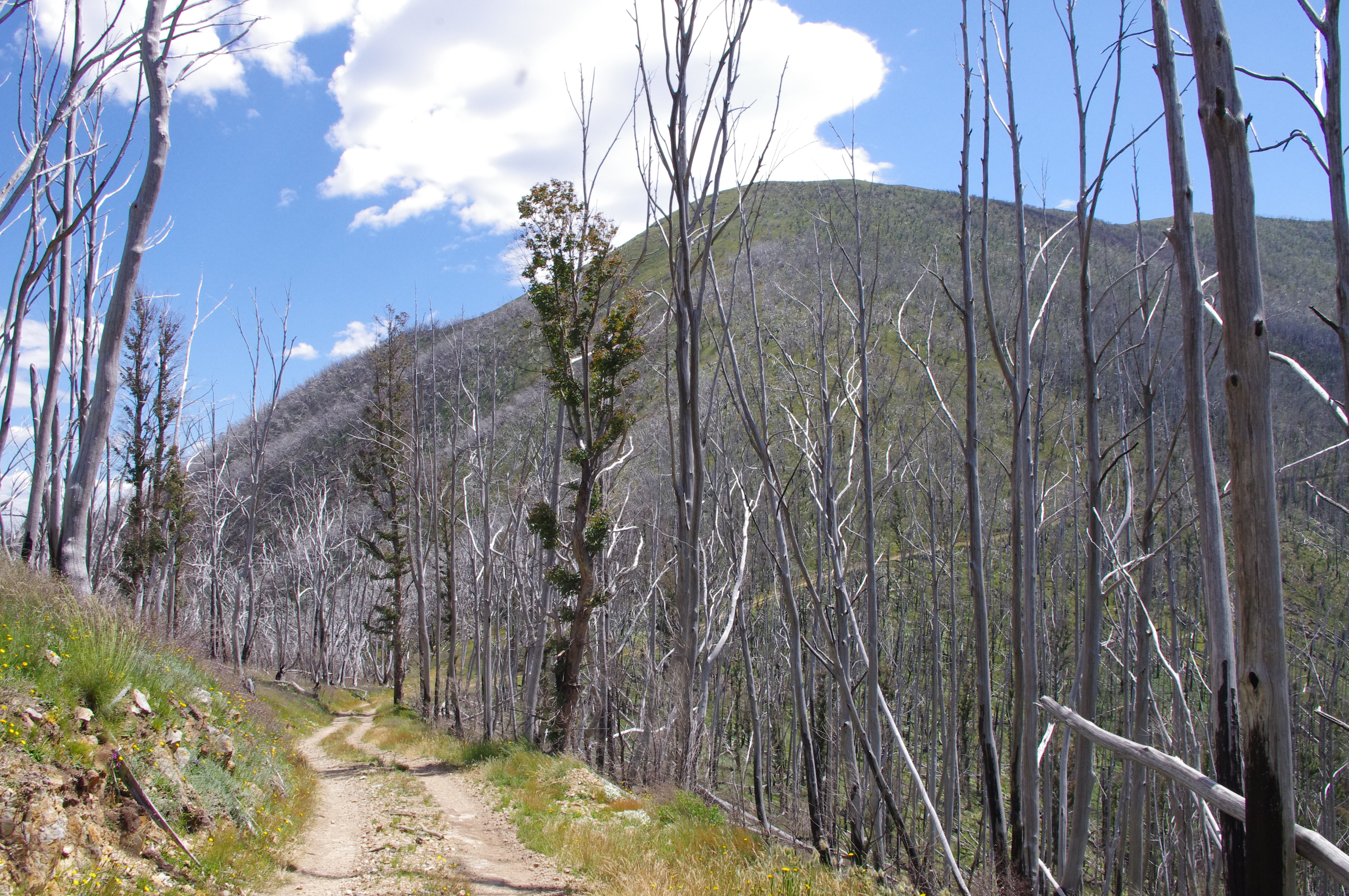
Parts of this country have been burnt three times in a decade. Each year, the land becomes ever more of a mosaic of new burn, older burn, and pockets of old forest – alpine ash and snow gum – that have survived each onslaught. The 2013 fire has killed off forests, glades, slopes that had survived the earlier fires. The headwater country of the Ovens, Buckland, and Wongungarra were hammered hard over the past summer. To my eyes that land seems poorer, from too many burns in too few seasons.
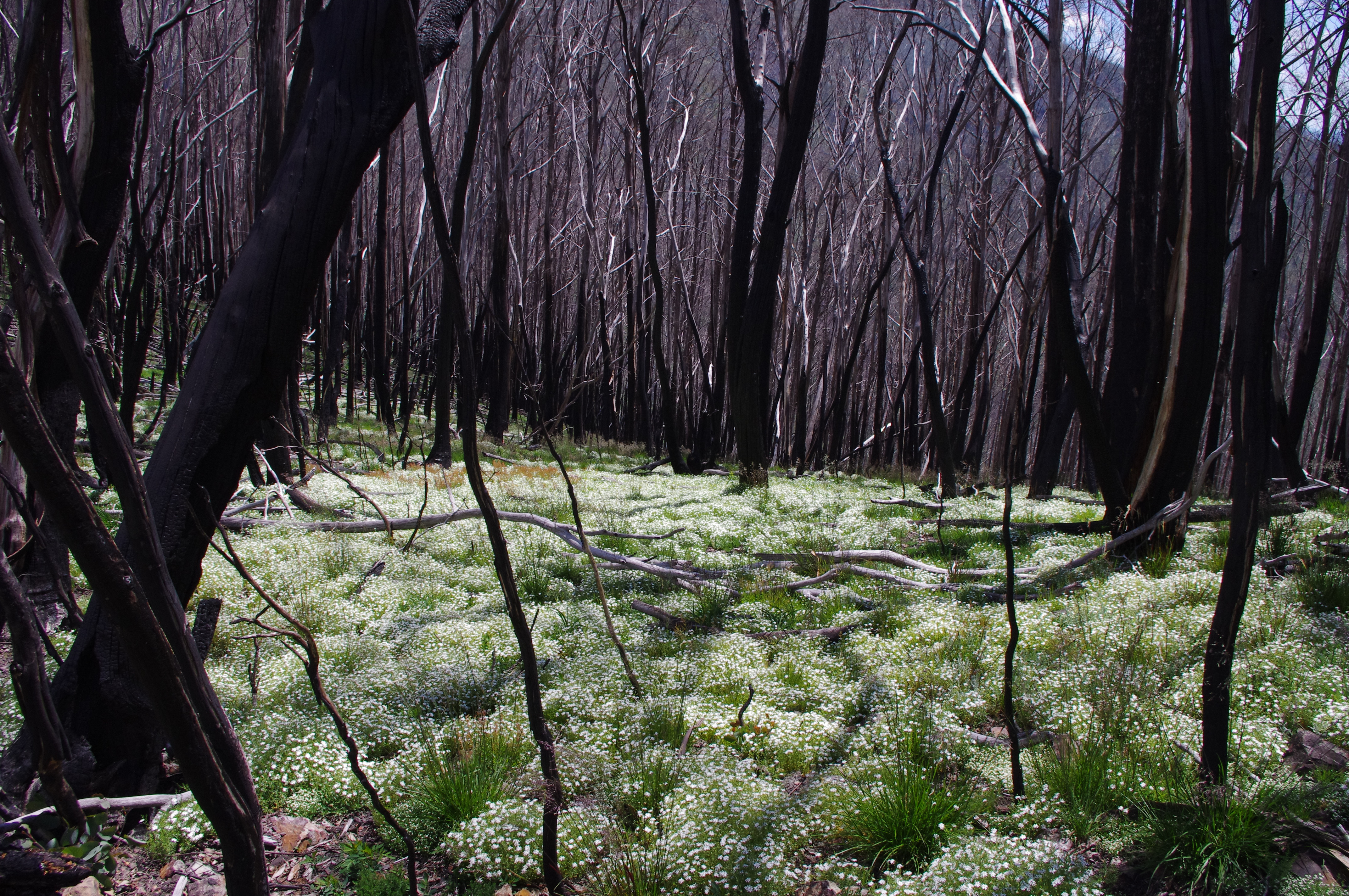
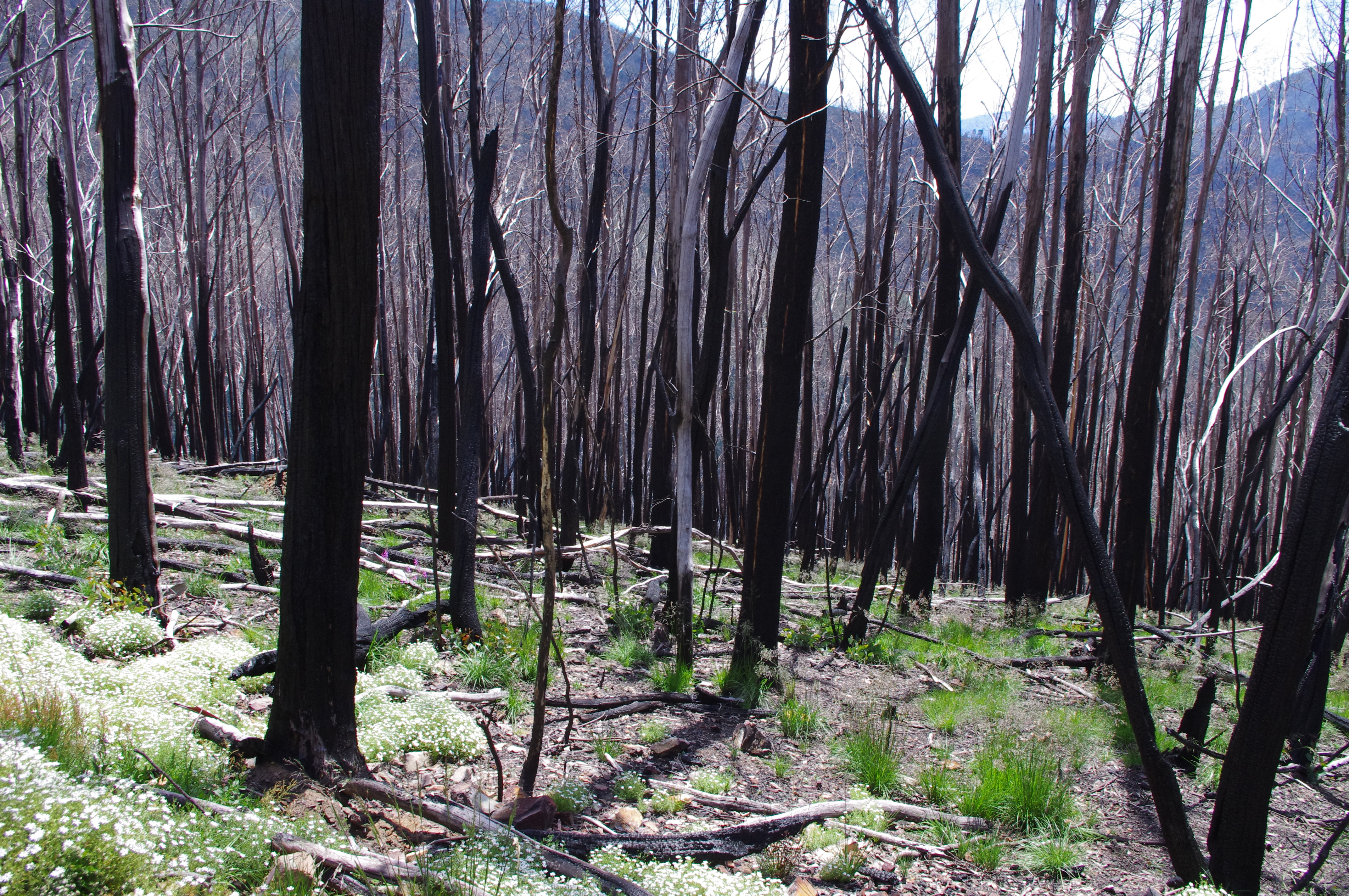
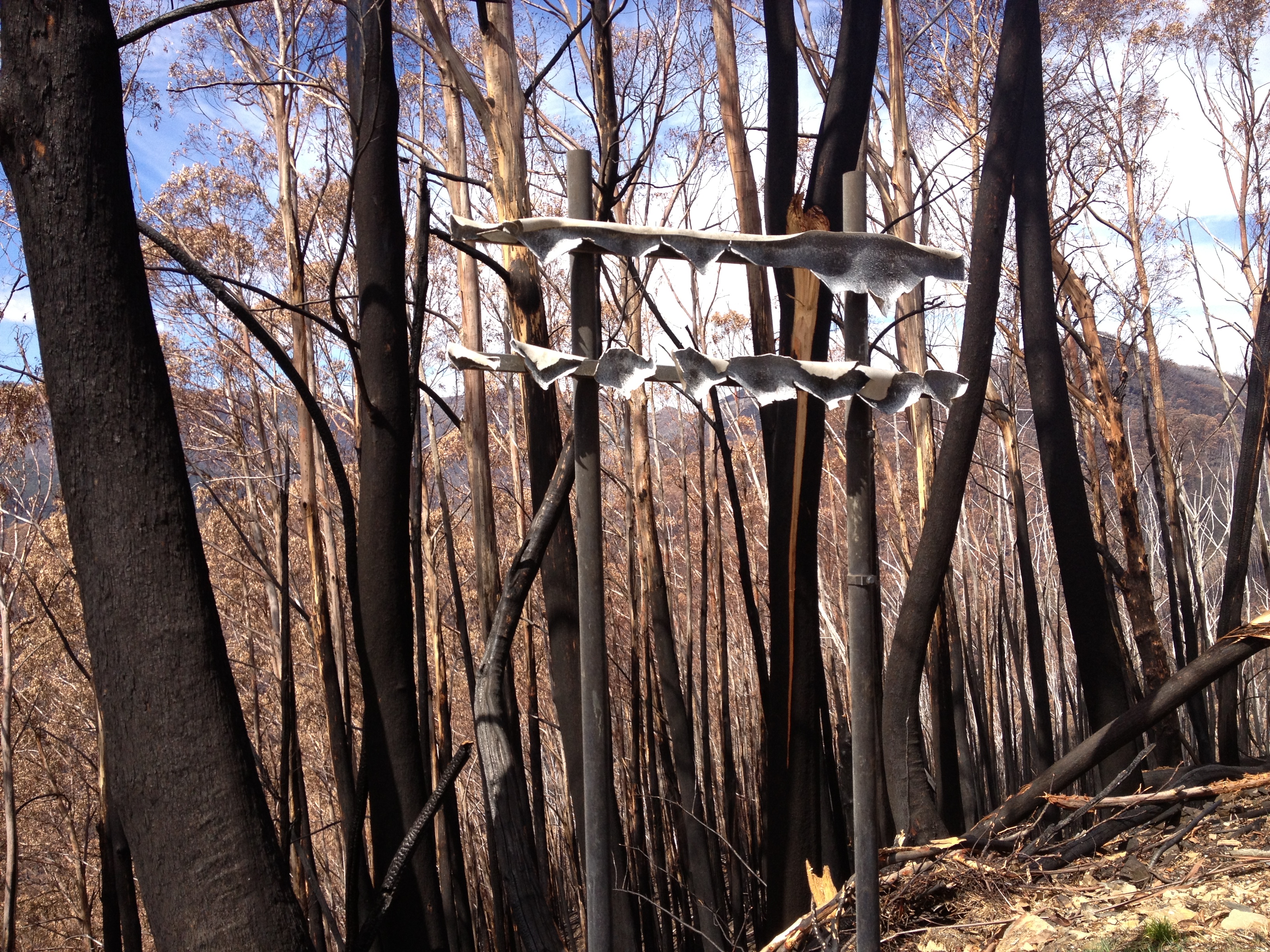
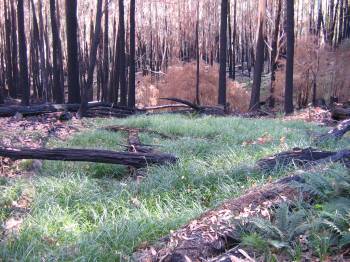
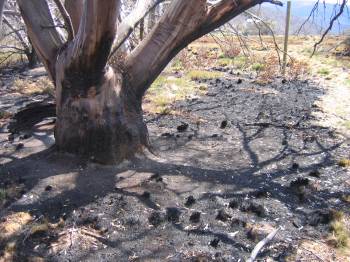
Fire has always been a part of our landscape. And climate science clearly tells us that longer and harder fire seasons are our future. These last few days I have wandered through alpine ash slopes and snow gum forests that had been completely scorched. Other areas have been lightly burnt, others spared altogether. The fire burnt hot up out of the Ovens, then seemed to turn back around some of the higher ridges on the Divide slower and with less heat. Its incredible to see some areas thick with new fern and daisys, while other areas as still mostly bare soil and logs, dead trees still black, streamers of bark rattling in the breeze. In some areas wattle are shooting back, in others, the beginning of Elderberry Panax groves or thick rushes of snow gums re-shooting around the burl of parent trees. If anything, the most recent fires have increased the mosaic effect on the ground.
Below tree line, the forests on these mountains can look so similar from a distance. Up close it is a mix of montane forests merging to alpine ash, leading to snow gum, the mix of vegetation in each place all dependent on slope and aspect, altitude and soil, fire history and circumstance. These most recent fires have added to the mix of already complex ecosystems and forest types.
In my mind I can see a future of more frequent fires, longer summers, warmer winters, and the land that I know and love so well being transformed into something new and poorer. Less old growth, trees pushed beyond their limits, less diversity of living things. But in the short term – summer to summer, the annual cycle that my mind can hold and understand – I see nature adapting and filling the spaces created by each fire. There is a deep ability for tenacity and resilience, seeking balance. The great unknown we face is that we do not yet understand the point at which we will have crossed beyond the balance of resilience and natural cycle into the time when balance will be broken by a human induced future. Some days I am frightened that no one knows, or will even be able to identify, that point of no return, when resilience is surpassed by a new reality that will make our familiar lands a new country, one that is foreign and strange, beyond anything we have known before.
The CFA is reporting ‘fire activity in the northern Wonnangatta Valley. This fire has started as a result of last nights lightning activity. The fire is close to the Australian Alps Walking Track and the Macalister Springs Hut. The fire is currently active in the Cross Cut Saw Section of the track and visitors are advised to avoid the area’.
The fire is in the Terrible Hollow and apparently burning up towards Mt Buggery. As of midday Dec 20, it was listed as being 10 ha in size.
Scroll down for updates
UPDATE. 21 DEC
The fire is close to the Australian Alps Walking Track and the Macalister Springs Hut. The fire is currently active in the Crosscut Saw Section of the track and visitors are advised to avoid the area.
The Australian Alpine Walking Track is closed from King Billy Saddle through to Barry Saddle (where Barry Saddle adjoins the Wonnangatta Road).
Closures to the Alpine Walking Track include: Howitt Spur Walking Track, Queen Spur Walking Track, King Spur Walking Track and Macalister Springs Walking Track. (This general area of closures to the Australian Alpine Walking Track is also known as the Howitt Crosscut Speculation Area).
Smoke will be visible in the area. Aircraft will be operating in the vicinity of Mt Buller and Snowy Range today and tomorrow.
The fire is still going and described as being in the ‘Cross Cut Saw’ area (now 42 ha in size), with the Alpine track and surrounding areas closed. Fire breaks are being cut on the south east and eastern flanks, and fire retardants on the western sides.
UPDATE. DEC 23
The fire is now described by the CFA as being ‘contained’ at 45ha in size. The area outlined above remain closed.
UPDATE. DEC 24
The CFA has announced that the fire is now contained, although it appears that previously announced track closures are still in place. Check with Parks Vic before going near the area.
The 2013 state of the environment report, produced by the Commissioner for Environmental Sustainability, has just been released. Apart from providing a fascinating, and worrying, snapshot of the state of the Victorian environment, it offers some significant insights to how we respond to fire risk.
“Across the 30 indicators the report uses to assess Victoria’s environment – across climate, biodiversity, land, inland waters, coasts and human settlements – 16 were considered in poor health, six fair and just one good.
When it comes to fire and fuel reduction:
“The report … says the state government should withdraw support for a recommendation by the 2009 Bushfire Royal Commission to burn five per cent of public land each year to prevent bushfires. The report says this target could mean some areas will be exposed to fire frequency above its tolerance, impacting biodiversity.
“altered burning regimes, which we expect to be driven by climate change, have the potential to severely impact biodiversity and ecosystem function and services”.
(page 10, chapter 3)
The Age report continues:
“Professor Auty recommends instead a new approach be developed focusing on protecting key assets from bushfires for both public and private land, with the results reported to demonstrate the risk reduction achieved. She also notes the government is yet to report on the biodiversity impacts of planned burns, a recommendation of the Royal Commission”.
Many ecologists have criticised the 5% burn target because of the political imperative for land managers to burn to meet their quotas, sometimes resulting in burns in less than optimum conditions (with the risk of fires escaping), burns in remote areas where asset protection is meaningless, and burns in areas regardless of the ecological impacts of the operation.
Let’s hope the report has some influence on how the state government manages fire risk, starting the shift from a simple ‘hectares target’ approach into a more nuanced and ecologically targeted approach which will protect human assets.
From my observations in some areas that I am familiar with, and that have been burned for fuel reduction, you can end up with more fuel after the burn. Loads of fine fuels quickly return to pre-burn levels but the fire and heat kills a lot of the understory leaving a lot of coarser ‘ladder’ fuel that previously wasn’t there. The fuel reduction dogma cart is before the horse. — There’s no doubt that fire has been instrumental in shaping the Australian landscape but it’s more nuanced than ‘fire = good’, ‘no fire = bad’. If, for example, industrial logging and fuel reduction regimes remove or disturb forests at higher elevations, wet forests, rainforests and riparian and other communities that by their physical nature act to limit and mitigate fire spread across wide geographic areas, one potential result is fire regimes that burn over larger areas at hotter temperatures. That will create natural selection processes that favor fire respondent species and have a homogenising effect across previously diverse ecosystems. The potential for negative feedback loops is evident. Indiscriminately napalming vast tracts of forest from helicopters with a budget constrained skeleton crew operating on the fringes is possibly not the best approach to implementing a scientifically and ecologically informed fire regime. — I would also add there’s no point point in burning remote areas to reach arbitrary fuel reduction targets when the real problem is at the urban interface where populations and planning laws keep pushing into forested areas. As city fringes become more urbanised and “safe”, the growing population means there are always people pushing out into high risk areas. In most cases, these sites will never be defendable on extreme days no matter how much you burn or how many dollars they charge for the fire levy.
The following excerts come from a piece by Grant Williamson, Brett Murphy, and David Bowman published in The Conversation. It seems pertinent given the current proposal to re-introduce cattle into a section of the Alpine national park.
This was not an on-ground research project into how grazing might be used as a fuel management tool. Rather, it was based on an assessment of satellite images of the Victorian Alps. They looked at vegetation maps from the past, and compared them with areas after the cessation of grazing, and also the impacts of extensive areas burnt by fires.
“We overlaid maps of crown scorch derived from satellite imagery following large bushfires in 2002/03 and 2006/07 with the location of pastoral leases. Crown scorch is a measure of fire intensity, based on the degree to which flames have reached a height which enables them to burn the forest canopy”.
They summarise their findings in this way:
“Using geospatial statistics we found that cattle grazing had no effect on the likelihood of crown scorch in eucalypt forests and woodlands.
This result is biologically plausible given that cattle are grazing animals, not browsing animals – they do not extensively feed on woody vegetation focusing on grasses instead. Our study is also consistent with previous ground-based studies that have demonstrated the cattle prefer to graze in grassy areas”.
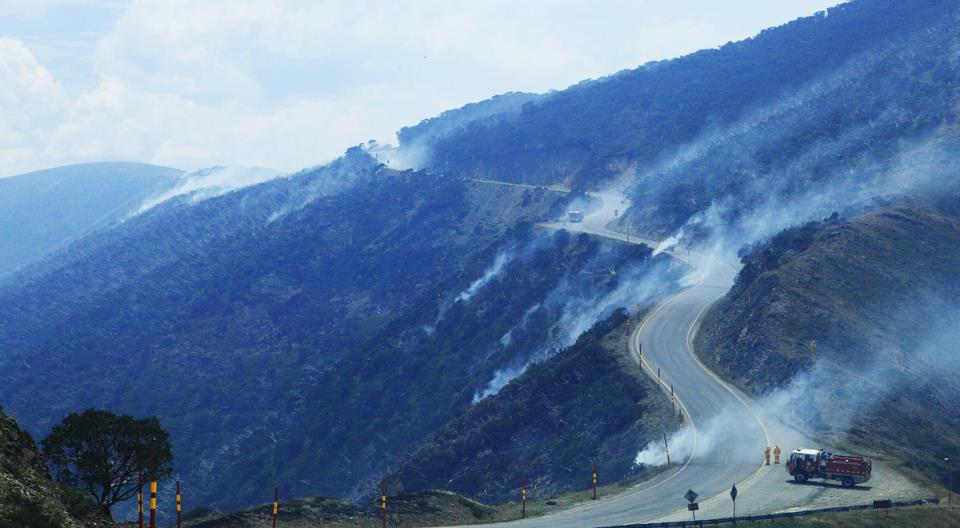
The North West Spur fire burnt hot up and out of the Upper East Ovens valley, over the St Bernard – Sugarloaf ridge, killing a lot of the remaining Alpine Ash forests along the upper sections of the Great Alpine Road that had survived previous fires, and snow gum forests at higher elevations.
A huge effort was made to get the road open in time for Easter and winter, with massive tree felling operations along the road, and removal of debris.
The final stage in these operations is now underway, and Vic Roads will be doing works on the Great Alpine Road from November 11th through until early December to remove fire damaged trees effected by the 2013 bushfires. One of the problems has been the large number of trees killed in previous fires being burnt again this year, and becoming very likely to collapse.
For anyone that has driven the road in recent months, you will be painfully aware of the visual impacts of these operations.
What is less clear at this point is the environmental impacts of effectively clear felling a large swathe of forest along the road. As noted by VicRoads, this clearing is substantial in some areas, between 10 and 40 metres from the roadside. There have been attempts to reduce the impacts of this work, for instance removing many of the trees being felled beyond what would be normal on the forest floor, and aerial seeding of alpine ash.
But the fact remains that safety considerations for traffic has resulted in a 20 km clearcut, mostly within a national park.
VicRoads advises that access to sections of the Great Alpine Road will be reduced at various times from Monday 11 November until Friday 20 December to enable the safe removal of dead and dangerous bushfire damaged trees.
These works are a continuation of the tree removal works that were undertaken prior to the 2013 snow season. It is essential for VicRoads to remove these hazardous fire damaged trees from the roadside as soon as possible as they present a potential road safety hazard.
From Monday 11 November until early December, the Great Alpine Road will be closed to traffic between Harrietville and Dargo High Plains Road between 8.00am & 1.00pm and 2.00pm & 5.00pm on weekdays to enable tree removal from within 10 metres of the roadside. However, the road will be open at all other times including weekends.
From early December until Friday 20 December, tree removal will continue in an area 10-40 metres from the roadside in the Alpine National Park. This work is being undertaken in consultation with Parks Victoria. Local traffic closures will be in place with delays expected. In addition to the tree removal, VicRoads will also be replacing fire damaged guardrail at 11 locations.
The Alps Link bus service between Omeo and Bright will continue to run during this time.
During the road closure period, Mount Hotham and Dinner Plain will remain accessible via Omeo and Dargo at all times.
Access between Bright and Omeo will be available via Bright-Tawonga Road (C536), Kiewa Valley Highway (C531) to Mount Beauty, then along the Bogong High Plains Road (C531) and the Omeo Highway (C543) to Omeo.
VicRoads encourages motorists travelling through the area to plan ahead and allow for significant additional travel time.
Motorists are requested to observe the changed traffic conditions for their own safety and the safety of workers nearby the road, including adhering to reduced speed limits.
VicRoads thanks the community for their patience while these important works are carried out.
For enquiries or more information about the works, please contact VicRoads on 5761 1827.
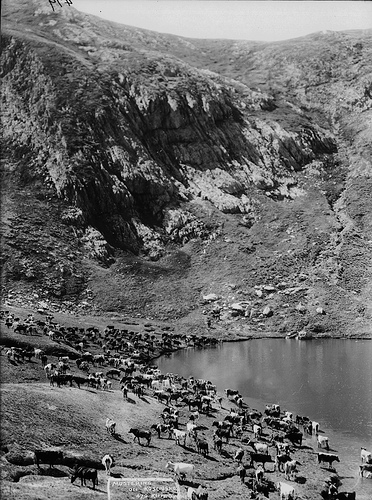
Images of mountain grazing tend to be positive, often evoking the frontier ethos
From my earliest days of walking in the Alps, cattle were a prominent feature of many places I visited. I would often meet cattlemen (almost invariably men), who would assure me the cattle were a benign influence on the environment.
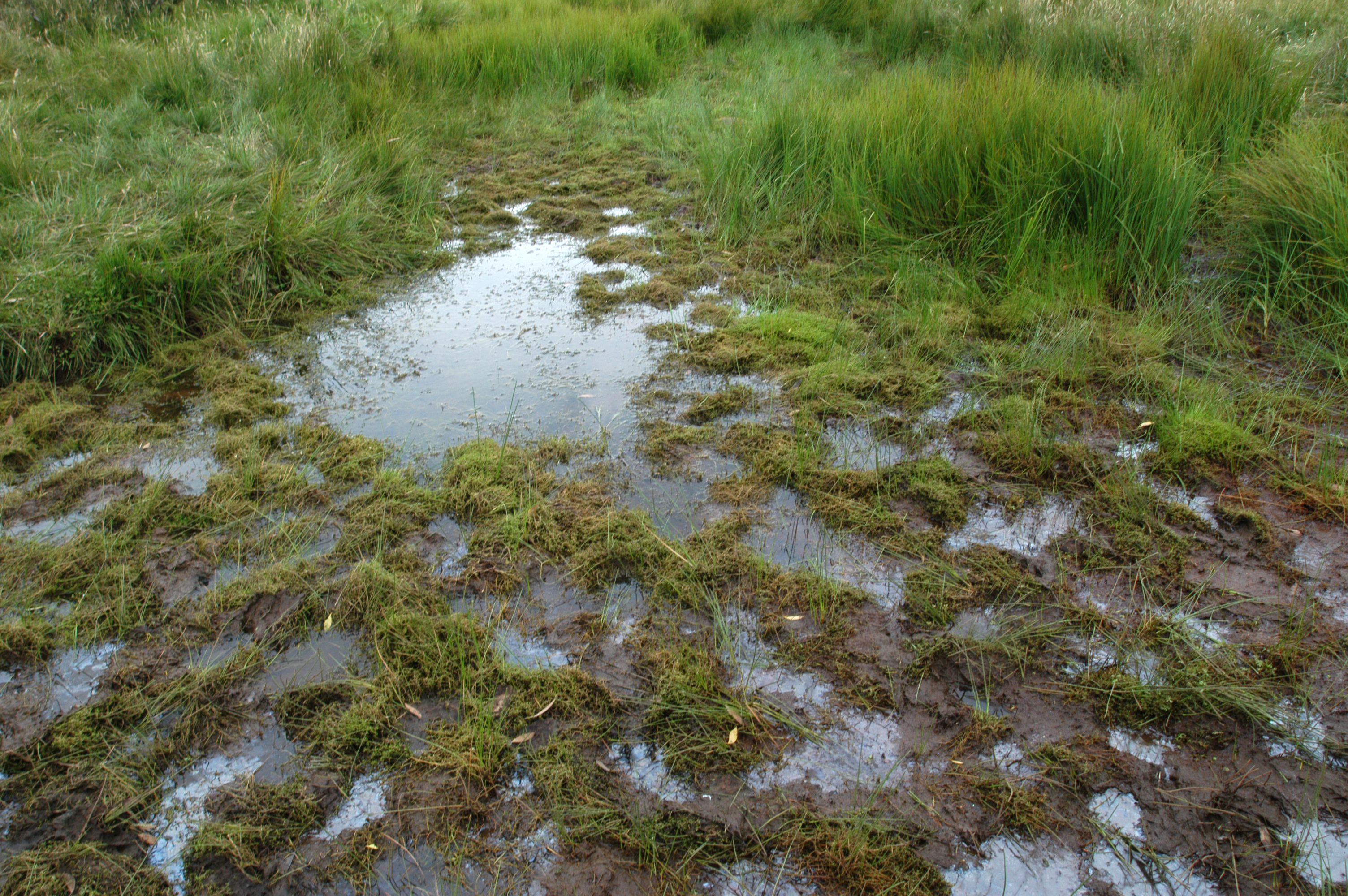
But what I saw was trampled wetlands and stream beds. I saw cattle standing in the headwaters of crystal clear streams, crapping and stomping the stream banks. I saw them spreading weeds. And I saw them selectively eating the succulent low lying vegetation in meadows rather than the flammable shrubs on the edges of those systems. More than once I was chased by a herd, and a scarey and heart thumping run and scramble up a tree got me out of a few situations. At Mt Stirling I saw that the ‘exclusion zone’ around the alpine summit was somewhat aspirational – the fence was normally damaged and there were almost always cows wandering around up on the summit. I drank from streams that had been polluted by huge animals with damaging hard hooves. At Macalister Springs we were warned of intestinal worms that had been introduced by cattle years before.
But my experience of alpine grazing was more like this.
At 16, I wanted a sticker that said ‘cattle grazing increases blazing’.
Cattle were finally removed from the Alpine National Park in 2005 by the Bracks Government after a thorough investigation by the Alpine Grazing Parliamentary Taskforce. Cattle continued to graze in state forest next to the park.
In recent years I have witnessed the recovery of alpine systems as cattle caused erosion slowly healed.
That should have been the end of the matter. But we all know that it was plain old politics that saw the newly elected Coalition government try to fulfil a promise to the mountain cattlemen for their support in ousting East Gippsland independent MP Craig Ingram at the 2010 state election. They allowed the cattlemen to return cattle to the Alpine national park in a sneaky operation under the guise of ‘scientific grazing’. Thankfully that was thwarted by the federal government.
As has been noted on this site, the election of the Coalition to federal Coalition to power has changed the dynamic, and the president of the Mountain Cattleman’s Association, Charlie Lovick, says alpine grazing is ‘back on the agenda’.
He says there is no other way to effectively control fire fuel loads above an elevation of 1,200 metres.
“How else do you reduce the fuel load because grass and scrub grows,” he said.
“We’re saying that cattle are a perfect balance to manage the higher stuff, to chew it down and keep it nice and green and you can more confidently burn the other areas.”
Mr Lovick red tape is the only thing stopping the federal and state governments from moving ahead with the plan.
If you’ve never been to the high country, it might seem sensible to argue that there will be less fire where cattle graze. But the idea doesn’t actually stack up when you look at the science.
The most significant research on alpine grazing and fire was carried out shortly after the 2003 fires swept across Victoria’s Alpine National Park, and was published in a peer-reviewed journal.
The conclusion was that grazing is not scientifically justified as a tool for fire abatement.
Many earlier studies have shown the damage cattle cause in the Alps.
Alpine grazing was not recommended by the Bushfires Royal Commission.
Victoria’s 2009 Bushfires Royal Commission was an inquiry of unparalleled thoroughness. It had no limits to the subjects it could address, was granted a $40 million budget, and sat for 155 days between May 2009 and May 2010.
The Commission made ten recommendations for research into fire related matters. The effectiveness of alpine grazing on reducing fire was not one of them.
The Commission recommended, as a high priority, extensive research into the monitoring of the effectiveness of fuel reduction burning programs across Victoria, and monitoring of the impacts of bushfires and fuel reduction burning on biodiversity.
The Department of Sustainability and Environment’s own Code of Fire practice says that ‘(domestic stock) grazing is appropriate only for significantly modified habitats’, such as roadsides.
There is compelling peer-reviewed evidence showing that alpine cattle grazing has no significant effect on mitigating bushfires.
So, as Mr Abbott works his way through his top order list, like ‘stopping the boats’ and winding back the price on carbon, cutting ‘green tape’ and so on, will he eventually get to the wish list of the mountain cattlemen?
It seems to me that alpine grazing would be entirely consistent with the world view of Tony Abbott and the mountain cattlemen: if you don’t like what the science is telling you, ignore it and do what you wanted to do in the first case.
If you’re not a huge fan of this world view, you may want to send a message to the federal environment minister, Greg Hunt.
The Victorian Coalition Government has launched an urgent effort to re-seed about 2,000 hectares of Alpine Ash forest that was burnt during the Harrietville fire earlier this year.
Minister for Environment and Climate Change Ryan Smith said a helicopter was being used to spread Alpine Ash seeds across 198 hectares of State Forest and 1,876 hectares of National Park that was burnt in the fires.
“Areas within the Harrietville fire boundary have been burnt several times over the past decade and Department of Environment and Primary Industries and Parks Victoria ecology experts predict about 2,000 hectares will not be able to naturally regenerate due to the nature of Alpine Ash and its response to fire,” Mr Smith said.
“It is also important to re-seed the area to assist with stabilising the fragile soils in the steep terrain to protect water catchments, which supply communities downstream.
“We have already started the aerial re-seeding operation in the State Forest and will continue the work over the next few days if the weather conditions remain suitable.”
Parks Victoria Regional Director East Andrew Marshall said it was important to sow the Ash seeds before other plants regenerate so the Ash seeds can germinate in the spring.
“There will be some follow-up monitoring of some sites within the State Forests but in National Parks areas this is a once off opportunity to regenerate,” Mr Marshall said.
The cost of the re-seeding work is approximately $620,000 and is funded as part of the Victorian Coalition Government’s Harrietville fire recovery program.
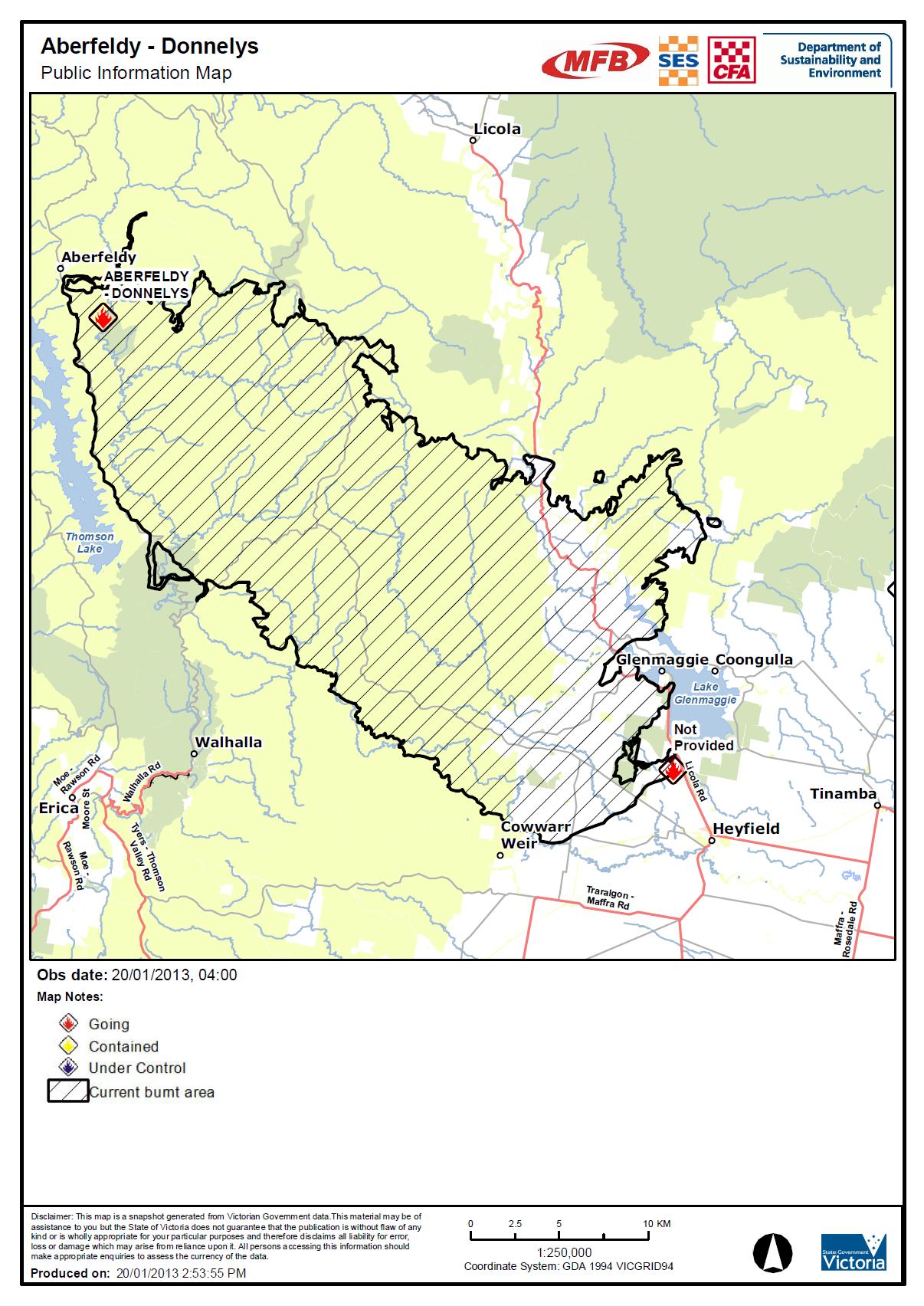
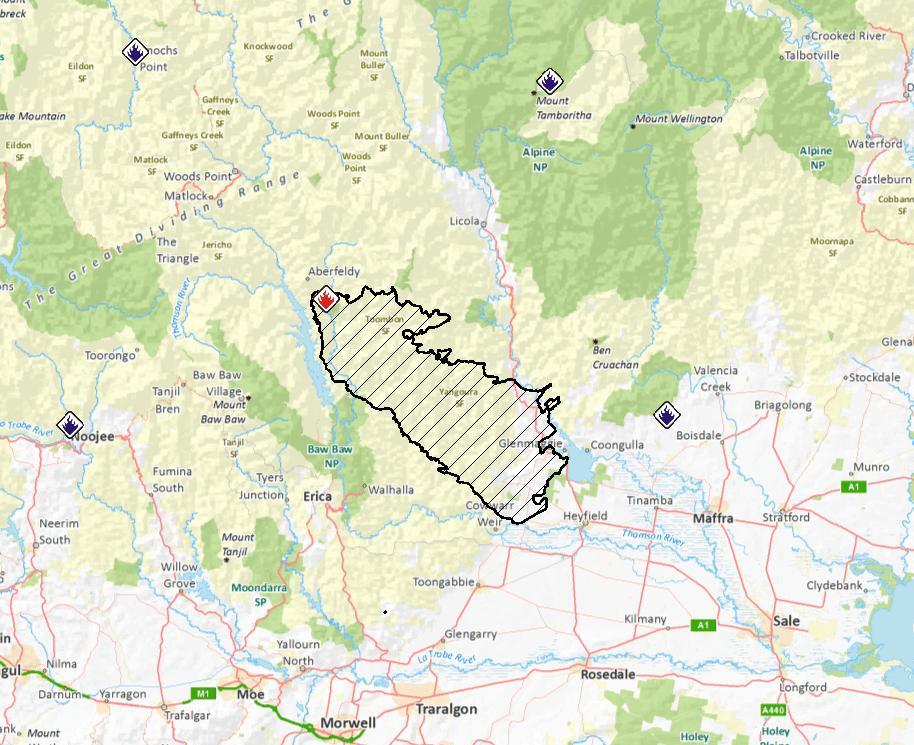
The main fire is the ABERFELDY – DONNELYS complex and it has already burnt more than 44,000 ha (as at 18 Jan). It started in the Aberfeldy area to the east of the Thomson Dam and Baw Baw plateau. It has now burnt east as far as the Licola road.
Check further down this page for updates on a fire that started Jan 21 in the north west spur area around Mt Feathertop.
UPDATE March 5:
VicRoads will open the Great Alpine Road to light traffic for the Labour Day long weekend, despite the ongoing maintenance and recovery works required after the Harrietville – Alpine North bushfires.
UPDATE, Feb 27: significant rain over the past day has greatly reduced fire activity across the Alps. The road from Heyfield to Licola has now been opened, as is the road from Omeo to Hotham Village.
The Great Alpine Road remains closed between Harrietville and Hotham and will remain so until further notice. Landslips on this road have added to the workload of removing ‘up to 10,000 fire killed trees’ along the GAR on this section.
Aberfeldy fire
UPDATE: Feb 15.
RECENT mild weather is helping suppression activities for the Aberfeldys-Donnellys fire and any more rain will ease conditions further.
The Aberfeldy fire has burned through 84,100 hectares and has a perimeter of almost 400 kilometres. Firefighters have constructed control lines on more than 300 kilometres of that perimeter by hand, with machinery and from the air.
Today, there are 295 personnel working on the fire, supported by 11 tankers, 87 slip-on units (4WD vehicles), 14 dozers and seven aircraft.
Further control lines are being constructed near the junction of Hickeys Creek Track and the southern end of Mt Margaret Track to protect the Avon Wilderness.
Backburning operations in the area will continue when weather conditions allow.
UPDATE: Feb 11:
The CFA reports:
Country Fire Authority and DSE advise that there is fire activity and suppression works in the Licola, Glenfalloch, Wollangarra, Glencairn area.
This bushfire is being controlled.
There is backburning on private property west of the Macalister River between Glenfalloch and Licola. Residents of Licola and surrounds may see active fire and there will be considerable smoke.
This message applies to the town of Licola and areas of Glenfalloch, Wollangarra and Glencairn.
This fire has burnt through approximately 82,522 hectares.
Control lines are being constructed on the Mt Margaret Track in an attempt to halt the easterly spread of the fire.
Machinery continues to work along the public-private interface north of Licola and around Glencairn.
Melbourne Water and DSE crews are patrolling on the south end of South Rd, near Mt Useful where back burning operations have been undertaken.
THE public can access Walhalla and Licola after a number of roads closed due to the Aberfeldy-Donnelly Fire were re-opened.
The fire is continuing to burn but is being controlled.
As Saturday morning, an area of 69,823 hectares has been burnt with a fire perimeter approximately 416 kilometres in length with 220km of control line built.
About 438 personnel, 150 vehicles, 21 dozers and 14 aircraft are involved in fighting the fire.
Among the roads opened include Licola Rd and Walhalla Rd only to the Thompson Dam Access Road.
UPDATE: Jan 27: The CFA reports that:
This bushfire is being controlled.
The fire has now burnt 71,000 ha.
UPDATE: Jan 25:ABC is reporting that ‘Towns to the south of the Aberfeldy bushfire could soon be under threat with northerly winds expected to strengthen overnight’.
Authorities remain concerned that hot winds could cause the Aberfeldy-Donnellys bushfire to jump control lines this morning.
The fire has now burnt 67,000 ha.
UPDATE: Jan 24. The CFA is reporting that the fire is being contained. Wind conditions have favoured crews working to build containment lines around the bushfire this morning, however, a predicted wind change is expected to challenge crews this afternoon.
The Alpine National Park and the Avon Wilderness Park are now officially closed.
DSE and CFA crews have been working to consolidate containment lines ahead of a predicted wind change on Friday afternoon.
The Aberfeldy bushfire is now around 62,000 hectares in size and has destroyed 22 homes.
Deputy Incident Controller Adrian Gutsche said a change forecast for the wind change had delayed the risk “by 12 hours”.
Mr Gutsche said crews had been working to consolidate firebreaks and control lines to the south of the fire zone ahead of a predicted wind change on Friday.
UPDATE: Jan 23. The CFA reports that the fire has now burnt 63,233 ha. There will be ‘aerial ignition within control lines east of Walhalla occurring today’ and additional control lines on the Walhalla – Cowwarr road.
UPDATE: Jan 22. The CFA reports that ‘this bushfire is being controlled.
The Aberfeldy Road is closed north of Beardmore.
Burning out operations are continuing north east of Walhalla and east of Aberfeldy.
There was increased fire activity north of Walhalla overnight’
About 600 crews, 130 vehicles and 13 aircraft are involved in fighting the fire, which is now 61,783 hectares in size with the fire perimeter now 322 kilometres.
Fire behaviour is expected to increase slightly as the temperature rises during the day and crews will continue backburning operations and building containment lines.
A critical 190 hectare backburn will reduce fuel loads in the unburnt area 5km south of Glenmaggie and 6km north-west of Heyfield. Smoke will be visible from surrounding communities.
UPDATE. Jan 21. The access to the mountains via Licola are still closed off. Restricted access has now been restored to Licola Rd, all the way from Licola to Heyfield.
Residents of the immediate area; people providing recovery and relief services, council or VicRoads employees or sub-contractors, and business owners in the immediate area can now access Licola.
Victoria Police has reiterated that many roads in the Seaton, Glenmaggie and Heyfield area are restricted to local access only.
Police will be actively patrolling the area and have asked drivers to take care on the roads and avoid unnecessary travel, particularly in fire-affected areas.
Department of Sustainability and Environment conducted a 180 hectare backburn Sunday morning in an unburnt area five kilometres south of Glenmaggie and 6km north-west of Heyfield.
This fire will remain active into Monday and possibly longer.
UPDATE. Jan 20. The Department of Sustainability and Environment advise that there is a planned 180 hectare back burn occuring in the Heyfield District area. The fire is still being contained. It has burnt 57,726 hectares.
UPDATE. As of Jan 19, the fire is still moving and has burnt out 52,669 ha.
The fire as at 19 Jan. Despite some claims from the usual (anti green) sources, the fire didn’t start in a national park.
At this point (Jan 18) this is the only significant fire burning near the high country. There were media reports earlier in the day that this fire complex was heading for the Avon wilderness.
TEN Licola locals are trapped as an out-of-control bushfire heads towards the township.
Victorian Fire Services Commisioner Craig Lapsley confirmed 90 school children at a camp in Licola had been relocated to Traralgon safely but ten locals remained isolated in the town.
There are five fire crews with the residents battling the blaze which is expected to hit between 4pm and 6pm this afternoon.
The Licola Rd has been closed since this morning leaving remaining residents no way to leave.
The blaze is now more than 44,500ha in size and creating spot fires 2-4km in front of it.
Mr Lapsley warned the fire, which still also threatens the townships of Seaton, Heyfield and Glenmaggie, could burn for as long as two weeks if mother nature was not kind.
“This has the potential to be a two-week fire fight,” he said.
“We would hope this weekend would be kind to us but there is no rain forecast.
“Without rain or moisture it’s very hard to bring it to a controlled position.”
He described the fire as difficult and unpredictable and said as the blaze spread into remote bushland it got harder to control from the ground.
There are more than 70 firetrucks, about 200 firefighters and 13 helicopters working to control the fire.
Five homes have already been destroyed in Seaton.
Heyfield incident controller Laurie Jeremiah told a media briefing at Seaton this morning that five homes were believed to have been burnt at Seaton and a family had been trapped in their house but were able to escape.
Mr Jeremiah also confirmed a fire tanker had been burnt.
The crew members took shelter in the vehicle while the fire went over and escaped unharmed, he said.
Mr Lapsley said the extent of damage to livestock and farm land was still unclear but would unfold in coming days and weeks.
“There will be damage to fencing and there will have to be damage to livestock,” he said.
“(Damage to livestock) is not something we have been able to calculate but there will be losses in those areas.”
The Harrietville–Alpine South fire has not spread much overnight, but there will be increased smoke visible from communities today as backburning operations progress.
The fire is now 12,130 hectares, with a perimeter of 228 kilometres.
The fire continues to burn in steep, rugged terrain with limited access for on-ground fire fighter crews.
Ongoing asset protection, suppression and patrolling activities continue around Mt Hotham, Dinner Plain and Dargo.
Areas of sensitive natural values including cultural heritage places, threatened species and critical breeding habitat have been identified and protective works undertaken.
Combined, the north and south fires are 30,400ha.
The Great Alpine Rd has reopened to the public from Dinner Plain towards Omeo yesterday at 7pm. From Mt Hotham to Dinner Plain, access is restricted to residents, essential services, accredited media and individuals or groups delivering relief and aid to residents and to animals.
UPDATE: Feb 13. Backburning continues to protect Dinner Plain. The southern fire front is moving roughly south eastwards, to the south of Dinner Plain.
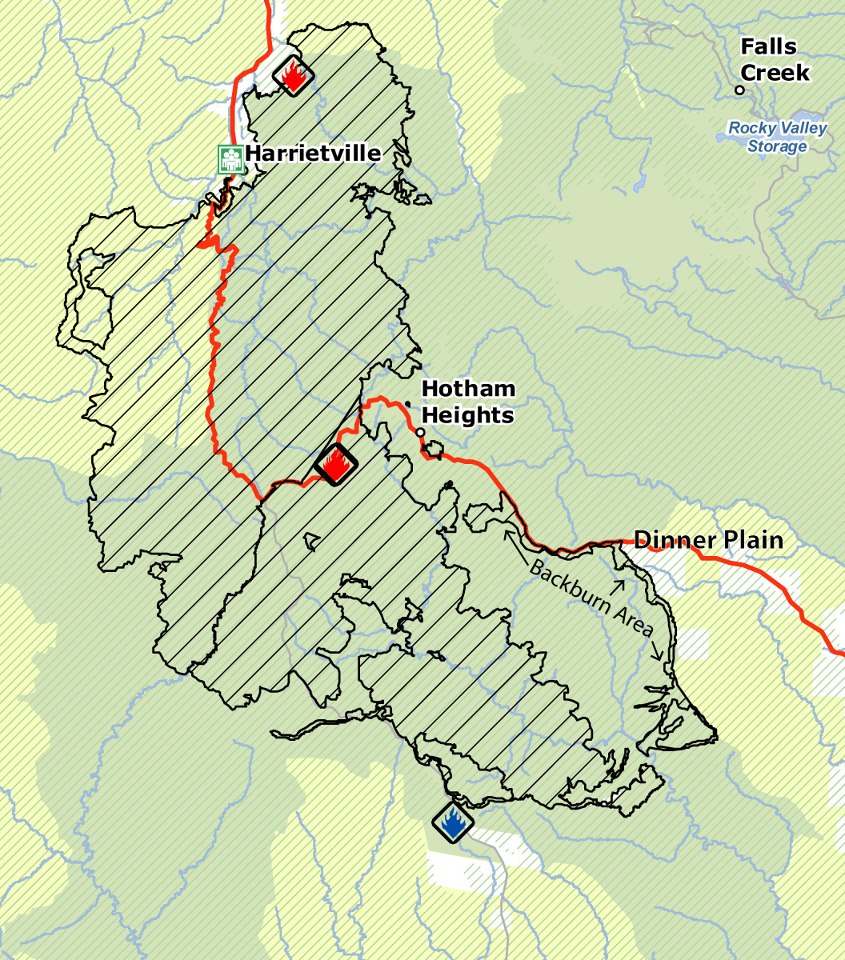
the fire, showing recent back burning lines around Dinner Plain, as at 12 Feb
THE Harrietville-Alpine fire remains active in the Dargo River valley area north of Dargo, however moist and cooler weather conditions have resulted in a decrease in fire activity.
The Harrietville-Alpine South fire is about 7127 hectares, and is not yet under control. With the north and south areas combined, the Harrietville-Alpine fire is 23,411ha.
The focus of firefighters is on both asset protection and back burning to contain the fire.
Back burning work is likely to continue for at least the next week. Residents and visitors to the area are asked to take extra care when travelling on local roads, as they are likely to experience increased smoke across roads and in the community, increased firefighting activity, and a greater number of emergency vehicles travelling in the area.
Back burning operations began Sunday afternoon along the southern edge of the Great Alpine Rd from the Alpine Resorts Commission entrance between Dinner Plain and Mount Hotham Resorts down to Dinner Plain Track.
Road closures remain in place, and anyone intending on travelling in the area should check with VicRoads for any updates.
The Great Alpine Rd is closed between Harrietville and Dinner Plain.Dargo-High Plains Rd is closed between the Great Alpine Rd and Dargo until further notice. Access to forests and parks north of Dargo is restricted as a result of this closure.
The Alpine National Park is closed east of Harrietville extending along Westons Spur Track to the Australian Alps Walking Track to Pretty Valley Track, then south to the Great Alpine Rd to the boundary of the Alpine National Park and Dinner Plain State Forest.
Mount Feathertop and its approaches are closed.
State Forest north of the fire area including the West Kiewa is also closed.
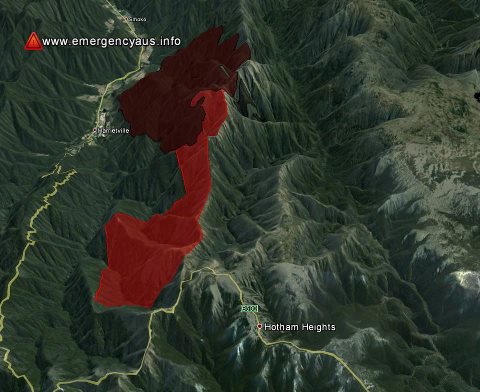
UPDATE. Feb 8. After a few days of continued fire control and mild conditions, fire activity has heightened considerably, putting Hotham village at direct risk. The fire is now operating on two main fronts. The fire was previously referred to as the ‘Harrietville – Feathertop Fire.’ It has been split into two fire sectors – the ‘Harrietville – Alpine North Fire’ and ‘Harrietville – Alpine South Fire’.
See below for update from Mt Hotham management:
The ‘Harrietville – Alpine Fires’ remains classified as ‘going’, no asset losses have been reported to date.
The wind direction has remained ‘NNW’ all day and with a wind speed of 30 kmh with gusts up to 50 kmh. Humidity is low at 33%.
Harrietville – Alpine South’ fire is firmly established in the ‘Dargo’ and has increased in size significantly during the course of the day. The fire is visually prominent SW of the village, along ‘Morning Star Spur’ and below ‘St Bernard’ and is moving up toward Baldy Creek to the SW of the resort centre. This fire activity is of concern – heavy aerial water bombing has been undertaken all day so as to prevent the fire moving into Baldy Hollow (immediately below the Village Centre and Summit). One Erickson Skycrane and two bucket equipped heavy lift helicopters with have been refilling from the snowmaking dam at Loch every 7 minutes all day. Dam capacity has been maintained. CFA/DSE expect the ‘Alpine South Fire’ to make further SSE runs in the untracked forest of the ‘Dargo’ until at least late Sat/early Sunday given the predicted weather conditions.
The control strategies for this part of the fires are limited due the dense nature and ruggedness of the terrain. The ‘Swift’s Creek’ ICC has indicated an ‘indirect attack/asset protection’ strategy aimed at keeping the main fire east of the ‘Dargo High Plains’ Road.
The ‘Harrietville – Alpine North’ fire continues to move through high elevation forest that was burnt in 2003 and 2006. The fire has now burnt down to the ‘Diamantina River’ along a 500m stretch – which proposes a potential threat to the Resort Water Catchment. Resort Management staff have observed smoke continuing to rise from the ‘Diamantina Area’, which indicates that the fire is still active, despite aerial suppression. CFA/DSE have reported that the hot edge on the Diamantina River continues to hold west of the river, but many hot spots remain, right down to the river bank. Felled timber on the helipad has delayed insertion of crews this morning, but crews are now working after the pad was aerial bombed. Options for providing water-pumping capability for ground crews to black out this edge are being explored
An aerial infrared scan (FLIR flight) this morning showed going fire continuing to back down in a westerly direction into the West Ovens and the upper part of the East Buckland catchments. The fire is also continuing to burn slowly down steep slopes into the headwaters of the Dargo catchment. It has reached the upper reaches of the Dargo River in some places and has uphill runs available to it once it crosses. The fire has burnt in a broad front southward along both sides of the Dargo High Plains Road. A further aerial FLIR scan will be flown this afternoon if time and conditions permit.
Note: A ‘Watch & Act’ message for Hotham and Dinner plain remains in place and ‘Advice messages’ for Harrietville, Dargo, Cobungra, Omeo, Swifts Creek and Ensay.
Today, Saturday and Sunday are classified ‘high-risk’.
UPDATE. Feb 6. Backburning has been carried out south of Harrietville and along the Great Alpine Road on the south western side of Hotham summit in recent days.
CFA reports that:
This fire is yet to be contained
Fire activity has increased significantly this afternoon and increased smoke will be evident.
The fire has the potential to cross the Great Alpine Road approximately 12 kilometres south of Harrietville heading in a westerly direction.
Back burning along the Great Alpine Road near Baldy Hollow. Image: Dinner Plain Alpine Village facebook
UPDATE: Feb 3. The Harrietville-Feathertop fire has now burnt more than 6,100 hectares of the Alpine National Park.
Alpine National Park is closed east of Harrietville extending along Westons Spur Track to the Australian Alps Walking Track to Pretty Valley Track, then south to the
Great Alpine Road to the boundary of the Alpine National Park and Dinner Plain State Forest. Mount Feathertop and its approaches are still closed.
Backburning will be carried out to the south of Harrietville between Old Coach Road and the East Ovens River.
The Great Alpine Road is still closed between Harrietville and Dinner Plain.
UPDATE. Feb 1. Spot fires occured within Hotham Village and have all now been controlled. However, CFA reports that the main fire is still not yet under control.
This bushfire is approximately 5000 hectares in size and is out of control.
The Hotham Dinner Plain community meeting will be held at 3pm Saturday February 2 at Rundells Alpine Lodge Dinner Plain.
The Great Alpine Road is closed between Harrietville and Dinner Plain and the Dargo High Plains Road is closed.
The Feathertop fire as of Jan 31
UPDATE. Jan 31. After a quiet few days, the fire is again threatening surrounding towns. The CFA reports:
There is a large, fast moving bushfire in the Mount Hotham and Hotham Heights area. It is travelling in asouth– south westerly direction.
This fire is expected to impact anytime within the next hour.
This bushfire is approximately 4100 hectares in size and is out of control, currently creating spot-fires approximately 2-3km/s ahead.
Relocation is not advisable. If required head to the neighborhood safer place.
UPDATE: Jan 28. The same as yesterday (see below). Additionally, the CFA advises that:
The Alpine National Park is closed east of Harrietville, west of Mt Cope, south of Mt Jim and north of the Great Alpine Road
UPDATE: Jan 27. The CFA reports that:
There is still fire activity near Harrietville township. This fire is yet to be contained and considerable work will be occurring over coming weeks. The Great Alpine Road and the Dargo High Plains Road are now open. Motorists are urged to use caution as emergency vehicles will be in the area.
Hotham Heights is not listed as being at risk at present, the main focus is around Harrietville. The fire has burnt an area of around 3,000 ha.
UPDATE: Jan 25: ABC reports that ‘Strong northerly wind gusts of up to 90 kilometres per hour are fanning the flames of two bushfires burning in Victoria’s east. The winds are expected to intensify a fire in the Alpine region near Harrietville and Hotham Heights‘.
A watch and act alert remains in place for both of those communities.
Overnight there has been benign fire behaviour, with limited spread of fire since midnight. A short section of fire has continued to back down to the control line around private property north of Harrietville, but has not caused control problems. The weather forecast indicates that Mt Hotham could be impacted by fire in the next 24hrs
UPDATE: Jan 24. The CFA report that the fire is still moving rapidly, and it is travelling in a south easterly direction.
This fire is expected to impact Hotham Heights, Harrietville anytime within the next 24 hours.
There is no evacuation order for Harrietville. Residents without fire plan are being advised to leave by 6pm today. A Watch and Act notice remains in place for the communities of Hotham Heights and Dinner Plain.
This fire is expected to impact Falls Creek, Hotham Heights, Harrietville anytime within the next 24 hours.
The Great Alpine Road is closed between Harrietville and Hotham Heights.
UPDATE. Jan 23. The fire has continued overnight and the great alpine road is still closed, as are a number of parks in the area plus the Alpine National Park in the Feathertop vicinity. Check here for all closures.
Emergency services safely evacuated 37 hikers from the Mt Feathertop – Razorback walking tracks via helicopter.
The fire has burnt around 850 hectares in steep, dense bushland.
While no towns are directly under threat at this stage, fire services will closely monitor the fire and work hard to build containment lines today ahead of severe fire danger tomorrow.
UPDATE. Jan 22. 5pm. CFA are now advising:
This is a large, fast moving bushfire. It is travelling in a south easterly direction.
This fire is expected to impact Davenport Village, Falls Creek, Hotham Heights, Harrietville, Smoko anytime within the next 6 to 24 hours.
The great alpine road is closed between harrietville and Hotham Heights
Bushwalkers and other forest users are advised to avoid walking tracks in the Alpine National Park east of Harrrietville
It is described as being in the RAZORBACK NORTH WALKING TRK area, above the towns of Smoko, Freeburgh, and Harrietville.
Although described by the CFA as being ‘small’ the fire caused the Great Alpine Road to be closed on Jan 22.
A number of other small fires were reported on Jan 21 and 22 in the area, including one near Tawonga South and one near Falls Creek.
The federal Greens have been successful in getting a Senate Inquiry into extreme weather. This is a significant opportunity for the government to consider the impacts of climate change and extreme weather events on local communities, landscapes and economies in the Alpine region.
It would be useful if you or your business or group were be able to make a brief submission to the inquiry about the threat of extreme weather and climate change in your community, and the impacts it has already had or is predicted to have. See below for some ideas on making a submission.
Time is short – we only have until January 18.
You may also want to make a formal request for the committee to visit your area and host a public hearing to take submissions from people who live in or are reliant on good winters to keep the local economy strong.
The snow industry – the canary in the cage when it comes to climate change?
The winter sports industry/community is deeply dependent upon predictable, heavy snowfall, but climate change is expected to contribute to warmer winters, reduced snowfall, and shorter snow seasons.
A recent US study, commissioned by Protect Our Winters (POW) and the Natural Resources Defense Council (NRDC), shows that the U.S. ski and snowmobile winter sports industry is currently worth an estimated $12.2 billion each year, and has already felt the direct impact of decreased winter snowpack and rising average winter temperatures.
As the authors note in the report, “climate change spells trouble for all businesses dependent on winter weather including snowboarding, snowshoeing and skiing. The shrinking numbers of winter sports tourists also affect restaurants, lodging, gas stations, grocery stores, bars” and other businesses.
Bogong High Plains fires, 2007
Here in Australia, winters are already becoming warmer and more erratic, and this impacts on the quality and quantity of snow.
According to Dr. David Bain, in the high Alps from 1950 to 2007 there has been an increase in winter temperatures approaching 1°C, and over much the same period (1957 to 2011), Australia has seen a slow decrease in snow depth. The mid-winter snow depths have only decreased a small amount, whereas spring snow depth has dropped by almost 40%. The obvious impact here is that the resort season becomes shorter, making it more difficult to make a profit on infrastructure that is located in resorts year round.
While resorts have invested in extra snow making capacity and are seeking to build visitation outside of the winter months, the majority of infrastructure is based around winter sports. Snow making will become more expensive in coming years as energy prices rise, and this will impact on resort profit margins and hence viability. As was highlighted in the 2012 document the Alpine Resorts Strategic Plan, “cost pressures are a major problem for many on-mountain businesses and site holders”.
Science suggests that without determined action to reduce climate change, we can expect to see less and less reliable snow falls in coming years.
According to the government commissioned report ‘Caring for our Australian Alps Catchments’, the Alps face an average temperature rise of between 0.6 and 2.9 degrees centigrade by 2050, depending on how much action the international community takes to combat climate change.
Rain, snow and other precipitation is expected to decrease up to 24% over the next four decades, accompanied by more bushfires, droughts, severe storms and rapid runoff, causing heavy erosion. Additionally, what precipitation we get could become more erratic. For instance, it is likely there will be more storm events in summer, which could be expected to impact on outdoor recreation and especially organised events like bike rides and festivals. The 2003 and 2006/2007 fires in Alpine regions are an indicator of what could come with enhanced global warming. These shut down tourism across sections of eastern Victoria, with dramatic impacts on businesses reliant on summer tourism.
The Caring for our Australian Alps Catchments report says that our ski slopes could be completely bare of natural winter snow by 2050 unless concerted action is taken against global warming.
The erratic weather will also be felt in winter, with corresponding impacts on economies. The US report notes that in that country, the downhill ski resort industry is estimated to have lost $1.07 billion in aggregated revenue between low and high snow fall years over the last decade: if the snow is bad, many people will simply cancel their holiday. So even if there is some snow cover, erratic weather can still have impacts.
All of this will be a disaster for skiers, boarders and all who spend their time in the Alps.
Buffalo Plateau from Big Hill
But it will also be devastating for local economies. In Victoria, the alpine resorts are estimated to have contributed $570 million and 5,800 Full-Time Equivalent jobs to the Victorian economy in winter alone for 2011 (source: Alpine Resorts Strategic Plan 2012, p13). The flow on effects of the industry is felt in towns throughout north east Victoria and around the Snowy Mountains, including the development of niche agriculture economies which is, in part, supported by snow-based tourism. To take one example of local benefits, the ‘gross regional profit’ of Alpine Shire was increased by about $130 million in 2011 because of the presence of the alpine resorts. The negative impacts of the bushfires on Murrindindi Shire in this same period indicate what climate change and extreme weather events could mean in future for all shires across the state.
According to the Economic Significance of the Australian Alpine Resorts report (2011), the combined benefit for the three Australian States with alpine resorts in 2005 is calculated to be $1.3 billion with 17,050 annual equivalent employment opportunities.
As the US report concludes: “all of this translates into less snow and fewer people on the slopes, which results in massive economic hardship for resorts, states, local communities, businesses and their employees.” Please write a submission
In order to protect the alpine environments that we love and the many thousands of people and businesses who depend on a snow-filled season, we must act now to support policies that protect our climate, and in turn, our slopes.
Apart from any direct impacts you are concerned about, you might want to mention that the latest science is showing that the impacts of climate change are happening faster than expected, and that communities will require funding to deal with the worst predicted outcomes. There must be greater community engagement about adaptation to climate change. However, responding to climate change (‘adaptation’) is not enough: we must also respond to the causes of climate change – by reducing emissions (‘mitigation’).
Check here for climate change scenarios for the Alps.
If you would like the Senate Inquiry to visit your town to hear your concerns about climate change and extreme weather, please check here.
Submissions are due on 18 January with the final report due from the Senate Committee on 20th March.
 A SMALL Victorian town will defy a Victorian Government order to abandon their fire refuge.



 Mountain Journal
Recent Comments