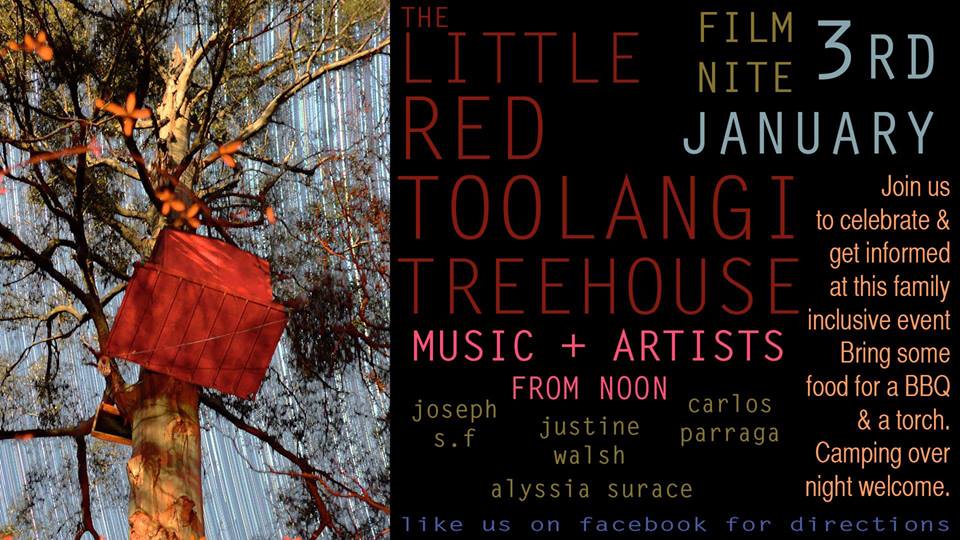
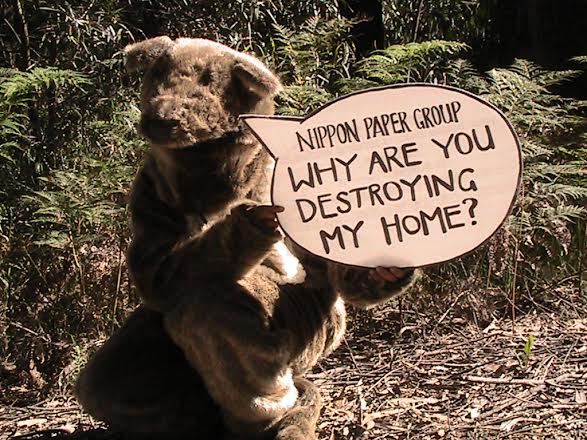
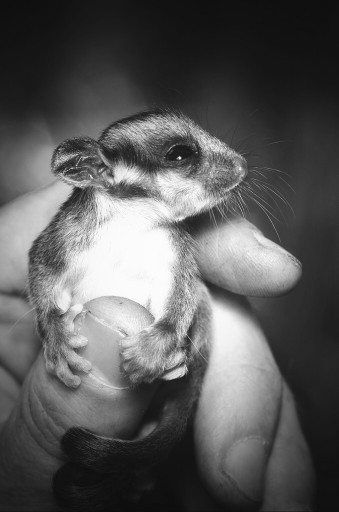
On sunday 10 November, 2013, a young activist called Hannah Patchett launched a long term tree sit to highlight the immediate threats to the Leadbeaters Possum through continued destruction of its habitat. Logging threatens the survival of this species in the Central Highlands to the east of Melbourne.
She has called a ‘festive picnic’ at the red treehouse, because she is expecting the government to issue a notice of complaint addressed to the ‘owner’ on the 3rd or 6th of January. Supporters will host a walk to the location of the treehouse with local naturalist Burnie Mace and a movie screening is also planned, plus some live music. This will be a family friendly drug and alcohol free event.
It will be held on thursday January the 3rd. Please call the Camp phone on 0455 111 985 for specific directions and if you feel like it please ask if you can bring something or help some one with a lift. The journey is about 1.5hrs from Melbourne.
I have been out checking some of my special places, to see how they are faring after last summer’s Feathertop fire. The north razorback fire burnt hot up and out of the Ovens river, past Mt Smythe and into the Upper Buckland River and swinging east around the massive bulk of Hotham and towards Dinner Plain.
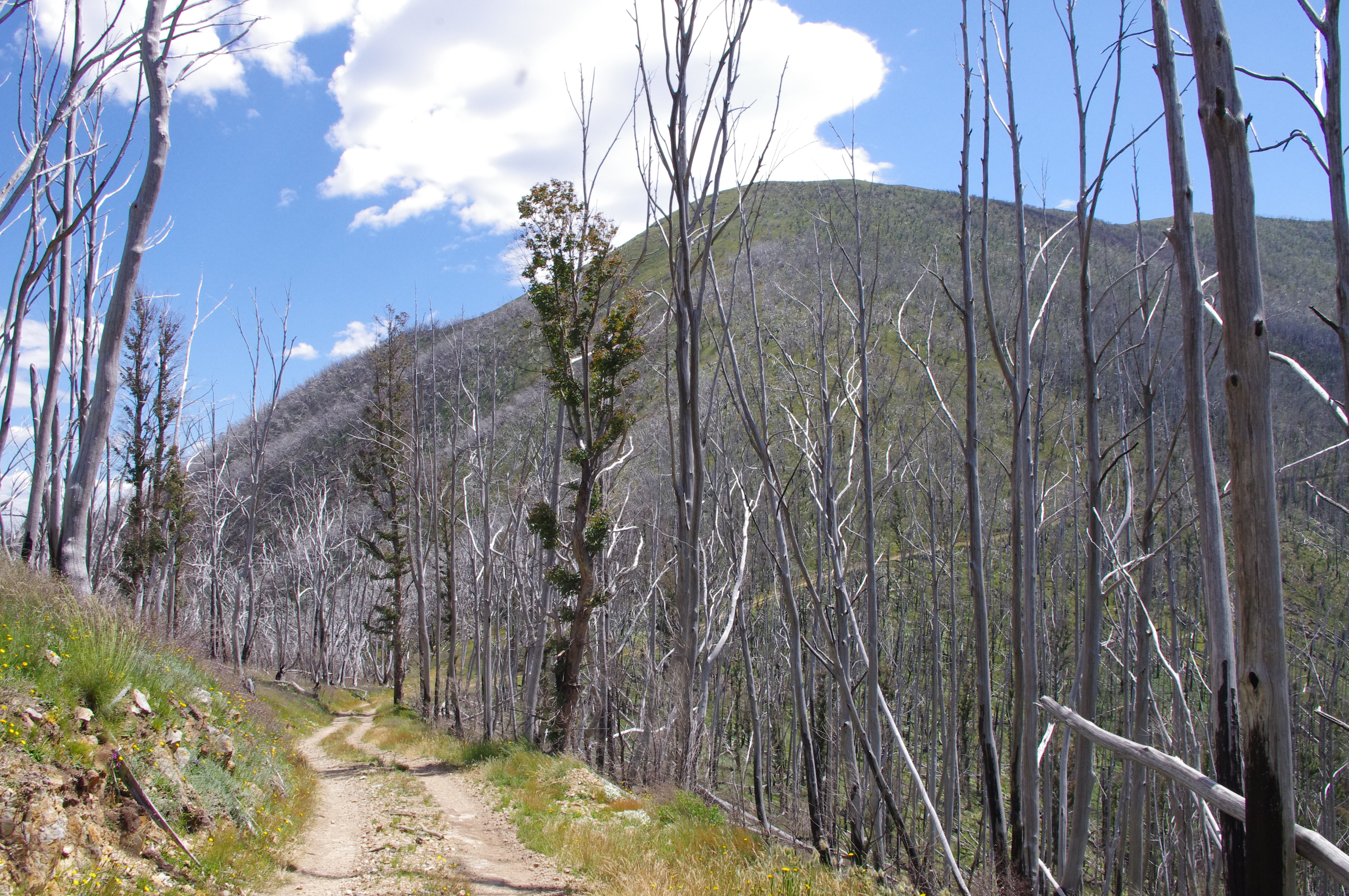
Many of the forests along the Sugarloaf Ridge were badly burnt and now big swathes of burnt out country have been clearfelled to protect the Great Alpine Road. I understand the need to cut out the alpine ash close to the road that had been killed in the 2013 or earlier fires, but a major over clearing has happened on the slopes of Mt St Bernard, where fire killed snowgums well back from the road had been clearfelled for no obvious reason.
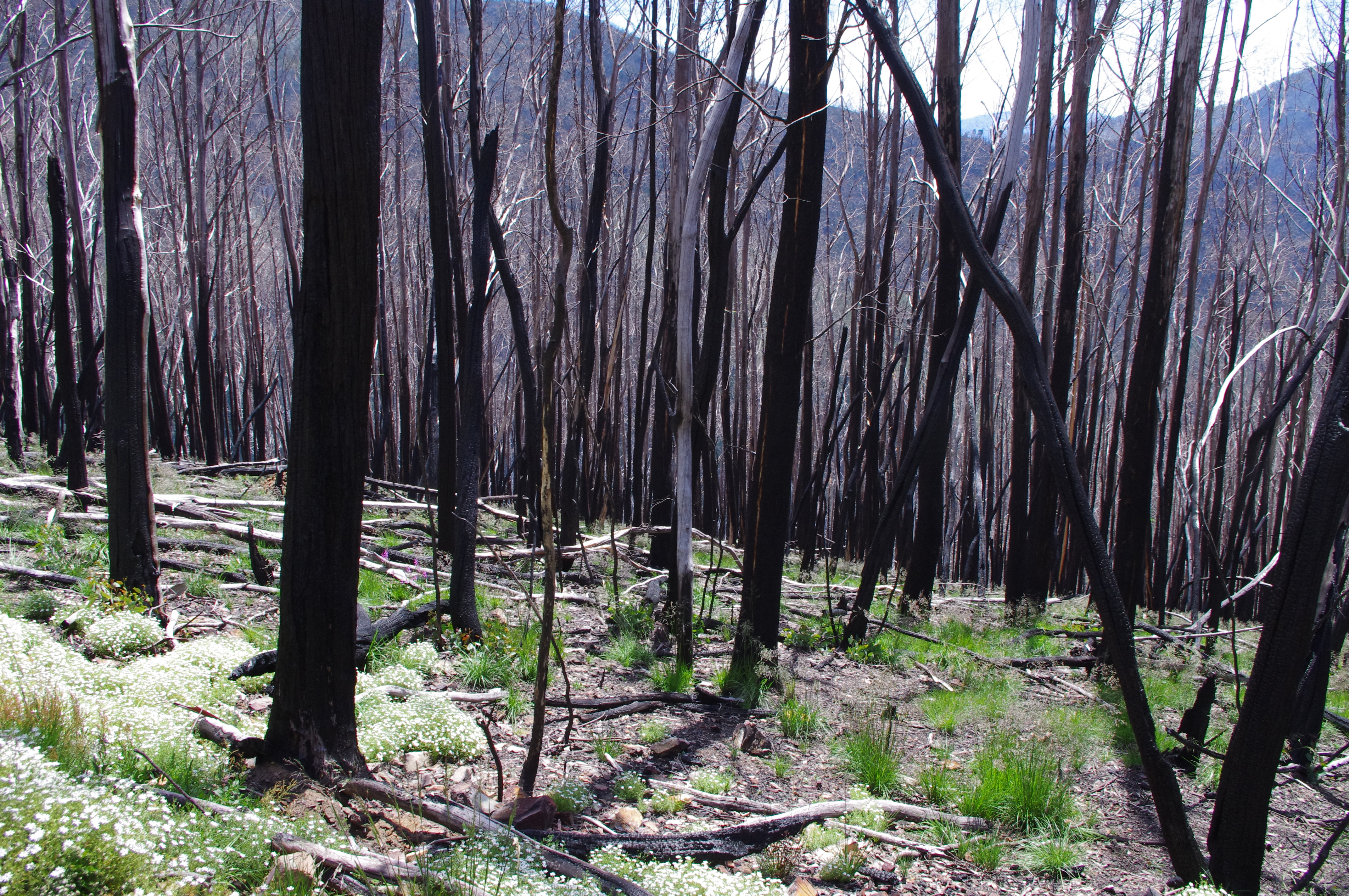
Parts of this country have been burnt three times in a decade. Each year, the land becomes ever more of a mosaic of new burn, older burn, and pockets of old forest – alpine ash and snow gum – that have survived each onslaught. The 2013 fire has killed off forests, glades, slopes that had survived the earlier fires. The headwater country of the Ovens, Buckland, and Wongungarra were hammered hard over the past summer. To my eyes that land seems poorer, from too many burns in too few seasons.
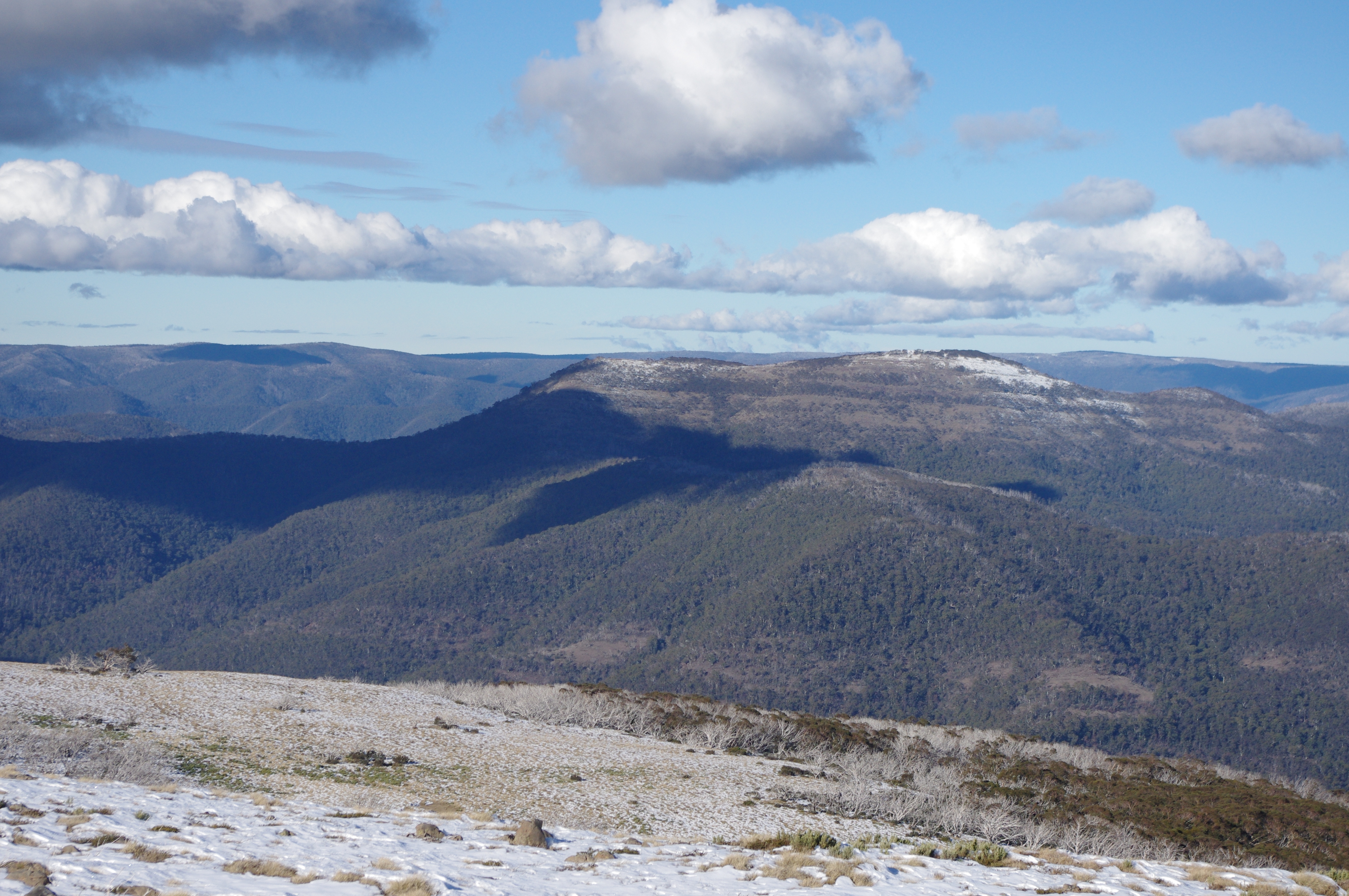
Fire has always been a part of our landscape. And climate science clearly tells us that longer and harder fire seasons are our future. These last few days I have wandered through alpine ash slopes and snow gum forests that had been completely scorched. Other areas have been lightly burnt, others spared altogether. The fire burnt hot up out of the Ovens, then seemed to turn back around some of the higher ridges on the Divide slower and with less heat. Its incredible to see some areas thick with new fern and daisys, while other areas as still mostly bare soil and logs, dead trees still black, streamers of bark rattling in the breeze. In some areas wattle are shooting back, in others, the beginning of Elderberry Panax groves or thick rushes of snow gums re-shooting around the burl of parent trees. If anything, the most recent fires have increased the mosaic effect on the ground.
Below tree line, the forests on these mountains can look so similar from a distance. Up close it is a mix of montane forests merging to alpine ash, leading to snow gum, the mix of vegetation in each place all dependent on slope and aspect, altitude and soil, fire history and circumstance. These most recent fires have added to the mix of already complex ecosystems and forest types.
In my mind I can see a future of more frequent fires, longer summers, warmer winters, and the land that I know and love so well being transformed into something new and poorer. Less old growth, trees pushed beyond their limits, less diversity of living things. But in the short term – summer to summer, the annual cycle that my mind can hold and understand – I see nature adapting and filling the spaces created by each fire. There is a deep ability for tenacity and resilience, seeking balance. The great unknown we face is that we do not yet understand the point at which we will have crossed beyond the balance of resilience and natural cycle into the time when balance will be broken by a human induced future. Some days I am frightened that no one knows, or will even be able to identify, that point of no return, when resilience is surpassed by a new reality that will make our familiar lands a new country, one that is foreign and strange, beyond anything we have known before.
The Lake Mountain area, near Marysville, was terribly burnt in the fires of early 2009.
Almost every tree on the plateau was killed or burnt back to ground level (snow gums have the capacity to reshoot from the base after the above ground section of the tree is killed). At Lake Mountain, the fire was particularly severe and killed off many parent trees that had survived the 1939 fires.
The landscape was completely transformed from what it had been. Anyone that knew the ‘old’ Lake Mountain couldn’t help but be devastated on their first post fire visit.
The good rainfalls over the summers of 2010 and 2011 greatly assisted the regrowth across the mountain. Whilst the area will not return to anything near to its former state for many years, the regrowth is going well, and the spring/ summer wildflower display is fantastic.
If you haven’t been to Lake Mountain since the fires, Christmas is a great time to go.
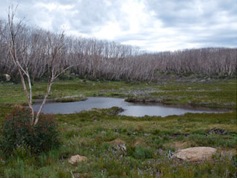
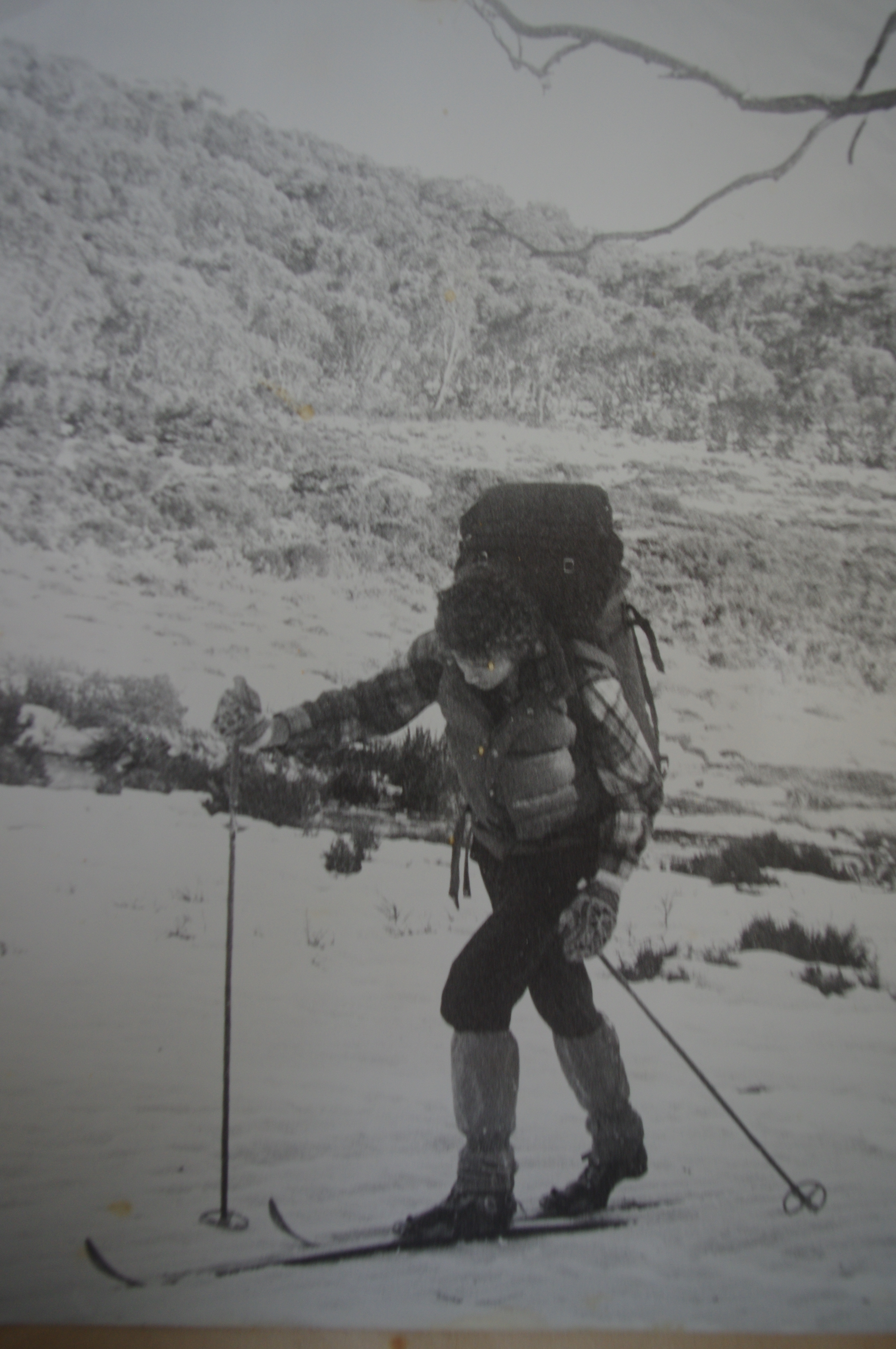
The Olden Days (aka the late 1970s). Echo Flat with an intact snow gum forest
The snow gum woodlands and lower alpine ash forests were absolutely devastated in the fires. Regeneration in the snow gum country is now substantial, with regrowth over 3 m high and in most places at least one third the height of the remnant dead trunks. In addition large numbers of Snow Gum seedlings are also thriving.
The open heath and bog areas have been slower to recover, but ground cover is now almost complete.
If you knew the pre-fire landscape, then coming back can be emotionally devastating. The two known stands of Mountain Plum Pine on Echo Flat did not survive the fires. These trees had previously been dated as being between 700 and 800 years old. The remaining colony of Leadbeaters Possums have been removed to Healesville Sanctuary because it wasn’t deemed biologically viable. Most of us won’t see the likes of the original forest, and the landscape itself can seem forlorn.
But life is coming back. There is great walking on the plateau, and the local economies need your support.
Conservation Volunteers Australia and Parks Victoria are calling out for volunteers to help restore remote sections of the 650-kilometre Australian Alps Walking Track.
Last summer saw helpers spend 120 days in Alpine National Park Across repairing 23 kilometres of track, laying 930 metres of rubber matting and installing eight water bars to prevent erosion at locations including The Knobs, Mount Sunday and Mount McDonald.
Park ranger Nigel Watts said: “It’s a win-win situation for us and for them; an opportunity to get out into the Alps, help with managing this area and enjoy this beautiful landscape.
“Remote sections of the track are difficult to maintain over time and help is needed to clear fallen timber off the track, install rubber tiling, brush-cut overgrown vegetation and to install crucial signage and symbols to help guide bushwalkers on their adventures in the Australian Alps.”
The first three projects in Januray and February are rated easy walking but require volunteers who are especially fit and strong to lay rubber tiles and use heavy mattocks over five full days. Accommodation will be provided in Falls Creek.The track work is all on the Bogong High Plains.
The last three projects in March and April are rated hard walking, and involve remote camping in the King Billy/ Mt Magdala/ Mount Clear/Knobs areas.
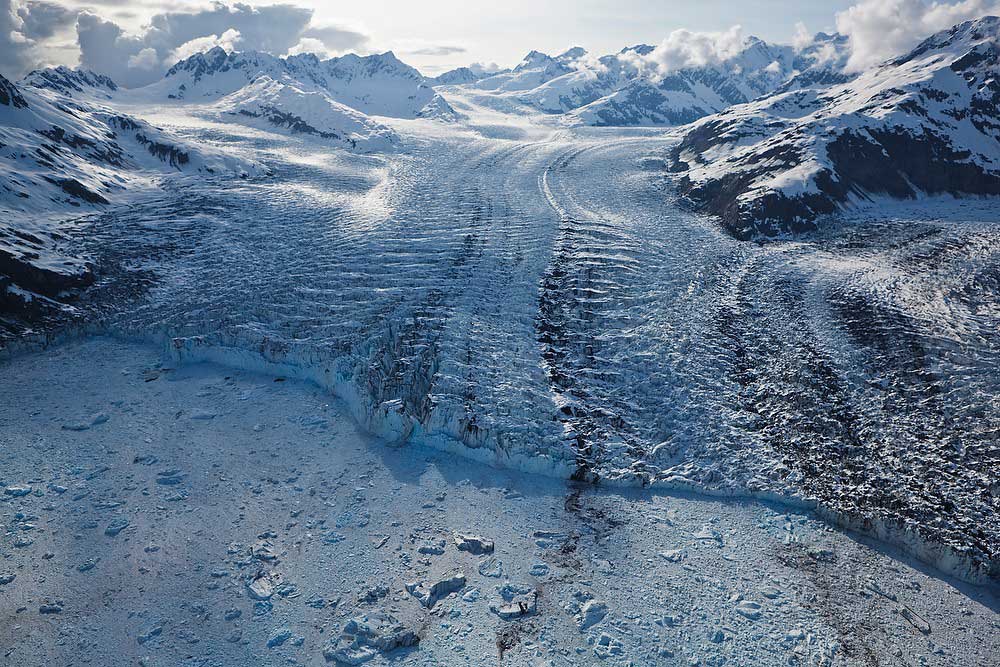
The West Branch of the Columbia Glacier, near Prince William Sound in Alaska’s Chugach Mountains. photo by Ethan Welty.
An interesting piece from Mountain Online. Here in Australia, the 10 year drought in the south east brought noticeable levels of dust onto the snowfields. Dust events are known to impact on snowcover in the South West of the US and have been linked to desertification, over grazing, etc. This article suggests another way human activity has been impacting on snow melt is through burning coal.
New research reveals humans halted the Little Ice Age. Is it too late to learn from our mistakes?
By Patrick Doyle
In July 1998, Thomas Painter took a break from his doctoral studies on the reflective nature of snow to climb the Maroon Bells near Aspen, Colorado. The snow was unusually filthy along his route. On a whim, he scraped the dirt off a small area with his ice axe and continued climbing. After summiting, Painter returned to the snowfield. The clean patch was now a small, extruded tower; the blackened snow rapidly melting around it. “It was sticking up about three inches—in a day,” says Painter.
Around that time, climate scientists were grappling with a conundrum tied to the end of the Little Ice Age, a period of below-average temperatures in the 16th through 19th centuries. Researchers had pegged the ice age’s demise to 1860, when glaciers in the Alps began to retreat. But that theory didn’t quite compute. Regional temperatures continued to decline for another 60 years. If anything, the glaciers should have kept growing.
Painter wondered if dirty snow could have been at play. In 1860, the Industrial Revolution’s coal-burning factories started spewing soot that covered European cities and—Painter guessed—the glaciers in the Alps. He hunted down ice cores from the Alps and found that layers of black carbon began appearing in the mid-19th century. Like the dirty snow melting on the Maroon Bells, the soot liquefied hundreds of meters of glacier in just 20 years. Painter, now an ice and snow scientist at NASA’s Jet Propulsion Lab, published his findings in September 2013. “I was just in the right place at the right time,” he says. “I was thinking of junk falling on snow.”
The study doesn’t just rewrite the ending of the Earth’s most recent ice age; it underlines the fact that humans caused it. Painter’s work also suggests that black carbon settling on snow runs a close second to carbon dioxide as a driver of global warming. Which means the fall of King Coal in North America is good news for snow and glaciers. Nearly half of U.S. energy came from coal in 2007. By 2012 that number had dropped to 37 percent. Expect that trend to continue, driven by increased consumption of cleaner natural gas and the Obama administration’s tighter emissions regulations for future coal plants. And while China’s coal usage has skyrocketed in recent decades, the country’s coal imports finally began to drop this year due to a slowing economy and pollution levels so high they are poisoning the population.
The switch to cleaner fuels can’t happen soon enough. But in India, a growing economy means increasing demand for coal. And more black carbon on Himalayan snow and glaciers. “What we’re seeing in the Himalaya in terms of glacier retreat is profound,” says Painter.
How it works:
Black carbon from coal-burning power plants blows into the atmosphere and settles on the mountains.
Most of that soot lands on glaciers at lower elevations, which are already susceptible to melting from summer sun.
The darkened snow melts at double the speed of clean snow, causing the glacier to retreat up the mountain.
Smaller glaciers are less able to mitigate the effects of climate change, causing a spiral of increased temperatures and less stable weather.
Image: GECO. NB: this photo is from the Dec 12 action
Environmentalists have halted logging in state forest on the iconic Errinundra Plateau in East Gippsland. One person has climbed a tree more than 40 metres, and sits on a platform tied to machinery.
“Until recently this area of forest was reserved as a special protection zone, it contains a number of different forest types and is of high conservation value. It also contains old growth forest and is a known site for the endangered powerful owl.” Said David Caldwell, spokesperson for Goongerah Environment Centre (GECO)
“This area was made available for logging in 2011as part of changes to the informal reserve system. This process swapped a large number of forest areas reserved for specific values, for areas that don’t reflect the same value. This has been something of a lifeline to the logging industry, who have repeatedly shown poor management of Victoria’s forests at the expense of the taxpayer.” He said.
“This is another example of forest destruction in the face of evidence of threatened species. Our native forests are becoming degraded and without areas like this one, they won’t be able to provide our endangered animals with a chance to survive. This is a looming extinction crisis that is being assisted by forest agencies around the nation.” Said Miranda Gibson spokesperson for Still Wild Still Threatened.
Today’s action is the latest in a series of actions over the last week, known as Fearless Summer, a coalition of grassroots environment groups, committed to an end to industrial scale native forest logging and export woodchipping.
The following information comes from the Victorian National Parks Association. A number of significant environmental decisions will be made by the federal environment minister before Christmas, with the danger that they will slip through relatively unnoticed and unreported.
If approved, it can be expected that cattle will be introduced over summer. Last time the Victorian Coalition government introduced cattle to the Alpine Park, they did so without setting in place adequate scientific frameworks to the trial. They had been clearly told that grazing would not be useful in reducing fire risk, yet proceeded to implement their policy.
The fact that the government has withheld information from the federal minister in their current attempt to reintroduce cattle is hardly the basis for assuming this trial will be any more scientifically robust.
Over the next few days Australia’s environment minister Greg Hunt must decide whether or not he will let the Victorian Government put cattle back into the Alpine National Park.
After failing to return cattle to the Alps in both 2010 and 2011 the Napthine Government is again asking the federal government to approve a new cattle grazing trial in the Alpine National Park.
They plan to bring 60 cattle into the remote Wonnangatta Valley, a beautiful river flat that sits below the Howitt High Plains and has been ungrazed by cattle since 1988.
We need your help. Please take action today or as soon as possible:
We cannot allow this grazing trial to go ahead.
The Victorian Government wants to put cattle into the park simply because of a promise it made to some graziers that once held privileged grazing licences.
Their new attempt comes on the back of repeated attacks by the Napthine Government on the integrity of national parks including changing legislation to allow 99 year leases for private development, expanding areas for fossicking and prospecting and making significant cuts to park budgets.
We have also uncovered many serious flaws in the proposed trial:
There is no scientific design for the trial, and apparently no scientists are involved.
There has been no consideration of a location outside of the national park, even though there are many areas where such a trial could be conducted.
The application ignores the considerable evidence that cattle grazing does not significantly reduce alpine fires. There are far more important bushfire research projects on which to spend scarce research funds.
More than 60 years of research shows cattle damage alpine wetlands and the headwaters of many rivers, threaten nationally-listed rare plants and animals, and bring weeds into the National Heritage-listed Alpine National Park.
National parks are the cornerstone of our efforts to protect nature – not cow paddocks or private resorts.
When I went through the paperwork attached to the state government’s proposal to put cattle back into the Alpine National Park, one of the things that struck me was the fact that there was no data from the field about possible threatened plants or animals that may be impacted by the proposal.
in the Wonnangatta, looking north
The Wonnangatta is not the easiest place to get to in Victoria. Yet the Environment Minister has visited there on at least two occasions. Clearly this project is important to the minister. So it would be reasonable to assume that he would have ensured that some staff were sent to the Valley to investigate possible impacts on endangered species.
Yet in their proposal, the government relies only on desk top data searches of federal government information. Given that the government was roundly criticised for its poorly framed research methodology last time they attempted to put cattle back into the park, you would think they would at least make an effort to make the scientific case more robust this time.
But now, according to The Age, this lack of firsthand data isn’t just because of sloppy project design. It would appear that the government has deliberately withheld key information.
The state government has withheld from the Commonwealth a survey of rare and threatened plants of an area of the Alpine National Park earmarked for a cattle grazing trial.
It is believed scientists at the state’s biodiversity research body – the Arthur Rylah Institute – were asked to look for rare and threatened plants in different parts of the alpine park as part of research for the high country grazing project. Their results were outlined in an unreleased report from May 2012. But the survey was not included in a recent application by Victoria to the federal government for environmental approval of a grazing trial.
Instead an older desktop study – drawing on previously recorded data – was used to identify the extent of endangered species in the low-lying Wonnangatta Valley, where the latest trial is planned.
The unreleased 2012 plant survey found one nationally protected species of orchid known as pale golden moths and a small patch of endangered alpine bog and wetland in the valley. A large area of rare grassland and a rare plant known as spreading knawel were also found across the trial region.
The report suggests that fencing to protect the orchids, grassland and spreading knawel would be impractical and would not mitigate against the impacts of grazing.
No government is perfect. But deliberately withholding information in order to get an outcome you want is incredibly bad form. It begs the question: if this has happened in this case, how do we know it doesn’t happen routinely in attempts to introduce other aspects of environmental policy in Victoria?
The following media release comes from Still Threatened, Still Wild, and marks the beginning of a summer of actions to protect remaining old growth forests.
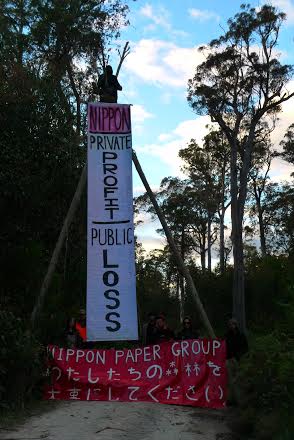
Today’s protest action continues to stop logging operations in a stand of forest at Stony Creek, East Gippsland, Victoria. Two conservationists remain at the top of tripods, blocking the road at different access points to the logging zone. While one person remains 30 meters above the ground in a tree sit in the middle of the logging coupe. Around 40 others remain in the area.
Department of Environment and Primary Industries (DEPI) workers attended the site at around 11am. The DEPI workers then cut down trees in an area believed to be part of the Snowy River National Park, in an attempt to drive around a blockade tripod. Forestry workers are currently in the logging coupe, below the tree sit, assessing the situation.
“Three conservationists are today putting themselves on the line, up tripods and tree sits, and risking arrest in order to halt the destruction of this stand of forest that is home to the endangered long footed potoroo” said David Caldwell of Goongerah Environment Centre (GECO).
“Continued funding from tax-payer dollars to this industry for the benefit of a few private companies, like Nippon Paper, should be of concern to all tax payers. Australia is not only losing millions of dollars to prop up this industry, we are also losing our irreplaceable native wildlife species” said Mr Caldwell.
“Today’s action has brought a national focus to the destruction of wildlife habitat that is occurring here in East Gippsland as well as forested landscapes around Australia. It comes the day after a court appeal was lost by My Environment which now allows the ongoing logging of endangered leadbeater possum habitat.” said Poppy King of Central Highlands Action Group (CHAG).
“These dedicated conservationists are committed to continuing today’s action as long as possible, in order to protect this precious forest from industrial scale logging. This is part of a nation-wide movement that will see ongoing actions across the country in a call for protection of our native forests” said Miranda Gibson of Still Wild Still Threatened.
This release is from Healesville based MyEnvironment, about the outcome of the recent case seeking protection for the Leadbeaters Possum.
Law fails to guarantee protection for threatened species
The Flora and Fauna Guarantee Act has never before been tested at the level of Appeal. By taking our case to Appeal we have given the law the best possible opportunity to show whether it can be effective in its stated purpose of GUARANTEEING the survival of unique native species.
In this, the law has failed.
This judgement gives the green light to ongoing destruction of Leadbeater’s Possum habitat in Toolangi State Forest at sites where we have photographic and video confirmation that the species is present. Obviously, this is a disappointing outcome for MyEnvironment but, more importantly, for Leadbeater’s Possum and all other species that rely on the protection of the Flora and Fauna Guarantee Act for their ongoing survival.
If the Flora and Fauna Guarantee Act is incapable of guaranteeing the protection of our state’s faunal emblem against a rapacious logging industry, we have to wonder what, if anything, does it protect?
We call on the state government to urgently review the Act to make it functional and effective in saving threatened species, including the Leadbeater’s Possum from extinction.
In the meantime, we call on VicForests and its contractors to demonstrate genuine commitment to their repeated protestations of concern for the survival of Leadbeater’s Possum by properly protecting all sites in logging coupes that contain known colonies of the species, including the three Toolangi coupes that were the subject of this case, where video and photographs of nesting and foraging animals have recently been obtained. Their conduct in coming days and weeks will be a public demonstration of their sincerity and decency.
We shall now take time to study the implications of the judgement for MyEnvironment, the group and its members, and to take advice on future action.
For quotes please call ; Steve Meacher 0447 330 863 or Sarah Rees 0438 368 870
For background on the Toolangi forest issue, check here.
In January 2013, it was reported that the Mountain Cattlemen’s Association (MCAV) was lobbying the state environment minister Ryan Smith to seek permission to reintroduce cattle to the area around the Wonnangatta station.
While spokespeople for the minister have been quoted in the media, there has been no formal statement by Ryan Smith and details on the trial have not been released to the public by the Victorian government.
“But it was the state of the park, the threat of high intensity fires from high fuel loads and the impact this could have on its ecology – particularly snow gums – and the infestation of weeds and feral animals that were most pressing on the minds of the cattlemen”.
Media reports have mentioned the ability of cattle grazing to reduce weeds in the Wonnangatta, however, the application only talks about the possibility of it reducing fuel loads. There is no mention of any strategies to ensure the reintroduction of cattle doesn’t bring a new set of weeds into the Wonnangatta. Does this shift from dealing with weeds and fire to just fuel reduction show that there is an admission that cattle make weed infestation worse?
The application says that the traditional owner group was consulted, and of course the MCAV was. What is strange is the claim that environment groups were consulted. Really?
Some observations about the proposed trial
Given that the government has identified fuel loads as a problem, it has not sought to find other ways to reduce fuel loads without a grazing trial.
The impact of weed spread due to grazing (one of the reasons cattle were excluded from the national park in the first case) is not specifically addressed in the proposal.
There is not yet an Environmental Management Plan (EMP) for the project. Given the experience in early 2011, when the Coalition secretly let cattle back into the High Country without a proper framework for how the trial would be managed, one has to wonder if the same thing will happen this time. The documentation says that the EMP will consider issues such as ‘pest plant and animal controls’: so let’s hope the EMP is produced before the cattle are introduced.
The study area covers around 2,200 hectares of land, with 4 ‘treatments’ to be carried out over different parcels of land: a control area, some areas being grazed, some areas grazed and burned, and some areas just burned. The documentation identified 10 ecological vegetation classes (EVCs) within the research trial area. It is not yet clear whether the 4 treatments will be carried out in each EVC.
Lack of consultation. Given that this proposal has been foisted onto the community without any attempt to explain the project beyond a couple of media grabs, it hasn’t got off to a great start if the government hopes to generate widespread support for the trial. The documentation says a ‘communications strategy’ will be created, with the development of ‘key messages’ that will inform the community on the progress of the trial. Note that consultation is a very different thing to communication.
Threats to nationally listed species. The application says the government only carried out desk top assessments of possible federally listed species in the research area. As is widely noted, animal and plant data for the region is not huge, but the government was happy to rely on what information was currently held by the federal government rather than sending a team to check the actual site. Mitigation measures, aimed to deal with any impacts on federally listed species that may be subsequently identified, will be dealt with via the EMP.
Traditional Owner (TO) attitudes to fire. One valuable aspect of the project documentation was a consultant’s report and ‘conceptual model’ of TO understandings of the role of fire in managing land in the High Country. The government is to be congratulated for commissioning this research.
So, we are a little bit closer to gaining an understanding of what is planned with the trial, although there are a significant number of areas where there is no clarity about what the government intentions are and big gaps in understanding how the project will be managed.
The federal minister is currently considering the application and will probably make a decision shortly.
The following excerts come from an article on the ABC website by Greg Muller about a recent survey in north eastern Victoria. The survey was a collaboration between Parks Victoria, Museum Victoria, community members and 4WD clubs. Check here for an earlier post about this survey.
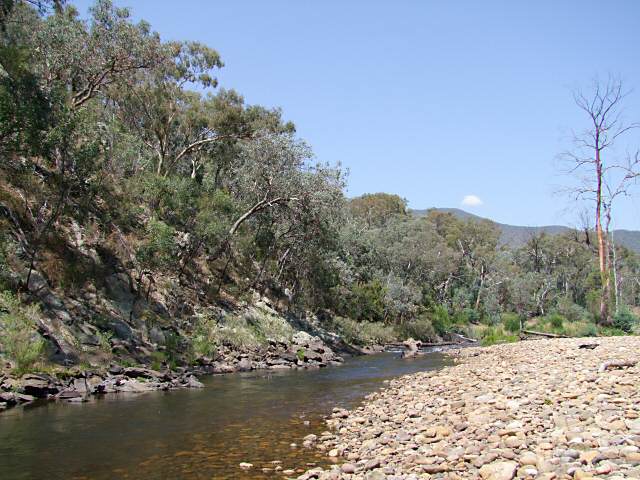
Areas explored included the Upper Buchan River and Davies Plain.
A key message is at the end of the story: climate change poses a grave threat to many alpine and sub-alpine species.
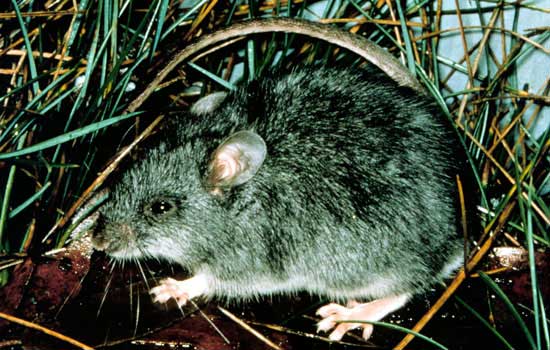
Smoky Mouse
In a wild corner of north-east Victoria, more than 80 researchers have just spent two weeks counting and documenting rarely seen alpine wildlife.
The remoteness of the region means there is limited knowledge of the area—an issue Museum Victoria and Parks Victoria are now attempting to rectify.
‘There’s good news. We’re delighted we found alpine tree frogs because that’s one species vulnerable to a deadly fungus which has been attacking the frogs,
During the two-week bioscan, 21 species of reptiles were found, including the endangered Kosciusko Water Skink, Glossy Skink and the Mountain Skink.
Two listed species were found, the Broad Tooth Rat and the Smokey Mouse.
There were also two species of Antechinus (a small marsupial mouse indigenous to Australia) found, but at this time of year the population consisted only of females.
Roger Fenwick, the regional manager for Parks Victoria, was instrumental in organising the bioscan and worked to bring researchers, park rangers and locals together for the project.
‘No one group knows everything and it’s great to share the knowledge and get better results as land managers,’ said Mr Fenwick.
‘We invited four wheel drivers to be involved and this means the scientists can get on with doing their work, the Parks staff can concentrate on managing the program, and the four wheel drivers can get everyone around nice and safe.’
Museum Victoria’s senior curator of entomology, Dr Ken Walker documented 400 nests of native bees during the study.
‘What you find is a pile of dirt which looks like a chimney which goes down about 30 centimetres underground,’ he said.
Also at the bioscan was a member of the local indigenous community, Katherine Mullet, who was representing the Gunnai/Kurnai and Monero communities who used to occupy this area.
Ms Mullet was looking for cultural sites, including traditional walking routes, many of which are now 4WD and bushwalking tracks.
Dr Norman explained that climate change is a major threat to alpine wildlife species, which are already living at the edge of their environment.
‘The challenge worldwide with changing climate is if you are at the top of your limit or as far south as you can go, there’s nowhere else to go.’
 On sunday 10 November, 2013, a young activist called Hannah Patchett launched a long term tree sit to highlight the immediate threats to the Leadbeaters Possum through continued destruction of its habitat. Logging threatens the survival of this species in the Central Highlands to the east of Melbourne.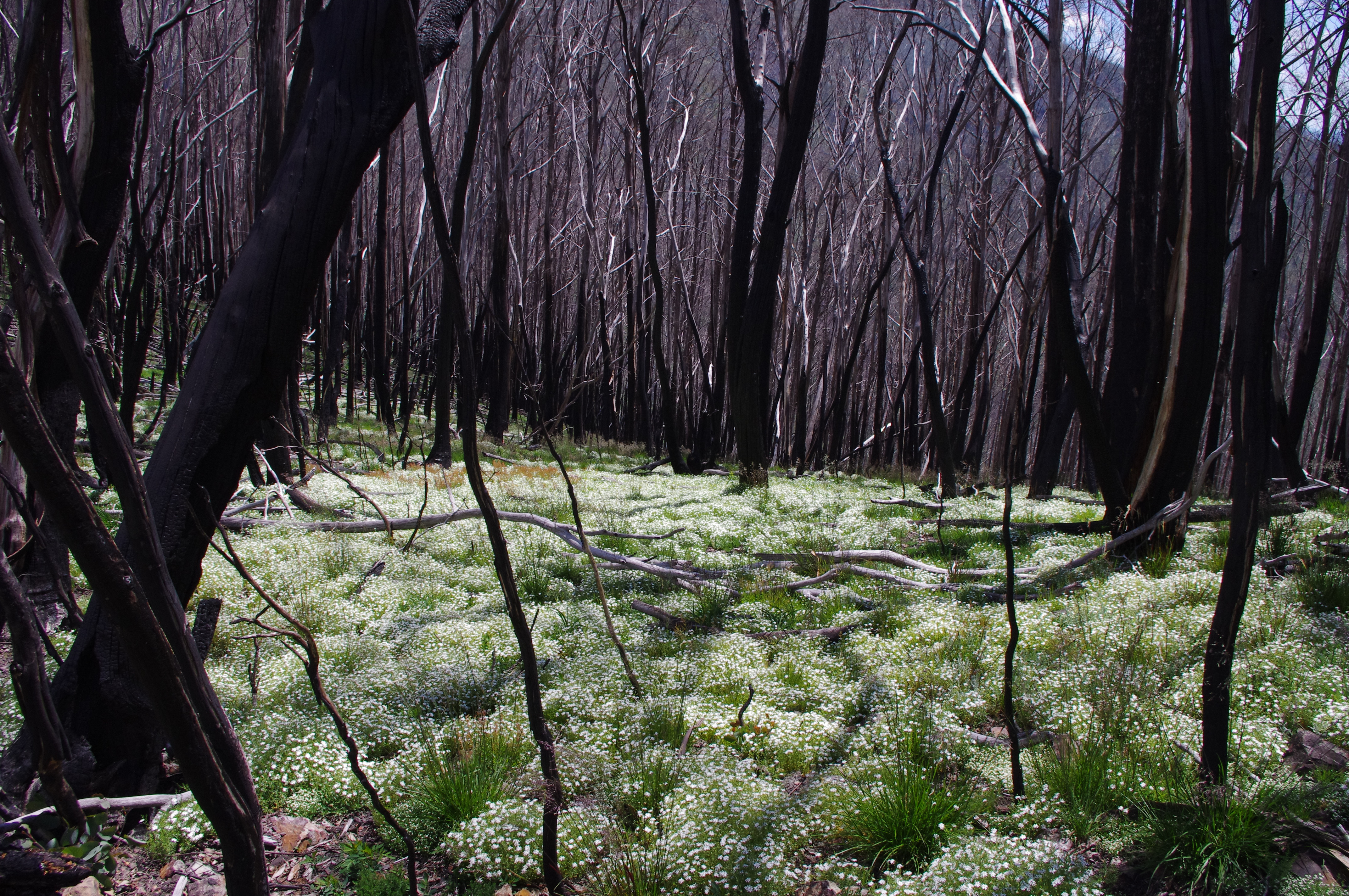



 Mountain Journal
Recent Comments