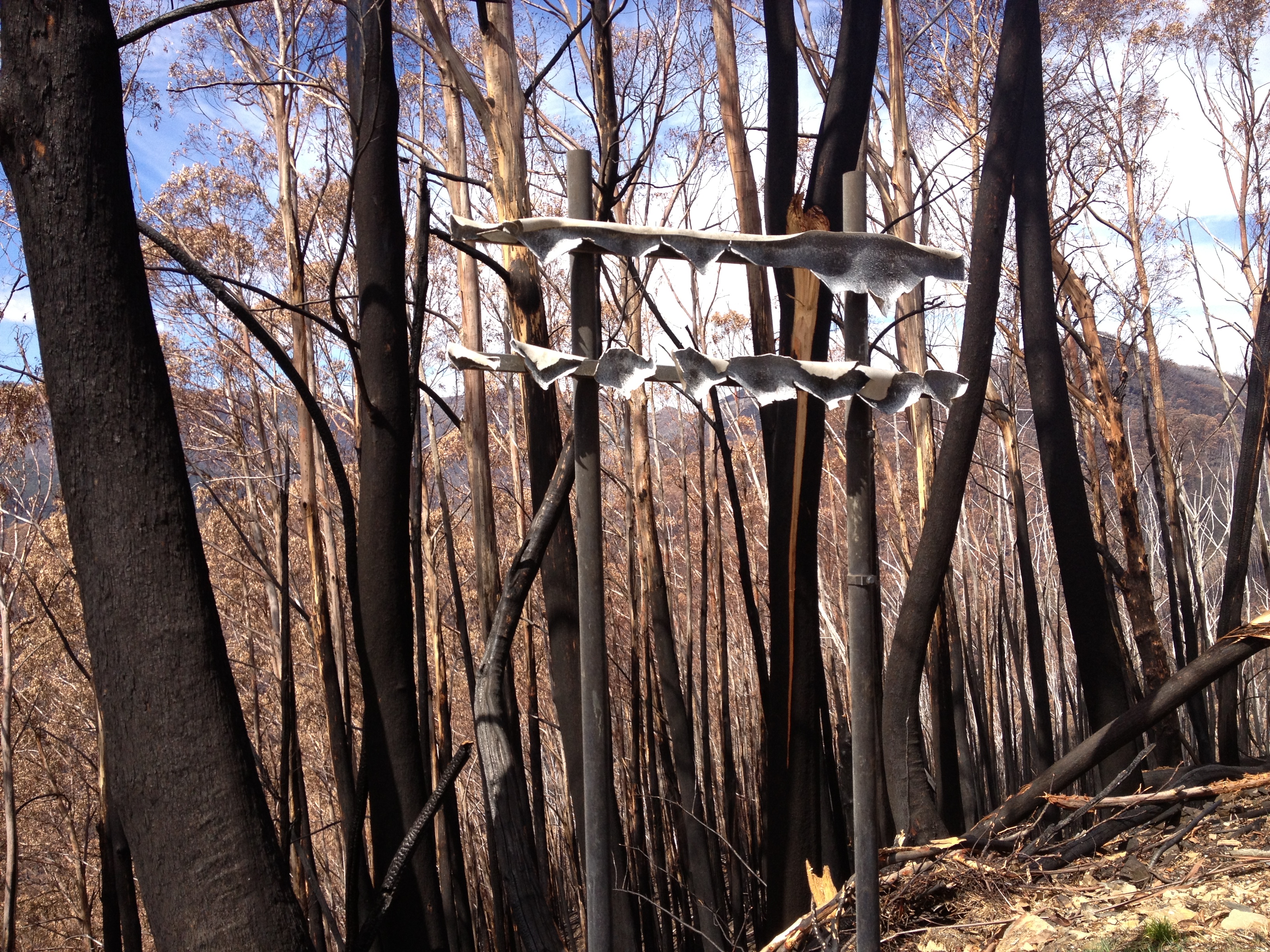
The Lake Mountain area, near Marysville, was terribly burnt in the fires of early 2009.
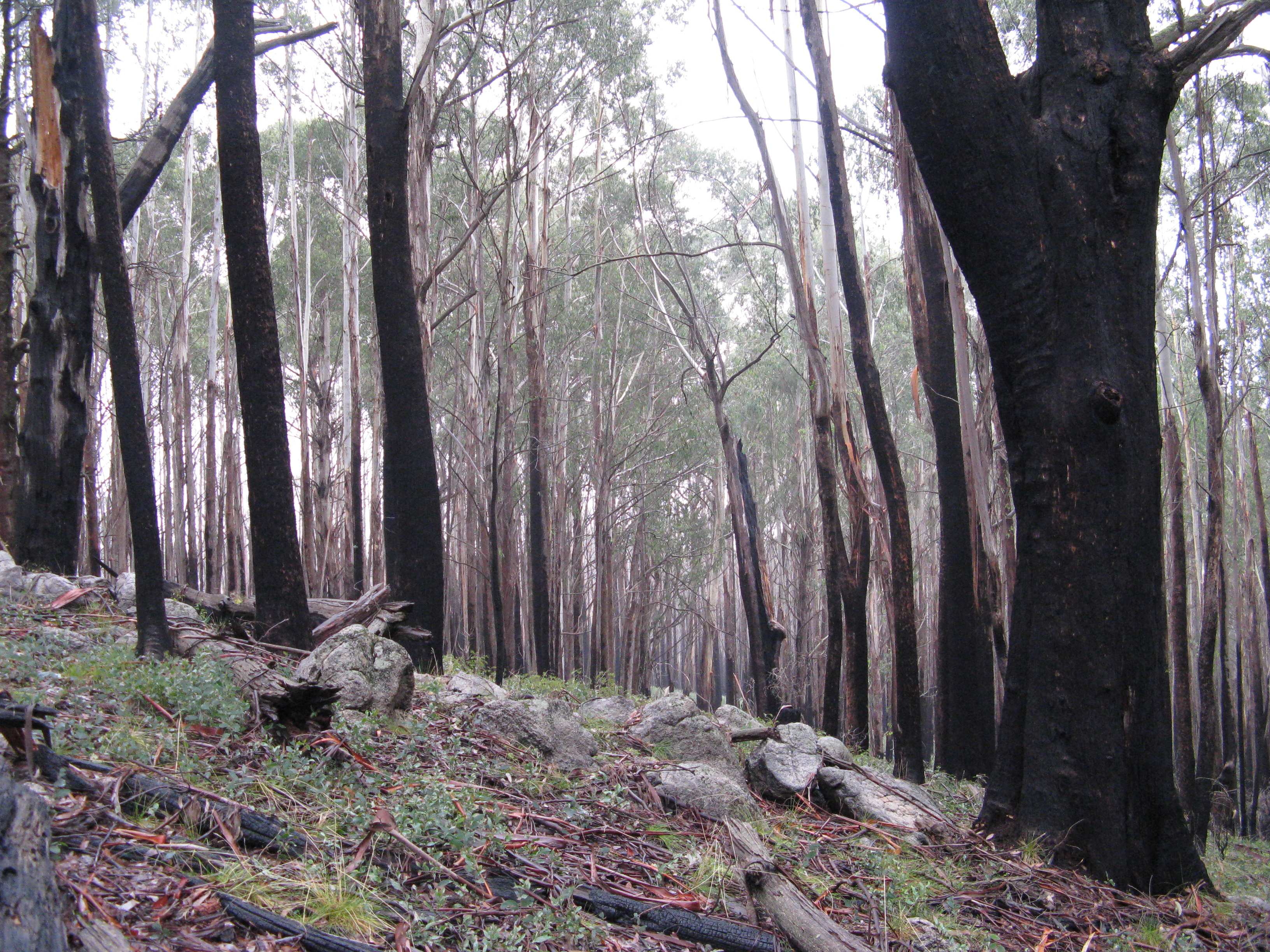
Almost every tree on the plateau was killed or burnt back to ground level (snow gums have the capacity to reshoot from the base after the above ground section of the tree is killed). At Lake Mountain, the fire was particularly severe and killed off many parent trees that had survived the 1939 fires.
The landscape was completely transformed from what it had been. Anyone that knew the ‘old’ Lake Mountain couldn’t help but be devastated on their first post fire visit.
The good rainfalls over the summers of 2010 and 2011 greatly assisted the regrowth across the mountain. Whilst the area will not return to anything near to its former state for many years, the regrowth is going well, and the spring/ summer wildflower display is fantastic.
If you haven’t been to Lake Mountain since the fires, Christmas is a great time to go.
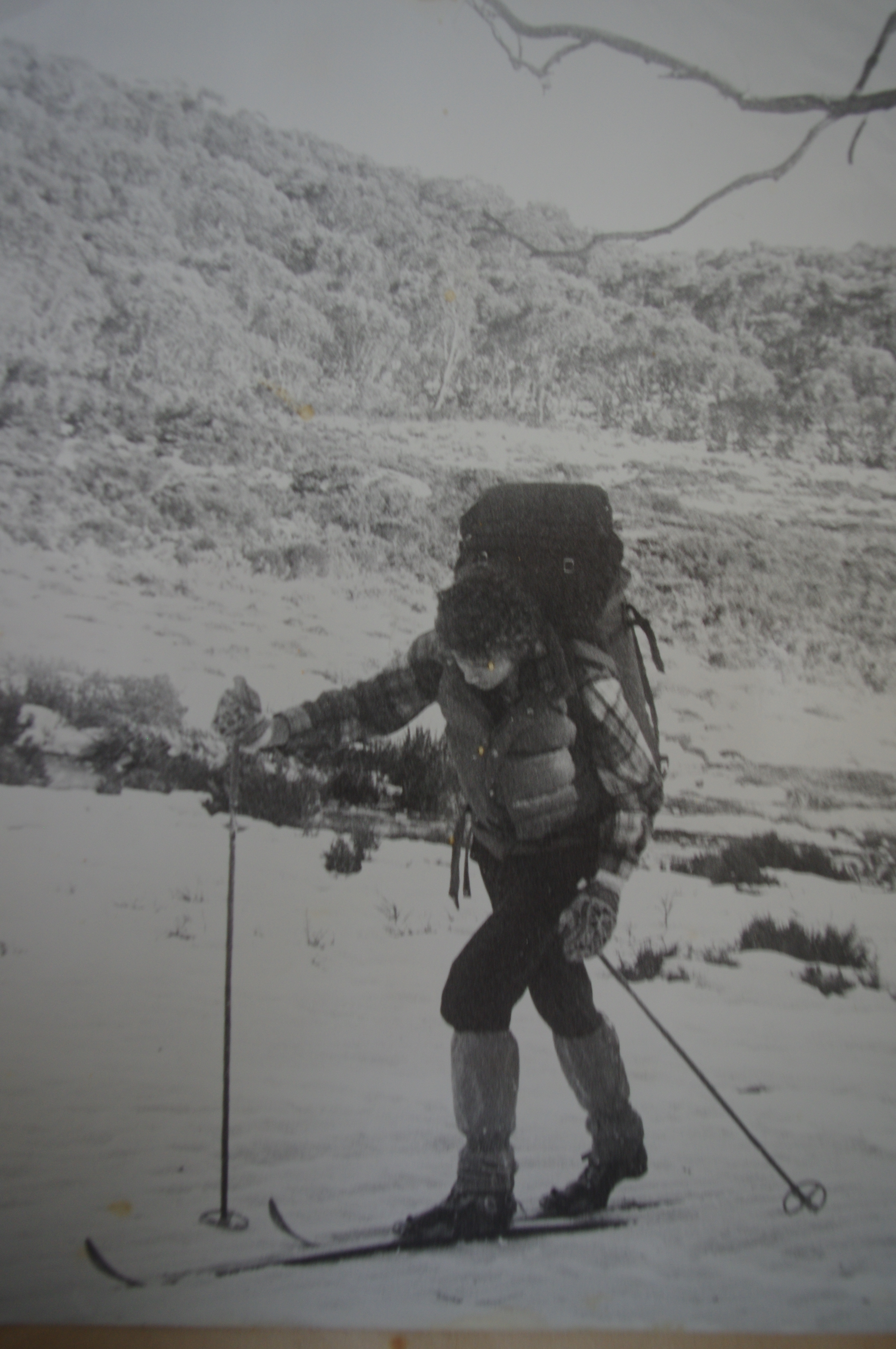
The Olden Days (aka the late 1970s). Echo Flat with an intact snow gum forest
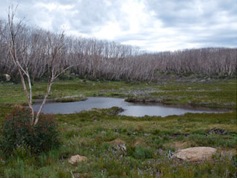
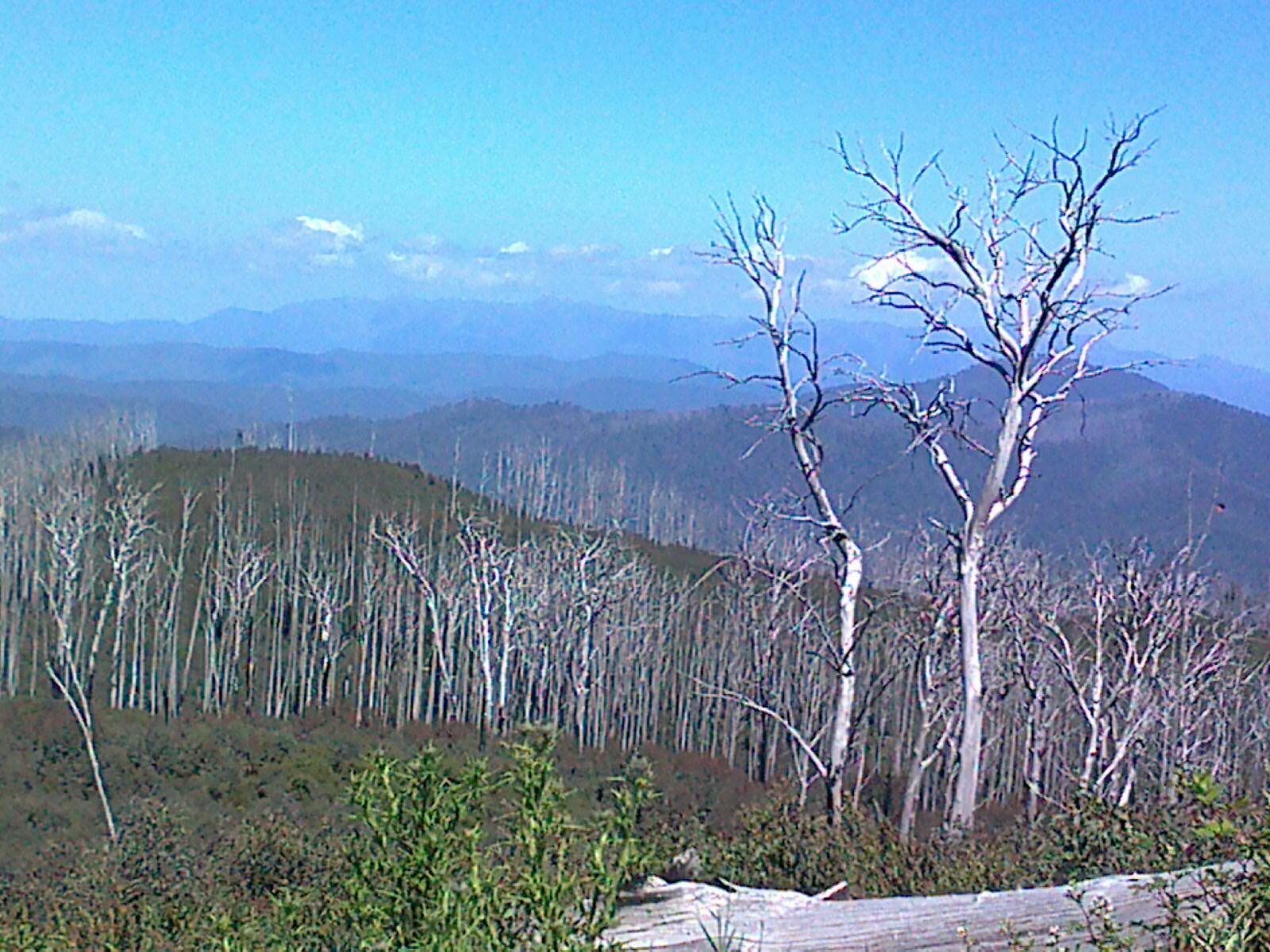
The snow gum woodlands and lower alpine ash forests were absolutely devastated in the fires. Regeneration in the snow gum country is now substantial, with regrowth over 3 m high and in most places at least one third the height of the remnant dead trunks. In addition large numbers of Snow Gum seedlings are also thriving.
The open heath and bog areas have been slower to recover, but ground cover is now almost complete.
If you knew the pre-fire landscape, then coming back can be emotionally devastating. The two known stands of Mountain Plum Pine on Echo Flat did not survive the fires. These trees had previously been dated as being between 700 and 800 years old. The remaining colony of Leadbeaters Possums have been removed to Healesville Sanctuary because it wasn’t deemed biologically viable. Most of us won’t see the likes of the original forest, and the landscape itself can seem forlorn.
But life is coming back. There is great walking on the plateau, and the local economies need your support.
The following information comes from the Victorian National Parks Association. A number of significant environmental decisions will be made by the federal environment minister before Christmas, with the danger that they will slip through relatively unnoticed and unreported.
If approved, it can be expected that cattle will be introduced over summer. Last time the Victorian Coalition government introduced cattle to the Alpine Park, they did so without setting in place adequate scientific frameworks to the trial. They had been clearly told that grazing would not be useful in reducing fire risk, yet proceeded to implement their policy.
The fact that the government has withheld information from the federal minister in their current attempt to reintroduce cattle is hardly the basis for assuming this trial will be any more scientifically robust.
Over the next few days Australia’s environment minister Greg Hunt must decide whether or not he will let the Victorian Government put cattle back into the Alpine National Park.
After failing to return cattle to the Alps in both 2010 and 2011 the Napthine Government is again asking the federal government to approve a new cattle grazing trial in the Alpine National Park.
They plan to bring 60 cattle into the remote Wonnangatta Valley, a beautiful river flat that sits below the Howitt High Plains and has been ungrazed by cattle since 1988.
We need your help. Please take action today or as soon as possible:
We cannot allow this grazing trial to go ahead.
The Victorian Government wants to put cattle into the park simply because of a promise it made to some graziers that once held privileged grazing licences.
Their new attempt comes on the back of repeated attacks by the Napthine Government on the integrity of national parks including changing legislation to allow 99 year leases for private development, expanding areas for fossicking and prospecting and making significant cuts to park budgets.
We have also uncovered many serious flaws in the proposed trial:
There is no scientific design for the trial, and apparently no scientists are involved.
There has been no consideration of a location outside of the national park, even though there are many areas where such a trial could be conducted.
The application ignores the considerable evidence that cattle grazing does not significantly reduce alpine fires. There are far more important bushfire research projects on which to spend scarce research funds.
More than 60 years of research shows cattle damage alpine wetlands and the headwaters of many rivers, threaten nationally-listed rare plants and animals, and bring weeds into the National Heritage-listed Alpine National Park.
National parks are the cornerstone of our efforts to protect nature – not cow paddocks or private resorts.
Grazing advocates argue that cattle will reduce the impacts of bushfires when they do occur
Since at least 2006, a number of people have called for fuel reduction burns and a re-introduction of grazing to the river flats around Wonnangatta station. This has variously been claimed as being important for protection of visitors should a wild fire break out, for weed control, and ecological recovery.
Weeds are an acknowledged problem in the valley, with St Johns Wort, blackberry, Cape Broom, sweet briar and Hawthorn all being significant. In many places, the remnant Themeda (Kangaroo grass) flats are being encroached on by weeds.
It has been reported several times that ‘the poor state of the park is strong evidence of State Government underfunding of Parks Victoria’. So, one option to tackle weeds would be to increase PV’s budget. The current state government is cutting staff at present.
The call for a re-introduction of grazing has been promoted largely by people with connections to grazing.
It is interesting to learn that the current attempt to get cattle back into the Alpine national park by the mountain cattlemen is for a relatively low lying area, the flats around the Wonnangatta station. Previous attempts have been for high country grazing. In contrast, the Wonnangatta station sits at about 500 metres above sea level, in very different vegetation to the high country.
So. Could a grazing operation at this elevation be good for weed management and to reduce fuel loads?
cane toad. Would grazing bring more problems then it solves?
Lets leave aside the fact that many of the problematic weeds in the alpine area were introduced by cattle (hopefully any re-introduction of cattle does not become a solution like the ‘cane toad’ syndrome – where unintended new problems are created in trying to resolve an existing problem).
Lets instead take the cattlemen at face value: that they believe that in this particular location, grazing will reduce fire risk and weed infestation.
Is there a place for grazing by hard hooved and heavy non-indigenous animals in our national parks? And would the proposed grazing trial actually prove if this is the case?
The problem is, we just don’t know. This is because – for whatever reason – the state government has not released any meaningful information about how the grazing trial would work. Given the high level of politics involved in previous attempts to get cattle back into the park, it is hard to trust their motivations unless we have this information.
Media reports say that the trial will be ‘part of a scientific investigation of bushfire prevention options across 2,200 hectares.’ Lets recall that this idea has been discussed with the Environment Minister for at least 10 months before his recent announcement, so its not unreasonable to assume the methodology for the trial is well advanced.
The government could start to resolve the mistrust about their intentions by releasing the outline of their grazing plan. To make an informed decision about whether this is a ‘fair dinkum’ trial, the community needs to know:
Who has created the methodology?
Who will be responsible for managing it?
What scientific evidence is there that grazing will control weeds and fire risk in the way it is claimed?
What is the budget for the program, and where does it come from. Does it just draw from existing Parks Vic budget?
What assessment will be done of current weed infestation and fuel loads prior to the introduction of cattle?
What targets will be set to reduce weed coverage and fuel loads. Different weeds respond in different ways to grazing – what are the strategies for each of the key weeds? And what is the strategy for weeds that are not normally grazed by cattle?
Will the 2,200 ha in the project be fenced? Who will pay for it? Would meaningful results be able to be gained from running the trial on a smaller parcel of land?
Will the adjacent waterways be fenced to keep cattle out of the river? If not why not. What are the likely public health implications of this? (many thousands of people visit and camp in the Wonnangatta each year).
What strategy will be developed to ensure the cattle do not re introduce weeds?
Have the relevant traditional owner groups been consulted and involved in the project?
What will the cattlemen by paying in agistment fees?
Once this information is in the public domain we can start to have an informed discussion about the merits of such a trial. Until then, we have to assume this is just another attempt to get some benefits for political mates. Hardly the basis for forming good policy over how we manage public lands.
The 2013 state of the environment report, produced by the Commissioner for Environmental Sustainability, has just been released. Apart from providing a fascinating, and worrying, snapshot of the state of the Victorian environment, it offers some significant insights to how we respond to fire risk.
“Across the 30 indicators the report uses to assess Victoria’s environment – across climate, biodiversity, land, inland waters, coasts and human settlements – 16 were considered in poor health, six fair and just one good.
When it comes to fire and fuel reduction:
“The report … says the state government should withdraw support for a recommendation by the 2009 Bushfire Royal Commission to burn five per cent of public land each year to prevent bushfires. The report says this target could mean some areas will be exposed to fire frequency above its tolerance, impacting biodiversity.
“altered burning regimes, which we expect to be driven by climate change, have the potential to severely impact biodiversity and ecosystem function and services”.
(page 10, chapter 3)
The Age report continues:
“Professor Auty recommends instead a new approach be developed focusing on protecting key assets from bushfires for both public and private land, with the results reported to demonstrate the risk reduction achieved. She also notes the government is yet to report on the biodiversity impacts of planned burns, a recommendation of the Royal Commission”.
Many ecologists have criticised the 5% burn target because of the political imperative for land managers to burn to meet their quotas, sometimes resulting in burns in less than optimum conditions (with the risk of fires escaping), burns in remote areas where asset protection is meaningless, and burns in areas regardless of the ecological impacts of the operation.
Let’s hope the report has some influence on how the state government manages fire risk, starting the shift from a simple ‘hectares target’ approach into a more nuanced and ecologically targeted approach which will protect human assets.
From my observations in some areas that I am familiar with, and that have been burned for fuel reduction, you can end up with more fuel after the burn. Loads of fine fuels quickly return to pre-burn levels but the fire and heat kills a lot of the understory leaving a lot of coarser ‘ladder’ fuel that previously wasn’t there. The fuel reduction dogma cart is before the horse. — There’s no doubt that fire has been instrumental in shaping the Australian landscape but it’s more nuanced than ‘fire = good’, ‘no fire = bad’. If, for example, industrial logging and fuel reduction regimes remove or disturb forests at higher elevations, wet forests, rainforests and riparian and other communities that by their physical nature act to limit and mitigate fire spread across wide geographic areas, one potential result is fire regimes that burn over larger areas at hotter temperatures. That will create natural selection processes that favor fire respondent species and have a homogenising effect across previously diverse ecosystems. The potential for negative feedback loops is evident. Indiscriminately napalming vast tracts of forest from helicopters with a budget constrained skeleton crew operating on the fringes is possibly not the best approach to implementing a scientifically and ecologically informed fire regime. — I would also add there’s no point point in burning remote areas to reach arbitrary fuel reduction targets when the real problem is at the urban interface where populations and planning laws keep pushing into forested areas. As city fringes become more urbanised and “safe”, the growing population means there are always people pushing out into high risk areas. In most cases, these sites will never be defendable on extreme days no matter how much you burn or how many dollars they charge for the fire levy.
The federal Greens have been successful in getting a Senate Inquiry into extreme weather. This is a significant opportunity for the government to consider the impacts of climate change and extreme weather events on local communities, landscapes and economies in the Alpine region.
It would be useful if you or your business or group were be able to make a brief submission to the inquiry about the threat of extreme weather and climate change in your community, and the impacts it has already had or is predicted to have. See below for some ideas on making a submission.
Time is short – we only have until January 18.
You may also want to make a formal request for the committee to visit your area and host a public hearing to take submissions from people who live in or are reliant on good winters to keep the local economy strong.
The snow industry – the canary in the cage when it comes to climate change?
The winter sports industry/community is deeply dependent upon predictable, heavy snowfall, but climate change is expected to contribute to warmer winters, reduced snowfall, and shorter snow seasons.
A recent US study, commissioned by Protect Our Winters (POW) and the Natural Resources Defense Council (NRDC), shows that the U.S. ski and snowmobile winter sports industry is currently worth an estimated $12.2 billion each year, and has already felt the direct impact of decreased winter snowpack and rising average winter temperatures.
As the authors note in the report, “climate change spells trouble for all businesses dependent on winter weather including snowboarding, snowshoeing and skiing. The shrinking numbers of winter sports tourists also affect restaurants, lodging, gas stations, grocery stores, bars” and other businesses.
Bogong High Plains fires, 2007
Here in Australia, winters are already becoming warmer and more erratic, and this impacts on the quality and quantity of snow.
According to Dr. David Bain, in the high Alps from 1950 to 2007 there has been an increase in winter temperatures approaching 1°C, and over much the same period (1957 to 2011), Australia has seen a slow decrease in snow depth. The mid-winter snow depths have only decreased a small amount, whereas spring snow depth has dropped by almost 40%. The obvious impact here is that the resort season becomes shorter, making it more difficult to make a profit on infrastructure that is located in resorts year round.
While resorts have invested in extra snow making capacity and are seeking to build visitation outside of the winter months, the majority of infrastructure is based around winter sports. Snow making will become more expensive in coming years as energy prices rise, and this will impact on resort profit margins and hence viability. As was highlighted in the 2012 document the Alpine Resorts Strategic Plan, “cost pressures are a major problem for many on-mountain businesses and site holders”.
Science suggests that without determined action to reduce climate change, we can expect to see less and less reliable snow falls in coming years.
According to the government commissioned report ‘Caring for our Australian Alps Catchments’, the Alps face an average temperature rise of between 0.6 and 2.9 degrees centigrade by 2050, depending on how much action the international community takes to combat climate change.
Rain, snow and other precipitation is expected to decrease up to 24% over the next four decades, accompanied by more bushfires, droughts, severe storms and rapid runoff, causing heavy erosion. Additionally, what precipitation we get could become more erratic. For instance, it is likely there will be more storm events in summer, which could be expected to impact on outdoor recreation and especially organised events like bike rides and festivals. The 2003 and 2006/2007 fires in Alpine regions are an indicator of what could come with enhanced global warming. These shut down tourism across sections of eastern Victoria, with dramatic impacts on businesses reliant on summer tourism.
The Caring for our Australian Alps Catchments report says that our ski slopes could be completely bare of natural winter snow by 2050 unless concerted action is taken against global warming.
The erratic weather will also be felt in winter, with corresponding impacts on economies. The US report notes that in that country, the downhill ski resort industry is estimated to have lost $1.07 billion in aggregated revenue between low and high snow fall years over the last decade: if the snow is bad, many people will simply cancel their holiday. So even if there is some snow cover, erratic weather can still have impacts.
All of this will be a disaster for skiers, boarders and all who spend their time in the Alps.
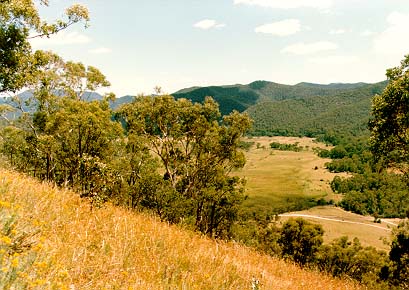
Buffalo Plateau from Big Hill
But it will also be devastating for local economies. In Victoria, the alpine resorts are estimated to have contributed $570 million and 5,800 Full-Time Equivalent jobs to the Victorian economy in winter alone for 2011 (source: Alpine Resorts Strategic Plan 2012, p13). The flow on effects of the industry is felt in towns throughout north east Victoria and around the Snowy Mountains, including the development of niche agriculture economies which is, in part, supported by snow-based tourism. To take one example of local benefits, the ‘gross regional profit’ of Alpine Shire was increased by about $130 million in 2011 because of the presence of the alpine resorts. The negative impacts of the bushfires on Murrindindi Shire in this same period indicate what climate change and extreme weather events could mean in future for all shires across the state.
According to the Economic Significance of the Australian Alpine Resorts report (2011), the combined benefit for the three Australian States with alpine resorts in 2005 is calculated to be $1.3 billion with 17,050 annual equivalent employment opportunities.
As the US report concludes: “all of this translates into less snow and fewer people on the slopes, which results in massive economic hardship for resorts, states, local communities, businesses and their employees.” Please write a submission
In order to protect the alpine environments that we love and the many thousands of people and businesses who depend on a snow-filled season, we must act now to support policies that protect our climate, and in turn, our slopes.
Apart from any direct impacts you are concerned about, you might want to mention that the latest science is showing that the impacts of climate change are happening faster than expected, and that communities will require funding to deal with the worst predicted outcomes. There must be greater community engagement about adaptation to climate change. However, responding to climate change (‘adaptation’) is not enough: we must also respond to the causes of climate change – by reducing emissions (‘mitigation’).
Check here for climate change scenarios for the Alps.
If you would like the Senate Inquiry to visit your town to hear your concerns about climate change and extreme weather, please check here.
Submissions are due on 18 January with the final report due from the Senate Committee on 20th March.
The following comes from the Australian Alps national parks Co-operative Management Program.
“The Australian Alps Education Kit is designed for students, teachers and anyone else keen to learn about this spectacular region of Australia. These educational materials form an organised resource focusing on iconic, awe-inspiring and accessible areas within the Australian Alps.
The contents range from the resilient yet fragile plant communities that grow in the harsh alpine environment, to thecultural impact of the Snowy Mountains Hydro-electricity Scheme; and from the First People’s connection with the mountain landscape to the Alps’ cycles of weather and climate”.
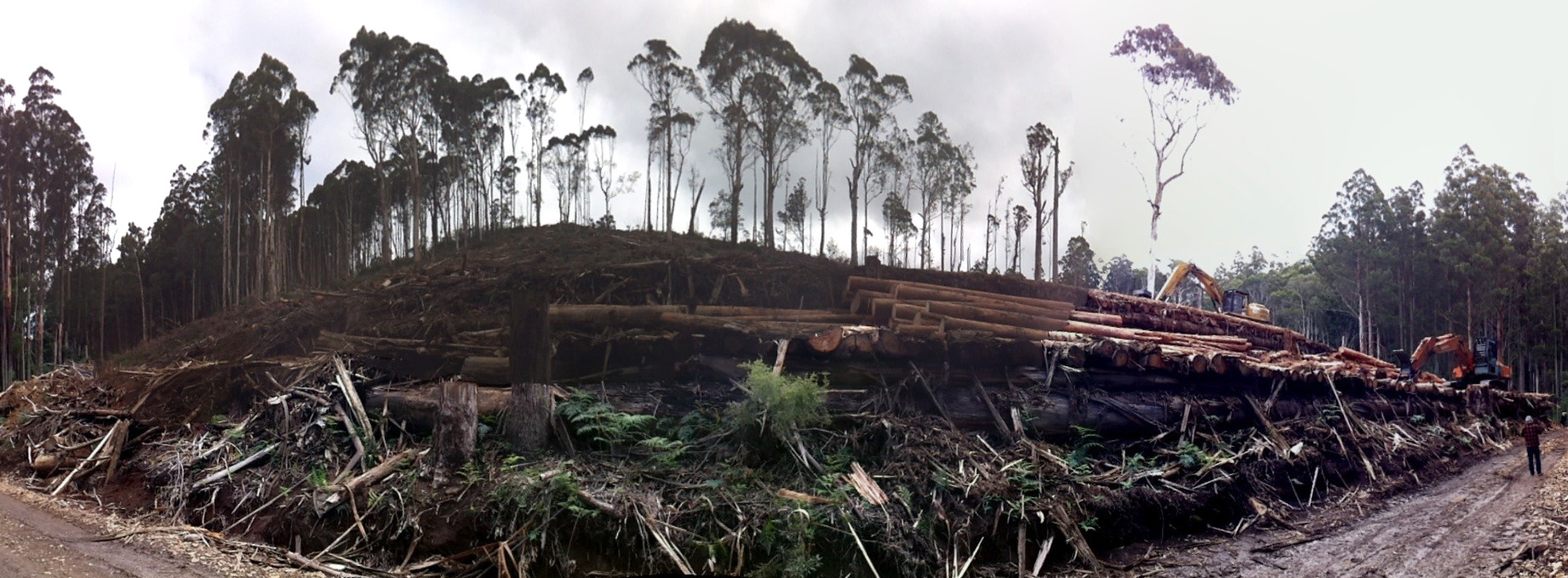
For the past two days, more than 30 people from the Central Highlands Action Group and local Toolangi and Healesville residents have been occupying a large logging coupe on Yellowdindi rd in Toolangi state forest.
Two 30m tree sits, which are suspended by ropes attached to two log-harvesters and two ‘bunnies’ with their arms locked through the tracks of a third machine have ensured that no clear-felling took place in the coupe on Monday January 16.
Much of the Toolangi forests were burnt in the fires of 2009. One Toolangi local said that “residents are concerned that following the Black Saturday fires in 2009 that clear-fell logging in the area will increase the risk of mega-fires due to the large amount of wood waste which is left behind in coupes. The resulting mono-species regeneration after logging operations is far more combustible than the mature age forests which are being removed. This is a recipe for further fire disasters”. They point to research by eminent forest ecologist Dr David Lindenmayer, which clearly indicates that clear-felling practices in the Central highlands notably increases fire risk and thus threatens the whole region.
Activists also point to other values of the forests: “These forests give us protection against climate change and provide habitat for native fauna which is such a feature of this area.”
Past Cooma, on the edge of the Southern Highlands, an innovative project is underway.
Farmers are taking part in workshops which is teaching them Indigenous land management techniques.
It’s hoped that owners will not only gain an appreciation of the methods, but also use them on their own properties.
And as part of the lessons, we’re learning about one of the oldest form of land management: fire.
Before the tractor was king, much of Australia was controlled by fire, and it’s a technique that Indigenous elder Rob Mason believes should be used more on Australian farms.
“We’re trying to do it in a way so that local landowners can have a bit more vision on their local resources,” he said.
“A farmer will look out on his area and might say, okay, I think that might a suitable area for growing peas or it might be a suitable area to put my sheep.
“Same with Aboriginal people. We look out into the areas and we actually know by animal indications that suitable areas are where they are.
“We tend to think of ideas or management plans like that for the areas, such as burning practices. That’s quite an old technique of land management, and I believe that’s totally missing from this important area here.”
Geoff Robertson owns a 270 hectare property outside of Nimmitabel, half an hour south of Cooma, and is hosting this unique workshop as part of a cultural heritage agreement he signed with the Murrumbidgee Catchment Management Authority.
“Some years back we signed up to a stewardship agreement for biodiversity,” he said.
“And when we did that we were contacted by their Indigenous unit, and we were very interested in that for all sorts of personal reasons.
“So we signed this agreement, and part of that was sharing of knowledge of traditional Aboriginal knowledge through Friends of Grasslands.”
Geoff, who has been involved for many years with Friends of Grasslands, says he wasn’t concerned that that signing the agreement would take away control over his property.
“But there was nervousness about opening oneself up to a different way of thinking, because I guess us White Australians have this side of our history that we’re not too proud of or don’t want to know about, so I guess confronting that, that’s scary,” he said.
“Since my early 20s, I’ve taken a lot of interest in Aboriginal communities.
“My first wife and I actually adopted a Torres Strait Islander child who’s now very much an adult, so we have personally within our family Indigenous people, so every day in some sense we deal with that issue of being Indigenous and not being Indigenous.”
Geoff’s property was formerly used for grazing, and he says that the Indigenous farming techniques wouldn’t interfere if the property were to return to that practice.
“In lots of properties in this area, they’re not too different to this one, so there’s nothing that would prevent what we’re doing here from happening in other parts of the country.”
But how feasible is this kind of management as an alternative, or even addition, to modern farming techniques? Monaro grazier Charlie Massy was excited by the workshop he attended at Nimmitabel.
“There is some really exciting holistic land management grazing going on in this country,” he said.
“Whilst we didn’t have ruminant herbivores in the past, Tim Flannery and others are talking about what the megafauna might have been doing and that new types of grazing might be starting to emulate that and stimulate landscape function.”Indigenous land management on farms in the Monaro
The following is from a piece by well known naturalist Bob McDonald, and taken from the ABCs ‘Drum Unleashed’ website.
Australia and Victoria in particular have been labelled among the most bushfire-prone areas of the world.
Before any analysis of the causes of the 2009 Black Saturday fires, the assumption was made publicly that the “lack of fuel reduction burning” was the “cause” of this catastrophe.
By implication it must have been Aboriginal people who burned the bush continually to maintain low fuel low loads. But did they? Just published research evaluated fire frequency using charcoal occurrence from more than 200 sites in Australasia over 70,000 years – concentrated around south-east Australia. It tells a completely different story. The results reveal how dramatic the increase in fire in the Australian mainland landscape has been since Europeans.
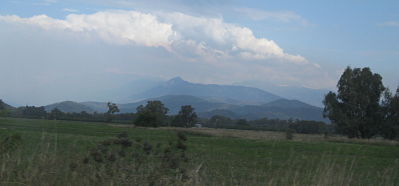
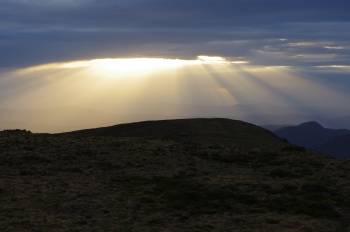
A bit of a reflection on mid autumn cloudy landscapes of subdued colours and moody feelings, as we get through one more fire season and almost out the other side of ‘burning’ season.






 Mountain Journal
Recent Comments