Search

Mountain Journal

Environment, news, culture from the Australian Alps

Tag

forests

Life, death, rebirth and new terrain

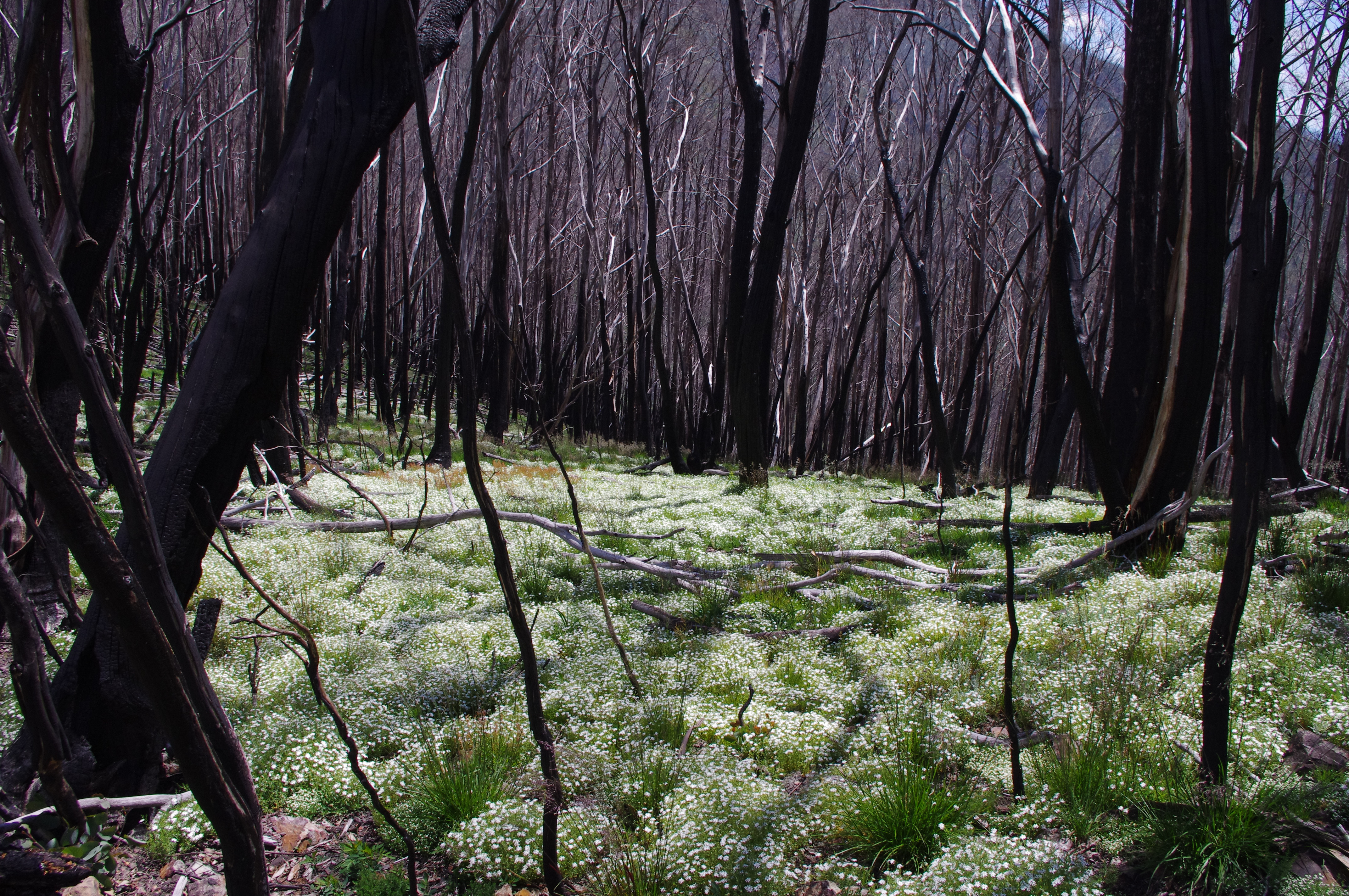
near Mt Wills
near Mt Wills

I have been out checking some of my special places, to see how they are faring after last summer’s Feathertop fire. The north razorback fire burnt hot up and out of the Ovens river, past Mt Smythe and into the Upper Buckland River and swinging east around the massive bulk of Hotham and towards Dinner Plain.

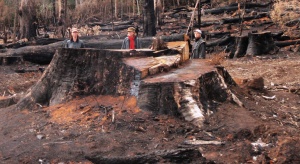
Many of the forests along the Sugarloaf Ridge were badly burnt and now big swathes of burnt out country have been clearfelled to protect the Great Alpine Road. I understand the need to cut out the alpine ash close to the road that had been killed in the 2013 or earlier fires, but a major over clearing has happened on the slopes of Mt St Bernard, where fire killed snowgums well back from the road had been clearfelled for no obvious reason.
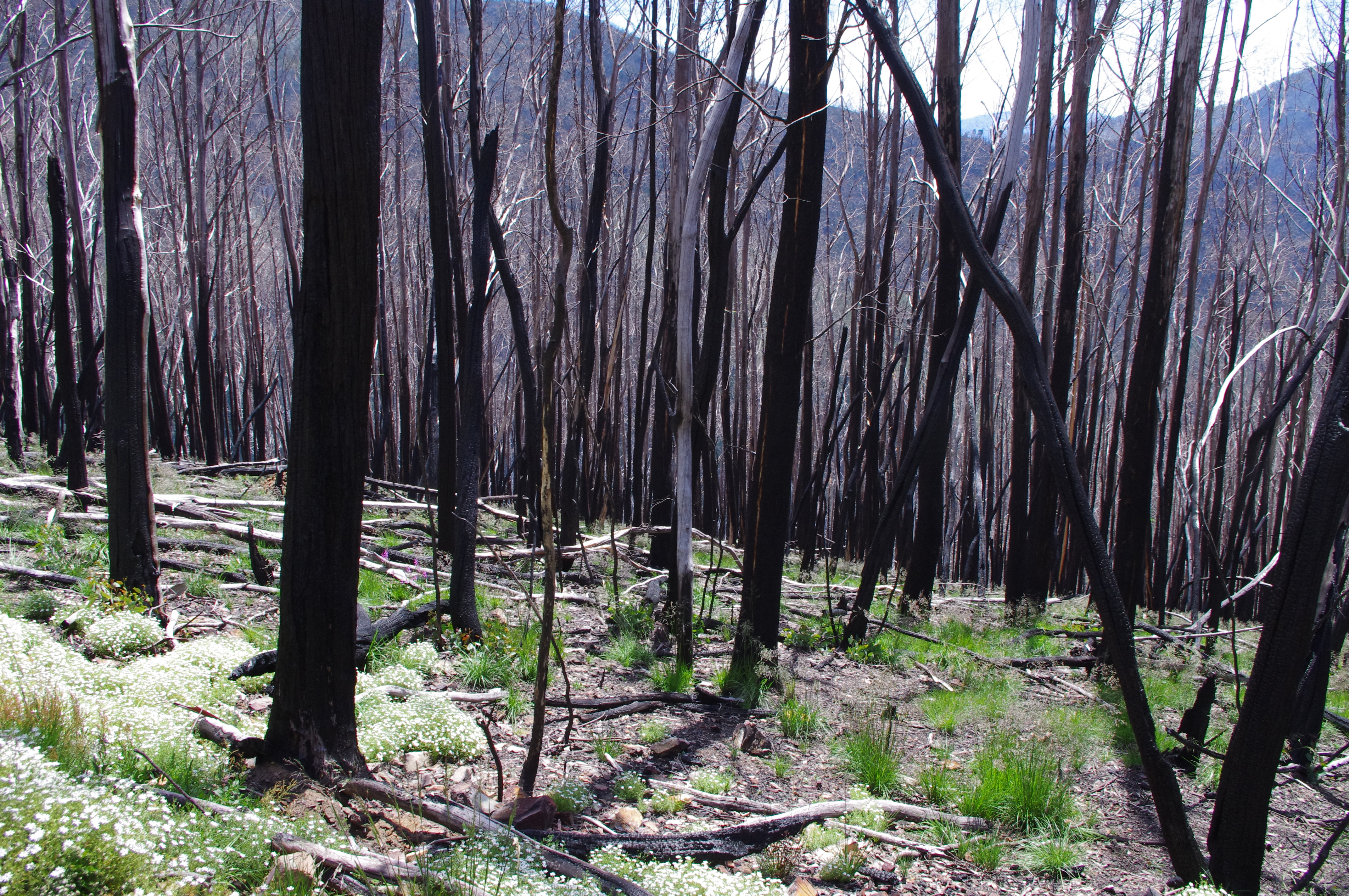
IMGP6236Parts of this country have been burnt three times in a decade. Each year, the land becomes ever more of a mosaic of new burn, older burn, and pockets of old forest – alpine ash and snow gum – that have survived each onslaught. The 2013 fire has killed off forests, glades, slopes that had survived the earlier fires. The headwater country of the Ovens, Buckland, and Wongungarra were hammered hard over the past summer. To my eyes that land seems poorer, from too many burns in too few seasons.
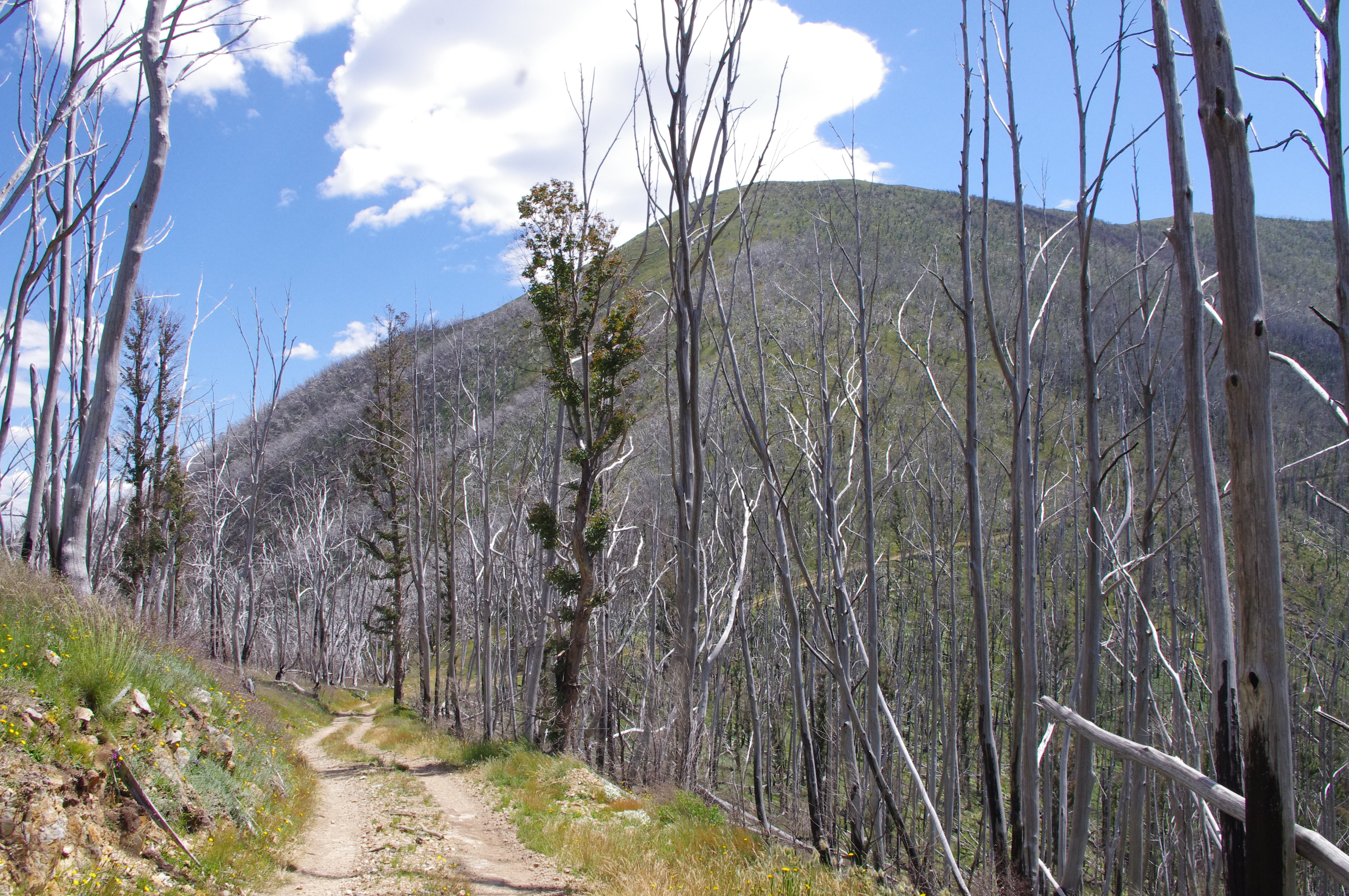
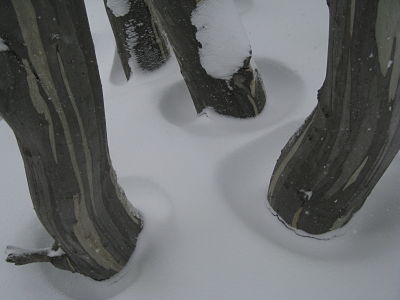
IMGP6251Fire has always been a part of our landscape. And climate science clearly tells us that longer and harder fire seasons are our future. These last few days I have wandered through alpine ash slopes and snow gum forests that had been completely scorched. Other areas have been lightly burnt, others spared altogether. The fire burnt hot up out of the Ovens, then seemed to turn back around some of the higher ridges on the Divide slower and with less heat. Its incredible to see some areas thick with new fern and daisys, while other areas as still mostly bare soil and logs, dead trees still black, streamers of bark rattling in the breeze. In some areas wattle are shooting back, in others, the beginning of Elderberry Panax groves or thick rushes of snow gums re-shooting around the burl of parent trees. If anything, the most recent fires have increased the mosaic effect on the ground.

Below tree line, the forests on these mountains can look so similar from a distance. Up close it is a mix of montane forests merging to alpine ash, leading to snow gum, the mix of vegetation in each place all dependent on slope and aspect, altitude and soil, fire history and circumstance. These most recent fires have added to the mix of already complex ecosystems and forest types.

In my mind I can see a future of more frequent fires, longer summers, warmer winters, and the land that I know and love so well being transformed into something new and poorer. Less old growth, trees pushed beyond their limits, less diversity of living things. But in the short term – summer to summer, the annual cycle that my mind can hold and understand – I see nature adapting and filling the spaces created by each fire. There is a deep ability for tenacity and resilience, seeking balance. The great unknown we face is that we do not yet understand the point at which we will have crossed beyond the balance of resilience and natural cycle into the time when balance will be broken by a human induced future. Some days I am frightened that no one knows, or will even be able to identify, that point of no return, when resilience is surpassed by a new reality that will make our familiar lands a new country, one that is foreign and strange, beyond anything we have known before.

Logging halted in forest on the Errinundra Plateau today

This report comes from Goongerah Environment Centre. The actions are part of the Fearless Summer campaign.

Image: GECO. NB: this photo is from the Dec 12 action

Environmentalists have halted logging in state forest on the iconic Errinundra Plateau in East Gippsland. One person has climbed a tree more than 40 metres, and sits on a platform tied to machinery.

“Until recently this area of forest was reserved as a special protection zone, it contains a number of different forest types and is of high conservation value. It also contains old growth forest and is a known site for the endangered powerful owl.” Said David Caldwell, spokesperson for Goongerah Environment Centre (GECO)

“This area was made available for logging in 2011as part of changes to the informal reserve system. This process swapped a large number of forest areas reserved for specific values, for areas that don’t reflect the same value. This has been something of a lifeline to the logging industry, who have repeatedly shown poor management of Victoria’s forests at the expense of the taxpayer.” He said.

“This is another example of forest destruction in the face of evidence of threatened species. Our native forests are becoming degraded and without areas like this one, they won’t be able to provide our endangered animals with a chance to survive. This is a looming extinction crisis that is being assisted by forest agencies around the nation.” Said Miranda Gibson spokesperson for Still Wild Still Threatened.

Today’s action is the latest in a series of actions over the last week, known as Fearless Summer, a coalition of grassroots environment groups, committed to an end to industrial scale native forest logging and export woodchipping.

long term tree-sit established in Toolangi forest

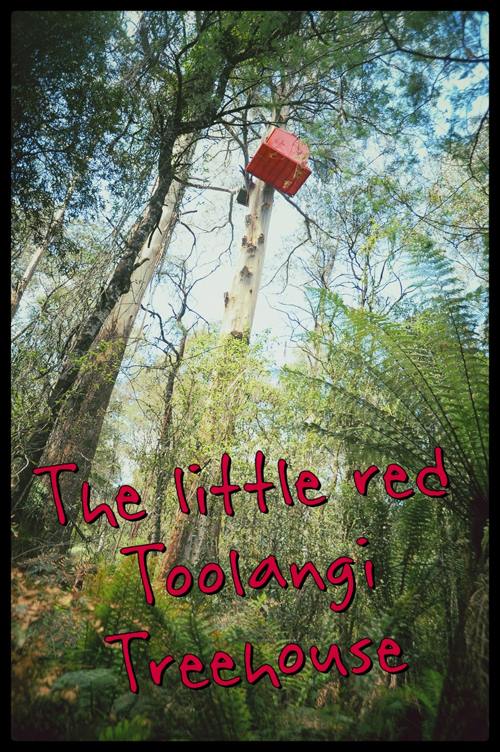
On sunday 10 November, 2013, a young activist called Hannah Patchett launched the beginning of what is intended to be a long term tree sit to highlight the immediate threats to the Leadbeaters Possum through continued destruction of its habitat.

969385_10151799133659001_829810885_nKeep up to date via the treehouse facebook page.

Check here for background information on this long running campaign.

Friends of the Earth – Media Release

Saturday 9 November 2013

Tomorrow at 12 noon Hannah Patchett will formally launch her time dwelling in Toolangi’s treetops.

The Little Red Toolangi Treehouse has been built 50 metres up into the canopy of an area of forest habitat for the critically endangered Leadbeater’s Possum.

“I’ve chosen to stay in the Little Red Toolangi Treehouse because I want to see real action taken to save the Leadbeater’s Possum from extinction,” says Hannah Patchett.

“Removing clearfell logging from these forests is the first step.”

Logging of the remaining unburnt forest area following the 2009 bush fires has become increasingly controversial, and the subject of extensive community opposition.

Today the Toolangi forest continues to be logged, mostly for pulp for paper.

Leading expert on the Leadbeater’s Possum, Professor David Lindenmayer, has called for an end to clearfell logging by the end of 2013.

“The Little Red Toolangi Treehouse is a vital and brave initiative to protect the Leadbeater’s Possum habitat that the Napthine state government continues to log against expert recommendations,” says spokesperson for Friends of the Earth, Lauren Caulfield.

“Friends of the Earth support Hannah’s efforts because like her, our organisation and our supporters want implementation of management changes our forests so desperately need,” says Lauren.

“As it stands current industrial scale clearfelling will see our wildlife emblem managed into extinction’,” says Lauren.

“Real and urgent action must be taken to protect the Leadbeater’s Possum and its forest habitat from logging.”

“Forestry Minister Peter Walsh and environment Minister Ryan Smith must ensure the new management recommendations laid out by Professor Lindenmayer are implemented if the Leadbeater’s Possum is to stand a chance,” concludes Lauren.

What: Launch of the Little Red Toolangi Treehouse
Photo opportunity: Little Red Toolangi Treehouse from the ground, or assisted ascend to tree platform
When: From 12 noon, Sunday 10 November
Where: Toolangi State Forest – contact Amelia Young for directions 0404 074 577

biomass power plant planned for New South Wales far south coast.

Image: Chip-Busters

The proposal to put a biomass plant in southern NSW is heating up again.

South East Fibre Exports wants to build a plant at Eden to generate electricity from woodchip timber waste.

Anti woodchipping group Chip-Busters have previously said “our forests are amongst the most carbon dense in the world, home to a vast array of wildlife and critical to the health of our water catchments and rivers in the face of the looming climate catastrophe. Woodchipping them for paper pulp or biomass energy is just plain stupid”.

Full story here.

what would a Coalition victory mean for the Victorian Alps?

Little Mt Higginbotham, VIC

With the prospect of the Coalition taking power following yesterday’s state election it is worth taking a few minutes to think about what this might mean in terms of a change in attitude to the Victorian High Country.

The most obvious short term implication would be if the Coalition was actually able to implement its promise to return cattle to the Alpine National Park. (Phil Ingamells of the Victorian National Parks Association recently explained why this is most unlikely).

The Mountain Cattlemen’s Association of Victoria (MCAV) is hoping the Coalition will act on it’s promise to re-introduce cows to the Alpine National Park. They say this would be a good thing because “cattle grazing (is) a proven management tool to reduce fuel loads”.

You don’t have to be a genius to know that a cow, given the choice between a succulent plant and a prickly shrub, will choose to eat the former. Over time, at at scale, this drives sub alpine vegetation towards scrubbier vegetation types – which will be more flammable. ‘Alpine grazing reduces blazing’ has been consistently proven incorrect by a number of studies. There are a range of other reasons to keep cattle out of the headwaters of our most significant river systems, not least of which is water quality. Lets hope common sense will prevail on this one.

They have also announced that they would intensify logging and replace native forest ecosystems with Mountain Ash ‘plantations’.

Another, longer term issue is climate change. As we know, climate science tells us that the Alps are at grave risk from climate change unless we can greatly reduce greenhouse emissions in the near future.

The Victorian Coalition was noticeably absent from the climate change debate through most of this year, and didn’t even bother to release their climate change policy before the election.

They did release an energy policy (just 4 days out from the election) and there are various points of detail in that policy that should worry anyone who is wanting action on climate change from the Party that forms the next state government.

This includes the fact that:

  • they have provided very little detail on how Victoria might meet the existing 20% emissions reduction target,
  • there is no mention of the scale of the problem of climate change,
  • there is no direct commitment to a phase-out of Hazelwood or any other coal fired power station,
  • finally, it includes a regressive policy on wind farms.

As leader, Ted Baillieu has shown a complete lack of interest in the issue of climate change. The next few years are pivotal if the global community is to respond effectively to the threat of global warming. Victoria must do a fair share of this work. Based on their actions over the past year, it seems clear that a Coalition government would send Victoria backwards on this most pressing of issues.

In the build up to the election, environment groups released a series of scorecards assessing Party policies. In the final version, the Greens scored 93%, the ALP was next best on 52% and the Coalition was far behind on just 22%.

The scorecard can be found here.

Geoff Mosley

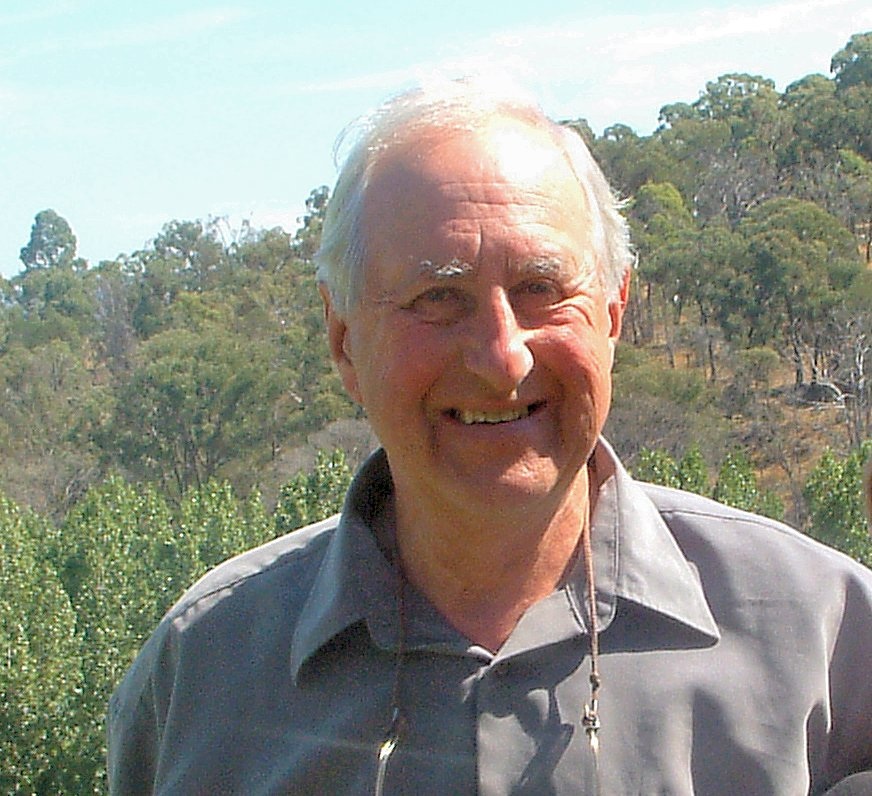
Geoff Mosley has worked for decades to protect wild places in Australia. He helped establish wilderness zones and parks across the south east of the mainland and Tasmania, and has recently released a book on Antarctica. He is active in the field of steady state economics, a keen walker, and widely published activist and thinker.

Perhaps he is best known for his efforts to see a major national park established across the Australian Alps. Much of this vision has now been realised, although he continues to work to see an extension of the Western section of the Alpine National Park and to get World Heritage listing for the forest ecosystems of the south east corner of the country, where Gippsland and NSW meet.

Check here for an interview with Geoff.

review: Old Growth. Australia’s remaining ancient forests

This book was published in 2009 and is a wonderful and evocative appreciation for old growth in Australia – in all it’s forms, including alpine trees across Tasmania and the Australian Alps.

Image: Peter McConchie

It brings together the work of 16 photographers in a beautifully presented book, drawn together by Mornington Peninsula-based photographer Peter McConchie.

A review can be found here.

Blog at WordPress.com.

Up ↑