On the 3rd November, a bunch of bushwalkers will start a 35 day walk from Sydney to the summit of Kosciuszko, to highlight the damage being caused by feral horses.
They are looking for walkers to join them for all or some of the walk. The route will follow main and secondary roads, via Camden, Mittagong, Goulburn, Canberra, Cooma and Charlotte Pass. With the support of the National Parks Associations of NSW and the ACT, and Bushwalking NSW, they are expecting large crowds at the start and finish of the walks. More detail is available on the Save Kosci web site (savekosci.org)
You’ll be able to register as a walker or non-walking helper from early September. Watch this page for further news, or contact Linda Groom, convenor@savekosci.org
The Andrews government has released a long-term plan to protect the Alpine National Park in Victoria from the threat of feral horses.
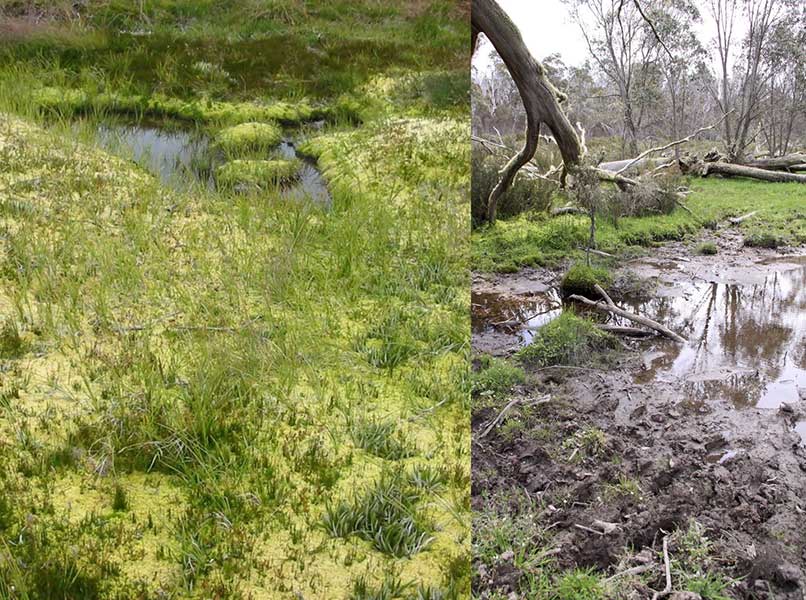
Minister for Environment Lily D’Ambrosio launched the Protection of the Alpine National Park – Feral Horse Strategic Plan 2018-2021 this week, which aims to radically reduce wild horse numbers in the park. In announcing the plan, Minister D’Ambrosio said “feral horses cannot be allowed to run rampant in the Alpine national park – their hard hooves damage the precious environment and destroy the habitats of threatened species.”
In a significant move, NSW Labor have announced that they will not support “the ill-thought through Berejiklian- Barilaro wild horse bill because it ignores science and the irreversible damage that unmanaged wild horse populations have done to Kosciuszko National Park”.
Labor has launched a plan to protect the Park’s fragile environment and the threatened species that live there.
In a bizarre and disappointing move, the New South Wales government has announced that a proposed cull of wild horses in the Kosciuszko National Park will be scrapped, and any future cull will be outlawed.
The enormous damage caused by wild horses to the high country is widely documented. It is estimated that around 6,000 wild horses live within the Kosciuszko National Park in NSW. Plans to cull them have been supported by scientists and environmentalists but opposed by people who claim they represent part of the cultural heritage of the mountains. While this is certainly true, they are also massively destructive and a responsible government would be working to reduce their numbers.
Now the NSW government is moving to rule out any culls in the park.
Feral horses pose a threat to and damage the environmental values of the Victorian alps, including areas of the Bogong High Plains. This impact has been well documented in the past.
To address this threat, Parks Victoria has for some time undertaken a trapping program to reduce the number of horses, and hence the damage they have on sensitive alpine flora and fauna.
A new report has been released based on assessments of impacts on a number of locations across the Bogong High Plains in north eastern Victoria, and how these impacts have changed over the last decade.
Feral horse levels in the Alpine National Park are at critical levels. Their hard hooves cause serious damage to the sensitive alpine environment. Without intervention, their impacts will cause severe long-term harm to the park’s special endangered native alpine wildlife and plant species.
Parks Victoria (PV) is expanding it’s horse removal program in the Eastern Alps and seeks your feedback. Feedback closes on 2 February.
Sadly it seems that the ‘horses are a cultural icon and must be protected’ interests have won out (for the time being) over sensible land management. For a summary of the environmental impacts of wild horses, check here.
The plan identifies eight priorities for urgent action, one of which is feral horse control.
Peter Hunt from The Weekly Times has looked into one aspect of the plan which will cause concern among groups who have campaigned against shooting feral horses. However, the environmental impacts of wild horses are well documented and numbers of these animals needs to be radically reduced.
The issue of how to manage wild horse populations in the Australian high country is a complex and vexed issue.
The NSW government has recently released a draft wild horse management plan for Kosciuszko national park which aims to cut the population of wild horses in the park from 6,000 to about 3,000 in the next five to 10 years.
The Guardian is reporting that plans to cull more than 5,000 brumbies in the Snowy Mountains has received the support of leading scientists from around Australia.
This is the ultimate bit of research into the negative ecological impacts of brumbies on indigenous ecosystems in the Alps.
It is explained in three reports, and the primary author is Graeme L. Worboys. A range of other researchers were involved in the work. It is peer reviewed and based on observations by the author in the Australian Alps protected areas that covers a period of 42 years.
Wild horse (brumby) populations are causing major environmental damage across the Alps. But as a charismatic animal with strong cultural connection for some groups, the question of population control is a vexed and and emotional one.
Recently, the National Parks Association NSW has called on the NSW Government to release its plan for managing wild horses in the Snowy Mountains.
A draft plan of management due for public exhibition last year was delayed until December, and has again been postponed until early 2016.
The following comes from ABC Rural and is written by Alexandra Blucher and Bill Brown. At the end of their article you will also find links to the arguments FOR and AGAINST culling, culling methods and summary of the damage caused by brumbies.
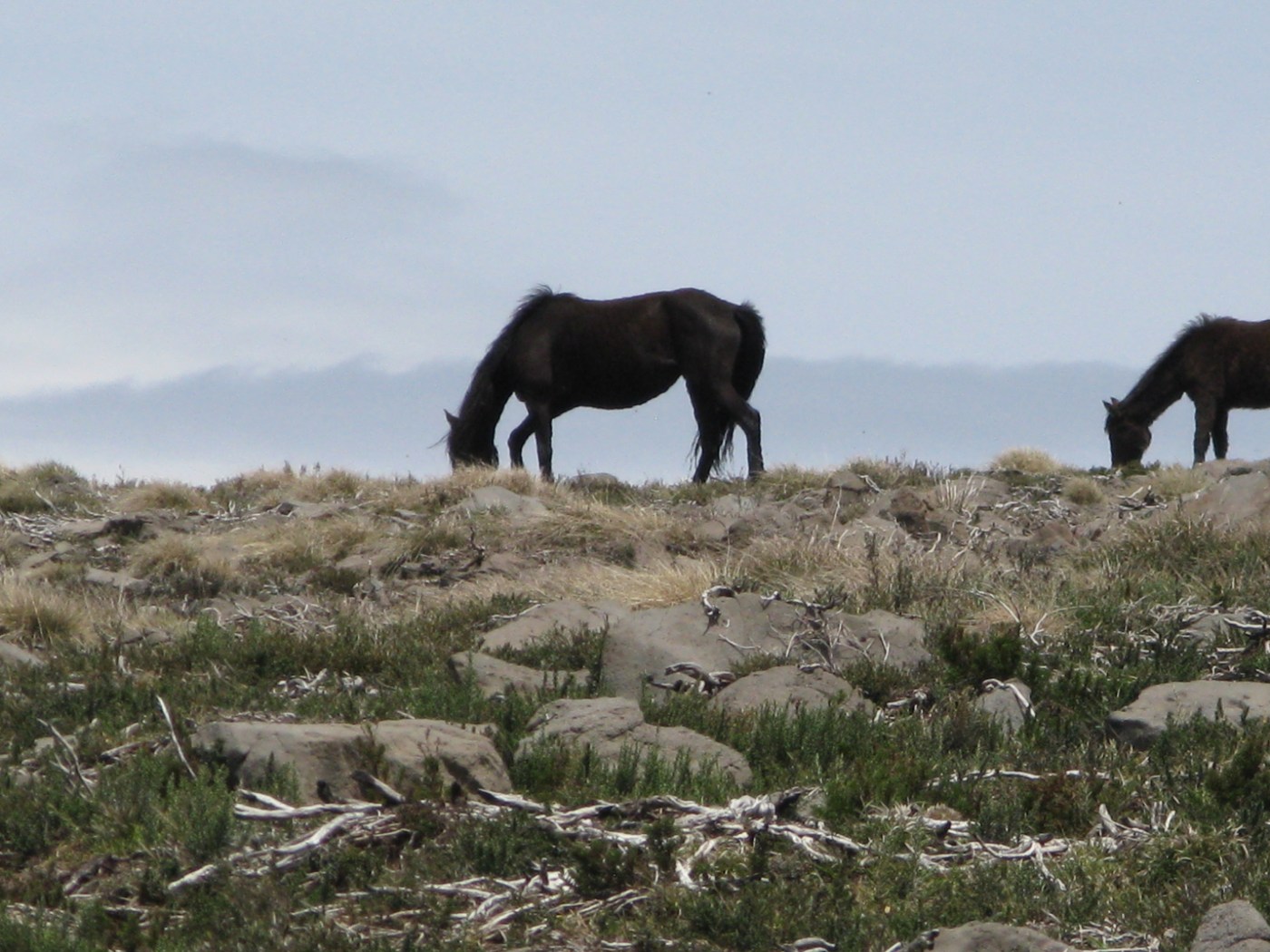
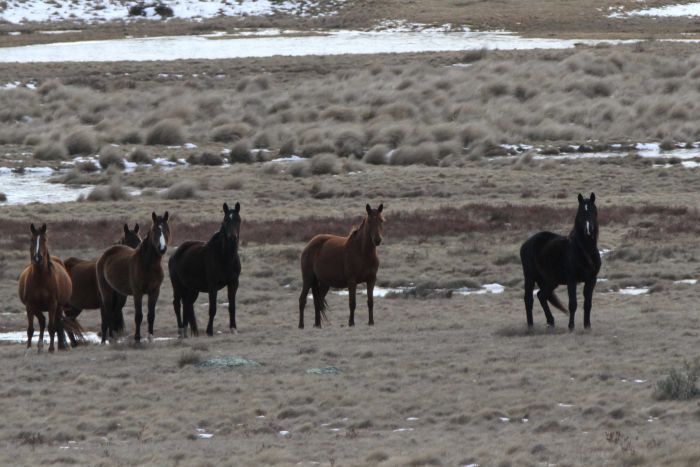
Brumbies roam the Kosciuszko National Park. Photo: Coleen O’Brien
Wild horses are out of control in the Australian Alps according to conservationists, and doing irreparable damage to the fragile alpine environment.
However, brumby advocates dispute the claims and say alpine horses are part of an iconic bush heritage that must be protected.
It’s a divisive debate and passions always run high.
Aerial surveys of the wild horse population in the Australian Alps, including Kosciuszko National Park between 2003 and 2009, indicate an increase in brumby numbers, from just under 2, 500 to over 7,500 horses.
With recent good seasons and an estimated population growth of between eight to 20 per cent every year, NSW National Parks are projecting that a conservative estimate, would put the current horse numbers in the alps at over 10,000, with over 7000 in Kosciuszko National Park.
Conservationists say environmental destruction in Kosciuszko National Park is at crisis point, with threatened native animal and plant species at risk. They want the population to be aerially culled.
Advocates for these wild horses of the high country reject the population estimates, the claims of lasting environmental damage, and say they will vehemently fight any move towards aerial culling.
Government review puts brumbies back in the spotlight
A review of the Kosciuszko Horse Management plan is currently underway after the NSW Environment Minister, Robyn Parker, called for it to be examined last year.
As a part of the review, a consultation process is underway to bring the polarised community together to decide how the wild horse population in Kosciuszko National Park will be managed.
The discussions are expected to be far from harmonious with the facts about horse numbers, the extent of environmental damage and the best approach to management, all in dispute.
Another round of aerial surveys is expected to be completed in April.
The Government initiated consultation process will put the divisive issues firmly back on the public agenda.
Recent Comments