Search

Mountain Journal

Environment, news, culture from the Australian Alps

Tag

land management

Victorian government tables bill to protect National Parks

Earlier this week the Andrews Labor Government put an amendment before Parliament to implement its election commitment to prevent large-scale private development in national parks by removing the ability to grant 99 year leases.

This is a good move given the previous government’s interest in allowing new and potentially intrusive developments in the park system.

Continue reading “Victorian government tables bill to protect National Parks”

Feral deer damaging Alpine National Park to be culled in Parks Victoria trial

This article is by Darren Gray, writing in The Age newspaper.

Image: Deer damaging an Alpine bog on the Bogong High Plains Photo: Parks Victoria.

Wild deer causing significant environmental damage in the Alpine National Park will be culled in a three-year trial program aimed at tackling a population estimated to number in the thousands.

The deer – whose numbers are believed to be on the rise – trample through, drink from and wallow in fragile alpine spaghnum bogs, damage waterways, graze on native flora and contribute to erosion. They are damaging some of the most sensitive parts of the high country.

Parks Victoria, which is co-ordinating the shooting program, has reported a “marked increase” in deer activity in the park. It will be  the first deer cull to be undertaken in the huge national park to address conservation needs.

Continue reading “Feral deer damaging Alpine National Park to be culled in Parks Victoria trial”

Alpine grazing update

The following comes from the Victorian National Parks Association.

Quite some time before cattle grazing was banned in the Alpine National Park, ‘Soil erosion and vegetation damage and disturbance in the alpine regions of Victoria caused by cattle grazing’ was listed as a ‘Potentially Threatening Process’ under Victoria’s Flora and Fauna Guarantee Act.

The draft Action Statement required by that listing has now been prepared by the Department of Environment, Land, Water and Planning (DELWP).

Continue reading “Alpine grazing update”

Three Tassie eco-tourism projects approved

In theory, new eco tourism projects are a good idea, and will get more people out into wild environments in a way that doesn’t damage the environment. But when it comes to the current Tasmanian government, I wouldn’t trust them as far as I could throw them.

The following comes from The Great Walks website.

Three eco-tourism projects have been given the green light to operate in Tasmania as part of the Government’s bid to open up the state’s national parks to eco-tourism.

Continue reading “Three Tassie eco-tourism projects approved”

Aerial spraying of herbicides in the Ovens Valley

Information session

Bright aerial spraying.

This forum will be an opportunity for residents to hear about the impacts of aerial spraying of the herbicides Clopyralid, Glyphosate and Metsulfuron Methyl in the plantations around Bright and surrounding townships.

Saturday May 16, 4.30pm

Bright Elderly Citizens Club, Cobden street, Bright.

Guest speaker: Anthony Amis, Friends of the Earth.

For further information, please check the Bright Community aerial spraying concerns facebook page.

https://www.facebook.com/groups/811651055586061/

Background information available here.

Wild dog attacks. Farmers ask for more trappers.

Wild dogs are a huge problem in farming areas around the mountains in north east Victoria. They also prey heavily on native fauna. The issue of dog control has risen again recently in Victoria because of claims that there are fewer people employed to control population numbers.

According to a report in The Weekly Times (29/4/15):

“The Victorian Government employs 18 dog trappers, 10 in Gippsland and eight across the North East.

The Victorian Farmers Federation says that five years ago there were 25 trappers for the same area.

But the community engagement officer for the Government’s wild dog program, Barry Davies, said there were now “five or six casual wild dog controllers, two contractors and 25 field services officers who are trained to various deg­rees, some capable of trapping dogs.”

The full article, by journalist Kath Sullivan can be found here. It highlights the impacts on farmers and animals as a result of dog attacks on stock.

There are, of course, a number of ways of dealing with the problem. Trapping and shooting is a traditional method. Is funding for dog-proof fencing an option in key farming areas around the high country national parks? Some farmers use Maremmas (is a breed of livestock guardian dog indigenous to central Italy), while others bait.

There is also some question about whether the government will allocate more resources to employ additional hunters in the state budget, due to be released in early May.


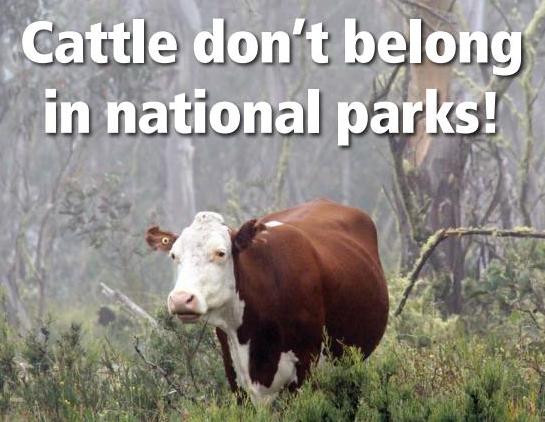
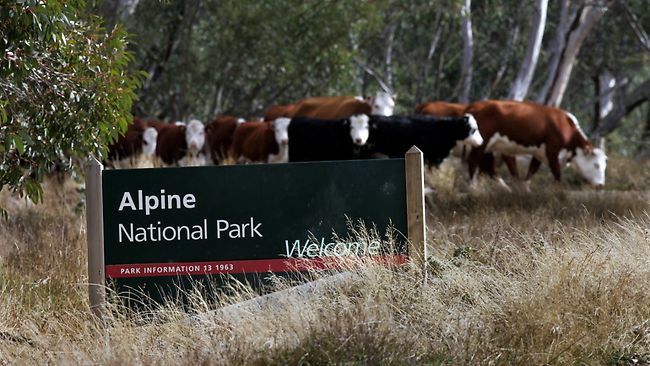
High country cattle grazing ban in national parks likely to succeed

In an update to our recent report on the Victorian government introducing legislation to ban cattle grazing in the Alpine and Red Gum national parks, it now seems likely the legislation will pass through the Upper House.

The ALP controls the Lower House but will require at least two additional Upper House votes to have the legislation approved. The Weekly Times is reporting that this is now looking likely:

Many Upper House MPs still expect the Government to succeed despite its minority position.

At least two of the five cross-benchers are expected to join the ALP and Greens and vote the Bill through after it clears the Lower House.

While all minority parties say they are still waiting to see the legislation’s wording, Sex Party MP Fiona Patten said she was likely to support the ban, as was Democratic Labour Party MP Rachel Carling-Jenkins.


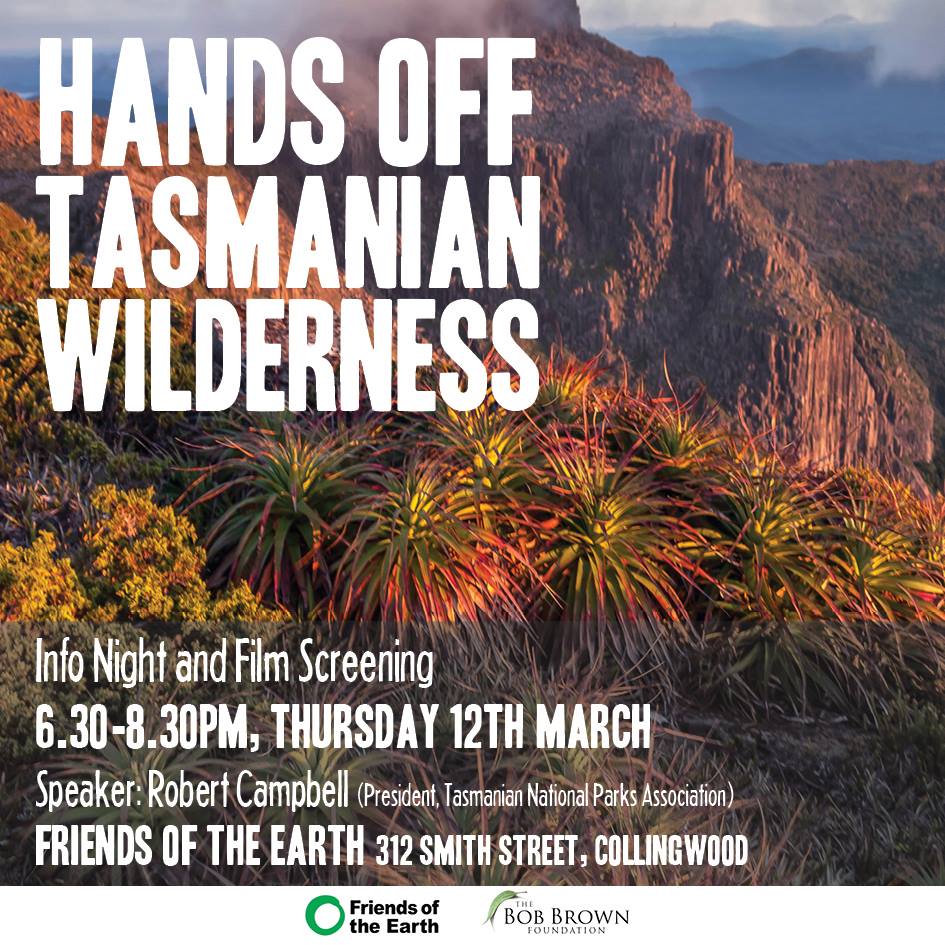
Hands off the Tasmanian World Heritage Area!

In January, The Australian newspaper reported that:

“TASMANIA’S  Liberal government is to take the “wilderness’’ out of the state’s iconic Wilderness World Heritage Area, rezoning it to allow tourism developments, more aircraft and ship access, and even selective logging.

The radical plans, which have provoked outrage from conservationists, are contained in a draft ­revised management plan for the Tasmanian Wilderness World Heritage Area.”

The natural and cultural values of this incredible landscape are under threat, but you can write a submission about the management plan.

Friends of the Earth in Melbourne is hosting an information night to let people know what is being planned and how to write a submission.

Please come along and find out what is really going on and how you can help Tassie campaigners to protect this global treasure!

Featuring speaker Robert Campbell (President of the Tasmanian National Parks Association), amazing photography, films, snacks and drinks.

Thursday March 12, at 6.30 pm.

At Friends of the Earth, 312 Smith street, Collingwood.

A Facebook page for the event is available here.


Victorian government stops Alpine grazing trial

In the latest development in the decades long saga over cattle grazing in the Alpine National Park, the new Victorian government has confirmed it has stopped the grazing trial established by the previous Coalition government.

For background on this issue check here.

The following comes from Rob Harris at The Weekly Times.

Continue reading “Victorian government stops Alpine grazing trial”

Australian Alps Walking Track maintenance program, 2014/ 2015

Conservation Volunteers Australia (CVA) and Parks Victoria are embarking on their 3rd year of a joint maintenance program of the Australian Alps Walking Track from November 2014 to mid-March 2015. They are looking for fit and strong outdoor volunteers to join the program, committing 6 days to support the track maintenance activity.

Ross Grant, Parks Victoria Ranger in Charge, says the volunteers will be working in some of Victoria’s most spectacular scenic locations on a variety of projects.

Continue reading “Australian Alps Walking Track maintenance program, 2014/ 2015”

Join the 2014/2015 Falls Creek Hawkweed Volunteer Program

Hawkweeds are a highly invasive pest plant species which can cause major environmental damage in alpine and sub-alpine areas of Australia if not eradicated early. Native to Europe, Hawkweeds have recently become naturalised on mainland Australia. Hawkweeds spread quickly via runners and roots, forming dense mats inhibiting and outcompeting native vegetation.

For several years, Parks Victoria has co-ordinated volunteer teams each summer to remove Hawkweed on the Bogong High Plains.

Volunteer recruitment is now open for the 2014/2015 season Falls Creek Hawkweed Survey. Participating in the Falls Creek Volunteer surveys is a great way to help protect the Victorian Alps from this dangerous weed, as well as a fantastic opportunity to enjoy the magnificent alpine environment during the green summer months.

Continue reading “Join the 2014/2015 Falls Creek Hawkweed Volunteer Program”

Old foes team up to preserve Higgs Track

This story by Hilary Burden from The Guardian describes some work being done to restore the famous Higgs Track, which climbs through the Great Western Tiers, across Tasmania’s Central Plateau, towards the Walls of Jerusalem. The context is how people from across the land use divide are finding ways to work together.

The Mountain Huts Preservation Society is collaborating with the NGO Environment Tasmania.

The article says:

“Historically, Mountain Huts and green groups such as Environment Tasmania have been foes, ever since the nationwide environmental movement encouraged the removal of mountain huts. Twenty or 30 years ago, manmade sites of historic significance to local communities in Australia’s high country were deemed to clash with a vision of a totally pristine wilderness.

But times have moved on, the Higgs Track is now part of the World Heritage Area, and the former foes are working together to build a bridge” (in this case a literal one, a bridge over a stream).

Continue reading “Old foes team up to preserve Higgs Track”

Blog at WordPress.com.

Up ↑