Search

Mountain Journal

Environment, news, culture from the Australian Alps

Tag

land management

cattle back in Alpine national park. Ryan Smith’s legacy?

The Age is reporting that:
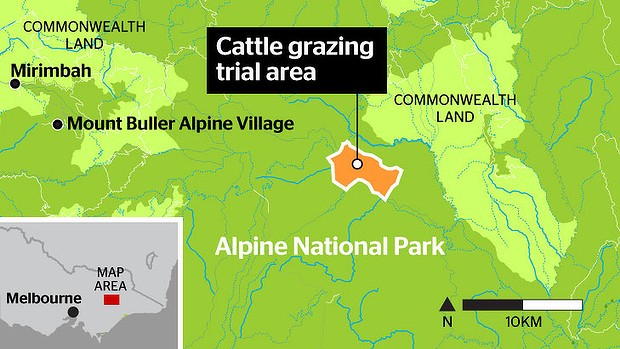
Image from The Age. Graphic: Jamie Brown

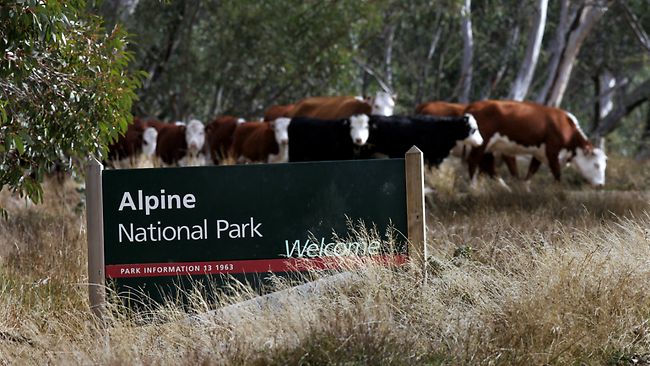
Cattle have returned to the Alpine National Park for the first time in three years, with animals released in recent days under the Napthine government’s grazing trial.

It is understood that a little under 60 cows were brought into the park either on Wednesday night or Thursday morning, marking the start of the program.

The move follows the state government getting approval for its grazing plans from federal Environment Minister Greg Hunt earlier this month. The state government says the trial will test whether cattle grazing lowers bushfire risk by reducing fuel loads.

As pointed out by Phil Ingamells of the Victorian National Parks Association:

“the trial was not science, rather a political promise to the cattlemen to protect their privileged grazing rights in the park”.

“Decades of evidence show how much grazing harms the park. But it does nothing to reduce grazing risk,” he said.

Read more in the article by Tom Arup here.

And background on the trial here.

Environmental policy in a time of climate change
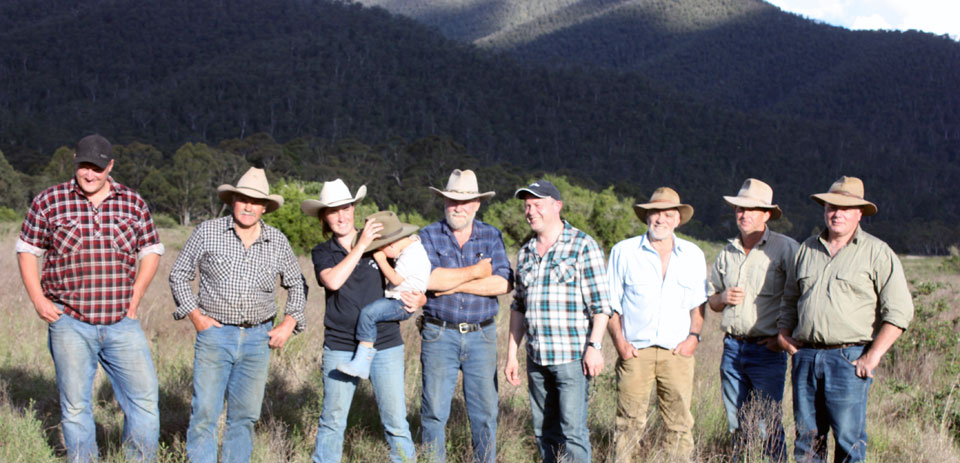
Environment Minister Ryan Smith with mountain cattle graziers, Wonnangatta Valley. source: MCAV

The state government has doggedly pursued this grazing trial since it came to power, and the environment minister Ryan Smith has been closely involved in efforts to get cattle back into the park. The first attempt was knocked back by the previous federal government. The current proposal has recently been approved by Coalition Minister Greg Hunt.

Victoria’s environment is in bad shape. Imagine how things could be improved if Mr Smith put as much effort into reducing Victoria’s contribution to climate change. Or protecting Mallacoota from the destructive development at Bastion Point. Or if he acted to protect the habitat of the endangered Leadbeaters Possum which is threatened by logging. Or … (insert any number of other issues here: for instance or check this list from Environment Victoria).

Sadly, he has instead overseen the demolition of the Victorian Climate Change Act. Development of renewable energy has basically stopped on his watch, which can only give benefit to the fossil fuel industry.

Meanwhile, he has pursued this project, widely described as being more about politics than land management.

Will he be remembered as the minister who turned his back on climate action and habitat protection, whose one legacy was to put cattle back into a national park?
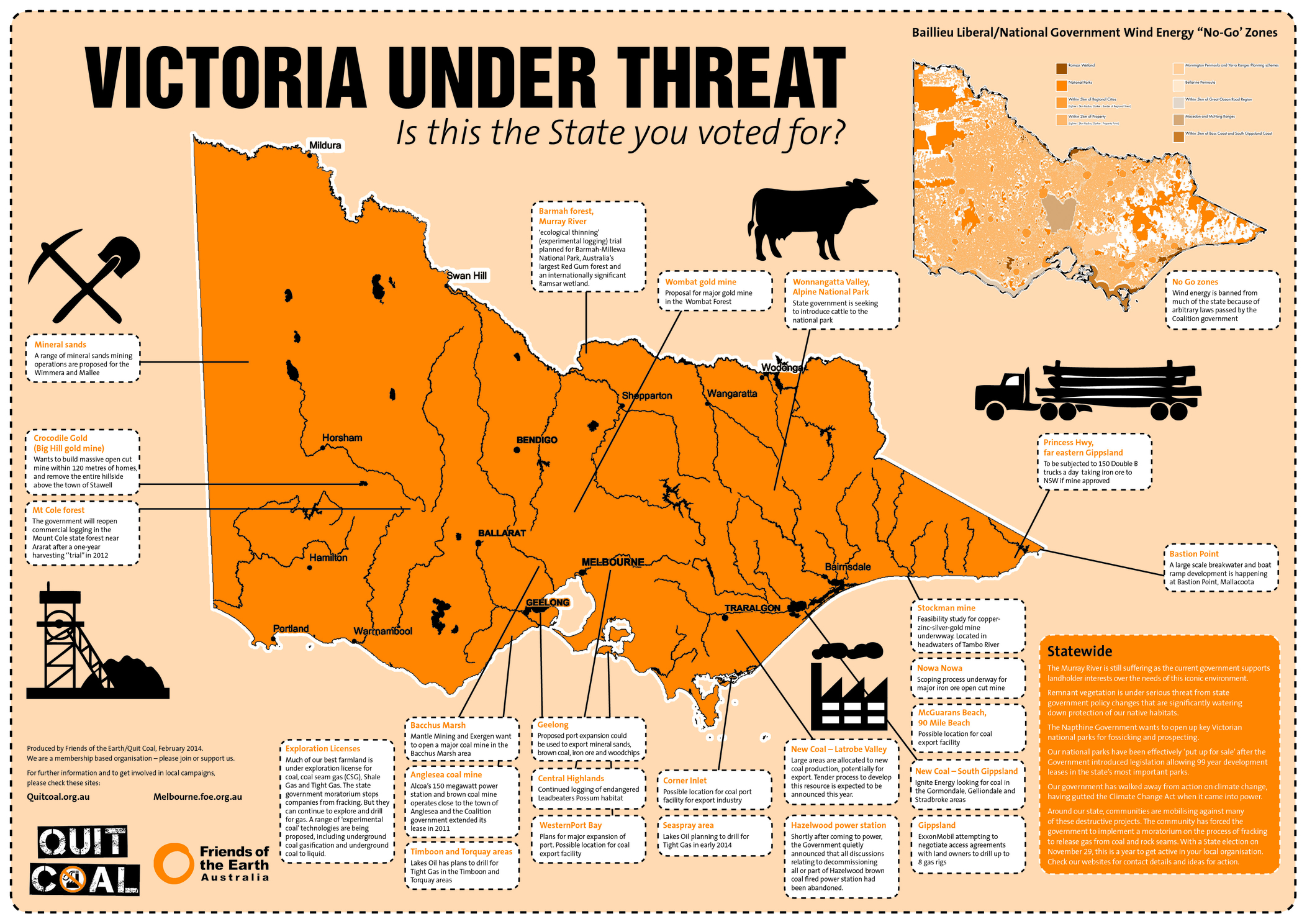
VIC map for web

Alpine grazing trial: “If this was a Masters’ project, we’d boot it back to the student”

It’s getting on to four years that the Victorian government has been pursuing its attempt to re-introduce cattle into the Victorian alpine national park. You would think that for an issue they are so committed to they would actually be able to produce a comprehensive and scientifically robust plan.

This has not been the case. The following article from the ABC is just the latest criticism of the trial from a scientific perspective. Journalist is Jeremy Story Carter.

Alpine grazing trial given fail mark

alpine grazingA senior scientist says the proposal for the Victorian National Alpine Park cattle grazing trial would receive a fail mark if it was the work of a student.

Professor Mark Burgman, chair of the School of the Botany at the University of Melbourne, reviewed the proposal as part of a submission to the Victorian Government by the Australian Academy of Science.

“If this was a Masters’ project, we’d boot it back to the student,” said Professor Burgman.

“If it was submission to the Australian Research Council, it wouldn’t get to first base, it would get bounced.”

Federal Environment Minister Greg Hunt last week approved the trial, which will allow 60 cattle to be released into the Wonnangatta Valley this year, with more permitted over the coming two years, subject to review.

Professor Burgman believes the trial should not be permitted in its current form, as it fails to incorporate years of exhaustive research into the impacts of grazing on alpine regions.

“The science I see in front of me is lacking, and it is an admission that should be redressed before anyone starts to think about doing a trial of any kind,” he said.

“There is a wealth of information that could be used to help design the study, but they didn’t make any use of it. That 50-60 years of research ought to have been used to design the study.

“From a scientific perspective, it doesn’t make any sense to do that.”

He says the trial is too narrow in scope, and there is a potential for its findings to be used in other, broader contexts.

“It is very limited in space and its time – three years, one location,” said Professor Burgman.

“If one were to do this in isolation, it would be very easy to generate a set of results that are misleading, that you are then tempted to extrapolate to other places, other situations, that simply won’t function in the same way or react in the same way.”

Professor Burgman is concerned results from the trial could lead to mismanagement of future grazing regions.

“If you treat this trial in isolation, you will end up with some pretty significant surprises and start to manage the place in ways that will lead to outcomes you would have rather avoided.”

Alpine grazing trial ‘will be a neat demonstration that cows eat grass’

The following update and call out comes from the Victorian National Parks Association.

There was also an interesting report on Bush Telegraph on ABC, with the following quote:

In a report titled Does Alpine grazing reduce blazing? A landscape test of a widely-held hypothesis. Dr Williams found ‘the use of domestic stock to mitigate fire extent and severity at landscape scale under conditions of extreme fire weather, is not justified on the basis of the current scientific understanding of fire behaviour, livestock behaviour and alpine vegetation dynamics.’

Dr Williams says there is no justification for the current trial.

‘It has no scientific justification and the trial as it is set out has very little scientific credibility… it will be a neat demonstration that cows eat grass.

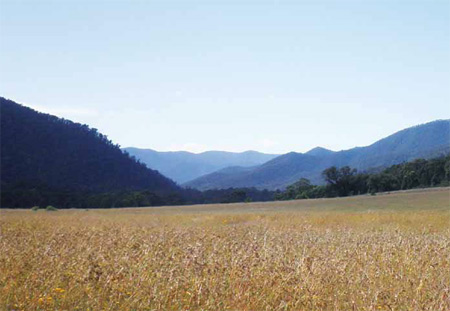
in the Wonnangatta, looking north

Don’t let Abbott & Co trash our parks

Today, Federal Environment Minister Greg Hunt approved the Victorian Government’s application to trial cattle grazing in the Wonnangatta Valley, part of the National Heritage-listed Alpine National Park.
In a needlessly rushed decision the minister has approved the return of 60 cattle for a few weeks before winter sets in as part of a larger three year trial involving up to 300 cattle.
Sixty cattle, grazing for a few weeks, is by no means a scientific experiment. The same thing can be easily done outside the national park, but this option was not even considered.
The VNPA along with many scientists and members of the community made detailed submissions arguing against the cattle grazing trial, but obviously they have all been ignored.
The so-called scientific trial is a farce, here are just some of the reasons why:
  • There is still no peer reviewed scientific design for the trial.
  • There has been no consideration of a location outside of the national park.
  • The application ignores the considerable scientific evidence that cattle grazing does not significantly reduce alpine fires.
  • More than 60 years of research shows cattle damage alpine wetlands and the headwaters of many rivers, threatening nationally-listed rare plants and animals.
  • The rushed decision means there will be no time to carry out on-ground surveys for threatened and rare species that could be affected by cattle grazing.
Wonnangatta Valley has been in the Alpine National Park for more than 20 years. National parks were created for the conservation of nature, not as cow paddocks for graziers who want to regain privileged access to the park.
The Victorian Government has now wasted more than $1 million of taxpayers’ money on this deeply flawed ‘science project’ to appease its cattlemen mates. 
It is three years since the Coalition first promised to get cattle into the Alpine National Park, but we are yet to see a peer-reviewed scientific design for the project, or be told if any scientists have put their name to the ‘scientific trial’.
The Abbott and Napthine governments seem hell bent on trashing national parks, even though they are cherished by most Australians and envied by the rest of the world.
It’s time to stand up and make some noise for national parks! 
You can help by: 
We love national parks – they should provide a safe and secure home for our natural heritage, our native plants and animals. We use them to walk, ride, camp and relax, but never should they be used as cow paddocks!

Shooting brumbies in Kosciuszko

The following comes from ABC Rural and is written by Alexandra Blucher and Bill Brown. At the end of their article you will also find links to the arguments FOR and AGAINST culling, culling methods and summary of the damage caused by brumbies.

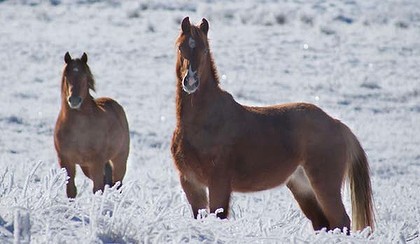
Brumbies roam the Kosciuszko National Park. Photo: Coleen O'Brien
Brumbies roam the Kosciuszko National Park. Photo: Coleen O’Brien

Wild horses are out of control in the Australian Alps according to conservationists, and doing irreparable damage to the fragile alpine environment.

However, brumby advocates dispute the claims and say alpine horses are part of an iconic bush heritage that must be protected.

It’s a divisive debate and passions always run high.

Aerial surveys of the wild horse population in the Australian Alps, including Kosciuszko National Park between 2003 and 2009, indicate an increase in brumby numbers, from just under 2, 500 to over 7,500 horses.

With recent good seasons and an estimated population growth of between eight to 20 per cent every year, NSW National Parks are projecting that a conservative estimate, would put the current horse numbers in the alps at over 10,000, with over 7000 in Kosciuszko National Park.

Conservationists say environmental destruction in Kosciuszko National Park is at crisis point, with threatened native animal and plant species at risk. They want the population to be aerially culled.

Advocates for these wild horses of the high country reject the population estimates, the claims of lasting environmental damage, and say they will vehemently fight any move towards aerial culling.

Government review puts brumbies back in the spotlight

A review of the Kosciuszko Horse Management plan is currently underway after the NSW Environment Minister, Robyn Parker, called for it to be examined last year.

As a part of the review, a consultation process is underway to bring the polarised community together to decide how the wild horse population in Kosciuszko National Park will be managed.

The discussions are expected to be far from harmonious with the facts about horse numbers, the extent of environmental damage and the best approach to management, all in dispute.

Another round of aerial surveys is expected to be completed in April.

The Government initiated consultation process will put the divisive issues firmly back on the public agenda.

VIC government opens more parks to prospecting

Prospectors get green light to search in national parks

The Age has reported that the state government has approved for new national parks. The following is an excert from an article by Tom Arup.

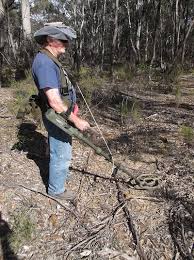
Five parts of the Alpine National Park, one area of the Lake Eildon National Park and two sections of the Lerderderg State Park will now be opened to recreational gold hunters who are often known as prospectors or fossickers.

The use of metal detectors and hand tools will be allowed, but the government has ruled out the use of more elaborate motorised devices sometimes used by prospectors.

A review of the environmental and cultural impact of the decision will occur after one year.

Phil Ingamells from the Victorian National Parks Association said national parks were there for nature, not for digging up.

prospecting”The government acknowledges that prospecting damages natural areas, so it is disappointing that the activity will be allowed in new areas in national parks,” he said.

The decision to open up new areas follows a Victorian Environmental Assessment Council investigation – commissioned by the government – of nine national and state parks to determine which would be most appropriate to allow prospectors access to.

While the council recommended the new areas adopted by the government on Tuesday, it warned in its final report there was clear evidence the practice could damage the natural values of national parks, especially rivers and creeks. It also said prospecting did not sit well with the purposes of national and states parks.

Read the full article by Tom Arup here.

Read background info here.

a new take on backcountry skiing: managing forests to create runs

mt stirling 008
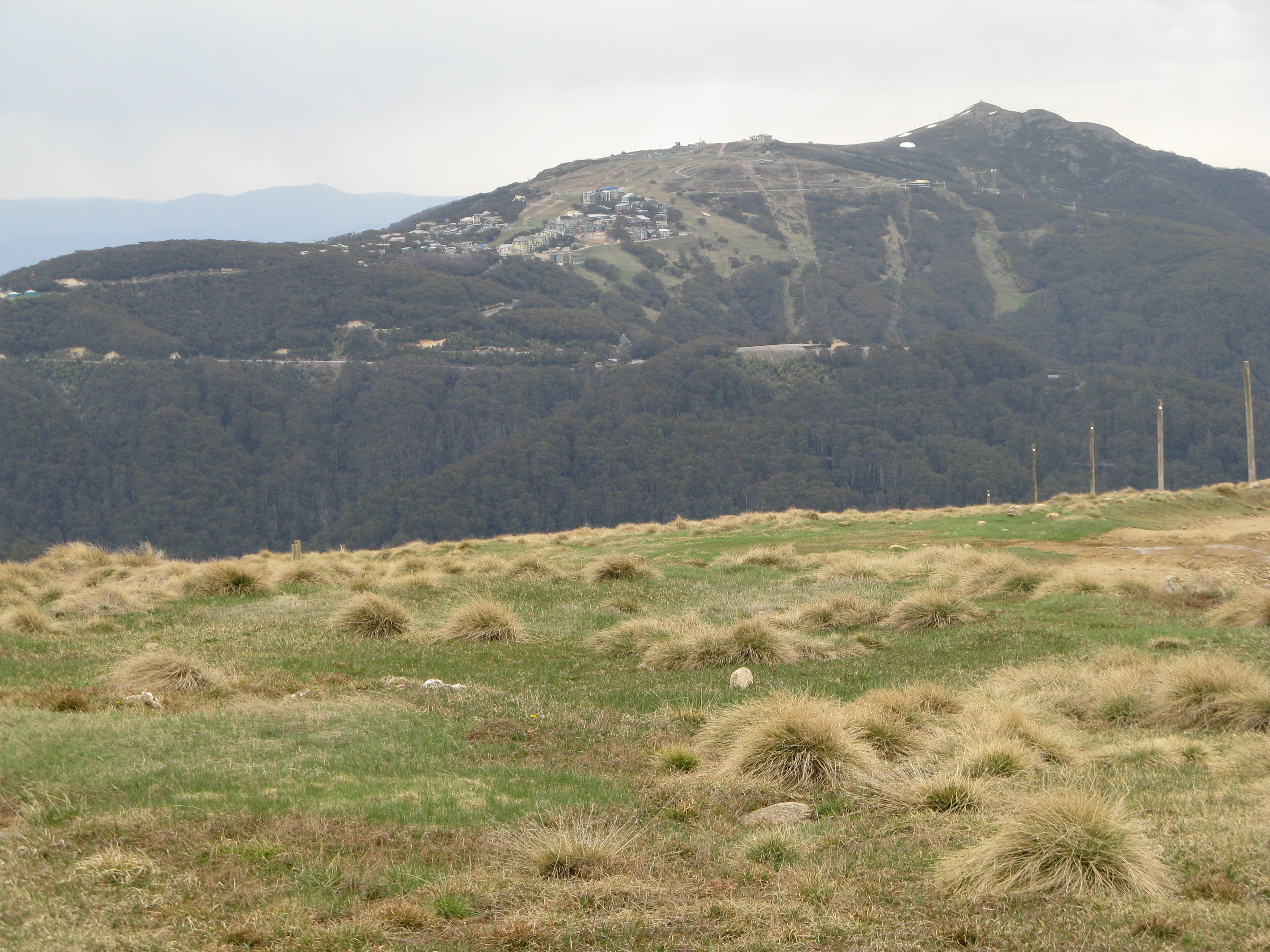
Mt Buller from Mt Stirling

The mountains of the eastern seaboard of the USA have some similarities with those in south eastern Australia. They are mostly forested, with only limited terrain above tree line, meaning that much of the steep snow country is not easily or safely ridden. Alpine resorts get around this by cutting runs, with sometimes very significant environmental impacts. Mt Buller would stand out as the worst case in Australia, with much of the mountain having been massively impacted by the footprint of the resort: the roads, the village, the runs and associated infrastructure, and waste treatment plants, etc.

Backcountry skiers and boarders tend to look to the higher terrain, and while many areas of tree covered terrain in the Australian mountains do offer some great options, the vast majority of the riding hours that are clocked up each winter are on naturally open slopes above tree line.

Image: APSA
Image: APSA

In the Adirondack mountains of New York state, there is a growing movement to create backcountry runs through ‘glade clearing’, small scale clearing of saplings to create safe corridors through the forests to allow skiing access.

The Adirondack Powder Skier Association (APSA) was formed to negotiate the right to cut these trails from state authorities in the Adirondack Park, which covers about 2.5 million hectares of wild land. Although avalanche slide paths are formed each year, skiers currently have few options when it comes to safely touring the backcountry mountain sides in the park. The APSA is seeking to gain an amendment to legislation that covers the park management plan so that they can create a series of skier-specific trails. The APSA argues that these would have less environmental impact than formed walking trails. Ron Konowitz, the president of the APSA, says “we’d manage the undergrowth by clipping horizontal stems and minimal undergrowth. On hiking trails they remove the top soil down to a hard surface. What we’re proposing is so much less invasive than that.”

Essentially they would seek to carefully remove a handful of trees on each ‘run’ or glade to create a more open area through birch forests which will be far safer than attempting to ski through regrowth forest. At this point, this type of management for backcountry skiing is not recognised in the Park management plans. Back country skiing and boarding is growing in North America, as it is here. The APSA argues that opening up back country runs would bring economic benefit to local towns, as it would attract more people to a wider area of the Adirondacks, as well as bringing many more opportunity for low impact out-of-resort skiing.

Of course, such land management intervention for a particular user group on public land is potentially fraught. It can be a foot in the door to more intrusive developments. The APSA seems to be mindful of this risk: it is seeking a change only to allow glade management, and is going to considerable lengths to bring all groups concerned about the mountains along with this proposal. It is set up as a not-for-profit corporation formed to “study, protect, promote, and enhance low-impact human powered snow sports on public lands in the Adirondack Mountains” and is working with state and local land managers, plus the local towns, conservation groups, and other stakeholders, to “define then develop appropriate management regulations” for managing the runs. If successful in gaining permission for the runs, they would trial them on a number of mountains.

For further details on the APSA, check their website.

Job fears in Parks Victoria revamp

The following comes from The Weekly Times, journalist is Chris McLennan.

Image: DSE
Image: DSE

With government plans to introduce camping fees for staying in national parks (which will draw on Parks Victoria [PV] resources to manage), allow private development in parks, re introduce cattle into the Alpine national park, you do have to wonder about the common sense of this government. Add to this the threat of ever worse fire seasons, and these cut backs seem short sighted and potentially dangerous. Union officials say that more than 500 people, including firefighters, will be caught up in the proposed changes.

According to the union that represents PV workers,

Parks are slashing 10% of its workforce but exempt senior and managerial positions, and will target Ranger and Field Service Officer employees instead.  Parks will waste $8-$10million paying out retrenched employees trying to save $10-$15million.  It’s completely cost counterproductive.  Parks Victoria (currently) employs 1,100 staff at 100 national, state, marine and urban parks.

Job fears in Parks Victoria revamp

Parks Victoria staff face an anxious summer after a department-wide restructure was announced just before Christmas.

Union officials claim more than 500 people will be caught up in the proposed changes, which may involve some staff pay cuts and others choosing redundancies.

“Many of these people are our frontline firefighters. They already have a lot on their plate,” Community and Public Sector Union federal secretary Karen Batt said.

A consultation period on the proposed changes will end on January 30 and a Parks Victoria spokeswoman said it may not be until March-April that the reorganisation is finalised. Individual staff are yet to be told which positions will be restructured.

Parks Victoria’s acting chief executive Chris Hardman said there would be no net loss of staff from the restructure. He said the proposed model was designed to significantly enhance the organisation’s services for the Victorian community.

“We are looking forward to hearing from staff and unions as to what they think about the proposal and to assist the organisation to put together the best possible operating model.”

More than 120 jobs have been trimmed from Parks Victoria in the past 18 months.

Blog at WordPress.com.

Up ↑