Search

Mountain Journal

Environment, news, culture from the Australian Alps

Tag

mountains

Mt Geryon

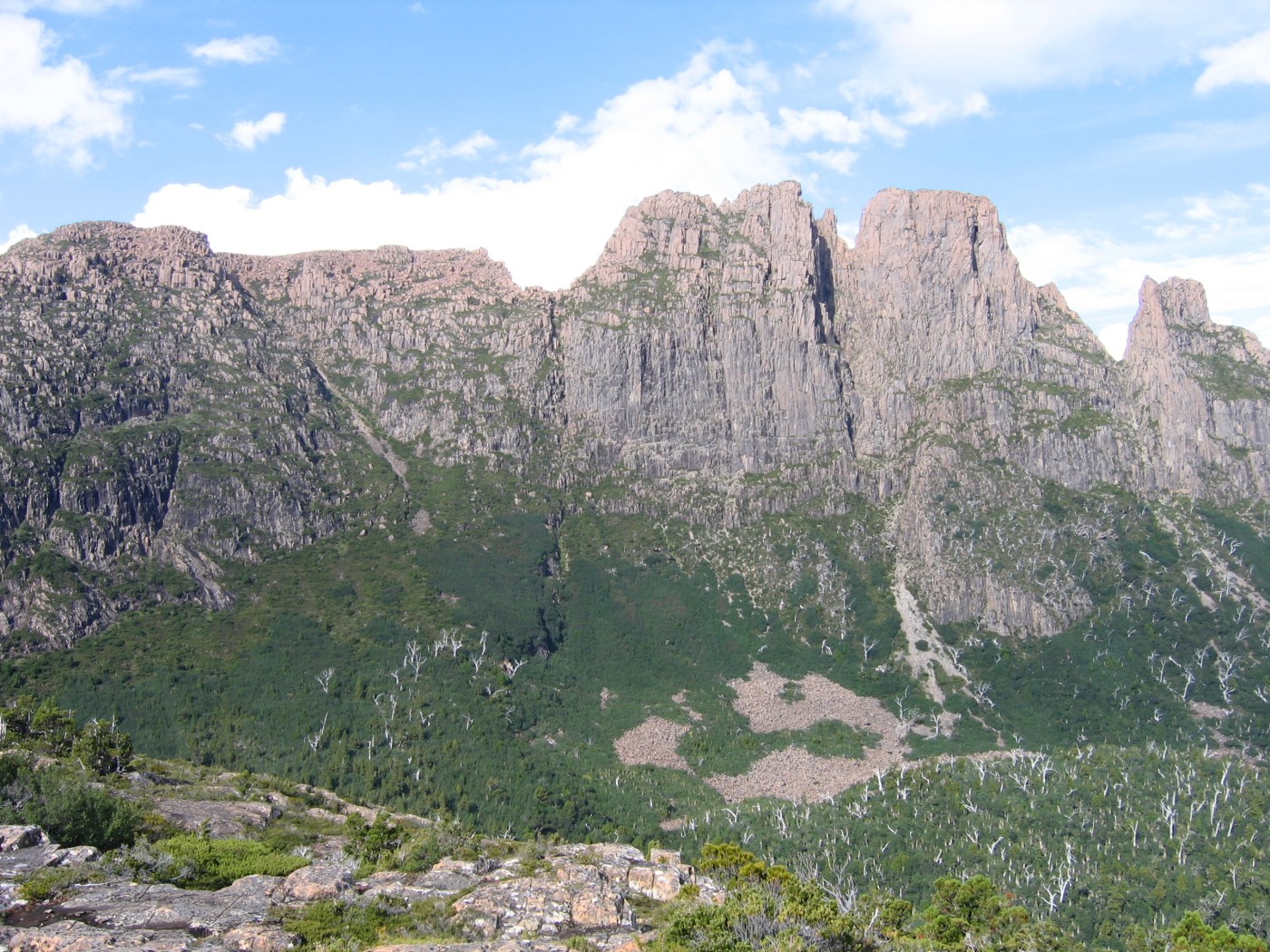
I don’t know any Indigenous stories about Mt Geryon, in the southern end of Tasmania’s Cradle Mountain Lake St Clair National Park. But I do often wonder what it must have been like for the people’s who lived and passed through the incredible mountain country of central western Tasmania. To approach this mountain up Pine Valley and finally to reach the small clearing (the old ‘climbers camp’) where the bulky western face suddenly reveals itself is always an impressive, and to me, spiritual, experience. I wonder if they climbed this peak.

So many of the features of this region have been loaded down with Biblical titles or names from the Greek Classics, something that irks me whenever I scan the map or skyline. There are some great names: I love Innes High Rocky in the south west. And closer to Geryon, there is Fury Gorge, Pencil Pine Bluff, Cathedral Mountain, High Dome, Walled Mountain, The Never Never, and the beautifully appropriate Pool of Memories. These names evoke something of the place. Peaks named after early explorers also make sense. But just reeling off a list of names from western mythology seems lazy and disrespectful. But I can live with Geryon. The three-bodied giant of Greek Mythology.

It is such a dramatic mountain, squeezed up the end of Pine Valley up against the Ducane range, and hidden in behind the bulkier looking Acropolis when seen from lake St Clair. It provides a dramatic and other worldly aspect to dinner when you’re sitting in Bert Nichols hut on the Overland track. If the word charismatic can be applied to a mountain, then it certainly applies to Geryon. Its dramatic rocky faces on the east and west constantly change their moods and even from The Labyrinth it presents itself as a ‘real’ mountain, with another thousand feet of cliffs and dramatic skyline above the Labyrinth plateau. It can be mild in The Labyrinth and storming up on Geryon and the Ducane Range. The Cephessis scree, which runs from the base of the western face down almost to Cephissus Creek, is an amazing feature, and acts as a giant staircase that leads you right to the cliffs.

Full story here.

Mt Wellington cable car proposal looking less likely

There is a welcome development regarding the cable car which is planned for Mt Wellington (kunanyi). It has been long resisted by local residents.

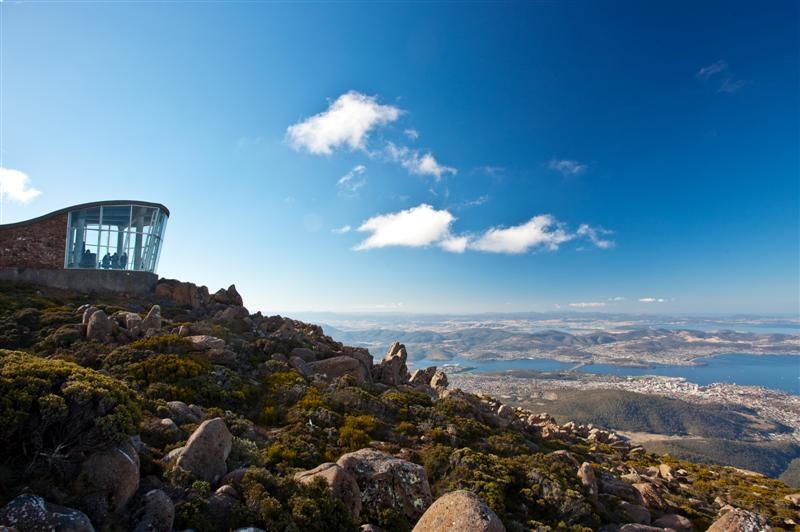
The Tasmanian Planning Commission has recently announced the findings of a review it had carried out into the planning process. It found that there had been significant problems in the planning process around this development. It is now up to the Wellington Park Management Trust to decide whether to rezone the development boundary on the pinnacle in order to allow for a commercial ‘pinnacle centre’ to be located just above the organ pipes and a cable car on the face of Mt Wellington.

The following comes from Residents Opposing the Cable Car (ROCC).

Continue reading “Mt Wellington cable car proposal looking less likely”

‘The Mountain’ book launch tonight

Five years in the making, The Mountain is the first photographer’s monograph on Mt Wellington in nearly 20 years.

Mark Clemens has created a superb photographic collection highlighting the uniqueness of this wild place on Hobart’s back doorstep with a foreword by award winning Tasmanian novelist, Heather Rose.

A photographic evocation of the Mountain’s own intrinsic nature: it lets the Mountain have its own voice and tell its own story.

The Mountain is Hardback $49.95, and is printed in Hobart to the highest specs.

Part of the proceeds go to the Tasmanian Land Conservancy.

Reservation essential to:   rsvp@fullersbookshop.com.au   or (03) 6234 3800

THE MOUNTAIN
BY MARK CLEMENS
BOOK LAUNCH

Follow The Mountain on facebook.com

WHEN

September 18, 2014 at 5:30pm – 6:30pm

WHERE

Fullers Bookshop
131 Collins St
Hobart, Tasmania 7000


Wellington Park Management Trust weighs up cable car expansion request

The following comes from The Mercury newspaper. Journalist is Michelle Paine.

You may want to add a comment to The Mercury article.

For background to this issue, please check here.

A CABLE car on Mt Wellington is a step closer as the public is called to comment on extending the summit’s development zone.

The Wellington Park Management Trust has agreed to evaluate the proposal to enlarge the Pinnacle Specific Area, which allows development.

The Mt Wellington Cableway Co requested the boundary be moved to accommodate a cable car.

Trust chair Christine Mucha said it did not mean the trust was supporting any particular development.

The change would extend the area by about 60m east of the observation shelter.

Dr Mucha said that after consultation, the trust would prepare a report for the Tasmanian Planning Commission.

“While we recognise the strong sentiment against the potential for future development in the Pinnacle Specific Area, the trust believes that the management plan enables such proposals to be considered and assessed in accordance with the performance standards contained in the plan,’’ Dr Mucha said.

MWCC project lead Adrian Bold said it was a positive step.

“We’re following proper process. They had to agree with our rationale. Now there will be a process that involves the public,’’ Mr Bold said.

He said enlarging the boundary was extra work but would mean the cable car would have less visual impact.

Residents Opposed to the Cable Car spokesman Ted Cutlan said he was appalled at the trust’s “rubber stamp’’.

“They’re bending the management plan to fit the development,’’ Mr Cutlan said.

“This is one step along the way. The developer has to put in a development application that would fit the plan.’’


Alan E J Andrews 1926 – 2014

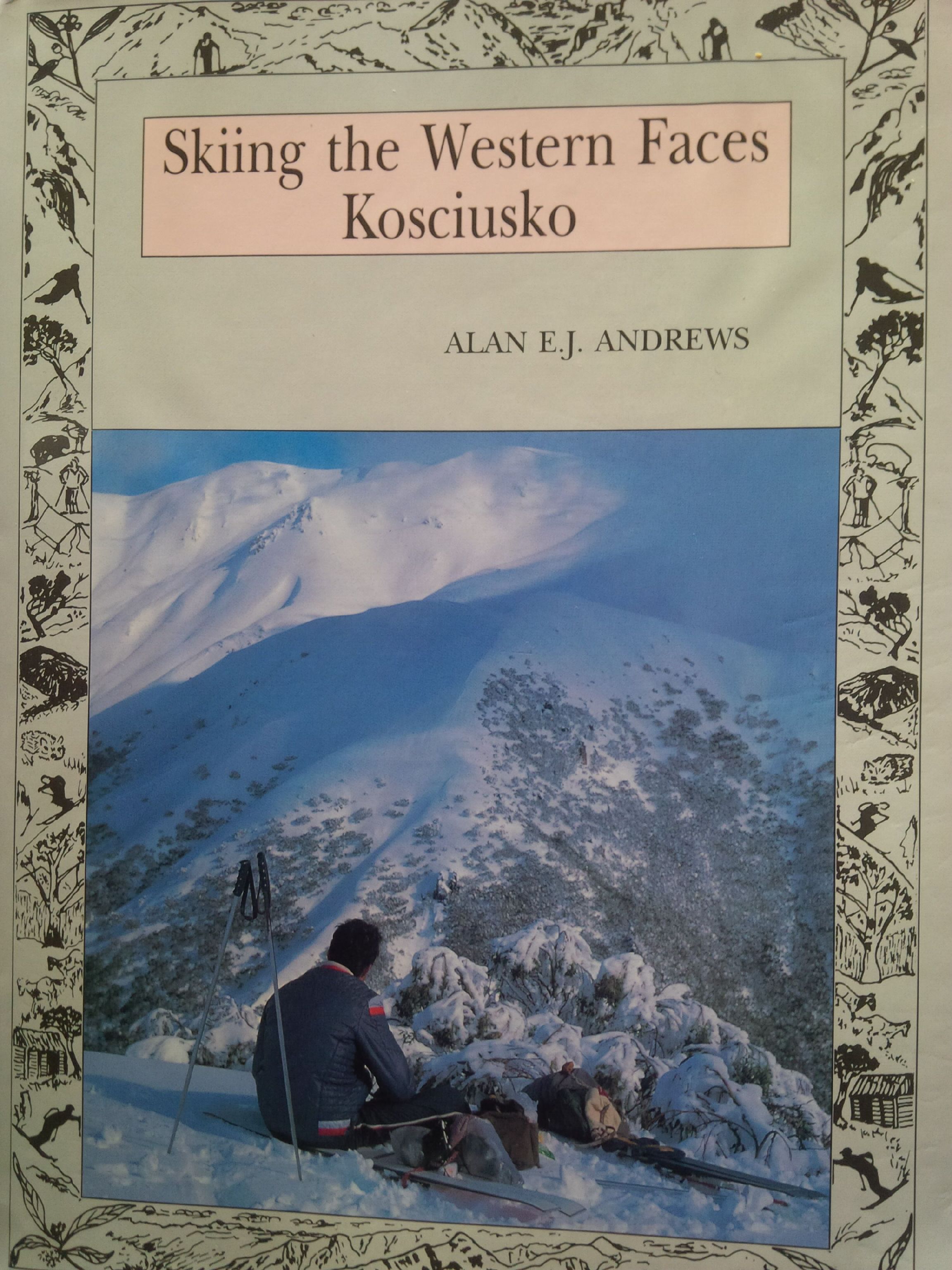
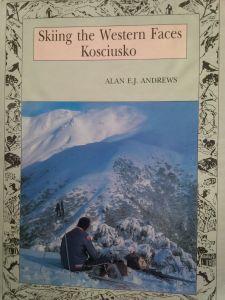
mapAlan E J Andrews is known to many backcountry skiers and boarders as a pioneer of skiing the steep western faces of the Main Range of the Snowy Mountains. He was the author of Skiing the Western Faces Kosciusko.

He passed away last month after a long and well lived life. The eulogy that follows was written by his friend Klaus Hueneke, another luminary of the High Country.

Nureyev on Skis
Or
The Emperor of Illawong

Eulogy for Alan E J Andrews, Mona Vale, 26/6/14

“I have known Alan in person since about 1984 and I’ve known about his writings and journeys across the high country since the 1960s. He had a big impact on my life and my book publishing business Tabletop Press.

Alan was a lover of:-

Australian History especially the early explorers,

the Australian Alps and skiing in all its forms,

the mountain huts especially Illawong and Albina,

old style poetry with rhyming verse,

the ballet and bacon sandwiches and

an old Holden Station Wagon.
He loved reading, drawing and using maps,
and the careful composing of numerous articles and books.

He enjoyed helping others with their own research and replied at length to any questions or correspondence sent. He did this in careful, often quite tiny, longhand or neatly printed with lots of curly bits. You can view it in some of his books. When his distinct handwriting was not on the last parcel of books I thought, ‘something must be seriously wrong’. It was.

His books and long sojourns at Albina or Illawong hut above the Snowy River were very important features of his life. When he was at Illawong it was like the Emperor was in residence. Not a domineering Emperor who demanded our attention but a quietly spoken, quietly smiling, self effacing Emperor, one who didn’t have to shout it from the roof tops.

I loved listening to him reciting Australian classics as well as his own poetry. This is an extract from The Fan-shaped Snowgum.

There it is, the fan-shaped snowgum,
Glinting in the morning frost;
Reminding us of courtly pleasures
From time forgotten – long since lost.
Lovely eyes ‘neath lowered lashes,
Flirting sweetly, ringlets tossed,
Fan on crinoline laid demurely,
Clamouring suitors imperiously bossed.

But look again, the trunk is twisted,
Leaning perilously askew.
Another instant it had fallen,
Yet still survives, to grow anew,
The branchlets fanning to the northward,
Others stretching southward too;
Now proudly standing tall, defiant,
A sentinel to welcome you.

In 1982 I wrote Huts of the High Country. Alan took note that there was a new kid on the block and on a later visit to Illawong we spoke about my new book Kiandra to Kosciusko. He offered to draw a number of maps and gave me permission to use his articles about early ski tours in different parts of the Snowy Mts.

When the book came out he said ‘but you only spent a couple of pages on the history of Mt Kosciusko itself’. Sorry Alan. It got him going and in 1990 he asked me to design and publish Kosciusko – the Mountain in History. It covered all the first European explorers who reached the high tops and filled a missing gap. As usual, the research was meticulous.

In 1993 he wanted me to do the same with Skiing the Western Faces but this time he said, ‘I want the book to breathe more’. ‘Breathe?’, I thought Can a book breathe? It showed how books to him were living entities with eyes, lungs, heart and soul. No wonder his and Muriels house is full of them.

He showed me a book which had lots of space around the text and between chapters. I got the message and Skiing the Western Faces became his most popular book. It inspired many others including his sons Neil and Ian as well as my step-son Chris, who brought me here today, to explore the dramatic western faces. I always know it has been a good snow year if orders come in during September and October.

By 1996 he was ready to go with Rainforest and Ravished Snow. Half of this book dealt with his bushwalks on the Comboyn and in the Upper Manning River area, one in which some of his relatives once lived and where Ian, his son, still owns a plot of bush. After skiing became too hard for him, Alan often went there to communicate with nature.

It became obvious that Alan had been sitting on a large body of drawings, maps, photos, writing ideas and unpublished work. I was very glad he chose me to bring them into the world. These were books with small print runs not commercially viable for big publishing houses but important nevertheless.

In 1998 I received the manuscript for Earliest Monaro and Burragorang, his last major work. It is jam-packed with historical detail, black and white photos, dozens of hand-drawn maps and many references. It has been well received by old Monaro families and local historians.

His books have been selling steadily for the last 20 years and will continue to do so for a long time. I often say ‘History doesn’t age, it just gets older’.

Before I came along Alan published a number of books with Blubber Head Press and smaller hand-made ones like Where the Wombat Goes and Surveyor Thomas Townsend, his work in Australia 1831-1854. Another was a compendium of all the articles and books he had published between 1950 and 1983. Yes, starting in 1950, 64 years ago, when he was a young 24. A note in one said, ‘This really is a table top book – written, made and printed at home’.

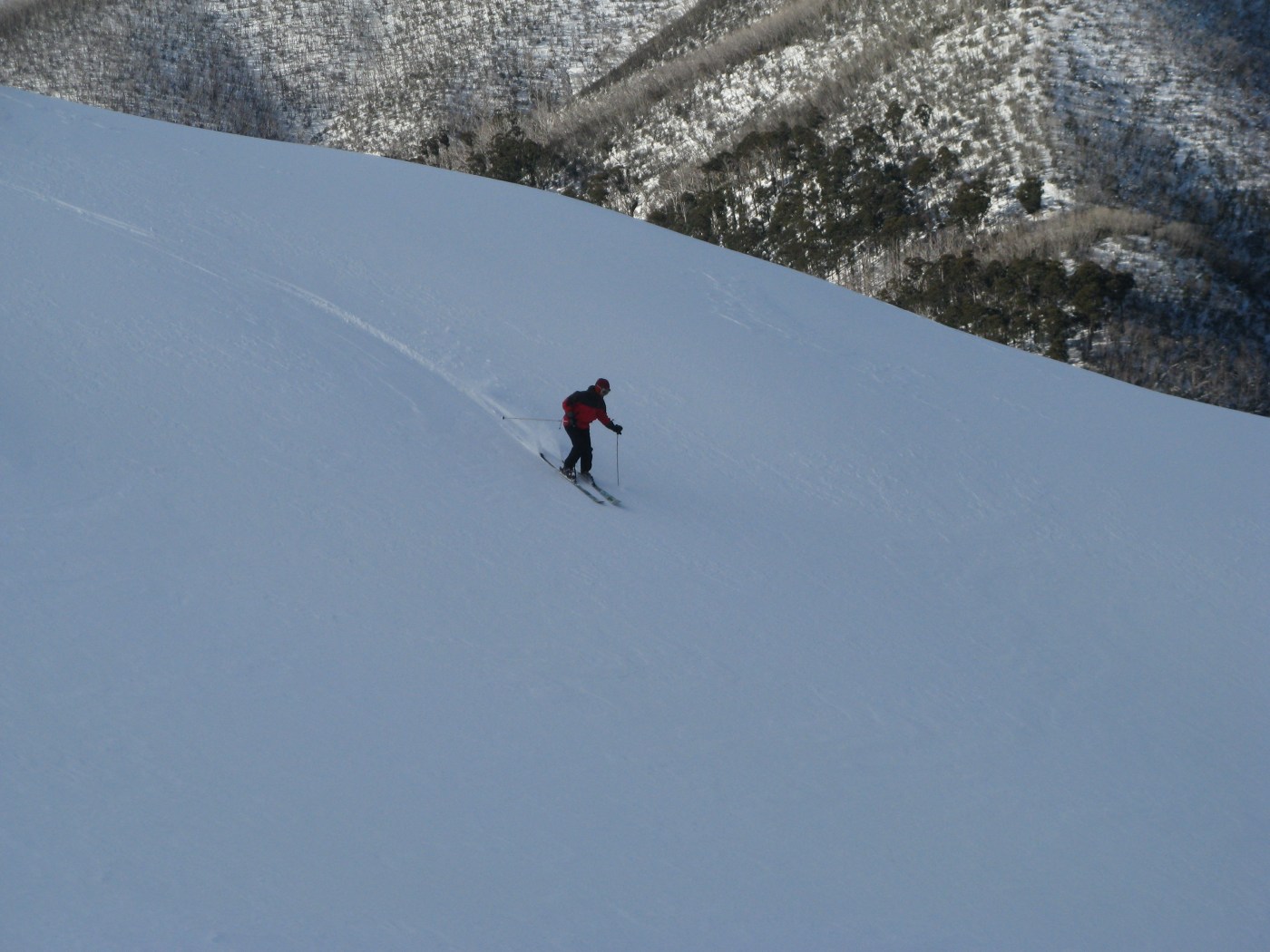
On one of our day trips he took me on to Twynam West Spur and showed me the gap in the cornices through which I could thread my long, thin skis and descend into Siren Song Creek. ‘Ski down there?’ I thought, and went off to sit at the end of the Crags to bask in the sun and contemplate the vista to the crouching lion Jagungal.

He, meanwhile, wasted no time and in a series of adroit, light as a feather, linked turns, leapt, carved and flew into the sirens arms. It was Rudolf Nureyev (a famous ballet dancer from the 1980s) delicately balanced on a couple of plastic planks in the steepest snow country we have.

About the same time I discovered he adored the Australian Ballet and the stunning, lithe, pink-clad ballerinas. He wrote poems about them too. The ballet must have rubbed off for it was ballet on skis that he displayed that memorable day.

Writing this about Alan, the word ‘fey’ kept bouncing around inside my head. The dictionary explained. It means, ‘as if enchanted, under a spell and aware of supernatural influences’. Yes, that was Alan all over and that’s what explains his love of skiing, his poetry, his wry sense of humour, some of his drawings and his ability to morph from a cheeky Shakespearean imp to a serious historian over the same cup of tea.

I will end on a poem he wrote after ascending Twynam North Spur. It could be his epitaph:

We leave our stately sentinel
And pass on through the Arc of Trees,
Then upwards still and cross the snowbridge,
There possibly to take our ease,
But not for long; it’s on to Twynam
To the throne to pay our dues
And find our fealty rewarded –
The granting of the kingdom’s keys.

You may be sure we will not waste them.
Full many a secret we’ll explore.
Full many a slope will feel our ski-tips:
Past craggy slate and granite tor,
Down gullies steep and awesome,
We’ll ski them all, you may be sure.

So when at last we hand the keys in,
As needs we must – so stands the Law –
There’ll be no need for compensation.
There’ll be no need to ask for more.

I will miss him, his annual hand-illustrated and written Christmas cards, his tightly composed letters often with poetry, his years of support and all that he stood for with all my heart for the rest of my days.

Alan, you were an inspiring scholar and an old fashioned gentleman”.

Klaus Hueneke (OA-AM)

NB: a number of Alan’s books are still available, check here for details.
The High Country of the Mind

The places we love are the ‘mountains of the mind’. The places we imagine and day-dream about. The places we escape to. Each of us has our special place. Some of us have many. Some just like to keep moving, and the mountain of the mind is the next unclimbed range.

What makes our places special? And what do we find there?

And where are your places?

Check here for some reflections, inspired by writer David Gilligan.

Australian backcountry film festival – Spring 2014

For the past four years, the backcountry film festival has been attracting good numbers of people and is showing in more locations.

It seems like it might be time to have our own festival – with films made in Australia.

At previous Melbourne shows, we have added a film about skiing and boarding on The Bluff, and this year saw OFF GRID, a new effort on Mt Bogong from SoO Airtime.

The plan is to hold an Australian backcountry film festival in late spring 2014 with only local content. There are some fantastic film makers out there, and we hope to be able to showcase some of these.

We are seeking expressions of interest from film makers who would like to submit films.

Any human and gravity powered backcountry adventure would be welcome: walking, skiing, boarding, MTBing, paddling, climbing, …

As this is an entirely volunteer effort, with no budget, we are not able to offer payment for showing the films.

Films can be in two length categories. We hope to show an hours worth of short films (3 to 7 minutes) then up to 2 longer films (30 – 40 minutes).

At this point we are looking at doing a Melbourne showing, with the ability to offer the festival to other places once its packaged up.

If you’re keen, please get in touch: cam.walker@foe.org.au

And get out there and getting filming!

The King of Hotham: My Father

This book is a memoir by Gillian Salmon of the remarkable life and times of her father, Lindsay Salmon, who played a key role in the development of Mt Hotham, including the establishment of the Mount Hotham Ski School and the construction of the iconic Drift Chalet.

It covers his time in the mountains of north eastern Victoria, broken by World War II. On his return, he starts work on the Drift Chalet. It opens in 1952 and ‘offers a tradition of hospitality unmatched at Mount Hotham since.’

Check here for the full review.

‘For Our Sherpa Friends’

On April 18, an avalanche on Mount Everest swept through a line of Sherpas preparing the climbing route for their commercial clients. Sixteen men were killed, making it the deadliest day in the mountain’s history.

Many people in the climbing and outdoors community are responding. I like this project from the US, raising funds for the families of those killed and injured, by selling (amazing) photos.

The project is called For Our Sherpa Friends. They say:

We are a group of ten photographers who have worked extensively with the Sherpa people and are devastated by this tragedy. For us, this is a moment to ask how we can help our Sherpa friends—both in this time of crisis and in the years to come. As a first step, we are donating the prints you see here, a selection of our photographs of the Everest region and its people, curated by our editors, National Geographic’s Sadie Quarrier and Outside’s Amy Silverman. One-hundred percent of proceeds from this sale (after the cost of printing) will go to the Sherpa community via the nonprofit Alex Lowe Charitable Foundation, which has been working with Sherpa climbers in the Khumbu since 2003.

By purchasing a print today, you are helping provide relief to Sherpa families in crisis, as well as long-term support that transcends this single incident. Together, we will build a more comprehensive safety net for the high-altitude workers who help so many Westerners realize their dreams of the summit.

You can check the images, and buy them online, here.

In praise of huts

Tawonga Huts, Bogong High Plains, VIC

Huts in the mountains can be a vexed issue. Huts will tend to attract people and so tend to concentrate visitation within a larger area. As one example, most people who climb Mt Bogong tend to then turn towards Cleve Cole hut rather than head across to the Hooker Plateau. This tendency to influence visitation can be both good and bad.

They are part of the cultural history of the high country, and reflect major stages in the post colonisation era: cattle grazing, forestry, hydro, even fire watch towers and, more recently, huts built for recreational purposes. We also have a number of strange and random anomalies, ones that don’t really make sense: Craig’s hut near Mt Stirling as an example, which was built as a set for a film. There are, of course, those whose primary function is safety, such as Seaman’s hut near Mt Kosciusko, and huts that belong to clubs or even schools (Geelong Grammar on Mt Stirling).

I have always tended towards the position that we don’t need more huts in the high country. With incremental pressure as ski resorts increase their footprint and the risk of private developments within Victorian national parks and the precedent of private enterprise in a number of Tasmanian parks, I don’t think we need more infrastructure. There have been some hut removals that make ecological sense (such as Albina Lodge, above the western slopes of the Main Range in the Snowy Mountains). I certainly understand the need for huts in strategic spots for safety. And I do appreciate the history of these places, the incredible work of getting materials into hut sites in the early days and the bush skills of the builders. I love the work of Klaus Hueneke, who has chronicled the heritage of the huts.

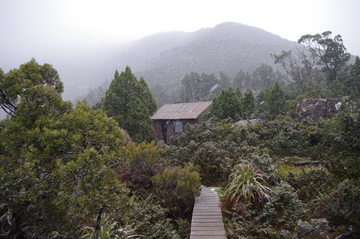
the hut at Lake Nameless
the hut at Lake Nameless, Central TAS

With the rise in wildfire over the past decade, we have lost many of the iconic huts. There have been some excellent rebuild efforts, such as Michel’s at Mt Bogong. The Victorian High Country Huts Association was founded after the major bushfires of February 2003, to try and preserve remaining huts. Some huts are looked after by organisations and this can give people a strong connection to ‘their’ hut, and various groups exist to look out for huts in general (partial list below).

For me, it’s a rare thing to find a hut that is more appealing than a tent, but amongst my favourites are Seamen’s and the ‘Schlink Hilton’ in the Snowies, Vallejo Gantner at Macalister Springs, Cleve Cole on Bogong (of course), and the hut at Lake Nameless in Central Tasmania. I love the location of the ridiculously ugly house on Mt Wills.

For hut fans, we have recently been posting photos on Mountain Journal’s facebook page. Please feel free to join in and post your favourite pics.

the hut at Newgate Tarn, TAS

I recently spotted the article below, highlighting the value of the ‘secret’ hut stash around many resorts, the little known hang out spot. I remember a rough hut that lasted several years on the northern slopes of The Bluff in Victoria which was popular with some backcountry skiers and boarders. I went to look for it one spring and it was gone (it had been tarp and pole heavy, more a glorified camp than a hut).

What I loved about this article is that it highlights that for all of us who use huts, there are personal and social memories that build up: of friendship, adventure, good dinners, long and late night conversations with strangers. I held my 30th birthday at Vallejo Gantner hut and have spent the last 4 new years at Bluff Spur hut on Mt Stirling with a big gang of friends. Part of the cultural – as opposed to technical – history is preserved in log books and, increasingly, on line. For instance, check the newsletters from the Mt Bogong Club, who have been looking after the Cleve Cole hut since 1965. In many countries there is the tradition of the hut warden, which can add to the sense of hut culture. I like the short film Winters of my Life, an appreciation of the decades-long service of Howard Weamer, who for the past 35 years has spent his winters as a hutkeeper in Yosemite’s backcountry.

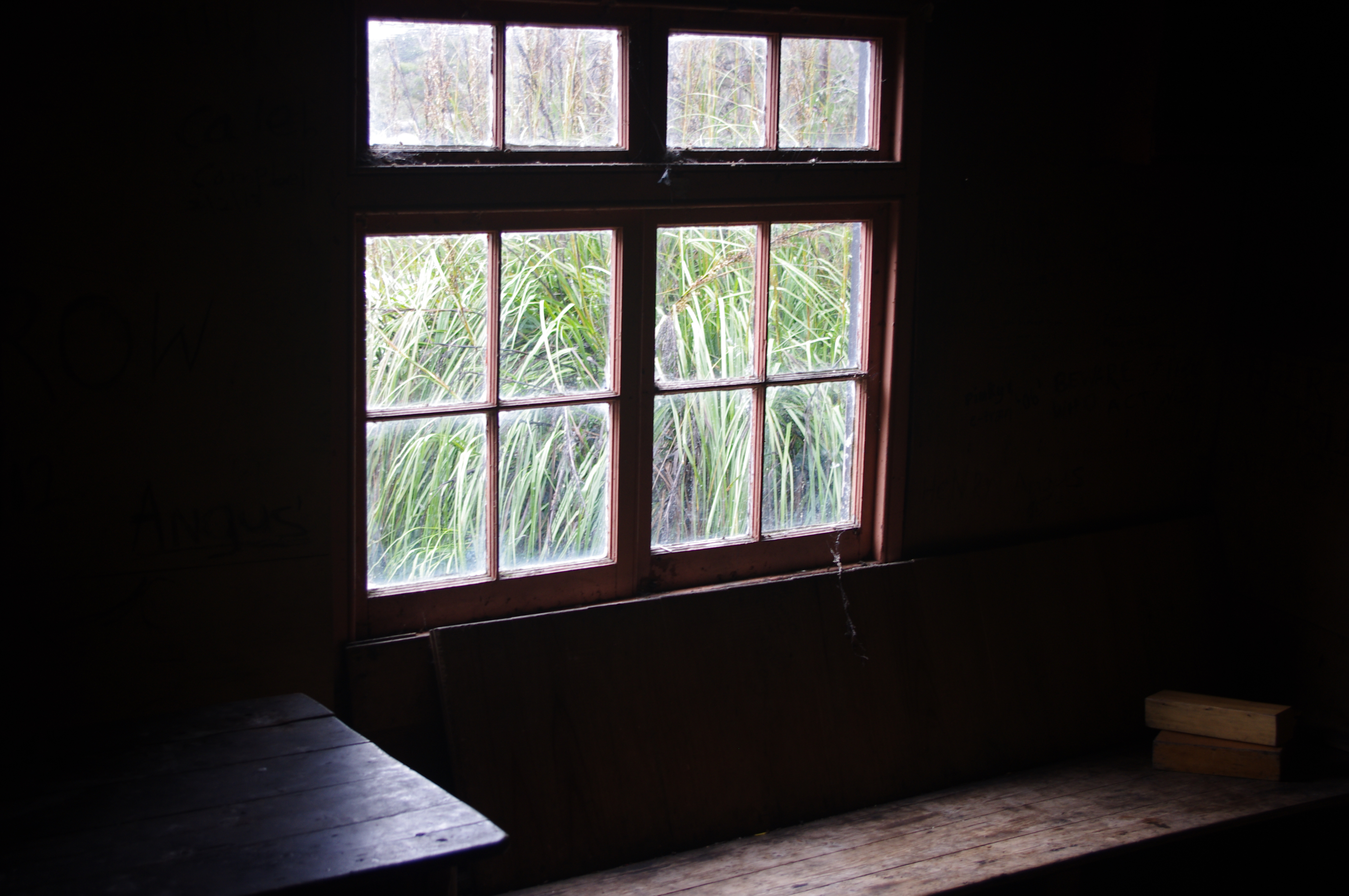
Twilight Tarn, TAS
Twilight Tarn, TAS

Shacktivities

From Powder magazine.

Secret stashes, shacks included, are a part of skiing in the same way that early mornings and long drives are. If you are dedicated you will have yours, you’ll know the good ones, and the people to share them with inbounds and out. People who love the mountains cultivated them, probably long before you got there.

 Some contacts

Kosciusko huts association.

Victorian High Country Huts Association.

Point zero zero one

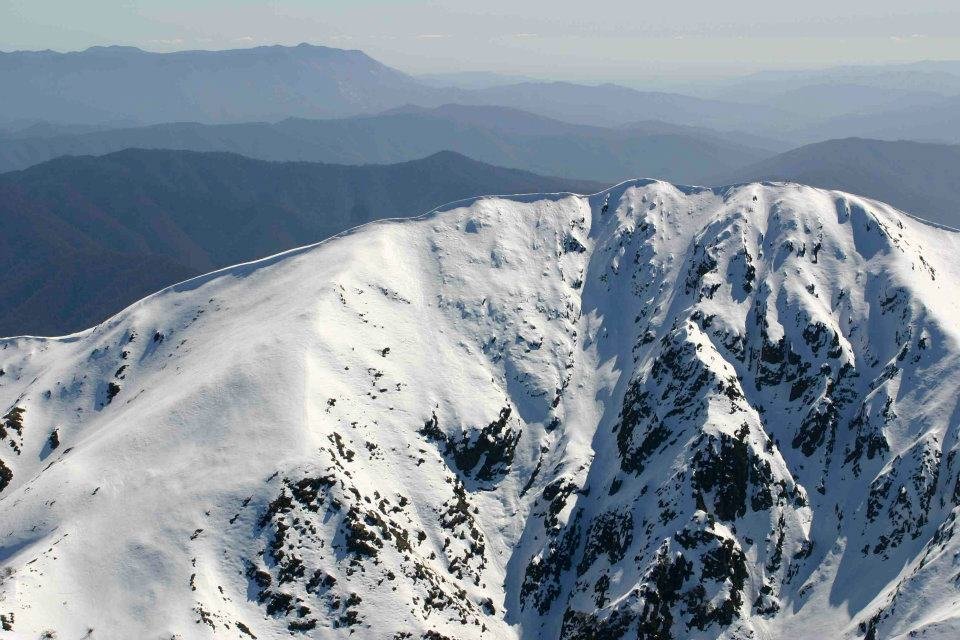
East Face of Mt Feathertop, VIC. Image from the film by Stephen Curtain.

As Tony Abbott threatens to de-list significant areas of the Tasmanian World heritage area (WHA) so the loggers can get to the old growth forests that are currently protected, it’s worth remembering that all our WH Areas are special and most of them are already under pressure from climate change.

No area has as many climate pressures as the Australian Alps. This film from Stephen Curtain offers some great telemark skiing images from the Western slopes of the Main Range in the Snowy Mountains. It also reminds us how unique and vulnerable this landscape already is. There have been several attempts to get World Heritage listing for the Australian Alps over the years. In an era of climate change and ever more demands on wild places, we need more world heritage areas, not less.

Check the film here.

Stephen says:

Point zero zero one (0.001) is the approximate percentage of the Australian continent occupied by the Australian Alps.

Bordering one Territory and two States, this biogeographical island supplies invaluable fresh water to much of south east Australia and provides outstanding natural, spiritual and cultural values.

Although the Australian Alps are recognised as a national iconic landscape by federal national park agencies and Tourism Australia in recognition of such values (see australia.com/campaigns/nationallandscapes/AustralianAlps.htm), World Heritage Listing still eludes the Australian Alps.

Point zero zero one celebrates the fleeting beauty of these Alps.

This short film was an entrant to Bristol’s 2012 Wildscreen Festival in the UK. Visit wildscreenfestival.org/

Photo of the day

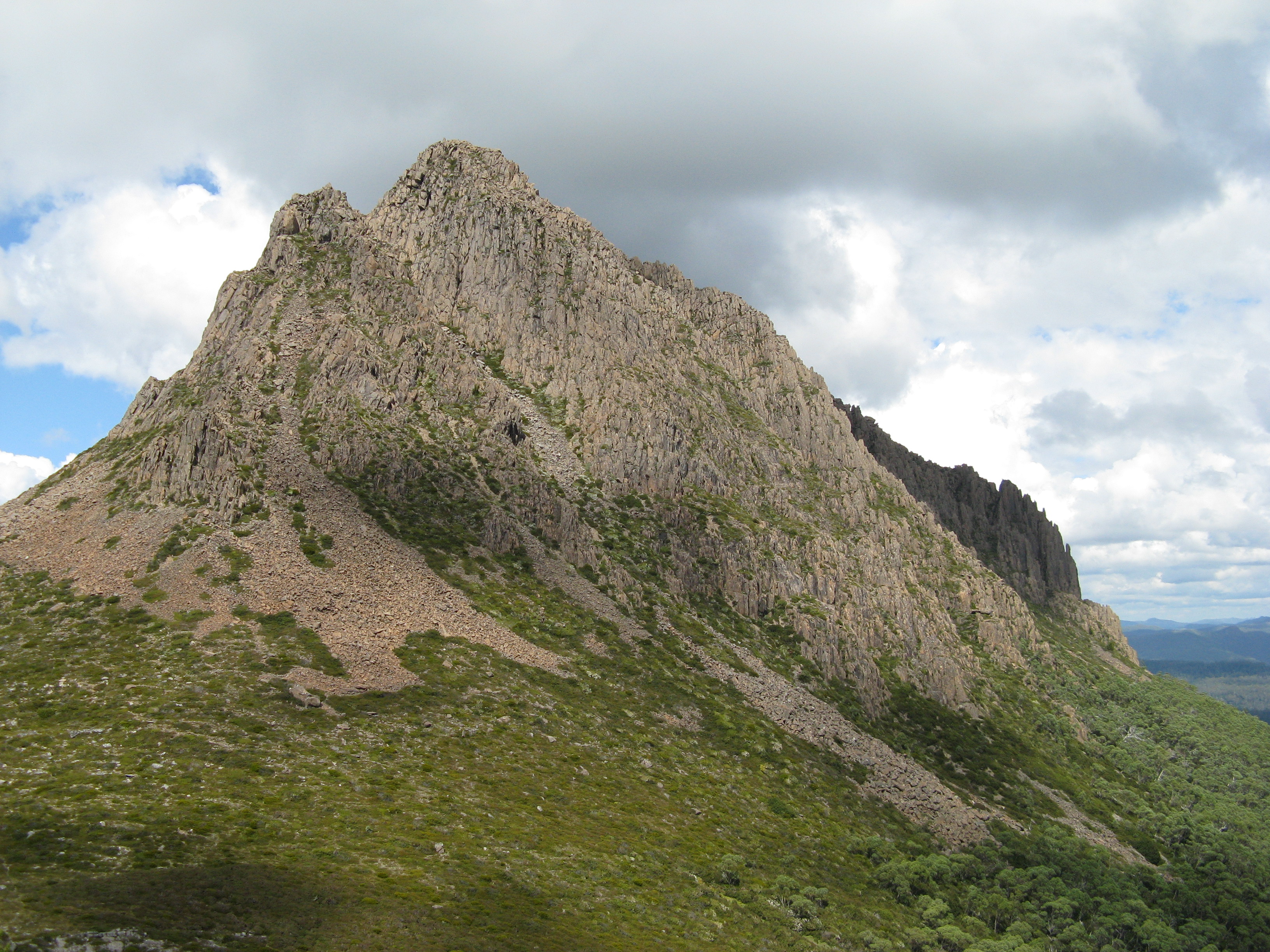
Mt Gould, TAS
Mt Gould, TAS

This site started as a place to share the inspiration that I find from being in the mountains. It’s a non commercial venture, community and environmental in orientation, and focused on human-powered adventure.

Clearly, there are lots of other people who are are equally addicted. Thanks for all the messages of late. Visitation keeps building, in fact remarkably so. Partly I assume this is because there is so much going on that impacts on the mountains – the sections dealing with alpine grazing, prospecting in national parks, private developments in parks, and logging, are all getting major attention.

In spite of these and other threats and issues, there are lots of good reasons to be out in the mountains. As the saying goes: “Stuff politics, let’s dance” (or ride/ walk/ run/ climb / paddle/ or maybe just sit and enjoy).

Mountain Journal is also on facebook, where the focus is on celebration of everything mountain.

It would be great if people felt inspired to contribute photos. The photo of the day posting features a pic of a favourite place: please feel free to send yours to cam.walker@foe.org.au or post them directly on the FB page.

Blog at WordPress.com.

Up ↑