Search

Mountain Journal

Environment, news, culture from the Australian Alps

Tag

mountains

the Backyard Project – low carbon adventures

backyard project

In a world where a big part of living the ‘dream’ is to have the ability to travel wherever you want wherever you want, a decision to stay at home and enjoy your own back yard becomes a radical action.

Skiers/ boarders are as bad as anyone else in the rich world. And there is no doubt that the rest of the world offers mountains that we can only dream of. But the fact is that constant holiday travel by large numbers of people across the world is not sustainable.

Overseas travel is great, but so is the decision to stay at home, to really appreciate the challenges and opportunities that your backyard offers.

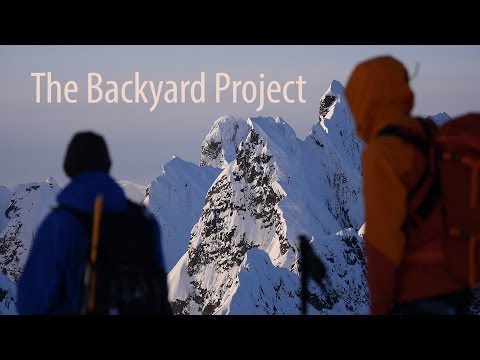
In this film featuring athlete Justin Lamoureux, who is sponsored by Arc’teryx, he sets out to ride all 30 mountains he can see from his backyard.

As he says:

“Our backyards are often overlooked for farther and more exotic adventures”.

Full points for walking (and paddling) the talk with a low carbon adventure. He lives in Squamish, British Columbia, which is surrounded by mountains, rising from sea level to 9,000 feet. This film follows his mission to try to ride them all in a single winter.

The first instalment is available here.

‘snow surfing’

‘Snow surf’ boards are hardly a common sight on our slopes. But they are showing up more in some classic backcountry films like Signatures, from Sweetgrass Productions.

The following item is lifted directly from the new The Drift publication, and features some quotes from renowned surfboard designer and rider Taro Tamai. The company Gentemstick makes snowsurf boards.


Image: The Drift
Image: The Drift

Taro Tamai: Of Gods and Mountains

ON DESIGNING GENTEMSTICK:

My shapes aren’t just mimicking surfboards, but like surfboards they have different shapes for riding different waves. I shape boards depending on snow, terrain, and riding styles.

The design should perform on any snow condition, whether it’s powder, groomers, or spring corn snow. I don’t focus on skateboard-like snowboards, which emphasize ollies, big-air landings and the spinning factor, but a design that focuses on the relationship between the rider and slopes.

Image: The Drift
Image: The Drift

ON SNOWSURFING:

What if someone sees the mountain differently than others? What if the same terrain appears different to each person who sees it? Obviously the design for riding that place will differ from one another. The reason I quit skiing— which I loved so much—for snowboarding is because the potential lines that I could see when on a snow-surfboard were drastically different from when I was on skis. The ultimate goal of surfing is to be one with the wave. The ultimate goal in snowsurfing is to be one with the mountains.

MOUNTAINS IN JAPANESE SYMBOLISM:

Traditionally, Japanese people felt the presence of gods in all natural elements: water, forests, fire or mountains. Mountains were one of the most important deific symbols and climbing was a religious ritual. Japanese mentality sees gods in every single pebble lying on the river shores.

Best backcountry ski & board films

Image: Winter Dreaming/ Stephen Curtain

Snow/ skiing/ boarding films have long been a staple part of mountain life. And while I love snow porn as much as the next person, I never felt very interested in the high profile ‘heroes and helicopters’ style that has long dominated the mainstream films.

It was only a few years ago when I realised there was a sub genre that actually spoke to my reality: backcountry films.

I am not sure if this is a growth sector compared with the rest of the snow industry films, but its certainly prolific. Here are some brief reviews of a few of the best.

Mt Wellington cable car ‘up and running by 2017’?

The Sunday Tasmanian reports that
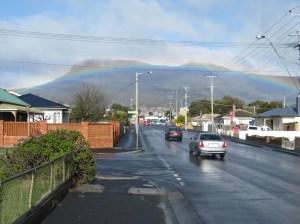
IMG_0384“Buoyed by the removal of the Wellington Park Management Trust’s veto power last week, the man behind Mt Wellington’s proposed cable car project hopes it will be up and running by 2017.

In State Parliament on Wednesday, the Labor Party supported legislation introduced by the Liberals aimed at removing the trust’s power to veto developments on the mountain.

Proposed developments will still need to go through the regular council planning approvals. But the legislation has given new hope to Mt Wellington Cableway Company executive director Adrian Bold, who said the controversial $37 million project would be funded private Canadian investors”.

Greens environment spokeswoman Cassy O’Connor said

“The bottom line is that we’ve never seen a cable car proposal come forward that is viable, that is economically sound, and that has overwhelming public support.

“I think we can do better for the mountain. Yes, I think we should have a sensible discussion about development on the summit … but a cable car is not the answer.”

Greens MP Peter Wish has previously said

I recently met with Sky Rail owner and consultant Dr Ken Chapman in Cairns and he described the business case for a cable car on Mount Wellington as very complicated and far from certain to be economically viable.

Any serious push for a Mount Wellington cable car has in the past resulted in community division. In 1984 there was a serious push for a cable car and again in 1993 and on both occasions there was no economic backing, the project was not viable and the cable car was put aside.

There is, of course, diversity of opinion, even amongst people that aren’t just of the ‘develop at all costs’ mind set. One example comes from writer Susan Moore:

“I reckon if more people can experience the beauty of Hobart from the top it would be a good thing. Aside from the tourists, I think it would be a popular option for people who want to go up the top and walk or mountain bike down or take the kids to play in the snow. Maybe, like some Swiss ski resorts, Mount Wellington could even become car-free?”

I tend to feel this is a bit hopeful, as any attempt to close the mountain would create an up roar amongst car advocacy groups and push people that want to get up the mountain without walking or riding into having to pay a private developer for the privilege of getting there.

Where is the project at?

It is still in the concept phase, described by the proponent like this:

Once the Tasmanian Planning Commission ratify the proposed WPMT 2012-2017 management plan, MWCC can initiate the next steps ahead, including a comprehensive technical analysis and environmental impact study to identify the most appropriate system, route, amenities and location for the project.

Once evaluated, MWCC can continue design work towards submitting a formal proposal, bringing the Concept Stage to a close.

Details on the WPMP (Wellington Park Management Plan) can be found here.

With both the Liberals and ALP voting to remove the Wellington Park Management Trust’s veto power over developments, the cable car proposal is getting closer.
mountain goodness – your daily pic from the hills

april 2009 147Mountain Journal is on Facebook and has a daily photo from the mountains of TAS, NSW and VIC.

Please feel free to add your own.

You can never have enough mountain goodness, especially at the start of what is likely to be a long, hot, and fire-prone summer.

Daily photos available here.

Splitboard festival on in 2013

379329_10151481327404273_1847261366_nFirstLight Boards have organised the second Australian splitboard festival for this winter. This year it will happen in both Victoria and NSW.

The NSW Splitfest DownUnder will be held on weekend of the 23rd of August in the NSW main range.
Register here.

The VIC Splitfest DownUnder will be held on the weekend of the 6th of September at Mt Hotham.
Register here.

review: A Night on a Mountain in Namadgi National Park

Whenever I fly from Melbourne to Canberra I try and get a window seat facing south, to get whatever glimpses I can of the High Country. The descent takes you over the wonderfully rocky, domed ridges of the Brindabella Ranges, scattered with frost hollows and ratty looking snow gum fringed ridgelines.

I haven’t been up into those mountains for years, but it’s on my perennial ‘to go’ list. Coming from the south I find the Main Range of the Snowies is normally sufficiently distracting that I don’t get any further north.

In the modern world of evolving media, the concept of ebooks has become popular. These can be books on specialised themes made by regular people, which are available in a print per purchase format, allowing an idea for a book to make it onto paper without the costs and commitment of producing a large print run.

A Night on a Mountain in Namadgi National Park is produced by Barrie Ridgway and available via Blurb, one of the online book companies. When you order it, a copy is printed and mailed.

The author says “this book is a textual and photographic portrayal of the beauty, vastness, peace and preciousness of wilderness in general and a unique Australian wilderness in particular. It is my portrayal of the need to preserve wilderness in its own right for the survival of all life on this planet Earth”.

It is a set of visually gorgeous photos taken as the author and his friends climb a peak in Namadgi Park to watch the sun set and spend the evening on the mountain. It reminds me of the ‘mountain viewing rituals’ described by deep ecological thinker Dolores laChapelle.

The book is primarily full colour photos, with some minimal commentary about the journey up the mountain and a plea to protect wilderness. It is a worthy addition to our literature about the Australian Alps, largely letting the landscape speak for itself, albeit through the eyes (lens) of someone with a great affinity for the place.

You can buy it via the Blurb website. Although this is expensive, it is a glorious book of 98 pp, with lots of gorgeous full colour pics at all scales, from the micro to the landscape level. The Softcover version comes in at about $50.

Hiker rescued on Mt Bogong

The following comes from the Herald Sun.

Mt Bogong summit

A hiker has had to be rescued from a hut at the peak of Mt Bogong after becoming stranded over the weekend.

The 43-year-old man took refuge in Cleve Cole hut on Saturday night after hiking to the top of Mt Bogong.

But falling snow prevented him from navigating his way down the mountain and he called police for help.

Search and rescue officers reached the hut late last night after a long climb.

The man was guided down this morning.

Police Acting Sergeant Scott Dower said winter hikers should be careful.

“If you are going hiking, be sure to prepare yourself and check the weather forecast and snow conditions before you head out,” he said.

“If you get lost, stop, seek shelter and wait for help.

“Keep your mobile phone charged, don’t travel alone and always let someone know where you are going.”

The search and rescue squad rescued seven people during the 2011 snow season, including a man who suffered hypothermia after he became lost in Alpine National Park without appropriate clothing.

Police said hikers should read the Snowsafe guide at http://www.snowsafe.org.au before setting off.

Five Iconic Mountains Threatened By Climate Change

The following article comes from Stephen Lacey, writing for Climate Progress.

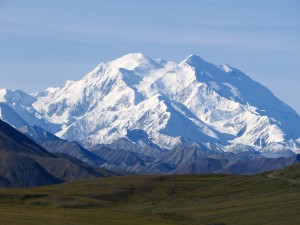
Denali, Alaska. Image: ThinkProgress

While many Australians are keenly aware of the increasingly erratic winters we have been getting and forecasts of shorter seasons (for instance see here) it is worth remembering this is a global phenomena – and hence requires a global solution.

Glacial melt. Invasive species. Mudslides. Erosion. Mountains around the world are seeing major changes accelerated by a warming planet.

Mountains represent 25% of the earth’s surface and host 13% of the world’s population. Warming-fueled changes are threatening sensitive ecosystems, water resources, climbing routes, and, in turn, the way of life in local communities.

Below is a list of five iconic mountains — known for their cultural, resource, and recreational significance — that are being directly impacted by climate change.

These include:

Everest, The Matterhorn, Denali (Mount McKinley), Kilimanjaro and Cotopaxi in Ecuador.

Check here for the article.

Mountaineer Lincoln Hall dies, aged 56

The following comes from AAP.

Image: AAP

Australian mountain climber Lincoln Hall has died from mesothelioma. He was 56.

The world-renowned mountaineer, who was a member of the 1984 first Australian Everest expedition, died “peacefully” in a Sydney hospital yesterday, Simon Baulderstone, chairman of the Australian Himalayan Foundation, said.

A well-known writer and adventurer, Hall lived in the Blue Mountains and was a founding director of the Australian Himalayan Foundation.

He was best known for his miraculous survival after he became confused and collapsed near the summit of Mt Everest on May 25, 2006. A rescue attempt was made by sherpas, but they were told to leave Hall and return to camp for the night. Hall’s expedition team released a statement to his friends and families the following morning that he had died on the mountain. Incredibly, he was found alive by another team after 12 hours exposed on the mountainside.

“Sitting to our left, about two feet from a 10,000 foot drop, was a man,” UK climber Myles Osborne said. “Not dead, not sleeping, but sitting cross-legged, in the process of changing his shirt. “‘I imagine you’re surprised to see me here,’ he said.

“Now, this was a moment of total disbelief to us all. Here was a gentleman, apparently lucid, who had spent the night without oxygen at 8600m, without proper equipment and barely clothed. And alive.” The team stayed with Hall until a rescue team of 12 sherpas arrived to help him to safety.

Hall became a celebrity on his arrival back home, featuring in several documentaries and writing a book about his ordeal, Dead Lucky.

He is survived by his wife and two sons.

The Australian Alps, a powerful teacher

Headwaters of the Snowy River

The following comes from the Australian Alps national parks Co-operative Management Program.

“The Australian Alps Education Kit is designed for students, teachers and anyone else keen to learn about this spectacular region of Australia. These educational materials form an organised resource focusing on iconic, awe-inspiring and accessible areas within the Australian Alps.

The contents range from the resilient yet fragile plant communities that grow in the harsh alpine environment, to thecultural impact of the Snowy Mountains Hydro-electricity Scheme; and from the First People’s connection with the mountain landscape to the Alps’ cycles of weather and climate”.

You can find the kit here.

There is a sheet on Aboriginal people and the alps available here.

Climate Change Pushing Alpine Plants Off the Mountain

This piece comes from Treehugger, and looks at impacts in the European Alps, but obviously warming of alpine environments is a real issue here in Australia as well (for instance, see the recent piece Alps could be snow free by 2050). The author is David DeFranza.

Aster bellidiastrum. Image: Alpine Exploratory

It seems obvious: As the average temperatures of alpine climates increase, cold-loving plant and animal species are forced to move up to higher elevations to find the conditions they are best suited for. New research, however, has found a surprise in this simple process—that it’s happening much faster than previously thought.

By analyzing plant samples from 60 summits in 13 European nations, researchers found that the phenomenon is continental in scale. Michael Gottfried, a researcher with the Austria-based Global Observation Research Initiative in Alpine Environments, explained that the team “expected to find a greater number of warm-loving plants at higher altitudes, but we did not expect to find such a significant change in such a short space of time

“Many cold-loving species are literally running out of mountain,” he continued, “in some of the lower mountains in Europe, we could see alpine meadows disappearing and dwarf shrubs taking over within the next few decades.”

Researchers compared data collected between 2001 and 2008, indicating the change is happening much more quickly than previously thought.

Blog at WordPress.com.

Up ↑