Search

Mountain Journal

Environment, news, culture from the Australian Alps

Tag

national parks

Pro-cattle grazing members dominate alpine committee

Now here’s a surprise, the state government has stacked the new Alpine Advisory Committee dominated with pro-cattle-grazing members. 

Published by the Victorian National Parks Association, August 2013

Image: VNPA
Image: VNPA

Victoria’s environment minister Ryan Smith has appointed a new Alpine Advisory Committee dominated by pro-cattle-grazing members, including MLC for Eastern Victoria and vocal cattlemen supporter Phil Davis MP.

The committee’s task is to review the long-running Alpine National Park draft management plan, which has yet to be released for public comment.

Some commentators see this as the first step towards a bid to try once again to reintroduce cattle grazing to the park, particularly if there is a change of government federally.

A representative of the Prospectors and Miners Association is also included.

The environment minister seems to have mistakenly signed off on the Mountain Cattlemen’s Association Christmas card list, instead of appointing an independent advisory committee.

No nature conservation groups are represented.

Who is on the commitee?

Chair: Ewan Waller.
Members: Philip Davis, David Packham, Peter Attiwill, Russell Mullett, Ronald Moon, Walter Wright, Mervyn McGuire, Geoffrey Burrowes, Stephen Dingwall, Andrew Dwyer, Christopher Commins, Christa Treasure, Trudy Anderson and Peter Roper.


The following information comes from the Weekly Times and highlights the heavy weighting towards grazing and other extractive interests.

The committee is being chaired by former Department of Sustainability fire chief Ewan Waller who revealed its scope allows them to give advice on forest and crown land in the high country as well as national parks.

Members include two former Mountain Cattlemen’s Association presidents Ensay’s Chris Commins and Glenaladale’s Christa Treasure and another MCAV member Neville Wright of Bobinwarrah plus Alpine Shire Mayor and Tawonga producer Peter Roper, and Trudy Anderson of Benambra.

Also appointed were retired CSIRO scientist and former forest chief David Packham along with retired forest ecologist Peter Attiwill, both known advocates for greater planned burning.

The Man from Snowy River film producer and Mansfield farmer Geoffrey Burrowes has also been selected and the tourism industry is represented by Andrew Dwyer of Jamieson and outback adventurer Ronald Moon.

Other members are Eastern Region MLA Philip Davis, Prospectors and Miners Association representative Stephen Dingwall, recreational fishing advocate Mervyn McGuire, indigenous consultants Russell Mullett.

Private leases plan for national parks

The following article comes from The Age, journalists are Jason Dowling and Tom Arup.

Check here for the response from the Victorian National Parks Association. Check here for the VNPA Hands off our Parks page.

ta-handsoff-240pxThe Napthine government has introduced sweeping changes to Victoria’s national parks allowing for 99-year private leases – in the same week Canberra is considering expanding its powers over the parks.

The state changes mean the historic Point Nepean Quarantine Station is in effect up for sale, according to activist Kate Baillieu.

The commercial real estate section of The Saturday Age carried an advertisement from real estate agents Jones Lang LaSalle to lease the Quarantine Station. The government has also asked for expressions of interest for private development of the 17-hectare site.

Matt Ruchel, executive director of the Victorian National Parks Association, said the new 99-year leases that will apply in all of Victoria’s national parks, including Wilsons Promontory, were deeply concerning. ”National parks are primarily for conservation, not development,” he said.

Environment Minister Ryan Smith said the 99-year leases would ”give investors greater certainty and a stronger incentive to develop innovative, high-quality proposals in our national parks”.

A spokesman for Mr Ryan said there would be exclusion zones where development would not be allowed in national parks.

In Canberra, the federal government is considering expanding its powers over national parks in response to plans by Coalition-led states to allow cattle grazing, shooting and logging in protected areas.

Environment Minister Tony Burke met as recently as Wednesday with conservation groups who want him to broaden his oversight over parks before the election.

The Australian Conservation Foundation and the Wilderness Society wants a ”trigger” to be legislated, meaning a heavy-impact project in a park would automatically need review under national environment laws, and giving the federal minister scope to block it.

The fate of national parks in Queensland, NSW and Victoria has come to the fore in recent years with cattle grazing, recreational shooting, and possibly logging, among state government proposals for parks. Currently, the federal government can only intervene in a national park if it is heritage-listed, or a protected plant or animal is threatened.

Mr Burke said the community was right to be concerned that places they have been enjoying are under threat. ”I share that concern and I’ll be looking into the ways I can stop these state governments from trashing national parks forever,” he said.

In 2011, Mr Burke proposed listing most of Australia’s 500-odd national parks – the domain of state governments – under federal environment law, which would have given him the power to reject new logging, grazing and mining projects. He later withdrew the proposed regulations after stopping a controversial cattle grazing trial in Victoria’s Alpine National Park using heritage law.

”Since then [the listing withdrawal] state Liberal governments are launching new attacks on national parks every few months. My view is clear, national parks are for families and nature. They are not farms, rifle ranges, mine sites or logging coupes,” Mr Burke said.

rainforest species in the Alps

The following story comes from the Summit Sun. Its good to know that pockets of Sassafras are hanging on at higher altitudes in  the Snowies.

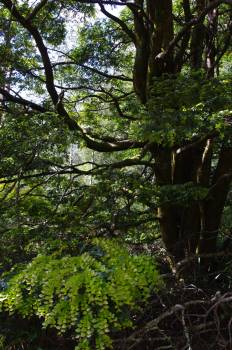
7457055298_e2b9d0a59d_zEnvironment specialists took to the skies recently to successfully confirm the presence of Southern Sassafras in the Bogong Peaks Wilderness in Kosciuszko National Park. The rugged mountainous country required a survey by helicopter to locate plants in forested gullies that flow towards the Goobragandra River.

Southern Sassafras or Atherosperma moschatum is a fire-sensitive tree. It has long been clouded in mystery regarding its existence in high altitude and cool temperate rainforest pockets like those found in the Bogong Peaks.

The survey was made possible thanks to a generous bequest by Kenneth Milburn to Landcare Australia, who have partnered with Greening Australia and the NSW National Parks and Wildlife Service (NPWS) to identify and map the distribution of the Southern Sassafras rainforest tree.

Shane Norrish, Farming and Major Projects Director at Landcare Australia said, “This is an outstanding opportunity to learn more about the ecology and distribution of high country vegetation communities. It is often difficult to obtain funding for projects such as these, and the generosity of the Milburn bequest will make a significant contribution to the protection of important species such as Southern Sassafras.”

Opportunistic surveys undertaken in 2011 by Greening Australia in the Bogong Peaks Wilderness Area confirmed the presence of Southern Sassafras further north-west than previously thought, but the extent was unknown.

“Identifying and broadening the known population boundaries of Southern Sassafras will have significant benefits for the species survival, and has important implications for park management activities including prescribed burning” said Matt White, NPWS Ranger for the Bogong Ranges.

Up until the time of the 2011 surveys, only a few populations were known to occur between 700-1300m altitude, and were usually found with Alpine Ash in sheltered gullies on the western fall of the main range of Geehi and Leather Barrel Creek, and in the Pilot Wilderness.

Further examination of remote sensing imagery had revealed additional potential occurrences in the Bogong Peaks, but limited access in the rugged terrain meant confirming these locations was almost impossible.

Greening Australia Project Manager, Nicki Taws, said, “The aerial survey enabled us to confirm the presence of Southern Sassafras in many locations that we couldn’t have reached on foot. We are very grateful to Landcare Australia for supporting this critical work.

Looking to the future, Nicki said, “We look forward to continuing our work with NPWS in this area, determining the presence and extent of Southern Sassafras and progressing collaborations to include community engagement in the protection and enhancement of this stunning tree.”

National park boundary redrawn for resort

The following comes from The Age newspaper, Feb 20, 2013.

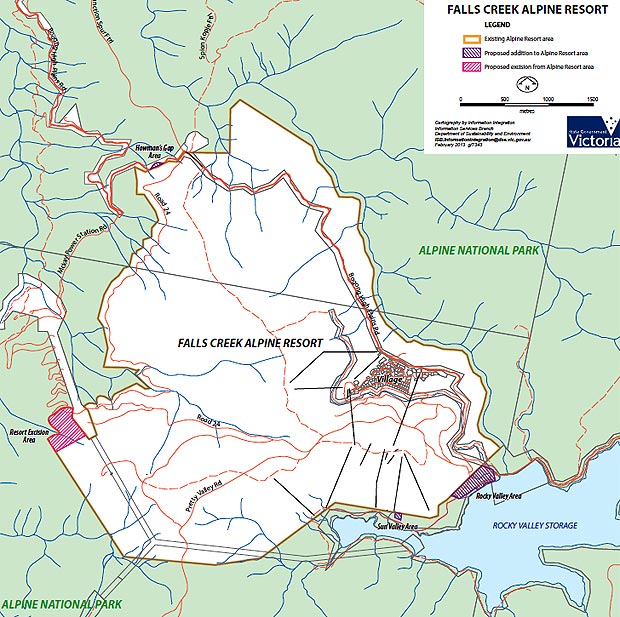
alpine2The Baillieu government has redrawn the boundaries of the Alpine National Park to allow the Falls Creek resort to expand.

On Thursday morning Environment Minister Ryan Smith announced the government would excise almost 10 hectares of land from the national park and add it to the adjoining Falls Creek Alpine Resort area.

The boundary change follows numerous requests from the Falls Creek resort to expand its operations. The resort wants to develop non-winter tourism activities and a high-altitude training camp for athletes.

The changes mean the resort will now be allowed to expand down to the shore of the Rock Valley Storage lake.
In exchange, the government will add almost 12 hectares of land on the slopes of Mount McKay to the park, which Mr Smith said contained snow gum woodland.

“Victoria’s alpine resorts make significant contributions to their local economies and to tourism in the state,’’ Mr Smith said.

‘‘This amendment is part of a long-term strategy to increase visitation, including in the non-winter months and ensure all Victorians can access and enjoy their natural environment,’’ he said.

“We want to encourage more altitude training, lake events, road cycling and mountain biking.’’

Mr Smith said the proposed amendments were part of Baillieu government’s plan to enable new ‘‘environmentally appropriate investments’’ on public land, including national parks, forests and alpine resorts.

In August the government decided to open up Victorian national parks to private tourism development following recommendations by the Victorian Competition and Efficiency Commission.

Guidelines to deem what development will be allowed in parks are still being finalised by Mr Smith, who will have final say over what projects would go ahead.

The decision to redraw the Alpine National Park boundaries to allow an expansion of the Falls Creek resort is separate to the August decision.

The Victorian National Parks Association’s Philip Ingamells said the process to redraw the Alpine National Park boundaries had been secretive.

“The government seems to think that if someone wants a development in a national park, they can simply excise that area from the park without any public consultation,’’ he said.

‘‘Management of our finest natural areas should be transparent, honest and based on the best scientific advice. We need to know what other developments they are planning for our magnificent national parks.”

Comment was being sought from Falls Creek Alpine Resort management.

The Alpine National Park was the site of the Baillieu government’s controversial cattle grazing trial, which was blocked by the Commonwealth under national environment law.

Help keep gold prospecting out of national parks!

The Baillieu Government wants to give prospectors and fossickers more freedom to dig up our most treasured national parks.The government has directed the Victorian Environmental Assessment Council (VEAC) to recommend that prospectors and fossickers should be permitted to expand their activities into the Alpine, Yarra Ranges, Baw Baw, Croajingolong, Errinundra, Lake Eildon, Lind and Mitchell River national parks, as well as the Lerderderg State Park.

Fossicking is already allowed in a number of Box-Ironbark parks in central Victoria. But despite a requirement that park managers monitor the impact of this damaging activity, no assessment has been carried out.

Prospecting in Victoria's national parks
> Take action

Our national parks are there to conserve our precious natural environments.

Please join us. VEAC cannot recommend that prospecting not be permitted in all of the parks, even if that is what its evidence shows.

PLEASE send your comments to the VEAC investigation by the deadline of Monday, 18 February 2013.

There are two easy ways to send a submission:

1. QUICK SUBMISSION

Just add your comments to our online submission and click SEND.

Quick email submission

2. PERSONAL SUBMISSION

In your own words, tell the government why our national parks should not be used for damaging activities like prospecting and gold panning.

Some suggestions:

  • Fossicking (metal detecting, digging holes and panning for gold) causes unnecessary damage to streamsides, and can threaten rare species such as ground orchids.
  • Our national parks are set aside to protect our natural areas for future generations. They are there for passive recreation, not exploitation.
  • Many of the rivers that flow through these parks are already listed as Heritage Rivers, and Natural Catchments. These additional levels of protection should be respected.
  • Fossicking is already allowed in a number of Box-Ironbark parks in central Victoria. But there has been no monitoring of their impacts as required by park management plans.
  • Fossicking and panning damages streamsides, causes erosion, and silts up rivers. In old gold-bearing streams, already worked over many years ago, mercury and other pollutants can be released into streams when soil is disturbed.
  • Fossicking and gold panning can damage the many important Aboriginal cultural heritage sites in the region.
  • While prospectors insist they behave responsibly, many don’t. The parks in the investigation area are in relatively remote areas, and fossickers’ activities will be difficult if not impossible to supervise or monitor.
  • Managing prospectors and fossicking will take park rangers away from other essential activities, at a time when staff numbers are already well below what’s needed for park management.
  • Many rivers, streams and catchments are important for rural, regional and city water supplies. We should be aiming to improve their condition, not compromise it.
  • There is already plenty of opportunity to fossick for gold in the extensive State Forest areas in eastern Victoria, outside national parks.
  • VEAC should have the opportunity to recommend no prospecting in parks, but the government has already decided that prospecting will be allowed in nine new parks (Alpine, Yarra Ranges, Baw Baw, Croajingolong, Errinundra, Lake Eildon, Lind and Mitchell River, and Lerderderg State Park).

Send your submission by Monday 18 February 2013 to:

Email: prospecting.investigation@veac.vic.gov.au

Or if sending by mail address your submission to:

VEAC
Level 6, 8 Nicholson St
East Melbourne 3002
Victoria, Australia

More information

The VEAC website has lots if useful information including maps and park overviews.

VEAC website

Read Phil Ingamells’ analysis of this issue in his article ‘Prospecting in Wonderland’.

Prospecting in Wonderland

keep our Parks free of prospecting

 The following alert comes from the Victorian National Parks Association.

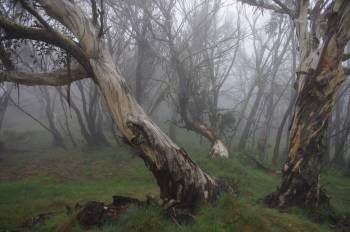
snow gums near Mt Lovick, VIC

Our national parks are under attack, yet again!

The Baillieu Government has asked the Victorian Environmental Assessment Council (VEAC) to make recommendations to introduce recreational prospecting into sections of up to nine national parks in eastern Victoria.

Importantly:

  •     VEAC cannot recommend that there should be no prospecting allowed in the parks, even if it reports that such activity would be harmful to the parks.
  •     VEAC has been given a very short time to gather evidence and make appropriate recommendations, indeed this will be the shortest ever VEAC investigation, and will largely take place over the holiday period.
  •     Prospecting with metal detectors can erode streamsides, harm rare plants and spread pathogens such as Phytophthora and Chitrid Fungus. But evidence-based information relating to both the impacts of fossicking and the complex geology of Victoria is not readily available. More time is definitely needed for this investigation.
  •     There will be no draft report, and only one period of public consultation.

Please write to VEAC, Victoria’s environment minister, and our energy and resources minister, saying:

  •     The terms of reference are flawed, because VEAC is forced to introduce fossicking to eastern Victorian parks, even if it decides the activity is harmful.
  •     There is no demonstrated high interest in fossicking in the eastern part of Victoria, even though vast areas of state forest are already available for that activity.
  •     There is absolutely no urgency for this investigation, so there is no need for such a tight timeline (and VEAC’s resources are already stretched, with two current investigations – Marine Parks and Yellingbo).

For more information, read the article Prospecting in Wonderland by Phil Ingamells in the latest edition of our magazine Park Watch.

For details of the investigation visit the VEAC website.

TAKE ACTION

Please, send a message now to Victoria’s environment minister, Ryan Smith, and the energy and resources minister Michael O’Brien saying that you are not happy with the restrictive terms of reference for this investigation, and that the timeline is far too short.

Please add your own concerns, and any of the information above.

Hon Michael O’Brien
Minister for Energy and Resources
Email: michael.o’brien@parliament.vic.gov.au

Hon Ryan Smith
Minster for the Environment and Climate Change
Email: ryan.smith@parliament.vic.gov.au

Environmental protection laws under attack

Nothofagus, Mt Toorongo, VIC

Changes are afoot to dramatically wind back cornerstone federal environmental protection laws. Under these changes, State Governments would be given sweeping powers to assess and approve major development projects. If implemented, these changes would be a disaster for our nation’s environment and wildlife.

In 1999, the Howard Government introduced the Environment Protection and Biodiversity Conservation (EPBC) Act. It was meant to protect environmental areas and wildlife that were so important, and so at risk, that their existence was of national importance.

Since it was introduced, the EPBC Act has saved only a few wild places from mining and other development. Many thousands of developments have gone ahead.

Australia’s environment is now under unprecedented attack. Nine open cut mines are planned for Tasmania’s pristine Tarkine forests. The Broome community are battling the construction of a massive gas hub at James Price Point that would mark the beginning of the industrialisation of the Kimberley . The Great Barrier Reef is becoming a coal and gas highway, and could lose its World Heritage status.

The State of the Environment Report 2011 paints a grim picture. More and more endangered species are moving closer to extinction, and we are losing our precious places.

40 years backwards

This is the most serious attack on environmental protection in over 40 years. It doesn’t take much imagination to see what the environmental implications of state decision-making would look like for our environment. In Queensland, Premier Campbell Newman has opposed any delays to coal projects, saying that Queensland is “in the business of coal”.

In Western Australia, four out of five Environmental Protection Authority decision-makers on the proposed James Price Point gas hub had to disqualify themselves because of conflicts of interest; the single remaining member, unsurprisingly, approved the proposal.

In Victoria, intervention by Federal Environment Minister Tony Burke was required to stop Premier Baillieu from overturning the previous government’s ban on alpine grazing, to reintroduce cattle into national parks under the guise of a ‘grazing trial’ that was likened to ‘scientific whaling’. Meanwhile, the New South Wales Government has changed laws to permit private hunters to shoot in national parks and allow fishing in critical grey nurse shark habitat.

The major environmental victories of past decades have largely been won by the Federal Government overturning bad development decisions by state governments. Without strong federal laws, the Franklin River would be dammed, the Great Barrier Reef would have oil rigs and Fraser Island would be a sand mine.

Yet later this year, the Council of Australian Governments (COAG) meets to agree to the framework for handing over of approval powers to the states. Decisions about renewing Regional Forest Agreements could be made at any time.

We need decision-makers to hear our voices now. Friends of the Earth is mounting a campaign − ‘Nature: Not Negotiable’ − to prevent the gutting of federal environment laws and to strengthen the federal government’s role in protecting the natural environment.

This campaign includes mobilising around the upcoming COAG meeting, organising with local campaigns, lobbying and community campaigning.

For more information on this work or to get involved, please email lauren.caulfield@foe.org.au

You can also find us on Twitter @naturenotneg or on Facebook at ‘Nature: Not Negotiable’.

Please support our campaign to ensure these powers are not undermined.

Info on the campaign is available here.

Our petition is available here.

Help needed to protect Australia’s biodiversity from Hawkweeds on the Bogong High Plains

Orange hawkweed flower. Photo: Mark Imhof, DPI

2012/13 Bogong High Plains
Hawkweed Surveillance Volunteer Program

Help needed to protect Australia’s biodiversity from Hawkweeds on the Bogong High Plains

Native to Europe, Hawkweeds have recently become established on mainland Australia.  Posing a serious threat to Australian biodiversity and the structure of natural communities, it is imperative that the incursion is eradicated before it’s too late.

Hawkweeds spread quickly via runners and roots forming dense mats, inhibiting and out-competing native vegetation.  In grassy ecosystems like the High Plains, dense patches of the weeds dominate the spaces between grass tussocks that are vital for the survival and recruitment of native flora and fauna.

Survey sessions will be conducted during the active flowering period. Most sessions will be five days long, the session between Christmas and New Year will be four days. Attendance for a full session is preferred but is not essential.

Accommodation will be provided at Falls Creek. Transport will be provided to survey areas each day.

The surveys for 2012/2013 season will be held over the following dates:

Session 1: Monday the 10th – Friday the 14th of December
Session 2: Monday the 17th – Friday the 21st of December
Session 3: Thursday the 27th – Sunday the 30th of December
Session 4: Monday the 7th – Friday the 11th of January
Session 5: Monday the 14th – Friday the 18th of January

For more information or to express your interest in the program, please contact:

Keith Primrose
hawkweed@parks.vic.gov.au
Mobile: 0428 508 299
Mt. Beauty Parks Victoria Office: (03) 5754 4693

Pest trees in Kosciuszko reinvented as mulch

This news release comes from the NSW Office of Environment and Heritage.

Image: NSW National Parks – Office of Environment & Heritage

Media release: 10 September 2012

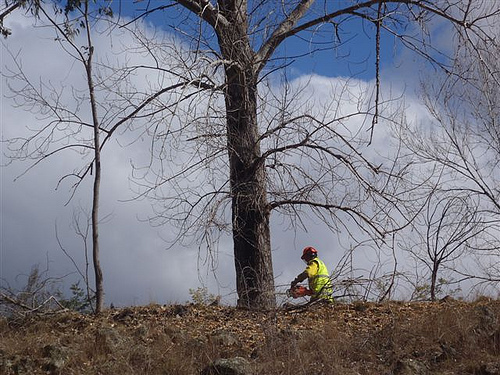
Field staff have been converting pest trees into valuable mulch to improve native animal habitat and suppress invasive blackberry and briar weeds in parts of Kosciuszko National Park.

NSW National Parks and Wildlife Service (NPWS) Senior Field Supervisor Danny Matthews said the mulched trees, mostly poplars, had been spreading at an alarming rate.

“Five field staff recently spent 26 days removing and chipping hundreds of trees over an area of six hectares at the Talbingo Landslip Quarry near Talbingo Dam wall,” Mr Matthews said.

“During the construction of the Snowy Scheme, and particularly between the 1950s and 1970s, exotic trees were planted for erosion control and this had unintended consequences for native ecosystems.”

Mr Matthews said European species including willow, broom and poplar were planted in parts of Kosciuszko National Park and in many cases they had spread and become weeds.

“Replacing exotic trees with native vegetation will not only protect soil stability, it will have broader environmental benefits.

“And chipping these trees has produced about 800 cubic metres of mulch, which we have spread to boost organic levels in the soil and help stop weed infestations in the undergrowth.”

This major woody weed eradication program in Kosciuszko National Park is tackling exotic trees on Guthega Road, reducing Scotch Broom in the Snowy River, and removing kilometres of willows in the Tumut River.

More work is planned this year, including the removal of thousands of willow stems in the Eucumbene River and helicopter-based work in the upper reaches of the Tumut River between the T2 power station and the Elliott Way.

Weed eradication programs like the one underway in Kosciuszko are one way the Office of Environment and Heritage enhances the care and management of National Parks for a healthy environment.

recreational hunting in NSW National Parks?

The NSW Premier has announced plans to open up almost 80 national parks and reserves to hunting, covering close to 3 million hectares or 40% of all NSW parks and reserves.

This announcement, part of a deal with the Shooters and Fishers Party to ensure passage of the government’s electricity privatisation bill – will allow shooting of feral animals in ”a limited number of areas under strict conditions”.

It has been widely condemned.

The following, from someone living near one of the Parks to be affected, sums up the issues nicely. Check the link at the end for further background. If you live in NSW please sign the letter.

My wife and I live across the water from Kosciuszko National Park and our house is within easy gunshot range of the park. The wife and I spend at least two days a week hiking in the park and the decision by the O’Farrell government to allow amateur shooters to roam our national parks is an absolute disgrace and should be opposed by every environmental group in Australia. Not just in NSW because as the Shooters Party gains more members and more clout, they will surely do deals with other present and future state and federal governments that will impact adversely on our treasured state and national parks and wildlife areas.

National parks were formed not just as quiet natural places to shuck off the stresses of modern living and a place to get away from it all, but to protect Australia’s wild places. Their ecological integrity must remain intact – meaning that the structure and function of the ecosystems with their various wildlife habitats are minimally unimpaired by human activity. Allowing bands of amateur hunters with bows and arrows and high powered rifles and pig dogs to roam the parks is hardly in the spirit that the parks were formed.

Park rangers have slammed a decision to allow hunting in NSW national parks, saying they shouldn’t have to work in fear of their safety – Sure and let’s no forget about the publics safety either !

The NSW government has now said that there will be no shooting allowed in world heritage or wilderness areas – Should we believe them?

Barry O’Farrell has broken a pre election promise not to allow hunting in the parks, and doing so has trashed the government’s environmental credentials. He has lied to the public once and so he will surely allow even more concessions in his dealings with the Shooters and Fishers Party when he needs their support.

I realize (reluctantly) that culling of feral animals in the park is necessary from time to time, but this should only be done by trained National Park personnel, and or professional shooters.

I would bet that over 90% of Australians do not want people with guns and pig dogs roaming their favourite park, and so I believe that all environmental groups in the country should protest immediately.

“Say no to recreational hunting in NSW National Parks”

Ken

Please sign the petition here.

For a map of affected Parks, please check here.

Vic Govt told to reveal cattle grazing documents

This story comes from the ABC. Journalist is Gus Goswell.

Image: VNPA

The Victorian Government has been ordered to hand over internal documents relating to its alpine cattle grazing trial.

The controversial trial in the Alpine National Park was blocked by the Federal Government but the State Government has launched an appeal.

It says the trial was designed to reduce the bushfire risk, based on scientific evidence.

The Victorian Civil and Administrative Tribunal (VCAT) has ordered that Department of Sustainability and Environment emails and scientific documents be made public.

The Environment Defenders Office applied for the documents on behalf of the Victorian National Parks Association.

Lawyer Felicity Milner from the Environment Defenders Office says the VCAT order is significant.

“We’re concerned about the scientific basis for the alpine cattle grazing trial,” she said.

“Certainly we want to see the documents to apply scrutiny to that decision and see whether or not it could be said to be backed up by proper science.

“If it is not backed up by proper science then we will be attacking the Government’s decision.

“The cattle grazing trial, as I understand it, has not gone ahead because the Federal Government has said it is unacceptable but the State Government is challenging that decision in the Federal Court.

“Based on public statements from the Government and the department we are of the understanding at this stage that they intend to continue with the alpine grazing trial if they are legally allowed to.”

Victorian Premier Ted Baillieu has defended spending taxpayer dollars to try to stop the documents being released.

“The Government has taken a view about what material ought to be made public,” he said.

“You would expect the Government to reinforce the view it has about information and our understanding of the legislation.”

Mr Baillieu has not ruled out challenging the VCAT order.

“The Government will have a look at that judgment and we’ll make an assessment of it,” he said.

However, Mr Baillieu has confirmed the Government still wants to push ahead with the cattle grazing trial.

“We certainly maintain the view that the Commonwealth when it made its decisions didn’t do it on a basis that was thorough and comprehensive,” he said.

Alphutte – still alpine vandals

We have previously pointed out that the Alphutte pizza restaurant at Dinner Plain destroyed all the remnant indigenous groundcover on their property last autumn.

Sadly, they continue their irresponsible behaviour, planting out various exotics, including herbs and succulents, on their property, which have the potential to go wild.

Dinner Plain village is an enclave of private land within the Alpine National Park, about 10 kilometres from Mt Hotham. Despite local Council requiring people to use indigenous species in any plantings, a growing number of residents are choosing to ignore this requirement.

It’s a shame that people who are lucky enough to have access to such a beautiful mountain environment are happy to put potential environmental weeds into the local habitat.

If this concerns you, you may want to avoid Alphutte when you visit Dinner Plain. Local café Mountain Kitchen sells indigenous plants, which are also available via the Alpine Shire.

Blog at WordPress.com.

Up ↑