Search

Mountain Journal

Environment, news, culture from the Australian Alps

Tag

rivers

NSW Government to remove independent Snowy Scientific Committee?

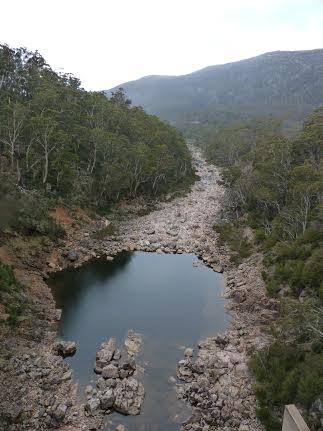
The Snowy River, in Kosciusko National Park looking downstream from Island Bend Dam

The NSW Government’s Bill to amend the Snowy Hydro Corporatisation Act and replace the independent Snowy Scientific Committee with an advisory committee under the control and direction of Katrina Hodgkinson (NSW Minister for Primary Industries) passed the Lower House last week.

Check here for some background.

One of the key benefits of the current Committee is that it was “firmly independent of government” as Ms Hodgkinson puts it (ie, doesn’t tow a government line).

According to a report in the SMH:

Scientists, including former members of the six-member scientific committee, said the separation from powerful interests such as the giant Snowy Hydro Ltd gave the panel a critical watchdog role that is likely to be lost. Irrigators, Snowy Hydro and government officials from NSW and Victoria are likely to hold sway, they say.

Independence is “the way scientists give you the best advice”, said Sam Lake, an aquatic expert from Monash University, who served on the committee.

It is set to pass the Upper House Tuesday 25th March unless the Shooters and Christian Democrats change their mind and vote against it.

An independent Snowy Scientific Committee is vital for the restoration of the Snowy River and all other rivers affected by the Snowy scheme.

take action

If you value the Snowy, please write to the Christian Democrats and Shooters and Fishers policy managers, urging them to oppose the government’s Bill.

A quick email is sufficient.

Possible text:

(cut and paste, make any changes you want, add your name and address and email to the two emails below).

Dear Paul and Robert

Snowy Hydro Corporatisation Act

I write to you to express my concerns about the NSW Government’s Bill which will amend the Snowy Hydro Corporatisation Act and replace the independent Snowy Scientific Committee with an advisory committee under the control and direction of Katrina Hodgkinson.

I believe it is essential that the panel continue to be composed of independent, appropriately skilled people. If the proposed changes in the Bill are passed, a critical watchdog role is likely to be lost. Irrigators, Snowy Hydro and government officials from NSW and Victoria are likely to hold sway, rather than scientists.

Having the ability to get independent advice is the best way for government to make sound, long term decisions about the Snowy River. An independent Snowy Scientific Committee is vital for the restoration of the Snowy River and all other rivers affected by the Snowy scheme.

I urge you to vote against the proposed amendments to the Snowy Hydro Corporatisation Act.

Yours sincerely,

Send to:

Paul.Green@parliament.nsw.gov.au  for the Christian Democrats

robert.despotoski@parliament.nsw.gov.au for the Shooters and Fishers Party

or alternatively contact the Minister directly:

Katrina Hodgkinson: office@hodgkinson.minister.nsw.gov.au or call her office on (02) 9228 5210.
Lessons to learn from the Snowy

The following opinion piece comes from the Weekly Times.

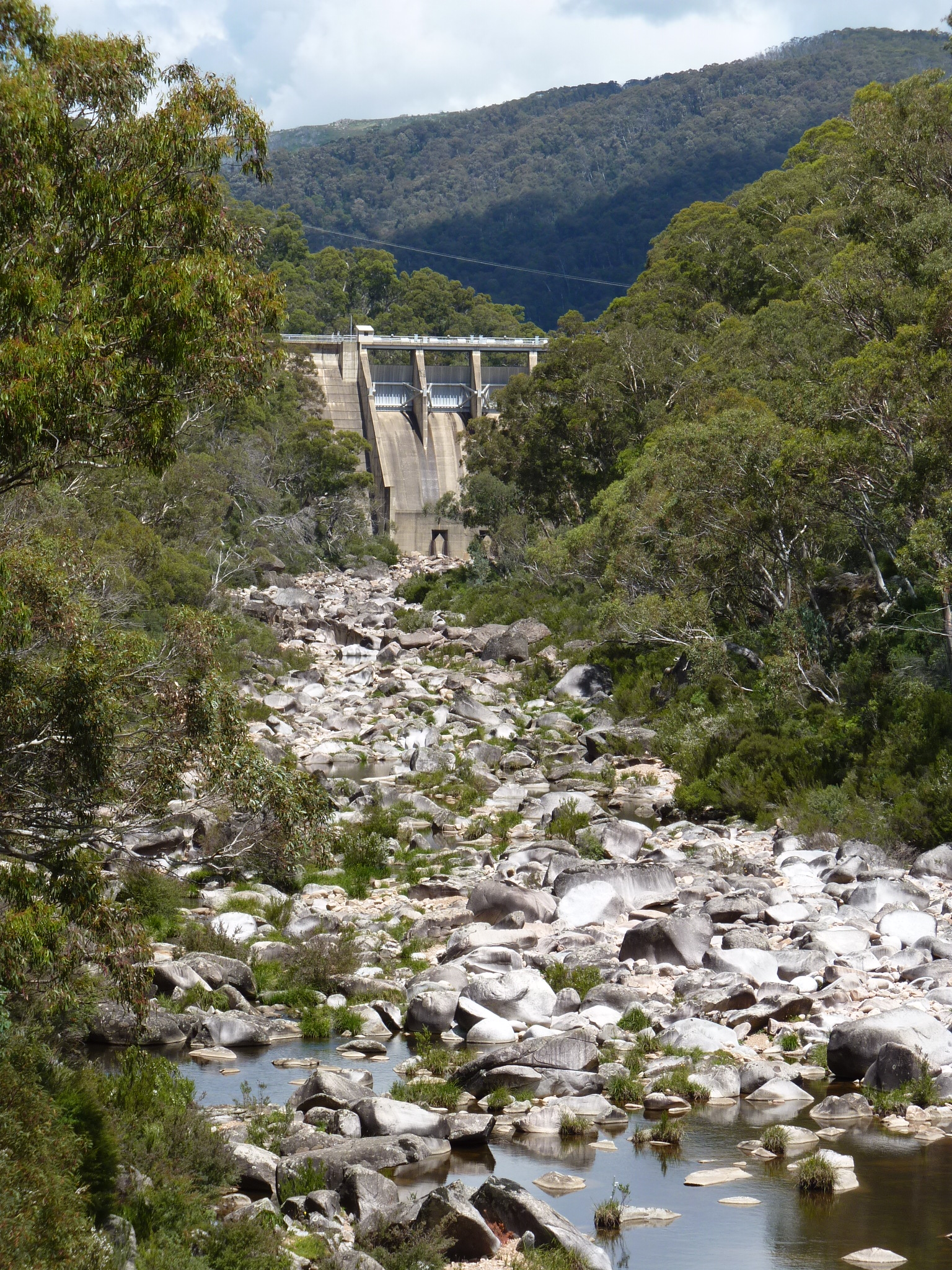
Snowy River in Kosciusko National Park

GOVERNMENTS have failed the mighty river, writes LOUISE CRISP

The big spring releases from Jindabyne Dam into the Snowy River will capture the media’s attention this week.

Snowy Hydro Ltd will allow up to 84 gigalitres to flow down the Snowy River during the next two weeks.

Although they are much reduced, the spring releases are intended to mimic the huge spring snowmelt flows the Snowy was named for.

Most people now believe the Snowy has been saved.

When Jindabyne Dam was completed in 1967, the Snowy River had 99 per cent of its headwaters captured and diverted west to the Murray-Darling Basin for electricity generation and irrigation, resulting in severe degradation of the Snowy and considerable economic loss to the downstream communities.

In 1996, an expert panel scientific report identified that a healthy river needed the equivalent of 28 per cent annual natural flow below Jindabyne.

Ten years ago, the Victorian, NSW and Commonwealth governments signed agreements and legislation to fund a 10-year plan to return environmental flows to the Snowy.

The three shareholder governments of Snowy Hydro Ltd were committed to providing $375 million to Water for Rivers for savings in the Murray and Murrumbidgee systems to off-set increased flows by 2012 to:

THE Snowy River below Jindabyne Dam – up to 21 per cent of annual natural flow.

SNOWY montane rivers – up to 118 gigalitres a year.

SEVENTY gigalitres a year to the Murray.

The three governments also agreed to return up to 28 per cent to the Snowy below Jindabyne Dam post-2012.

The legislation also required the NSW Government to establish an independent Snowy Scientific Committee to provide advice on the best environmental flow release regime and produce annual state-of-environment reports on the rivers affected by the Snowy scheme.

So where are we 10 years later?

In November 2010 and October last year, large spring flows were released into the Snowy River below Jindabyne from water savings obtained by Water for Rivers.

While the Snowy has seen some good flows this year, it is far from saved.

The annual allocation to the Snowy below Jindabyne this water year (beginning May 1) is only about 15 per cent of the annual natural flow, and half the required minimum environmental flow identified by scientists in 1996. Releases below Jindabyne are unlikely to be much more than 15 per cent, as half the water acquired by Water for Rivers is general security or low reliability.

These entitlements would only deliver much real water to the river in exceptionally wet years.

The upper Snowy River in Kosciuszko National Park was scheduled to receive increased flows from 2007-08 (below Guthega Dam) and from 2009-10 (below Island Bend Dam). However, these sections of the Snowy have not received environmental flows.

For months the Snowy River in Kosciuszko National Park remains a dry stony riverbed.

In addition, the main eastern tributary, the Eucumbene River, and many other tributaries were not included in the original Snowy legislation and will not receive environmental flows.

Snowy Hydro Ltd has made one release to the Murray in 2005-06 of 38 gigalitres.

There is now 230 gigalitres of taxpayer-funded water savings owed the Murray River held by Snowy Hydro Ltd in Snowy Scheme storages. Nevertheless, the Murray Darling Basin Authority has included it in baseline modelling for the proposed Basin plan.

The 2002 legislation also required NSW to establish the independent Snowy Scientific Committee but it was delayed until 2008.

The committee produced a series of invaluable public reports on the adequacy of flows to the Snowy and the upper Murrumbidgee.

The committee’s term expired on May 15 last year and despite commitments from the three relevant NSW ministers, it has still not been re-established.

The 10-year plan to restore the Snowy is a simpler and smaller version of the proposed Murray-Darling Basin Plan.

The failure of governments therefore, to deliver the environmental outcomes for the Snowy, does not bode well for the future of the Murray.

    Louise Crisp is vice chairwoman of the Snowy River Alliance

Check here for a you-tube video on the upper Snowy river.

a copper zinc gold mine in the Vic Alps?

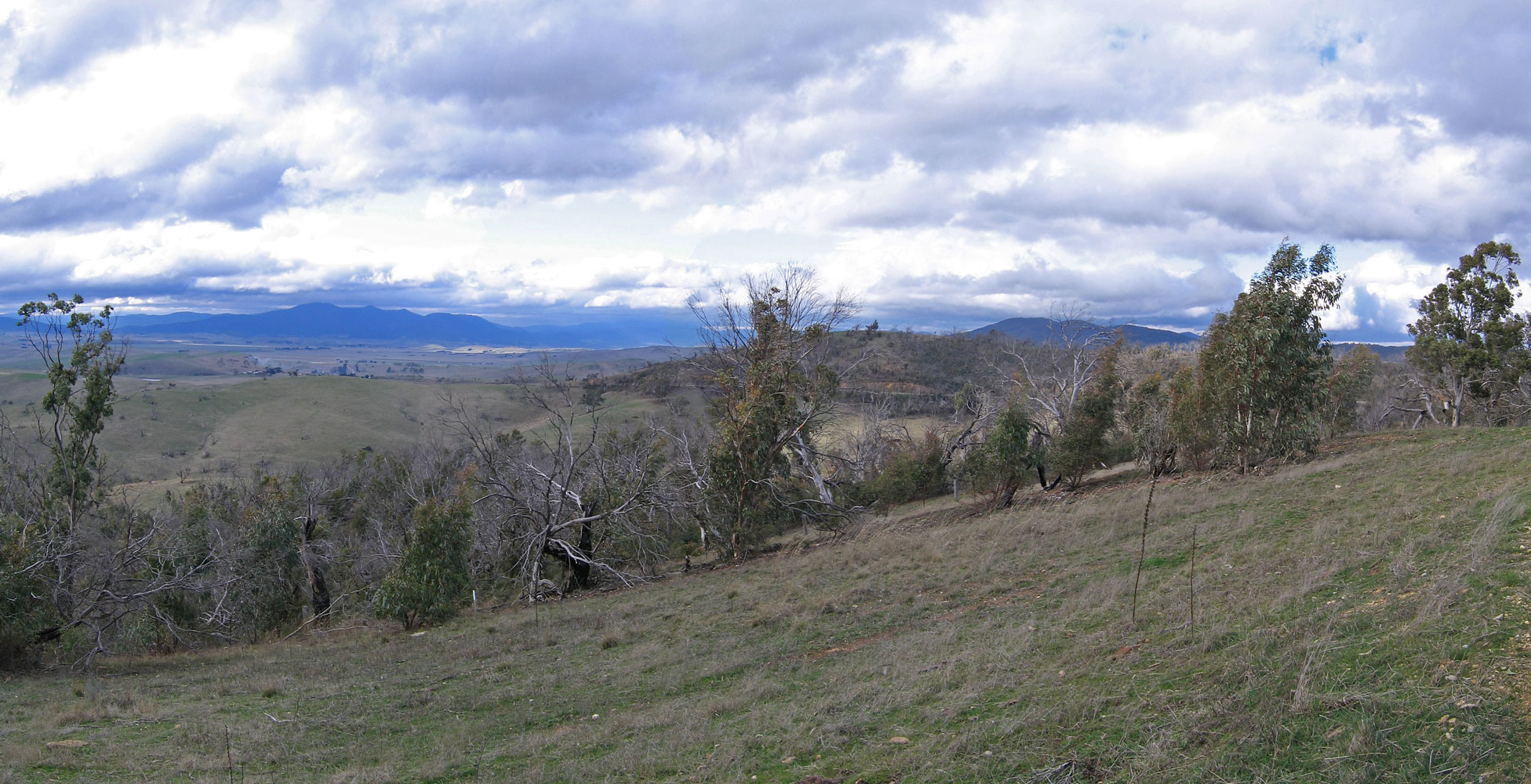
Benambra from McMillans Lookout. Image: en.wikipedia.org

The Stockman Project is located in the Victorian Alps, 470km by road north-east of Melbourne and 60km by road north east of Omeo. The project contains two copper-zinc-lead-silver-gold rich deposits, called Wilga and Currawong. Wilga was discovered in 1978 and Currawong in 1979. Denehurst mined the copper rich core of Wilga deposit from 1992 to 1996. In 2006, following rehabilitation of the plant site and tailings dam by the Victorian Department of Primary Industries, the project was put out for public tender as part of an exploration incentive program. Jabiru Metals Limited (Jabiru) was awarded the project in March 2007.

The Independence Group has now bought up Jabiru, and is proposing to recommission the Wilga mine and establish a new mine four kilometres to the north (the Currawong deposit).

Check here for a summary of the project, and some of the issues concerning locals.

logging and Melbourne’s water catchments

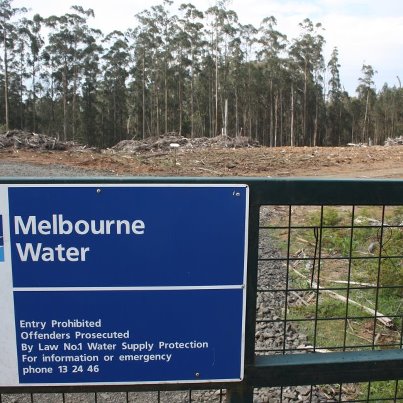
The following comes from Central Highlands Action Group and highlights the logging issue within Melbourne’s drinking water catchments.

Starvation Creek – Yarra Catchment. Image: CHAG.

Melbourne Water and Premier Baillieu overcharge us for a desalination plant while they plunder our free water from Melbourne’s catchments subject to logging.

Logging in Toolangi, tributary to the Upper Goulburn, is already ripping 3,807 billion litres of water from ‘paying’ downstream users and irrigators worsening over the next century. VicForests, the governments logging company, don’t pay for this water cost nor do Australian Paper (makers of Reflex copy paper) who receive 50% of VicForests wood supply. The owners of Australian Paper are the Japanese multi-national pulp conglomerate Nippon Paper, whose office is in Tokyo. VicForests have only paid a legitimate rent for this forest ‘use’ once since their inception in 2004.

VicForest have yet to break even since 2005 without the aid of grants. They are insolvent but are exempt from Part IV of the Trade Practices Act that would see these matters investigated by a third party like the ACCC. VicForests have avoided audits by the Auditor General after 8 years of operating.

In 2008 the Victorian ALP government received the results of the Wood and Water study committed to in the Regional Forest Agreement process (RFA) in 1998. The results of the hydrological study recommended ending logging in 2009/10 in order to improve water yields to Melbourne (DSE/Mein 2008). This was flatly rejected by government and as a result environment and local government stakeholders abandoned participation in the study.

As temperatures broke state records, angry at the state governments response to dismissing the option to end catchment logging, fifteen local governments independently carried a motion to stop catchment logging by 2010, including the Melbourne City Council. The government ignored this concern and proposed a very expensive buffer.

In 2008 the state ALP government commissioned a desalination plant and maintained clearfell logging the catchments, which in effect, firmly privatised the otherwise historically free water resource. Melbourne has enjoyed a clean, heathy water supply as a result of government in the late 1800‘s kicking timber-getters and miners out of the catchments. As Melbourne’s population grew, new water sources were channeled and created like the Thomson dam at a considerable cost to Victorians. The Thomson provides up to 60% of Melbourne’s water and is now the most heavily logged catchment in the network.

In the 2010 election the Coalition Minister for Water and Forestry, Peter Walsh, committed to hastening logging rotations down from 80 years to 50 years in the Timber Industry Action Plan (TIAP) in order to create more resource from the dwindling forests. This ultimately means that regenerating forests, after logging, growing in the band of highest rainfall, will be kept in perpetual thirst. Regrowing ash species forests lose up to 50% of water run off at 50 years of age due to their enormous growth capacity. It’s not HOW MUCH you log its where and what species you log that’s costing Melbourne critical free water!

In the TIAP, Minister Walsh made a commitment to log parks and strengthened commitments to log water catchments as an electoral promise to his National party colleagues (many of whom are loggers). So under current policy and its effects, our catchments will never yield water at their maximum delivery and we have to pay for the forfeiture via a desalination plant no-one can afford. Minister Walsh runs VicForests and Melbourne Water so he sets any checks and balances, should any exist.

In this Melbourne By-Election voters should demand that candidates openly declare their policy on Melbourne’s Water! It maybe the single greatest issue for the sustainability and survival of Melbourne.

Check here for details on protests held earlier in 2012.

Snowy River environmental flows

The Weekly Times is running with the story on getting environmental flows back into the Snowy River:

crossing the headwaters of the Snowy

“The greatest hurdle to reviving the Snowy River’s flows could be removed for little more than $3.3 million.

That’s the estimated cost of extinguishing a 56,000-megalitre water debt that must be repaid before the iconic river’s flows can be raised above a trickle this spring.

If the debt is not repaid the Snowy River will once again be capped at 4 per cent of its natural flow in 2010-11, almost 10 years after the inter-government deal was struck to rescue the river.

East Gippsland Independent MP Craig Ingram, who put Labor into power on the back of its promise to revive the Snowy’s flows, said it was time to extinguish the debt and boost this spring’s flows”.

Your can find the Times story here.

Blog at WordPress.com.

Up ↑