Search

Mountain Journal

Environment, news, culture from the Australian Alps

Tag

sense of place

In praise of huts 2

Mountain Journal has previously covered the issue of huts in the high country. As we said then:

Huts in the mountains can be a vexed issue. Huts will tend to attract people and so tend to concentrate visitation within a larger area. As one example, most people who climb Mt Bogong tend to then turn towards Cleve Cole hut rather than head across to the Hooker Plateau. This tendency to influence visitation can be both good and bad.

They are part of the cultural history of the high country, and reflect major stages in the post colonisation era: cattle grazing, forestry, hydro, even fire watch towers and, more recently, huts built for recreational purposes. We also have a number of strange and random anomalies, ones that don’t really make sense: Craig’s hut near Mt Stirling as an example, which was built as a set for a film. There are, of course, those whose primary function is safety, such as Seaman’s hut near Mt Kosciusko, and huts that belong to clubs or even schools (Geelong Grammar on Mt Stirling)”.

With growing risk of wildfire, and many huts simply ageing and starting to fall apart, there is the chance that the overall number of huts will decline in coming years. Some are carefully looked after (the Kosciusko Huts Association lists the known caretakers of huts in the Snowy Mountains) but others are falling into disrepair.

I am more interested in indigenous history of the high country than huts, but I do appreciate the cultural value they hold for many people and the practical value of refuge huts.

Continue reading “In praise of huts 2”

Mountain music

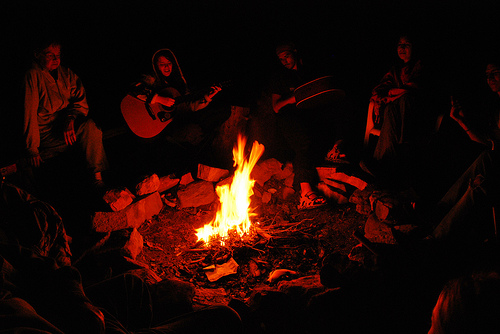
Many years ago, I spent a slightly surreal weekend on the Howqua River in north east Victoria, where, as luck would have it, there was both a mountain cattleman’s gathering and a big enclave of environmental activists holding campaign workshops. Our camps squeezed closer together as the crowds packed in along Sheepyard Flat, and the initial distrust dissolved on the second or third night as we found some common cause in shared music around the fire.

It was one of those nights to remember. I recall that we got on famously, that many songs were traded, and various social lubricants were consumed. What I most remember was the music.

Music is one of those things that defines culture. Any authentic culture has its own music, songs that grow from who its people are and how they live, and also the place they live in. There’s nothing wrong with playing other people’s songs, but almost everything I heard that night was from somewhere else.

Read the story here.

Mountain Journal turns five

It’s autumn, and so it must be time for the annual reflection on the Journal. Hard to believe its half a decade old!

Much of my motivation in starting MJ was simply to create a forum where I could appreciate our mountains and the people who are drawn to live and play amongst them. Early on, I did a few interviews with people I admire, and always love to run stories on people getting out amongst our wonderful mountain environment.

Over the past few years, the visitation has swung towards politics and backcountry adventure. This was the case in 2014 in terms of visitation. Sadly this is probably because there have been so many negative decisions taken by the Victorian Coalition government as it relates to the High Country. With the election of the ALP in November, the key threat to the Alpine national park – alpine grazing – has again been stopped.

While MJ was never really planned to be a ‘track notes’ type site, it has been interesting to see very strong visitation to the few trip reports that have been posted.

Check here for the full report.

High Country Harvest

The High Country Harvest is a food based festival featuring 40 events across north east Victoria over 10 days.

15 – 24 May.

From the organisers:

You are invited to sip, sample and savour the bounty grown and created by chefs, artisan producers, craft brewers and winemakers at more than 40 culinary events over 10 glorious days. Most events sell out quickly, so bookings are essential.

You can find details on all the events here.

Winter may be over, but the beauty and wonder of the mountains rolls on…

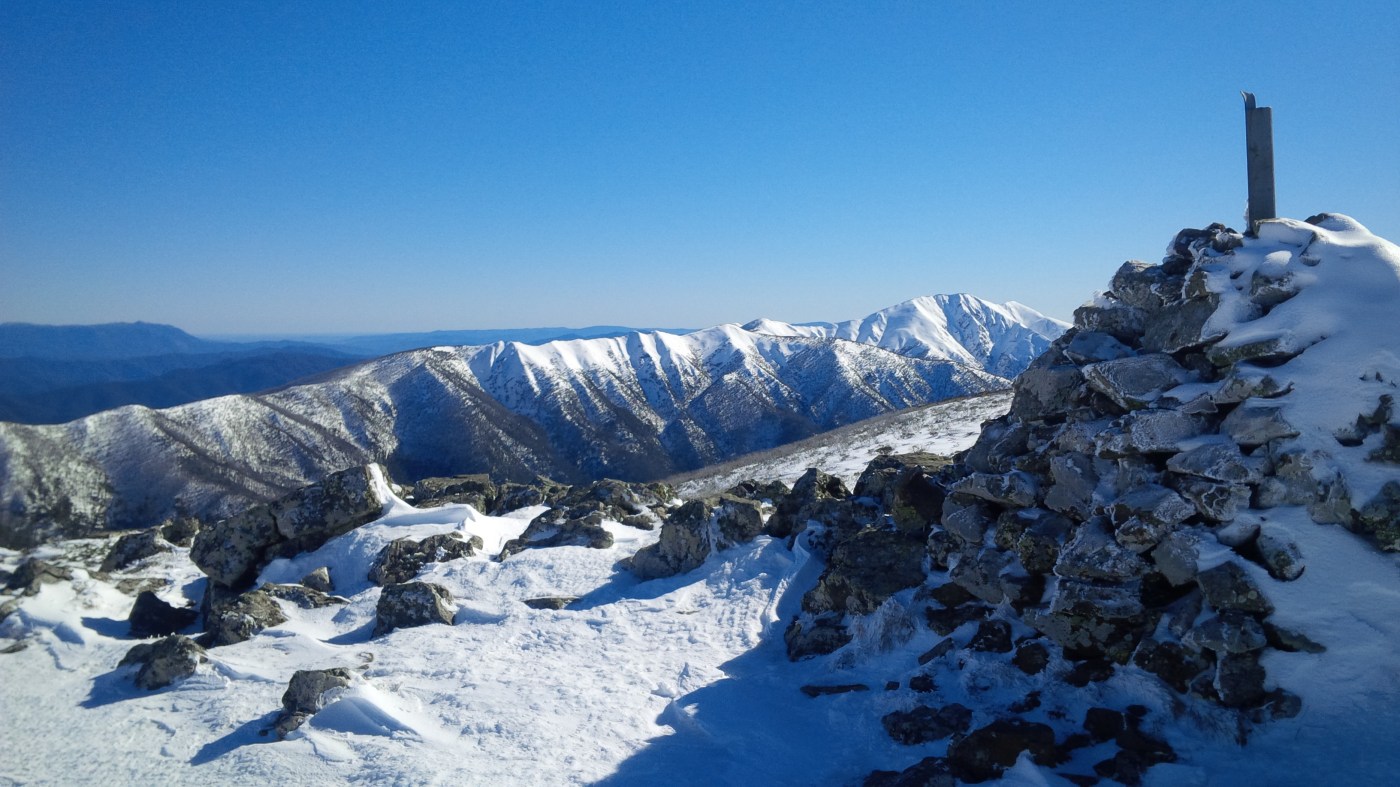
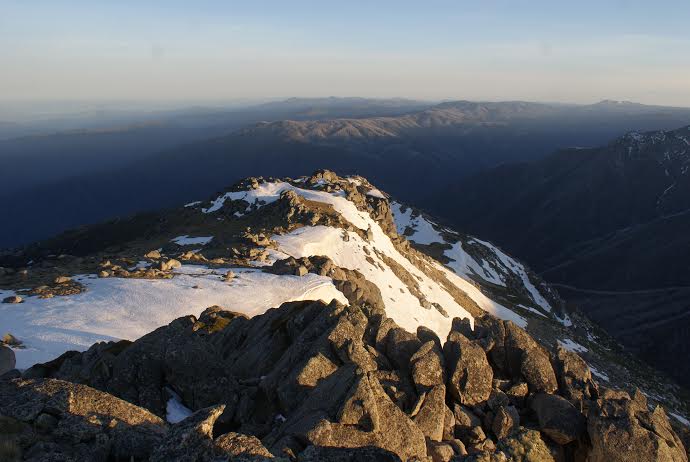
Some photos from Andrew Stanger, taken in late October “out the back on the Main Range of Kosciuszko National Park as the first flowers were unfurling to clear, sunny skies.”

Enjoy.

Continue reading “Winter may be over, but the beauty and wonder of the mountains rolls on…”

In Memoriam, Mike Moore

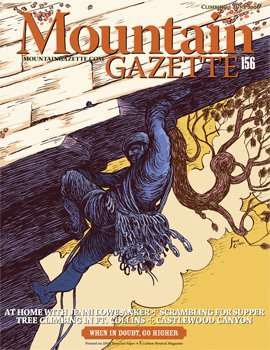
MG-cover-156-350hIn late summer 2010, I was stuck in the doldrums of endless heat and lack of rain, and winter seemed like it was light years away. I’d sought some shelter from the oven like air outdoors, and retreated to the coolest, darkest room in the house. I sought refuge in a cold beer and one of my favourite magazines, Mountain Gazette.

The Gazette was a lovely journal, described by its founder as being “generally about the mountains” that was produced in Colorado. It was often rambling and lateral, and seemed to cover everything from drinking and drugs to outdoor adventures, to politics in the ‘mountain states’, to musings on mountain culture. Leadville is not Miami (thankfully).

It got me thinking. I love the mountains here in south eastern Australia. And I love the culture that’s developing, growing from the thousands of people who are drawn to the hills to ski or board, to walk or paddle, to work and live. Not just the glossy consumer lifestyles of the rich and banal, but the real lives of people putting their roots down in a place that they love.

And so Mountain Journal was born. It never made it into print form. The logistics and costs were too great, and my time too limited. But it’s clearly filling some need for some people, and here we are four years later.

I just found out that Mike Moore, the founder of Mountain Gazette, passed away earlier this month. MG has long been a place of inspiration for me and I felt sad to hear of his passing. The Gazette itself transformed into an on-line journal several years ago and still publishes excellent writings and observations about mountain life. The following are some excerts from a reflection on Mike’s time as editor of the Gazette, by George Sibley.

Continue reading “In Memoriam, Mike Moore”

‘The Mountain’ book launch tonight

Five years in the making, The Mountain is the first photographer’s monograph on Mt Wellington in nearly 20 years.

Mark Clemens has created a superb photographic collection highlighting the uniqueness of this wild place on Hobart’s back doorstep with a foreword by award winning Tasmanian novelist, Heather Rose.

A photographic evocation of the Mountain’s own intrinsic nature: it lets the Mountain have its own voice and tell its own story.

The Mountain is Hardback $49.95, and is printed in Hobart to the highest specs.

Part of the proceeds go to the Tasmanian Land Conservancy.

Reservation essential to:   rsvp@fullersbookshop.com.au   or (03) 6234 3800

THE MOUNTAIN
BY MARK CLEMENS
BOOK LAUNCH

Follow The Mountain on facebook.com

WHEN

September 18, 2014 at 5:30pm – 6:30pm

WHERE

Fullers Bookshop
131 Collins St
Hobart, Tasmania 7000


Australian backcountry film festival – Spring 2014

For the past four years, the backcountry film festival has been attracting good numbers of people, and has been showing in more locations across south eastern Australia.

It seems like it might be time to have our own festival – with films made in Australia.

At previous Melbourne shows, we have added a film about skiing and boarding on The Bluff (No Lift Lines Here), and this year saw OFF GRID, a new effort on Mt Bogong from SoO Airtime.

The plan is to hold an Australian backcountry film festival in late spring 2014 with only local content. There are some fantastic film makers out there, and we hope to be able to showcase some of these.

We are seeking expressions of interest from film makers who would like to submit films.

Any human and gravity powered backcountry adventure would be welcome: walking, skiing, boarding, MTBing, paddling, climbing, …

As this is an entirely volunteer effort, with no budget, we are not able to offer payment for showing the films.

Films can be in two length categories. We hope to show an hours worth of short films (3 to 7 minutes) then up to 2 longer films (30 – 40 minutes each).

At this point we are looking at doing a Melbourne showing, with the ability to offer the festival to other places once its packaged up. The aim is to do a low fuss mini film festival, so we’d appreciate getting the films in a format that allows us to put them onto a single dvd.

If you’re keen, please get in touch: cam.walker@foe.org.au

I would also love to hear from anyone keen to volunteer their skills to turn the individual films into a package and for help with logistics.

A half century of change in the Central Alps

Anyone who has hiked and skied the mountains between Buller and Stirling, and from The Bluff to Howitt and Cobbler and is over 30 probably knows the wonderful maps of Stuart Brookes.

Stuart has produced maps of the Alps and other popular walking areas since the late 1940s. As a teenager on my first walking, snow shoeing and skiing adventures in the area around the Howqua River, I fell in love with Stuart’s black and white map ‘Watersheds of the King, Howqua & Jamieson Rivers’. It had basic landform details shown through shading and all the features that a walker needed: good campsites, places where you could get water on the high ridges, routes and cairned trails rather than just the marked roads. I would get a new version every couple of years, and later versions were in multi colour and had contours. But they still had a sense of richness that are rare in modern maps. This was country that Stuart knew intimately and the maps evoked a rich sense of place.

Continue reading “A half century of change in the Central Alps”

Alan E J Andrews 1926 – 2014

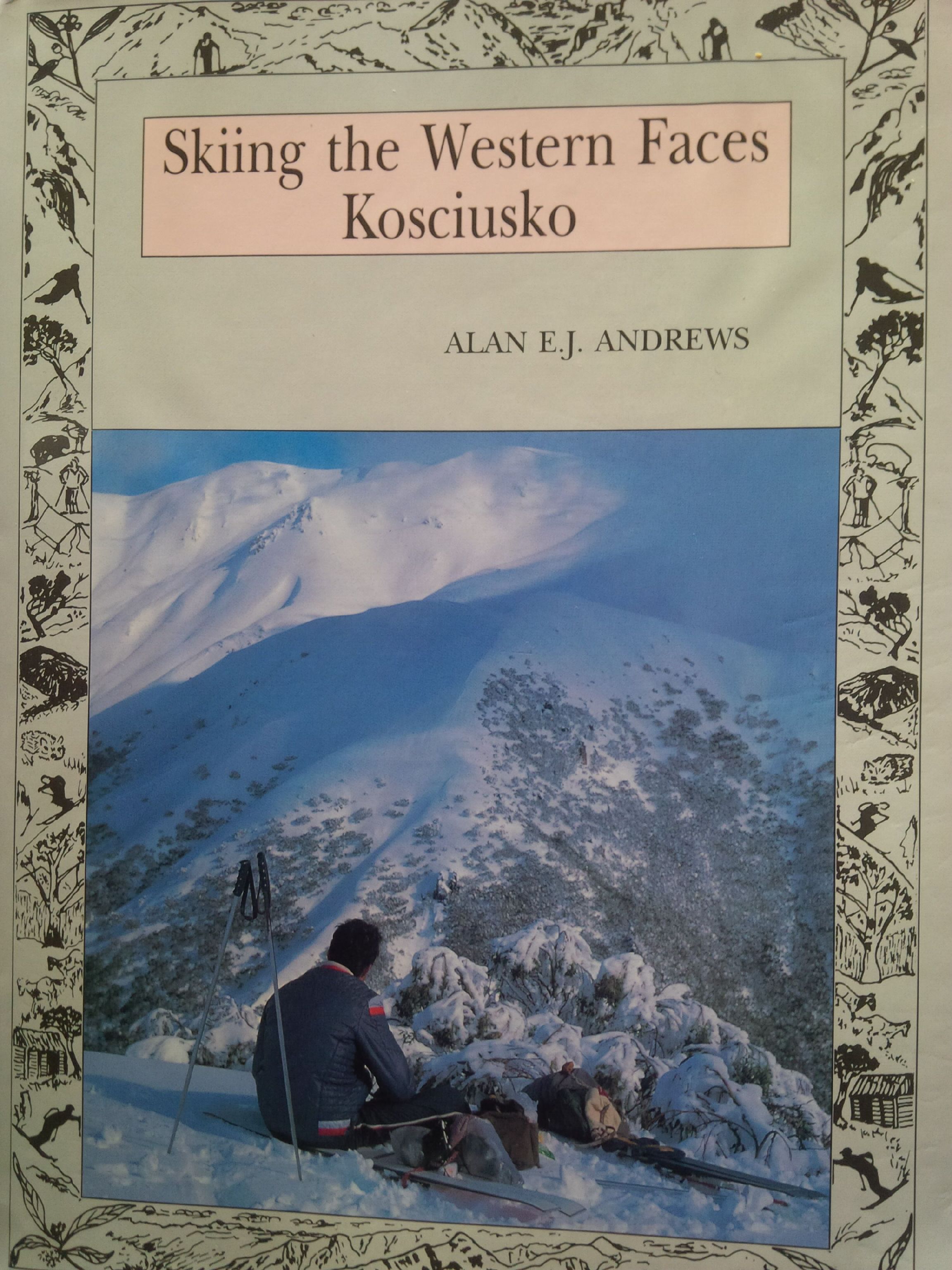
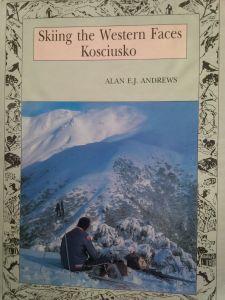
mapAlan E J Andrews is known to many backcountry skiers and boarders as a pioneer of skiing the steep western faces of the Main Range of the Snowy Mountains. He was the author of Skiing the Western Faces Kosciusko.

He passed away last month after a long and well lived life. The eulogy that follows was written by his friend Klaus Hueneke, another luminary of the High Country.

Nureyev on Skis
Or
The Emperor of Illawong

Eulogy for Alan E J Andrews, Mona Vale, 26/6/14

“I have known Alan in person since about 1984 and I’ve known about his writings and journeys across the high country since the 1960s. He had a big impact on my life and my book publishing business Tabletop Press.

Alan was a lover of:-

Australian History especially the early explorers,

the Australian Alps and skiing in all its forms,

the mountain huts especially Illawong and Albina,

old style poetry with rhyming verse,

the ballet and bacon sandwiches and

an old Holden Station Wagon.
He loved reading, drawing and using maps,
and the careful composing of numerous articles and books.

He enjoyed helping others with their own research and replied at length to any questions or correspondence sent. He did this in careful, often quite tiny, longhand or neatly printed with lots of curly bits. You can view it in some of his books. When his distinct handwriting was not on the last parcel of books I thought, ‘something must be seriously wrong’. It was.

His books and long sojourns at Albina or Illawong hut above the Snowy River were very important features of his life. When he was at Illawong it was like the Emperor was in residence. Not a domineering Emperor who demanded our attention but a quietly spoken, quietly smiling, self effacing Emperor, one who didn’t have to shout it from the roof tops.

I loved listening to him reciting Australian classics as well as his own poetry. This is an extract from The Fan-shaped Snowgum.

There it is, the fan-shaped snowgum,
Glinting in the morning frost;
Reminding us of courtly pleasures
From time forgotten – long since lost.
Lovely eyes ‘neath lowered lashes,
Flirting sweetly, ringlets tossed,
Fan on crinoline laid demurely,
Clamouring suitors imperiously bossed.

But look again, the trunk is twisted,
Leaning perilously askew.
Another instant it had fallen,
Yet still survives, to grow anew,
The branchlets fanning to the northward,
Others stretching southward too;
Now proudly standing tall, defiant,
A sentinel to welcome you.

In 1982 I wrote Huts of the High Country. Alan took note that there was a new kid on the block and on a later visit to Illawong we spoke about my new book Kiandra to Kosciusko. He offered to draw a number of maps and gave me permission to use his articles about early ski tours in different parts of the Snowy Mts.

When the book came out he said ‘but you only spent a couple of pages on the history of Mt Kosciusko itself’. Sorry Alan. It got him going and in 1990 he asked me to design and publish Kosciusko – the Mountain in History. It covered all the first European explorers who reached the high tops and filled a missing gap. As usual, the research was meticulous.

In 1993 he wanted me to do the same with Skiing the Western Faces but this time he said, ‘I want the book to breathe more’. ‘Breathe?’, I thought Can a book breathe? It showed how books to him were living entities with eyes, lungs, heart and soul. No wonder his and Muriels house is full of them.

He showed me a book which had lots of space around the text and between chapters. I got the message and Skiing the Western Faces became his most popular book. It inspired many others including his sons Neil and Ian as well as my step-son Chris, who brought me here today, to explore the dramatic western faces. I always know it has been a good snow year if orders come in during September and October.

By 1996 he was ready to go with Rainforest and Ravished Snow. Half of this book dealt with his bushwalks on the Comboyn and in the Upper Manning River area, one in which some of his relatives once lived and where Ian, his son, still owns a plot of bush. After skiing became too hard for him, Alan often went there to communicate with nature.

It became obvious that Alan had been sitting on a large body of drawings, maps, photos, writing ideas and unpublished work. I was very glad he chose me to bring them into the world. These were books with small print runs not commercially viable for big publishing houses but important nevertheless.

In 1998 I received the manuscript for Earliest Monaro and Burragorang, his last major work. It is jam-packed with historical detail, black and white photos, dozens of hand-drawn maps and many references. It has been well received by old Monaro families and local historians.

His books have been selling steadily for the last 20 years and will continue to do so for a long time. I often say ‘History doesn’t age, it just gets older’.

Before I came along Alan published a number of books with Blubber Head Press and smaller hand-made ones like Where the Wombat Goes and Surveyor Thomas Townsend, his work in Australia 1831-1854. Another was a compendium of all the articles and books he had published between 1950 and 1983. Yes, starting in 1950, 64 years ago, when he was a young 24. A note in one said, ‘This really is a table top book – written, made and printed at home’.

On one of our day trips he took me on to Twynam West Spur and showed me the gap in the cornices through which I could thread my long, thin skis and descend into Siren Song Creek. ‘Ski down there?’ I thought, and went off to sit at the end of the Crags to bask in the sun and contemplate the vista to the crouching lion Jagungal.

He, meanwhile, wasted no time and in a series of adroit, light as a feather, linked turns, leapt, carved and flew into the sirens arms. It was Rudolf Nureyev (a famous ballet dancer from the 1980s) delicately balanced on a couple of plastic planks in the steepest snow country we have.

About the same time I discovered he adored the Australian Ballet and the stunning, lithe, pink-clad ballerinas. He wrote poems about them too. The ballet must have rubbed off for it was ballet on skis that he displayed that memorable day.

Writing this about Alan, the word ‘fey’ kept bouncing around inside my head. The dictionary explained. It means, ‘as if enchanted, under a spell and aware of supernatural influences’. Yes, that was Alan all over and that’s what explains his love of skiing, his poetry, his wry sense of humour, some of his drawings and his ability to morph from a cheeky Shakespearean imp to a serious historian over the same cup of tea.

I will end on a poem he wrote after ascending Twynam North Spur. It could be his epitaph:

We leave our stately sentinel
And pass on through the Arc of Trees,
Then upwards still and cross the snowbridge,
There possibly to take our ease,
But not for long; it’s on to Twynam
To the throne to pay our dues
And find our fealty rewarded –
The granting of the kingdom’s keys.

You may be sure we will not waste them.
Full many a secret we’ll explore.
Full many a slope will feel our ski-tips:
Past craggy slate and granite tor,
Down gullies steep and awesome,
We’ll ski them all, you may be sure.

So when at last we hand the keys in,
As needs we must – so stands the Law –
There’ll be no need for compensation.
There’ll be no need to ask for more.

I will miss him, his annual hand-illustrated and written Christmas cards, his tightly composed letters often with poetry, his years of support and all that he stood for with all my heart for the rest of my days.

Alan, you were an inspiring scholar and an old fashioned gentleman”.

Klaus Hueneke (OA-AM)

NB: a number of Alan’s books are still available, check here for details.
The High Country of the Mind

The places we love are the ‘mountains of the mind’. The places we imagine and day-dream about. The places we escape to. Each of us has our special place. Some of us have many. Some just like to keep moving, and the mountain of the mind is the next unclimbed range.

What makes our places special? And what do we find there?

And where are your places?

Check here for some reflections, inspired by writer David Gilligan.

In praise of huts

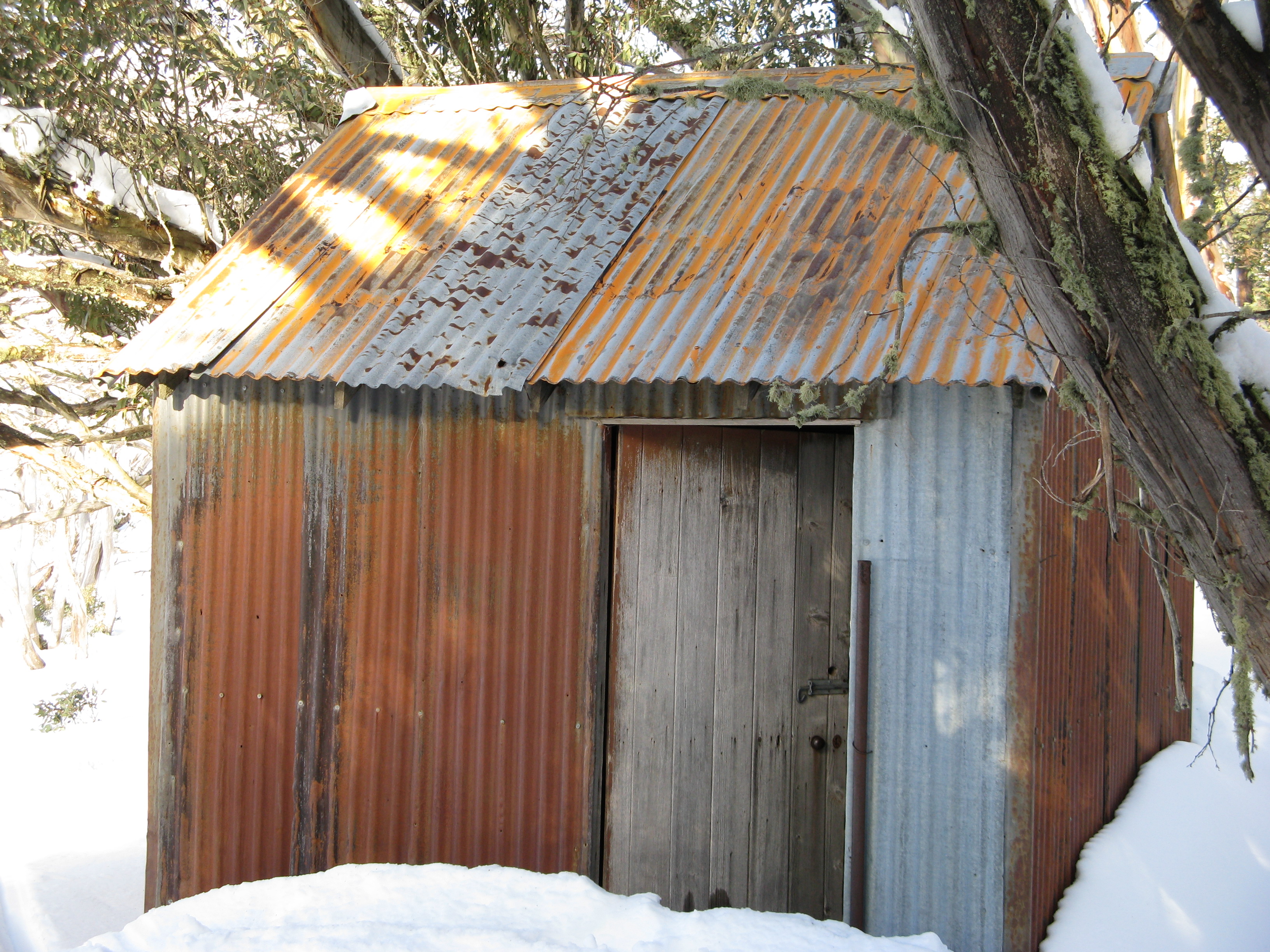
Tawonga Huts, Bogong High Plains, VIC

Huts in the mountains can be a vexed issue. Huts will tend to attract people and so tend to concentrate visitation within a larger area. As one example, most people who climb Mt Bogong tend to then turn towards Cleve Cole hut rather than head across to the Hooker Plateau. This tendency to influence visitation can be both good and bad.

They are part of the cultural history of the high country, and reflect major stages in the post colonisation era: cattle grazing, forestry, hydro, even fire watch towers and, more recently, huts built for recreational purposes. We also have a number of strange and random anomalies, ones that don’t really make sense: Craig’s hut near Mt Stirling as an example, which was built as a set for a film. There are, of course, those whose primary function is safety, such as Seaman’s hut near Mt Kosciusko, and huts that belong to clubs or even schools (Geelong Grammar on Mt Stirling).

I have always tended towards the position that we don’t need more huts in the high country. With incremental pressure as ski resorts increase their footprint and the risk of private developments within Victorian national parks and the precedent of private enterprise in a number of Tasmanian parks, I don’t think we need more infrastructure. There have been some hut removals that make ecological sense (such as Albina Lodge, above the western slopes of the Main Range in the Snowy Mountains). I certainly understand the need for huts in strategic spots for safety. And I do appreciate the history of these places, the incredible work of getting materials into hut sites in the early days and the bush skills of the builders. I love the work of Klaus Hueneke, who has chronicled the heritage of the huts.

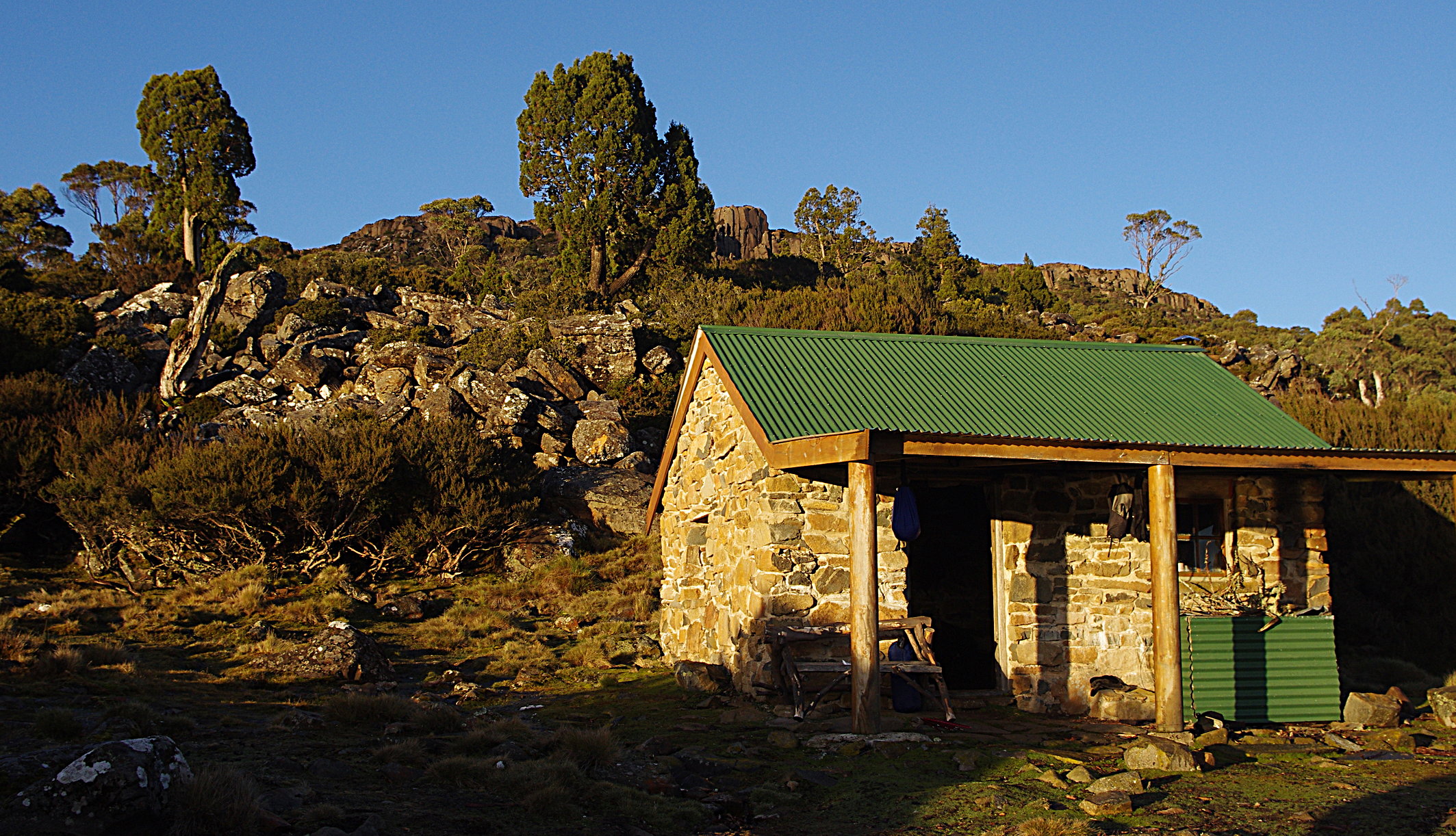
the hut at Lake Nameless
the hut at Lake Nameless, Central TAS

With the rise in wildfire over the past decade, we have lost many of the iconic huts. There have been some excellent rebuild efforts, such as Michel’s at Mt Bogong. The Victorian High Country Huts Association was founded after the major bushfires of February 2003, to try and preserve remaining huts. Some huts are looked after by organisations and this can give people a strong connection to ‘their’ hut, and various groups exist to look out for huts in general (partial list below).

For me, it’s a rare thing to find a hut that is more appealing than a tent, but amongst my favourites are Seamen’s and the ‘Schlink Hilton’ in the Snowies, Vallejo Gantner at Macalister Springs, Cleve Cole on Bogong (of course), and the hut at Lake Nameless in Central Tasmania. I love the location of the ridiculously ugly house on Mt Wills.

For hut fans, we have recently been posting photos on Mountain Journal’s facebook page. Please feel free to join in and post your favourite pics.

the hut at Newgate Tarn, TAS

I recently spotted the article below, highlighting the value of the ‘secret’ hut stash around many resorts, the little known hang out spot. I remember a rough hut that lasted several years on the northern slopes of The Bluff in Victoria which was popular with some backcountry skiers and boarders. I went to look for it one spring and it was gone (it had been tarp and pole heavy, more a glorified camp than a hut).

What I loved about this article is that it highlights that for all of us who use huts, there are personal and social memories that build up: of friendship, adventure, good dinners, long and late night conversations with strangers. I held my 30th birthday at Vallejo Gantner hut and have spent the last 4 new years at Bluff Spur hut on Mt Stirling with a big gang of friends. Part of the cultural – as opposed to technical – history is preserved in log books and, increasingly, on line. For instance, check the newsletters from the Mt Bogong Club, who have been looking after the Cleve Cole hut since 1965. In many countries there is the tradition of the hut warden, which can add to the sense of hut culture. I like the short film Winters of my Life, an appreciation of the decades-long service of Howard Weamer, who for the past 35 years has spent his winters as a hutkeeper in Yosemite’s backcountry.

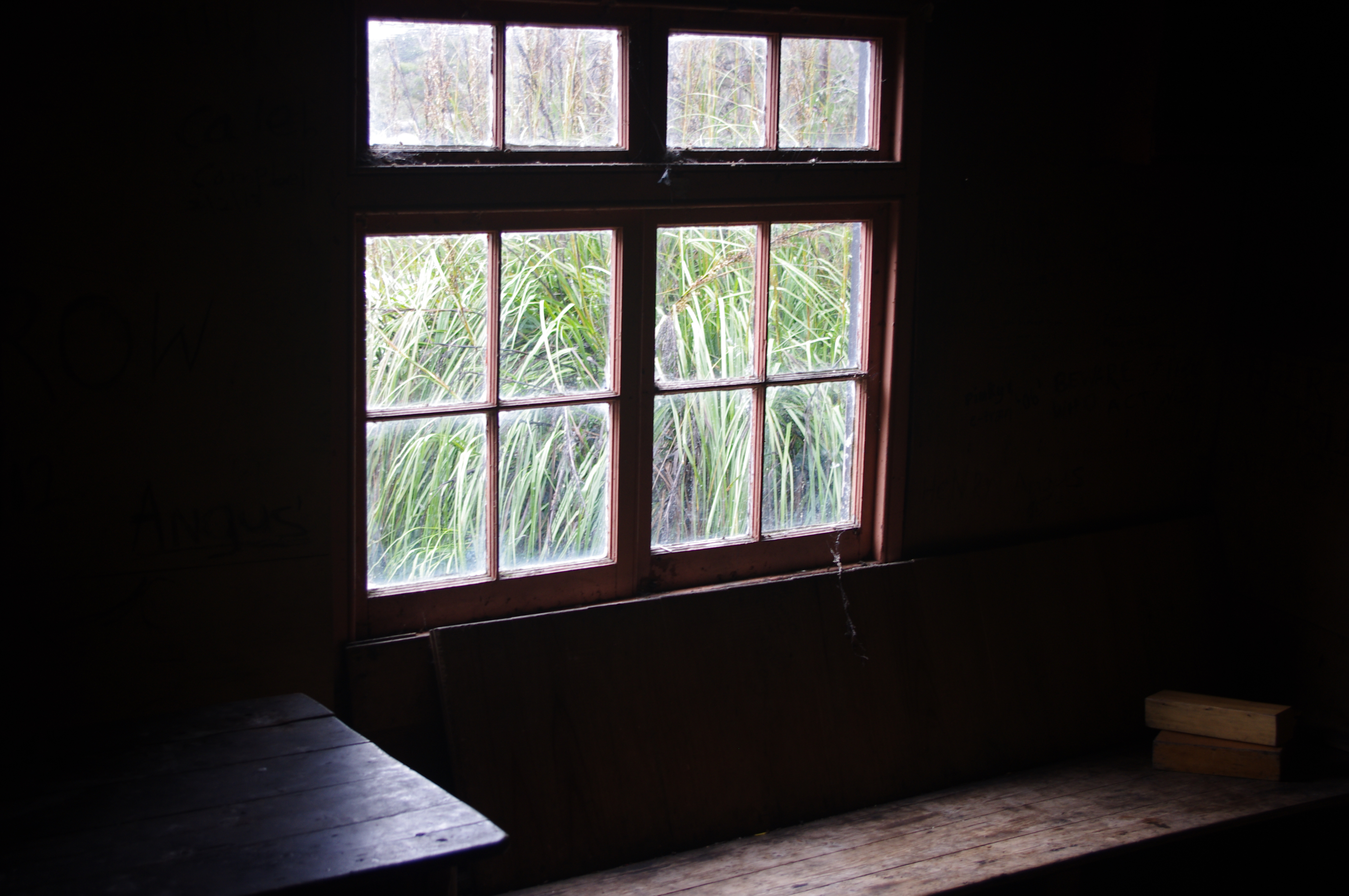
Twilight Tarn, TAS
Twilight Tarn, TAS

Shacktivities

From Powder magazine.

Secret stashes, shacks included, are a part of skiing in the same way that early mornings and long drives are. If you are dedicated you will have yours, you’ll know the good ones, and the people to share them with inbounds and out. People who love the mountains cultivated them, probably long before you got there.

 Some contacts

Kosciusko huts association.

Victorian High Country Huts Association.

Blog at WordPress.com.

Up ↑