Search

Mountain Journal

Environment, news, culture from the Australian Alps

Tag

sense of place

Giving back

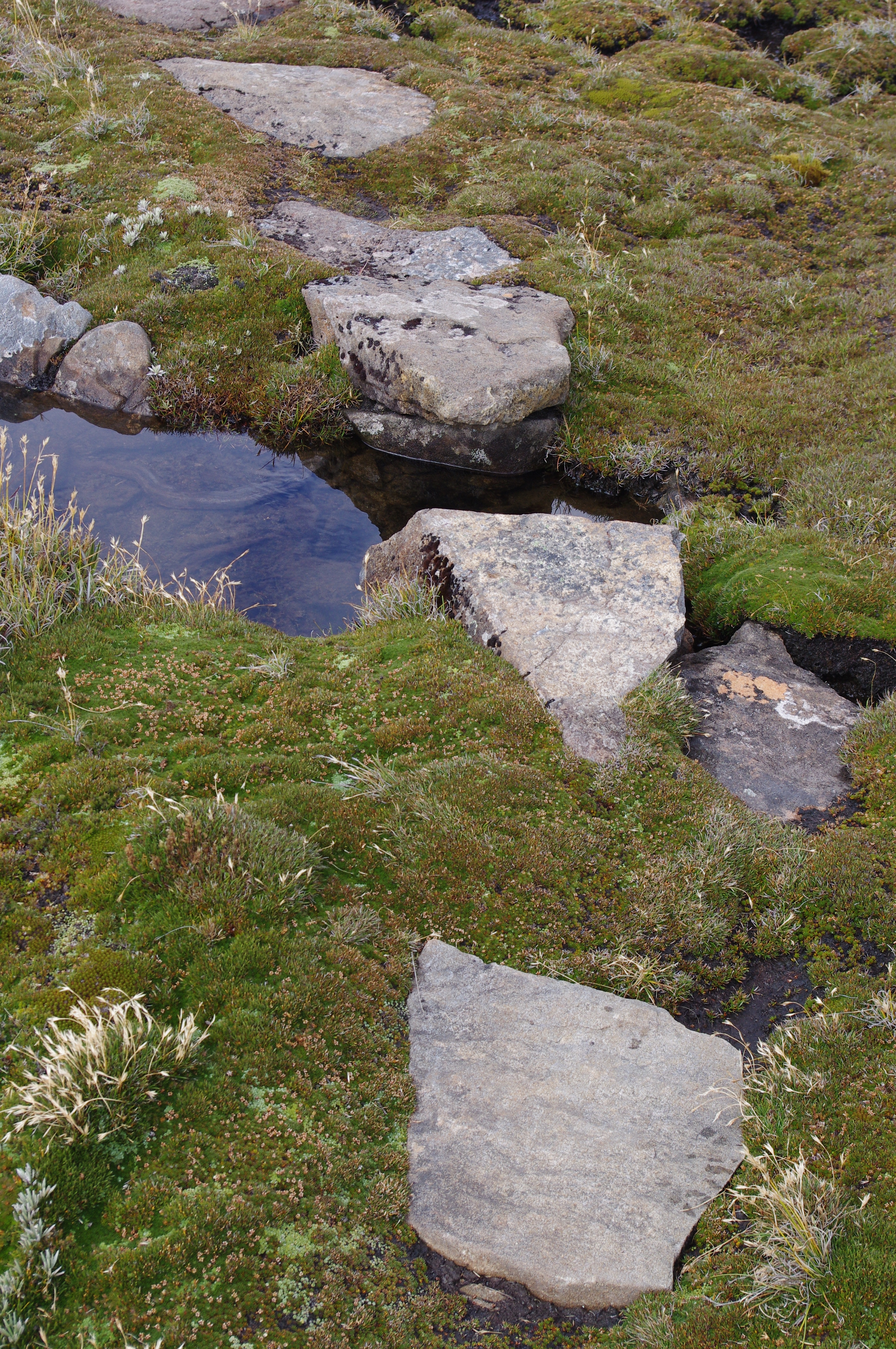
IMGP7211While on a recent walk in Mt Field national park in Tasmania, I was struck by the amount of track work that had been done in the four years since I was last there. Much of this is in the fragile areas from Negate Pass through to K Col.

I was reminded of the fact that track work can be incredibly aesthetic. In Tasmania there have been various stages in creating and stabilising tracks, with less use nowdays of locally cut timber, in favour of treated pine and lots of boardwalks. This is never very nice looking in it’s own right, and often needs helicopter lifts to get to remote areas, and hence has a higher environmental impact than locally cut wood. But the stone work in many places, including Mt Field, is fantastic. Thanks to the Parks Service workers, contractors and volunteers who have put in so much effort for so long to stabilise the track network in the mountains.

Although I have walked in remote areas since I was a teenager, I sometimes found track works an intrusion on my enjoyment of wild landscapes. Of course, I eventually realised that in popular – and especially alpine areas – they are a necessary part of reducing impact, by channeling what otherwise may be a myriad of smaller braided trails into a single pathway.

Then the poet Gary Snyder introduced me to the idea of track construction, of laying stones and other trail stabilisation as meaningful work, a way for us to interact with the wild. His poem Riprap and other works constantly remind me of that. Track building is a subtle, low impact way to engage mindfully with landscape.


Lay down these words

Before your mind like rocks.

placed solid, by hands

In choice of place, set

Before the body of the mind

in space and time:

Solidity of bark, leaf, or wall

riprap of things:

Cobble of milky way,

straying planets,

These poems, people,

lost ponies with

Dragging saddles—

and rocky sure-foot trails.

The worlds like an endless

four-dimensional

Game of Go.

ants and pebbles

In the thin loam, each rock a word

a creek-washed stone

Granite: ingrained

with torment of fire and weight

Crystal and sediment linked hot

all change, in thoughts,

As well as things.
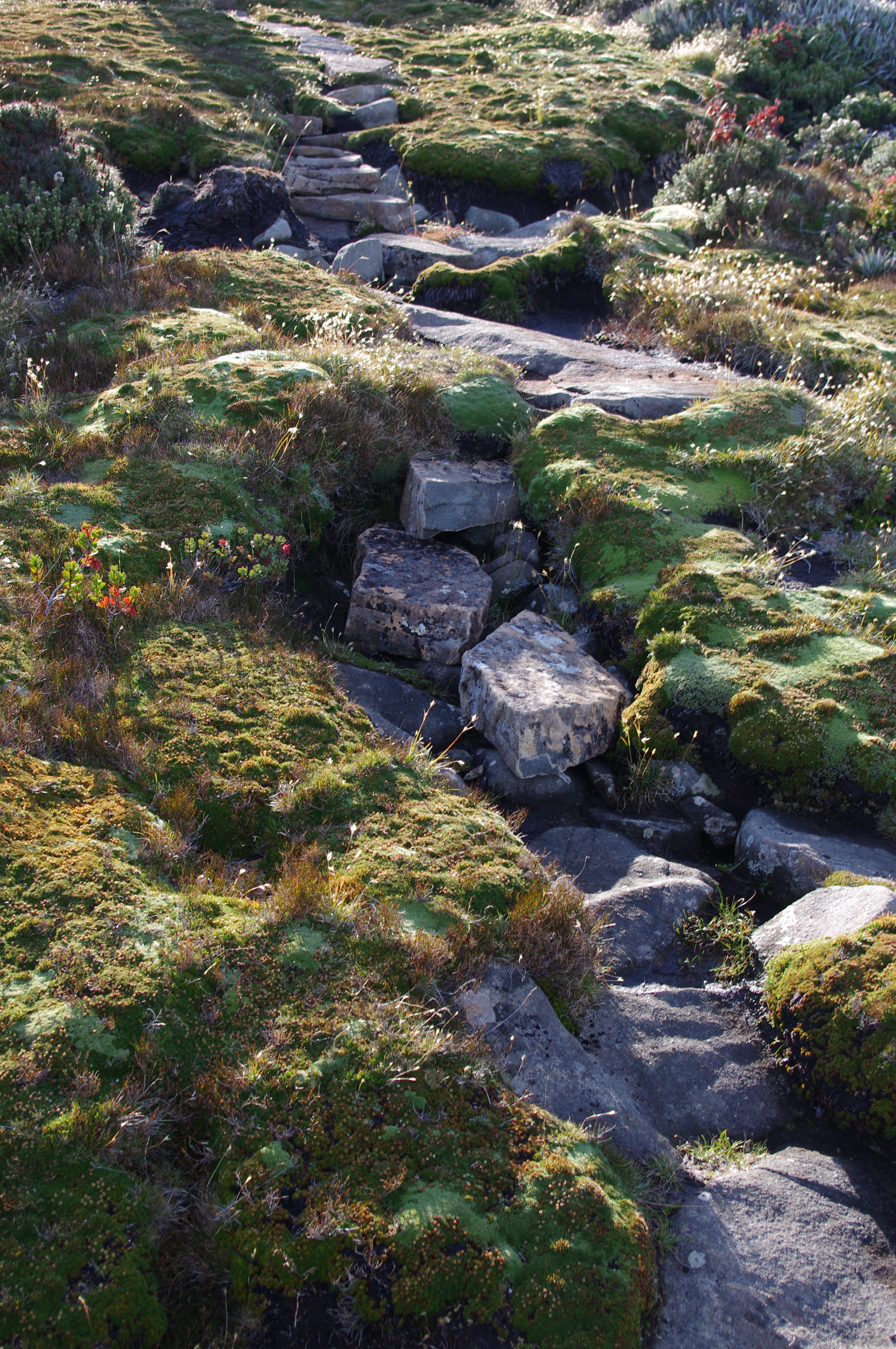
IMGP7470As we walked out from a fantastic trip, I was reminded that helping out on working bees to stabilise tracks is a great way of giving back to the places we love. If you live in Tasmania, you may want to get involved with Friends of Mt Field, a volunteer group that does much of the track work there. But where ever you are there will be a group doing this type of vital work. You will find some contacts here.

Check the Friends of Mt Field site here.
 

Mingling Waters Music Festival

January 18 and 19, Nowa Nowa, East Gippsland

Mingling-Waters-Music-Festival-logo-colour-300x223From the organisers:

Mingling Waters Music Festival is a small, grass-roots, high quality, well-organised, community-focused, family-friendly music event, supporting local artists and business, promoting Nowa Nowa as a special place to visit.

We plan to bring new and interesting artists in from the wider community.

We aim to create a scene that brings people together to talk, listen, play, and dance and celebrate together, in a beautiful natural environment!

It is a high priority to pay and look after all the participating artists as best we can.

We hope to do well enough to donate to two local charities, The East Gippsland Rail Trail and Melon’s Cottage.

There will be a small market, including food stalls, a bar, workshops, children’s activities and FINE MUSIC!

Check here for details on the artists.

Check here for details on tickets, accommodation, etc.


‘snow surfing’

‘Snow surf’ boards are hardly a common sight on our slopes. But they are showing up more in some classic backcountry films like Signatures, from Sweetgrass Productions.

The following item is lifted directly from the new The Drift publication, and features some quotes from renowned surfboard designer and rider Taro Tamai. The company Gentemstick makes snowsurf boards.


Image: The Drift
Image: The Drift

Taro Tamai: Of Gods and Mountains

ON DESIGNING GENTEMSTICK:

My shapes aren’t just mimicking surfboards, but like surfboards they have different shapes for riding different waves. I shape boards depending on snow, terrain, and riding styles.

The design should perform on any snow condition, whether it’s powder, groomers, or spring corn snow. I don’t focus on skateboard-like snowboards, which emphasize ollies, big-air landings and the spinning factor, but a design that focuses on the relationship between the rider and slopes.

Image: The Drift
Image: The Drift

ON SNOWSURFING:

What if someone sees the mountain differently than others? What if the same terrain appears different to each person who sees it? Obviously the design for riding that place will differ from one another. The reason I quit skiing— which I loved so much—for snowboarding is because the potential lines that I could see when on a snow-surfboard were drastically different from when I was on skis. The ultimate goal of surfing is to be one with the wave. The ultimate goal in snowsurfing is to be one with the mountains.

MOUNTAINS IN JAPANESE SYMBOLISM:

Traditionally, Japanese people felt the presence of gods in all natural elements: water, forests, fire or mountains. Mountains were one of the most important deific symbols and climbing was a religious ritual. Japanese mentality sees gods in every single pebble lying on the river shores.

on walking, part 2

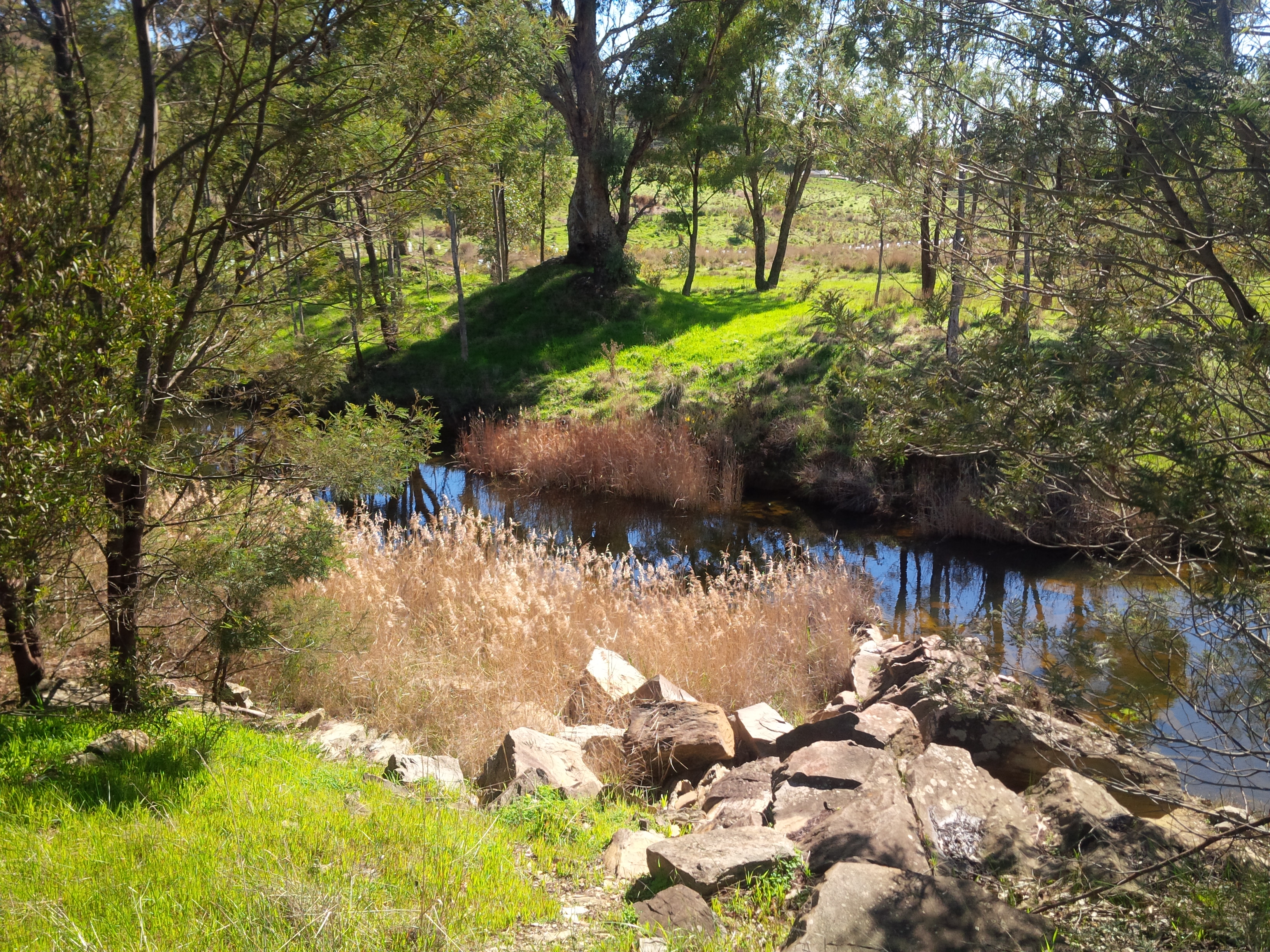
IMG_00000875The week’s craziness dissipates with every step, evaporating and blowing away. Another wave of clouds come through and I pause under a big old tree, waiting for the rain to pass. Behind me, what sounds like a frogmouth ohms its call, and as a rainbow breaks over the shallow valley in front of bright cumulus, the kangaroos slowly emerge from under cover and start grazing again. The stream is flowing clear, and everything is still green in a flush of late spring growth.

I am reminded, as I often am, of how walking is the only real way to experience landscape on an intimate scale. Surfing and cross country skiing are the same. Once it gets mechanical, you’re generally moving too fast to catch the nuances of landscape.

It also got me thinking about the frame of mind that can help to drive and inform your walking.

What jumps out at me is this.

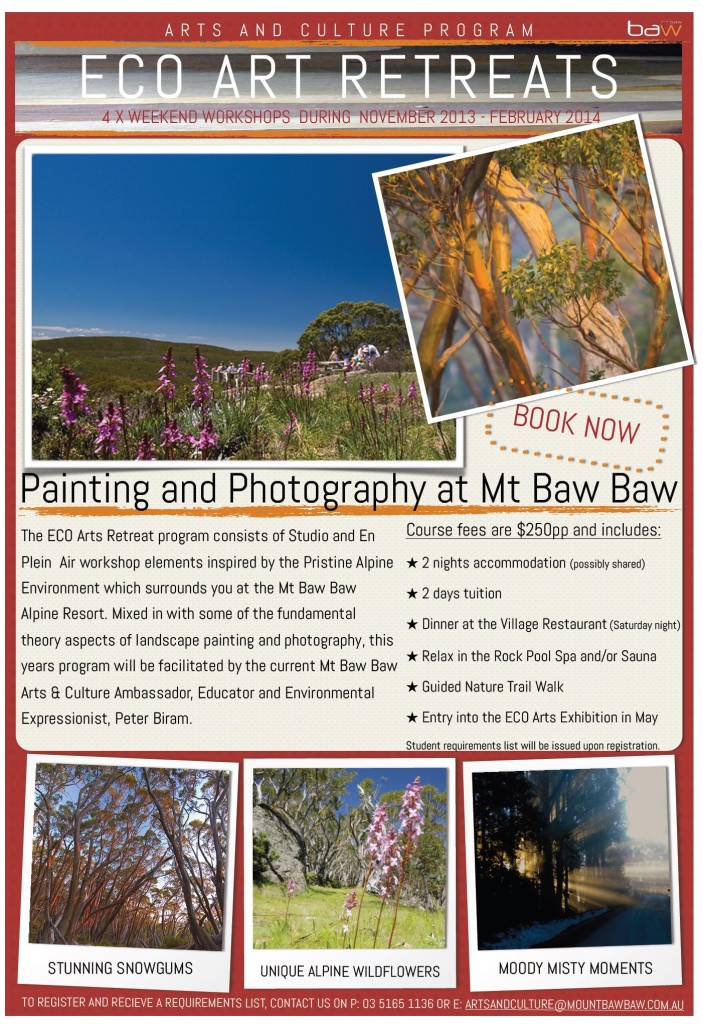
eco arts retreats at Baw Baw

This comes from Baw Baw resort. A nice bit of low impact value adding to the resort.

eco_arts_retreats-703x1024The ECO Arts Retreat program consists of Studio and En Plein Air workshop elements inspired by the Pristine Alpine Environment which surrounds you at the Mt Baw Baw Alpine Resort. Mixed in with some of the fundamental theory aspects of landscape painting and photography, this years program will be facilitated by the current Mt Baw Baw Arts & Culture Ambassador, Educator and Environmental Expressionist, Peter Biram.

A series of Photography and Painting retreats will be available during summer on the mountain:
9/10 November 2013 : Eco Arts Retreat #1 : Painting
14/15 December 2013 : Eco Arts Retreat #2 : Photography
11/12 January 2014 : Eco Arts Retreat #3 : Painting
1/2 February 2014 : Eco Arts Retreat #4 : Photography

For further information contact:
Caroline Hammond, Mt Baw Baw Arts and Culture Manager on 5165 1136
or email artsandculture@mountbawbaw.com.au

on walking

on the Razorback, VIC

I recently heard a great Radio National program featuring English travel writer Robert Macfarlane.

His new book The Old Ways: A Journey on Foot is the third in a trilogy about “landscape and the human heart”.

As mentioned on RN, “in it, Robert Macfarlane travels the ancient walking tracks of Britain” and he spoke of the many deep experiences he has had while travelling on foot.

I have always been a big fan of walking, for commuting and recreation. It has all manner of benefits, and in bioregional terms, is a necessary part of getting to know your place and region. But lately I have been getting more influenced by the thought that walking can have a spiritual benefit as well.

Partly this is just formed from many hours sitting on trams and trains, aware of everyone around me fiddling with their electronic gadgets. I love and appreciate the internet as much as anyone and have the need to be plugged in. But as our minds become ever more crowded with huge volumes of data and (often quite shallow) information, and as we get ever more dependent on electronic gadgets, many of us are becoming obsessive in our need to be online and ‘connected’.

To have what has been described as a ‘considered’ life, you need time for reflection. This means time simply being with yourself. Whether you have religious or spiritual beliefs or not is irrelevant to this observation. It strikes me as being obvious that people need time for inward reflection – as opposed to the external ‘reflection’ that happens on social media and ‘reality’ TV, which is essentially something crafted for consumption by others. If you cannot bear to just sit with yourself, then there is something wrong in your life.

But in this hyper consumerist world, few of us are encouraged to make that time just to be.

Having some quiet time in the day means we can think about life, and how we are going in our relationships: with ourselves, our loved ones, and our community. Walking brings this opportunity to me. You don’t need any fancy gear to actually do it, just a few minutes in your day, wherever and whenever you can fit it in.

The global connections available to us via the internet are amazing. And more and more this opportunity is spreading to the majority world. But this engagement is very much ‘front of brain’ interaction, generally not deep or reflective.

And while I love my bike, walking gets you to a different place, because you can get into the rhythm of walking rather than maintaining the need to be constantly scanning for danger, which is a requirement of riding a bike at any speed.

Walking clears my head. It lets me plan for my day and then to unpack whatever happened at work.   Sometimes it just connects me to place, as I wander neighbourhoods and see how people live and interact. My life feels richer as I get to know the places around me, human and non-human, as you see a level of detail that cannot be discovered even from a push bike or car.

Then there is the deeper level. Sometimes I think its good to have an open mind as you walk. To consciously not think or plan, just to be open to what presents itself on that particular day. Some of my deepest revelations and connections have happened as I practise open mind walking, there is something to the movement of walking – a defining characteristic for humanity through the entirety of our existence – that takes me far further than sitting meditation has ever done. Being propelled through a landscape, the weather, our immediate surroundings, at the pace of the human body is inherently spiritual.

Yes, walking can be a drag, when you’re tired and want to get home, when its too hot or too wet or your destination is simply too far away. When you’re sick or tired or simply weary with life. But mostly its something that enriches our lives and gives authentic experience that is not gained from being plugged in or otherwise distracted in our lives.

To finish, I like this quote from Timothy Hull. His ‘companions’, transcendentalist poet uncle Walt Whitman and nature writer Mary Oliver may not resonate for us all. But the notion of walking out from home, into a rich landscape – busy or empty – flat or hilly – urban or rural – is something that we can all do. Who knows what we might find and who we might meet on the way.

Lets go walk out beyond the Wall
Across the land in the bright Fall
With the leaves fiery jewels
With Uncle Walt on the open road
Mary Oliver,
Dreaming souls
Wonderful companions bright and clear

[originally posted on an appreciation of the Bogong bioregion]

mountain goodness – your daily pic from the hills

april 2009 147Mountain Journal is on Facebook and has a daily photo from the mountains of TAS, NSW and VIC.

Please feel free to add your own.

You can never have enough mountain goodness, especially at the start of what is likely to be a long, hot, and fire-prone summer.

Daily photos available here.

review: A Night on a Mountain in Namadgi National Park

Whenever I fly from Melbourne to Canberra I try and get a window seat facing south, to get whatever glimpses I can of the High Country. The descent takes you over the wonderfully rocky, domed ridges of the Brindabella Ranges, scattered with frost hollows and ratty looking snow gum fringed ridgelines.

I haven’t been up into those mountains for years, but it’s on my perennial ‘to go’ list. Coming from the south I find the Main Range of the Snowies is normally sufficiently distracting that I don’t get any further north.

In the modern world of evolving media, the concept of ebooks has become popular. These can be books on specialised themes made by regular people, which are available in a print per purchase format, allowing an idea for a book to make it onto paper without the costs and commitment of producing a large print run.

A Night on a Mountain in Namadgi National Park is produced by Barrie Ridgway and available via Blurb, one of the online book companies. When you order it, a copy is printed and mailed.

The author says “this book is a textual and photographic portrayal of the beauty, vastness, peace and preciousness of wilderness in general and a unique Australian wilderness in particular. It is my portrayal of the need to preserve wilderness in its own right for the survival of all life on this planet Earth”.

It is a set of visually gorgeous photos taken as the author and his friends climb a peak in Namadgi Park to watch the sun set and spend the evening on the mountain. It reminds me of the ‘mountain viewing rituals’ described by deep ecological thinker Dolores laChapelle.

The book is primarily full colour photos, with some minimal commentary about the journey up the mountain and a plea to protect wilderness. It is a worthy addition to our literature about the Australian Alps, largely letting the landscape speak for itself, albeit through the eyes (lens) of someone with a great affinity for the place.

You can buy it via the Blurb website. Although this is expensive, it is a glorious book of 98 pp, with lots of gorgeous full colour pics at all scales, from the micro to the landscape level. The Softcover version comes in at about $50.

‘mountainside’: new site from Charlie Brown

‘Mitch Smith on his favourite ridge’. Image: Charlie Brown

Charlie Brown is based at Falls Creek in the Victorian Alps. His photography gets a good run in a lot of snow and ski related media, and his new website Mountainside has some gorgeous images, especially from around the Falls Creek/ High Plains area.

His ‘human’ related work includes portraits, some really lively and dynamic sports images – including snow sports and MTB, plus a focus on architecture, food and weddings. His obvious love of the High Country really shines through his work: and the site is well worth checking.

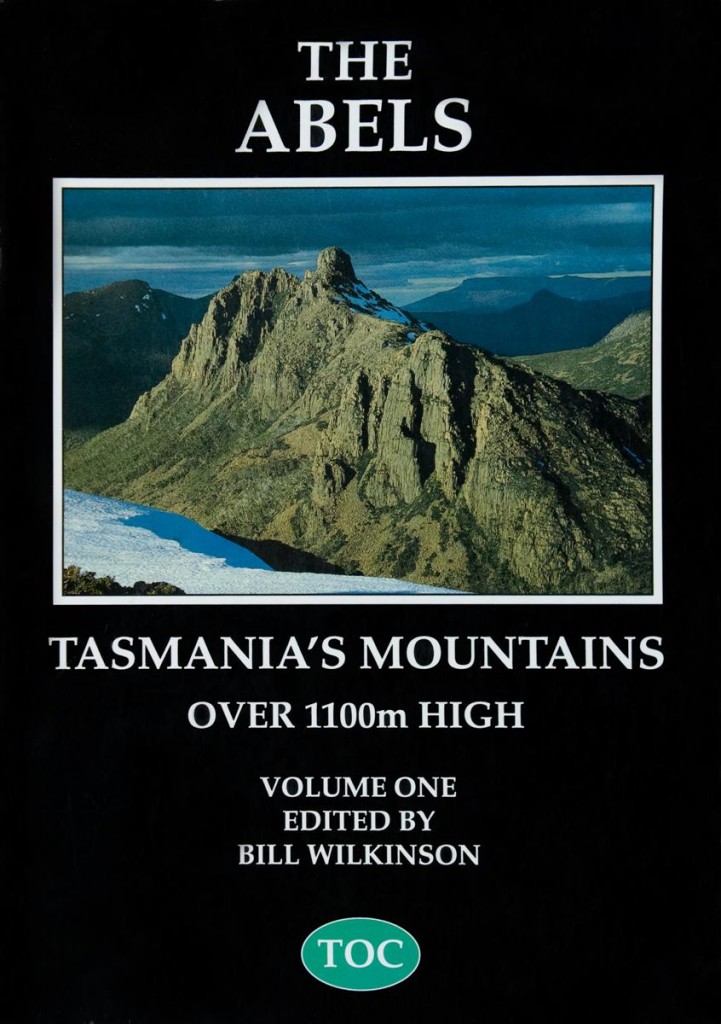
Review: Abels Volume 2

the cover of volume 1

This book, the long awaited second volume covering Tasmania’s mountains over 1,100 metres in height, which covers the west and south west of the state, is absolutely gorgeous.

This volume is considerably longer than the first, with good introductory essays on animals, plants, geology and weather.

As with the first volume, it has profiles on all mountains in the region over 1,100 metres, opening lots of options for peaks you might have glimpsed from afar or seen on a map, but weren’t quite sure about how to get there or what the terrain might be like.

There is a review available here.

news from the Strathbogie Ranges

The following are two great community sites from the Strathbogie Ranges, an outlier to the Vic Alps. The more regional sites the better!

Strathbogie Ranges – Nature View

Flora, fauna & natural history of the Strathbogie Ranges, Victoria

This blog is about observations & issues concerning the natural history of the Strathbogie Ranges, Victoria, Australia.
The Strathbogie Ranges are located in north-east Victoria, Australia. The Ranges include several districts (e.g. Strathbogie, Ruffy, Highlands), but support no towns (Strathbogie does have a General Store and Ruffy has the Pantry) and no major through-roads. Towns on the plains surrounding the Ranges include:

* Seymour to the south-west
* Euroa, Violet Town & Benalla to the north
* Yea & Alexandra to the south, and
* Mansfield to the south-east

The Ranges are separated from the main Great Dividing Range by the valleys and floodplains created by the Goulburn and Broken Rivers. Being separate from nearby areas of similar elevation and high rainfall has resulted in some interesting and unique biogeographic and ecological patterns.

If you’d like to add your own observations just leave a comment under the relevant post. If you’d like to contribute your own posts, email me and I’ll sign you up (bertram.lobert@activ8.net.au). You don’t need a photo to contribute, all your nature observations are welcome. This blog is part of a larger project to record biodiversity and natural history information from across the Strathbogies.

You can find their site here.

Images: Strathbogie Ranges – Nature View

Strathbogie community website

It’s a new way for residents and landholders to stay in touch and communicate with each other.  We may be a small and scattered community but, with increasing use of computers and email, this site offers the opportunity to keep informed about events, to comment about Tableland issues, to contribute ideas, to catch up with each other, to buy and sell, and to show off our creativity.

FOR THOSE WHO DON’T KNOW THE AREA, the small community of the Strathbogie Tableland is located on an elevated plateau in the Strathbogie Ranges. Two hundred kilometres northeast of Melbourne, it is surrounded by forests, farmland and granite hills.

The environment is beautiful with its native bush, birds and animals. While many people have spent their entire lives on the tableland, others are increasingly choosing to leave city life and move up to live here permanently.
You can find their site here.

the Monaro tablelands

Image: Andrew Stanger

Andrew Stanger lives on the Monaro tablelands in south eastern NSW.

As a recent arrival to the region, he is, as he puts it “taking some time to acclimatise” because of the often harse nature of the environment. But equally, “there is something distinctive about this place and the landscape and the people” that has him captivated and intrigued.

You can find his writing on adapting to life on the Monaro here.

Blog at WordPress.com.

Up ↑