Search

Mountain Journal

Environment, news, culture from the Australian Alps

Tag

Snowy Mountains

Snow gum summit tickets now on sale

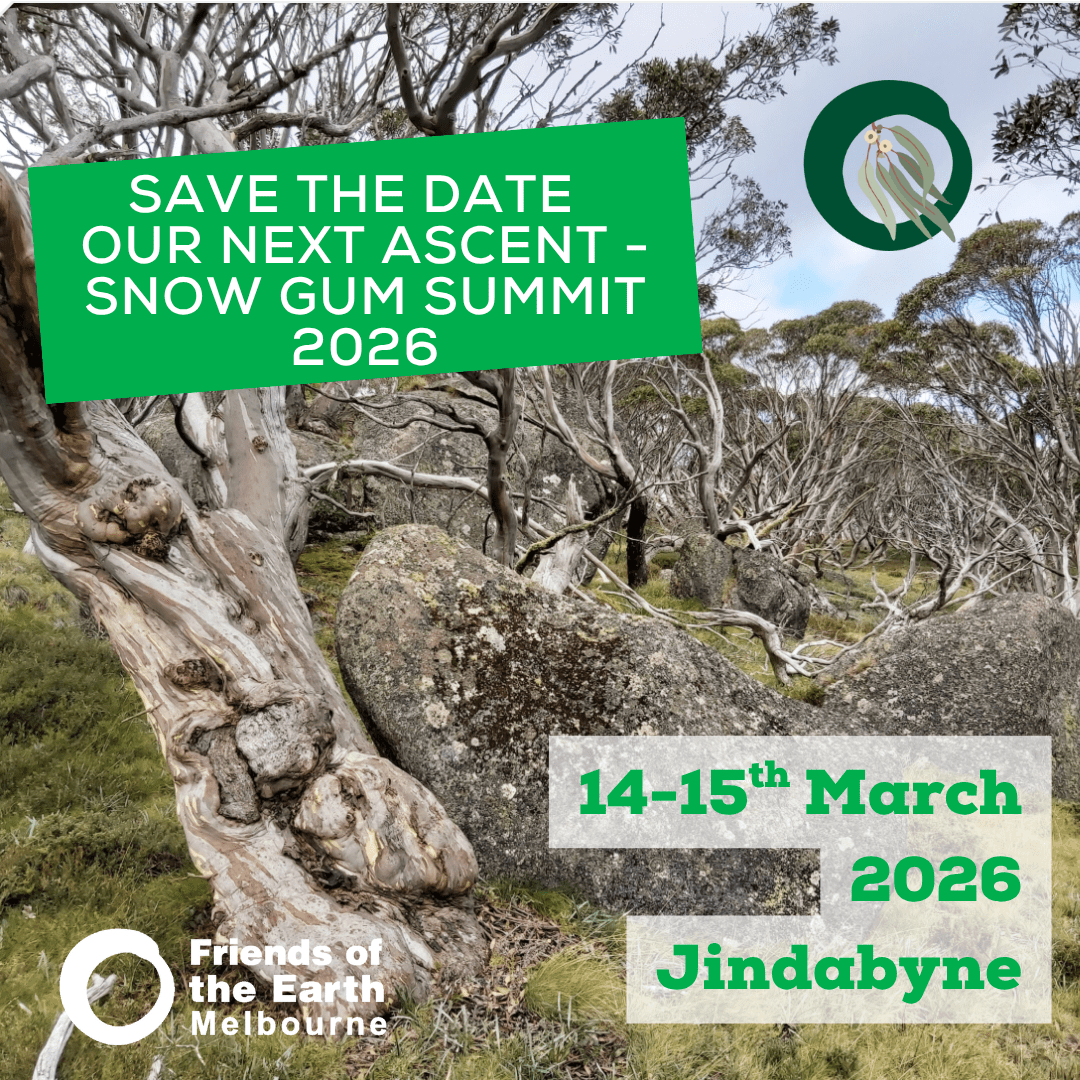
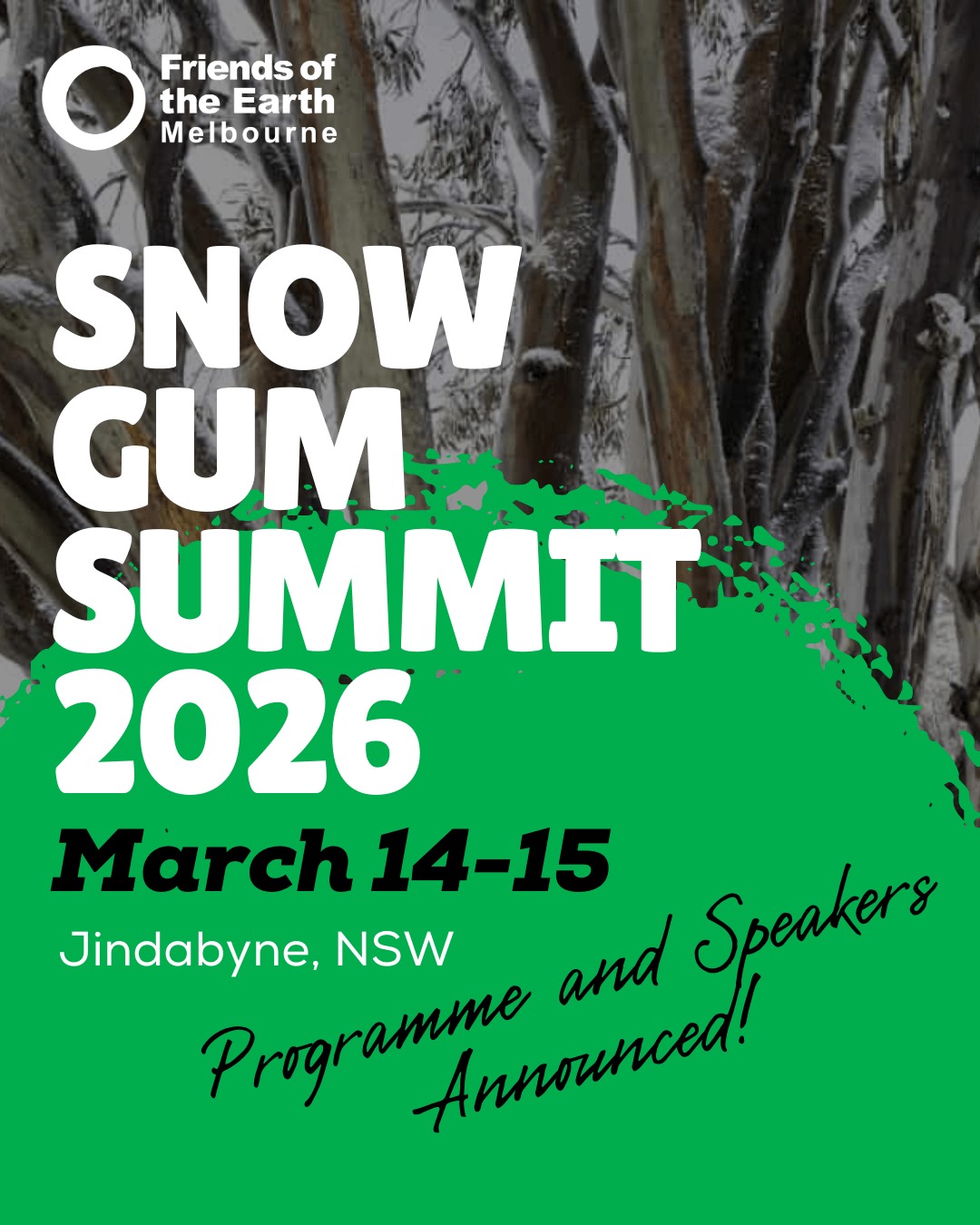
The second snow gum summit will happen on Ngarigo Country in Jindabyne over the weekend of March 14 and 15 next year.

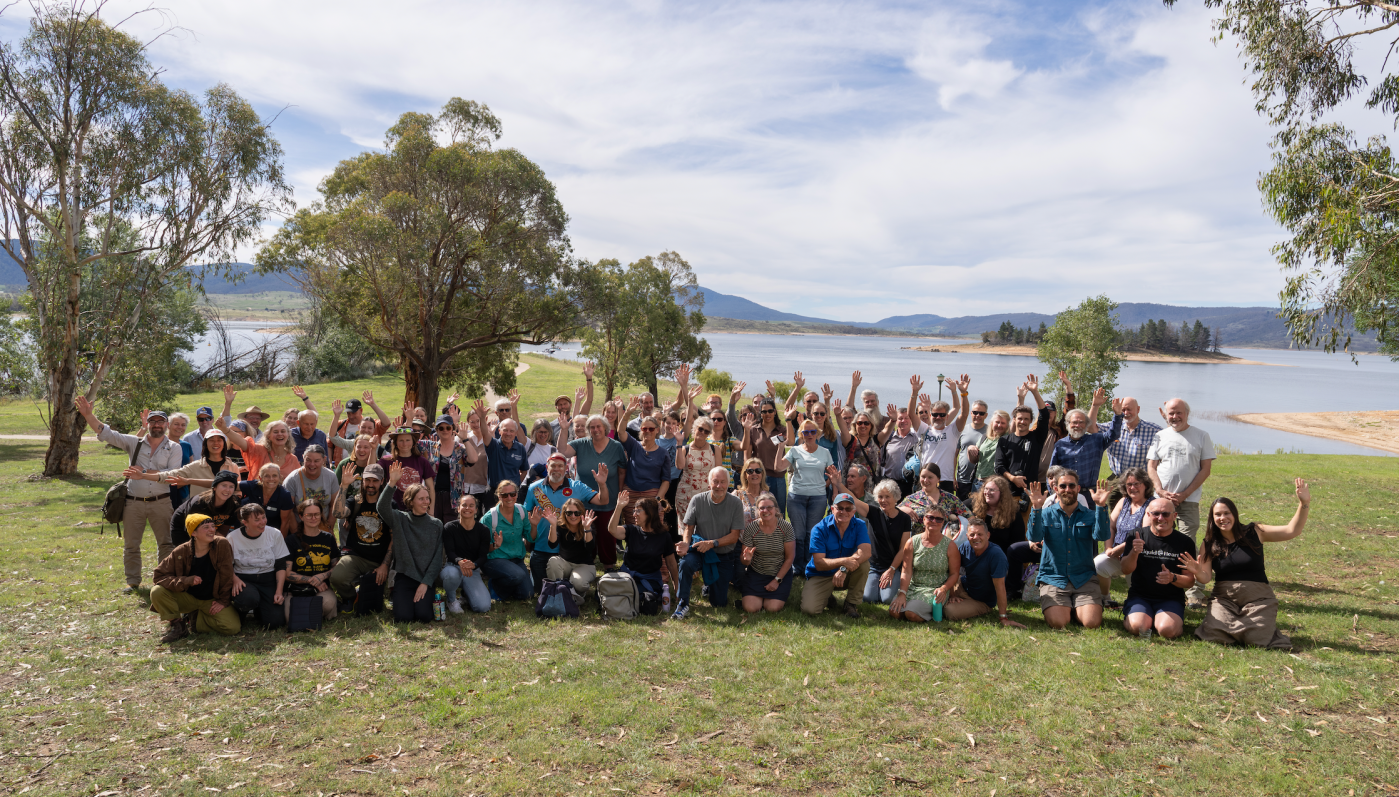
The first summit happened at Dinner Plain earlier this year, attracting about 100 people, who heard from wonderful speakers.

Tickets for the 2026 gathering have just gone on sale. Like the 2025 event, this is expected to sell out, so grab one today if you’re planning to attend.

Continue reading “Snow gum summit tickets now on sale”

Snow Gum Summit will return in 2026

Snow Gum Summit – Next Ascent: Protecting Alpine Landscapes

Friends of the Earth Melbourne is excited to share that we are organising a second Snow Gum Summit, which will take place in March 2026 on Ngarigo Country in Jindabyne. The Summit will bring people together from across the Australian Alps bioregion spanning Victoria, NSW and the ACT, to address the threats facing these iconic landscapes we all know and love.

Snow gum forests and woodlands are under accelerating stress from climate change, fire, and beetle-driven dieback. The widespread dieback is equivalent to that of a mass bleaching event of the Great Barrier Reef. Without bold interventions, these ecosystems face ecological collapse within our lifetimes.

The summit will happen over the weekend of March 14 and 15.

Continue reading “Snow Gum Summit will return in 2026”

‘It was hard, beautiful, scary, mountainous and stunning’. A journey along the AAWT

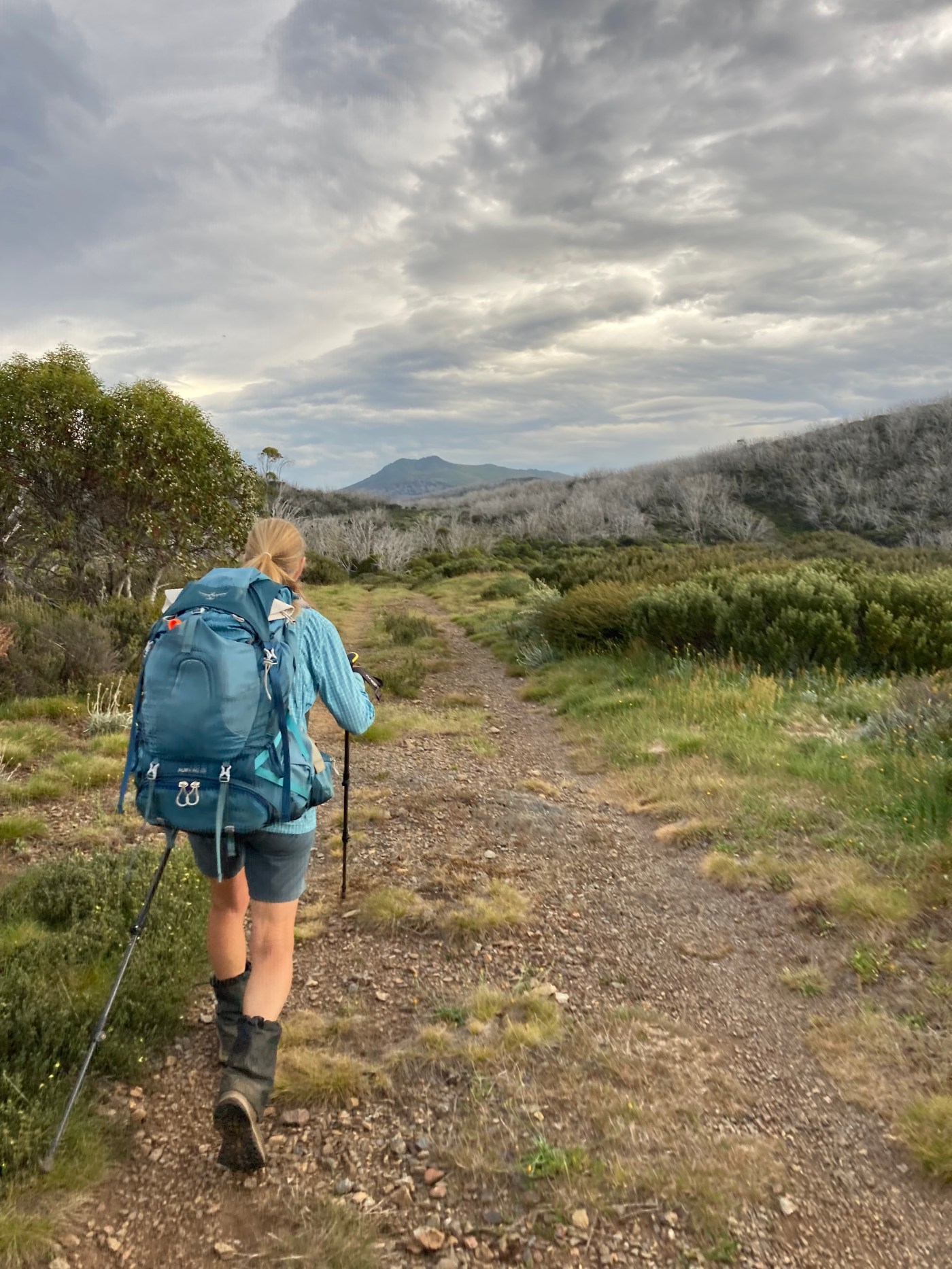
The 2024 edition of the Mountain Journal magazine (available here), had a focus on human powered crossings of the Australian Alps. Of course many of these focused on the Australian Alps Walking Track (AAWT). Since then, more people have been sending stories about their journey along the AAWT. It has been wonderful to hear about their experience along the trail: the challenges, the special times, the hardships and lessons learnt.

This is from Tanya Deer and is her tale of walking the AAWT with her husband in January 2023. There are some lovely reflections and a good reminder that the AAWT is a trip that is well outside regular walking: its multiday nature allows you to go deep as you travel through an ever changing landscape: ‘I am full of gratitude for the experience, for those I love, for my body and for the environment I am in’.

Continue reading “‘It was hard, beautiful, scary, mountainous and stunning’. A journey along the AAWT”

Plibersek puts NSW on notice over feral horse numbers

In the long running campaign to have the NSW government do something about the huge number of feral horses that are causing damage in the Kosciuszko National Park, recent efforts to reduce horse numbers has been welcomed by environmentalists.

Figures announced by the NSW government on 29th January show that 3,530 feral horses have been removed from Kosciuszko since the Plan’s commencement – by re-homing, removal to knackery, aerial and ground shooting, and shooting in yards. However, the Federal Environment Minister Tanya Plibersek has announced that she may intervene to ensure a ‘zero-tolerance approach’ to feral horses in the park if the environmental impacts remain too high.

Continue reading “Plibersek puts NSW on notice over feral horse numbers”

Save our snow climate data – we won!

The following information come from Protect Our Winters (POW) Australia.

After POW alerted the winter snowsports community to the fact that that the frequency of snow data collection at Spencers Creek in the Snowy Mountains has decreased in recent years, Jeremy Kinley, Acting Manager of water for Snowy Hydro, has confirmed that “we have agreed that we will commit to more regular measurements at Spencers Creek from next year onward.”

The data on snowpack collected by Snowy Hydro provides our best snapshot of snow pack over time. Earlier in the year, POW reported that:

‘Data collected in 2022 was sparse in comparison to previous years, with only four records collected from 1st of May to 31st of July. This is a reduction of over 60% compared to the average of the previous decade (2012-2021). 

‘Snowy Hydro explained their reduction in data collection in 2021 as a means to avoid sending staff to remote locations in poor weather conditions.

POW launched a campaign to get Snowy Hydro to continue recording their valuable data on a weekly basis from the first snowfall throughout the season. This campaign has been a success. Congratulations to everyone involved.
Save the Snowies!

The NSW government is one step away from allowing aerial control of feral horses in Kosciuszko National Park. After years of delay, and continued growth in horse populations, this is huge news and a crucial step for our threatened native wildlife and the fragile alpine ecosystems they call home.

Continue reading “Save the Snowies!”

POW highlights threat to climate data

Anyone who is paying attention to the state of our winters knows that they are getting more erratic. Often they start later (it’s now a rare thing to ski on natural snow on opening weekend) and winter snow is subject to more rain events, with big impacts on snow pack. While our climatic patterns go through natural wetter and drier cycles, climate science tells us that these patterns will become more extreme, with less overall snow and shorter seasons over time.

While all resorts track snowfall, the benchmark of snowfall in Australia over time comes from Spencers Creek, at a site at 1,800 metres above sea level, in the Main Range of the Snowy Mountains.

The area is midway between Perisher Valley and Thredbo, and has been visited by weather observers every week during winter since the mid-1950s, when the Snowy Hydro scheme was being constructed. The information collected by Snowy Hydro provides our best snapshot of snow pack over time. Sadly the data shows that snowpack has been in decline since 1957.

Now Protect our Winters (POW) has discovered that the frequency of data collection at Spencers Creek has decreased in recent years.

Continue reading “POW highlights threat to climate data”

Treeline rising in the alpine zones due to climate change

If you are a regular reader of Mountain Journal, you will know that I bang on endlessly about climate change impacts on the mountains: more intense fire regimes impacting snow gums and alpine ash forests, declining snow pack, longer droughts and all the rest of it. I probably don’t spend enough time looking at what is happening in the true alpine zones above the tree line.

New research from Griffith University researchers outlines how alpine habitat is responding to climate change and bushfires.

Griffith Environmental Futures Institute Research Fellow Dr Brodie Verrall said the alpine area in the Main Range of the Snowy Mountains was mapped to observe and analyse the changes resulting from the warming climate between 1990 to 2000, 2010, and 2020.

“Ultimately, warmer temperatures, longer growing seasons, declining snow cover and variable precipitation regimes have resulted in the rapid expansion of the woody vegetation,” Dr Verrall said.

Continue reading “Treeline rising in the alpine zones due to climate change”

Road tripping close to home

I spent May on a slow roadtrip from the northern Snowy Mountains to Mt Hotham. Lots of days out of the car – camping, walking, doing a few overnighters – including a quick trip into Mt Jagungal. I arrived in the mountains as the early May snowfalls started to settle and was blessed with more than 2 weeks of bluebird skies, with remnant snow on the higher peaks, frosty mornings (-4 to -8oC in the northern Snowies) and absolute silence. I think in the first week I spoke with three people, and had most campsites to myself.

It was wonderful to get reacquainted with the long, glorious snow plains and intact forests of the northern Snowies, the wonderful higher alpine zones of the central Snowies (that area from Kiandra to the Schlink Pass) and back in my usual stomping grounds of the Main Range (with the obligatory camp at Island Bend).

Continue reading “Road tripping close to home”

Protect the Alps from feral horses – make a submission today

Australia’s alpine areas are much loved for their majestic landscapes and unique plants and animals. The heads of many rivers are found in their snowy peaks, bogs and streams. Almost a third of the Murray Darling Basin’s annual flows are born from the Alps.

But a marauding population of feral horses are trampling these unique high country habitats.

The good news? Senator Pocock has successfully launched a federal senate inquiry into feral horses in the Alps.

Have your say and make sure Australia’s much-loved Alpine wildlife and their habitats get the protections they deserve.

Continue reading “Protect the Alps from feral horses – make a submission today”

Is this the summer you do the AAWT?

Its walking season. And people are getting out, despite some crazy weather. A friend has just left on the Australian Alps Walking Track (AAWT). Another is about to leave. A work mate is planning to walk it in autumn.  And I am seeing many posts from people who were out on the track during recent epic snowfalls. It seems like our premier long distance trail is getting a lot of love at present.

Many of the usual issues will remain, like sections that are hard to find in the hill and valley country in the south (although in early 2023, the section of the AAWT from Mt Sunday to Low Saddle, which has been problematic for walkers for some time has now been cleared by volunteers from Bushwalking Victoria). In the northern end, the heavy rains are making it hard to do river crossings in places like the Murrumbidgee and Eucumbene rivers and Morass Creek. Fire regrowth in some areas is also making for some hard navigation. And the road from Mt Beauty to Falls Creek will be closed through summer, making support and food drops on the Bogong High Plains slightly more problematic (you can reach the High Plains via Omeo). Because of heavy rains, there are many local road closures in the mountains.

But, as always it is a great adventure.

Continue reading “Is this the summer you do the AAWT?”

A quick look at the Kosciuszko National Park Plan of Management

In 2021, the New South Wales government released its 40-year plan to turn the Snowy Mountains into a ‘year-round tourist destination’. There were two aspects to these plans – a draft Special Activation Precinct plan, which outlined options for future growth in and around Jindabyne, and proposed amendments to the Kosciuszko National Park Plan of Management (background available here).

The Park Plan proposed substantial new developments within the Kosciuszko National Park. Environmental groups expressed strong opposition to many of the plans outlined in the document. The NSW National Parks Association described the plan as ‘reckless proposals (which would) overturn more than 40 years of careful planning and management of the park.” 

Now, the final Kosciuszko National Park Amendment to the Plan of Management Snowy Mountains Special Activation Precinct has been released (available here).

Continue reading “A quick look at the Kosciuszko National Park Plan of Management”

Blog at WordPress.com.

Up ↑