Search

Mountain Journal

Environment, news, culture from the Australian Alps

Tag

Victoria

logging and Melbourne’s water catchments

The following comes from Central Highlands Action Group and highlights the logging issue within Melbourne’s drinking water catchments.
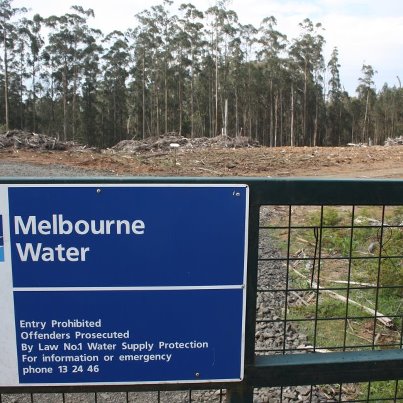
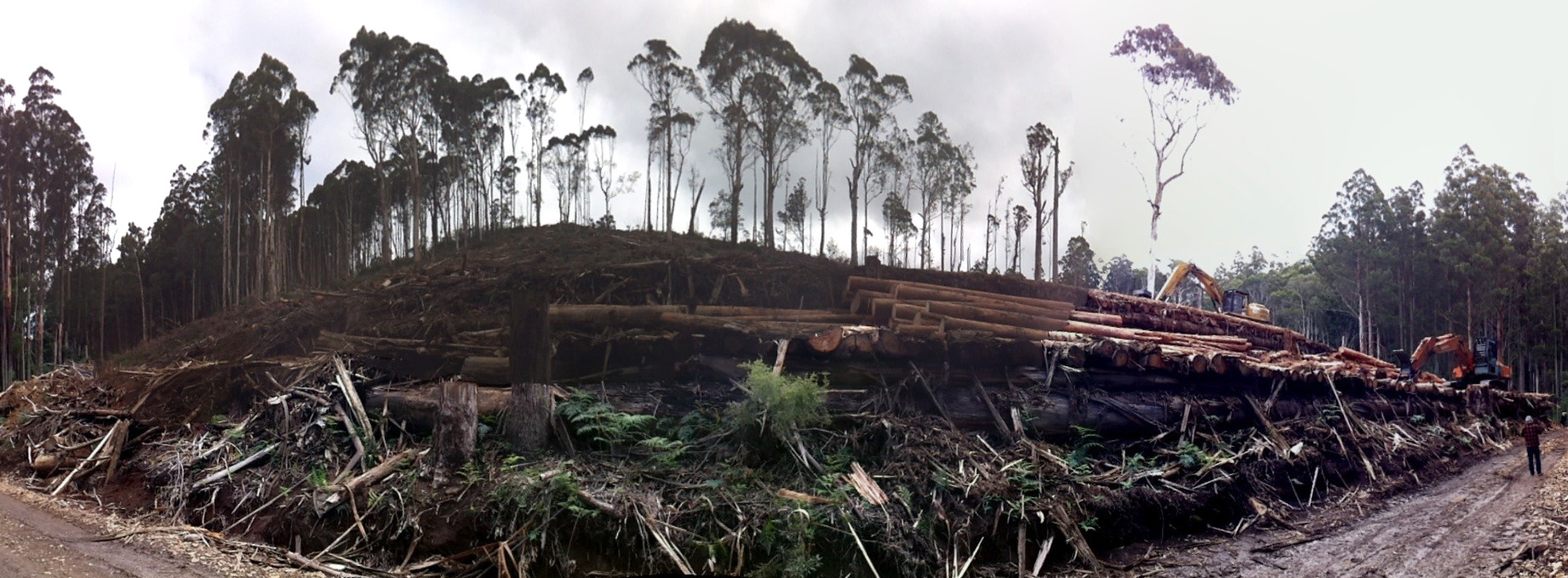
Starvation Creek – Yarra Catchment. Image: CHAG.

Melbourne Water and Premier Baillieu overcharge us for a desalination plant while they plunder our free water from Melbourne’s catchments subject to logging.

Logging in Toolangi, tributary to the Upper Goulburn, is already ripping 3,807 billion litres of water from ‘paying’ downstream users and irrigators worsening over the next century. VicForests, the governments logging company, don’t pay for this water cost nor do Australian Paper (makers of Reflex copy paper) who receive 50% of VicForests wood supply. The owners of Australian Paper are the Japanese multi-national pulp conglomerate Nippon Paper, whose office is in Tokyo. VicForests have only paid a legitimate rent for this forest ‘use’ once since their inception in 2004.

VicForest have yet to break even since 2005 without the aid of grants. They are insolvent but are exempt from Part IV of the Trade Practices Act that would see these matters investigated by a third party like the ACCC. VicForests have avoided audits by the Auditor General after 8 years of operating.

In 2008 the Victorian ALP government received the results of the Wood and Water study committed to in the Regional Forest Agreement process (RFA) in 1998. The results of the hydrological study recommended ending logging in 2009/10 in order to improve water yields to Melbourne (DSE/Mein 2008). This was flatly rejected by government and as a result environment and local government stakeholders abandoned participation in the study.

As temperatures broke state records, angry at the state governments response to dismissing the option to end catchment logging, fifteen local governments independently carried a motion to stop catchment logging by 2010, including the Melbourne City Council. The government ignored this concern and proposed a very expensive buffer.

In 2008 the state ALP government commissioned a desalination plant and maintained clearfell logging the catchments, which in effect, firmly privatised the otherwise historically free water resource. Melbourne has enjoyed a clean, heathy water supply as a result of government in the late 1800‘s kicking timber-getters and miners out of the catchments. As Melbourne’s population grew, new water sources were channeled and created like the Thomson dam at a considerable cost to Victorians. The Thomson provides up to 60% of Melbourne’s water and is now the most heavily logged catchment in the network.

In the 2010 election the Coalition Minister for Water and Forestry, Peter Walsh, committed to hastening logging rotations down from 80 years to 50 years in the Timber Industry Action Plan (TIAP) in order to create more resource from the dwindling forests. This ultimately means that regenerating forests, after logging, growing in the band of highest rainfall, will be kept in perpetual thirst. Regrowing ash species forests lose up to 50% of water run off at 50 years of age due to their enormous growth capacity. It’s not HOW MUCH you log its where and what species you log that’s costing Melbourne critical free water!

In the TIAP, Minister Walsh made a commitment to log parks and strengthened commitments to log water catchments as an electoral promise to his National party colleagues (many of whom are loggers). So under current policy and its effects, our catchments will never yield water at their maximum delivery and we have to pay for the forfeiture via a desalination plant no-one can afford. Minister Walsh runs VicForests and Melbourne Water so he sets any checks and balances, should any exist.

In this Melbourne By-Election voters should demand that candidates openly declare their policy on Melbourne’s Water! It maybe the single greatest issue for the sustainability and survival of Melbourne.

Check here for details on protests held earlier in 2012.
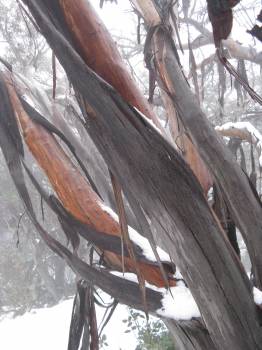
Lake Mountain music festival

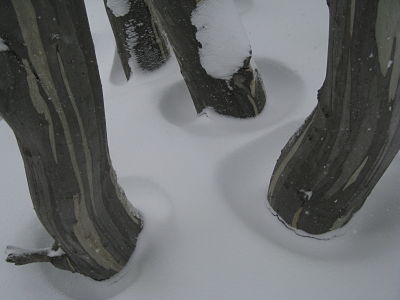
burnt snow gums

From the Lake Mountain Alpine Resort:

“Get out your dancing shoes and head to Lake Mountain over the Labour Day March weekend – when the Mountain will hold the “Thank You Victoria Lake Mountain Music Festival” on Sunday March 11, 2012 to thank Victorians for their contribution to the mountain’s recovery from the 2009 Black Saturday bushfires”.

“The festival, featuring performances by artists including Deb Conway & Willy Zygier, is an opportunity for Victorians who donated to the Black Saturday Appeal to see how the mountain has recovered – and experience the range of new summer activities”.

“Lake Mountain Alpine Resort is back in business – and bigger and better than ever – with new summer activities including dune buggies and flying foxes, a new function centre and an action packed winter planned for 2012”.

(I’ll save my tirade about the stupidity of having dune buggies on the mountain for another day …)

Full details here.

Residents and activists defending old forests at Toolangi

The tree sit at Toolangi

For the past two days, more than 30 people from the Central Highlands Action Group and local Toolangi and Healesville residents have been occupying a large logging coupe on Yellowdindi rd in Toolangi state forest.

Two 30m tree sits, which are suspended by ropes attached to two log-harvesters and two ‘bunnies’ with their arms locked through the tracks of a third machine have ensured that no clear-felling took place in the coupe on Monday January 16.

Much of the Toolangi forests were burnt in the fires of 2009. One Toolangi local said that “residents are concerned that following the Black Saturday fires in 2009 that clear-fell logging in the area will increase the risk of mega-fires due to the large amount of wood waste which is left behind in coupes. The resulting mono-species regeneration after logging operations is far more combustible than the mature age forests which are being removed. This is a recipe for further fire disasters”. They point to research by eminent forest ecologist Dr David Lindenmayer, which clearly indicates that clear-felling practices in the Central highlands notably increases fire risk and thus threatens the whole region.

Activists also point to other values of the forests: “These forests give us protection against climate change and provide habitat for native fauna which is such a feature of this area.”

There is a report available here.

These images by Emma-Jayne Heather.

the coupe at Yellowdindi

Tourism facilities in national parks could kill the ‘golden goose’

A release from the Victorian National Parks Association on a recent proposal to open up national parks for private tourism facilities.

MEDIA RELEASE – Tuesday, 8 March 2011

Tourism facilities in national parks could kill the ‘golden goose’

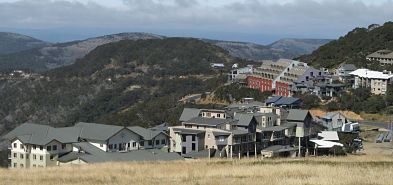
Mount Hotham

The Victorian National Parks Association says a recommendation by the Victorian Competition and Efficiency Commission, to open up national parks for private tourism facilities, is simplistic and would be a dangerous new direction for park management.

“National Parks are becoming a victim of their own success. They are popular and much loved, but now private companies want a piece of the action in a public asset designed to protect nature for the future”.

“There is a danger of killing the goose that lays the golden egg. People visit national parks for an experience they can’t get elsewhere – they want the opportunity to experience the natural world.    There is ample opportunity for tourism infrastructure adjacent to parks, where financially viable developments can take place without the more onerous conditions necessarily imposed on infrastructure inside parks.

The VCEC recommendations contradict Victoria’s current, and widely respected, Nature Based Tourism Strategy, which states that “Private investment into any new large scale facility, particularly accommodation other than adaptive re-use of existing infrastructure, should be sited outside the park”.

“There is a lot of tourism potential on private land adjacent to our national parks which allows for certainty of investment, particularly in and around regional towns,” said Mr Ruchel.

“The VCEC draft report fails to appreciate the public land tenure system and its landscape context. Over 60% of Victorian land is privately owned and 80-90% of that has already been cleared. National parks and conservation reserves make up only approx about 18% of the land in Victoria, and are a refuge for plants and animals in a state with relatively little intact native habitat left.”

“The State Government must rule out new major infrastructure in national parks and re-commit to the principles outlined in Victoria’s existing Nature Based Tourism Strategy.”

“The change we need in national park management is a solid commitment to managing our unique natural heritage for all Victoria’s and future generations” he concluded.

For further comment contact:
Matt Ruchel: 0418-357-813
Phil Ingamells: 0427 705 133

news from the Strathbogie Ranges

The following are two great community sites from the Strathbogie Ranges, an outlier to the Vic Alps. The more regional sites the better!

Strathbogie Ranges – Nature View

Flora, fauna & natural history of the Strathbogie Ranges, Victoria

This blog is about observations & issues concerning the natural history of the Strathbogie Ranges, Victoria, Australia.
The Strathbogie Ranges are located in north-east Victoria, Australia. The Ranges include several districts (e.g. Strathbogie, Ruffy, Highlands), but support no towns (Strathbogie does have a General Store and Ruffy has the Pantry) and no major through-roads. Towns on the plains surrounding the Ranges include:

* Seymour to the south-west
* Euroa, Violet Town & Benalla to the north
* Yea & Alexandra to the south, and
* Mansfield to the south-east

The Ranges are separated from the main Great Dividing Range by the valleys and floodplains created by the Goulburn and Broken Rivers. Being separate from nearby areas of similar elevation and high rainfall has resulted in some interesting and unique biogeographic and ecological patterns.

If you’d like to add your own observations just leave a comment under the relevant post. If you’d like to contribute your own posts, email me and I’ll sign you up (bertram.lobert@activ8.net.au). You don’t need a photo to contribute, all your nature observations are welcome. This blog is part of a larger project to record biodiversity and natural history information from across the Strathbogies.

You can find their site here.

Images: Strathbogie Ranges – Nature View

Strathbogie community website

It’s a new way for residents and landholders to stay in touch and communicate with each other.  We may be a small and scattered community but, with increasing use of computers and email, this site offers the opportunity to keep informed about events, to comment about Tableland issues, to contribute ideas, to catch up with each other, to buy and sell, and to show off our creativity.

FOR THOSE WHO DON’T KNOW THE AREA, the small community of the Strathbogie Tableland is located on an elevated plateau in the Strathbogie Ranges. Two hundred kilometres northeast of Melbourne, it is surrounded by forests, farmland and granite hills.

The environment is beautiful with its native bush, birds and animals. While many people have spent their entire lives on the tableland, others are increasingly choosing to leave city life and move up to live here permanently.
You can find their site here.

Alpine grazing action alert

A new dilemma for the government:

According to The Age newspaper, “traditional owners of Victoria’s high country have threatened the Baillieu government with legal action, accusing it of “stepping over the mark” in the controversial return of cattle to the Alpine National Park.”

The government appears to be in the bunker and not responding to a number of recent stories in The Age.

UPDATE, 12/1/11: it has just been announced that the government has secretly put a small number of cows back in the Alps Park in order to “prevent any potential Federal Government injunction”. (!!)

This secrecy flies in the face of the Ted Baillieu’s committment to transparent government.

Check this letter from the Environmental Farmers Network on the grazing decision.

Background

Cattle were removed from the Alpine National Park in 2005 by the government of Steve Bracks. This was an important step forward for good land management in our state. Since then, some of the long term damage caused by decades of grazing have started to heal.

However, the Victorian Coalition announced in the build up to the November election that it would return cattle grazing to Victoria’s alpine national parks as a tool to reduce fire risk.

It probably made sense to summer graze cows in the alps when the practise started in the 1800’s. Given what we now know – of the ecological damage they cause – it made sense to remove them from the precious alpine areas.

Putting them back into the Park – in the very headwaters of our most significant river systems in a time of climate change – would mean turning our backs on common sense land management and scientific evidence. Grazing greatly damages the alpine systems, including the peat beds, that release high quality water into our river systems across the north east of the state.

Research on alpine grazing has consistently shown that the pro grazing mantra ‘grazing reduces blazing’ simply isn’t true.

The Victorian National Parks Association has substantial information on the question of grazing and fires which is available here.

You can also see the CSIRO’s finding on grazing and fire here.

We need to send a strong message to the new government that the majority of Victorians do not support the re-introduction of grazing into the Alps and other protected areas like the Barmah forest.

TAKE ACTION

Please write to the Premier and Environment minister, explaining that you are opposed to the reintroduction of cattle grazing into Victoria’s alpine environment.

You could mention that the grazing of cattle in a national park is inconsistent with conservation management, which is the main purpose of national parks protection. It will not help reduce fire risk. Our alps are at great risk from climate change and do not need that degradation that will come with grazing.

Simply send a brief and polite email outlining your concerns, with your name and address to:

The Hon Ted Baillieu MP
Premier of Victoria
ted.baillieu@parliament.vic.gov.au

The Hon Ryan Smith MP
Minister for Environment and Climate Change
ryan.smith@parliament.vic.gov.au

It would be great if you could cc us a copy so we know how many letters have gone in: foe@foe.org.au

Please send this alert on to your friends. Thanks!

what would a Coalition victory mean for the Victorian Alps?

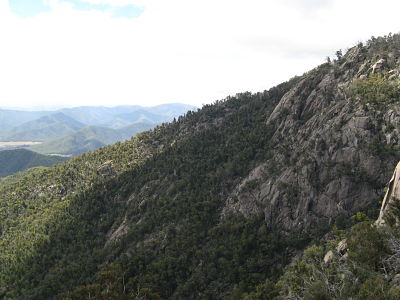
Little Mt Higginbotham, VIC

With the prospect of the Coalition taking power following yesterday’s state election it is worth taking a few minutes to think about what this might mean in terms of a change in attitude to the Victorian High Country.

The most obvious short term implication would be if the Coalition was actually able to implement its promise to return cattle to the Alpine National Park. (Phil Ingamells of the Victorian National Parks Association recently explained why this is most unlikely).

The Mountain Cattlemen’s Association of Victoria (MCAV) is hoping the Coalition will act on it’s promise to re-introduce cows to the Alpine National Park. They say this would be a good thing because “cattle grazing (is) a proven management tool to reduce fuel loads”.

You don’t have to be a genius to know that a cow, given the choice between a succulent plant and a prickly shrub, will choose to eat the former. Over time, at at scale, this drives sub alpine vegetation towards scrubbier vegetation types – which will be more flammable. ‘Alpine grazing reduces blazing’ has been consistently proven incorrect by a number of studies. There are a range of other reasons to keep cattle out of the headwaters of our most significant river systems, not least of which is water quality. Lets hope common sense will prevail on this one.

They have also announced that they would intensify logging and replace native forest ecosystems with Mountain Ash ‘plantations’.

Another, longer term issue is climate change. As we know, climate science tells us that the Alps are at grave risk from climate change unless we can greatly reduce greenhouse emissions in the near future.

The Victorian Coalition was noticeably absent from the climate change debate through most of this year, and didn’t even bother to release their climate change policy before the election.

They did release an energy policy (just 4 days out from the election) and there are various points of detail in that policy that should worry anyone who is wanting action on climate change from the Party that forms the next state government.

This includes the fact that:

  • they have provided very little detail on how Victoria might meet the existing 20% emissions reduction target,
  • there is no mention of the scale of the problem of climate change,
  • there is no direct commitment to a phase-out of Hazelwood or any other coal fired power station,
  • finally, it includes a regressive policy on wind farms.

As leader, Ted Baillieu has shown a complete lack of interest in the issue of climate change. The next few years are pivotal if the global community is to respond effectively to the threat of global warming. Victoria must do a fair share of this work. Based on their actions over the past year, it seems clear that a Coalition government would send Victoria backwards on this most pressing of issues.

In the build up to the election, environment groups released a series of scorecards assessing Party policies. In the final version, the Greens scored 93%, the ALP was next best on 52% and the Coalition was far behind on just 22%.

The scorecard can be found here.

Buffalo skways final “Open House” Information & Feed Back Session

This will be held on Wednesday June 16, 2010 4:00 PM – 6:00 PM
Alpine Visitor Information Centre, Bright, Victoria.

It is hosted by Council and billed as being a Public open house session.

This is your last opportunity to voice your support or concerns. Everyone is welcome to visit and comment. If you can’t attend, please send your thoughts to the Alpine Shire (the proponents for this proposed project) via their contacts page.

For details on some of the environmental problems of this project and how to voice your concerns, please check here.

new Chair of the Alpine Resorts Co-ordinating Council announced

Des Powell has been appointed as the new Chair of the Alpine Resorts Co-ordinating Council (ARCC) in Victoria.

The Council is a statutory body established under the Victorian Alpine Resorts Management Act 1997. It reports to the Minister for Environment and Climate Change, and it’s key function includes planning for and facilitation of “the establishment, development, promotion, management and use of alpine resorts” in the state.  It will be very interesting to see how Des steers the ARCC in coming years.

Given this has been announced via the Australian Financial Review, I expect there will be something on the ARCC website soon.

Hotham Central, VIC

profile: Charley Daniel, W Tree, VIC

Home of Black Rainbow Printing (Snowy River Country)

A profile of legendary activist Charley Daniel.

The hill country of East Gippsland is probably not the place where you would expect to find an environmentally friendly printing service. But in the small township of W Tree, north of Buchan, Charley and his partner Jenny Doran have been running their specialty printing business for many years.

Charley has spent his life successfully fighting for the environment. He has a deep and passionate commitment to change through individual action. He has expressed this through his activism and his printing business for decades now.

.
You can find the profile here.

Premier announces free entry to all Vic national parks

From the premier’s website:
“Entry to all of Victoria’s national parks and metropolitan parks will be made free of charge to encourage people to get active in the great outdoors, Premier John Brumby announced today.

Opening the international Healthy Parks Healthy People Congress at the Melbourne Convention and Exhibition Centre, Mr Brumby said the health benefits for people getting out and exploring the natural world far outweighed the benefits of collecting entry fees from parks.

“Victoria has one of the best park networks in the world and we want them to be as accessible as possible to all Victorians,” Mr Brumby said.

Buffalo Plateau

“From 1 July 2010 there will be no entry fee to any national park or metropolitan park in Victoria. Parks Victoria estimates that removing entry fees will increase visitor numbers by 25 per cent to 50 per cent at most sites.”

National parks that will be free are Wilsons Promontory, Mount Buffalo, Baw Baw, Mornington Peninsula, Yarra Ranges (Mount Donna Buang) and Point Nepean as well as Werribee Park, Coolart, National Rhododendron Gardens and William Ricketts Sanctuary metropolitan parks.

Surely this is a good thing… it means more people are likely to get out in the parks (and the premier has included a review to see if top up funds are needed to back fill loss of gate revenue). It should be especially useful in the case of Buffalo national park, which has been suffering because of loss or closure of key infrastructure in recent years.

Mr Brumby said encouraging people to get out and about in Victoria’s parks was good for community wellbeing and good for regional economies.

You can find the full release here.

Blog at WordPress.com.

Up ↑