Search

Mountain Journal

Environment, news, culture from the Australian Alps

Tag

Victorian Alps

The King of Hotham: My Father

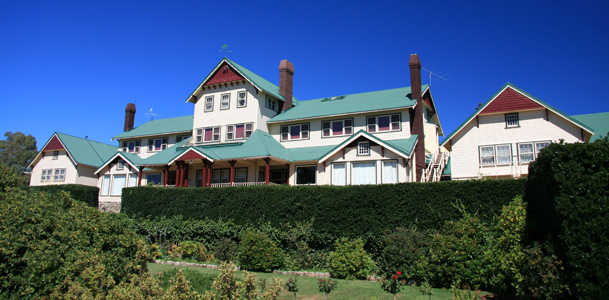
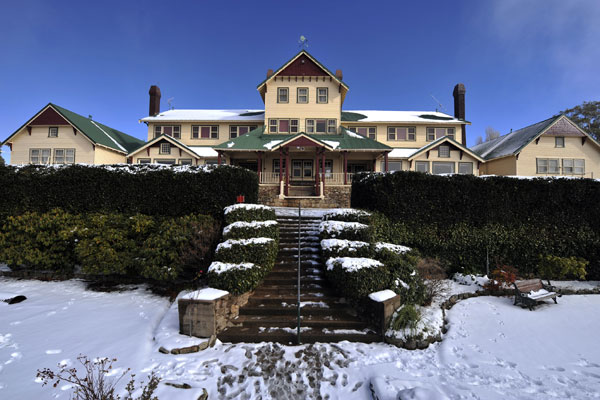
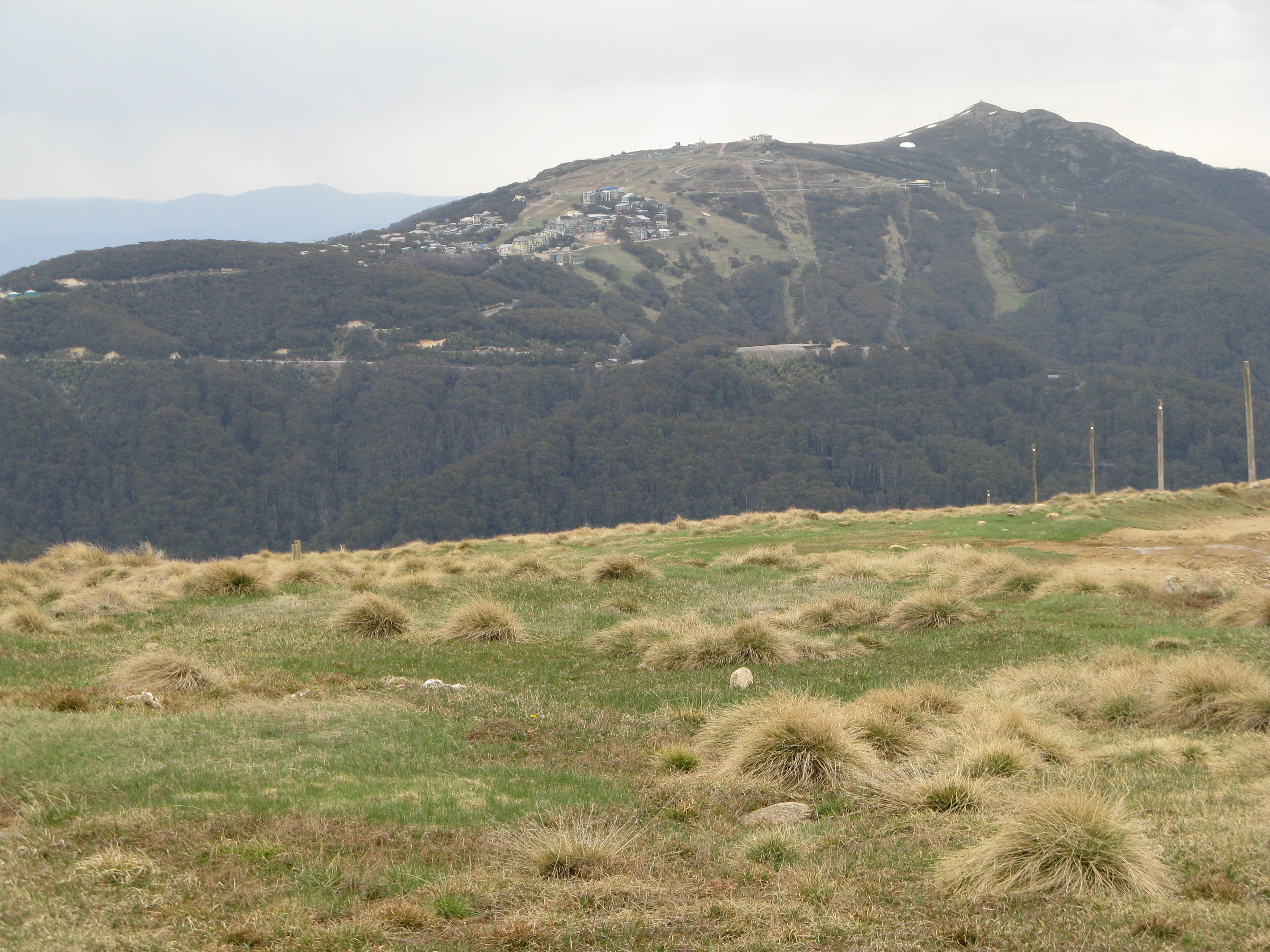
This book is a memoir by Gillian Salmon of the remarkable life and times of her father, Lindsay Salmon, who played a key role in the development of Mt Hotham, including the establishment of the Mount Hotham Ski School and the construction of the iconic Drift Chalet.

It covers his time in the mountains of north eastern Victoria, broken by World War II. On his return, he starts work on the Drift Chalet. It opens in 1952 and ‘offers a tradition of hospitality unmatched at Mount Hotham since.’

Check here for the full review.

the Alpine Walking Track in winter

This trip is from several years ago but remains an impressive effort: a traverse of the Alpine Walking Track (AWT) from near Canberra through to Walhalla in winter.

This short video gives some highlights of a trip done in 2005 by two brothers, Andrew and Mark Oates. The main ranges images are lovely, but it’s the earlier stages of slogging through the wet plains of the northern Snowies and fording flooded rivers that is perhaps the most impressive.

They say of their trip:

Our first seven days involved walking and carrying our skis, with pack weights around 35 kg. We first put on our skis just after Kiandra and apart from one or two days of pure walking we were able to ski most of the way from there to Hotham. A 60 cm dump of light dry snow near Thredbo helped keep us on our skis but it also made the first few days afterwards extremely challenging. Even with the fattest touring skis available we were still sinking at times thigh deep in snow with our skis on.

After crossing the three highest peaks in the ACT, NSW and Victoria we reached Hotham after four weeks. Unfortunately though the snow did not last – our fifth week out, from Hotham to Howitt saw us experiencing a week of solid rain and strong winds. This resulted in much of the existing snow along the remainder of our route melting away before our eyes.

There is a 4min 40 sec short version of their adventure available here.

Check Mark Oates vimeo page for the 2 longer videos. He also has a youtube page.

The AWT remains the quintessential trail through the Australian Alps, and at 680 km in length remains a committing project with complex logistics, because of the need for multiple food drops along the route. You can find some extra info on the track here.


Partial demolition of Mt Buffalo chalet to start

As a further development in the long running saga about the historic chalet on the Buffalo Plateau, The Weekly Times is reporting that the two accommodation wings on the chalet can now be demolished.

The journalist is Chris McLellan.

Iconic Mt Buffalo chalet to be saved by knocking some of it down

Image: SMH
Image: SMH

DEMOLITION works can proceed on the Mt Buffalo ­chalet after heritage protection ­orders were lifted.

Two wings will be knocked down to make way for a $7.5 million restoration and allow the chalet to be reopened as a day visitor centre.

Heritage Victoria granted the permit over the objections of the National Trust which supported efforts to restore the century-old chalet but not at the cost of about 40 per cent of the building.

The chalet closed in 2007.

There is still debate about whether the demolition works will need Federal Government approval as it is included on the National Heritage List.

A clearing sale of hundreds of items from the chalet will be held on May 4.

Heritage Victoria executive director Tim Smith said the permit would allow the main chalet building to be restored “to its former glory”.

Benalla MP Bill Sykes said work had started on the restoration with maintenance work well under way.

Expressions of interest closed this week for community representatives to oversee the redevelopment.

new road proposed for Mt Stirling

Mt Buller is already over developed. Is the road part of a plan to see similar development on Mt Stirling?

In 2008, the Mt Buller and Mt Stirling Alpine Resort Management Board applied for permission to build a road through old growth alpine ash across the north side of Corn Hill from Mt Buller to Mt Stirling.

This was ostensively to provide a route for people to escape the mountain in the case of a fire blocking the main road. However, it would pass through a considerable area of dense forest and then across to Mt Stirling, which then requires a long drive down to the Delatite River, where the existing Buller road emerges from the forest. If there is a major fire burning out of the Delatite Valley across the northern side of Buller it is hard to see how a major evacuation would work above the same area of forest. It would be a huge financial investment for a road that would probably never need to be used. A much cheaper option would be to ensure the community gathering site on the mountain contains a fire refugee able to withstand an intense fire.

So, is there something else going on? The Victorian National Parks Association (VNPA) believes the real intent is to make it easier to build accommodation on Mt Stirling because it would greatly improve vehicle access to the higher sections of the mountain.

The VNPA says it would just require a ‘simple amendment’ to the current planning scheme to allow development.

The road was knocked back several years ago, but now the resort is trying to gain approval again.

There have been various attempts to develop ski resort facilities on Mt Stirling over the years, and this has long been resisted by many in the community. Mt Buller is already heavily developed, and Mt Stirling provides opportunities for cheaper, lower impact winter and summer recreation. It has recently seen the development of major mountain biking trails, and provides access to walkers, skiers, 4 wheel drivers, and horse riders.

The VNPA is tracking this issue. Check their website for updates.

Bike Buller

Bike-Buller213Flow magazine is a great local mag that covers the mountain biking life.

The following is from the introduction to their recent story on mountain biking at Mt Buller in Victoria’s high country.

I’m on the chairlift for the second time that morning during day 2 of Bike Buller when my phone chimes in from the top pocket of my CamelBak. It’s Will, who’s here in Buller for the first time – his text reads simply:

“Holy shit my milkshake!”

Decoding Will’s particular blend of babbled enthusiasm, I know that the Delatite River Trail has lived up expectations and has left him, as we promised, as frothy and shaken up as any good vanilla ‘shake should be. Thinking back to my first ever run down the Delatite, I can recall how he must be feeling – the manic speed of it all, the stomach clenching fear as you get off the ride line and big rocks start flicking your wheels about, the disbelief at just how long it keeps it on descending. And finally a mixture of relief at having survived unscathed, and desire to just do it all again RIGHT NOW.

Check the story here.

Hawkweed Eradication Program

The following is a reportback from Parks Victoria on this summer’s Hawkweed program. For several years PV has been co-ordinating a program on the Bogong High Plains aimed at getting this invasive weed under control.

Volunteers help to eradicate dreaded Alpine weed

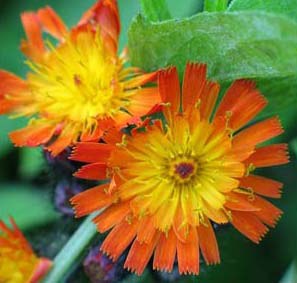
orange_hawkweedVolunteers are helping to eradicate one of the state’s worst weeds from the Victorian Alps. Hawkweed is an extremely invasive member of the daisy family and is a State prohibited weed in Victoria. It has already caused major environmental damage in North America, Japan and New Zealand. Three species have been discovered in the Falls Creek Alpine Resort and surrounding Alpine National Park. An eradication program is underway and being jointly overseen by Parks Victoria, the Department of Environment and Primary Industries and Falls Creek Resort Management. Universities, research organisations and volunteers are also helping with the eradication program.

Over summer, 59 volunteers made a significant contribution by seeking out Hawkweeds across the vast and rugged alpine landscape. Volunteers from the Victorian National Parks Association, Weed Spotters, Landcare and Bushwalking clubs, as well as individuals joined forces for the hunt. They searched a total area of 73 hectares over a five week period in December and January, discovering 15 Hawkweed infestations.

“The search involved approximately a thousand hours of surveillance over rough terrain and often in challenging weather conditions,” said Keith Primrose, Operations Manager for the Hawkweed Eradication Program with Parks Victoria.

The project was assisted with information from Parks Victoria’s Research Partners Program by the University of Melbourne, Parks Victoria and DEPI. This helped locate and prioritise Hawkweed infestations.

Falls Creek Resort Management supplied accommodation for the volunteers free of charge.

This meant they stayed on the mountain for the surveillance work and enjoyed their free time in this beautiful landscape.

Parks Victoria Volunteer Coordinator Yohanna Aurisch says these enthusiastic teams are making a real difference. “We had an amazing season with a fabulous bunch of volunteers and we can’t thank them enough for their time, hard work and dedication. They discovered infestations of Orange, King devil and Mouse-ear Hawkweeds and have helped us take another step towards eradicating this highly invasive pest.”

Keith Primrose says only a committed approach will see the eradication of Hawkweed from the Victorian Alps “Without the dedication and effort of these volunteers this program has significantly less chance of success.”

Planning is already underway for next year’s season and recruitment starts later this year. For more information contact Keith Primrose via info@parks.vic.gov.au

If you think you have seen a Hawkweed please contact DEPI on 136 186.

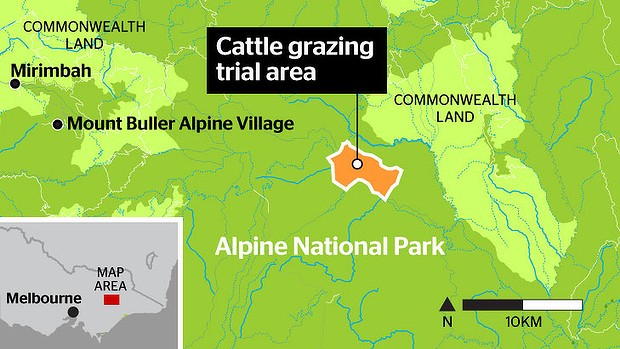
cattle back in Alpine national park. Ryan Smith’s legacy?

The Age is reporting that:

Image from The Age. Graphic: Jamie Brown

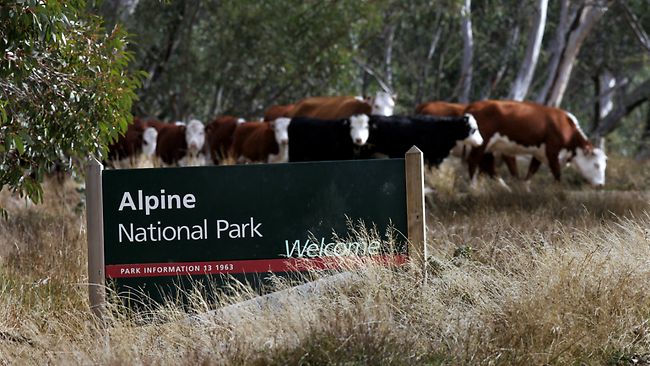
Cattle have returned to the Alpine National Park for the first time in three years, with animals released in recent days under the Napthine government’s grazing trial.

It is understood that a little under 60 cows were brought into the park either on Wednesday night or Thursday morning, marking the start of the program.

The move follows the state government getting approval for its grazing plans from federal Environment Minister Greg Hunt earlier this month. The state government says the trial will test whether cattle grazing lowers bushfire risk by reducing fuel loads.

As pointed out by Phil Ingamells of the Victorian National Parks Association:

“the trial was not science, rather a political promise to the cattlemen to protect their privileged grazing rights in the park”.

“Decades of evidence show how much grazing harms the park. But it does nothing to reduce grazing risk,” he said.

Read more in the article by Tom Arup here.

And background on the trial here.

Environmental policy in a time of climate change

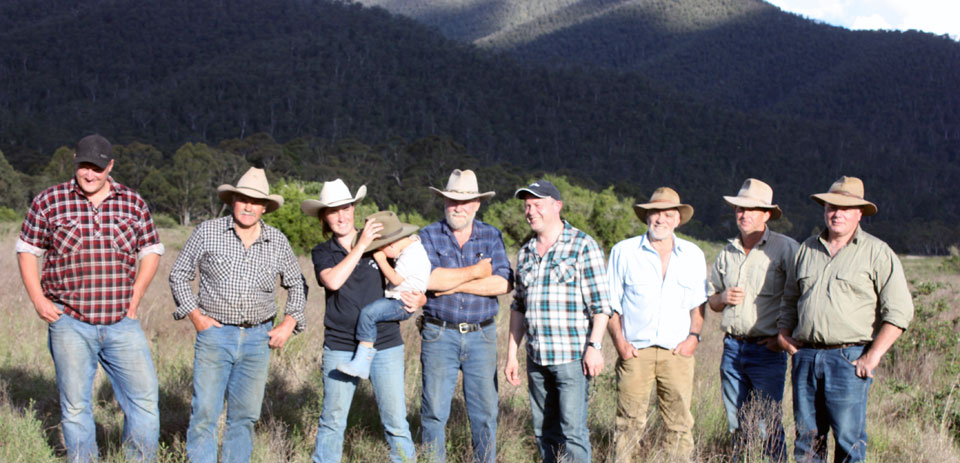
Environment Minister Ryan Smith with mountain cattle graziers, Wonnangatta Valley. source: MCAV

The state government has doggedly pursued this grazing trial since it came to power, and the environment minister Ryan Smith has been closely involved in efforts to get cattle back into the park. The first attempt was knocked back by the previous federal government. The current proposal has recently been approved by Coalition Minister Greg Hunt.

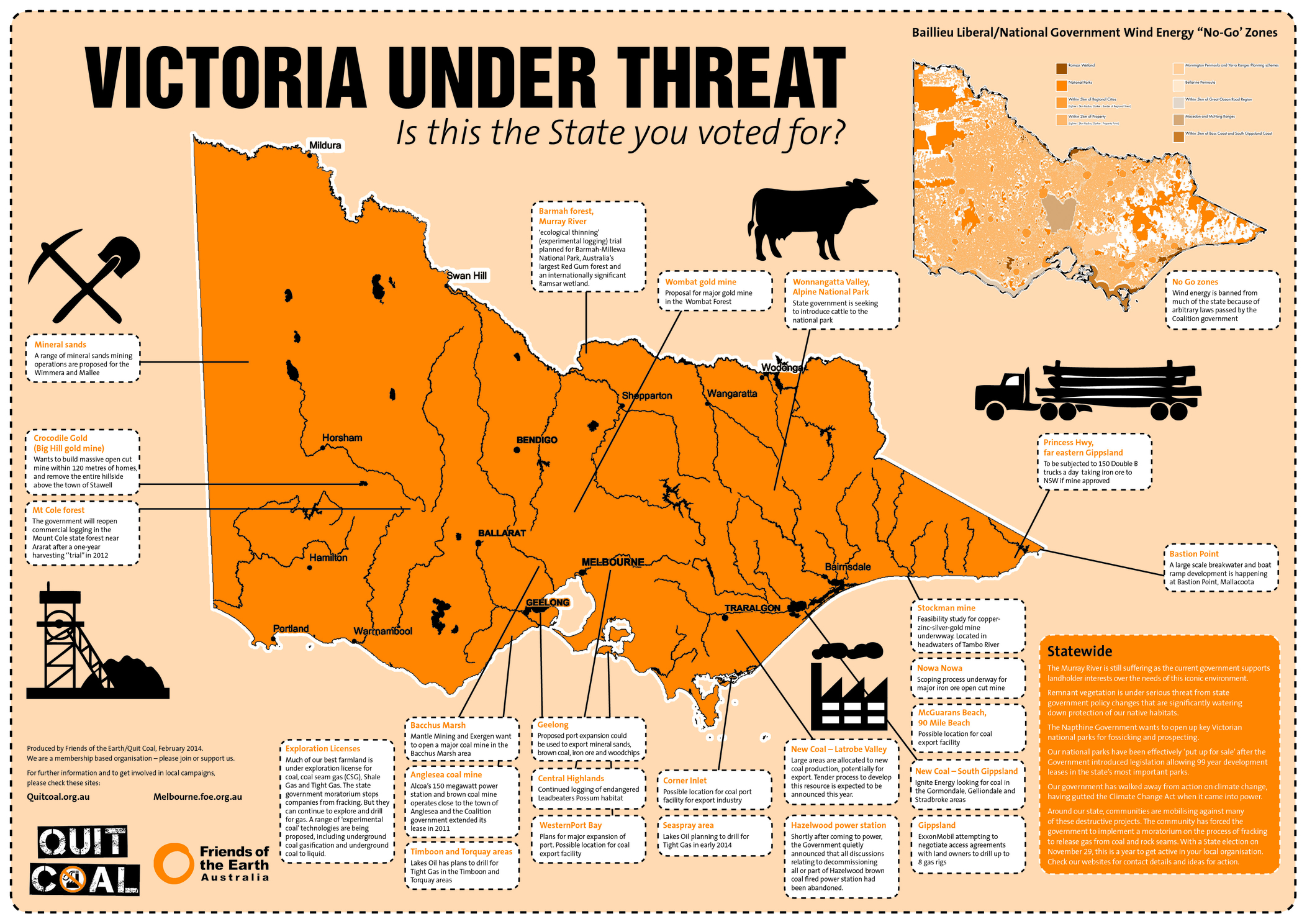
Victoria’s environment is in bad shape. Imagine how things could be improved if Mr Smith put as much effort into reducing Victoria’s contribution to climate change. Or protecting Mallacoota from the destructive development at Bastion Point. Or if he acted to protect the habitat of the endangered Leadbeaters Possum which is threatened by logging. Or … (insert any number of other issues here: for instance or check this list from Environment Victoria).

Sadly, he has instead overseen the demolition of the Victorian Climate Change Act. Development of renewable energy has basically stopped on his watch, which can only give benefit to the fossil fuel industry.

Meanwhile, he has pursued this project, widely described as being more about politics than land management.

Will he be remembered as the minister who turned his back on climate action and habitat protection, whose one legacy was to put cattle back into a national park?

VIC map for web

Alpine grazing trial: “If this was a Masters’ project, we’d boot it back to the student”

It’s getting on to four years that the Victorian government has been pursuing its attempt to re-introduce cattle into the Victorian alpine national park. You would think that for an issue they are so committed to they would actually be able to produce a comprehensive and scientifically robust plan.

This has not been the case. The following article from the ABC is just the latest criticism of the trial from a scientific perspective. Journalist is Jeremy Story Carter.

Alpine grazing trial given fail mark
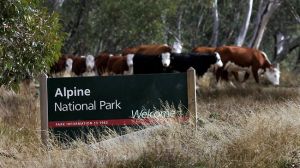
alpine grazingA senior scientist says the proposal for the Victorian National Alpine Park cattle grazing trial would receive a fail mark if it was the work of a student.

Professor Mark Burgman, chair of the School of the Botany at the University of Melbourne, reviewed the proposal as part of a submission to the Victorian Government by the Australian Academy of Science.

“If this was a Masters’ project, we’d boot it back to the student,” said Professor Burgman.

“If it was submission to the Australian Research Council, it wouldn’t get to first base, it would get bounced.”

Federal Environment Minister Greg Hunt last week approved the trial, which will allow 60 cattle to be released into the Wonnangatta Valley this year, with more permitted over the coming two years, subject to review.

Professor Burgman believes the trial should not be permitted in its current form, as it fails to incorporate years of exhaustive research into the impacts of grazing on alpine regions.

“The science I see in front of me is lacking, and it is an admission that should be redressed before anyone starts to think about doing a trial of any kind,” he said.

“There is a wealth of information that could be used to help design the study, but they didn’t make any use of it. That 50-60 years of research ought to have been used to design the study.

“From a scientific perspective, it doesn’t make any sense to do that.”

He says the trial is too narrow in scope, and there is a potential for its findings to be used in other, broader contexts.

“It is very limited in space and its time – three years, one location,” said Professor Burgman.

“If one were to do this in isolation, it would be very easy to generate a set of results that are misleading, that you are then tempted to extrapolate to other places, other situations, that simply won’t function in the same way or react in the same way.”

Professor Burgman is concerned results from the trial could lead to mismanagement of future grazing regions.

“If you treat this trial in isolation, you will end up with some pretty significant surprises and start to manage the place in ways that will lead to outcomes you would have rather avoided.”
Alpine grazing trial ‘will be a neat demonstration that cows eat grass’

The following update and call out comes from the Victorian National Parks Association.

There was also an interesting report on Bush Telegraph on ABC, with the following quote:

In a report titled Does Alpine grazing reduce blazing? A landscape test of a widely-held hypothesis. Dr Williams found ‘the use of domestic stock to mitigate fire extent and severity at landscape scale under conditions of extreme fire weather, is not justified on the basis of the current scientific understanding of fire behaviour, livestock behaviour and alpine vegetation dynamics.’

Dr Williams says there is no justification for the current trial.

‘It has no scientific justification and the trial as it is set out has very little scientific credibility… it will be a neat demonstration that cows eat grass.

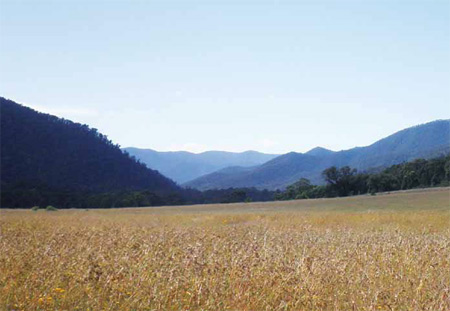
in the Wonnangatta, looking north

Don’t let Abbott & Co trash our parks

Today, Federal Environment Minister Greg Hunt approved the Victorian Government’s application to trial cattle grazing in the Wonnangatta Valley, part of the National Heritage-listed Alpine National Park.
In a needlessly rushed decision the minister has approved the return of 60 cattle for a few weeks before winter sets in as part of a larger three year trial involving up to 300 cattle.
Sixty cattle, grazing for a few weeks, is by no means a scientific experiment. The same thing can be easily done outside the national park, but this option was not even considered.
The VNPA along with many scientists and members of the community made detailed submissions arguing against the cattle grazing trial, but obviously they have all been ignored.
The so-called scientific trial is a farce, here are just some of the reasons why:
  • There is still no peer reviewed scientific design for the trial.
  • There has been no consideration of a location outside of the national park.
  • The application ignores the considerable scientific evidence that cattle grazing does not significantly reduce alpine fires.
  • More than 60 years of research shows cattle damage alpine wetlands and the headwaters of many rivers, threatening nationally-listed rare plants and animals.
  • The rushed decision means there will be no time to carry out on-ground surveys for threatened and rare species that could be affected by cattle grazing.
Wonnangatta Valley has been in the Alpine National Park for more than 20 years. National parks were created for the conservation of nature, not as cow paddocks for graziers who want to regain privileged access to the park.
The Victorian Government has now wasted more than $1 million of taxpayers’ money on this deeply flawed ‘science project’ to appease its cattlemen mates. 
It is three years since the Coalition first promised to get cattle into the Alpine National Park, but we are yet to see a peer-reviewed scientific design for the project, or be told if any scientists have put their name to the ‘scientific trial’.
The Abbott and Napthine governments seem hell bent on trashing national parks, even though they are cherished by most Australians and envied by the rest of the world.
It’s time to stand up and make some noise for national parks! 
You can help by: 
We love national parks – they should provide a safe and secure home for our natural heritage, our native plants and animals. We use them to walk, ride, camp and relax, but never should they be used as cow paddocks!

Greg Hunt approves Victorian Alpine National Park cattle grazing trial

In a sad but not unexpected move, the federal environment minister Greg Hunt has approved the Victorian government’s grazing trial in the Wonnangatta Valley within the Victorian national park.

Check here for some background.

This report comes from Tom Arup at The Age.

Greg Hunt approves Victorian Alpine National Park cattle grazing trial

alpine grazingCattle grazing will return to Victoria’s Alpine National Park after federal Environment Minister Greg Hunt approved a state government trial to have 60 to 300 cows in the park.

Mr Hunt’s approval stands in contrast to the Gillard Government which blocked a similar – albeit larger – cattle grazing trial, on the grounds it would damage the environment and the heritage values of the alpine region.

The Napthine government has pursued the trial saying it is necessary to test whether grazing reduces the risk of bushfires by removing fuel loads. Conservationists say there is little scientific rigour behind the program and past research shows cattle grazing has no impact on stopping bushfires, while damaging sensitive alpine ecology.

Under the trial, 60 cows will be released into the Wonnangatta Valley in the park for the first year of the program. In the second and third years of the trial, up to 300 cows could be introduced, though Mr Hunt would need to approve the expansion and extra years first.
Advertisement

The approval of the second and third years of the trial by Mr Hunt will be contingent on additional surveys of rare and endangered species in the area and the impacts on heritage.

Mr Hunt has also put limits on the numbers of dogs and horses allowed to be used during the trial. Temporary electric fencing will also be installed along some of the 262-hectare trial site boundary.

Cattle grazing was first removed from the Alpine National Park in 2005 by the Bracks government. Grazing is backed by the Mountain Cattlemen’s Association of Victoria, which says it is part of its long-standing cultural heritage and has campaigned for the practice to return to the national park.

Upon coming to power in Victoria in 2010, the Coalition moved to reinstall grazing in the park, proposing a five-year trial of 400 cattle across several sites to test its impact on bushfire risk.

The government then released cows in the national park in 2011 but was ordered to remove them by the Gillard Government because they had not sought approval under federal environment laws.

That sparked a bitter battle between Canberra and Spring Street over the trial. Former federal Environment Minister Tony Burke changed heritage protections for the alpine region to block cattle grazing, likening the proposal to Japanese “scientific” whaling.

The state government launched a legal challenge, which failed. When the Abbott government came to power last year it then resubmitted a slimmed down version of the trial.

Mr Hunt’s approval was made late on Wednesday night, and he says it followed a “rigorous assessment”.


Studies make a mockery of alpine grazing bid

The following opinion piece was published in the Weekly Times newspaper, March 5, 2014, and was written by Phil Ingamells, from the Victorian National Parks Association.

The project to put cattle back into the Alpine National Park has put Federal Environment Minister Greg Hunt in something of a pickle.

Should he leave decisions on land management to the states, as many in his Government will be pressing him to do, or should he act on his clear responsibility to protect the National Heritage-listed Alpine National Park?

alpine grazingThe Victorian Government hasn’t made it easy for him to surrender his authority. Its submissions have been careless, rushed and lacking in expertise.

Having made a pre-election promise to the mountain cattlemen that they’d get back into the park, the Victorian Government framed the exercise as a scientific trial to “prove” that alpine grazing would reduce fire.

But in December 2010 they hurried cattle into the park before they had even thought about out how to run a trial. Tony Burke, then federal Environment Minster, saw through the exercise and called a halt. This second attempt isn’t much better.

If you really want to know how grazing affects bushfires, you have to look at the behaviour of real fires, and two clever studies have done that.

One carefully measured the severity of fire across grazed and ungrazed areas of the Bogong High Plains after the 2003 fire. Another used satellite imaging right across the high country for both the 2003 and 2006 fires.

Both studies found that grazing didn’t significantly reduce fire extent or severity, and there was evidence grazing could alter vegetation over time to ­actually increase risk.

But the Victorian Government seems to be pretending these published didn’t happen.

Instead, the new “trial” will, inexplicably, put 300 cattle into the remote Wonnangatta Valley, letting them munch away on half the known population of a nationally threatened orchid.

Scientists and experienced land managers agree it will tell us nothing useful about fire behaviour. The Victorian Government is either showing incompetence, or taking the federal minster for granted, or both.

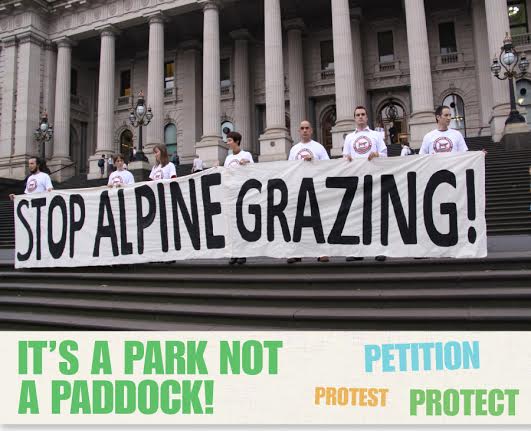
take action to keep cattle out of the Alpine national park

grazing bannerThe following comes from the Victorian National Parks Association.

In an exercise likely to cost the Victorian taxpayer more than half a million dollars, the Napthine Government is pushing to let cattle into the Alpine National Park’s beautiful Wonnangatta Valley next month.

They claim it is a trial to see how effective cattle grazing will be at reducing bushfires, but the so-called research trial is not actually part of the Victorian Government’s bushfire research program. It is in fact funded separately in an effort to honour a promise made by the Victorian Coalition to return cattle to the park.

What we need from you

The Federal Government has declared it will assess and approve or reject the proposed trial under national environmental laws.

The Wonnangatta Valley, part of the Alpine National Park, is protected under these laws as “national heritage” and is home to a number of nationally threatened species including rare orchids.

You have until 5pm next week (February 25) to say why the trial should not go ahead.

Please send a submission to the Victorian Government’s Department of Environment and Primary Industries, telling them why the trial will hurt the National Heritage listed Alpine National Park. Your comments will also be sent to the Australian Government.

Tell them:

  •     Cattle do not belong in the National Heritage listed Alpine National Park.
  •     The trial will allow cattle to graze half of the only population of the nationally threatened Pale Golden Moths orchid in a protected area, and a quarter of the entire known population.
  •     The trial design is careless, as they plan to bring cattle in as soon as March this year, even though there have been no fauna surveys done at the site, which is likely to contain populations of several threatened reptiles and frogs.
  •     The trial will contribute little, if anything, to our understanding of fire management in the high country. There are far better research programs to spend valuable research funds on.
  •     There has been no effort to find a suitable site for the trial outside the Alpine National Park, even though many suitable sites exist.

Please also add your own words about why you believe this trial should not go ahead.

Submissions MUST be sent by 5pm, Tuesday 25 February.

Send to:
Wonnangatta Valley Research Trial
Department of Environment and Primary Industries
PO Box 500
East Melbourne VIC 3002
wv.trial@depi.vic.gov.au

Please check the VNPA facebook page for further details on how to make a submission.

Blog at WordPress.com.

Up ↑