Search

Mountain Journal

Environment, news, culture from the Australian Alps

Tag

Victorian Alps

Decision on Alpine grazing before Christmas

w-valleyThe following information comes from the Victorian National Parks Association. A number of significant environmental decisions will be made by the federal environment minister before Christmas, with the danger that they will slip through relatively unnoticed and unreported.

If approved, it can be expected that cattle will be introduced over summer. Last time the Victorian Coalition government introduced cattle to the Alpine Park, they did so without setting in place adequate scientific frameworks to the trial. They had been clearly told that grazing would not be useful in reducing fire risk, yet proceeded to implement their policy.

The fact that the government has withheld information from the federal minister in their current attempt to reintroduce cattle is hardly the basis for assuming this trial will be any more scientifically robust.

Over the next few days Australia’s environment minister Greg Hunt must decide whether or not he will let the Victorian Government put cattle back into the Alpine National Park.

After failing to return cattle to the Alps in both 2010 and 2011 the Napthine Government is again asking the federal government to approve a new cattle grazing trial in the Alpine National Park.

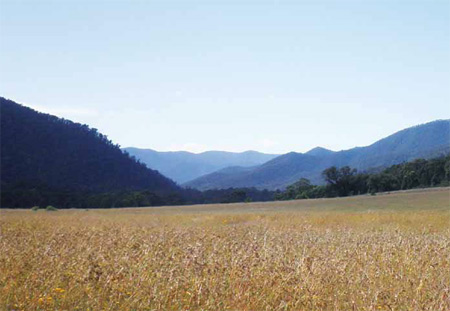
They plan to bring 60 cattle into the remote Wonnangatta Valley, a beautiful river flat that sits below the Howitt High Plains and has been ungrazed by cattle since 1988.

We need your help. Please take action today or as soon as possible:

We cannot allow this grazing trial to go ahead.

The Victorian Government wants to put cattle into the park simply because of a promise it made to some graziers that once held privileged grazing licences.

Their new attempt comes on the back of repeated attacks by the Napthine Government on the integrity of national parks including changing legislation to allow 99 year leases for private development, expanding areas for fossicking and prospecting and making significant cuts to park budgets.

We have also uncovered many serious flaws in the proposed trial:

  • There is no scientific design for the trial, and apparently no scientists are involved.
  • There has been no consideration of a location outside of the national park, even though there are many areas where such a trial could be conducted.
  • The State Government has withheld an important survey listing rare and threatened plants in the valley from the Federal Government.
  • The application ignores the considerable evidence that cattle grazing does not significantly reduce alpine fires. There are far more important bushfire research projects on which to spend scarce research funds.
  • More than 60 years of research shows cattle damage alpine wetlands and the headwaters of many rivers, threaten nationally-listed rare plants and animals, and bring weeds into the National Heritage-listed Alpine National Park.

National parks are the cornerstone of our efforts to protect nature – not cow paddocks or private resorts.

Please email Greg Hunt today.
Alpine grazing. Don’t like the data? Hide it.

When I went through the paperwork attached to the state government’s proposal to put cattle back into the Alpine National Park, one of the things that struck me was the fact that there was no data from the field about possible threatened plants or animals that may be impacted by the proposal.

in the Wonnangatta, looking north

The Wonnangatta is not the easiest place to get to in Victoria. Yet the Environment Minister has visited there on at least two occasions. Clearly this project is important to the minister. So it would be reasonable to assume that he would have ensured that some staff were sent to the Valley to investigate possible impacts on endangered species.

Yet in their proposal, the government relies only on desk top data searches of federal government information. Given that the government was roundly criticised for its poorly framed research methodology last time they attempted to put cattle back into the park, you would think they would at least make an effort to make the scientific case more robust this time.

But now, according to The Age, this lack of firsthand data isn’t just because of sloppy project design. It would appear that the government has deliberately withheld key information.

Tom Arup has reported that

The state government has withheld from the Commonwealth a survey of rare and threatened plants of an area of the Alpine National Park earmarked for a cattle grazing trial.

It is believed scientists at the state’s biodiversity research body – the Arthur Rylah Institute – were asked to look for rare and threatened plants in different parts of the alpine park as part of research for the high country grazing project. Their results were outlined in an unreleased report from May 2012. But the survey was not included in a recent application by Victoria to the federal government for environmental approval of a grazing trial.

Instead an older desktop study – drawing on previously recorded data – was used to identify the extent of endangered species in the low-lying Wonnangatta Valley, where the latest trial is planned.

The unreleased 2012 plant survey found one nationally protected species of orchid known as pale golden moths and a small patch of endangered alpine bog and wetland in the valley. A large area of rare grassland and a rare plant known as spreading knawel were also found across the trial region.

The report suggests that fencing to protect the orchids, grassland and spreading knawel would be impractical and would not mitigate against the impacts of grazing.

No government is perfect. But deliberately withholding information in order to get an outcome you want is incredibly bad form. It begs the question: if this has happened in this case, how do we know it doesn’t happen routinely in attempts to introduce other aspects of environmental policy in Victoria?

Want to build private huts in a national park? Here’s your chance.

The Razorback
The Razorback

The Victorian government is currently calling for tenders to design the Falls to Hotham Alpine Crossing Master Plan. The plan will define the level of future developments which will occur along the trail – and associated infrastructure like private developments to allow overnight accommodation.

Check here for a background on the recent upgrade of the walk.

It identifies the walk as being part of a bigger program:

Walk Victoria’s Icons is a trademark brand comprising a portfolio of four long distance walks located in iconic regions renowned for their outstanding natural landscapes, wildlife and cultural values across Victoria. With a vision to be compelling, world-class, year round sustainable walking experiences, the Great Ocean Walk, Grampians Peaks Trail, Falls to Hotham Alpine Crossing and Coastal Wilderness Walk represent the quintessential nature-based attributes of the State – from dramatic coastlines to rugged mountain peaks, from remote waterways and inlets to alpine and sub-alpine scenery.

As four distinct walks the Walk Victoria’s Icons walks are designed to capture discerning high yield experience seekers who have a desire to be immersed in exceptional natural beauty that is supported by high quality products and services.

It is seen as being a

guided 2 day walk of 25km, with potential for 4 days, offers an experience that will be as challenging as it will be rewarding.

So far, so good: more people out in the hills….

The Falls to Hotham Alpine Crossing Master Plan will be lead by Parks Victoria in partnership with Tourism North East, Tourism Victoria and Regional Development Victoria.

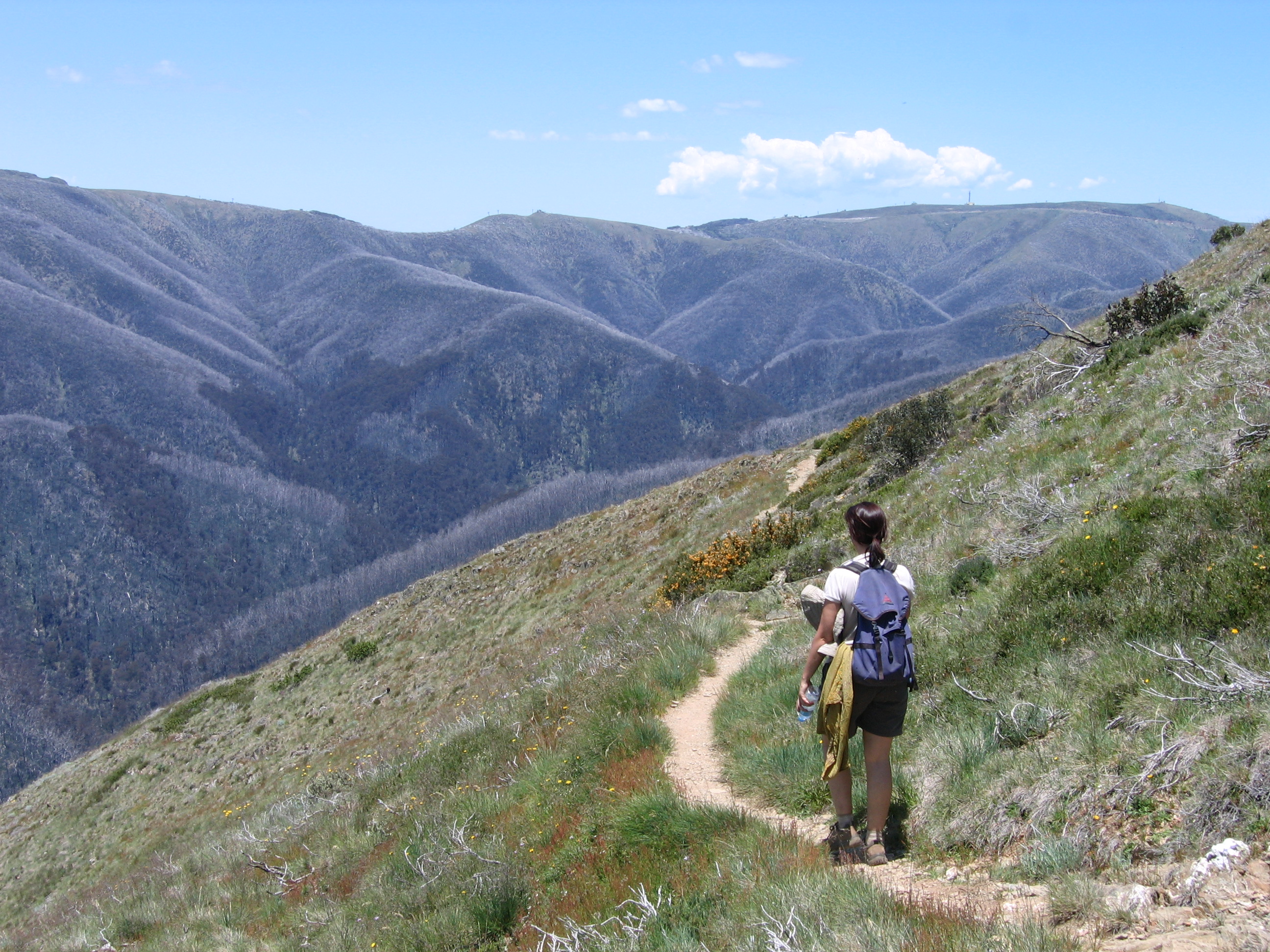
The preferred route goes from Falls Creek, around Rocky Valley dam to Wallaces hut, then across the High Plains, descending to Dibbins hut, then downstream along the Kiewa to Diamantina spur, up to Feathertop, and out to Hotham along the razorback.

The documents say:

The main driver for this project is the need for a resolved, design-led, strategic master plan and implementation strategy (the master plan) for the FHAC which considers regional tourism and commercial opportunities in the context of recent changes to public land policy, particularly tourism investment in national parks.

That is, the Coalition governments intention to encourage private development within national parks.

The tender documents show that private accommodation is planned to be developed. Included in the brief for the tender is the requirement that the master plan:

Identify settings where opportunities may exist for potential private sector investment in on-walk roofed accommodation and/or services;

Coming soon to a national park near you? Image: Cradle Mountain huts

They use the ‘precedent image’ of private huts along the Overland Track, Tasmania.

A final decision is expected by 2015.

What do you think?

It is great that the government is providing resources to further develop walking tracks to get more people out into parks.

It is orientated towards a market that is happy to pay to have ‘luxeries’ while in the bush, like high quality acommodation, so potentially brings a new group of people into the mountains, who would currently tend to stay in the neighbouring resorts.

However, it could be the thin end of the wedge in terms of developments within parks.

It will probably bring new walking track infrastructure to what is at present a relatively remote area with only a rough trail (the Diamantina spur).

Wonnangatta grazing trial. Federal decision soon?

In January 2013, it was reported that the Mountain Cattlemen’s Association (MCAV) was lobbying the state environment minister Ryan Smith to seek permission to reintroduce cattle to the area around the Wonnangatta station.

In November 2013, it was reported that the minister had asked the federal minister to approve such a trial.

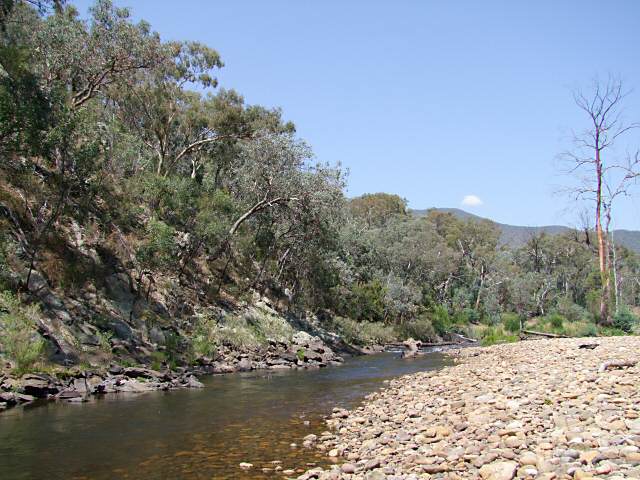
Wonnangatta River
Wonnangatta River

While spokespeople for the minister have been quoted in the media, there has been no formal statement by Ryan Smith and details on the trial have not been released to the public by the Victorian government.

However, because the Victorian government requires approval from the federal government under the EPBC Act, the paperwork for the trial is available via the federal environment department’s website. Despite the minister’s silence on the issue, at least we now know what is actually intended in the trial.

Sadly, many of the questions we have previously asked are not resolved in the application sent to the federal minister’s department.

weeds or fuel loads?

“But it was the state of the park, the threat of high intensity fires from high fuel loads and the impact this could have on its ecology – particularly snow gums – and the infestation of weeds and feral animals that were most pressing on the minds of the cattlemen”.

The Weekly Times.

Media reports have mentioned the ability of cattle grazing to reduce weeds in the Wonnangatta, however, the application only talks about the possibility of it reducing fuel loads. There is no mention of any strategies to ensure the reintroduction of cattle doesn’t bring a new set of weeds into the Wonnangatta. Does this shift from dealing with weeds and fire to just fuel reduction show that there is an admission that cattle make weed infestation worse?

The application says that the traditional owner group was consulted, and of course the MCAV was. What is strange is the claim that environment groups were consulted. Really?

Some observations about the proposed trial

Given that the government has identified fuel loads as a problem, it has not sought to find other ways to reduce fuel loads without a grazing trial.

The impact of weed spread due to grazing (one of the reasons cattle were excluded from the national park in the first case) is not specifically addressed in the proposal.

There is not yet an Environmental Management Plan (EMP) for the project. Given the experience in early 2011, when the Coalition secretly let cattle back into the High Country without a proper framework for how the trial would be managed, one has to wonder if the same thing will happen this time. The documentation says that the EMP will consider issues such as ‘pest plant and animal controls’: so let’s hope the EMP is produced before the cattle are introduced.

The study area covers around 2,200 hectares of land, with 4 ‘treatments’ to be carried out over different parcels of land: a control area, some areas being grazed, some areas grazed and burned, and some areas just burned. The documentation identified 10 ecological vegetation classes (EVCs) within the research trial area. It is not yet clear whether the 4 treatments will be carried out in each EVC.

Lack of consultation. Given that this proposal has been foisted onto the community without any attempt to explain the project beyond a couple of media grabs, it hasn’t got off to a great start if the government hopes to generate widespread support for the trial. The documentation says a ‘communications strategy’ will be created, with the development of ‘key messages’ that will inform the community on the progress of the trial. Note that consultation is a very different thing to communication.

Threats to nationally listed species. The application says the government only carried out desk top assessments of possible federally listed species in the research area. As is widely noted, animal and plant data for the region is not huge, but the government was happy to rely on what information was currently held by the federal government rather than sending a team to check the actual site. Mitigation measures, aimed to deal with any impacts on federally listed species that may be subsequently identified, will be dealt with via the EMP.

Traditional Owner (TO) attitudes to fire. One valuable aspect of the project documentation was a consultant’s report and ‘conceptual model’ of TO understandings of the role of fire in managing land in the High Country. The government is to be congratulated for commissioning this research.

So, we are a little bit closer to gaining an understanding of what is planned with the trial, although there are a significant number of areas where there is no clarity about what the government intentions are and big gaps in understanding how the project will be managed.

The federal minister is currently considering the application and will probably make a decision shortly.

take action

If this proposal troubles you, then please contact the Environment Minister and let him know.

Wildlife survey uncovers alpine creatures in Victoria

The following excerts come from an article on the ABC website by Greg Muller about a recent survey in north eastern Victoria. The survey was a collaboration between Parks Victoria, Museum Victoria, community members and 4WD clubs. Check here for an earlier post about this survey.

Areas explored included the Upper Buchan River and Davies Plain.

A key message is at the end of the story: climate change poses a grave threat to many alpine and sub-alpine species.

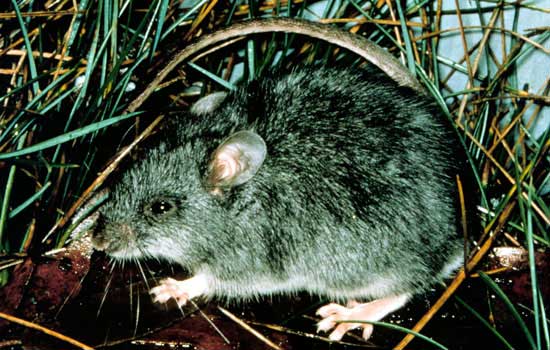
Smoky Mouse
Smoky Mouse

In a wild corner of north-east Victoria, more than 80 researchers have just spent two weeks counting and documenting rarely seen alpine wildlife.

The remoteness of the region means there is limited knowledge of the area—an issue Museum Victoria and Parks Victoria are now attempting to rectify.

‘There’s good news. We’re delighted we found alpine tree frogs because that’s one species vulnerable to a deadly fungus which has been attacking the frogs,

During the two-week bioscan, 21 species of reptiles were found, including the endangered Kosciusko Water Skink, Glossy Skink and the Mountain Skink.

Two listed species were found, the Broad Tooth Rat and the Smokey Mouse.

There were also two species of Antechinus (a small marsupial mouse indigenous to Australia) found, but at this time of year the population consisted only of females.

Roger Fenwick, the regional manager for Parks Victoria, was instrumental in organising the bioscan and worked to bring researchers, park rangers and locals together for the project.

‘No one group knows everything and it’s great to share the knowledge and get better results as land managers,’ said Mr Fenwick.

‘We invited four wheel drivers to be involved and this means the scientists can get on with doing their work, the Parks staff can concentrate on managing the program, and the four wheel drivers can get everyone around nice and safe.’

Museum Victoria’s senior curator of entomology, Dr Ken Walker documented 400 nests of native bees during the study.

‘What you find is a pile of dirt which looks like a chimney which goes down about 30 centimetres underground,’ he said.

Also at the bioscan was a member of the local indigenous community, Katherine Mullet, who was representing the Gunnai/Kurnai and Monero communities who used to occupy this area.

Ms Mullet was looking for cultural sites, including traditional walking routes, many of which are now 4WD and bushwalking tracks.

Dr Norman explained that climate change is a major threat to alpine wildlife species, which are already living at the edge of their environment.

‘The challenge worldwide with changing climate is if you are at the top of your limit or as far south as you can go, there’s nowhere else to go.’

Friends of the Cobberas

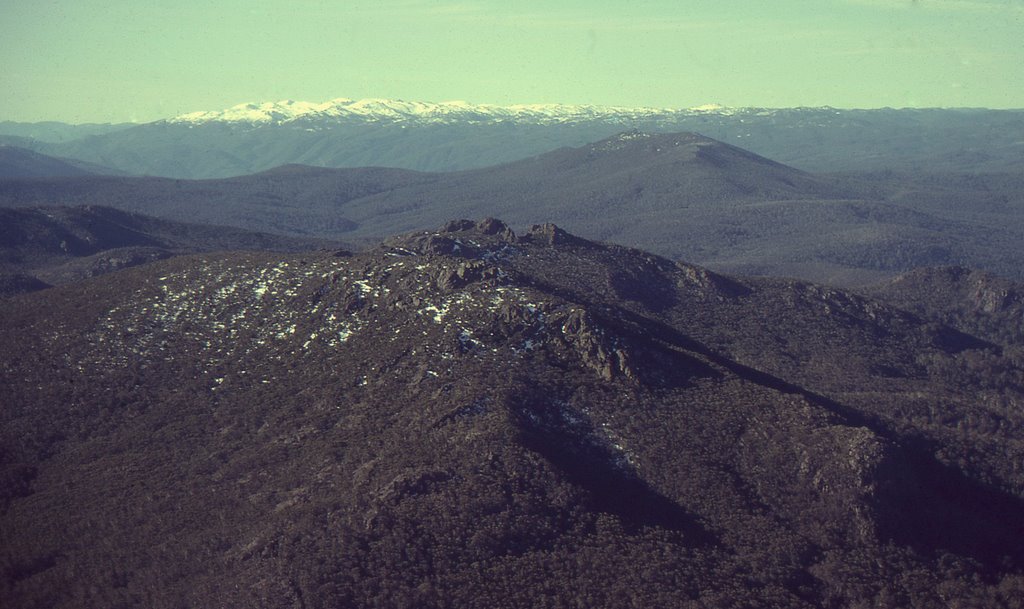
The Cobberas (in foreground), The Pilot, and the Main Range of the Snowy Mountains in background. http://www.panoramio.com/photo/29813127

The Cobberas Range is a remote area in the Victoria Alpine national park, close to the NSW border.

Friends of the Cobberas is a volunteer group who are interested in the conservation of the Cobberas and adjacent areas of the Alpine National Park. The group is under the umbrella of the Victorian National Parks Association and is supported by Parks Victoria.

Members are all volunteers, working together and learning together as we tackle various projects to assist with conservation and Park management. Activities include group camp outs and walks, walking track marking and maintenance, environmental and pest animal monitoring, weed control and more.

But we need more help!! This is a remote part of Victoria and there is plenty of projects the group could get involved with if we had more members. Joining the Friends of the Cobberas has many benefits, spending time in a great part of the High Country for starters! You will meet new friends, enjoy the benefits of shared knowledge amongst members and have the satisfaction of assisting with the management and conservation of some really special places.

Visit our website today www.friendscobberas.com.au or to receive more information on membership

Email: info@friendscobberas.com.au or Phone Parks Victoria Omeo on (03) 5159 0600

December 14-15 Track marking weekend

Mt Cobberas No 1 from The Playgrounds

Escape to the mountains for a dose of sub-alpine walking before Christmas!! Help out with some track marking and once you reach the summit, relax and soak up wonderful wilderness views. For those who are happy to camp there will be a base-camp at Native Dog Flat for at least one night. Accommodation options available a bit over 1 hour from site for non-campers.

Visitors or new members most welcome.

Email: info@friendscobberas.com.au for more details.

Facebook page here.

is there merit in the Alpine park grazing proposal?

Grazing advocates argue that cattle will reduce the impacts of bushfires when they do occur

Since at least 2006, a number of people have called for fuel reduction burns and a re-introduction of grazing to the river flats around Wonnangatta station. This has variously been claimed as being important for protection of visitors should a wild fire break out, for weed control, and ecological recovery.

The state government has now moved to gain approval from the federal government for a grazing trial.

Weeds are an acknowledged problem in the valley, with St Johns Wort, blackberry, Cape Broom, sweet briar and Hawthorn all being significant. In many places, the remnant Themeda (Kangaroo grass) flats are being encroached on by weeds.

It has been reported several times that ‘the poor state of the park is strong evidence of State Government underfunding of Parks Victoria’. So, one option to tackle weeds would be to increase PV’s budget. The current state government is cutting staff at present.

The call for a re-introduction of grazing has been promoted largely by people with connections to grazing.

It is interesting to learn that the current attempt to get cattle back into the Alpine national park by the mountain cattlemen is for a relatively low lying area, the flats around the Wonnangatta station. Previous attempts have been for high country grazing. In contrast, the Wonnangatta station sits at about 500 metres above sea level, in very different vegetation to the high country.

So. Could a grazing operation at this elevation be good for weed management and to reduce fuel loads?

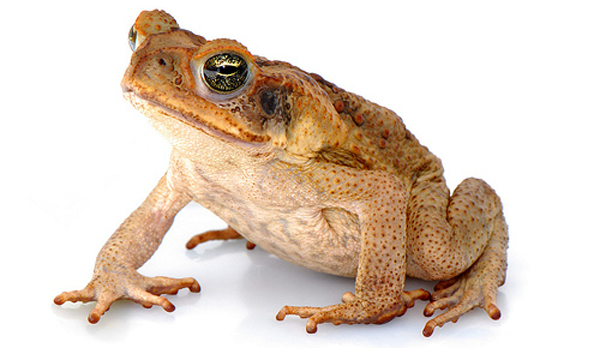
cane toad. Would grazing bring more problems then it solves?

Lets leave aside the fact that many of the problematic weeds in the alpine area were introduced by cattle (hopefully any re-introduction of cattle does not become a solution like the ‘cane toad’ syndrome – where unintended new problems are created in trying to resolve an existing problem).

Lets instead take the cattlemen at face value: that they believe that in this particular location, grazing will reduce fire risk and weed infestation.

Is there a place for grazing by hard hooved and heavy non-indigenous animals in our national parks? And would the proposed grazing trial actually prove if this is the case?

The problem is, we just don’t know. This is because – for whatever reason – the state government has not released any meaningful information about how the grazing trial would work. Given the high level of politics involved in previous attempts to get cattle back into the park, it is hard to trust their motivations unless we have this information.

Media reports say that the trial will be ‘part of a scientific investigation of bushfire prevention options across 2,200 hectares.’ Lets recall that this idea has been discussed with the Environment Minister for at least 10 months before his recent announcement, so its not unreasonable to assume the methodology for the trial is well advanced.

The government could start to resolve the mistrust about their intentions by releasing the outline of their grazing plan. To make an informed decision about whether this is a ‘fair dinkum’ trial, the community needs to know:

  • Who has created the methodology?
  • Who will be responsible for managing it?
  • What scientific evidence is there that grazing will control weeds and fire risk in the way it is claimed?
  • What is the budget for the program, and where does it come from. Does it just draw from existing Parks Vic budget?
  • What assessment will be done of current weed infestation and fuel loads prior to the introduction of cattle?
  • What targets will be set to reduce weed coverage and fuel loads. Different weeds respond in different ways to grazing – what are the strategies for each of the key weeds? And what is the strategy for weeds that are not normally grazed by cattle?
  • Will the 2,200 ha in the project be fenced? Who will pay for it? Would meaningful results be able to be gained from running the trial on a smaller parcel of land?
  • Will the adjacent waterways be fenced to keep cattle out of the river? If not why not. What are the likely public health implications of this? (many thousands of people visit and camp in the Wonnangatta each year).
  • What strategy will be developed to ensure the cattle do not re introduce weeds?
  • Have the relevant traditional owner groups been consulted and involved in the project?
  • What will the cattlemen by paying in agistment fees?

Once this information is in the public domain we can start to have an informed discussion about the merits of such a trial. Until then, we have to assume this is just another attempt to get some benefits for political mates. Hardly the basis for forming good policy over how we manage public lands.

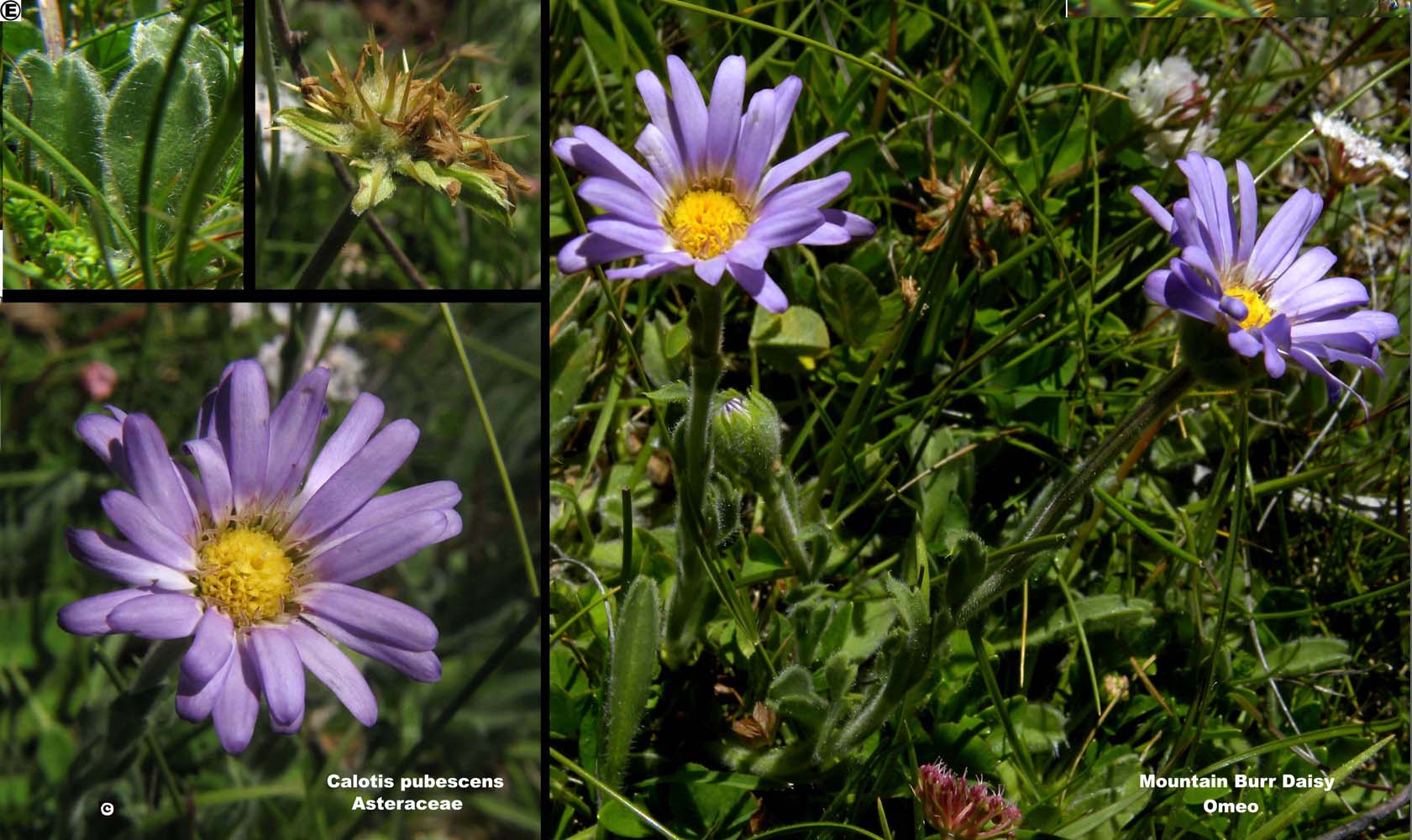
protection for endangered Mountain Burr Daisy?

Image: http://bie.ala.org.au/species/urn:lsid:biodiversity.org.au:apni.taxon:276201

The Mountain Burr Daisy (Calotis pubescens) was thought to be extinct until 2009, and is only found at one known location in Victoria, at Sugarmatt Plain, south of Cobungra. It has been recorded from the Nungar Plain, north of Adaminaby, in Kosciuszko National Park and the Snowy Plain at the headwaters of the Gungarlin River on private land and had long presumed to be extinct in Victoria.

It is a perennial forb (a herb that is not a grass or grasslike )that forms large, dense mats.

The remaining Victorian population at Sugarmatt Plain has an active threat from trampling and grazing by feral horses and cattle.

It has recently been recommended for listing under the Flora and Fauna Guarantee Act 1988 and the paperwork has now been sent to both the Minister for Environment and Climate Change and the Minister for Agriculture and Food Security, who will make a final decision on the matter. The ministers have 30 days to decide whether to list the plant under the Act, meaning there will be a decision by mid to late December 2013.

The Flora and Fauna Guarantee Act 1988 provides for the listing of taxa (genera, species, subspecies, varieties) and communities of flora and fauna which are threatened (the Threatened List), and potentially threatening processes (the Processes List).

Once the listing is approved, an Action Statement will be developed, covering a plan to protect the species in question.

Stay tuned for details.

Alpine grazing: still no news from government

source: MCAV
source: MCAV

Four days after The Australian newspaper announced that the Victorian government intends to ask the federal government to approve a new grazing trial within the Alpine national park, there is still no statement from the government about its intentions. The environment minister has had the time to issue a media release on the birth of a baby hippo at Werribee zoo, but apparently not to let the Victorian community know what is happening with this controversial proposal.

The grazing announcement has been a long time coming. In January 2013, The Weekly Times reported that the mountain cattlemen had toured Mr Smith to the Wonnangatta Station, specifically to talk about the re introduction of grazing.

Then last week, it was reported that the mountain cattlemen had again toured the Wonnangatta Valley with Mr Smith and also the Upper House MP Philip Davis.

Both the Age and the Australian have run pieces on the visit and subsequent announcement that the Victorian government is moving to gain federal approval to introduce cattle back into the Alpine national park.

The Weekly Times is reporting that a referral for the trial had been sent to the Federal Government on monday November 25.

Any attempt to re-introduce cattle gazing will be highly controversial. It seems strange that the Minister appears to be making announcements via the media, and not communicating directly with the people of Victoria about his intentions by making a detailed statement on the trial.

yet another attempt to get cows back into the Alpine Park

in the Wonnangatta, looking north

In a nicely orchestrated media piece, it has been announced via The Australian newspaper that the Victorian government will propose a three year cattle grazing trial in the Wonnangatta Valley, within the Alpine national park.

The paper reports that the government is supporting a three-year trial of cattle grazing in the Wonnangatta Valley, one of the main south flowing river systems in the central Alps.

“Victorian Environment Minister Ryan Smith will refer the issue to the Abbott government on Monday, backing a scientific study during the summer months of about 60 head of hereford and angus cattle”. The Victorian government has not yet issued a statement on the trials.

While previous attempts by the Coalition have been soundly attacked by scientists for the poor basis of the research framework, apparently this new trial will be “part of a scientific investigation of bushfire prevention options across 2200 hectares.”

Mountain cattleman Charlie Lovick is reported as saying he hopes this trial will re open access for grazing to a broader area.

The report says that the “preservation of Australian bush heritage will be crucial to the application” that will go to the federal environment minister, Greg Hunt, for approval.

The Wonnangatta was settled by Europeans in the 1860’s and incorporated into the national park in 1988. It is a lowland area compared with the previous attempt by the Victorian government to re-introduce grazing. One has to assume that should this trial be a success at reducing fuel load and weeds, then there would be an attempt to introduce it at higher elevations, where the science clearly shows that ‘grazing does not reduce blazing’.

The Victorian environment minister Ryan Smith (who is a member of the far right Institute of Public Affairs, well known for its anti –environment agenda) said “it’s not an ideological position, it’s a land-management issue.”

Assuming Greg Hunt approves the ‘scientific survey’, grazing could start as early as January 2014.

A spokesman for Mr Hunt said yesterday the government would assess the referral when it was received in accordance with Environment Protection and Biodiversity Conservation Act.

take action

If the prospect of grazing in the park troubles you, please contact the Minister for the Environment, Greg Hunt, making it clear you would not support such a move.

E: greg.hunt.mp@aph.gov.au

Website: http://www.greghunt.com.au

Twitter: https://twitter.com/greghuntmp

Possible tweet:

Alpine grazing is about politics, not good policy. @GregHuntMP – please: No cows in the Alpine Park.

Facebook: https://www.facebook.com/greg.hunt.mp


For background on the grazing issue, please see here.

https://themountainjournal.wordpress.com/environment/alpine-grazing/

new fees for camping in national parks

IMGP4039The Victorian government has announced that it is intending to introduce charges for overnight hiking and camping in more than 100 of our state and national parks.

In addition to increasing existing fees at car camping spots that have basic services, there is a proposal to introduce “overnight walking” fees.

You only have til COB this Friday, November 22 to make a submission.

Background information and details on how to make a submission is available here.

Check here for a statement by Glenn Tempest of Open Spaces Publications

Some quotes from Glenn’s submission:

There are so many issues regarding these proposals that it’s difficult to know where to start. Firstly, however, I have to say that I’m astounded at the size of the proposed increase in camping fees. A fee of almost $50 for an individual to stay one night at a campground designated as having a ‘high’ level of facility and service is simply outrageous.

Many park users are travelers who don’t plan ahead but simply ‘roll-up’ to various campgrounds. So who thought it was a good idea to confine those park users to an online booking system upon arrival at the campground?

Alpine National Park to get survey for vulnerability

This information comes from the Great Walks website.

snow gums near Mt Lovick, VIC

The eastern edge of Victoria Alpine National Park is set to receive one of the most thorough surveys ever, involving palaeontologists, geologists and biologists beginning 18 November.

Parks Victoria, Museum Victoria and 4WD Victoria will cooperate to examine the wildlife in the area and gather information about how well certain species are inhabiting the alpine terrain of the park compared to some threatened populations in other areas of Victoria.

“We love exploring the bush and this project presented a unique opportunity for our volunteers to be used for the first time in a major fauna research survey,” Project and Events Manager of 4WD Victoria Wayne Hevey said.

“Many of the high altitude species in the highest parts of Victoria are the most vulnerable in the state,” Dr Mark Norman, Head of Sciences, Museum Victoria, said.

“Over 80 researchers will be seeking the signs, sounds and movements of these wonderful creatures. The data we collect will help establish the status of many of the area’s endangered species,” said Dr Norman.

This is the fifth Bioscan to be undertaken by Parks Victoria and Museum Victoria as part of a five-year program designed to study wildlife across Victoria’s national parks, from deserts to forests to underwater kelp reefs. The program commenced in 2011.

Results will be presented at programs with four local schools and students and local residents will be able to interact with the scientists who conducted the survey at a Friday night ‘Science at the Pub.’

Blog at WordPress.com.

Up ↑