Search

Mountain Journal

Environment, news, culture from the Australian Alps

Tag

Victorian Alps

Alpine Resorts Strategic Plan 2012 finally tabled in Parliament

The following comes from the Minister for Environment and Climate Change, so should be read essentially as propaganda.

I would be interested in any industry/ community/ environmental perspectives on the new plan.

From the Minister for Environment and Climate Change

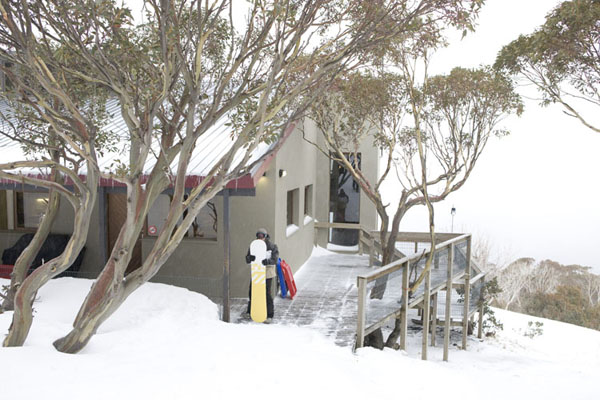
Image: Brush Ski Club

The long-term viability of Victoria’s alpine resorts will be strengthened following the tabling in Parliament today of a new strategic plan by Minister for Environment and Climate Change Ryan Smith.

The Alpine Resorts Strategic Plan 2012 will shape the long-term direction of Victoria’s six alpine resorts of Mt Hotham, Falls Creek, Mt Buller, Mt Stirling, Mt Baw Baw and Lake Mountain, ensuring they remain attractive tourist destinations, financially viable and capable of attracting new investment.

Mr Smith said the strategic plan recognised the fact that the winter season was the economic engine of the resorts, however opportunities existed to expand their array of iconic non-winter events and investment opportunities.

Under the strategic plan, each of the resorts will prepare an alpine resort master plan ensuring their environmental values are protected and providing the commercial sector greater certainty about the resorts’ long-term directions.

“The Alpine Resorts Strategic Plan 2012 outlines a vision for the resorts and a plan of actions to ensure they are vibrant, growing and financially sustainable places well into the future and their environmental values are preserved,” Mr Smith said.

“The strategic plan sets out a more co-operative and integrated approach to investment, promotion, management and use across the resorts.

“The plan focuses on paying more attention to the long-term financial viability of the alpine resorts, focusing on the winter economic ‘engine’ and building on the year-round competitive strengths of individual resorts.

“Victoria’s alpine resorts make a significant contribution to the State economy, especially in regional Victoria and the Coalition Government is committed to ensuring they remain viable into the future.”

In 2011 the resorts were visited by more than 1.2 million people, contributed $570 million to Gross State Product and generated around 5,800 full-time equivalent jobs for winter alone.

Mr Smith said the alpine resort master plans would simplify planning and leasing decisions and allow high priority development opportunities to be identified through the Victorian Alpine Resorts Development Program.

“We need to make sure that resort services and infrastructure are delivered efficiently and with appropriate levels of accountability.

Investment opportunities need to be more co-ordinated and non-commercial activities will need to be reviewed,” Mr Smith said.

The strategic plan proposes a new financial management framework for the alpine resorts to sustain their significant economic contribution to the State’s economy and to their surrounding regions.

The strategic plan also outlines actions to build partnerships across sectors and increase access for Victorians of all backgrounds.

“Victorian alpine resorts are on public land and are managed on behalf of all Victorians, so it is important we ensure alpine experiences are accessible to people of differing cultural backgrounds, ability levels and economic circumstances,” Mr Smith said.

“Major initiatives include a focus on growing visitation by enhancing the visitor experience and further development of the resorts. This means maximising benefits from winter visitation, non-winter or “green season” visitation and more integrated marketing,” Mr Smith said.

Activities such as horse riding, bush walking, road and mountain bike riding, fishing, festivals and events and even high-altitude training are set to become a non-winter feature under the new strategic plan.

The Alpine Resorts Strategic Plan 2102 includes opportunities to improve the regulatory environment and initiatives to address impediments to economic opportunities in the resorts, including:
·    planning and leasing arrangements;
·    native vegetation offsets; and
·    bushfire and emergency management.

The Alpine Resorts (Management) Act 1997 requires the Alpine Resorts Coordinating Council to conduct a five-yearly review of its strategic plan.

Extensive public consultation was conducted as part of the development of the Alpine Resorts Strategic Plan. A total of 250 people participated in workshops in Melbourne and at the resorts, and 66 submissions were received which were considered during development of the strategy.

More information about the Alpine Resorts Strategic Plan 2012 is at http://www.dse.vic.gov.au

Girl rescued after 5m hiking fall


Cross Cut Saw

The following report comes from The Weekly Times, journalist:  Sarah Scopelianos |  November 26, 2012

A 15-YEAR-OLD schoolgirl was flown to hospital today after sliding off a hiking track in the Baw Baw National Park while with a school group.

The girl was part of a group of nine students and teachers who were hiking between Mt Buggery and Mt Hewitt (sic) when the accident happened.

The girl slid about 5m down a rock face and landed on a ledge.

An Ambulance Victoria spokesman said a paramedic was lowered on to the ledge from the Air Ambulance to stabilise the girl and then the pair were winched to safety.

The service was called at 10.09am to Wabonga, near Mansfield.

He said the girl had neck and back complaints and cuts.

She was flown to the Latrobe Regional Hospital in a stable condition.

Backcountry journal – Spring Mission to Feathertop

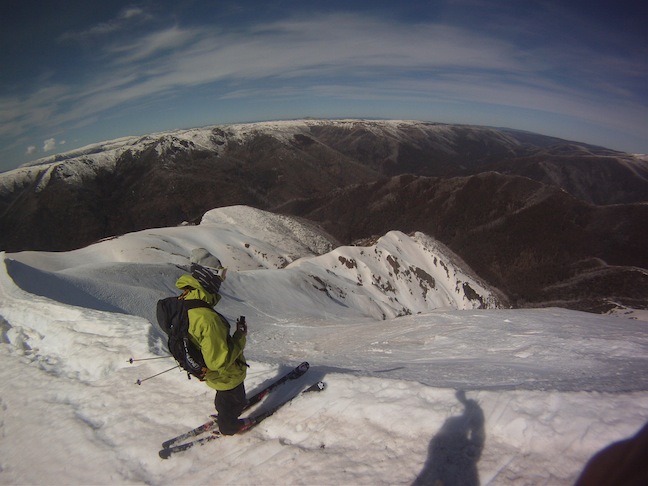
Scoping the line, image: Sam Leitch

Recent warm weather has really burnt off much of the snowpack remaining in the Victorian Alps, especially on lower elevation and north facing slopes. But there are still some great slopes and gullies, especially those facing south and east.

The following trip report by Sam Leitch comes from Mountain Watch, and features some great images of spring conditions on Mt Feathertop’s impressive east face.

Anyone who has skied/ boarded this terrain will know Hellfire and Avalanche gullies, this is serious country which can be dangerous because of cornice collapse, slide avalanches, and ice, even occasional rockfall. Being east facing it can quickly become extremely icy once in the shadows. Graeme Nelson, a highly experienced skier died here in the winter of 2011.

With spring in full swing and plenty of snow, conditions were great, but as Mike Garrett found on his trip to the Blue Rag Range, things don’t always go according to plan.

Read Sam’s report here.

Blue Rag Range by bike

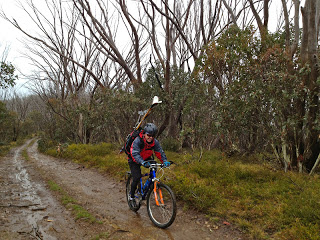
Image: MIke Garrett

A recent trip report from Mike Garrett about an epic bike ride (with skis) to the Blue Rag Range to check out what skiing was still on offer.

He says:

“Last year, Graeme (Nelson) and I had pencilled in a September man-date to the Blue Rag Range.

Visible from just about anywhere on Hotham, the Blue Rag sticks up like a red rag to a bull from the Barry Mountains between Hotham and Buller as a long ridge running east west. The heavily wooded northern faces visible from the chairlifts bely a host of south facing bowls, chutes and couloirs – and Graeme was, like me, certain that good snow would still be found there well after the season was over. The plan was to mountain-bike the 15km along the Dargo Road from St Bernard and camp out on the ridge for a few days picking off late September lines”.

A great winter has left some good snowpack in the backcountry. To find how much was left on the southern slopes of the Blue Rag, read Mike’s blog.

Alpine resorts and Council win State Government category in Premiers awards

Spion Kopje, above Falls Creek village

The Premier’s Sustainability Awards are billed as “Victoria’s most prestigious environmental awards ceremony”.

The awards are intended to “recognise and reward Victorian businesses, institutions, communities and individuals that are forging a sustainable Victoria now and for the future”.

At the awards ceremony on October 2, Alpine Shire Council – Dinner Plain Alpine Village, Falls Creek Resort Management, Mt Hotham Resort Management, Mt Buller Mt Stirling Resort Management, North East Victorian Regional Waste Management Group (NevRwaste) and 4SITE Australia Pty Ltd were recognised through being awarded the State government award.

This was for the ‘Living Bin’, a joint initiative between three alpine resorts which is administered by State Government Boards. This program captures organic waste from Falls Creek, Mount Hotham, Mount Buller and Dinner Plain Alpine village, to convert it into commercial fertiliser. A successful trial of organic collection was conducted in 2010, and in 2011 the program was extended into commercial food outlets, club lodges, and private accommodation.

In 2011 this program had several hundred participants and diverted over 70 tonnes of organic waste from landfill. This program empowers resort residents and guests to make a difference in their daily lives.

You can find extra details here.

As an observation about the awards, it does seem rather strange that Hepburn Wind won the overall award last year (Hepburn is within a ‘no go’ zone created by Ted Baillieu, and would not be allowed under his wind energy rules). And at the 2012 awards, a TAFE college won the Tertiary category. Given the slash and burn cutbacks occurring through the TAFE sector, this is a rather ironic decision.  

‘mountainside’: new site from Charlie Brown

‘Mitch Smith on his favourite ridge’. Image: Charlie Brown

Charlie Brown is based at Falls Creek in the Victorian Alps. His photography gets a good run in a lot of snow and ski related media, and his new website Mountainside has some gorgeous images, especially from around the Falls Creek/ High Plains area.

His ‘human’ related work includes portraits, some really lively and dynamic sports images – including snow sports and MTB, plus a focus on architecture, food and weddings. His obvious love of the High Country really shines through his work: and the site is well worth checking.

Help needed to protect Australia’s biodiversity from Hawkweeds on the Bogong High Plains

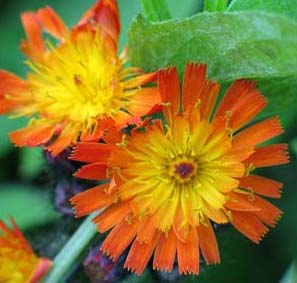
Orange hawkweed flower. Photo: Mark Imhof, DPI

2012/13 Bogong High Plains
Hawkweed Surveillance Volunteer Program

Help needed to protect Australia’s biodiversity from Hawkweeds on the Bogong High Plains

Native to Europe, Hawkweeds have recently become established on mainland Australia.  Posing a serious threat to Australian biodiversity and the structure of natural communities, it is imperative that the incursion is eradicated before it’s too late.

Hawkweeds spread quickly via runners and roots forming dense mats, inhibiting and out-competing native vegetation.  In grassy ecosystems like the High Plains, dense patches of the weeds dominate the spaces between grass tussocks that are vital for the survival and recruitment of native flora and fauna.

Survey sessions will be conducted during the active flowering period. Most sessions will be five days long, the session between Christmas and New Year will be four days. Attendance for a full session is preferred but is not essential.

Accommodation will be provided at Falls Creek. Transport will be provided to survey areas each day.

The surveys for 2012/2013 season will be held over the following dates:

Session 1: Monday the 10th – Friday the 14th of December
Session 2: Monday the 17th – Friday the 21st of December
Session 3: Thursday the 27th – Sunday the 30th of December
Session 4: Monday the 7th – Friday the 11th of January
Session 5: Monday the 14th – Friday the 18th of January

For more information or to express your interest in the program, please contact:

Keith Primrose
hawkweed@parks.vic.gov.au
Mobile: 0428 508 299
Mt. Beauty Parks Victoria Office: (03) 5754 4693

a copper zinc gold mine in the Vic Alps?

Benambra from McMillans Lookout. Image: en.wikipedia.org

The Stockman Project is located in the Victorian Alps, 470km by road north-east of Melbourne and 60km by road north east of Omeo. The project contains two copper-zinc-lead-silver-gold rich deposits, called Wilga and Currawong. Wilga was discovered in 1978 and Currawong in 1979. Denehurst mined the copper rich core of Wilga deposit from 1992 to 1996. In 2006, following rehabilitation of the plant site and tailings dam by the Victorian Department of Primary Industries, the project was put out for public tender as part of an exploration incentive program. Jabiru Metals Limited (Jabiru) was awarded the project in March 2007.

The Independence Group has now bought up Jabiru, and is proposing to recommission the Wilga mine and establish a new mine four kilometres to the north (the Currawong deposit).

Check here for a summary of the project, and some of the issues concerning locals.

Kangaroo Hoppet – 25 August 2012

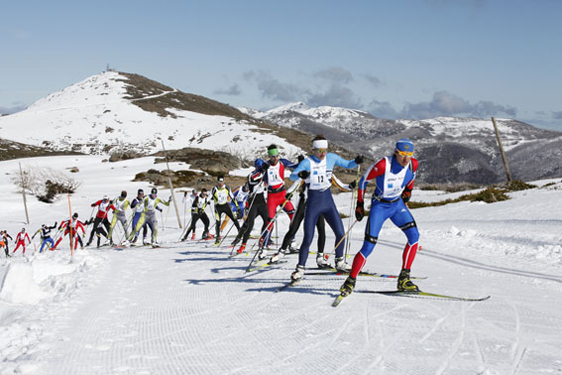
The 22nd Kangaroo Hoppet will  be held at Falls Creek in north east Victoria on 25 August 2012.

The 42km Kangaroo Hoppet is the opening event of the 2012 / 2013 Worldloppet series of long distance cross country ski races.  Also held on the same day are the shorter 21km Australian Birkebeiner and 7km Joey Hoppet events.

The Hoppet is an iconic alpine event, a great celebration of human-powered recreation, and attracts a huge crowd of skiers. With an excellent snow base, the race this year should be a great one.

You can register here.

geothermal technology in the Victorian Alps

Following on from a recent post on this site about a number of ski lodges at Mt Hotham installing solar panels to provide power, this is an update about a club at Hotham which has also started to use geothermal power for heating.

Image: Brush Ski Club

According to Wikipedia,

“A geothermal heat pump, ground source heat pump (GSHP), or ground heat pump is a central heating and/or cooling system that pumps heat to or from the ground.

It uses the earth as a heat source (in the winter) or a heat sink (in the summer). This design takes advantage of the moderate temperatures in the ground to boost efficiency and reduce the operational costs of heating and cooling systems”.

According to the Brush Ski Club,

“Victoria’s Alpine Resorts are facing the challenging hurdles of rapidly escalating energy costs, climate change and the national target to cut greenhouse emissions. We fully endorse Australia’s Keep Winter Cool initiative and are proactively committed to sustainability outcomes.

In an effort to jump these hurdles Mount Hotham’s B’Rush Ski Club has searched for many years to find an energy efficient and environmentally friendly solution to our energy requirements. In a location where winter temperatures dip to below minus 10 degrees keeping a large building at a comfortable room temperature has a high energy demand. In the past, B’Rush Ski Club has employed a combination of electric and gas fired boilers to provide hot water and heating for our guests. With energy prices on the rise and the desire to reduce our carbon footprint the club began a search for an alternate energy source.

After looking to the USA and Europe, where similar alpine environments exist, the Club decided on ‘GeoExchange’ or Ground Sourced Heat Pump (GSHP) technology. GeoExchange technology is commonly used in Europe and North America to provide low cost, low emission heating and cooling of buildings. Ground Source Heat Pumps or GSHPs are recognised as the most efficient and environmentally friendly heating and cooling systems available today, using as little as 25 % of the energy of conventional systems. This translates directly to lower costs and lower emissions.

A GHSP system is much like a reverse cycle air conditioner. The major difference is that instead of using the outside air to provide the energy the GSHPs extract renewable heat from the ground via a system of bores drilled into the earth. These bores carry a refrigerant loop that extracts ground heat, transporting it into the building. This solution will provide both heating for the building, via floor heating and radiator panels, as well as hot water for 40 guests.

The GeoExchange project has been facilitated by the Victorian Government’s ‘Four Seasons Energy Pilot Program’. The Victorian Government has provided 50% funding for the bore drilling as well as expertise and guidance in design and implementation. The assistance of the Government has turned a possibility into a reality.

The installation of this technology, in combination with a substantial upgrade to building insulation and an efficient floor system has cut our energy consumption by 75 % and our fossil fuel usage by more than 80 %. The payback period of 6 years is considered by the club to be completely acceptable given the expected 30 to 50 year life of our building. Since commissioning, forecasted savings have been exceeded with several spin-off benefits. The new system is spectacularly comfortable, has been universally acclaimed by our guests, the resort and wider communities and has been featured in several publications and forums, inc the 2009 Alpine Resorts Sustainability Forum at Thredbo on the 1st May.

This project is currently the highest GSHP installation in Australia and the first (of we hope, many) in an alpine environment”.

Congratulations to Brush Ski Club for their leadership on this. A number of other lodges and businesses in the Hotham – Dinner Plain area are also investigating using this energy source.

Hiker rescued on Mt Bogong

The following comes from the Herald Sun.

Mt Bogong summit

A hiker has had to be rescued from a hut at the peak of Mt Bogong after becoming stranded over the weekend.

The 43-year-old man took refuge in Cleve Cole hut on Saturday night after hiking to the top of Mt Bogong.

But falling snow prevented him from navigating his way down the mountain and he called police for help.

Search and rescue officers reached the hut late last night after a long climb.

The man was guided down this morning.

Police Acting Sergeant Scott Dower said winter hikers should be careful.

“If you are going hiking, be sure to prepare yourself and check the weather forecast and snow conditions before you head out,” he said.

“If you get lost, stop, seek shelter and wait for help.

“Keep your mobile phone charged, don’t travel alone and always let someone know where you are going.”

The search and rescue squad rescued seven people during the 2011 snow season, including a man who suffered hypothermia after he became lost in Alpine National Park without appropriate clothing.

Police said hikers should read the Snowsafe guide at http://www.snowsafe.org.au before setting off.

Vic Govt told to reveal cattle grazing documents

This story comes from the ABC. Journalist is Gus Goswell.

Image: VNPA

The Victorian Government has been ordered to hand over internal documents relating to its alpine cattle grazing trial.

The controversial trial in the Alpine National Park was blocked by the Federal Government but the State Government has launched an appeal.

It says the trial was designed to reduce the bushfire risk, based on scientific evidence.

The Victorian Civil and Administrative Tribunal (VCAT) has ordered that Department of Sustainability and Environment emails and scientific documents be made public.

The Environment Defenders Office applied for the documents on behalf of the Victorian National Parks Association.

Lawyer Felicity Milner from the Environment Defenders Office says the VCAT order is significant.

“We’re concerned about the scientific basis for the alpine cattle grazing trial,” she said.

“Certainly we want to see the documents to apply scrutiny to that decision and see whether or not it could be said to be backed up by proper science.

“If it is not backed up by proper science then we will be attacking the Government’s decision.

“The cattle grazing trial, as I understand it, has not gone ahead because the Federal Government has said it is unacceptable but the State Government is challenging that decision in the Federal Court.

“Based on public statements from the Government and the department we are of the understanding at this stage that they intend to continue with the alpine grazing trial if they are legally allowed to.”

Victorian Premier Ted Baillieu has defended spending taxpayer dollars to try to stop the documents being released.

“The Government has taken a view about what material ought to be made public,” he said.

“You would expect the Government to reinforce the view it has about information and our understanding of the legislation.”

Mr Baillieu has not ruled out challenging the VCAT order.

“The Government will have a look at that judgment and we’ll make an assessment of it,” he said.

However, Mr Baillieu has confirmed the Government still wants to push ahead with the cattle grazing trial.

“We certainly maintain the view that the Commonwealth when it made its decisions didn’t do it on a basis that was thorough and comprehensive,” he said.

Blog at WordPress.com.

Up ↑