Worn Wear is an exploration of quality – in the things we own and the lives we live. This short film takes you to an off-the-grid surf camp in Baja, Mexico; a family’s maple syrup harvest in Contoocook, Vermont; an organic farm in Ojai, California; and into the lives of a champion skier, a National Geographic photographer, and a legendary alpinist. It also features exclusive interviews with Patagonia founder Yvon Chouinard.
Released as an antidote to the USA Black Friday and Cyber Monday shopping frenzy, Worn Wear is an invitation to celebrate the stuff you already own.
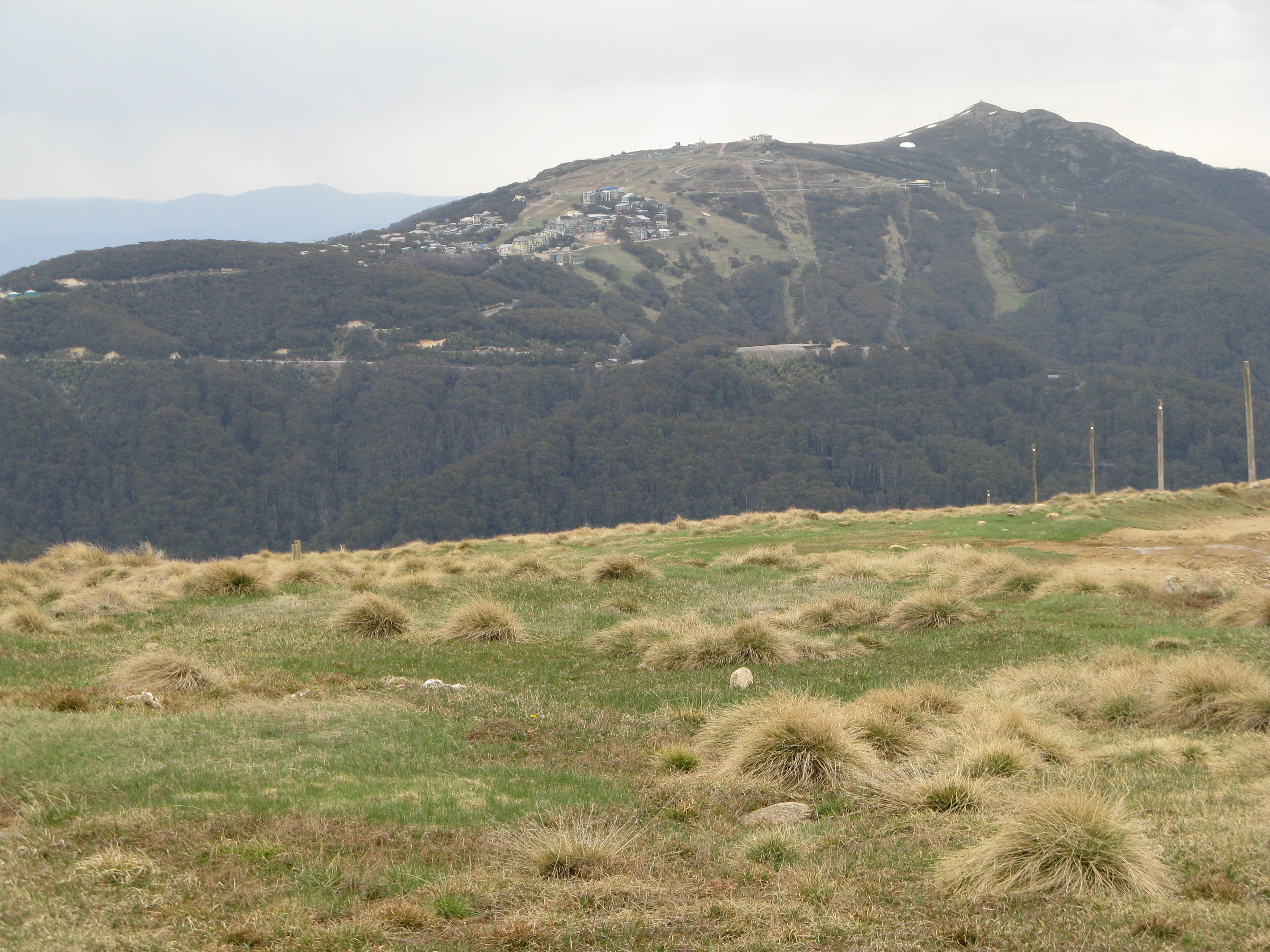
The mountains of the eastern seaboard of the USA have some similarities with those in south eastern Australia. They are mostly forested, with only limited terrain above tree line, meaning that much of the steep snow country is not easily or safely ridden. Alpine resorts get around this by cutting runs, with sometimes very significant environmental impacts. Mt Buller would stand out as the worst case in Australia, with much of the mountain having been massively impacted by the footprint of the resort: the roads, the village, the runs and associated infrastructure, and waste treatment plants, etc.
Backcountry skiers and boarders tend to look to the higher terrain, and while many areas of tree covered terrain in the Australian mountains do offer some great options, the vast majority of the riding hours that are clocked up each winter are on naturally open slopes above tree line.
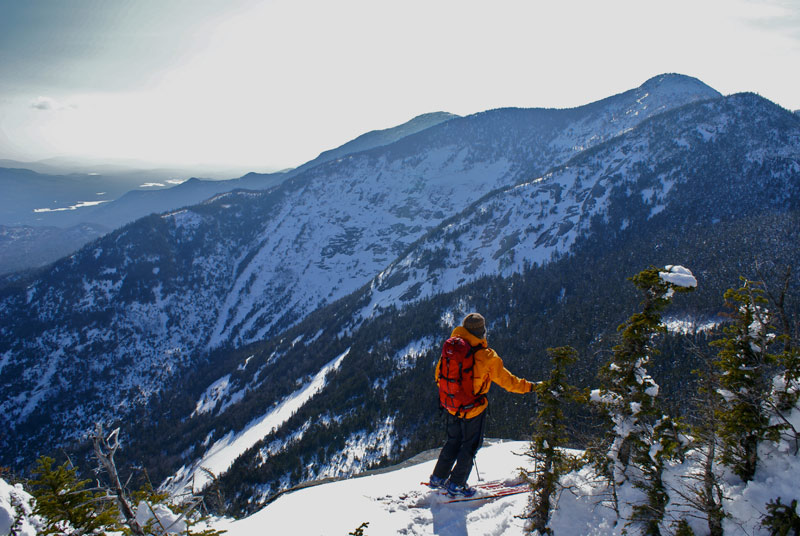
Image: APSA
In the Adirondack mountains of New York state, there is a growing movement to create backcountry runs through ‘glade clearing’, small scale clearing of saplings to create safe corridors through the forests to allow skiing access.
The Adirondack Powder Skier Association (APSA) was formed to negotiate the right to cut these trails from state authorities in the Adirondack Park, which covers about 2.5 million hectares of wild land. Although avalanche slide paths are formed each year, skiers currently have few options when it comes to safely touring the backcountry mountain sides in the park. The APSA is seeking to gain an amendment to legislation that covers the park management plan so that they can create a series of skier-specific trails. The APSA argues that these would have less environmental impact than formed walking trails. Ron Konowitz, the president of the APSA, says “we’d manage the undergrowth by clipping horizontal stems and minimal undergrowth. On hiking trails they remove the top soil down to a hard surface. What we’re proposing is so much less invasive than that.”
Essentially they would seek to carefully remove a handful of trees on each ‘run’ or glade to create a more open area through birch forests which will be far safer than attempting to ski through regrowth forest. At this point, this type of management for backcountry skiing is not recognised in the Park management plans. Back country skiing and boarding is growing in North America, as it is here. The APSA argues that opening up back country runs would bring economic benefit to local towns, as it would attract more people to a wider area of the Adirondacks, as well as bringing many more opportunity for low impact out-of-resort skiing.
Of course, such land management intervention for a particular user group on public land is potentially fraught. It can be a foot in the door to more intrusive developments. The APSA seems to be mindful of this risk: it is seeking a change only to allow glade management, and is going to considerable lengths to bring all groups concerned about the mountains along with this proposal. It is set up as a not-for-profit corporation formed to “study, protect, promote, and enhance low-impact human powered snow sports on public lands in the Adirondack Mountains” and is working with state and local land managers, plus the local towns, conservation groups, and other stakeholders, to “define then develop appropriate management regulations” for managing the runs. If successful in gaining permission for the runs, they would trial them on a number of mountains.
The following comes from The Weekly Times, journalist is Chris McLennan.
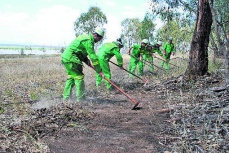
Image: DSE
With government plans to introduce camping fees for staying in national parks (which will draw on Parks Victoria [PV] resources to manage), allow private development in parks, re introduce cattle into the Alpine national park, you do have to wonder about the common sense of this government. Add to this the threat of ever worse fire seasons, and these cut backs seem short sighted and potentially dangerous. Union officials say that more than 500 people, including firefighters, will be caught up in the proposed changes.
Parks are slashing 10% of its workforce but exempt senior and managerial positions, and will target Ranger and Field Service Officer employees instead. Parks will waste $8-$10million paying out retrenched employees trying to save $10-$15million. It’s completely cost counterproductive. Parks Victoria (currently) employs 1,100 staff at 100 national, state, marine and urban parks.
Job fears in Parks Victoria revamp
Parks Victoria staff face an anxious summer after a department-wide restructure was announced just before Christmas.
Union officials claim more than 500 people will be caught up in the proposed changes, which may involve some staff pay cuts and others choosing redundancies.
“Many of these people are our frontline firefighters. They already have a lot on their plate,” Community and Public Sector Union federal secretary Karen Batt said.
A consultation period on the proposed changes will end on January 30 and a Parks Victoria spokeswoman said it may not be until March-April that the reorganisation is finalised. Individual staff are yet to be told which positions will be restructured.
Parks Victoria’s acting chief executive Chris Hardman said there would be no net loss of staff from the restructure. He said the proposed model was designed to significantly enhance the organisation’s services for the Victorian community.
“We are looking forward to hearing from staff and unions as to what they think about the proposal and to assist the organisation to put together the best possible operating model.”
More than 120 jobs have been trimmed from Parks Victoria in the past 18 months.
On sunday 10 November, 2013, a young activist called Hannah Patchett launched a long term tree sit to highlight the immediate threats to the Leadbeaters Possum through continued destruction of its habitat. Logging threatens the survival of this species in the Central Highlands to the east of Melbourne.
She has called a ‘festive picnic’ at the red treehouse, because she is expecting the government to issue a notice of complaint addressed to the ‘owner’ on the 3rd or 6th of January. Supporters will host a walk to the location of the treehouse with local naturalist Burnie Mace and a movie screening is also planned, plus some live music. This will be a family friendly drug and alcohol free event.
It will be held on thursday January the 3rd. Please call the Camp phone on 0455 111 985 for specific directions and if you feel like it please ask if you can bring something or help some one with a lift. The journey is about 1.5hrs from Melbourne.




 Mountain Journal
Recent Comments