Search

Mountain Journal

Environment, news, culture from the Australian Alps

Month

January 2021

Dead forests making bushfires worse

We know that climate change is making fire seasons longer and more intense. This is happening globally. It has enormous implications for the landscapes that we love, how we prepare for and fight fires, and even how we live in fire prone areas.

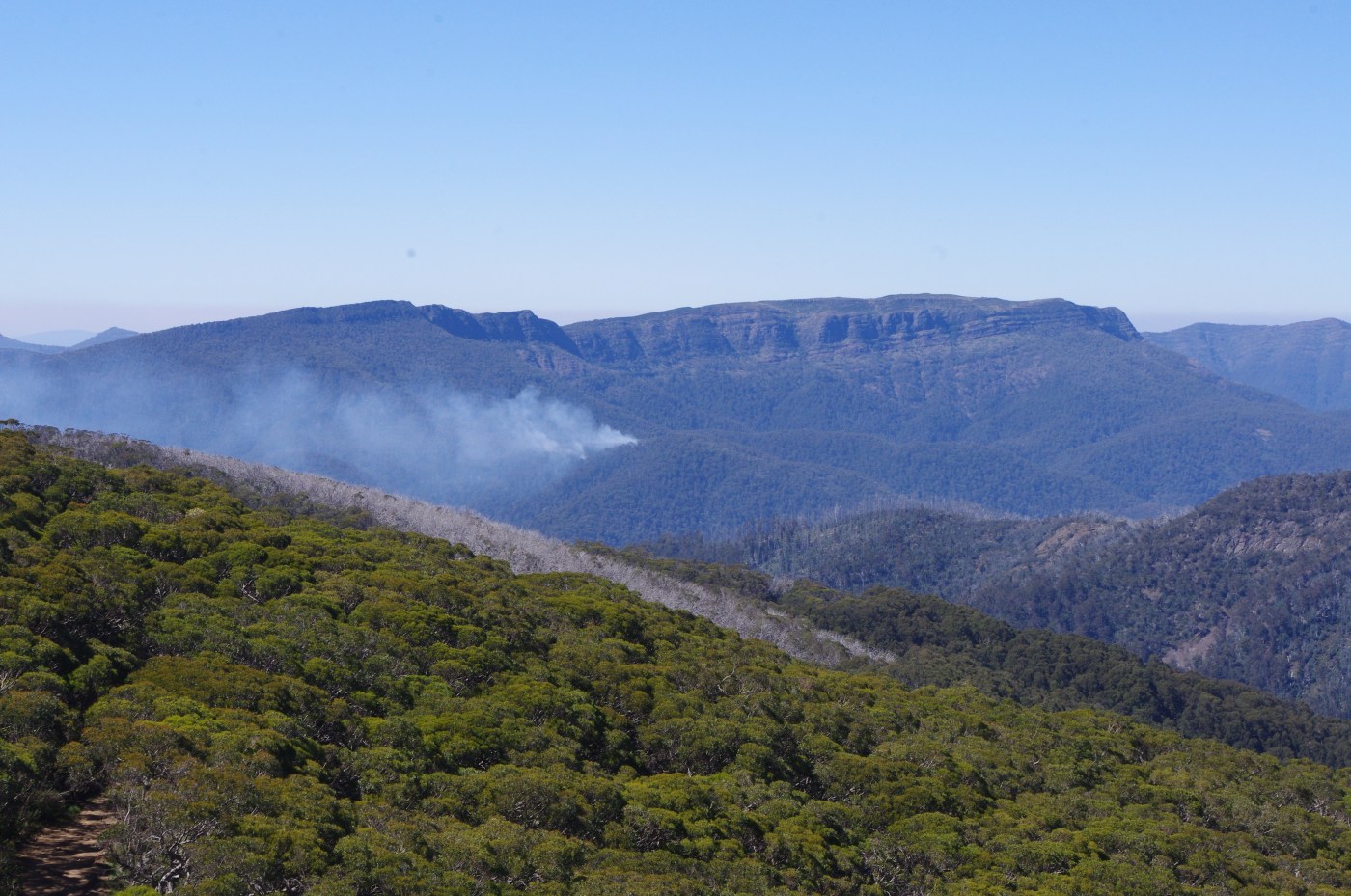
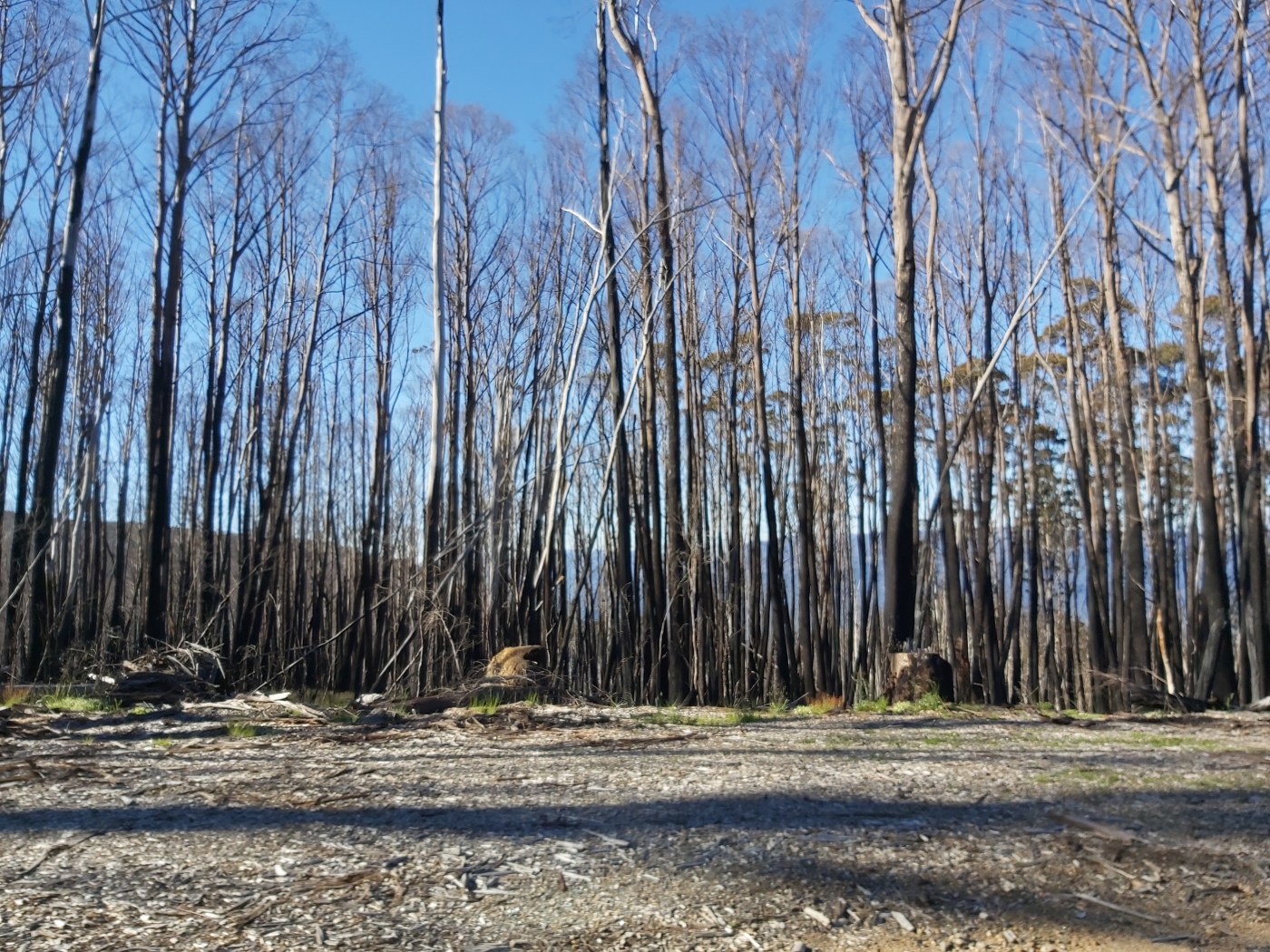
These fires are transforming the landscapes we know and love. Anyone who has driven out of Jindabyne into the Snowy Mountains, or Mt Beauty towards the Bogong High Plains knows what I am talking about – endless walls of grey, dead trees. Only 0.47% of old growth Alpine Ash still exists in Victoria. This has huge implications for the aesthetics of our mountain areas, and significant ecological implications.

Increased fire frequency could see mountain forests like Alpine Ash replaced by wattle woodlands. As recently noted by Brett McNamara, the manager of Namadgi National Park:

Recovery happens but it is “tainted with a sense of what does the future hold for us if we are to experience fire again and again with such intensity. This is where the question is unanswered. What these mountains will look like well into the future?”

The huge volumes of dead trees from previous fires also creates a lot of fuel that is already dry and hence ready to burn in future fires. What are the implications of this for our fire fighting and land management efforts?

Continue reading “Dead forests making bushfires worse”

The Victorian backcountry festival is back in 2021!

After moving online in 2020 due to the Covid-19 lockdown, the Victorian Backcountry Festival will be back at Mt Hotham in 2021.

The Festival celebrates the growing movement of ‘all things backcountry’, focused on  human powered winter activities such as cross-country skiing, snow shoeing, telemarking, alpine touring, split boarding, photography and snow camping.  This will be the fourth year that the Festival has run, and the second time at Mt Hotham.

The Festival aims to not only provide an introduction to the ever-growing suite of backcountry activities, but to also make it more accessible to the general public, whilst educating them about mountain safety.

Continue reading “The Victorian backcountry festival is back in 2021!”

Subalpine forests struggle to recover after 2019-20 bushfires

The Bushfire Recovery Project, led by five scientists, is tracking forest regrowth in NSW and Victoria after last summer’s fires, using data gathered by citizen scientists.

Their report has found that while low elevation forests on the NSW south coast appear to be recovering well, forests in some subalpine areas ‘near Mount Kosciuszko and in Victoria’s East Gippsland region are struggling to recover from the 2019-20 bushfires’.

This is consistent with everything we already know about the impact of climate driven fire seasons on the higher elevation Alpine Ash forests and Snow Gum woodlands.

Continue reading “Subalpine forests struggle to recover after 2019-20 bushfires”

‘Identifying the benefits’ of a new track system in the Tyndall Range

In 2019, the Tasmanian premier, Will Hodgman, announced that ‘Tasmania’s wild West Coast’ had been chosen as the preferred location for the state’s next ‘Iconic Walk’.

The area selected is the remote Tyndall Range. This ‘iconic walk’ will be similar to the Overland and Three Capes Tracks, where private hut networks have been built and tours are run by commercial operators. The Range is known for its rock climbing on conglomerate cliffs up to 300m in height, glacial lakes and substantial alpine areas and ‘out of the way’ nature. The plan to introduce a commercial operation is being opposed by many in the community.

The Tasmanian Parks and Wildlife Service (PWS) is currently exploring options to develop the walk.  The Project is still in the feasibility study stage. The PWS is seeking community assistance through a survey to ‘identify the benefits’ you think will arise from this project, so that the feasibility study ‘can be as comprehensive as possible’.

Continue reading “‘Identifying the benefits’ of a new track system in the Tyndall Range”

Increase in lightning strikes expected to ignite more wildfires

Lightning strikes are one of the main causes of wildfire in Australia. As the planet’s temperature warms, the frequency of lightning strikes is expected to grow with it.

Currently, lightning strikes the earth’s surface nearly eight million times a day. This number is expected to ‘dramatically increase’ as global temperatures rise, according to a study published by Science. The U.S., for example, could experience a 50% increase in the number of lightning strikes by the end of the century, if greenhouse gas emissions are not curbed.

This increase is already being felt in Australia and has implications for how we plan for, and fight fire. Because they start from a single point, lightning caused fires are initially small and can be easily contained before they turn into blazes, if there are ground crews or planes or helicopters available. As was shown by last summer’s fires, in a bad season, we simply don’t have enough resources to do this.

Continue reading “Increase in lightning strikes expected to ignite more wildfires”

A ‘mountain’ of loss – Snow Gum dieback in Victoria

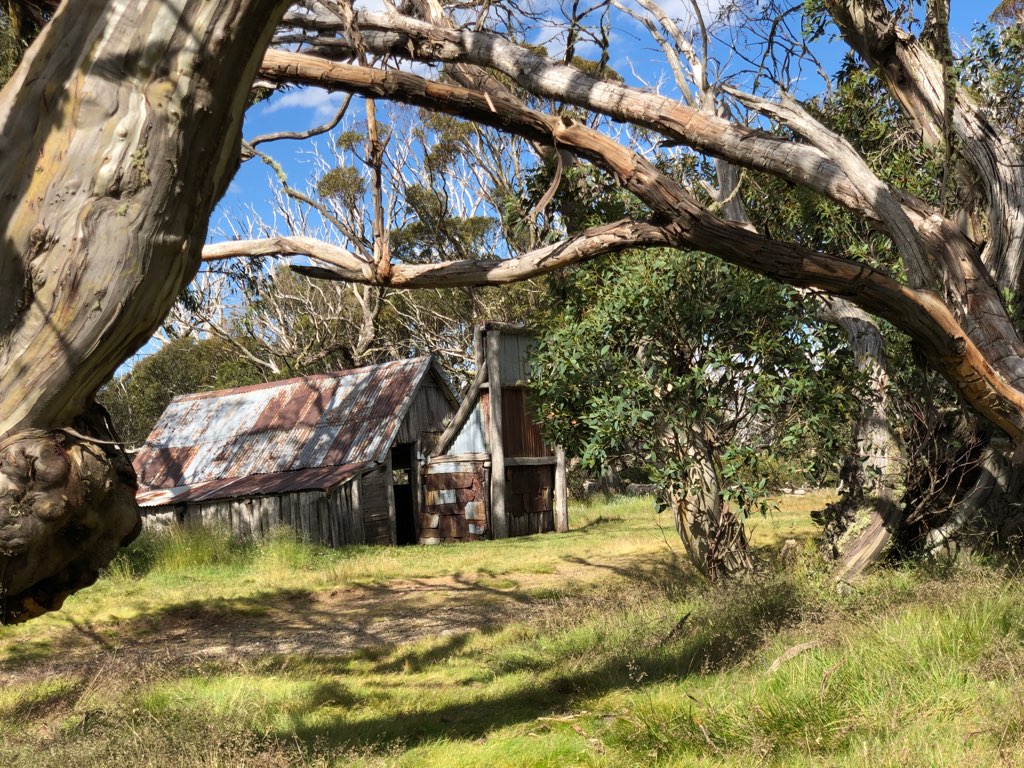
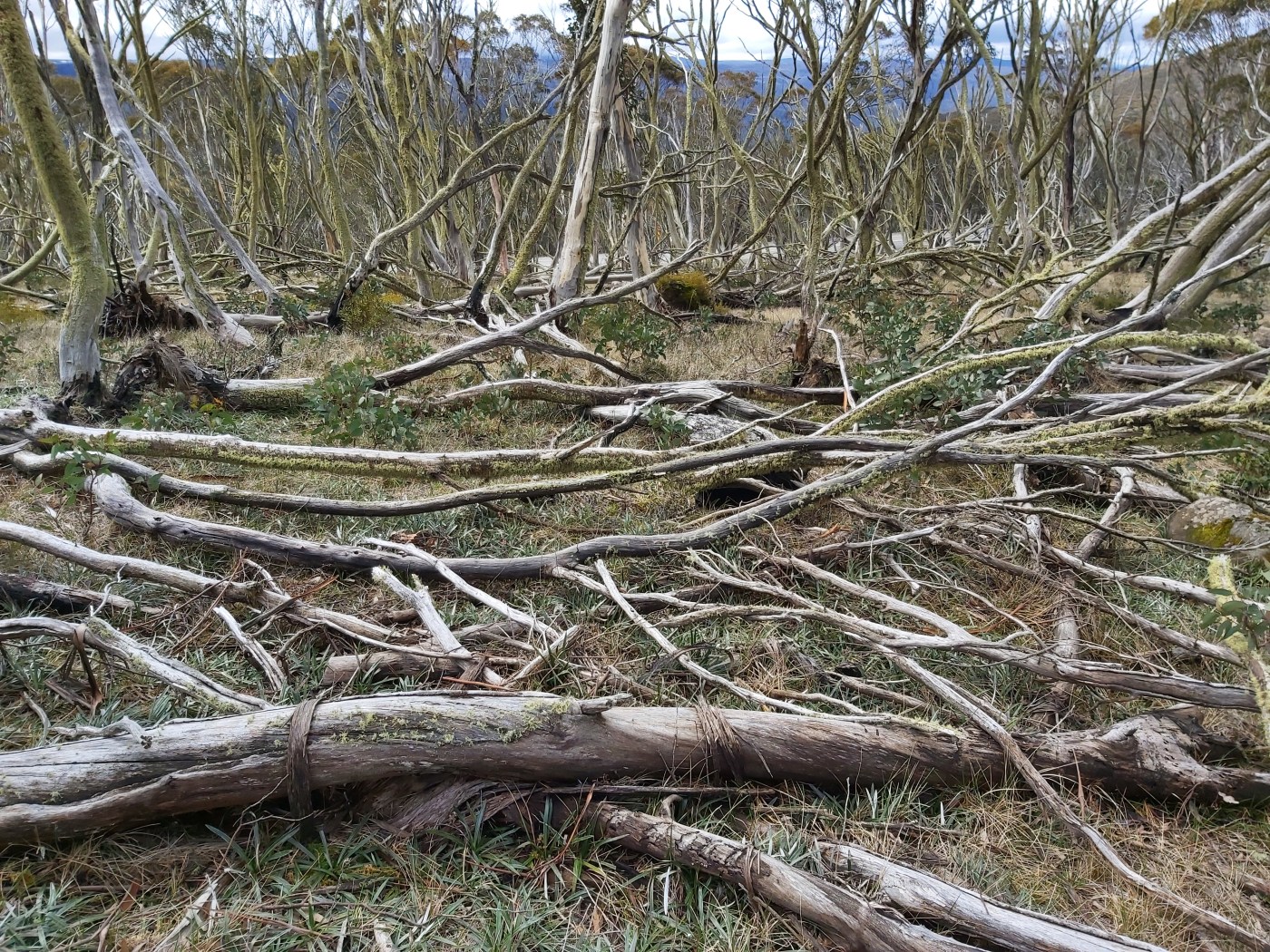
Snow gums are experiencing dieback in Kosciuszko National Park, largely because of the impacts of the native longicorn (or ‘longhorn’) beetle. These beetles prefer to lay their eggs on moisture-stressed trees and, in warmer weather, the longicorn beetle can hatch and grow up to 75% faster. It is understood that climate change is helping the spread of dieback because of background warming.

Now spread of dieback is being seen more frequently in the mountain forests of Victoria. Gillian Anderson reports back on some recent observations of snow gum dieback on the Bogong High Plains.

Continue reading “A ‘mountain’ of loss – Snow Gum dieback in Victoria”

Dinner Plain Mountain Adventure Festival

Dinner Plain in the Victorian Alps is hosting a 4 day adventure festival over the weekend of January 23 – 26 (the Survival Day/ Invasion Day/ Australia Day weekend).

It will feature a range of free and paid events, including:

  • an outdoor screening of the Bright Mountain Film Tour
  • self guided hikes to Mt Feathertop, with a free shuttle bus to the trailhead
  • abseiling tours
  • mountain bike clinics
  • photography workshops
  • orienteering sessions

Check the Dinner Plain website for full details, and bookings.

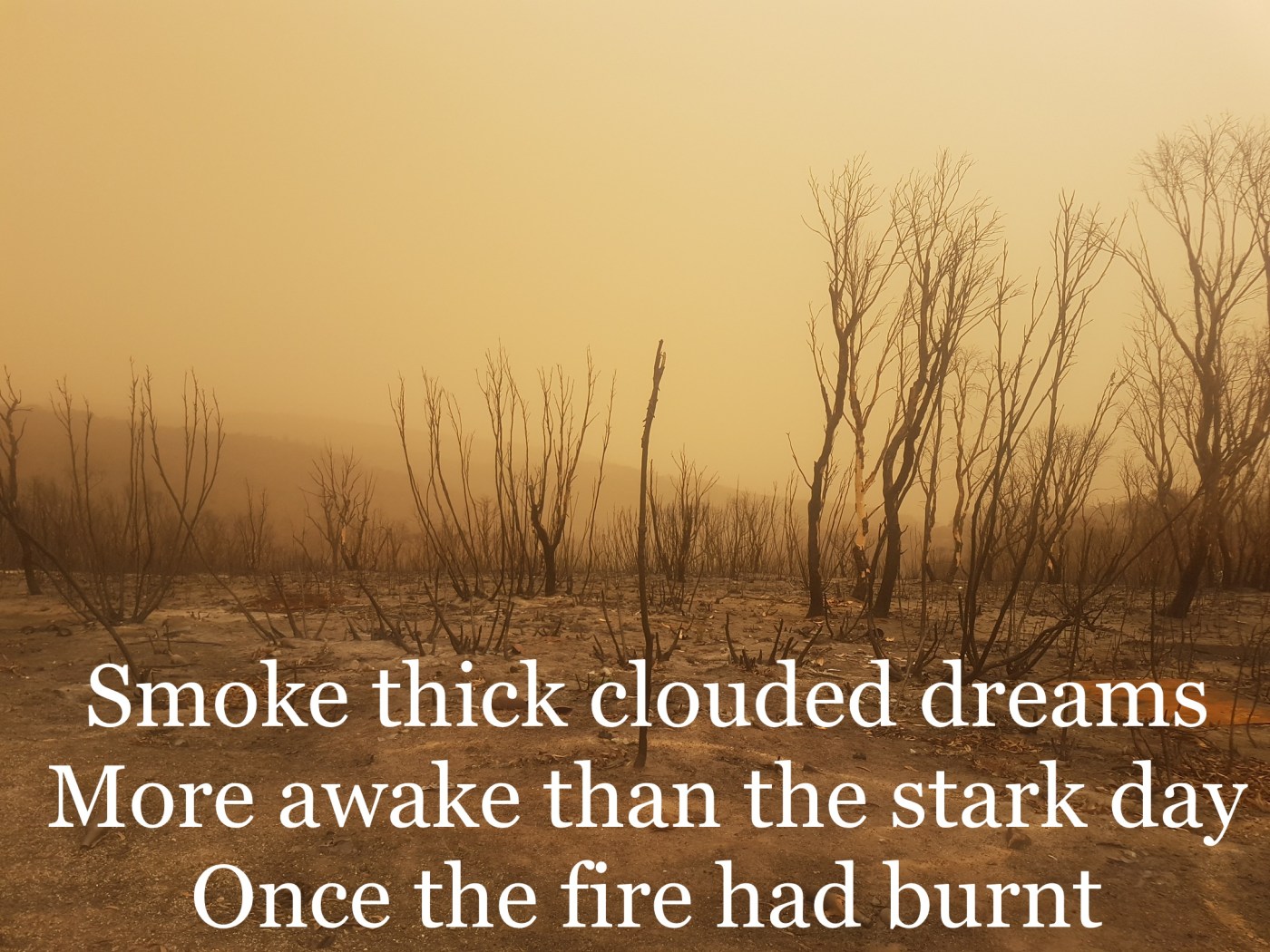
Fire Haiku

These haiku were written in the days weeks and months following the fires that devastated much of eastern Australia.

They are my personal response to the loss and the ensuing grief. A loss and grief that still exist a year later, a loss and grief l am not alone in experiencing.

Indeed these feelings seem to have permeated the psyche of those of us, not only living in the bush, but those of us that value the rivers, the birds, trees…

It’s not the loss of material, it’s the loss of something so much bigger.

It’s the tearing, and fraying of the connection to the land, to place.

It’s the changed ecosystem.

The green of the epicormia, what does it signal?

Recovery? Defined as a return to a normal state. I think not.

Hope? Perhaps.

Change..? Definitely.


Continue reading “Fire Haiku”

Please track and report Snow Gum dieback

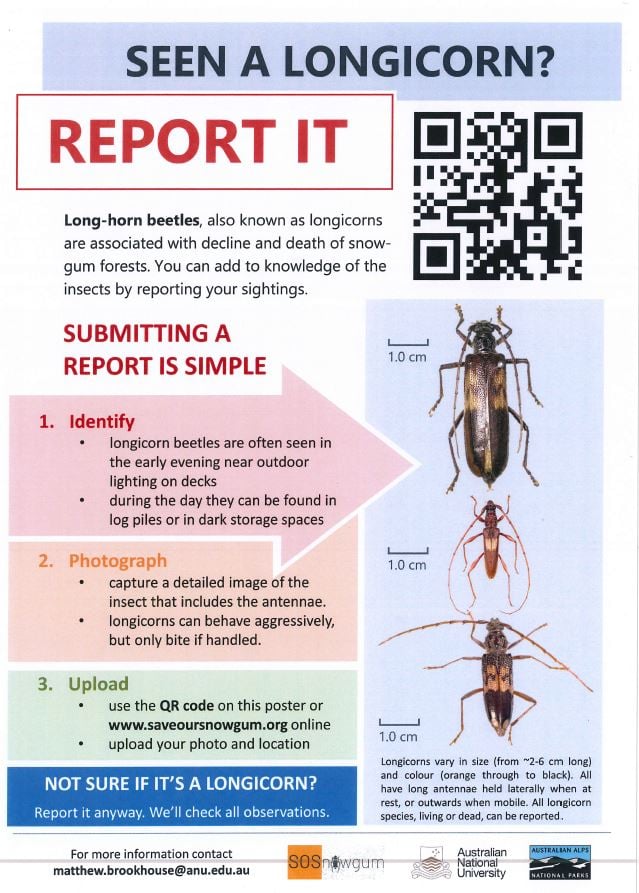
Snow gums are experiencing dieback in Kosciuszko National Park, largely because of the impacts of the native longicorn (or ‘longhorn’) beetle. These beetles prefer to lay their eggs on moisture-stressed trees and, in warmer weather, the longicorn beetle can hatch and grow up to 75% faster.

According to work published in the Resort Roundup winter 2019 edition (produced by the NSW government), ‘reduced snowfall, high summer temperatures such as January 2019 where temperatures at Thredbo top station were 4.4oC above average, and a reduction in autumn rainfall mean that snow gums are under much greater moisture stress than in the past.’ This means that larger beetle populations are causing more frequent dieback of some snow gum trees.

The SOS Snowgum program is asking people to log instances of dieback in mountain areas.

Continue reading “Please track and report Snow Gum dieback”

A new year. The old threats continue.

Well, we’re on the other side of New Year. Phew. I hope that you’re enjoying some good mountain time over summer and getting a recharge. There’s lots to do this year.

There are a range of environmental issues that have been bubbling away over the last year, and each of them have campaigns which could use some extra support if you have the time or resources. Here’s a sample of what’s going on. 

Continue reading “A new year. The old threats continue.”

Blog at WordPress.com.

Up ↑