
I spent May on a slow roadtrip from the northern Snowy Mountains to Mt Hotham. Lots of days out of the car – camping, walking, doing a few overnighters – including a quick trip into Mt Jagungal. I arrived in the mountains as the early May snowfalls started to settle and was blessed with more than 2 weeks of bluebird skies, with remnant snow on the higher peaks, frosty mornings (-4 to -8oC in the northern Snowies) and absolute silence. I think in the first week I spoke with three people, and had most campsites to myself.
It was wonderful to get reacquainted with the long, glorious snow plains and intact forests of the northern Snowies, the wonderful higher alpine zones of the central Snowies (that area from Kiandra to the Schlink Pass) and back in my usual stomping grounds of the Main Range (with the obligatory camp at Island Bend).
Then sections of north eastern Victoria that I rarely get into – Burrowa Pine national park, Mt Mittamatite, Mt Pinnibar, Wheeler Gibbo, the Cobberas, before getting back into more familiar country – the Big River, Mt Wills, the Bogong High Plains and Hotham.
Although I am addicted to mountains – which means the need to travel overseas – for the last 20 years I have been concentrating on low carbon adventures, staying as close to home as I can. I allow myself one flight a year, and head to lutruwita/ Tasmania each autumn for an adventure with mates, and have almost completely stopped flying for work (hello, zoom and long haul bus trips). Adventuring locally has been an incredible and enriching experience. I have fallen (even more) in love with places I have been visiting since I was a teenager, and been surprised by all the places I had never visited before. This roadtrip did allow me to visit some places that I hadn’t been to before. There is lifetimes of adventure to be had in our humble but glorious mountain ranges.
As an environmental activist, taking a holiday can be hard emotional work: you can see ecological collapse everywhere, and I find it difficult to switch off. Mountain Journal is full of my observations about ecological impacts. While I found it inspiring to really get a sense of the scale of that great high country between Kiandra and the Rolling Ground, and the intact nature of much of the forest country in the north, there were the usual revelations and discoveries:
Horses. What the actual hell is going on in NSW? On one morning I counted more than 100 feral horses in the Long Plain/ Blue Waterhole area. The roads are endless piles of horse poo, the streams are trampled and there are tracks everywhere. I am used to spotting horses here and there in the VIC Alps, but NSW is off the dial.
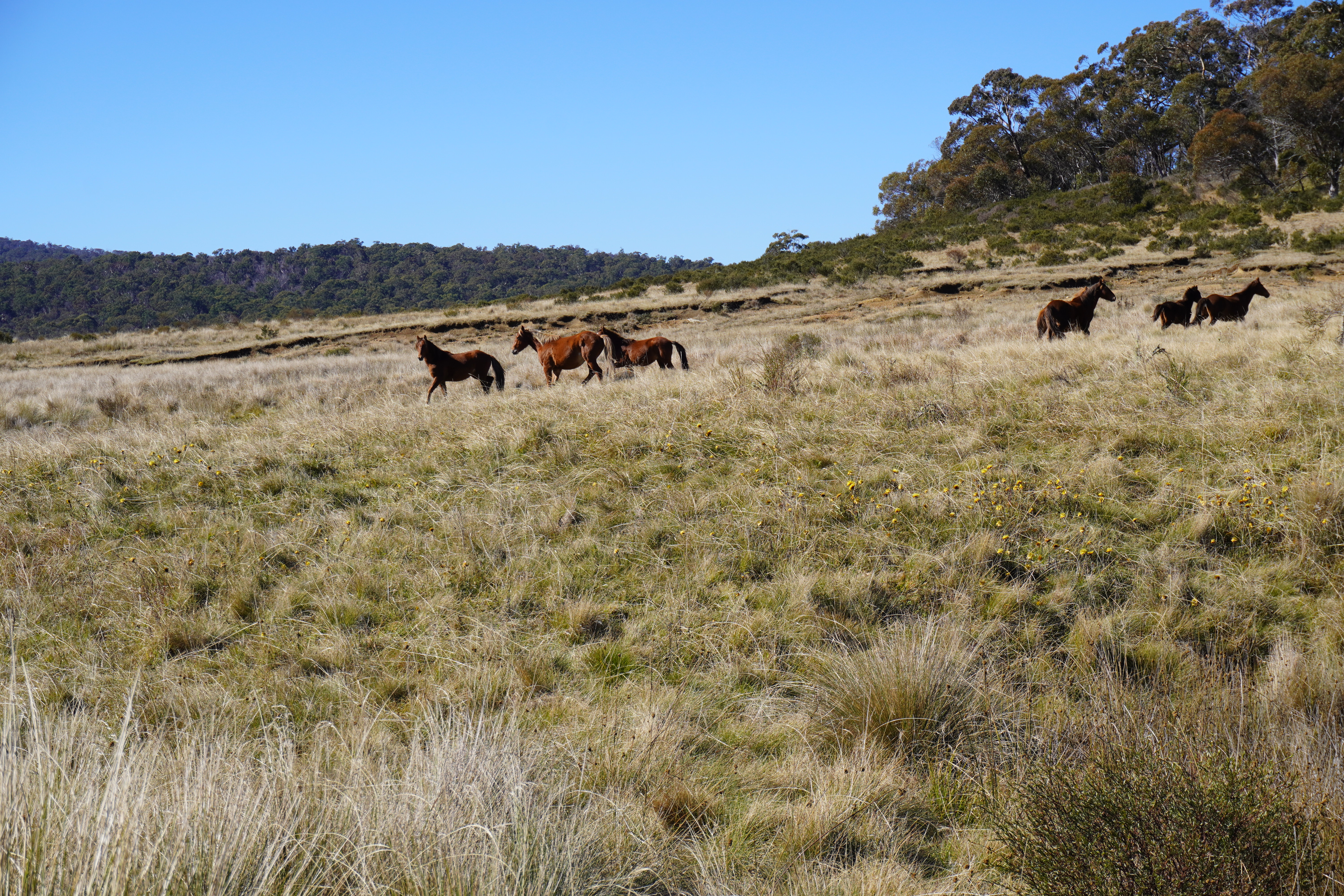
Above: yes, they are gorgeous. But they don’t belong in a national park.
Fire damage. I normally travel to the Snowies via Dead Horse gap and know that devastation in the Siberia area on the west side of the gap. I wasn’t really prepared for the scale of destruction across the Jagungal to Round Mountain zone, or in the alpine ash forests lower down. Far out.

Snowy 2.0. I was also shocked by the scale of industrialisation of this project. In the construction area there are literally trucks everywhere (with noticeable levels of road kill along the highway towards Adaminaby). I always said it is a good project in the wrong spot but was surprised by how much the project has taken over the central section of the park.
Logging. As court cases shut down logging in Victoria, VicForests is allowing ‘fallen product recovery’. I stumbled on one of these operations on the way in to Mt Pinnibar. As you travel through mile after mile of fire damaged alpine ash forests, suddenly the road became a log landing (and the loggers had put a huge log over a public road, blocking access to Pinnibar itself via Walkers road). Recovering ash was being relogged, with remaining older trees removed, compounding the damage of the original logging.
This trip highlighted how lucky we are to have such beautiful mountain country. And how we need to step up our efforts to protect this country.
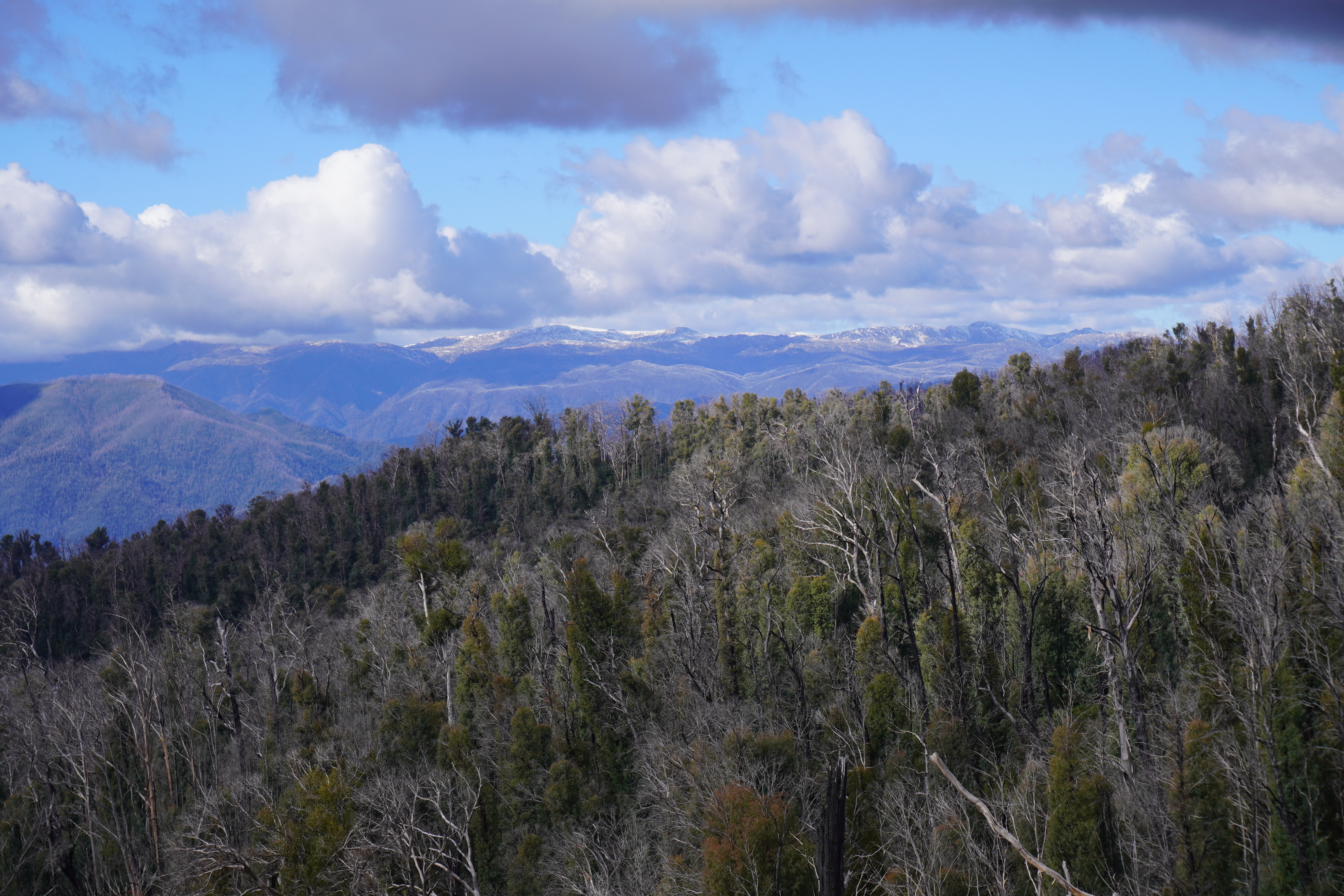
ABOVE: looking towards the Main Range from Walkers Road near Mt Pinnibar.




 Mountain Journal
June 3, 2023 at 3:57 pm
Hi Cam just a few points on the Brumbies well the population of Brumbies in the park is nothing like they say we would be lucky to have 3,500 in the park know many of them were killed in the fires but itâs a totally incorrect figure I know for all the time I spend in the High Country Will talk to you about it in more depth when we can my No is 0439485094 Regards Rod Collman
Sent from Mail for Windows
June 3, 2023 at 6:41 pm
Thanks Cam, a nice trip. My sentiments, the Alps are very much under pressure! Just been looking through an old favourite book. The Alps at the Crossroads. Dick Johnson VNPA. 1974. While an Alpine Nat Park has been achieved since then, seems we are still very much at the Crossroads.
June 3, 2023 at 10:00 pm
beautiful post!
June 4, 2023 at 10:27 pm
As I hiked and camped in Kossie NP during late Feb, I also noticed the ravages of horses and the bushfires (and had walked around the Tabletop region a few years back via Four Mile Hut and Broken Dam Hut). Having been an alpine bushwalker since 1969, I too am sad to see so much negative change everywhere. I too was shocked at the graveyard of dead alpine ash as one descends from Dead Horse Gap down to Geehi. Still such a shocker at that top section!
I was a member of the VNPA Council in the 80s, when we campaigned to ‘Save an Alp’ and thus saw much, much later the resulting Vic Alpine NP declared. Dick Johnson was the instigator with his book.