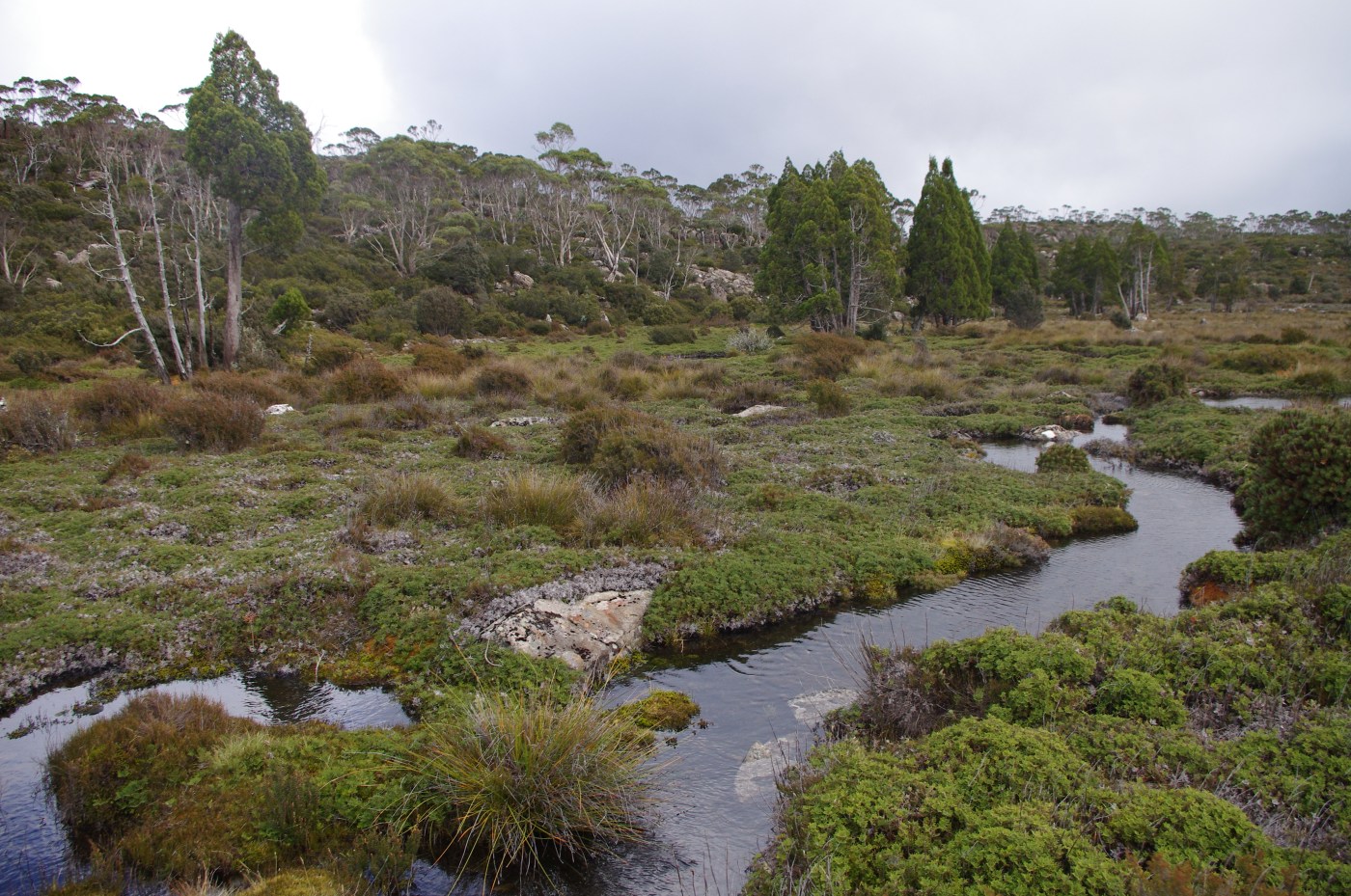
Back in 2016, lightning storms ignited a number of fires in central and western lutruwita/ Tasmania, which turned into large scale events that ‘threatened the core refugia of Gondwanan vegetation, particularly the largest stands of the endemic conifer Athrotaxis cupressoides’ (Pencil Pines). Pencil Pines are already limited to very small areas of Tasmania. Burnt Pencil Pines are unlikely to recover ‘given their slow growth, limited seedling establishment and projections of increased fire weather and lightning ignitions associated with drier soils.’
Although the climate of western Tasmania has not changed very much, as yet, as a result of global warming, the incidence of dry lightning strikes has increased markedly from last century to the present. Therefore these type of lightning caused fires are expected to increase. This could put the very survival of Pencil Pine communities at risk.
One of the fires that created greatest concern started near Lake Mackenzie, on the north western end of the Central Plateau. Significant areas of Pencil Pines were burnt.
With scattered groves of Pines burnt, and unlikely to recover without some form of intervention, what are our options?
Seven years on from the fires, research from the University of Tasmania, shows what is being done to assist recovery.
Called Tasmanian Wilderness World Heritage Area (TWWHA) Bushfire Recovery: Lake Mackenzie Rehabilitation Trials Data – Post-fire restoration of Pencil Pines, the primary goal of this trial was to identify best-practice methods (interventions) for restoring burnt pencil pine (𝘈𝘵𝘩𝘳𝘰𝘵𝘢𝘹𝘪𝘴 𝘤𝘶𝘱𝘳𝘦𝘴𝘴𝘰𝘪𝘥𝘦𝘴) stands. Five study sites were selected around the Lake (three of which were burnt in 2016). Monitoring was carried out from 2018 until 2022.
Three types of intervention were undertaken to consider how recovery could be supported: direct sowing of seed, planting seedlings and protecting natural seedling growth.
𝘕𝘢𝘵𝘶𝘳𝘢𝘭 𝘨𝘦𝘳𝘮𝘪𝘯𝘢𝘯𝘵𝘴 – Thirty-five plots were established in March 2019, to assess the practicality and effectiveness of restoring pencil pines by protecting naturally germinated seedlings from herbivores. Such seedlings were only found near living adult pencil pines, and mostly on Sphagnum.
Plots were situated where a seedling, or group of seedlings, could be enclosed within tree guard in situ. For half of these plots, tailored tree guards were constructed using stainless-steel mesh and aluminium tubes to create a perimeter impervious to vertebrate herbivores. Remaining plots were left as open controls
𝘋𝘪𝘳𝘦𝘤𝘵 𝘴𝘰𝘸𝘪𝘯𝘨 – 300 plots were established in March 2019, in which seeds were sown directly into the field. These plots were treated in a variety of ways, including putting tree guards around the area.
𝘛𝘳𝘢𝘯𝘴𝘱𝘭𝘢𝘯𝘵𝘴 – 1007 transplant plots were established between February and April 2020. In each, two small pencil pines were planted as tube stock: one propagated from seed (called seedlings) and one propagated from cutting material (called ‘cuttings’), which allowed the two propagation methods to be compared. Half of the transplant interventions were protected from herbivores using tree guards, and half were left open.
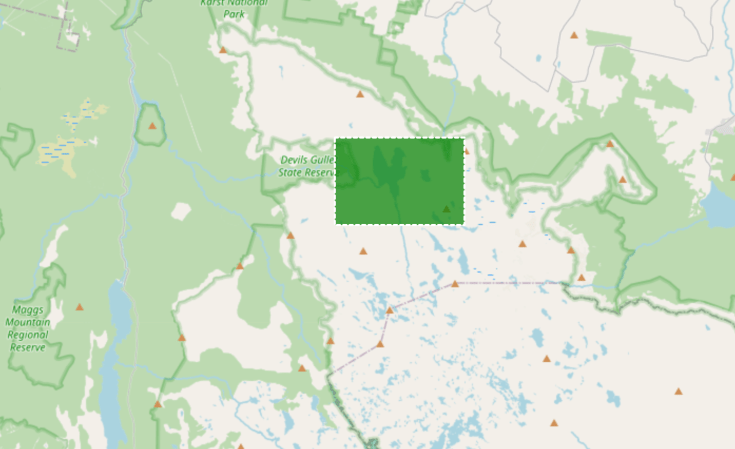
ABOVE: map of the area being studied.
Results
It is early days for this research so there are no formal results as yet about the effectiveness of the various methods employed.
The research
Bowman, D, French, B, Prior, L (2023) Data from: Tasmanian Wilderness World Heritage Area (TWWHA) Bushfire Recovery: Lake Mackenzie Rehabilitation Trials Data – Post-fire restoration of Pencil Pines.
You can find the research here.
As is the case with Alpine Ash communities in Victoria (where seed collection and aerial seeding is occurring in an effort to keep the species viable given the increased frequency of wildfire in the Victorian high country), the need to intervene in such a way is a grim reminder that climate change is profoundly impacting on how we manage the conservation estate and the landscapes we love.
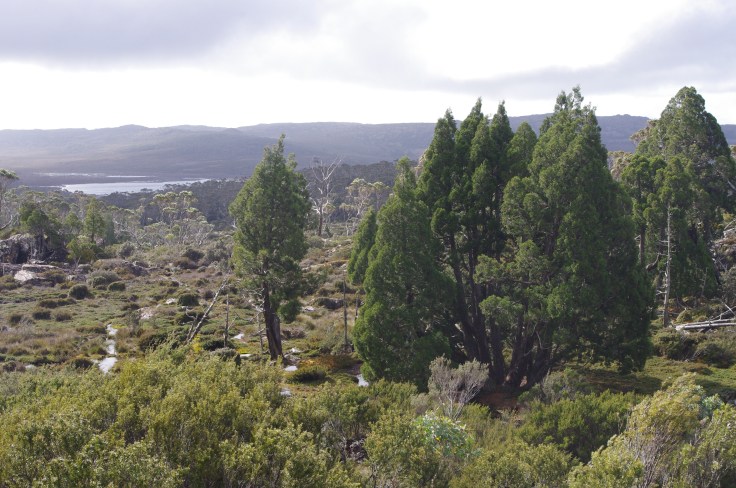
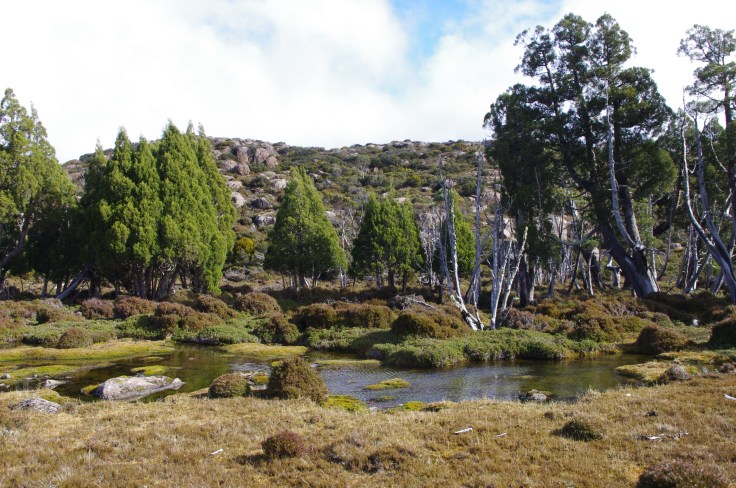
ABOVE and BELOW: Lake Mackenzie area before the 2016 fires.




 Mountain Journal
Leave a comment