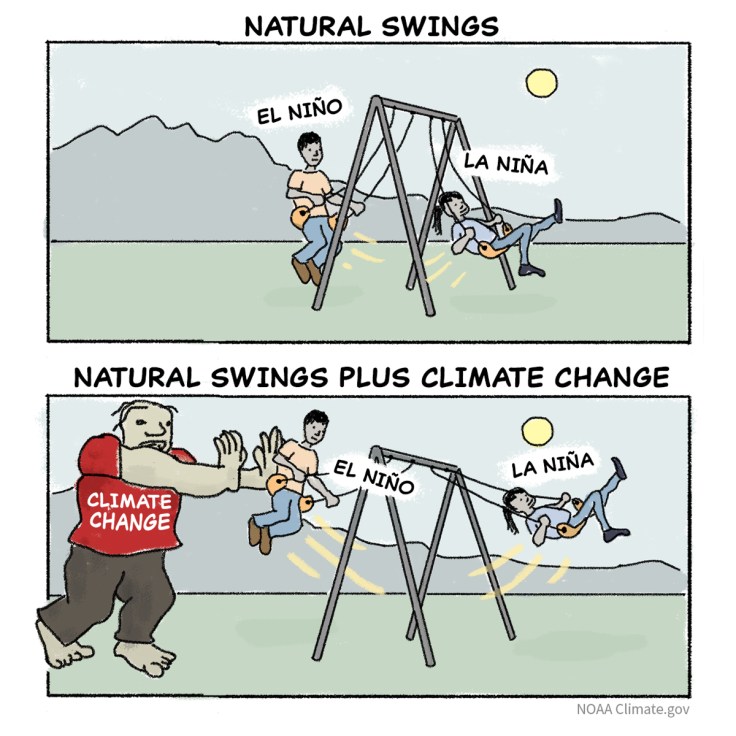
Australia has always experienced erratic weather and climate extremes. But, as demonstrated in this cartoon from National Oceanic and Atmospheric Administration (NOAA), human induced climate change is now ‘super charging’ those natural cycles.
So, when we get an El Nino pattern, it is hotter and drier than it would have been otherwise. Same with the wetter conditions that come with a La Nina event.
Overall patterns show a decline of snowpack across the higher mountains of south eastern Australia. This has been evident since 1957 and is more pronounced at lower/ marginal elevations. This is not news to anyone, the decline of natural snow pack has been commented on for many years. And yet we generally continue as if everything will be ok.
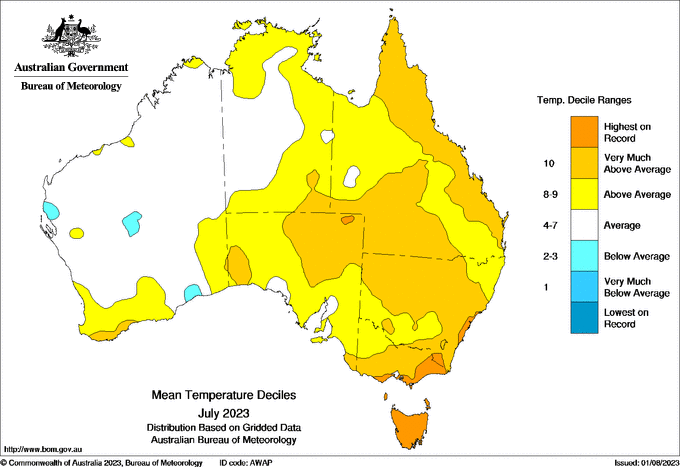
2023 started with early snowfalls in May across the ranges and the first part of the formal ski season saw solid snowfalls. But then it stopped snowing. Now as we move into August we have just experienced the hottest July on record for the high country. In the resorts the snow cycles from ice to late afternoon slush, and in the backcountry the snow pack is getting thin and all but gone below 1,500 metres asl. With no decent snow in the forecast, a number of commentators have made the (possibly rash) decision to say that winter is done. I am not going to do that, I have all my fingers crossed in the hope that we return to decent snowfalls in coming weeks. But we do need to understand that what is happening this winter is exactly what you expect to happen under human induced climate change.
I have previously pointed out that more erratic snow pack (loss of the majority of the pack multiple times during winter due to rain events and warmer conditions) will change many things about how we enjoy winter. I say in one story ‘this may be the future of backcountry skiing and riding on the mainland: erratic weather cycles of snow and rain, with loss of snowpack, meaning the secret to good conditions is always to chase the storm and get out before the next rain cycle’.
The economic impacts of this erratic snowpack will be enormous.
Yes, that’s depressing. But, as always, action is the antidote to despair.
For a background on why this winter is so warm, check this story from the ABC.
There are some additional resources on the changes in snowpack available here.




 Mountain Journal
Leave a comment