
The Pacific Crest Trail (PCT) is a 4,200 kilometre track that runs from Mexico to Canada. Since Cheryl Strayed published her bestselling book about hiking the PCT, Wild (adapted into a movie starring Reese Witherspoon in 2014), it has become arguably the world’s best known long distance walking track. The dream of doing a long long walk through wild terrain is a dream for many people.
However:
‘Wildfires now regularly close vast sections of the trail in the late summer, and water sources in the desert and high Sierras are drying up, making remote regions virtually impassable. Hiking the trail end-to-end in one year, a bucket-list item for many long-distance backpackers, is now “almost impossible” due to climate change.’
There are many reports that numbers of walkers are down due to the current season and there being too much snow in long sections of the higher mountain areas of the route.
Wherever we are, whatever mountain range we are in, the reality of climate change gets ever harder to ignore.
Here is Australia, we have a different problem: lack of snow.
The 2023 season has been a shocker. While we saw heavy falls across the Alps in May, and a good start to the season through until late July, it is as if the snow was just ‘turned off’ through August. Increasingly this is leading to major events being cancelled. The fact that key resorts have managed to stay open is a testament to the incredible behind the scenes work of snow makers and snow groomers, and extensive movement of snow onto ski runs.
The limited snow brings heartache to families and individuals who look forward to their ski holiday. It reduces the experience for skiers and riders who are sharing an ever smaller area of snow. And it impacts the workers and businesses who are getting less trade or shifts.
It has also had some dramatic impacts on a number of big ticket events.
The first race of the 2023 FIS SBX Junior Series had to be cancelled due to lack of snow.
The famous cross country ski event the Kangaroo Hoppet had to cancel for the first time in its history due to lack of snow cover to be able to run the course on the Bogong High Plains.
The 2023 Interschools event planned for Mt Buller was cancelled due to snow conditions. Buller Ski Lifts said ‘it is evident, given the mild weather forecast for the next 7 days that appropriate National Interschool level courses and event sites cannot be built and maintained’.
Lake Mountain, Baw Baw and Mt Stirling have all announced early closure of winter activities due to lack of snow.
The list goes on.
Lack of snow meant that there was little or no skiing or riding on Opening Weekend. Selwyn snow resort reopened for the first time since the 2020 bushfires only to close again after a couple of weeks. It was dire for much of the winter at other lower elevation snow areas like Lake Mountain at the Buffalo plateau.
And yet there is a strange form of denial that almost feels like amnesia. Snow commentators talk about the bad season without mentioning the dread words climate change. People object to any discussion about the lack of snow, because it is ‘talking the industry down’. I understand the need to keep a positive approach so as not to scare off potential visitors but sometimes it just becomes meaningless spin (for instance at the start of the season, Michael Fearnside, operations director at Perisher Ski Resort told news.com.au it is “certainly not doom and gloom” for the industry). There is often an irrational anger when the reality of climate change is raised, and a sad shoulder shrug from many others who grit their teeth as they ride on an ever diminishing snowpack. There is a weird business as usual response that permeates everything.
Surely as grown ups we can ‘walk and chew gum’ at the same time? Surely we can support local businesses, continue to visit the mountains while also talking about the Elephant in the Room? For instance, the organisers of the VIC backcountry festival have done exactly that, adapting touring areas and outdoor activities to fit the available conditions, encouraging participants to attend, even though the experience will be quite different to a ‘normal’ year.
Life is changing in the mountains. Longer and more intense fire seasons, more erratic snowpack, loss of snow at the lower elevation resorts, economic impacts for the businesses who already have a short snow season to try and make ends meet. Ignoring the problem will not make it go away. What is perhaps the strangest thing about this year is the complete absence of any statement by any resort or lift company or snow reliant business about the reality of climate change and the need to act now to radically reduce emissions.
As always, action is the antidote to despair.

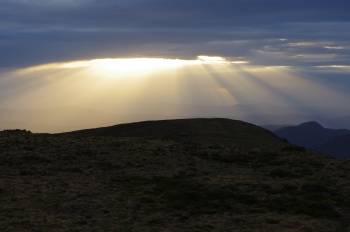
ABOVE: mid winter on the Buffalo plateau, August 2023




 Mountain Journal
August 28, 2023 at 5:05 pm
The worst is when they use fossil-fuel powered machines to make artificial snow, worsening the problem.
You have described the way cognitive dissonance works. “If that were true,I and the people I love would be in deadly danger. If that were true, I would need to make MAJOR life changes. So, of course it cannot be true.”
Logical, huh?