All snow lovers know how bad last winter was. As Mountain Watch noted in it’s end of season wrap, it was one ‘that went out with a whimper, ending two weeks early for most resorts thanks to a low snow year, above average temps and hot northwest winds and the fastest meltdown in memory’.
‘How to summarise the 2023 season? Given the slow start, early finish, three-week ice age during July, spring temps and hardly any snow in August and summer temps in September it’s fair to say, as far as the snow totals and snow quality goes, the 2023 season was pretty bad’.
Of course we will continue to have good and bad winters (and fingers crossed for 2024!). But we also know that climate change is reducing the overall amount of snow we receive in Australia. The snow pack has been in decline since at least 1957. How grim it gets will depend on how the world responds to the threat of climate change now.
How can the snow industry respond?
With a few notable exceptions, ski resorts have been operating under a business as usual approach for a long time. Now is the time to get active.
Resorts have political muscle, but don’t use it. Resorts are collectively bringing about $2.4 billion a year into the economy. They employ many thousands of people directly and through the valley tourist towns that exist along the main routes from capital cities to the resorts. It is one of the biggest employers in regional Australia, accounting for the equivalent of more than 20,000 full-time jobs. Summer visitation in Victoria alone adds a further $146 million to that state.
Given their economic weight the resorts are embarrassingly absent from national debates about climate.
The resorts need to get their act together and become a political force. That means using their influence to call for deeper emission reduction cuts and energy transformation.
The resorts need to get their house in order. For starters, they must shift all their operations to rely on renewable energy. That’s the first and most significant thing they need to do. There are some steps forward and many examples of resorts overseas doing fantastic work on this front. How is it that in 2023 we are still heating our lodges with gas and running our lifts on diesel?
Skiers and riders need to get their act together. Yes, I know people go to the snow for a holiday and want a break from negative news. They want to switch off and enjoy the snow. But there are many things we can do, and humans tend to trust friends and family over scientists for forming views. Resorts should be helping people to understand that without meaningful action to reduce emissions now, we will see the end of winter as we know it within our lifetimes. It needn’t be grim or shouty, but there is a role for resorts in educating their visitors. They could even reward people for making good decision, for instance by seriously getting behind mass transport to the mountains.
Hardcore skiers and riders also need to step up. With a dynamic group leading efforts at Protect Our Winters and many new projects underway, now is the time to sign up, get involved, and bring your skills and passion to the movement.
What we do matters. Yes, I have been overseas to ski, four times now. Each trip was mind bogglingly good. But it came at a cost for the planet. The Australian aviation industry’s CO2 equivalent emissions jumped from more than 10 megatonnes in 2002-03 to more than 23 megatonnes in 2018-19, a pre-pandemic peak. And I have contributed to that.
After lockdowns, and a sad local winter, many of us are keen to head north and get into some pow. But what are our responsibilities? In a world where people will continue to fly for recreation, and where the climate cost of those flights remains high, some logical options are:
- Go for fewer longer trips when you do go overseas, rather than multiple short trips
- Don’t take short haul flights to get to the skifields
- Stay well away from those ridiculous helicopter flights they have at some resorts. Of course, any resort that was serious about climate change would cancel these operations as a first step in becoming responsible corporate citizens.
Other resources
Remember that action is always the antidote to despair. This has lots of links to local and national groups and ideas on taking action.
HEADER IMAGE
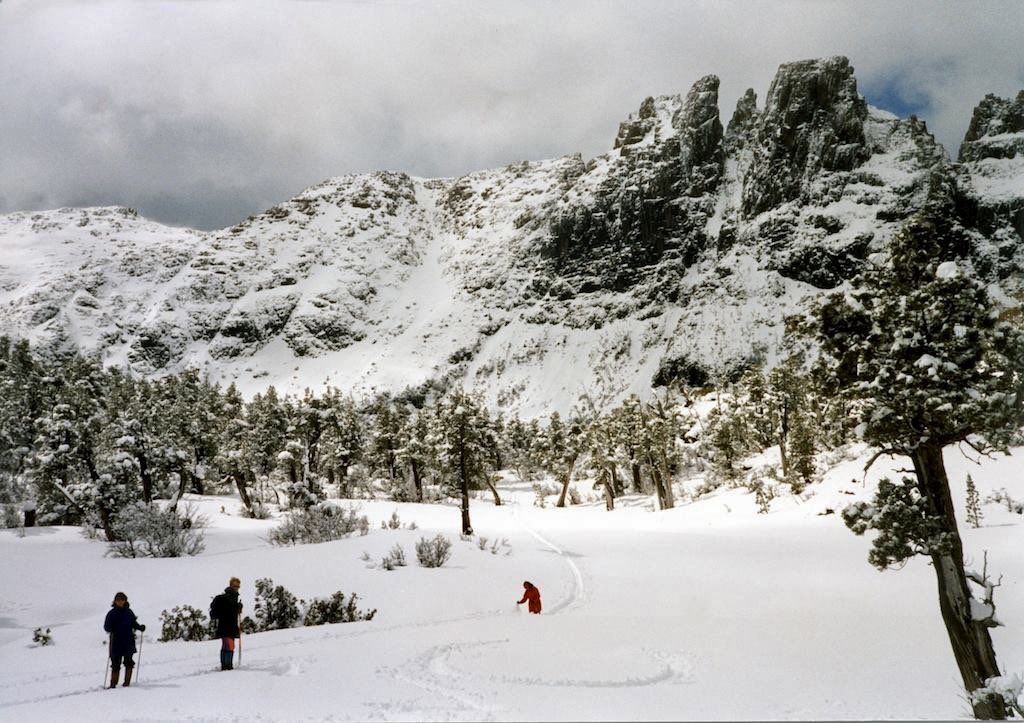
Mt Geryon in lutruwita/ Tasmania in happier days. As noted by John McLaine, until about the year 2000, grand final weekend in late September ‘always meant one thing to me; Tasmanian back country skiing’. It is tragic and terrifying that things have changed so profoundly in such a brief period of time. It’s a reminder of what we had, what we are losing, and why it is important to get mobilised before it’s too late.
Further info and images from John available here:




 Mountain Journal
Leave a comment