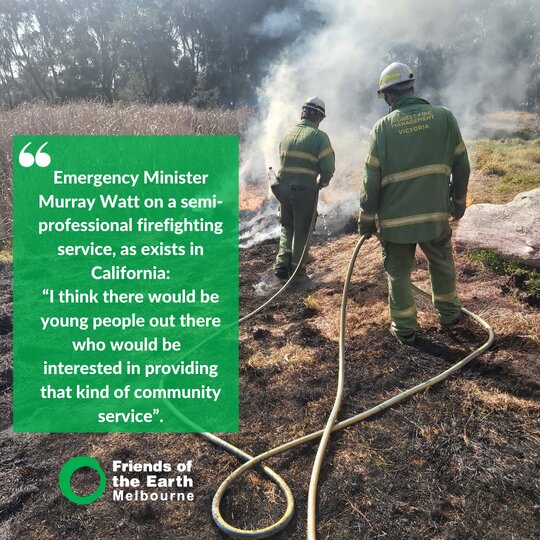
Firefighters say dry lightning has caused more than a dozen fires across Queensland this week, sparking concerns for authorities battling El Niño conditions.
As reported by the ABC, senior meteorologist Steve Hadley from the Bureau of Meteorology said dry lightning occurred when there was no significant rainfall, particularly during “overarching dry conditions”.
“Sometimes with not enough significant rainfall, of a few millimetres or more, that can mean lightning is essentially happening over drier areas and drier terrain with no rain to follow it up,” he said.
“Then you can get some fires starting from that depending on how the landscape is at that time.”
The threat from dry lightning caused fires continues to increase in mountain environments. To take one example, multiple lightning strikes across the Victorian high country on December 31, 2019 resulted in fires developing, including the 44,000 ha Cobungra fire which threatened Omeo, Anglers Rest, and Cobungra.
In lutruwita/ Tasmania, widespread wildfires ignited by lightning strike in early 2016 caused devastating damage across large areas of the Tasmanian World Heritage Area, including significant sections of vegetation which is not fire adapted, such as Pencil Pine forests.
At the time, and in follow up investigations, it became clear that increased fire risk due to climate change posed an existential threat to these vegetation types. Research has confirmed the trend towards more extreme fire seasons. It suggests that we reached a ‘tipping point’ sometime around the year 2000 and that, since then, there has been an increase in the number of lightning-caused fires and an increase in the average size of the fires, “resulting in a marked increase in the area burnt”.
On the mainland, fires increased significantly from about the same time. There were major fires in the Victorian high country in 1998, 2002/3, 2006/7, 2013 and 2019/20. Fires are becoming more common and more intense across the Alps.
It turns out that something similar was happening around the country. Fire regimes around Australia shifted abruptly 20 years ago.
A recent story by Roger Jones from Victoria University, and published in The Conversation, says that ‘almost everywhere in Australia is now in a different fire climate than it was just 20 years ago, with falling relative humidity a key factor’.
Getting ready for the next bad season
While fires rage across Queensland and much of NSW, the mountains are still green and face the prospect of a mild fire season.
But we cannot be complacent.
We know that, in bad seasons, we simply don’t have enough fire fighting resources to stop lightning ignited fires in remote areas. We know that when human assets such as towns are threatened, the wild landscapes of the mountains are abandoned while houses, farms and the ski resorts are protected.
We need to act now to ensure there are adequate resources to protect our wild landscapes when the bad fire seasons return. If we act now we can be ready for that day. If we put off action yet again, we will struggle to deal with new fires from lightning strikes, with potentially disastrous consequences.
Here are two ideas that could be enacted now, so we are ready for next summer.
A national remote area firefighting team
While firefighting is (and should remain) primarily the responsibility of individual states and territories, it is clear that Australia would benefit from a professional national firefighting team which can be deployed to assist firefighting efforts locally.
As fire increasingly threatens World Heritage Areas and high conservation areas within national parks across the country, it is time to establish a national remote area firefighting team, which would be tasked with supporting existing crews in the states and territories.
Long fire seasons stretch local resources, and sometimes remote areas need to be abandoned in order to focus on defending human assets. Having an additional, mobile national team that could be deployed quickly to areas of greatest need would help us protect the wonderful legacy of national parks and World Heritage Areas that exist across the country.
This was recommended by a Senate inquiry after the devastating fires in Tasmania of 2016.
It would be up to the federal government to set up such a team.
Further information is available here.
Establish volunteer firefighting teams open to people living in urban areas
Australia has always relied on volunteer firefighters to do a large proportion of fire response. But many local brigades, especially in farming areas, are aging, and struggling to attract new members. At present, most people living in urban areas can’t contribute to volunteer firefighting efforts because they live too far from a volunteer station, which means that the burden of fire fighting continues to fall on rural and regional communities, while the benefits of effective firefighting are experienced by all Australians.
The states and territories could be assisted by the federal government to establish volunteer firefighting teams which are not attached to specific existing brigades. These could offer opportunities to people living in urban areas to sign on, be trained, and then be deployed at times of urgent need. This would mean we skill up new trained firefighters rather than draining the existing volunteer base or relying on the ADF to be active in fire zones. This is more complicated than attracting people who already have fire qualifications and experience but would allow urban people to play a role through committing time to firefighting efforts.
These groups could also be specifically trained in remote area firefighting to be able to assist state, territory and a potential professional national firefighting team.
Further information available here.
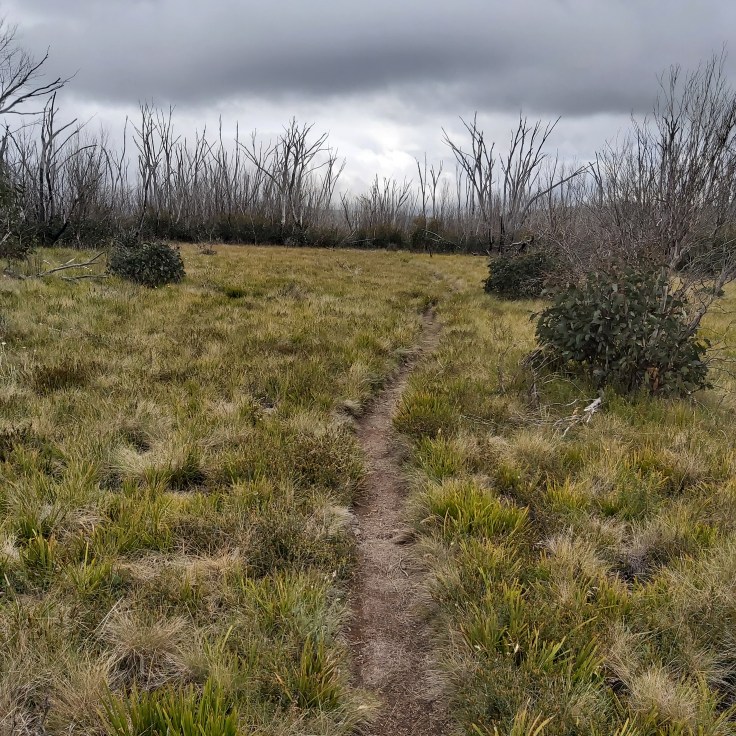
ABOVE: fire ravaged snow gum woodlands, Wellington Plains, VIC.




 Mountain Journal
Leave a comment